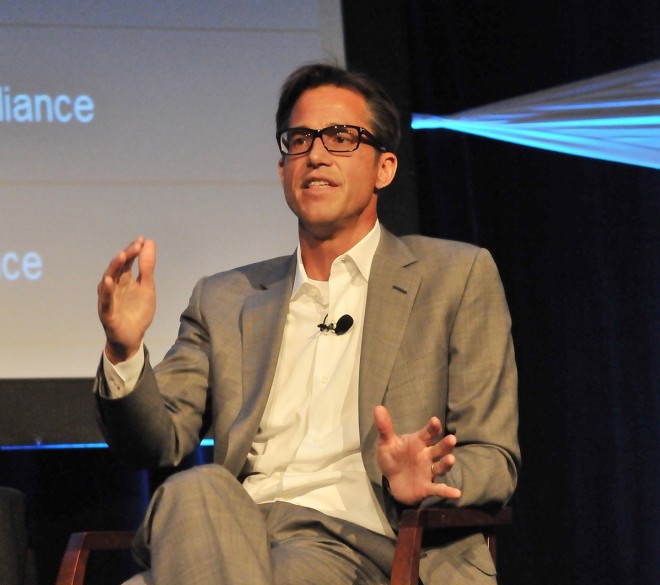
Henry Ford’s Great-Great Grandchildren Join the Family Business

June 25, 2013, 7:39 p.m. ET

Henry Ford’s Great-Great Grandchildren Join the Family Business

Founder’s Great-Great Grandchildren Join the Business; ‘There Are No Guarantees,’ Says Bill Ford Jr.

MIKE RAMSEY

MK-CE286_FORDFA_G_20130625185747

Henry Ford, left, and his son Edsel both worked for decades at Ford.

Ford family members are piling into the auto maker, with a record number now on the payroll even as some investors say the family’s control of voting shares is pressuring its market performance. Mike Ramsey reports.

Calvin Ford, 29, knew as a child where he would probably wind up working as an adult. But he took his time getting there. Read more of this post

Sir Howard Panter and Rosemary Squire show theatre can be profitable

June 25, 2013 4:18 pm

Together at every stage

By Emma Jacobs

download (5)

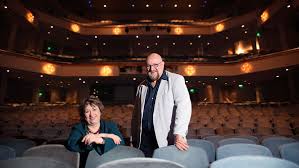
Best seats in the house: Sir Howard Panter and Rosemary Squire in one of their UK regional theatres

This month Sir Howard Panter received a knighthood in the Queen’s birthday honours for his services to theatre. His wife, Rosemary Squire, co-chief executive and co-founder of the Ambassador Theatre Group, which owns and runs theatres in London’s West End, the regions and one on Broadway, got nothing. Read more of this post

Embrace the inner slasher to thrive; We should abandon the concept of a job being permanent

June 25, 2013 4:12 pm

Embrace the slasher within to thrive

By Luke Johnson

We should abandon the concept of a job being permanent

Aslasher is not just a type of horror movie, but also a new category of entrepreneur. It describes someone with a portfolio career – a photographer/journalist perhaps, or a programmer/property developer. I believe it is the way ahead for this generation.

After all, most of us will need to work and earn for 50 years or so because of rising life expectancy and lack of pension provision. To pursue a single-track career for half a century risks boredom – which I think of as almost the greatest enemy. Moreover,technological change means many roles will become redundant – necessitating retraining in a new vocation anyway. Read more of this post

Burning land 40 times cheaper than using machines, says expert

Burning land 40 times cheaper than using machines, says expert

PETALING JAYA — Even though machines can significantly increase work efficiency, farmers in Indonesia still prefer the slash and burn method of clearing land, simply because it is cheaper to do so.

BY –

1 HOUR 27 MIN AGO

PETALING JAYA — Even though machines can significantly increase work efficiency, farmers in Indonesia still prefer the slash and burn method of clearing land, simply because it is cheaper to do so.

“The underlying factor is cost,” said Dr Helena Varkkey, environmental politics expert from the Department of International and Strategic Studies, Universiti Malaya.

Slash and burn, though crude and primitive, is 40 times cheaper than using machinery, which costs around US$200 (S$254.4). Read more of this post

Stop pretending it’s all a party: The social contract of working at a startup

Stop pretending it’s all a party: The social contract of working at a startup

BY SARAH LACY 
ON JUNE 25, 2013

Perhaps it’s because I’ve worked my whole career in media and startups. But I’m having a hard time getting super lathered up about Bloomberg’s takedown of what it is like to work at Fab.

Don’t hang your jacket on the back of a chair? Don’t use a certain font in emails?Those are friendly suggestions compared to having to walk into the Conde Nast building everyday. A friend who worked for a Conde Nast publication (and is thin, gorgeous, and always impeccably dressed) said walking into the cafeteria was worse than the most mean girls high school. The anxiety of getting sized up everyday in the elevator was a big reason she sought another job. Key words: Sought another job. Read more of this post

Warming oceans make parts of world ‘uninsurable’, say insurers

June 24, 2013 8:48 pm

Warming oceans make parts of world ‘uninsurable’, say insurers

By Alistair Gray and Pilita Clark in London

Insurers have issued a rare warning that the speed at which the oceans are warming is threatening their ability to sell affordable policies in a growing number of places around the world.

Parts of the UK and the US state of Florida were already facing “a risk environment that is uninsurable”, said the global insurance industry trade body, the Geneva Association. Read more of this post

“Every business needs to continue to transform itself and move into new markets,” says Marc Lautenbach, the first outside chief executive in Pitney’s 93-year history as the leading U.S. maker of postage meters is struggling to adapt its 20th century brand for the 21st century

June 25, 2013, 6:33 p.m. ET

Pitney Bowes Readies 21st Century Message

JOANN S. LUBLIN

MK-CE270_BT_PIT_G_20130625184008

Pitney Bowes Inc. CEO Marc B. Lautenbach on leadership lessons gleaned over time and preventing burnout.

Pitney Bowes Inc., PBI +3.30% the leading U.S. maker of postage meters, is struggling to adapt its 20th century brand for the 21st century.

Amid weaker demand for mail—revenue for the mail and document-services company dropped 4.4% during the first quarter following a 4.3% decline for all of 2012—Pitney is consolidating its core business to reduce costs while expanding its digital-commerce operation. Those digital initiatives include a service that enables eBayEBAY +1.59% to calculate the cost of shipping packages overseas, location check-in software for Facebook FB +1.30% users and a credentials-verification service. Read more of this post

Marc Rich, the controversial billionaire founder of the company that went on to become commodities giant Glencore-Xstrata has died aged 78; Received Pardon in 2001 from Bill Clinton for tax evasion and illegal trading with Iran

June 26, 2013, 5:35 a.m. ET

Glencore Founder Marc Rich Dead

Rich Received Pardon in 2001 from Bill Clinton

By ALEX MACDONALD and JAMES HERRON

MarcRich2606e

LONDON—Marc Rich, the founder of the company that went on to become commodities giant Glencore-Xstrata GLEN.LN -2.12% PLC, has died aged 78.

“We are saddened to hear of the death of Marc. He was a friend and one of the great pioneers of the commodities trading industry,” the company’s Chief Executive Ivan Glasenberg said Wednesday. “Our deepest sympathies and condolences are with his family at this time.”

Switzerland’s Radio 1 reported that Mr. Rich died near Lucerne and would be buried in Tel Aviv, Israel. Read more of this post

The Venture Capital Secret: 3 Out of 4 Start-Ups Fail

September 19, 2012, 9:32 p.m. ET

The Venture Capital Secret: 3 Out of 4 Start-Ups Fail

By DEBORAH GAGE

It looks so easy from the outside. An entrepreneur with a hot technology and venture-capital funding becomes a billionaire in his 20s.

But now there is evidence that venture-backed start-ups fail at far higher numbers than the rate the industry usually cites.

About three-quarters of venture-backed firms in the U.S. don’t return investors’ capital, according to recent research by Shikhar Ghosh, a senior lecturer at Harvard Business School. Read more of this post

“Either you will be a global company, or you won’t be a company”

“Either you will be a global company, or you won’t be a company”

BY SARAH LACY 
ON JUNE 24, 2013

Our PandoMonthly with Fred Wilson was one of our most popular so far, and it was brought to you by Smartling – a company that makes it possible to adapt your website into multiple different languages and manage all those versions quickly and easily.

It was a fitting sponsorship, because many of Wilson’s best known companies like Foursquare, Twitter, and Zynga have massive, massive audiences overseas. Part of the explanation for consumer Internet companies’ massive valuations this time around has been that they are more than a billion people online, and it’s never been possible to reach such a large audience so quickly. Read more of this post

Daredevil Nik Wallenda completed a historic high-wire walk on a 2-inch (5-cm) steel cable over the Grand Canyon, the first person to cross the canyon without a tether or safety net

Daredevil Nik Wallenda completes high-wire walk across Grand Canyon

Daredevil Wallenda gives a thumbs-up sign as he nears the end of a steel cable rigged across more than a quarter-mile deep remote section of the Grand Canyon near Little Colorado River

6:48am EDT

By Tim Gaynor

LITTLE COLORADO RIVER, Arizona (Reuters) – Daredevil Nik Wallenda completed a historic high-wire walk on a 2-inch (5-cm) steel cable over the Grand Canyon on Sunday and was greeted by wild cheers after his hair-raising stunt. Wallenda, the self-described “King of the High Wire,” took 22 minutes and 54 seconds to walk 1,400 feet across the crimson-hued canyon with just a distant ribbon of the Little Colorado River beneath him. The event was broadcast live around the world. Wallenda, the first person to cross the canyon, made the walk without a tether or safety net. Wallenda could be heard praying almost constantly during the walk, murmuring “Thank you, Jesus.” He kissed the ground when he reached the other side. He said he stopped and crouched down twice, first because of the wind, the second because the cable had picked up an unsettling rhythm. Read more of this post

Archimedes’s discoveries are still inspiring modern-day inventions

June 24, 2013

Archimedes: Separating Myth From Science

By KENNETH CHANG

25ARCH2-popup

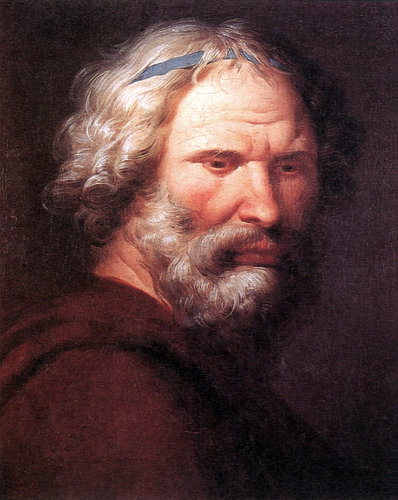
An oil painting of Archimedes by Giuseppe Patania, an early 19th century Italian artist, hangs in Palermo. Two inventions credited to Archimedes, death rays and steam cannons, have proved to be stubborn myths.

For the last time: Archimedes did not invent a death ray.

But more than 2,200 years after his death, his inventions are still driving technological innovations — so much so that experts from around the world gathered recently for a conference at New York University on his continuing influence.

The death ray legend has Archimedes using mirrors to concentrate sunlight to incinerate Roman ships attacking his home of Syracuse, the ancient city-state in the southeast Sicily. It has been debunked no fewer than three times on the television show “Mythbusters” (the third time at the behest of President Obama). Read more of this post

How a freelance web developer made $490,000 in just 18 months posting lectures online on Udemy, which keep 30% of the revenue while the instructor takes 70%

June 25, 2013 – 12:41PM

Will Oremus

How a freelance web developer made $490,000 in just 18 months posting lectures online.

Victor Bastos has made close to half a million US dollars teaching classes on Udemy, an online learning start-up. Photo: Courtesy of Victor Bastos

Victor Bastos was making $US20,000 ($21,600) a year as a freelance web developer in Lisbon, Portugal, when he started posting videos to YouTube. Already fluent in several programming languages and looking to branch into new ones, he thought making instructional videos would help him keep track of what he’d learned. “It was like an online notebook for myself,” Bastos, 33, said. “But then I started getting a lot of subscriptions. People told me, ‘Your tutorials are great — why don’t you make a full course?’”

Within a few months, Bastos got an email inviting him to do just that. The proposal came from an online-learning start-up he had never heard of called Udemy. The offer: host his course on Udemy’s web-based platform, and he could charge students to take it and keep 70 per cent of the revenues. Udemy would keep the other 30 per cent. Read more of this post

Square roots? Scientists say plants are good at math; Plants do complex arithmetic calculations to make sure they have enough food to get them through the night

Square roots? Scientists say plants are good at math

Sun, Jun 23 2013

LONDON (Reuters) – Plants do complex arithmetic calculations to make sure they have enough food to get them through the night, new research published in journal eLife shows. Scientists at Britain’s John Innes Centre said plants adjust their rate of starch consumption to prevent starvation during the night when they are unable to feed themselves with energy from the sun. They can even compensate for an unexpected early night. “This is the first concrete example in a fundamental biological process of such a sophisticated arithmetic calculation,” mathematical modeler Martin Howard of John Innes Centre (JIC) said. During the night, mechanisms inside the leaf measure the size of the starch store and estimate the length of time until dawn. Information about time comes from an internal clock, similar to the human body clock. “The capacity to perform arithmetic calculation is vital for plant growth and productivity,” JIC metabolic biologist Alison Smith said. “Understanding how plants continue to grow in the dark could help unlock new ways to boost crop yield.”

Studies show that giving a spouse advice–particularly unsolicited advice–can lower marital satisfaction. How to give advice that your husband or wife may actually take.

June 24, 2013, 7:03 p.m. ET

The Perils of Giving Advice

Even When Well Intentioned, It Hurts Marital Satisfaction for the Giver and Receiver

By ELIZABETH BERNSTEIN

WhatHeSays062413

A tension point for many couples: the giving and receiving of advice. Experts say men hear advice from women as scolding while women often hear advice from men as condescending. Elizabeth Bernstein and Dr. Anna Ranieri discuss. Photo: The Bean Family.

I know what you should do and here’s my advice.

How many times have you heard that (and groaned)?

Advice giving, especially unsolicited, is tricky. Being on the receiving end can be annoying and make us defensive. But giving advice can be frustrating, as well, particularly when the intended beneficiary of our wisdom makes it clear it isn’t welcome—or takes the same recommendations we’ve been giving for months from someone else. The whole advice issue is typically hardest to navigate with the person we know the best: our spouse or partner. Read more of this post

Can This One Greek Word Improve Your Work And Life? “Opa!” It’s actually more than a word–it’s a philosophy and a way of looking at the world. And it contains incredible implications

CAN THIS ONE GREEK WORD IMPROVE YOUR WORK AND LIFE?

“OPA!” IT’S ACTUALLY MORE THAN A WORD–IT’S A PHILOSOPHY AND A WAY OF LOOKING AT THE WORLD. AND IT CONTAINS INCREDIBLE IMPLICATIONS.

BY: ALEX PATTAKOS & ELAINE DUNDON

3009828-inline-two-sides-of-opa-coin

Perhaps it is a “sign of the times” but more and more people have been telling us that they feel stressed, disengaged, disconnected, unfulfilled, fearful, and overwhelmed with too much to do. Sadly, in increasing numbers they’ve revealed to us that they want to feel inspired, and that they want their lives and work to really matter. Much like Sisyphus, the Greek hero who was ordered by the gods to push a big rock uphill only to see it slip out of his hands at the last moment, living the “good life,” a philosophical term originally associated with Aristotle, for many people has become an endless–and joyless–undertaking.

The notion of the “good life” can be viewed as the human quest for meaning, a formidable challenge that involves both making a living and making a life that really matters, that has significance. To be sure, this seems to be easier said than done in light of the overwhelming evidence that points to the opposite: More people than ever before, in spite of obvious advances in our way and quality of life, appear to be experiencing some kind of existential angst or are lost in an empty space that the world-renown psychiatrist, Viktor Frankl, described as an “existential vacuum.” Read more of this post

What’s the biggest barrier to accomplishing great things?

What’s the biggest barrier to accomplishing great things?

by SHANE PARRISH on JUNE 20, 2013

“If you’re myopic and only look at the next moment in time and you base your decisions on ‘what am I going to get out of this in the next nanosecond’ versus ‘what do I have to put into this in the next nanosecond,’ then when you hit a plateau, your natural conclusion is to quit and move to the next thing. If you’re able to think about things in much bigger chunks, you can make good long-term choices and investments of your effort and time.”
— Angela Duckworth

At some point we all give up trying to get better at something. But Why?

Let’s say you want to play piano. In the beginning, it’s quite rewarding. You start to take lessons and notice immediate progress. Your teacher comments on your talent and you see it being actualized into skill on a consistent basis with seemingly little skill. You pick up the elementary aspects in no time. But then the rate of progress diminishes. Improvement becomes harder and harder.

This is where perseverance matters. Read more of this post

Jürgen Geissinger, Schaeffler chief executive, wants to take the German model of engineering global

June 23, 2013 7:14 pm

Jürgen Geissinger, Schaeffler chief executive

By Peter Marsh

iZey0hqVlgmY

Managing many components: Jürgen Geissinger wants Schaeffler to become a ‘series of hubs’, with regional centres of production all using German-style technical training

Jürgen Geissinger looks a little shamefaced when he is asked about the two big pictures of engineering mechanisms that line the wall behind his desk. “It’s not really art, I know this,” he says of the technical drawings. “I stole them from an [engineering] exhibition. The sales guys pretended to look the other way.” Read more of this post

Cappuccino Billionaire De’Longhi Brews Fortune on Coffee; Europe’s third-largest coffee-machine manufacturer by retail volume has risen more than 250 percent since the end of 2007

Cappuccino Billionaire De’Longhi Brews Fortune on Coffee

De'Longhi

The boutiques and restaurants lining Monmouth Street in central London’s Covent Garden neighborhood stand empty on a recent Wednesday morning, except for the 11-person line that stretches out of the Monmouth Coffee Company cafe.

“In the last few years, I’ve replaced bad coffee with good coffee,” said Holly Woodford, a 35-year-old sports consultant, as she sipped a 2.60 pound ($4) cappuccino at one of the restaurant’s farmhouse-style tables. Read more of this post

Today’s Acqui-Hires Will Become Tomorrow’s Innovators

Today’s Acqui-Hires Will Become Tomorrow’s Innovators

PETER RELAN

posted 2 hours ago

headgears

Editor’s note: Peter Relan is a former programmer and Internet executive, as well as a successful serial entrepreneur, Silicon Valley executive, angel investor, and technology veteran for over 25 years. He founded YouWeb Incubator in 2007, spinning out a string of successful mobile and gaming companies. Follow him on Twitter@prelan.

There is no doubt about the unprecedented wealth of talent in Silicon Valley, both technical and entrepreneurial. The area has become known as a mecca, and for some the Wild West, of digital innovation. So many entrepreneurs migrate to the Valley in hopes of building the next Facebook or Twitter, and technical talent and engineers are the bread and butter making this possible.  Read more of this post

The Science of Storytelling: Why Telling a Story is the Most Powerful Way to Activate Our Brains

The Science of Storytelling: Why Telling a Story is the Most Powerful Way to Activate Our Brains

A good story can make or break a presentation, article, or conversation. But why is that? When Buffer co-founder Leo Widrich started to market his product through stories instead of benefits and bullet points, sign-ups went through the roof. Here he shares the science of why storytelling is so uniquely powerful.

In 1748, the British politician and aristocrat John Montagu, the 4th Earl of Sandwich, spent a lot of his free time playing cards. He greatly enjoyed eating a snack while still keeping one hand free for the cards. So he came up with the idea to eat beef between slices of toast, which would allow him to finally eat and play cards at the same time. Eating his newly invented “sandwich,” the name for two slices of bread with meat in between, became one of the most popular meal inventions in the western world. Read more of this post

Baking biscuits round the clock; Hunger sharpens the wits, a Spanish saying goes: For all the hardship it is inflicting, the crisis is helping many firms sharpen up

Spanish companies: For all the hardship it is inflicting, the crisis is helping many firms sharpen up

Jun 15th 2013 | AGUILAR DE CAMPOO |From the print edition

20130615_WBP003_0

Baking biscuits round the clock

IN A windswept Castilian town 300km (190 miles) north of Madrid, Europe’s largest biscuit plant is churning out digestives, wafers and crackers around the clock. The economic crisis has not really hurt Galletas Gullón, a family-owned firm that dates back to the 19th century: its products are staples in Spanish households and its newer range of “healthy” biscuits created the market sector they dominate. Read more of this post

Working-class 20- and 30-somethings are coming of age in a world of disappearing jobs and shrinking social support networks. Self-sufficiency has a dark side: it leaves little empathy to spare for those who cannot survive on their own

JUNE 22, 2013, 2:30 PM

Young and Isolated

By JENNIFER M. SILVA

In a working-class neighborhood in Lowell, Mass., in early 2009, I sat across the table from Diana, then 24, in the kitchen of her mother’s house. Diana had planned to graduate from college, marry, buy a home in the suburbs and have kids, a dog and a cat by the time she was 30. But she had recently dropped out of a nearby private university after two years of study and with nearly $80,000 in student loans. Now she worked at Dunkin’ Donuts. Read more of this post

Why some high-income earners still go broke

Why some high-income earners still go broke

Melissa Leong | 13/06/22 | Last Updated: 13/06/21 4:50 PM ET
Ten years ago, Jonathan Rivard approached a stone and stucco home with a three-car garage in the north end of Toronto. A Porsche and a Mercedes sat in the driveway and he could hear the mirth of children in a backyard swimming pool. Money is so easily spent. With a tap of your credit card or the shuffle of dollar bills, it’s gone, never to return — well, until payday. Even after you’ve diligently hoarded your funds, here are five things that will quickly deplete your savings. When he stepped inside, however, the rooms were stark, except for a few toys. He walked into the kitchen, pulled back a metal patio chair and took a seat at a glass lawn table. “Have you been robbed?” he asked, jokingly. “They couldn’t afford to furnish the house yet,” the advisor with Edward Jones remembers. “That to me was a wake-up call. There’s perceived wealth and actual wealth.” People may earn a high income. But that doesn’t necessarily make them wealthy. The more money someone makes, he has the same options as you and I: spend it, save it or invest it. Read more of this post

The big rupture: How the Great War transformed a group of artists

The big rupture: How the Great War transformed a group of artists

Jun 22nd 2013 |From the print edition

ARTISTS born in Europe in the last decade of the 19th century found, almost without exception, that their careers were made (or unmade) by the first world war. In Britain six of the best had studied in London at the Slade School of Art, the top school of the day. From 1893 the towering personality there was Henry Tonks, a former medic turned artist, gaunt and severe. Read more of this post

Zhong Shanshan, a former plasterer and reporter, builds billion-dollar business empire Nongfu Spring from turtle shells

Zhong Shanshan builds a business empire from turtle shells

Staff Reporter

2013-06-23

001ec949ff5c12f298a207

By focusing on a lucrative niche in the market, Zhong Shanshan, a former plasterer and reporter, built a major business group from the ground up. For 20 years, his businesses have been selling bottled water and Chinese herbal medicine, but Zhong continues to maintain a low profile by keeping his firms private.

The flagship firm of Zhong’s business group is YST, which produces Chinese herbal medicine, and owns a number of subsidiaries, notably Nongfu Spring, the second-largest water-bottling firm in China. Read more of this post

Bill Gates: Three Things I’ve Learned From Warren Buffett

Bill Gates: Three Things I’ve Learned From Warren Buffett
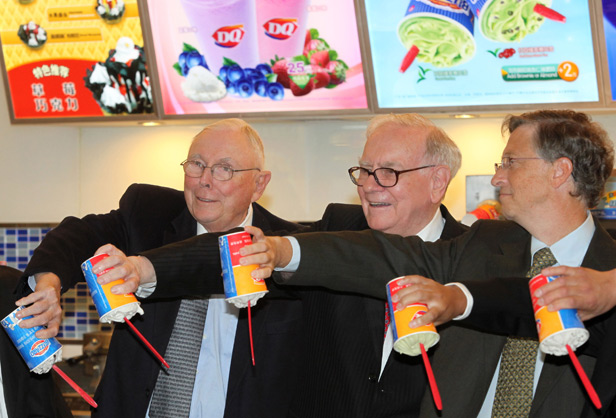
bill-gates-19-sized

I’m looking forward to sharing posts from time to time about things I’ve learned in my career atMicrosoft and the Gates Foundation. (I also post frequently on my blog.) Last month, I went to Omaha for the annual Berkshire Hathaway shareholders meeting. It’s always a lot of fun, and not just because of the ping-pong matches and the newspaper-throwing contest I have with Warren Buffett. It’s also fun because I get to learn from Warren and gain insight into how he thinks. Here are three things I’ve learned from Warren over the years:

1. It’s not just about investing.

The first thing people learn from Warren, of course, is how to think about investing. That’s natural, given his amazing track record. Unfortunately, that’s where a lot of people stop, and they miss out on the fact that he has a whole framework for business thinking that is very powerful. For example, he talks about looking for a company’s moat—its competitive advantage—and whether the moat is shrinking or growing. He says a shareholder has to act as if he owns the entire business, looking at the future profit stream and deciding what it’s worth. And you have to be willing to ignore the market rather than follow it, because you want to take advantage of the market’s mistakes—the companies that have been underpriced. I have to admit, when I first met Warren, the fact that he had this framework was a real surprise to me. I met him at a dinner my mother had put together. On my way there, I thought, “Why would I want to meet this guy who picks stocks?” I thought he just used various market-related things—like volume, or how the price had changed over time—to make his decisions. But when we started talking that day, he didn’t ask me about any of those things. Instead he started asking big questions about the fundamentals of our business. “Why can’t IBM do what Microsoft does? Why has Microsoft been so profitable?” That’s when I realized he thought about business in a much more profound way than I’d given him credit for.

2. Use your platform.

A lot of business leaders write letters to their shareholders, but Warren is justly famous for his. Partly that’s because his natural good humor shines through. Partly it’s because people think it will help them invest better (and they’re right). But it’s also because he’s been willing to speak frankly and criticize things like stock options and financial derivatives. He’s not afraid to take positions, like his stand on raising taxes on the rich, that run counter to his self-interest. Warren inspired me to start writing my own annual letter about the foundation’s work. I still have a ways to go before mine is as good as Warren’s, but it’s been helpful to sit down once a year and explain the results we’re seeing, both good and bad.

3. Know how valuable your time is.

No matter how much money you have, you can’t buy more time. There are only 24 hours in everyone’s day. Warren has a keen sense of this. He doesn’t let his calendar get filled up with useless meetings. On the other hand, he’s very generous with his time for the people he trusts. He gives his close advisers at Berkshire his phone number, and they can just call him up and he’ll answer the phone. Although Warren makes a point of meeting with dozens of university classes every year, not many people get to ask him for advice on a regular basis. I feel very lucky in that regard: The dialogue has been invaluable to me, and not only at Microsoft. When Melinda and I started our foundation, I turned to him for advice. We talked a lot about the idea that philanthropy could be just as impactful in its own way as software had been. It turns out that Warren’s brilliant way of looking at the world is just as useful in attacking poverty and disease as it is in building a business. He’s one of a kind.
Want to Learn How to Think? Read Fiction; reading a literary short story increases one’s comfort with ambiguity

Want to Learn How to Think? Read Fiction

New Canadian research finds reading a literary short story increases one’s comfort with ambiguity.

June 12, 2013 • By Tom Jacobs • 10 Comments and 0 Reactions

Are you uncomfortable with ambiguity? It’s a common condition, but a highly problematic one. The compulsion to quell that unease can inspire snap judgments, rigid thinking, and bad decision-making. Fortunately, new research suggests a simple antidote for this affliction: Read more literary fiction. Read more of this post

The next time you’re in a meeting and want to get people on your side, just say ‘yeah’; MIT research found that certain words seem to help participants increased the chances that their ideas would win acceptance from the group

June 18, 2013, 10:08 p.m. ET

At Work: Just Say ‘Yeah’

The next time you’re in a meeting and want to get people on your side, just say “yeah.”

New research out of the Massachusetts Institute of Technology found that certain words seem to help participants appear more persuasive in meetings and increased the chances that their ideas would win acceptance from the group. Read more of this post

How iRobot is Invading Your Life

How iRobot is Invading Your Life

by Brian Solomon | Jun 19, 2013

topimg_21867_colin_angel_300x400

CEO Colin Angle jokes that he’s a vacuum cleaner salesman, but his robots are tackling bigger challenges

The end of iRobot’s military boom focussed it on figuring out how to make money off civilians As he mashes the joystick controls, Colin Angle grins like a six-year-old boy playing with his first radio-controlled car, freshly torn wrapping paper thrown aside. But the 45-year-old iRobot co-founder and CEO isn’t testing out a toy—he’s putting a $100,000-plus piece of machinery to work, a remote-controlled 60-pound minitank with four cameras, rubber treads and a six-foot extendable arm.

Read more of this post