Thailand’s Buddhist monks are under investigation following complaints sparked by a video showing some flying on a private jet

Jet-set monks warned after video exposes lavish lifestyle

Monday, June 17, 2013 – 12:26 PM

zzzjetsetmonks_large

Thailand’s Buddhist monks are under investigation following complaints sparked by a video showing some flying on a private jet. The YouTube video showed one of the monks was wearing stylish aviator sunglasses, carrying a luxury brand travel bag and sporting a pair of modern-looking wireless headphones. It attracted criticism from Buddhists nationwide. Office of National Buddhism director-general Nopparat Benjawatananun said that the agency saw the video and had warned the monks from a monastery in Thailand’s north-east not to repeat the lavish behaviour. It plans to monitor monks nationwide. With the world’s largest Buddhist population, Thailand has attempted to help Buddha’s 2,600-year-old doctrine stand the test of time through a variety of means, including imposing a ban on the sale of alcohol on religious holidays. The efforts, however, are sometimes tainted by the monks themselves. Last year, about 300 out of 61,416 Buddhist monks and novices in Thailand were reprimanded – in several cases removed from the monkhood – because of their misconduct, ranging from alcohol consumption, having sex with women, to extortion. The office also received complaints about monks driving cars, and scams and false claims of black magic uses by monks. Mr Nopparat said the Buddhist monks in the video were acting “inappropriately, not composed and not adhering to Buddha’s teachings of simplicity and self-restraint.” Monruedee Bantoengsuk, an administrative officer at Khantitham Temple in Sisaket province, confirmed that the monks on the private plane lived at the temple but refused to give details about the trip. “We can explain this, but not now,” she said, saying that the abbot, who appeared in the video, is currently on a religious tour in France. The images from the video contrasted with the abbot’s message on the temple’s homepage that read: “The true core of those who preach Buddha’s teachings is to not to own any objects at all.” “When Lord Buddha was alive, there wasn’t anything like this. There were no cars, smart phones or cameras, so the rules were much simpler,” said Mr Nopparat. “While the monks need to keep themselves abreast of new knowledge, current events and technology, they are restrained to choose the appropriate tools.” He said one way to prevent the monks from misbehaving is for followers not to spoil them with valuable objects or vices. “In many cases, it was the followers who gave the monks the luxury. Some bought them sports cars. This is by no means necessary.”

The Secret to Learning Anything: Albert Einstein’s Advice to His Son

The Secret to Learning Anything: Albert Einstein’s Advice to His Son

Three Einsteins

Einstein with his eldest son, Hans Albert, and his grandson, Bernhard – 1936

“That is the way to learn the most, that when you are doing something with such enjoyment that you don’t notice that the time passes.”

With Father’s Day around the corner, here comes a fine addition to history’s greatest letters of fatherly advice from none other than Albert Einstein – brilliant physicist, proponent of peace, debater of science and spirituality, champion of kindness – who was no stranger to dispensing epistolary empowerment to young minds. In 1915, aged thirty-six, Einstein was living in wartorn Berlin, while his estranged wife, Mileva, and their two sons, Hans Albert Einstein and Eduard “Tete” Einstein, lived in comparatively safe Vienna. On November 4 of that year, having just completed the two-page masterpiece that would catapult him into international celebrity and historical glory, his theory of general relativity, Einstein sent 11-year-old Hans Albert the following letter, found in Posterity: Letters of Great Americans to Their Children (public library) – the same wonderful anthology that gave us some of history’s greatest motherly advice, Benjamin Rush’s wisdom on travel and life, and Sherwood Anderson’s counsel on the creative life. Einstein, who takes palpable pride in his intellectual accomplishments, speaks to the rhythms of creative absorption as the fuel for the internal engine of learning:

My dear Albert,

Yesterday I received your dear letter and was very happy with it. I was already afraid you wouldn’t write to me at all any more. You told me when I was in Zurich, that it is awkward for you when I come to Zurich. Therefore I think it is better if we get together in a different place, where nobody will interfere with our comfort. I will in any case urge that each year we spend a whole month together, so that you see that you have a father who is fond of you and who loves you. You can also learn many good and beautiful things from me, something another cannot as easily offer you. What I have achieved through such a lot of strenuous work shall not only be there for strangers but especially for my own boys. These days I have completed one of the most beautiful works of my life, when you are bigger, I will tell you about it. I am very pleased that you find joy with the piano. This and carpentry are in my opinion for your age the best pursuits, better even than school. Because those are things which fit a young person such as you very well. Mainly play the things on the piano which please you, even if the teacher does not assign those. That is the way to learn the most, that when you are doing something with such enjoyment that you don’t notice that the time passes. I am sometimes so wrapped up in my work that I forget about the noon meal. . . .

Be with Tete kissed by your

Papa.

Regards to Mama.

Europe 1870 by stereotype

europe 1870

Original Mad Man David Ogilvy on the 10 Qualities of Creative Leaders: A capacity for hard work and midnight oil; A streak of unorthodoxy – creative innovators

Original Mad Man David Ogilvy on the 10 Qualities of Creative Leaders

Ogilvy

The rare talents of trust, gusto, and guts under pressure.

Long before the listicle epidemic of the social web, 11th-century Japanese courtesan Sei Shanagon, the world’s first “blogger,” enumerated 7 rare things in life, beloved novelist Umberto Eco asserted the list was the origin of culture, and the inimitable Susan Sontag reflected on why lists appeal to us. One of modern history’s most fierce list-lovers is advertising legend and original “Mad Man” David Ogilvy, as evidenced by his enduring 10 no-bullshit tips on writing. From The Unpublished David Ogilvy (public library) – which also gave us Ogilvy’s endearing note to a veteran copywriter – comes his list of the ten qualities he looks for in creative leaders, as originally delivered in one of Ogilvy’s eloquent talks to the staff. Among expected necessities like work ethic and the ability to transcend fear in the creative process are also a few oft-overlooked but equally important requirements like a healthy dose of nuttiness and comedic sensitivity. (We already know that humor and creativity are driven by the same mechanics.)

High standards of personal ethics.

Big people, without pettiness.

Guts under pressure, resilience in defeat.

Brilliant brains – not safe plodders.

A capacity for hard work and midnight oil.

Charisma – charm and persuasiveness.

A streak of unorthodoxy – creative innovators.

The courage to make tough decisions.

Inspiring enthusiasts – with trust and gusto.

A sense of humor.

The Unpublished David Ogilvy features many more of Ogilvy’s lists, as well as a wealth of his insights on everything from creativity to management to the nitty-gritty of the communication arts.

The rise of ‘retired’ workers

The rise of ‘retired’ workers

Emma Simon looks at why there are now more than a million people working past the age of 65 .

By Emma Simon

7:00AM BST 16 Jun 2013

It isn’t just the younger generation who need to face up to the reality of working past their pension age. Figures released by the Office of National Statistics last week showed that there were now more than one million people in the workforce aged 65 or over.

This is the highest number since the ONS started collating this data, back in 1971, although pension experts said that this number is likely to rise significantly over the next few decades.

There are a number of reasons behind this change in working patterns. Undoubtedly one of the biggest drivers has been financial need. Read more of this post

How an American woman rescued Burberry, a classic British label

How an American woman rescued Burberry, a classic British label

The fashion label was in dire trouble before Angela Ahrendts took over. Now, seven years on, she is among the best-paid bosses in Britain

Rupert Neate

The Observer, Sunday 16 June 2013

Angela Ahrendts

Angela Ahrendts was at first reluctant to join Burberry.

New Palestine, Indiana, (population 2,000) is as far removed from the runways of London, Paris, Milan or New York as it is possible to imagine. But it was here, in a house so crowded she carved out a refuge for herself in the cupboard under the stairs, that Angela Ahrendts first set her sights on a career in fashion. Now as chief executive of Burberry, she’s one of the most powerful figures in the big-ticket world of luxury labels – and one of Britain’s best paid bosses: taking home £17m in 2012 (more than any man working for a FTSE-100 blue-chip company that year) and another £7m this year.

“It was always fashion,” she says. “If you read my high school yearbook, I was [someone] who at 16 knew exactly what I was going to do.”

What she has done, in the past seven years, is turn Burberry from a label that had become associated with baseball caps worn in nightclubs to the biggest British high-fashion brand, which ranks alongside anything the ateliers of Paris and Milan have to offer. She has signed up actors such as Eddie Redmayne and Emma Watson as the faces of the brand – and scored a huge publicity coup when she put Romeo Beckham in one of Burberry’s trademark trench coats for a series of glossy magazine adverts. Read more of this post

Shipping magnate Paul Soros, older brother to George Soros, dies in NYC at 87; “His genius, which was really reflected in his work, was really a function of seeing what everyone was seeing and finding new ways to solve interesting problems”

Shipping magnate Paul Soros dies in NYC at 87

6:52 p.m. EDT June 15, 2013

He suffered from cancer, diabetes, and Parkinson’s

Soros was born Paul Schwartz in Hungary; his parents changed it to avoid Nazi persecution

Soros and his wife established a scholarship program for immigrants

NEW YORK (AP) — Paul Soros, a successful innovator in shipping, philanthropist and the older brother of billionaire financier George Soros, died in New York City on Saturday after a long bout with a host of illnesses, said his son Peter Soros. He was 87. Soros, an engineer and businessman, founded Soros Associates, a world leader in the design and development of bulk handling and port facilities. The company has operations in 91 countries. Soros also held a number of patents and wrote more than 100 technical articles on the transportation of materials and related shipping design issues. “His genius, which was really reflected in his work, was really a function of seeing what everyone was seeing and finding new ways to solve interesting problems,” said Peter Soros. Soros also drew upon his own immigrant biography in establishing with his wife the Paul & Daisy Soros Fellowships for New Americans in 1997. The foundation’s $75 million endowment funds graduate education for immigrants and the children of immigrants. Read more of this post

What Dell tells us about the entrepreneur’s endless fight

What Dell tells us about the entrepreneur’s endless fight

BY KEVIN KELLEHER 
ON JUNE 14, 2013

What is it about the barrier between public markets and private companies? Traversing it in either direction seems fraught with peril. Facebook, Zynga, Groupon, and others saw their fortunes take a turn for the worse once they became public. And Dell is nowundergoing a battle to take the company private again.

Entrepreneurs are used to fighting for the companies they are building, and Michael Dell’s recent experience shows that in many respects that fight is never really over. To recap: After announcing a leveraged buyout intended to take Dell private and retool the company for a long-term recovery (free from those vexing quarterly performance targets), Michael Dell faced a counter-bid from longtime activist investor Carl Icahn. Read more of this post

Inside the Box: A Proven System of Creativity for Breakthrough Results

Inside the Box: A Proven System of Creativity for Breakthrough Results [Hardcover]

Drew Boyd (Author), Jacob Goldenberg (Author)

inside-the-box-a-proven-system-of-creativity-for-breakthrough-results

Release date: June 11, 2013

Want a truly creative organization? Then think Inside the Box. The traditional view says that creativity is unstructured and doesn’t follow rules or patterns. That you need to think “outside the box” to be truly original and innovative. That you should start with a problem and then “brainstorm” ideas without restraint until you find a solution. Inside the Box shows that more innovation— and better and quicker innovation—happens when you work inside your familiar world (yes, inside the box) using a set of templates that channel the creative process in a way that makes us more—not less—creative. These techniques were derived from research that discovered a surprising set of common patterns shared by all inventive solutions. They form the basis for Systematic Inventive Thinking, or SIT, now used by hundreds of corporations throughout the world, including industry leaders such as Johnson & Johnson, GE, Procter & Gamble, SAP, and Philips. Many other books discuss how to make creativity a part of corporate culture, but none of them uses the innovative and unconventional SIT approach described in this book. With “inside the box” thinking, companies and organizations of any size can creatively solve problems before they develop—and innovate on an ongoing, systematic basis. This system really works! Read more of this post

Think Inside the Box: Forget brainstorming: People are at their most innovative when they work within the constraints of what they know

June 14, 2013, 6:59 p.m. ET

Think Inside the Box

Forget brainstorming: People are at their most innovative when they work within the constraints of what they already know.

By DREW BOYD and JACOB GOLDENBERG

RV-AK835_INNOVA_G_20130614181900

The most consequential ideas are often right under our noses.

When most CEOs hear the word “innovation,” they roll their eyes. It conjures up images of employees wasting hours, even days, sitting in beanbag chairs, tossing Frisbees and regurgitating ideas they had already considered. “Brainstorming” has become a byword for tedium and frustration. Read more of this post

In Glittering Gems, Reading Earth’s Story; Gems — each forged with its own recipe of elements, temperature and pressure — offer precious clues to some of the most profound questions about the life of our planet.

June 13, 2013

In Glittering Gems, Reading Earth’s Story

By CARL ZIMMER

A jewelry store is an archive of the Earth. Every gem fixed to every ring or necklace was forged deep inside our planet, according to its own recipe of elements, temperature and pressure. But it has taken a while for geologists to decode the cookbook for gems. Jade, for example, puzzled geologists for decades. “For a long time people looked at this crazy rock, and it didn’t make any sense,” said George Harlow, a geologist at the American Museum of Natural History. But thanks to the research of Dr. Harlow and other geologists, jade now has a back story: It formed in dying oceans. The discovery of gems like rubies and jade thus signifies more than just a new supply of bling in jewelry stores. It tells geologists some important things about the planet.

Read more of this post

From spiders, a material to rival Kevlar; Synthesizing spider thread—which is stronger than nylon and even some metals—has been a vexing problem. Until now

From spiders, a material to rival Kevlar

June 14, 2013: 12:40 PM ET

Synthesizing spider thread—which is stronger than nylon and even some metals—has been a vexing problem. Until now.

By Michael Fitzpatrick

FORTUNE — A Japanese startup claims it has cracked the knotty problem of commercializing the production of spider thread, which, gram for gram, is stronger than nylon and even many metals. As one of nature’s super-substances — tougher than Kevlar yet significantly more elastic — scientists have been trying to recreate it in significant quantities in labs but failed for over a decade. By using synthetic biology techniques and a new spinning technology, Spiber Inc. says it is now able to produce many hundreds of grams of synthetic spider silk protein where past efforts have produced less than a few grams over a day. One gram of the special protein produces about 9,000 meters (29,527 feet) of silk.

Read more of this post

Diminutive Dads of the Animal Kingdom; Fathers in many species play a minor role—and they don’t always survive the act of mating

June 14, 2013, 7:24 p.m. ET

Diminutive Dads of the Animal Kingdom

Fathers in many species play a minor role—and they don’t always survive the act of mating

By DAPHNE FAIRBAIRN

This weekend, children across the country will honor their dads with the usual assortment of cards, tools and ties, thus paying tribute to the influential role that fathers play in our lives. But human dads are unusual in their devotion to family, especially when compared with the rest of the animal kingdom. Though most bird fathers help care for their offspring, absentee dads are the rule in 90% of mammal species. Fatherly care is even less common in other animal groups. Also atypical is our expectation that the dad is the larger and stronger parent. Males are the larger sex in most birds and mammals, but among the vast majority of other animal groups, females are usually larger—often very much larger. Female deep-sea anglerfish, for example, outweigh males by a multiple of as much as 500,000. This makes sense when you think about the biology. Most female animals produce tens to hundreds of thousands of eggs at one time. Their bodies have to be large enough to accommodate these eggs, which can comprise as much as 25% to 75% of the mother’s weight. By contrast, reproductive tissues generally make up less than 1% of a male’s body weight.

Read more of this post

Lululemon Posts Hilarious Open Call For CEO Position

Lululemon Posts Hilarious Open Call For CEO Position

ASHLEY LUTZ JUN. 14, 2013, 12:27 PM 9,377 6

Lululemon CEO Christine Day announced this week that she’s leaving. Now, the yoga-wear retailer must find her replacement. Where is Lululemon recruiting for one of the most sought-after jobs in retail? The Internet.  The company posted a job description on its website calling for CEO applicants. Check it out:

description

You report to no one, you are the CEO (duh). You are passionate about doing chief executive officer type stuff like making decisions, having a vision and being the head boss person.

a day in the life of a chief executive officer

-You communicate powerfully, often through Sanskrit

-You are disciplined, focused and can hold headstand for at least 10 minutes

-You’re a long-term thinker. You already have a plan to bring yoga and luon to Mars by 2018

-You break all the rules like getting your OM-on (loudly) whenever the urge arises

-You elevate and cultivate the level of talent within the senior leadership team by holding The Bachelor lululemon. Only one successful SVP will get the final rose

-Not only do you lead the organization to create components for people to live long, healthy and fun lives, you know the secret to how they got the caramel in the Caramilk bar

-You wear The Mansy to lead our company-wide morning chant and kombucha ritual

the finer print 

-Your go-to party trick is your dead-on impression of the yogi in “Sh*T Yogis Say”

-You voted for Pedro

-You have Chip Wilson, Bill Clinton, Ellen DeGeneres and Oprah Winfrey on speed dial

-You actively live and breathe the lululemon culture – on Friday afternoons you hit up wheatgrass and tequila shots (it’s called work/life balance)

-You use your third eye to channel innovation

-Your lineage is directly related to Phidippides

-You own yoga

Mexico’s Spoiled Rich Kids: The entitled children of the country’s elite are now coming under fire

June 14, 2013, 6:13 p.m. ET

Mexico’s Spoiled Rich Kids

The entitled children of the country’s elite are now coming under fire

By DAVID LUHNOW

The sons and daughters of Mexico’s elite are known as “Juniors.” Filmmaker and former Junior Gary Alazraki explains how to spot a Junior and why he ultimately decided to reject the Junior lifestyle.

You can spot them prowling the streets of Mexico City’s wealthy enclaves in sports cars. The guys wear their hair slicked back and designer shirts with the top three buttons open. The women have expensive bags and sunglasses. They are nearly always followed by a black SUV packed with armed bodyguards.

They are known in Mexico as “Juniors”—the sons and daughters of the country’s elite, young people whose love of brand names is surpassed only by their sense of entitlement. Juniors grow up to dominate the upper echelons of business and politics. They live behind high walls, travel in private jets and seem utterly untouchable—and out of touch in a country that struggles with poverty and violence. Read more of this post

Most technology companies fail. Some research suggests that three out of four venture backed companies don’t make it, and less than 1 percent achieve an initial public offering. To succeed, an entrepreneur must understand the three main risks facing every tech chief executive

The three risks

BY CHRISTOPHER LOCHHEAD 
ON JUNE 13, 2013

Let’s begin off with some cheery facts. Most technology companies fail. Some research suggests that three out of four venture backed companies don’t make it, and less than 1 percent achieve an initial public offering.

To succeed, an entrepreneur must understand the three main risks facing every technology chief executive:

1) Category risk: Is your market large, valuable, and growing?

Category risk is the most fundamental challenge facing both startup and large incumbent technology companies. After all, a market must exist for you to be the leader. If you want to sell bibles, there must be Christians. And if you want increasing revenues, margins and earnings over time, you must be positioned in a market that is large and growing. This means that building your category is equally important to building your company. It sounds crazy, but it’s true. Read more of this post

Hidden Reimann Billionaire Found as Coty Has New York IPO

Hidden Reimann Billionaire Found as Coty Has New York IPO

A fifth billionaire has been unmasked in the German family behind perfume maker Coty Inc. (COTY), which debuted on the New York Stock Exchange today.

Andrea Reimann-Ciardelli, 56, sold her stake in Joh. A. Benckiser, the Reimann family’s closely held investment company, in 2003 for almost $1 billion, according to a person familiar with the terms of the deal who asked not to be identified because the transaction was private. She has a fortune valued at $1.2 billion, according to the Bloomberg Billionaires Index.

Reimann-Ciardelli is a U.S. citizen and resides in Hanover, New Hampshire. Her four adopted siblings — Renate Reimann-Haas, 61, Wolfgang Reimann, 61, Stefan Reimann-Andersen, 49, and Matthias Reimann-Andersen, 48 — each own 24 percent of JAB, which is led by a trio of outside executives. Their stakes are collectively worth about $19 billion, according to the ranking. Read more of this post

Cocaine seizures at Frankfurt airport have fallen by more than 50 percent in two years, providing an insight into the fallout that a ban on night flights has had on Europe’s third-busiest aviation hub

Cocaine Slump Shows Force of Frankfurt Night-Flight Ban: Freight

Cocaine seizures at Frankfurt airport have fallen by more than 50 percent in two years, providing an insight into the fallout that a ban on night flights has had on Europe’s third-busiest aviation hub.

About 246 kilograms (542 pounds) of the drug were recovered in 2012, down from 524 kilos in 2010, with the termination of overnight mail services from Latin America a major contributor to the drop, according to Yvonne Schamber, a Customs Office spokeswoman. Airports including Munich, where carriers such as Deutsche Lufthansa AG (LHA) diverted flights, have seen volumes gain. Read more of this post

Miracle-Gro’s Potty-Mouthed CEO Should Have Known Better

Miracle-Gro’s Potty-Mouthed CEO Should Have Known Better

Profane language can be a useful tool for ambitious executives, enabling them to express the power of their convictions and the seriousness of their cause.

It can also backfire, as the chief executive officer of Scotts Miracle-Gro Co., Jim Hagedorn, found out last week. Hagedorn was reprimanded for his use of inappropriate language; three other board members of the lawn-care company resigned because of the controversy. While it is unclear what remarks led to the reprimand and resignations, Hagedorn had a habit of employing colorful language when speaking with reporters, shareholders and the public.

The boundaries of acceptable public and workplace discourse have long been contested. While many executives, such as Hagedorn, have had a penchant for salty language, public profanity has only recently found uneasy acceptance in business culture. Executives who try to motivate employees and other corporate stakeholders with tough talk sometimes enjoy significant success, but they also risk immediate legal liability and the future judgment of history. Read more of this post

Why Berkshire Hathaway’s McLanee Has a Moat, and Are There Similar Companies In Asia? Bamboo Innovator is featured in BeyondProxy.com, where value investing lives

Bamboo Innovator is featured in BeyondProxy.com, where value investing lives:

Why Berkshire Hathaway’s McLanee Has a Moat, and Are There Similar Companies In Asia? (BeyondProxy)

McLane

The high cost of sad workers; Not happy at your job? Your company is paying for it in innovation potential

Not happy at your job? Your company is paying for it in innovation potential.

By Vivek Wadhwa, Updated: June 13, 2013

A Nov. 2011 paper from European Union-backed academic institution evoREG makes the case that happiness is both integral to the innovation process and oddly enough simultaneously misunderstood. The authors find happiness to be both an input factor as well as an output factor of the innovation process. In other words, happiness leads to more innovation, and when directed properly, innovation creates more happiness for societies. Read more of this post

Brick by Brick: How LEGO Rewrote the Rules of Innovation and Conquered the Global Toy Industry

Brick by Brick: How LEGO Rewrote the Rules of Innovation and Conquered the Global Toy Industry

by David Robertson  (Author) , Bill Breen  (Author)

16054798

Brick by Brick takes you inside the LEGO you’ve never seen. By following the teams that are inventing some of the world’s best-loved toys, it spotlights the company’s disciplined approach to harnessing creativity and recounts one of the most remarkable business transformations in recent memory.
Brick by Brick reveals how LEGO failed to keep pace with the revolutionary changes in kids’ lives and began sliding into irrelevance. When the company’s leaders implemented some of the business world’s most widely espoused prescriptions for boosting innovation, they ironically pushed the iconic toymaker to the brink of bankruptcy. The company’s near-collapse shows that what works in theory can fail spectacularly in the brutally competitive global economy.
It took a new LEGO management team – faced with the growing rage for electronic toys, few barriers to entry, and ultra-demanding consumers (ten-year old boys) – to reinvent the innovation rule book and transform LEGO into one of the world’s most profitable, fastest-growing companies.
Along the way, Brick by Brick reveals how LEGO:
– Became truly customer-driven by co-creating with kids as well as its passionate adult fans
– Looked beyond products and learned to leverage a full-spectrum approach to innovation
– Opened its innovation process by using both the “wisdom of crowds” and the expertise of elite cliques
– Discovered uncontested, “blue ocean” markets, even as it thrived in brutally competitive red oceans
– Gave its world-class design teams enough space to create and direction to deliver
built a culture where profitable innovation flourishes
Sometimes radical yet always applicable, Brick by Brick abounds with real-world lessons for unleashing breakthrough innovation in your organization, just like LEGO. Whether you’re a senior executive looking to make your company grow, an entrepreneur building a startup from scratch, or a fan who wants to instill some of that LEGO magic in your career, you’ll learn how to build your own innovation advantage, brick by brick. Read more of this post

Lego faces are getting angrier, study finds; Scientist says classic, smiling face of Lego figures is increasingly being replaced, with more themes based on conflict

Lego faces are getting angrier, study finds

Scientist says classic, smiling face of Lego figures is increasingly being replaced, with more themes based on conflict

Alexandra Topping and agencies

The Guardian, Wednesday 12 June 2013

Lego faces are becoming more angry, a New Zealand researcher has found

Lego faces are becoming more angry, a New Zealand researcher has found. Photograph: Corbis

Life in Legoland used to be so simple – smiling doctors helped cheerful patients, contented petrol pump operators filled the tanks of satisfied drivers and classrooms of ecstatic children were taught by beaming teachers.

But then life became more complicated. Anger, puzzlement and confusion started to set in – the beatific existence of the Lego figurine was over.

The number of happy faces on Lego toy mini-figures has been decreasing since the 1990s, and the number of angry faces has increased, giving rise to concerns that children could be affected by the negativity of the toys. Read more of this post

Steven Spielberg and George Lucas: The Movie Industry Is About To Implode

STEVEN SPIELBERG: The Movie Industry Is About To Implode

HENRY BLODGET JUN. 13, 2013, 10:17 AM 12,274 34

spielberg_lucas

Steven Spielberg and George Lucas made some startling comments at USC yesterday, David Cohen of Variety reports. The two movie moguls said the movie industry is about to implode. What’s happening, Spielberg and Lucas said, is that Hollywood is betting ever more heavily on a handful of massive-budget general-interest blockbusters each year, while losing the regular movie-going audience to the Internet and TV. And soon, Spielberg predicted, some of these humongous bets will blow up, demolishing the industry: “They’re  going for the gold,” said Lucas of the studios. “But that isn’t going to work forever. And as a result they’re getting narrower and narrower in their focus. People are going to get tired of it. They’re not going to know how to do anything else.” Spielberg noted that because so many forms of entertainment are competing for attention, [the studios] would rather spend $250 million on a single film than make several personal, quirky projects. “There’s eventually going to be a big meltdown,” Spielberg said. “There’s going to be an implosion where three or four or maybe even a half-dozen of these mega-budgeted movies go crashing into the ground and that’s going to change the paradigm again.” Lucas predicts that the movie-theater industry will soon evolve into something like Broadway, where huge blockbuster movies are shown for long periods on huge screens and tickets cost fantastic amounts of money: Lucas predicted that after that meltdown, “You’re going to end up with fewer theaters, bigger theaters with a lot of nice things. Going to the movies will cost 50 bucks or 100 or 150 bucks, like what Broadway costs today, or a football game. It’ll be an expensive thing. … (The movies) will sit in the theaters for a year, like a Broadway show does. That will be called the ‘movie’ business.” “There’ll be big movies on a big screen, and it’ll cost them a lot of money. Everything else will be on a small screen. It’s almost that way now. ‘Lincoln’ and ‘Red Tails’ barely got into theaters. You’re talking about Steven Spielberg and George Lucas can’t get their movies into theaters.” Read more of this post

The Astronomical Math Behind UPS’ New Tool to Deliver Packages Faster; The cost to UPS per year if each driver drives just one more mile each day than necessary is $30 million

The Astronomical Math Behind UPS’ New Tool to Deliver Packages Faster

BY MARCUS WOHLSEN

06.13.13

In a sense, all business boils down to math. But some companies have tougher equations to solve than others.

At UPS, the average driver makes about 120 deliveries per day, says Jack Levis, the shipping giant’s director of process management. To figure out how many different possible routes that driver could travel, just start multiplying: 120 * 119 * 118 * . . . * 3 * 2 * 1. The end result, Levis likes to say, far exceeds the age of the Earth in nanoseconds.

If that number sounds big, imagine having to make those calculations for 55,000 drivers every day. Until recently, UPS used a software tool that gave drivers a general route to follow but allowed wide latitude for human judgement along the way. Over the next five years, however, the company will roll out widely a more exacting algorithm designed to steer drivers away from well-worn paths toward often counterintuitive routes calculated to make delivery faster. Read more of this post

Oakmark’s Bill Nygren: Easier Today to Be a Value Investor Than When I Started

June 12, 2013, 7:13 P.M. ET

Nygren: Easier Today to Be a Value Investor Than When I Started

By Brendan Conway

Bill Nygren, manager of Oakmark Fund (OAKMX), isn’t having the line that active fund managers are hampered by the last few years’ market volatility, high-speed trading or other modern boogeymen. Asked by an audience member at the Morningstar Investment Conference whether it’s more difficult to be a fund manager today than in the past — a theme in the conference’s opening panel — Nygren argued it’s actually easier. The junior analysts his company hires are “definitely” smarter than recruits were when he started out. But that’s not the defining factor, he explained. “One of the things that has changed is the time horizon of investors,” Nygren said. “Investors might be smarter than 20 or 30 years ago, but they are focused on such a different time period than what we are looking for. I’ve seen sell-side reports [where they argue,] ‘It might take more than two quarters for the good news to start coming out.’” He chuckles. “[Ours is] 5 to 7 years. [So] there’s actually less competition for cheap stocks today than when I started in the business,” he said. “Indexing, the percentage of momentum investors, very short term events — I think is higher than ever. [It] makes it easier for a long-term value investor to do well.”

The 10 Things Innovative Companies Do To Stay On Top

The 10 Things Innovative Companies Do To Stay On Top

JULIE BORT JAN. 25, 2013, 10:09 AM 50,035 3

Innovation isn’t this abstract thing that some companies have and some don’t. Innovation is actually a business skill that executives and employees can develop and master. So says Booz & Company management consultants Barry Jaruzelski, John Loehr, and Richard Holman. The authors of Booz’s annual “Global Innovation 1,000 report” named the most innovative companies in the world for 2012 and studied what makes them so. In addition to looking at what these 1,000 companies do right, it also surveyed some 700 companies not on the list to find out how they come up with new products and services.

No. 10: Innovative companies systematically create new ideas Read more of this post

Pepsi’s Chief Design Officer On How To Invest In Innovation

Pepsi’s Chief Design Officer On How To Invest In Innovation

KATHLEEN DAVISENTREPRENEUR 10 MINUTES AGO 110

The fast-paced business world is focused on results and returns, but truly innovative companies have a culture focused on long-term gains where innovation can thrive. Mauro Porcini, the chief design officer of PepsiCo, argues that true innovation isn’t about creating the “next big thing” to capture their fleeting attention. He says companies should instead focus on connecting with customers on a more meaningful level.
Porcini spoke at the World Innovation Forum in New York today about the evolution of “design thinking,” a form of creative problem solving. “Design thinking is not a job; it’s a lifestyle,” he says. “There’s no difference for a design thinker between life and work.”
He offers these insights to foster a company culture where innovation can thrive. Read more of this post

Shaolin Temple Pilots: Monks can be astronauts, says abbot

Shaolin Temple Pilots: Monks can be astronauts, says abbot

Tsai Meng-yu and Staff Reporter

2013-06-13

C403X0191H_2013資料照片_N71_copy1

A young Shaolin monk displays his mastery of gravity in Kaifeng, Henan province. (Photo/Xinhua)

Shaolin monks can also practice Buddhist teachings in outer space because Buddhism depicts a boundless universe, and even believes in life outside Earth, the temple’s abbot says.

Shi Yongxin, head of the temple in Henan province known as the home of Chinese kung fu, told the state newswire Xinhua said that those who master the teachings of Buddhism can reach buddhahood and travel to other worlds, which could be the outer space of popular imagination. Read more of this post

Luxury Ecosystems: Controlling Your Brand While Letting It Go

Luxury Ecosystems: Controlling Your Brand While Letting It Go

by Antonio Achille, Jean-Marc Bellaiche, and Vincent Lui

JUNE 12, 2013

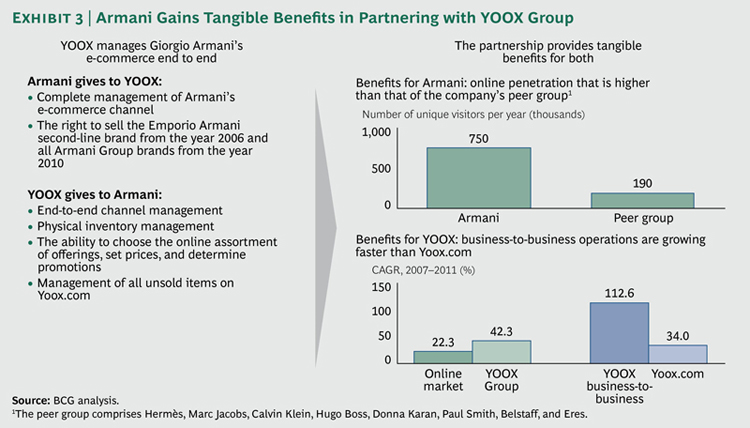
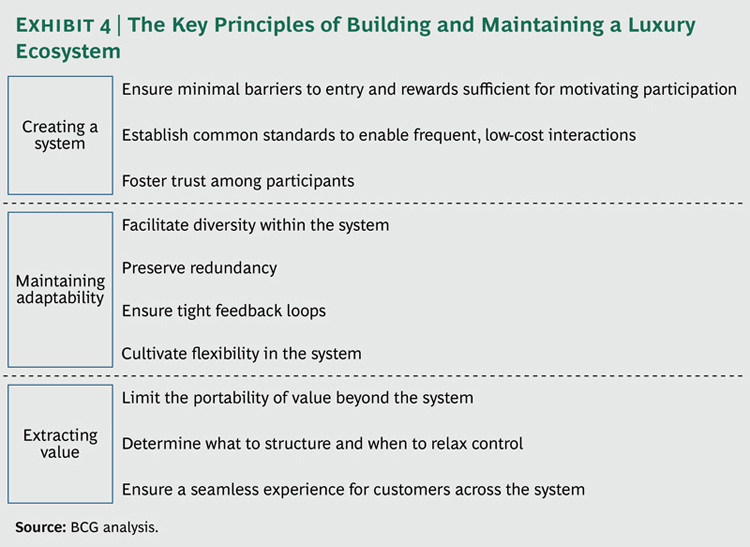
Luxury-Ecosystems-ex1_large_tcm80-136287 Luxury-Ecosystems-ex2_large_tcm80-136292 Luxury-Ecosystems-ex3_large_tcm80-136281 Luxury-Ecosystems-ex4_large_tcm80-136284

Overview

Not so long ago, Nokia was a powerhouse in the mobile-phone business—arguably the industry’s dominant brand worldwide, with a market capitalization that had made the company one of the largest blue chips in Europe.

Then along came Apple.

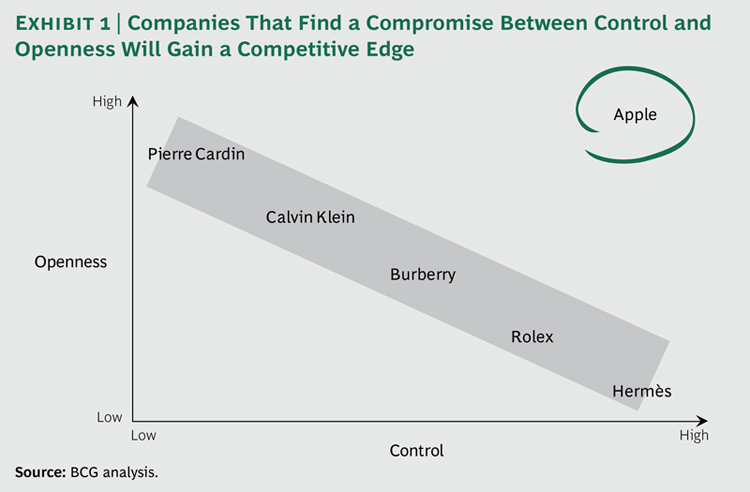
The iPhone shattered the prevailing ideas of value creation in personal mobile communications. Apple was not just making and selling a product, it was bringing together a range of attractive offerings from a whole universe of partners, large and small. Yet despite the size and diversity of this universe, the offerings were tightly integrated: Apple was guaranteeing a homogenous and pleasing experience for the customer—a crucial factor in its success. Read more of this post