Integrating Suppliers: Moving Impact from Lean Programs to the Next Level

Integrating Suppliers: Moving Impact from Lean Programs to the Next Level
by Thomas Frost, Holger Gottstein, Christian Greiser, and Robert Tevelson

JUNE 04, 2013

Overview

Integrating-Suppliers-ex1_large_tcm80-135656 Integrating-Suppliers-ex-sidebar_large_tcm80-135652 Integrating-Suppliers-ex2_large_tcm80-135660 Integrating-Suppliers-ex3_large_tcm80-135663 Integrating-Suppliers-ex4_large_tcm80-135666

Many manufacturers that have applied lean concepts to their operations find that although they do achieve significant savings, their production costs remain high. This is, in most cases, attributable to material costs, which, depending on industry can range from 60 to 80 percent of total production costs. (See Exhibit 1.)

The challenge for these manufacturers is to discover how to extend lean concepts and practices beyond the walls of their own factories. The most effective way is to forge links with key suppliers on the basis of lean principles. In addition to yielding cost savings, this kind of collaboration can form the foundation of a profitable strategic partnership. More than simply an approach to eliminating waste in procurement, creating such relationships means leveraging existing lean techniques to the fullest and using them to transform a manufacturer’s entire supply chain. Read more of this post

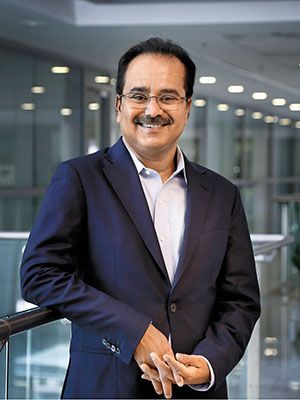
Samvardhana Motherson Group’s VC Sehgal says it is a mistake building a business solely with the idea that your children can inherit it

VC Sehgal: We entrepreneurs are a bit insecure, that’s why we control

by VC Sehgal | Jun 13, 2013

topimg_21837_vc_sehgal_300x400

Samvardhana Motherson Group’s VC Sehgal says it is a mistake building a business solely with the idea that your children can inherit it

VC Sehgal is the chairman of the $5.4 billion Samvardhana Motherson Group, one of India’s largest auto components companies. In his 40-year-long career, Sehgal has dabbled in various businesses—silver trading, selling housing cables and polyester chips. But he finally found his calling in manufacturing wiring harness for automobiles. An Australian citizen, Sehgal travels more than 300 days in a year meeting customers across the globe

The year 1994-95 was very interesting because there was a directive from the Indian government which wanted us to localise fast. We had to travel to Japan a lot because our main collaborates [Sumitomo] were there and I found that travelling was increasing more and more. Then we had Maruti requesting us to localise very intricate parts which were under patents, so there were a lot of conflicts and I had to also travel a lot to Europe and look for second sources. Because I was travelling a lot, I appointed one person who would be responsible for the whole company and every aspect/problem would first be reported to him  Read more of this post

India’s Persistent Systems’ founder Anand Deshpande: My employees asked me, was it my company or our company?

Anand Deshpande: My employees asked me, was it my company or our company?

by Anand Deshpande | Jun 10, 2013

topimg_21823_anand_deshpande_600x400

Anand Deshpande is founder, CEO and managing director of Persistent Systems. Prior to setting up the Pune-based company in 1990, he worked at Hewlett-Packard Laboratories in Palo Alto, California. Every month, he spends about two weeks meeting his customers in the US. Ram Charan, Jim Collins, Clayton Christensen and CK Prahalad are among his favourite management thinkers

Anand Deshpande realised he needed to make a transition from a programmer to a sales manager in order to grow Persistent

Before I started persistent systems, i was doing research work at HP Labs in Palo Alto. When I came back to India, my ambition was to start a high-end, tech-focussed company that wouldn’t compromise my résumé in some sense. I started Persistent in 1990 and we were working on some interesting projects. The idea was to be very niche. For the first three or four years, we were doing that kind of work. I felt I achieved what I had intended to. And I was doing what I liked doing. After three or four years, some employees told me, “Fine. This is what you are doing for yourself but what about us?” In effect, their question was, “Is this your company or is this our company?”   Read more of this post

Dr Reddy’s GV Prasad: You can never have a company totally dependent on one person

GV Prasad: You can never have a company totally dependent on one person

by GV Prasad | Jun 12, 2013

topimg_21829_gv_prasad_300x400

Except for a brief period when GV Prasad ran his family’s construction business, he has been in the pharmaceutical industry for over 25 years. Following the merger of Cheminor Drugs, where he was the managing director, with Dr Reddy’s Laboratories (DRL) in 2000, Prasad became the executive vice chairman and chief executive officer of the merged entity. In April 2013, with the passing away of Dr K Anji Reddy, Prasad became the chairman of DRL. He lives in Hyderabad and, when time permits, ind

Dr Reddy’s Laboratories’ GV Prasad says that an organisation must be able to sustain changing ownership, technologies, products and strategies

When I came back to india after graduation in the us, I knew I wanted to start a business but what that would be I didn’t know. I joined the family business for a while and then set up a bulk drugs company, Benzex Labs, with my parents’ money. It was 1985, also the year I got married. I ran the business for over a year. Unfortunately, it didn’t do very well and Dr Reddy’s Laboratories (DRL), which was in the neighbourhood and expanding very aggressively, wanted to acquire it. And acquire it did, after my father decided with Dr [K Anji] Reddy that pharmaceuticals was a business he wanted to exit. I wasn’t part of that decision though.  Read more of this post

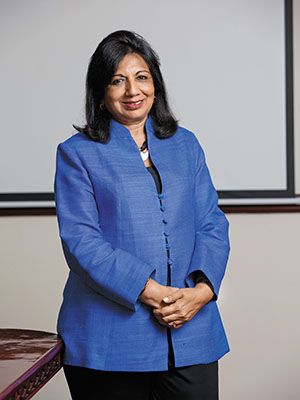
Kiran Mazumdar-Shaw talks about Biocon’s fallout with Pfizer which was perhaps the company’s most significant event since its insulin analogues breakthrough

Kiran Mazumdar-Shaw: Instead of having bad blood with a good company,I decided to part amicably

by Kiran Mazumdar-Shaw | Jun 6, 2013

topimg_21813_kiranmazumdar_mk_300x400

Kiran Mazumdar-Shaw is the chairman and managing director of Biocon, a company she founded in 1978. Over the years, she’s transformed the industrial enzyme company into an integrated biopharmaceutical business that focuses on key therpeutic areas of diabetes, oncology and auto-immune diseases. Along the way, she also set up two subsidiaries—Syngene and Clinigene

Kiran Mazumdar-Shaw talks about Biocon’s fallout with Pfizer which was perhaps the company’s most significant event since its insulin analogues breakthrough

Biocon’s journey in the insulin space was itself an inflection point at that time. When we chose to transform ourselves from enzymes to a biopharmaceutical company, we decided to leverage the existing enzyme technologies. Pichia technology was one of them—a platform to which a simple peptide like insulin lent itself easily. We could have done many things with it, developed many proteins but we chose insulin. The rationale was simple: Diabetes is a pandemic, there’s unmet need in India, and the cost of therapy [is high]. Read more of this post

“Tmura is the Hebrew word for change or metamorphosis and also means value for money; it is also a play on the word truma”, which means donation”

An unexpected winner in the Waze exit: a not-for-profit Israeli fund

Founded in attempt to entice the high-tech community to get more involved in Israeli non-profits, the Tmura fund is slated to receive $1.5 million from Waze’s sale to Google.

By Inbal Orpaz | Jun.12, 2013 | 4:58 PM |  2

The enormous exit for Waze, the Israeli navigation app start-up sold to Google for $1.03 billion, has created long list of new millionaires – including the company’s management. Founder Ehud Shabtai, who is also the chief technology officer, will receive $63 million. Amir Shinar, founder and head of research and development, will receive $51 million. Uri Levine, founder and president, will receive $30 million.

One of those profiting is a bit unusual in high tech-terms: Tmura – The Israeli Public Service Venture Fund, founded by Yadin Kaufmann. Read more of this post

The fall of Israel’s Better Place: When vision isn’t enough; From the very beginning, the electric-car company lacked a solid business model. Its collapse is sad, but no surprise

The fall of Israel’s Better Place: When vision isn’t enough

From the very beginning, the electric-car company lacked a solid business model. Its collapse is sad, but no surprise.

By Ora Coren | May.26, 2013 | 5:41 PM |  5

At a lecture three years ago Shai Agassi, the founder of the Better Place electric car venture, accused the state of Israel of lacking vision.

The state had refused to give him a $150 million grant to build a factory making electric cars in Beit She’an, Agassi griped. It also declined to offer him a gift in the form of a large plot of land in the Negev to generate solar power. Read more of this post

What 10-Foot Noodles Have to Do with Competitive Advantage

What 10-Foot Noodles Have to Do with Competitive Advantage

by Scott Anthony  |  12:00 PM June 12, 2013

“A properly integrated business model forms the essence of a company’s competitive advantage,” my colleague Mark Johnson advises. That quote ran through my head as I watched a young man in a track suit prance around my table twirling a 10-foot noodle.

I was in one of the Shanghai locations of a chain of hot pot restaurants called Hai Di Lao. If anything deserves to be commoditized, it would be a hot pot restaurant. The essence of the meal is cooking food yourself in close-to-boiling broth. The popularity of that cooking style in many parts of China means many nondescript restaurants compete ferociously for customers. Somehow in this crowded field, Hai Di Lao commands fierce loyalty; has expanded to 75 locations across China, Singapore, and soon the U.S.; and generates about $500 million a year in revenue. Read more of this post

Why Transparency Is Your Biggest Untapped Competitive Advantage

WHY TRANSPARENCY IS YOUR BIGGEST UNTAPPED COMPETITIVE ADVANTAGE

FOR BUFFER’S LEO WIDRICH, IT’S MUCH MORE THAN A BUZZWORD. SO WHY ISN’T EVERYONE EMBRACING IT?

BY: LEO WIDRICH

“Default to transparency” is one of our deepest values at Buffer and it’s been absolutely instrumental in our growth from making nothing just 2 years ago to making over $1 million a year today.

EMPLOYEES SHARE DEEP PERSONAL CONVERSATIONS ABOUT HOW THEY’RE REALLY DOING AND FEELING THAT START FROM SEEING HOW THEIR TEAMMATE IS SLEEPING.

To us, transparency isn’t a buzzword–it’s a huge competitive advantage when everyone knows what everyone is working on and getting done. It seems obvious, right? But I’m constantly shocked by how many companies say they understand the importance of transparency but don’t make any steps to make their companies more transparent. Read more of this post

Buffett’s 28-Year-Old Go-To Executive Tracy Britt

June 11, 2013, 2:59 p.m. ET

A Rising Star Emerges at Berkshire

By ANUPREETA DAS

OB-XU634_0611br_G_20130611130032

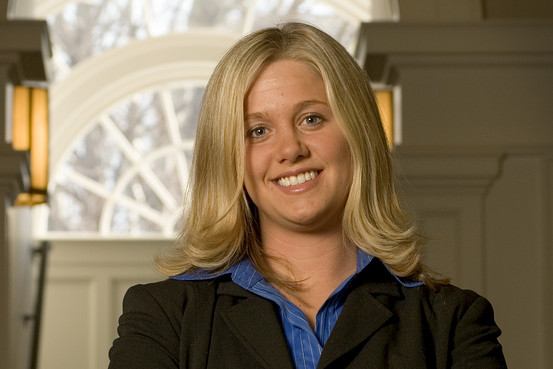
When Tracy Britt arrived in Omaha, Neb., in 2009 to meet with Warren Buffett, she brought a Harvard M.B.A., a glittering resume and a boatload of ambition. But she also brought the famed investor a gift to highlight their shared Midwestern roots: a bushel of corn and a batch of tomatoes.

The seed Ms. Britt planted that day yielded quick results: a job for Ms. Britt as Mr. Buffett’s financial assistant at Berkshire Hathaway Inc. BRKB -1.42% Almost four years later, it has blossomed further, with Ms. Britt emerging as one of Mr. Buffett’s top lieutenants and even serving as chairman of four companies within his $284 billion conglomerate.

Ms. Britt, now 28 years old and more than five decades younger than her boss, occupies a role unlike any other within Berkshire. With an office next to Mr. Buffett’s at Berkshire’s headquarters, Ms. Britt helps with financial research, accompanies Mr. Buffett to meetings and occasionally drives him around town. The billionaire gradually tacked on additional responsibilities. Read more of this post

Founders find it tough to choose someone to run their business

June 11, 2013 4:58 pm

Let the right one in

By Emma Jacobs

Kenny Wilson had a blunt conversation with Cath Kidston, founder of the eponymous floral home furnishings and fashion business, before he took over two years ago as chief executive. “I said ‘If you don’t want a CEO then don’t hire me’,” he says.

Stating the obvious? Perhaps. But Mr Wilson knew all too well that many entrepreneurs who appoint someone else as chief executive are incapable of actually ceding control. John Mullins, as­sociate professor of management practice at London Business School, ob­serves: “Founders let go with difficulty. People’s identity is subsumed by the business.” Read more of this post

The wrongs that write a business plan; What to avoid if you want to raise finance

June 11, 2013 4:36 pm

The wrongs that write a business plan

By Luke Johnson

What to avoid if you want to raise finance

Iread two or three business plans a week. I’ve developed a checklist of irritating elements that entrepreneurs are best advised to avoid if they want to succeed in raising finance.

● Complicated and aggressive non-disclosure and confidentiality agreements There is often an inverse relationship between the length of the NDA and the scale of the project. While entrepreneurs should try to protect their intellectual property, these contracts are really more of a ritual than of any practical use.

● Advisers taking a disproportionate fee Investors don’t want to see a material amount of their money going to pay corporate financiers. I was presented with a plan last year where the adviser stood to collect 20 per cent of the funds raised. It put me off the proposition. Read more of this post

Dropbox Founder Drew Houston’s MIT Commencement Address: ‘I stopped trying to make my life perfect, and instead tried to make it interesting.’

Drew Houston’s Commencement address
20130607150520-0

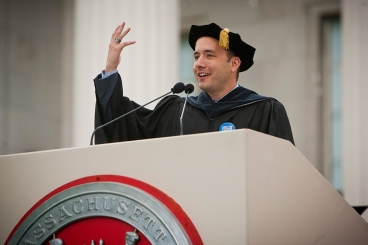
Drew Houston ’05 displays his Brass Rat during his Commencement Address.
‘I stopped trying to make my life perfect, and instead tried to make it interesting.’

June 7, 2013

Below is the prepared text of the Commencement address by Drew Houston ’05, the CEO of Dropbox, for MIT’s 147th Commencement held June 7, 2013.

Thank you Chairman Reed, and congratulations to all of you in the class of 2013.
I’m so happy to be back at MIT, and it’s an honor to be here with you today. I still wear my Brass Rat, and turning this ring around on graduation day is still one of the proudest moments of my life.
There are a lot of reasons why this is a special day, but the reason I’m so excited for all of you is that today is the first day of your life where you no longer need to check boxes.
For your first couple decades, success in life has meant jumping through one hoop after another: get these test scores, get into this college. Take these classes, get this degree. Get into this prestigious institution so you can get into the next prestigious institution. All of that ends today.
The hard thing about planning your life is you have no idea where you’re going, but you want to get there as soon as possible. Maybe you’ll start a company, or cure cancer, or write the great American novel. Or who knows? Maybe things will go horribly wrong. I had no idea.
Being up here in robes and speaking to all of you today wasn’t exactly part of my plan seven years ago. In fact, I’ve never really had a grand plan — and what I realize now is that it’s probably impossible to have one after graduation, if ever.
I’ve thought a lot about what’s different about the life you’re beginning today. I’ve thought about what I would do if I had to start all over again. What got you here was basically being smart and working hard. But nobody tells you that after today, the recipe for success changes. So what I want to do is give you a little cheat sheet, the one I would have loved to have had on my graduation day.
If you were to look at my cheat sheet, there wouldn’t be a lot on it. There would be a tennis ball, a circle, and the number 30,000. I know this doesn’t make any sense right now, but bear with me.
I started my first company in a Chili’s when I was 21. My cofounder, Andrew Crick, and I had never done this before. We were wondering if you needed to wear a suit to City Hall, or if you needed to make a company seal for stamping important documents. It turns out you can just go online and fill out a form and be done in about two minutes. It was a little anti-climactic, but we were in business. Over onion strings we decided that our company was going to make a new kind of online course for the SAT. Most kids back then were still using these old-school 800-page books, and the other online prep courses weren’t very good. We called it Accolade, an SAT vocab word meaning an award of distinction. Well, actually, we called it “The Accolade Group, LLC” which we thought sounded a lot more impressive.
I stopped at Staples on the way home to pick up some card stock. Clearly, the most important order of business was to Photoshop a logo and print out some business cards that said “Founder” on them. The next order of business was to hand them out at conferences, and tell girls “why yes, I do have a company.” It was awesome.
But the best part was learning all kinds of new things. I lived in my fraternity house every summer, and up on the fifth floor there’s a ladder that goes up to the roof. I had this green nylon folding chair that I’d drag up there along with armfuls of business books I bought off Amazon and I’d spend every weekend reading about marketing, sales, management and all these other things I knew nothing about. I wasn’t planning to get my MBA on the roof of Phi Delta Theta, but that’s what happened.
A couple years later, things started going downhill. I felt like I had to paddle harder and harder to make progress, and at some point I just snapped and couldn’t deal with any more math questions about parallel lines or the train leaving Memphis at 3:45. I figured something was wrong with me. I felt guilty for being so unproductive. Starting a company had been my dream, and, well, maybe I didn’t have what it takes after all.
So I took a little break. Of course, if you’re in course 6, sometimes “taking a break” means writing a poker bot. For those of you who don’t know what a poker bot is, what happens when you play poker online is first, you sit for hours and click buttons, and then you lose all your money. A poker bot means you can have your computer lose all your money for you.
But it was a fascinating challenge. I was possessed. I would think about it in the shower. I would think about it in the middle of the night. It was like a switch went on — suddenly I was a machine.
In the middle of all this, my mom and dad wanted all of us to come up to New Hampshire to spend a family weekend together. But I really wanted to keep working on my poker bot. So I pull up in my Accord and open the trunk, and next I’m dragging all my computer stuff and all these wires into our little cottage. The dining room table wasn’t big enough so I started moving all the pots and pans off the stove to make room for all my monitors. This time it was my mom who thought something was wrong with me. She was convinced I was going to jail.
I was going to say work on what you love, but that’s not really it. It’s so easy to convince yourself that you love what you’re doing — who wants to admit that they don’t? When I think about it, the happiest and most successful people I know don’t just love what they do, they’re obsessed with solving an important problem, something that matters to them. They remind me of a dog chasing a tennis ball: their eyes go a little crazy, the leash snaps and they go bounding off, plowing through whatever gets in the way. I have some other friends who also work hard and get paid well in their jobs, but they complain as if they were shackled to a desk.
The problem is a lot of people don’t find their tennis ball right away. Don’t get me wrong — I love a good standardized test as much as the next guy, but being king of SAT prep wasn’t going to be mine. What scares me is that both the poker bot and Dropbox started out as distractions. That little voice in my head was telling me where to go, and the whole time I was telling it to shut up so I could get back to work. Sometimes that little voice knows best.
It took me a while to get it, but the hardest-working people don’t work hard because they’re disciplined. They work hard because working on an exciting problem is fun. So after today, it’s not about pushing yourself; it’s about finding your tennis ball, the thing that pulls you. It might take a while, but until you find it, keep listening for that little voice.
Let’s go back to the summer after my graduation, the summer you’re about to have. One of my fraternity brothers, Adam Smith, and his friend Matt Brezina were starting a company and we decided it would be fun for all of us to work together out of one apartment.
It was the perfect summer — well, almost perfect. The air conditioner was broken so we were all coding in our boxers. Adam and Matt were working around the clock, but as time went on they kept getting pulled away by potential investors who would share their secrets and take them on helicopter rides. I was a little jealous — I had been working on my company for a couple years and Adam had only been at it for a couple months. Where were my helicopter rides?
Things only got worse. August rolled around and Adam gave me the bad news: they were moving out. Not only was my supply of Hot Pockets cut off, but they were off to Silicon Valley, where the real action was happening, and I wasn’t.
Every now and then I’d give Adam a call and hear how things were going. Things were always pretty good. “We met with Vinod this afternoon,” he would tell me. Vinod Khosla is the billionaire investor and cofounder of Sun Microsystems. Then Adam dropped the bomb. “He’s going to give us five million dollars.”
I was thrilled for him, but it was a shock for me. Here was my faithful beer pong partner and my little brother in the fraternity, two years younger than me. I was out of excuses. He was off to the Super Bowl and I wasn’t even getting drafted. He had no idea at the time, but Adam had given me just the kick I needed. It was time for a change.
They say that you’re the average of the 5 people you spend the most time with. Think about that for a minute: who would be in your circle of 5? I have some good news: MIT is one of the best places in the world to start building that circle. If I hadn’t come here, I wouldn’t have met Adam, I wouldn’t have met my amazing cofounder, Arash, and there would be no Dropbox.
One thing I’ve learned is surrounding yourself with inspiring people is now just as important as being talented or working hard. Can you imagine if Michael Jordan hadn’t been in the NBA, if his circle of 5 had been a bunch of guys in Italy? Your circle pushes you to be better, just as Adam pushed me.
And now your circle will grow to include your coworkers and everyone around you. Where you live matters: there’s only one MIT. And there’s only one Hollywood and only one Silicon Valley. This isn’t a coincidence: for whatever you’re doing, there’s usually only one place where the top people go. You should go there. Don’t settle for anywhere else. Meeting my heroes and learning from them gave me a huge advantage. Your heroes are part of your circle too — follow them. If the real action is happening somewhere else, move.
The last trap you might fall into after school is “getting ready.” Don’t get me wrong: learning is your top priority, but now the fastest way to learn is by doing. If you have a dream, you can spend a lifetime studying and planning and getting ready for it. What you should be doing is getting started.
Honestly, I don’t think I’ve ever been “ready.” I remember the day our first investors said yes and asked us where to send the money. For a 24 year old, this is Christmas — and opening your present is hitting refresh over and over on bankofamerica.com and watching your company’s checking account go from 60 dollars to 1.2 million dollars. At first I was ecstatic — that number has two commas in it! I took a screenshot — but then I was sick to my stomach. Someday these guys are going to want this back. What the hell have I gotten myself into?
You already know this feeling: at MIT we call it “drinking from the firehose.” It’s about as fun as it sounds, and all of us have the internal bleeding to prove it. But we’ve also learned it’s good for you. Today, one valve shuts off. Now you need to go out and find another firehose.
Dropbox has been mine. As you might expect, building this company has been the most exciting, interesting and fulfilling experience of my life. What I haven’t really shared is that it’s also been the most humiliating, frustrating and painful experience too, and I can’t even count the number of things that have gone wrong.
Fortunately, it doesn’t matter. No one has a 5.0 in real life. In fact, when you finish school, the whole notion of a GPA just goes away. When you’re in school, every little mistake is a permanent crack in your windshield. But in the real world, if you’re not swerving around and hitting the guard rails every now and then, you’re not going fast enough. Your biggest risk isn’t failing, it’s getting too comfortable.
Bill Gates’s first company made software for traffic lights. Steve Jobs’s first company made plastic whistles that let you make free phone calls. Both failed, but it’s hard to imagine they were too upset about it. That’s my favorite thing that changes today. You no longer carry around a number indicating the sum of all your mistakes. From now on, failure doesn’t matter: you only have to be right once.
I used to worry about all kinds of things, but I can remember the moment when I calmed down. I had just moved to San Francisco, and one night I couldn’t sleep so I was on my laptop. I read something online that said “There are 30,000 days in your life.” At first I didn’t think much of it, but on a whim I tabbed over to the calculator. I type in 24 times 365 and — oh my God, I’m almost 9,000 days down. What the hell have I been doing?
(By the way: you guys are 8,000 days down.)
So that’s how 30,000 ended up on the cheat sheet. That night, I realized there are no warmups, no practice rounds, no reset buttons. Every day we’re writing a few more words of a story. And when you die, it’s not like “here lies Drew, he came in 174th place.” So from then on, I stopped trying to make my life perfect, and instead tried to make it interesting. I wanted my story to be an adventure — and that’s made all the difference.
My grandmother is here today, and next week we’ll be celebrating her 95th birthday. We talk more on the phone now that I’ve moved out to California. But one thing that’s stuck with me is she always ends our phone calls with one word: “Excelsior,” which means “ever upward.”
And today on your commencement, your first day of life in the real world, that’s what I wish for you. Instead of trying to make your life perfect, give yourself the freedom to make it an adventure, and go ever upward. Thank you.
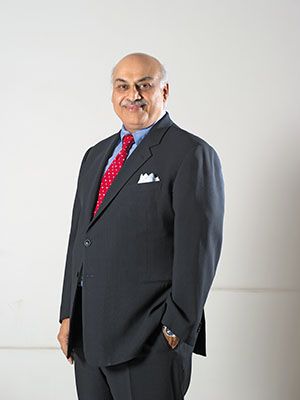
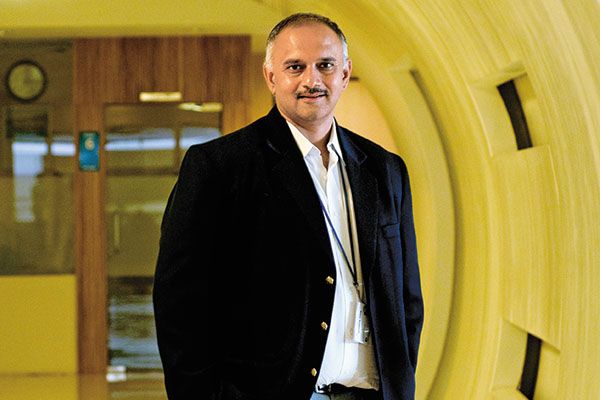
Chobani Yogurt’s Hamdi Ulukaya, the new World Entrepreneur of the Year, likened entrepreneurship to a quest, “like crossing the ocean or climbing Mount Everest: When you put yourself through this journey, you find out who you really are.”

New ‘World Entrepreneur’ has a beef with Canada

Rick Spence | 13/06/08 | Last Updated: 13/06/10 11:33 AM ET

0610chobani2

Hamdi Ulukaya, founder and CEO of New York State yogurt producer Chobani Inc., was named World Entrepreneur of the Year 2013.

MONTE CARLO — The newly selected World Entrepreneur of the Year has a problem. And it’s Canada.

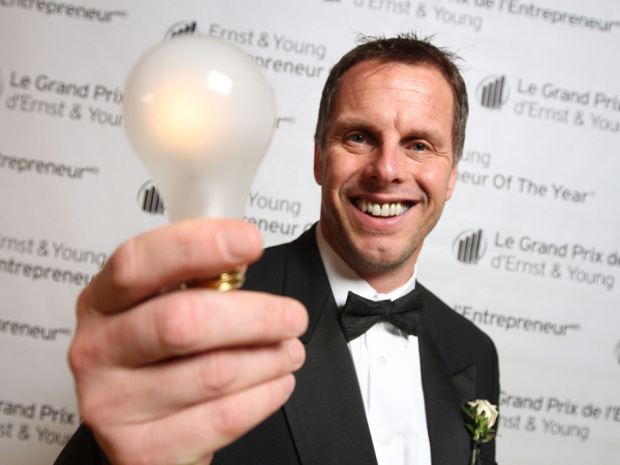
At a posh Monaco banquet hall on June 8 overlooking the Mediterranean Sea, Hamdi Ulukaya, founder and CEO of New York State yogurt producer Chobani Inc., was named World Entrepreneur of the Year 2013. The world event, founded by Ernst & Young, brought together the winners of 47 national Entrepreneur of the Year programs in a global playoff adjudicated by a panel of seven experienced business owners representing six continents.

The judges believed that Ulukaya’s story represents the best rags-to-riches aspects of global entrepreneurship. Born to a dairy-farming family in east Turkey, Ulukaya moved to upstate New York in 1994, to learn English and attend business school. He never finished his studies, but he started a business producing feta cheese. Read more of this post

Leadership: Art of delegation provides key to success; Such enlightenment, however, is usually only gained by a founder through a painful learning process

June 11, 2013 12:13 am

Leadership: Art of delegation provides key to success

By Jonathan Moules

Entrepreneurship is often presented as the achievement of individuals, defying the odds and proving that their idea or way of doing business was superior to what went before. But there is a problem with this image of entrepreneurial champions, because the world’s most successful companies have never been built on the achievements of just one person. It is a misunderstanding partly perpetuated by the media, profiling individual founders as if they alone created their companies’ successes. Some of these people no doubt believe their own PR, but the most successful are usually those with enough humility to admit their need to step back from running everything to let others take charge and grow their operations. The celebrated British entrepreneur, Sir Richard Branson, may be among the world’s best self-publicists, but he also readily admits that his most valuable skill is an ability to find good people to run the individual businesses within his Virgin empire. Such enlightenment, however, is usually only gained by a founder through a painful learning process. Read more of this post

Europe’s Top 25 Businesses and Leaders 2013

EUROPE’S TOP 25 BUSINESSES AND LEADERS 2013

ARTICLE | 10 JUNE, 2013 10:09 AM

The winners of the Families in Business Awards, in association with Societe Generale Private Banking, are soon to be announced, so take a look at the achievements of CampdenFB’s shortlisted candidates. The award ceremony will take place tomorrow, 11 June, at the Cercle National des Armées, in Paris.

Brembo Group
• FAMILY: Bombassei
• SECTOR: Automotive
• COUNTRY: Italy

Since Brembo was founded in Bergamo in 1961 by Emilio Bombassei and Italo Breda – along with current group president Alberto Bombassei, then aged 20 – it has supplied brakes to Aston Martin, Bugatti, Daimler, Ferrari, General Motors, Lamborghini and Porsche, and its products are sold in 70 countries. It has supplied brakes to Formula One cars since 1975. Celebrating its 50th anniversary in 2011 seems to have given the 58% family-owned northern Italian manufacturer a boost: net profits in 2012 were 81% higher than the previous year at €77.8 million, on sales of €1.4 billion. It now has more than 6,000 employees in 15 different countries. Read more of this post

Transferring the core values of the family is one of the key challenges facing a family-owned business in ensuring its long-run viability

Values transfer keep family firms afloat

Kwanchai Rungfapaisarn 
The Nation June 11, 2013 1:00 am

B Grimm head outlines fundamentals to sustainability

Transferring the core values of the family is one of the key challenges facing a family-owned business in ensuring its long-run viability.
Harald Link, chairman of B Grimm and a member of the third generation of the founding family, said yesterday that the core values of his family applied by or transferred from generation to generation are the desire to contribute, caring for ordinary people and compassion in daily life. 
“This means that we make a strong effort to be caring, reliable and responsible towards all people we deal with in our daily lives, be happy for other people’s successes and invest our time and money in social development projects that further education, culture, the environment, sports, religion and care for those in need,” he said. Read more of this post

Bamboo Innovator mentioned on TEDxWallStreet

TEDxWallStreet

Byron Wien’s 20 Lessons Learned Throughout His Investing Career: Read all the time

Byron Wien’s 20 Lessons Learned Throughout His Investing Career

Posted: 10 Jun 2013 11:20 AM PDT

MarketFolly.com

Byron Wien is Vice Chairman at Blackstone and prior to that worked at hedge fund Pequot Capital and Morgan Stanley.  Earlier this year, he released an addendum to his usual commentary about lessons he’s learned in 80 year investing career.  His words of wisdom are below:
Byron Wien’s 20 Lessons Learned
1.  Concentrate on finding a big idea that will make an impact on the people you want to influence.  The Ten Surprises, which I started doing in 1986, has been a defining product.  People all over the world are aware of it and identify me with it.  What they seem to like about it is that I put myself at risk by going on record with these events which I believe are probable and hold myself accountable at year-end.  If you want to be successful and live a long, stimulating life, keep yourself at risk intellectually all the time. Read more of this post

Amazing baby photos!

Dad’s amazing flying baby photos

2013-06-09 02:54:17 GMT2013-06-09 10:54:17(Beijing Time)  SINA.com

That’s one busy baby! Emil Nyström, a Sweden-based photographer has created a photo series starring his infant daughter, doctoring the images so she’s placed in all sorts of crazy scenarios—soaring through the air on the back of a plane, slicing fruit with a katana sword, fixing a car engine—you know, all the stuff babies do. “My ideas and inspiration come from different places,” Nyström said. “Luckily, I haven’t had too many challenges. The main thing is to prepare the setup well. And because my baby isn’t too good at long working hours, if i get 15 minutes [of shots] I’ve had a good day.” And your day will be better after checking out these photos.

U169P5029T2D597759F24DT20130609105417U169P5029T2D597759F26DT20130609105417U169P5029T2D597759F28DT20130609105417U169P5029T2D597759F31DT20130609105417U169P5029T2D597759F32DT20130609105417U169P5029T2D597759F34DT20130609105417U169P5029T2D597759F36DT20130609105417

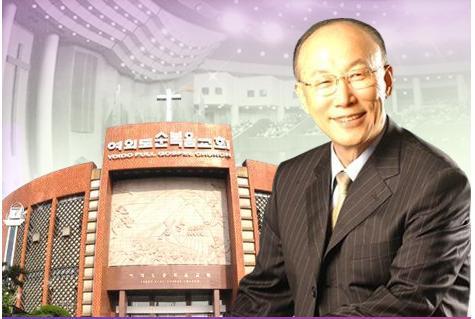
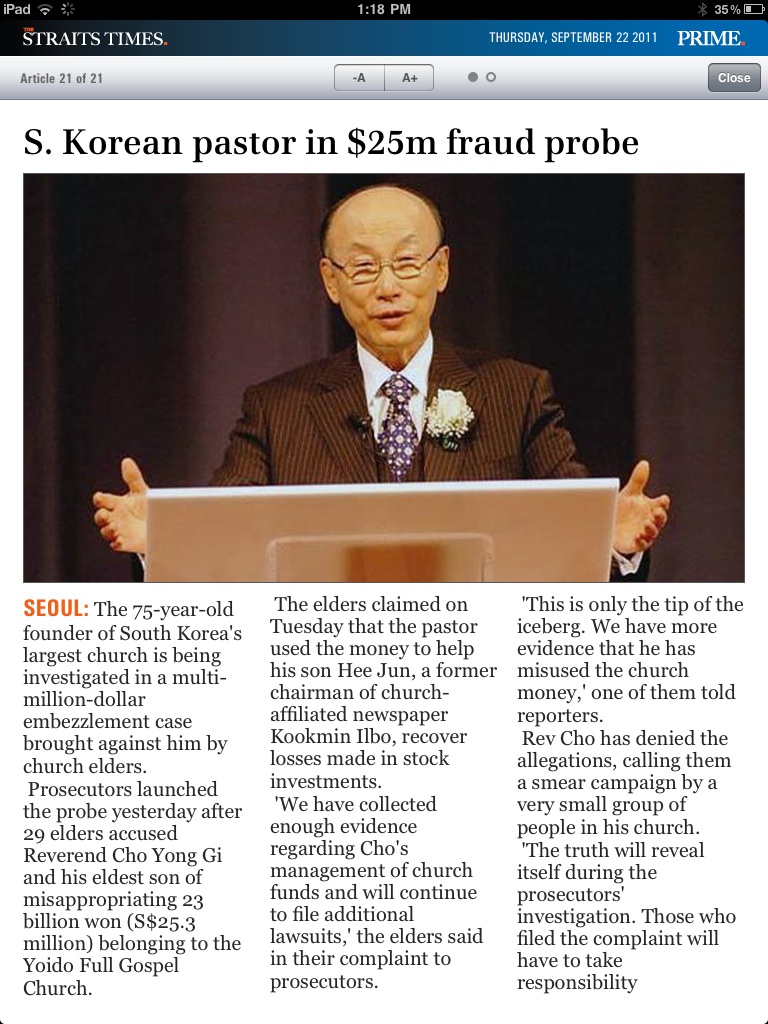
Korean prosecutors will chase the leader of world’s largest Christian congregation for allegedly stealing tens of billions of won in worshippers’ money and underpaying taxes

2013-06-09 16:50

Pastor Cho in trouble

Korean Christianity’s illness befalls Full Gospel Church 

By Kim Tong-hyung

Prosecutors will chase the leader of world’s largest Christian congregation for allegedly stealing tens of billions of won in worshippers’ money and underpaying taxes.
Their decision to indict Cho Yong-gi, founder and pastor of the Yoido Full Gospel Church, on Saturday was another kick in the teeth for the country’s mighty but increasingly unpopular protestant church, frequently described as greedy, dishonest and socially regressive. Cho and some members of the church’s senior leadership have fallen out spectacularly in recent years as the 77-year-old minister came under constant accusations of corruption and nepotism. A group of church elders in 2011 filed a complaint with prosecutors claiming that Cho diverted more than 20 billion Korean won (about $18 million) in the church’s fund to acquire the stocks of a company owned by his son, Hee-jun, at prices dramatically higher than market value in 2002. The younger Cho, former chairman of the church-affiliated newspaper Kookmin Ilbo, currently serving a jail term for an unrelated financial crime, had sustained heavy losses from stock investments then.

pastor davidchoyonggicho_part174275284Yoido-Full-Gospel-Church-Seoulseo51 Read more of this post

Embracing your Dragon Boat Festival holiday which commemorates the death of Qu Yuan, an upright minister who found it impossible to put into practice those ambitions and ideals in a corrupt era

Embracing your Dragon Boat Festival holiday

F201306081123062392330573

Hometown of Qu Yuan prepare to mark upcoming Dragon Boat Festival

The 5th day of the 5th month of the lunar year is an important day for the Chinese people. The day is called Duan Wu Festival, or Dragon Boat Festival, celebrated everywhere in China. This festival dates back to about 2,000 years ago with a number of legends explaining its origin. The best-known story centers on a great patriotic poet named Qu Yuan. Read more of this post

Why have a ‘culture’ and what value does it add?

Why have a ‘culture’ and what value does it add?

Robert Hooijberg, Dan Denison and Nancy Lane | Business | Sat, June 08 2013, 3:29 PM

Paper Edition | Page: 16

Managers regularly ask us whether we think it is a good idea for their organizations to have a culture and what value it might add. The question is interesting because it presumes a company does not already have a culture. This is a myth.

All organizations inevitably have a culture; they do not have a choice. Its culture consists of its values and principles as they are expressed through management and employee behaviors and the organization’s systems and processes. An organization’s culture often reflects the values of its founders: Whether it’s Sam Walton of WalMart or Steve Jobs for Apple, one can clearly see the impact its founder and his or her values on what happens in that organization.  Read more of this post

How to Demotivate Your Best Employees; Many companies hand out awards such as “employee of the month,” but do they work to motivate performance? Not really, says professor Ian Larkin. In fact, they may turn off your best employees altogether

How to Demotivate Your Best Employees

by Dina Gerdeman | Jun 10, 2013

Many companies hand out awards such as “employee of the month,” but do they work to motivate performance? Not really, says professor Ian Larkin. In fact, they may turn off your best employees altogether

It would seem to make sense that when companies recognize their workers with awards, they are likely to see a boost in morale and perhaps even inspire them to work harder.

It turns out that sometimes rewarding employees for good behavior can actually backfire, leading to a drop in motivation and productivity.  Read more of this post

Thousands of people attended prayers to celebrate what would have been the 92nd birthday of the late Indonesian President Suharto in Solo, Central Java

Suharto’s Birthday Keeps Discussion Alive

By Imron Rosyid Taufikur on 11:36 pm June 9, 2013.

SAN7046-1024x695

A guide gives a tour around Suharto’s memorial park in Bantul, Yogyakarta, which was unveiled on Saturday. (JG Photo/Aiera Maharani)

Thousands of people attended prayers to celebrate what would have been the 92nd birthday of the late President Suharto in Solo, Central Java, on Saturday. Read more of this post

Canada’s Entrepreneur of the Year, Alan Ulsifer of FYidoctors, has transformed the optical industry by creating a giant network of opticians who bring new products and diagnostics technology to clients from coast to coast

World entrepreneurs reaffirm business is the best route to change, reform and prosperity

Rick Spence | 13/06/09 | Last Updated: 13/06/07 2:09 PM ET

0607ulsifer

Canada’s Entrepreneur of the Year, Alan Ulsifer of FYidoctors, has transformed the optical industry by creating a giant network of opticians who bring new products and diagnostics technology to clients from coast to coast.

MONACO — “Entrepreneurs make the world work better.” That was the message from Ernst & Young’s incoming chief executive, Mark Weinberger, as he kicked off the World Entrepreneur of the Year conference last week in Monte Carlo. A full 47 countries (including first-time participants Uruguay and Serbia) sent their entrepreneurial champions to the combined competition/professional-development/networking session, and the enthusiasm was infectious. Read more of this post

The Turkish founder of Greek yoghurt business Chobani has been named the world’s best entrepreneur for building a $1bn (£640m) turnover business in less than six years

Yoghurt tycoon named world’s best entrepreneur

The Turkish founder of a Greek yoghurt business has been named the world’s best entrepreneur for building a $1bn (£640m) turnover business in less than six years.

Chobani, which launched in the UK last year, has annual sales of almost $1bn and around 3,000 staff.

By James Hurley

3:48PM BST 09 Jun 2013

Hamdi Ulukaya, who launched New York-based Chobani in 2007, won the Ernst & Young World Entrepreneur of the Year competition in Monte Carlo on Saturday night.

Mr Ulukaya, who was described by judges as the “personification of every immigrant’s American dream”, pipped 48 entrepreneurs to the prize, including Lance Uggla, founder of British financial information firm Markit. Chobani, now America’s biggest yoghurt business, began with just five employees after Mr Ulukaya bought a closed factory from US food giant Kraft using a government loan. Read more of this post

Washington Post Media’s Katharine Weymouth on why running the business is tough; “You have to fail. You have to make mistakes in order to have the successes”

June 9, 2013 1:50 pm

Katharine Weymouth, publisher, Washington Post Media

By Emily Steel

b57ef33aedf0400ec8f61be2eac990c5cn_image.size.washington-post

New edition: Katharine Weymouth is the fifth member of the Graham family to be publisher of Washington Post Media; From left: publisher Katharine Weymouth, former executive editor Ben Bradlee, former chairman and C.E.O. Katharine Graham, current executive editor Marcus Brauchli, and chairman and C.E.O. Don Graham.

Scotch-taped to the door of Katharine Weymouth’s office in the executive suite of theWashington Post headquarters are printouts of two photographs she took during a visit last year to Facebook’s Silicon Valley headquarters.

In bold, red, capital letters, one poster asks: “What would you do if you weren’t afraid?” The other reads: “Done is better than perfect.”

The proclamations are a constant reminder to the publisher of one of the US’s most venerable newspapers to embrace the Valley’s culture of endorsing failure – a somewhat foreign notion in the world of traditional media.

“You have to fail. You have to make mistakes in order to have the successes,” she says. “We in the media are not very forgiving of traditional organisations making mistakes.” Read more of this post

Family businesses ‘need to bridge generations’

Family businesses ‘need to bridge generations’

Watchiranont Thongtep
The Nation
June 10, 2013 1:00 am

Family businesses appear to be a key mainstream of global business. But bridging the gaps between the founding and new generations is important for long-term stability, an expert suggests.

“More than 80 per cent of the companies in the country were started and operate as a family business. Once the company grows up, a smooth transition in family management is crucial for sustainability,” Akachai Apisakkul, dean at the School of Business at the University of the Thai Chamber of Commerce (UTCC), told The Nation recently. Read more of this post

Taiwan’s Formosa Plastic/Petrochemicals Heir Claims $4 Billion of Assets Misappropriated by Late Patriarch’s Financial Advisers

Plastic Heir Claims $4 Billion of Assets Misappropriated

Winston Wong, the eldest son and estate administrator of deceased Taiwan petrochemicals tycoon Wang Yung-ching, sued two Hong Kong companies, claiming they misappropriated $4 billion in assets. Hong Kong’s High Court on May 2 named Wong as administrator of his father’s estate. Wong filed a lawsuit today against Jao Chien Fang and Chang Pen-yuan, formerly his father’s financial advisers, as well as Hua Yang Investment (H.K.) Ltd. and Winson International Investments Ltd. He accused the defendants of acting dishonestly to misappropriate his father’s assets, and is seeking their return plus interest. “This is an important and humbling moment as I stand in my father’s shoes as administrator and continue the efforts to identify and recover everything that should have been declared in his estate,” Wong said in a statement today. Today’s suit adds to litigation that Wong has filed in the U.S., Taiwan, Bermuda and Hong Kong over Wang’s holdings since his death in 2008 at the age of 91. The $4 billion held in Hong Kong includes power plants in China and real estate, with Wong estimating the total value of his late father’s assets at about $18 billion. Read more of this post