Where Were You in 1979? The final year of the 1970s witnessed epochal shifts in power that ushered in the modern world.

May 3, 2013, 2:57 p.m. ET

Where Were You in 1979?

The final year of the 1970s witnessed epochal shifts in power that ushered in the modern world.

By Jonathan Karl

The 1970s seem destined to be a justly forgotten decade—a time of disco, stagflation and little of the social upheaval that defined the previous decade or the epic global changes of the one that followed. But Christian Caryl sees more than malaise when he looks at the 1970s; he sees one of history’s great turning points. “With the passage of time,” Mr. Caryl writes in “Strange Rebels: 1979 and the Birth of the 21st Century,” “the 1970s begin to appear less like a sideshow than the main event.”

Strange Rebels

By Christian Caryl
Basic, 407 pages, $28.99

As the title of Mr. Caryl’s book suggests, his focus is 1979—a year that brought Iran’s Islamic revolution, the siege of the U.S. embassy in Tehran, the Soviet invasion of Afghanistan, and the emergence of four leaders who, he argues, changed the course of history: Margaret Thatcher, the Ayatollah Khomeini, Deng Xiaoping and Pope John Paul II.

It is hard to imagine figures as different as these or a year quite as grim as 1979, but suspend your disbelief for a moment. Mr. Caryl makes a fairly compelling case that this was a year when history made a sharp turn and that each leader set in motion the seismic changes that came to shape our world today: the fall of the Soviet Union, the rise of China and the emergence of radical Islam. In 1979, Mr. Caryl says, “the twin forces of markets and religion, discounted for so long, came back with a vengeance.”

In January of that year, China’s new paramount leader, Deng Xiaoping, made a nine-day visit to the United States. He was not technically China’s head of state (he never held that title), but President Jimmy Carter welcomed him to the White House with a state dinner. At the dinner, Deng found himself seated at a table with actress Shirley MacLaine, who had spent time in China working on a documentary extolling the virtues of Maoism during the bloody Cultural Revolution. She told Deng how wonderful it had been for her to meet a professor plowing a field on a collective farm. “Deng looked at her scornfully . . . ,” Mr. Caryl writes. “Professors, he told her, should be teaching university classes, not planting vegetables.” Read more of this post

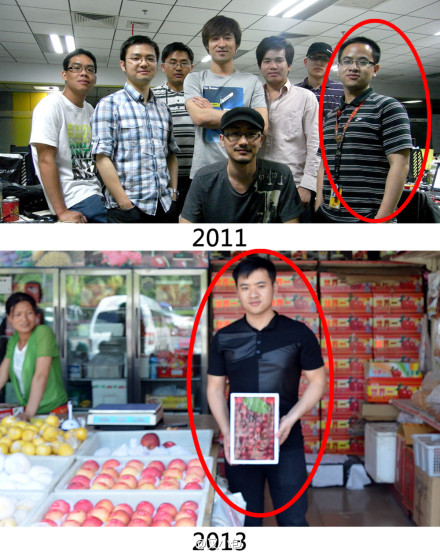
IT engineer becomes Weibo sensation after giving up career to become a fruit seller

IT engineer becomes Weibo sensation after giving up career to become a fruit seller

Xu Jia was a PHP engineer for Sina Weibo in 2011 and often worked late into the night. -China Daily
7427ea210acc12ed5abd14
Sat, May 04, 2013
China Daily/Asia News Network

A former IT engineer has become a sensation on China’s Twitter-like Sina Weibo after he gave up a promising career to successfully turn into a fruit vendor. Xu Jia was a PHP engineer for Sina Weibo in 2011 and often worked late into the night. In 2013, he was promoted to a title equivalent to an architect in one of China’s most popular social networking sites. “I was in tears to see my promotion. It was a dream for many years finally coming true. But I changed my mind and wanted to discover the other me,” Xu wrote on Weibo. Xu quit his job to sell fruit in 2013. What surprised Weibo users most is the combination photo showing sharp differences in his looks between the two working environments. In his high-end IT job, he looked exhausted, wore glasses and had scanty hair on his head. But in the fruit store, he appears vigorous, well-dressed, and in good shape. Read more of this post

Buffett maps out hopes for Berkshire without him

Buffett maps out hopes for Berkshire without him

8:19pm EDT

By Jonathan Stempel and Jennifer Ablan

OMAHA, Nebraska (Reuters) – Warren Buffett on Saturday gave the most extensive comments to date about the future of Berkshire Hathaway Inc after he is gone, saying he still expects the conglomerate to be a partner of choice for distressed companies.

Buffett, 82, also defended his plan to install his son, Howard, who has little investing experience, as nonexecutive chairman, saying the younger man’s role would be to ensure that Berkshire had the right CEO in place.

During the financial crisis and its immediate aftermath, Berkshire helped prop up a number of companies, among them blue-chips such as General Electric and Goldman Sachs. Buffett’s investments were viewed by many shareholders as a seal of approval from one of the world’s most respected businessmen.

Short-seller Doug Kass, invited by Buffett to Berkshire’s annual meeting on Saturday to offer contrarian points of view, asked whether a successor would have the same heft. Buffett said it would not matter.

“Berkshire is the 800 number when there is really some panic in the markets, and people really need significant capital,” Buffett said. Read more of this post

Steve Case: When Attackers Become Defenders, Innovation Is Lost

May 4, 2013

When Attackers Become Defenders, Innovation Is Lost

By ADAM BRYANT

This interview with Steve Case, chief executive of Revolution, an investment firm, was conducted and condensed by Adam Bryant. Mr. Case was also a founder of America Online.

Q. What were some early leadership lessons for you?

A. The earliest ones probably related to just understanding that everybody is wired a little bit differently. Just because you think a certain way or are inclined to react a certain way doesn’t mean everybody thinks and reacts the same way. I think people just naturally presume that they look at a problem in a certain way and frame the issue in a certain way and that everybody else would look at it the same way.

I learned in my 20s that there are a lot of different ways to look at things, a lot of different filters that people put on, partly based on how they analyze the circumstance but also based on their own history and perspectives and biases and instincts and so forth. You have to be open-minded about that and listen to what’s being said — but also to what’s not said sometimes. Those discussions can lead you to different places. Read more of this post

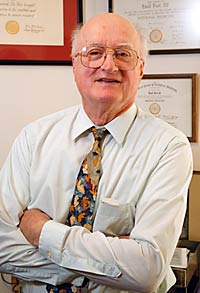
Emil Frei III, Who Put Cancer Cures in Reach, Dies at 89

May 4, 2013

Emil Frei III, Who Put Cancer Cures in Reach, Dies at 89

By MARGALIT FOX

Emil_FREI_26

Dr. Emil Frei III, an oncologist whose trailblazing use of combination chemotherapy — in which anticancer drugs are administered simultaneously rather than singly — helped make certain cancers curable for the first time, died on Tuesday at his home in Oak Park, Ill. He was 89.

His daughter Judy Frei confirmed the death.

Combination chemotherapy is now a standard treatment for a wide range of cancers, including breast, bone and testicular cancers, and has been credited with saving millions of lives worldwide. Read more of this post

The Smartest Thing Warren Buffett Ever Said

The Smartest Thing Warren Buffett Ever Said

By Matt Koppenheffer | More Articles | Save For Later
April 30, 2013 | Comments (1)

Berkshire Hathaway  (NYSE: BRK-A  ) (NYSE: BRK-B  ) CEO Warren Buffett is never shy about sharing wisdom. The brilliant investor is known for witty quips (“Rule No. 1: Never lose money. Rule No. 2: Never forget Rule No. 1.”) as well as longer parables (such as “The Superinvestors of Graham-and-Doddsville“). But could any one of Buffett’s gems of wisdom be the best? Could there be one Buffett-ism to rule them all? To find out, I grabbed five game Fools to weigh in.

Scott Phillips: In trying to distill Warren Buffett’s brilliance, many Buffett-watchers lean heavily on the Oracle of Omaha’s formative years at the metaphorical knee of his mentor, the famed value investor Ben Graham. Graham was notoriously mechanical in his investing; seeking to find companies with specific financial characteristics, then buy them in bulk. However, Buffett — particularly after he met his business partner and Berkshire Vice-Chairman Charlie Munger — is far from the myopically mechanical investor some would paint him to be. Indeed, in his 1982 Chairman’s letter to Berkshire Hathaway shareholders, Warren Buffett wrote: Managers and investors alike must understand that accounting numbers are the beginning, not the end, of business valuation. Yes, the reported numbers matter — a lot — but they are a guide to starting to understand the business, not neatly packaged answers. Buffett’s brilliance was in taking the fundamental lessons he’d learned from Graham and improving on them by understanding the factors that build and sustain great companies. Buffett has said he has one message for the managers of Berkshire’s subsidiaries — “widen the moat.” He wants them to focus on doing those things that make the business stronger and less vulnerable to the competition. Talking about Coca-Cola (NYSE: KO  ) , he said “Give me $10 billion and how much can I hurt Coca-Cola? I can’t do it.” That fact won’t show up in black and white on the financial statements, but is far more important than the numbers themselves.

Jason Moser: I had the great fortune of attending the Berkshire meeting last year, and while I’ve followed Buffett for a while now, something he said during the Q&A session last year resonated with me. Someone asked him his opinion on gold, to which he replied (and I’m paraphrasing): Let’s say you own an ounce of gold today. You hold it, love it and caress it. In 50 years you’ll still own an ounce of gold. Now say you own 100 acres of farmland today. In 50 years you’ll still own that same 100 acres of farmland. The difference is you’ll also have had the time to produce crops to grow more stuff to buy more farmland and whatever else you want. In other words, there’s a tremendous cycle of production there. Gold on the other hand is more or less an unproductive asset. This, to me, is key to why Buffett has been such a successful investor all these years. Not only is he able to focus on longer periods of time, but also the ever-so-valuable cycles of production that can occur during that time. It should therefore come as no surprise that if you gave me a bar of gold today, I would sell it and go buy stocks.

Tim Beyers: While Buffett is often thought of as the patron saint of value investing, I find him in many ways to be the quintessential Rule Breaker. Just listen to what he said at last year’s confab: I would never spend a lot of time valuing declining businesses. The same amount of energy and intelligence brought to other businesses is just going to work out better. I’d never have believed it had I not heard it myself. After all, what is value investing if not for figuring the worth of an oversold business that may, in fact, be in decline? Buffett’s lesson here, I think, is to be open to a broad range of stock ideas. Don’t merely look for a low price-to-earnings ratio. Look instead for businesses that are surprisingly strong defenders of the majority share of a profitable niche, such as Walt Disney  (NYSE: DIS  ) . The House of Mouse isn’t cheap at 20 times earnings, but can you name an enterprise with more big-name brands under its belt? Marvel, Star Wars, Pixar, and all those princesses that seven-year-old girls worship? Don’t be surprised if Berkshire takes a close-up tour of the Magic Kingdom.

Jacob Roche:

It takes 20 years to build a reputation and five minutes to ruin it. If you think about that, you’ll do things differently. This quote always stuck with me because it’s so applicable to both life and business. It takes a long history of coming through for people to build a reputation with your friends, family, and coworkers, but one big mistake can shatter that reputation and leave a lasting bitter taste in the mouths of people who know you. Whether you’re the normally responsible friend who had too a few too many drinks at a party, or the go-to guy at work who told off the wrong client, a person’s worst impression of you is usually their most lasting. This is even more true for the highest levels of management in a large company. It can take decades for a company to earn the trust of its customers, shareholders, and employees. And while a big accounting scandal may take years to fully percolate, it starts with one bad decision. Whether it was the massive accounting scandals at Enron, Worldcom, or evenWaste Management, an unethical decision that could have been avoided can, at best, result in massive fines, like WM’s half-billion dollar shareholder suit, or even jail time in the case of Enron and Worldcom executives. These unfortunate fates could have been avoided by managers at the top simply deciding to do things differently in that crucial moment.

Dan Dzombak:

Buffett: I tell college students, when you get to be my age, you will be successful if the people who you hope to have love you, do love you. Charlie and I know people who have buildings named after them, receive great honors, etc., and nobody loves them — not even the people who give them honors. Charlie and I talk about wouldn’t it be great if we could buy love for $1 million. But the only way to be loved is to be lovable. You always get back more than you give away. If you don’t give any, you won’t get any. Everybody loves Don. There’s nobody I know who commands the love of others who doesn’t feel like a success. And I can’t imagine people who aren’t loved feel very successful.

Munger: You don’t want to be like the motion picture exec who had so many people at his funeral, but they were there just make sure he was dead. Or how about the guy who, at his funeral, the priest said, “Won’t anyone stand up and say anything nice for the deceased?” and finally someone said, “Well, his brother was worse.”

Buffett: Most people in this room and most college students I talk to will have plenty of money, but some will have few friends.

— 2003 Berkshire Hathaway Annual Meeting

Coming from one of the richest people in the world, the quote is a good reminder that there’s a lot more to a successful life than just money. My definition of success is long-term sustainable happiness, and having friends who love you is a key part of that. A close network of friends has been shown to help fight illness and depression, speed recovery, slow aging, and prolong life. While it takes effort to be lovable, Buffett has shown that the benefits are massive and certainly worth the effort.
Van Gogh: “Today again from seven o’clock in the morning till six in the evening I worked without stirring except to take some food a step or two away”

What does nearly every genius have in common when it comes to work habits?

by eric barker

A very interesting new book, Daily Rituals: How Artists Work, examines the work habits of over 150 of the greatest writers, artists and scientists. What does nearly every genius have in common? Those interested in the 10,000 hour theory of deliberate practice won’t be surprised — the vast majority of them were complete and unapologetic workaholics.

Via Daily Rituals: How Artists Work:

William Faulkner:

During his most fertile years, from the late 1920s through the early ’40s, Faulkner worked at an astonishing pace, often completing three thousand words a day and occasionally twice that amount. (He once wrote to his mother that he had managed ten thousand words in one day, working between 10: 00 A.M. and midnight— a personal record.) “I write when the spirit moves me,” Faulkner said, “and the spirit moves me every day.”

Maya Angelou:

Sometimes the intensity of the work brings on strange physical reactions— her back goes out, her knees swell, and her eyelids once swelled completely shut. Still, she enjoys pushing herself to the limits of her ability. “I have always got to be the best,” she has said. “I’m absolutely compulsive, I admit it. I don’t see that’s a negative.”

H.L. Mencken:

His compulsiveness meant that he was astonishingly productive throughout his life— and yet, at age sixty-four, he could nevertheless write, “Looking back over a life of hard work  …   my only regret is that I didn’t work even harder.”

Musician Glenn Gould:

From the time he retired from public performances in 1961, when he was thirty-one years old, Gould devoted himself completely to his work, spending the vast majority of his time thinking about music at home or recording music in the studio. He had no hobbies and only a few close friends and collaborators, with whom he communicated mostly by telephone. “I don’t think that my life style is like most other people’s and I’m rather glad for that,” Gould told an interviewer in 1980. “[ T] he two things, life style and work, have become one. Now if that’s eccentricity, then I’m eccentric.”

Alexander Graham Bell:

As a young man, Bell tended to work around the clock, allowing himself only three or four hours of sleep a night… When in the throes of a new idea, he pleaded with his wife to let him be free of family obligations; sometimes, in these states, he would work for up to twenty-two hours straight without sleep.

Van Gogh:

“Today again from seven o’clock in the morning till six in the evening I worked without stirring except to take some food a step or two away,” van Gogh wrote in an 1888 letter to his brother, Theo, adding, “I have no thought of fatigue, I shall do another picture this very night, and I shall bring it off.”

Artist Chuck Close:

“Inspiration is for amateurs,” Close says. “The rest of us just show up and get to work.” Read more of this post

Charlie Munger: No tweets for me, Buffett’s second-in-command says

No tweets for me, Buffett’s second-in-command says

2:20pm EDT

By Jennifer Ablan and Jonathan Stempel

OMAHA, Nebraska (Reuters) – So they are not completely in sync after all. A day after Berkshire Hathaway Inc Chairman Warren Buffett set up his own account on Twitter, his second-in-command, Charlie Munger, said he has no plans to follow the legendary investor’s lead. Buffett, 82, launched his “@WarrenBuffett” account with the tweet “Warren is in the house,” and immediately started adding followers at the rate of 1,000 per minute. But the 89-year-old Munger – renowned for his forthright style of speaking – suggested fans should not look forward to seeing his trademark remarks in 140-character form any time soon.

“No, certainly not,” Munger said in an interview, after being asked whether he planned to join the social media network. “That’s not my milieu. I don’t like too many things going on at once.” It marks a rare point of departure between Buffett and Munger, who have worked together at Berkshire for decades. “We have practically no disagreements. That’s just the way the chemistry has worked,” Munger said, commenting on his working relationship with Buffett. “People who think we’re quite a diverse pair, and that one is helping the other – it’s more like two twins, and one of them is a little more able than the other.” Berkshire Hathaway will hold its annual shareholder meeting on Saturday in Omaha. Buffett calls the meeting and the weekend’s related events “Woodstock for Capitalists.”

Find the Customers Your Competitors Are Offending

Find the Customers Your Competitors Are Offending

by Sehreen NoorAli  |  10:00 AM May 3, 2013

In a targeted effort to appeal to Gen Y, Pizza Hut offered free pizzas for life to any attendee of last October’s presidential debate who dared ask President Obama or Governor Romney, “Sausage or Pepperoni?” Outraged by the mockery to the democratic process, millennials shamed the popular company across national outlets. The backlash against the campaign shocked Pizza Hut and forced it to backpedal.

Pizza Hut’s campaign unwittingly shut the door on thousands of customers who were either: 1) people within the target market that the ad alienated (ex: millennials who care about politics more than pizza); or 2) people excluded from the target market altogether (ex: non-Gen Yers).

This is a basic problem with target advertising: it frequently ignores the fact that people who share a common demographic do not necessarily share the same preferences or opinions. By extrapolating consumer behavior from fixed demographic information like gender, age, and ethnicity, companies indiscriminately make conclusions like “African-Americans love fried chicken,” “senior citizens only care about incontinence” and “single men aspire to be James Bond.” Using unrefined market segmentation to understand the preferences of potential target customers often backfires. Take Diet Pepsi’s “Skinny Can” controversy, or Groupon’s callous Tibet commercial. Read more of this post

Leadership Is More than Interpersonal Skills

Leadership Is More than Interpersonal Skills

by Terri Griffith  |  12:00 PM May 3, 2013

Most of the 89,000 leadership books offered on Amazon.com focus on traditional interpersonal leadership: the relationships between leaders and followers. Interpersonal leadership sets up an expectation that leaders must be in dialog or at least in view of their followers. Yet this style of interaction is less likely as work stretches across locations and company boundaries as we telecommute, crowdsource, and take on joint ventures. Modern leadership may be as much about facilitating strategy through hiring, training, technology, and focused tasks and goals, as it is about face-to-face interaction.

Clear and meaningful tasks, goals, and technology tools that support the organization’s direction can supplement interpersonal leadership. This is a classic topic in the management field. In the 70s, Steve Kerr and John Jermier offered that leaders do many things beyond their interpersonal relationships with their followers. Talking about the history of substitutes for leadership research, Jermier said in 1997, “[Substitutes for leadership] pointed to unobtrusive and impersonal forces such as technology and task characteristics, professional standards, and formal regulations (policies, rules and procedures).” One of their conclusions was that some people don’t even need leadership in the traditional sense, or find leadership substitutes through interactions with other workers. Hiring for employees who can model the vision of the organization through their work can substitute for interactions with formal leaders. Read more of this post

The Analogical Animal: The key to human cognition may well be the ability to compare one thing to another

May 3, 2013, 7:42 p.m. ET

The Analogical Animal: The key to human cognition may well be the ability to compare one thing to another

By DOUGLAS HOFSTADTER And EMMANUEL SANDER

At the White House Correspondents Dinner last week, President Barack Obama got some laughs when he said that his advisers had suggested he start his speech “with some jokes at my own expense, just take myself down a peg. I was like, ‘Guys, after 4½ years, how many pegs are there left?’ ”

In this remark, few of us would immediately think of “take myself down a peg” as an analogy, but that’s what it is: a comparison between two things, in this case, between the president’s standing and pegs on a board. Mr. Obama did it again later in his speech, complimenting journalists “who took the time to wade upstream through the torrent of digital rumors to chase down leads and verify facts.” “Wade upstream” and “torrent” qualify as analogies, too.

In fact, once you start to look for analogies, you find them everywhere, not just in the metaphors and other figures of speech used by politicians. It is by way of analogy that human beings negotiate and manage the world’s endless variety. We would make an even grander claim: that analogies lie at the very center of human cognition, from the humblest of everyday activities to the most exalted discoveries of science. Read more of this post

Risky Business: The Quiz That Could Steer You Wrong

May 3, 2013, 6:13 p.m. ET

Risky Business: The Quiz That Could Steer You Wrong

By JASON ZWEIG

BF-AE903_INVEST_G_20130503172321

With the stock and bond markets butting up against record highs, and volatility not far from all-time lows, that little red devil on your shoulder is whispering in your ear that it’s safe to take more risk again. Can you count on your broker or financial adviser to tell you how much risk is right for you?

Read more of this post

How the Brain Really Works: New techniques are letting researchers look at the activity of the whole brain at once

May 3, 2013, 5:16 p.m. ET

How the Brain Really Works

New techniques are letting researchers look at the activity of the whole brain at once

By ALISON GOPNIK

For the last 20 years neuroscientists have shown us compelling pictures of brain areas “lighting up” when we see or hear, love or hate, plan or act. These studies were an important first step. But they also suggested a misleadingly simple view of how the brain works. They associated specific mental abilities with specific brain areas, in much the same way that phrenology, in the 19th century, claimed to associate psychological characteristics with skull shapes.

Most people really want to understand the mind, not the brain. Why do we experience and act on the world as we do? Associating a piece of the mind with a piece of the brain does very little to answer that question. After all, for more than a century we have known that our minds are the result of the stuff between our necks and the tops of our heads. Just adding that vision is the result of stuff at the back and that planning is the result of stuff in the front, it doesn’t help us understand how vision or planning work.

But new techniques are letting researchers look at the activity of the whole brain at once. What emerges is very different from the phrenological view. In fact, most brain areas multitask; they are involved in many different kinds of experiences and actions. And the brain is dynamic. It can respond differently to the same events in different times and circumstances. Read more of this post

Great historical minds on the importance of being truthful, or not

Saturday May 4, 2013

Great historical minds on the importance of being truthful, or not

“ONE per cent of people will always be honest and never steal,” the locksmith said. “Another one per cent will always be dishonest and always try to pick your lock and steal your television. And the rest will be honest as long as the conditions are right but if they are tempted enough, they’ll be dishonest too. Locks won’t protect you from the thieves, who can get in your house if they really want to. They will only protect you from the mostly honest people who might be tempted to try your door if it had no lock.”

Dan ArielyThe Honest Truth About Dishonesty: How We Lie to Everyone Especially Ourselves

Time will inevitably uncover dishonesty and lies; history has no place for them.

The late King of Cambodia, Norodom Sihanouk

“We can easily forgive a child who is afraid of the dark; the real tragedy of life is when men are afraid of the light.”

Plato

“It is not only by dint of lying to others, but also of lying to ourselves, that we cease to notice that we are lying.”

Marcel Proust, Sodom and Gomorrah

“If you tell the truth, you don’t have to remember anything.”

Mark Twain

“I’m not upset that you lied to me, I’m upset that from now on I can’t believe you.”

Friedrich Nietzsche

“I’m the most terrific liar you ever saw in your life. It’s awful. If I’m on my way to the store to buy a magazine, even, and somebody asks me where I’m going, I’m liable to say I’m going to the opera. It’s terrible.”

J.D. Salinger, The Catcher In The Rye

“I always tell the truth. Even when I lie.”

Al Pacino

“I lie to myself all the time. But I never believe me.”

Susan Eloise, The Outsiders

Clay is moulded to make a vessel, but the utility of the vessel lies in the space where there is nothing. Thus, taking advantage of what is, we recognise the utility of what is not.

Lao Tzu

What compels us to lie; Dan Ariely’s “The (Honest) Truth About Dishonesty: How We Lie to Everyone Especially Ourselves”

Saturday May 4, 2013

What compels us to lie

Reviewed by NICK WALKER
balticmedia@ymail.com

The (Honest) Truth About Dishonesty: How We Lie to Everyone Especially Ourselves
Author: Dan Ariely
Publisher: Harper

HAVE you ever lied on your CV? Yeah, right. Sure you haven’t. How about fudging the truth a bit? Was that an affirmative you just mumbled?

Well, don’t beat yourself up about it. According to Dan Ariely, a behavioural economist and popular psychologist, and the bestselling author of The Upside of Irrationality and Predictably Irrational, we generally speaking all lie sometimes. And some of us lie all the time. What is worse, and no big surprise to any urban professional in Malaysia, is that the job-hunting game provides fertile ground for duplicity on both sides.

In his latest book, Ariely examines the contradictory forces that both compel us to be dishonest and restrain us from lying.

From cheating-by-smartphone in schools to political leaders who take liberties with the truth, to the commercial shenanigans that hurt the poorest in society, cheating, lying, and compromising the truth in other ways, are inescapable components of the human condition.

Drawing on his own empirical research, and penned in the breezy accessible style of Malcolm Gladwell’s What The Dog Saw andFreakonomics by Steven D. Levitt and Stephen J. Dubner, Ariely reveals, with remarkable candor, what knocks us off the true and straight road of honesty. Read more of this post

Finding that true north; When Tan Sri Lee Shin Cheng started his ice-cream business on a bicycle, nobody including himself expected him to become Malaysia’s fourth wealthiest man

Saturday May 4, 2013

Finding that true north

By CHOONG EN HAN
han@thestar.com.my

WE have all heard about the runaway success stories of entrepreneurs that made it big. Take Sara Blakely for example, the woman behind the success story of Spanx, in which she turned a US$5,000 investment into a billion dollar slimming bodywear empire.

The ones who made it always make the headlines but nobody knows how many entrepreneurs armed with game changing ideas that just fell flat.

That doesn’t stop people from going out on their own, but really, what does it take for one to take that leap of faith and delve into the unknown? Read more of this post

What Every Successful Leader Knows About The Chicken And The Egg

What Every Successful Leader Knows About The Chicken And The Egg

by Fortune Gamanya | May 3, 2013

Great organisations are those that do not waste time telling the world how they are better than the competition – they show them

The question of whether the chicken came first or the egg has occupied minds and spurred debate for generations. A similar paradox is being played out right now in organisations across the world: “Does a carefully conceived set of differentiators inform an organisation’s culture and performance, or should culture and performance give birth to differentiators?”.

All businesses know that customer service based on value and quality are critical for survival. Good companies realise that to retain and win new business, quality is not enough. Enter the differentiator; with companies spending time and money identifying what sets their service offering apart from that of their competitors. Once done, the marketers step in and communicate this set, top-down, to employees and customers.

But what becomes of this well-worn strategy when all good companies are using differentiators to stand out in the marketplace? And is it fair to say that trying to evolve a corporate culture or define a service offering by first thrashing out that set of differentiators, is a bit like trying to produce a chicken without an egg; or vice versa? Read more of this post

Brain, Interrupted. Does distraction matter — do interruptions make us dumber?

May 3, 2013

Brain, Interrupted

By BOB SULLIVAN and HUGH THOMPSON

TECHNOLOGY has given us many gifts, among them dozens of new ways to grab our attention. It’s hard to talk to a friend without your phone buzzing at least once. Odds are high you will check your Twitter feed or Facebook wall while reading this article. Just try to type a memo at work without having an e-mail pop up that ruins your train of thought.

But what constitutes distraction? Does the mere possibility that a phone call or e-mail will soon arrive drain your brain power? And does distraction matter — do interruptions make us dumber? Quite a bit, according to new research by Carnegie Mellon University’s Human-Computer Interaction Lab. Read more of this post

Chobani CEO: Our Success Has Nothing To Do With Yogurt; the company’s now infamous Greek yogurt is netting more than $1 billion in annual sales — and it only went to market five years ago.

Chobani CEO: Our Success Has Nothing To Do With Yogurt

Megan Durisin | May 3, 2013, 11:19 AM | 2,559 | 3

Chobani Yogurt has been one of the most explosive food start-ups to ever hit the market.

The company’s now infamous Greek yogurt is netting more than $1 billion in annual sales — and it only went to market five years ago.

But Chobani’s CEO and founder, Hamdi Ulukaya said the company’s instant success wasn’t all about the product.

“Chobani is not a yogurt story,” he said. “It’s a manufacturing story.”

Ulukaya gave a presentation earlier this week to a packed audience at New York University‘s Stern School of Business, sponsored by the Berkley Center for Entrepreneurship & Innovation. In it, he outlined the story of the company’s rapid growth.

Ulukaya scraped together funding to buy an old yogurt plant in upstate New York in 2005, with help from a Small Business Administration Loan. He didn’t have any concrete plans, and the place wasn’t in good shape — with water dripping from the ceiling and paint peeling for the walls. But when he got the idea to start making Greek yogurt in the U.S., the company fixed the factory up and ran with it, and Ulukaya said he practially lived in the plant for five years to get Chobani off the ground.

“I knew that something could be done with yogurt because growing up in Turkey, we knew what to expect from yogurt,” he said at NYU.

Chobani was an instant success when it hit shelves in 2007, with orders consistently increasing. Ulukaya soon had big yogurt companies, like Dannon, knocking at his door, asking him to sell. He also could have turned to private equity companies for funding. Those strategies are typically the most appealing to food start-ups, Ulukaya said, because if they don’t, the larger companies imitate it and use their large manufacturing bases to get it to the masses.

But he decided not to sell, and that’s when Chobani’s focus turned to expansion — and fast.

“No start-up has done it any other way, so I wanted to do it in another way,” Ulukaya said. “I bet on these guys being lazy, that they’re not going to wake up that fast, and I said, ‘I’m going to be fast.'”

And fast it was. Ulukaya didn’t outsource anything — keeping control of the yogurt from its production in the factories to the time it hit shelves. The company built a big warehouse across the street from the plant in two months, and soon after built another huge plant in Idaho, which went up in just a year.

He also bet on the product being successful and priced it based on what it would cost in the future if sales increased, instead of factoring in the high input costs that the company had to face at the onset. (The yogurt goes for about $1 per cup.)

“This was not going to be about selling,” Ulukaya said. “This was going to be about making.”

The strategy worked. The company now produces 2.2 million cases of yogurt a week, Ulukaya said, and has passed $1 billion in sales. When they started, Greek yogurt made up 0.2% of the yogurt market in the U.S. Now it makes up 50%, and Chobani has at least half of that market share, he said.

It’s been a huge shock to the yogurt sector, which had been dominated by two or three big companies for decades prior and mostly pumped out products that were high in sugar, coloring and preservatives, Ulukaya said. And the majority of the money to fund Chobani’s new plants, employees and warehouses was internally generated.

Ulukaya also prides the company’s success on its small-town roots and dedicated employees, who he said didn’t have a holiday off for the first five years.

“Never has a food aisle been challenged like this and changed so quickly by a startup ever,” Chobani said. “Some say we’re the fastest growing startup ever, including technology.”

Run silent, run deep: The life of new CEO Brian Krzanich at Intel

Run silent, run deep: The life of Brian Krzanich at Intel

5:57pm EDT

By Noel Randewich

SAN FRANCISCO (Reuters) – It took him 30 years, but Brian Krzanich – the understated, analytical engineer who started his career at an Intel chip factory in New Mexico – quietly worked his way up to the top. Now, the man who once prided himself on halving production times will have to act swiftly to move the company into new areas of growth.

Krzanich will take over as chief executive beginning on May 16 at the annual shareholder meeting, replacing Paul Otellini, who in November unexpectedly announced his plan to retire. Under Otellini, Intel has been sidelined in smartphones and tablets while demand for its PC processors is on the wane.

To turn around the $53 billion-a-year empire, Krzanich will have to depend on trusted lieutenants, something he shouldn’t have a problem doing, say former employees, analysts and industry executives who have worked with him.

In 2010, Krzanich was on the brink of a weighty decision: whether to break with tradition and open up Intel’s top-secret manufacturing facilities and make chips for other companies. He called a teleconference of 8-10 key people – executives from marketing, investor relations and sales among them – and began firing off questions. Read more of this post

The Generosity Strategies that Help Companies Grow

The Generosity Strategies that Help Companies Grow

by Eddie Yoon  |   2:00 PM May 2, 2013

Netflix reported another great quarter last month, with big subscriber and stock growth. It’s hard to believe it was just two years ago that the company and its CEO were widely ridiculed — and even subject to a Saturday Night Live parody.

Certainly much credit is due to adding new tricks to its tool kit by creating new content like House of Cards, a programming success that’s highlighted how it is using its analytic power to find news ways to satisfy customers.

I’ve written three HBR posts on Netflix since its difficult 2011. All were bullish on its future. I had many left-brain reasons why to be bullish — the quantified upside of digital streaming, its leadership, distribution and analytics advantages, etc. But I think there was emotional ‘data’ that I’ve acquired as a 10 year subscriber that stitches all the rational reasons together and amplifies them.

Put simply, Netflix is a generous company. And generosity can be a highly effective growth strategy. Read more of this post

Doug Kass: Kass: Warren Buffett and Me

Kass: Warren and Me

By Doug Kass05/01/13 – 06:00 AM EDT

TheStreet Premium Services

A complimentary preview of Real Money. This column originally appeared on Real Money Pro at 8:45 a.m. EDT on April 30.

NEW YORK (Real Money) — Yesterday, I outlined how my pilgrimage to Omaha got started, what my initial reaction was to Buffett’s invite, how unusual his invitation was, how I conducted my research, the challenge of the research process, what I expect to achieve in my questions, how I plan to conduct myself at the Berkshire Hathaway (BRK.A)/ (BRK.B) annual shareholders meeting and I finally gave some brief impressions I had of Warren Buffett based on my research over the past six weeks months.

Today, I shift to a different subject. I want to write about some of the similarities between Warren Buffett and myself. In doing my research, I was surprised how many things we have in common, though it certainly isn’t our net worths!

Prostate cancer: Both Warren Buffett and I were diagnosed with cancer in 2012. I had my prostate removed in a robotic-assisted laparoscopic prostatectomy in December 2012. (I am now cancer-free.) Warren Buffett underwent successful radiation treatment last year.

Wharton School: We both attended Wharton. After graduating from the Woodrow Wilson High School in Omaha in 1947, Warren Buffett entered the Wharton School at the University of Pennsylvania. He studied at Wharton for two years, and in 1950, he transferred to the University of Nebraska-Lincoln where he graduated with a Bachelor of Science in business administration. I attended Wharton in 1970 and received my MBA in finance in 1972.

Horse tip sheet: We both published and sold a horse tip sheet. Handicapping horses combined two traits that Warren Buffett was good at, collecting information and mathematics. With his friend, Bob “Russ” Russell, Warren hawked a tip sheet,Stable-Boy Selections, at Ak-Sar-Ben racetack. At $0.25 apiece, his tip sheet undercut the “Blue Sheet,” a staple at racetracks. I hawked a tip sheet, “Wharton’s Picks,” an independent study project in which I regressed variables in a computer and delivered the output in a computer-generated printout, for the same $0.25 cents at Liberty Bell Park racetrack, competing against “Lawton” and the “Orange Sheet,” while attending business school. Read more of this post

Exam cramming is not learning

Exam cramming is not learning

It is common and natural for students to cram ahead of examinations, but unless they have a better concept of the various subjects, they will soon forget what they have learnt in school, defeating the purpose and value of education.

4 HOURS 32 MIN AGO

It is common and natural for students to cram ahead of examinations, but unless they have a better concept of the various subjects, they will soon forget what they have learnt in school, defeating the purpose and value of education.

Memory and retention is a key ingredient in learning. The frequent occurrence of memories, thoughts and ideas help with the interpretation and understanding of new experiences and ideas. Read more of this post

Antifragile Black Swan’s Taleb Against Establishment Economists

Nicholas Taleb Against Establishment Economists

Tyler Durden on 05/02/2013 18:35 -0400

Submitted by Pater Tenebrarum of Acting-Man blog,

Throwing Down the Gauntlet

Nicholas Taleb is making waves again – and in a good way, as we will explain below. It began with an altercation between him and a few mainstream economists on Twitter (what is apparently called a ‘Twitter brawl’). Here is a post from Taleb’s Facebook page that he put up in the wake of said brawl – Taleb announced that he will go with a fine comb through the papers of one Karl Whelan, one of the countless ‘monetary economists’ who are writing papers for the Fed and are thereby providing justifications for its meddling with the markets. Here is his post:

“We Can Start Exposing Economists: I just finished a very rough draft of *Fat Tails & (Anti)Fragility* (~100 pages).

PART I provides a mathematical toolkit to detect anything that is bullshit in economic modeling (particularly macroeconomics), figure out which papers are flawed from a scientific standpoint, etc. When I mean flawed, it is on the basis that the math used impresses nonmathematicians but does not support the stated policy conclusions.

So I start by putting one Karl Whelan “scientific” work under severe mathematical scrutiny. I select him to start as he worked with central banks, the perfect profile of the person supported by the taxpayer against the taxpayer’s own interests. I also had a disgraceful encounter with him and his macro peers on twitter. Mr Whelan’s papers can be found here: http://ideas.repec.org/e/pwh23.html We can progressively expose mathematized social science that way, as I am refining the text, adding words and examples.” Read more of this post

Pilgrimage to Omaha + Entrepreneurship, Asian-style! (Go to BeyondProxy.com, where value investing lives)

Bamboo Innovator is featured in BeyondProxy.com, where value investing lives:

Pilgrimage to Omaha + Entrepreneurship, Asian-style! May 1, 2013 (Weblink: BeyondProxy.com)

Pilgrimage to Omaha

Ikigai (Japanese term for “meaning in life”); Happiness went with being a taker more than a giver, while meaningfulness was associated with being a giver more than a taker

What the heck does “meaning in life” mean, anyway?

by eric barker

400x500xmeaning-in-life.jpeg.pagespeed.ic.UHJVu5s-F9

Researchers at Tohoku University in Japan did a 7 year study of over 43,000 adults age 40 to 79 asking if they had ikigai (a Japanese term for meaning in life) and then tracked their health. People with ikigai were much more likely to be alive 7 years later.

Via Pursuing the Good Life: 100 Reflections on Positive Psychology:

Even when likely confounds were taken into account, ikigai predicted who was still alive after 7 years. Said another way, 95% of respondents who reported a sense of meaning in their lives were alive 7 years after the initial survey versus about 83% of those who reported no sense of meaning in their lives. The lack of ikigai was in particular associated with death due to cardiovascular disease (usually stroke), but not death due to cancer. Which raises a good question: What does meaning in life really mean, anyway? It seems to be one of those know-it-when-you-see-it type of things. One thing we do know is that it’s not the same as happiness. Roy Baumeister (author of Willpower), Jennifer Aaker (author of the Dragonfly Effect), Kathleen Vohs and Emily Garbinsky explored the similarities and differences between happy and meaningful lives:

Our findings suggest that happiness is mainly about getting what one wants and needs, including from other people or even just by using money. In contrast, meaningfulness was linked to doing things that express and reflect the self, and in particular to doing positive things for others. Meaningful involvements increase one’s stress, worries, arguments, and anxiety, which reduce happiness. (Spending money to get things went with happiness, but managing money was linked to meaningfulness.) Happiness went with being a taker more than a giver, while meaningfulness was associated with being a giver more than a taker. Whereas happiness was focused on feeling good in the present, meaningfulness integrated past, present, and future, and it sometimes meant feeling bad. Past misfortunes reduce present happiness, but they are linked to higher meaningfulness — perhaps because people cope with them by finding meaning.

In his TED talk, Daniel Kahneman, Nobel Prize winner and author of Thinking, Fast and Slow discussed two different types of happiness that sound very similar to the distinction between happiness and meaning. The first is being happy in your life. It is happiness that you experience immediately and in the moment. Like the definition of happiness above. The second is being happy about your life. It is the happiness that exists in memory when we talk about the past and the big picture. Stories are key here. Closer to the definition of meaning above.

Fred Wilson: TheStreet.com could have been the Twitter and Blogger of Wall Street. We Didn’t Know What We Had

Apr 30, 2013

We Didn’t Know What We Had

Fred Wilson is a VC and principal of Union Square Ventures.

I sat next to Jim Cramer last night at a dinner put on by some mutual friends. I hadn’t seen Jim in a while so it was a great opportunity to take a trip down memory lane. In 1996 or early 1997, my prior firm Flatiron Partners led the first round of outside financing forTheStreet.com. I joined the board and eventually became Chairman before stepping down a decade ago. When I first met Jim, he was running a hedge fund and blasting posts from his trading desk. This was 1996 and what he was doing was unprecedented. He was publishing in real time his thoughts on what was going on in the markets. On some days, Jim would post three or four dozen times. As Jim and I reminisced about those days last night, I said to him “you were tweeting and blogging a decade before anyone else was doing that.” He nodded, “yeah, that is what I was doing”. But we didn’t know that. The money our firm invested went to hiring a team of journalists and we saw ourselves as the Wall Street Journal of the web. That was a mistake. The Wall Street Journal is the Wall Street Journal of the web. What Jim was doing was something way more native, way more powerful, and way more important. But we missed it. TheStreet.com has gone on to build a niche financial publishing business that is a solid and profitable company. But it could have been the Twitter and Blogger of Wall Street. That’s what it was at the start. But we didn’t know what we had.

A guide beyond leadership legends and all that jazz

May 1, 2013 3:39 pm

A guide beyond leadership legends and all that jazz

By Andrew Hill

This is the first management book to prompt me to listen to some jazz, specifically two Duke Ellington numbers: his band’s performance at the 1956 Newport festival, which revived Ellington’s reputation; and a poignant rendition of a ballad composed by his close collaborator Billy Strayhorn. Ellington was a master of all three levels of the leadership process, Nigel Nicholson suggests: acts – he was a management improviser as well as a musical one; tactics; and strategies. He prepared for opportunities, such as that Newport concert, shaped unexpected events to a coherent purpose and, critically, adapted to changing circumstances. Ellington’s elevation to leadership role model is one of the rare original examples in this book. Otherwise, Nicholson mines a seam of familiar stories about the flair and flaws of political and corporate bosses: from Tony Blair and George W. Bush to Jack Welch and Steve Jobs.

The lack of more colourful stories will disappoint anyone who enjoyed the cut and thrust of Family Wars, the analysis of family companies the London Business School professor co-authored in 2008. But it is what he does with the well-worn material that is original – and highly ambitious. “The journey of this book,” he writes, “starts with our animal nature, moves on to take in the sweep of human history since the dawn of time to explain the varieties of leadership and their effects, before closing in on the territory leaders inhabit and what it means to be strategic.” Read more of this post

The Science of Serendipity in the Workplace; To Encourage Interaction and Innovation, Companies Try Smaller Spaces, Games; Trivia Helps Break Awkward Silences

April 30, 2013, 8:38 p.m. ET

The Science of Serendipity in the Workplace

To Encourage Interaction and Innovation, Companies Try Smaller Spaces, Games; Trivia Helps Break Awkward Silences

By RACHEL EMMA SILVERMAN

MK-CC874_Serend_G_20130430224537

An installation, planned for Salesforce.com’s workplace, tabulates workers’ responses to ‘voting doors.’

Companies aren’t leaving serendipity to chance.

Firms are thinking up new ways to encourage interactions among employees who normally don’t work with each other. The hope is that these casual face-to-face chats among people with different skills might spark new ideas, lead to new solutions or at the least, increase workplace camaraderie.

To make those connections happen, some firms are taking a scientific approach—collecting and analyzing data about their teams and mathematically computing the likelihood that employees will meet. In some instances, they are squeezing workers into smaller spaces so they are more likely to bump into each other. In others, they are installing playful prompts, like trivia games, to get workers talking in traditional conversational dead zones, such as elevators.

But despite all the buzz around serendipity—several panels at the popular tech conference South by Southwest Interactive discussed the topic—it is hard to know for sure whether any of these efforts really work. The real challenge, companies and workplace scholars say, isn’t merely connecting workers with their colleagues so much as it is connecting them with the right ones. Read more of this post

Your Optimism Might Be Stifling Your Team; by acknowledging the downside and recognizing the messy, iterative path of innovation, they liberated their team to go bigger and reach further.

Your Optimism Might Be Stifling Your Team

by Liz Wiseman  |   2:00 PM May 1, 2013

I admit that I’m prone to an optimistic outlook, a belief that most problems can be tackled with hard work and the right mindset. I’ve read the research that indicates that positive thinkers tend to do better in school, work and life. Perhaps I even assumed that optimism was infectious and that people wanted to work with a confident, hopeful leader. In the true spirit of optimism, how could this possibly go wrong? Then I found out from a colleague that he didn’t find my optimism nearly as reassuring as I did. We were in the middle of a high-stakes research project with a small window of opportunity to write an article for a prominent academic publication. To pull this off, we needed to complete a complex analysis, do a round of additional research, and actually write the article, all while working on several other projects and operating on a thin budget. To me, this seemed like a feasible, interesting challenge, and I enthusiastically dove in. Then at one critical meeting, a more junior colleague turned to me and said, “Liz, I need you to stop saying that!”

“Saying what?” I asked.

“Saying that thing you always say — ‘How hard can it be?'” I looked puzzled. He explained, “You say that all the time. ‘How hard can it be? We can do this. After all, how hard can it be?'”

I recognized what he was saying and began to explain my logic: While I was working for Oracle Corporation, a small but rapidly growing company, I had been thrown into management at the tender age of 24 and was told that I was now in charge of training for the entire company and was tasked with building Oracle University and making it work in globally. I learned to say to myself, “We can do this. After all, how hard can it really be?” Now, I explained how this growth mindset had worked beautifully for me and many of my colleagues over the years. Yet steadfast, my colleague reiterated, “Yes, but that is what I need you to stop saying.”

“But why?” I probed.

He paused and said, “Because what we are doing is actually really hard, and I need you to acknowledge that.”

He wasn’t opposed to the idea that our enormous task was doable; he simply wanted me to acknowledge the reality of the challenge and recognize his struggle. He didn’t want me glossing over the challenge with my coat of optimism. So I did admit, “Yes, what we are doing is hard. It is really, really difficult.” I then assured him that I would do my best to stop saying that thing. Meanwhile, in the back of my mind I told myself “Sure, I can stop saying that. After all, how hard can it be?” Read more of this post