Why Innovation Is Tough to Define — and Even Tougher to Cultivate

Why Innovation Is Tough to Define — and Even Tougher to Cultivate

Published: April 30, 2013 in Knowledge@Wharton

Innovation: It’s something everyone is in favor of, everyone likes the idea of, yet no one really understands it, according to Wharton legal studies and business ethics professor Kevin Werbach. Werbach moderated a panel on the topic at the recent Wharton Economic Summit 2013 held in New York City, during which he challenged the participants to define innovation, talk about its relationship to entrepreneurship, and explain what is needed to nurture it. He noted that innovation is essential for companies to grow, and that it is transformative.

In response to a question about whether innovation is necessarily related to new technology and big breakthroughs, Lady Barbara Judge, chairman of the United Kingdom’s Pension Protection Fund, defined innovation as either “using something new, or something known, but in a different way, different time or a different place.”

To illustrate the latter, she spoke of two men who are bringing car sharing, a concept popularized most notably by the Nasdaq-traded company Zipcar, to India in the guise of a company called Zoom. “It is not new technology but somebody saw it, used it, did it in a different place, in a different time and it’s really very innovative,” she said of the fledgling firm. Read more of this post

Learning without borders; “If you spend your life working on something, it has to be worthwhile and scale beyond Singapore”

Learning without borders

14785940_0

SINGAPORE — Sitting on a sofa in the middle of an office, Ms Sun Ho surveys a large computer screen with a map of Singapore, which tells her in real time exactly how many of the 35,000 children attending the PAP Community Foundation (PCF) chain of kindergartens turned up for school that day.

BY FRANCIS KAN –

6 HOURS 38 MIN AGO

SINGAPORE — Sitting on a sofa in the middle of an office, Ms Sun Ho surveys a large computer screen with a map of Singapore, which tells her in real time exactly how many of the 35,000 children attending the PAP Community Foundation (PCF) chain of kindergartens turned up for school that day.

This application is part of a suite of tools produced by Ms Ho’s company, LittleLives, that aims to help pre-school teachers spend more time doing what they do best — teach.

“Teachers have to do a lot of paperwork because of reporting requirements, so by automating some of these tasks, such as taking attendance, it frees them up to focus on teaching,” said Ms Ho, 34, who started LittleLives in 2008 as a technology start-up focused on education. Read more of this post

Six Ways to Separate Lies From Statistics

Six Ways to Separate Lies From Statistics

The discovery of a spreadsheet error in an influential study by Harvard University economists Carmen Reinhart and Kenneth Rogoff inevitably raises a troubling question: To what extent can we trust what any researcher claims to be true?

The unfortunate reality is that mistakes much more serious than the one committed by Reinhart and Rogoff are far too common. Superfast computers and fancy statistical models can’t save us from human frailty. But that doesn’t mean empirical research has nothing to offer.

The Reinhart-Rogoff incident — in which they accidentally excluded five countries from a calculation of the average relationship between government debt and economic growth — is in some sense the wrong launching point for a discussion about modern empirical economics. It’s the perfect made-for-TV mistake: It involved a simple error in a commonly used spreadsheet program that can be explained with screen shots and laughed about with friends. Moreover, it barely affected their findings, and it isn’t representative of the challenges empirical research presents.

Today’s empirical analyses are more likely to be based on a mash-up of huge data sets containing millions of observations, which are processed using specialized statistical software. As a result, errors can be a lot more insidious. Often they can be found only through sophisticated forensics. Read more of this post

Professors are now brands; As professors themselves become bigger brands, firms are reaching out to the instructors directly instead of going through the schools

May 1, 2013, 6:45 p.m. ET

Professors Avoid the Middleman in Hawking Expertise to Companies

By MELISSA KORN and CAROLINE PORTER

For years, when big companies needed to train their leaders to manage large teams, change their thinking on product development or soak up the latest findings about globalization, they called on business schools. Schools’ executive-education offices would suggest a professor or two to lead a brief course on campus or at company offices, for which companies would pay thousands of dollars. Professors usually got a small cut of the earnings. But as professors themselves become bigger brands—aided by TED talks, Twitter and networks on sites like LinkedIn—firms are reaching out to the instructors directly instead of going through the schools. Faculty, meanwhile, are doing more to court outside teaching opportunities. It is a subtle change—executives in those workshops see little difference—but the shift saves companies money and endangers a revenue stream for the educational institutions. Read more of this post

What’s It Like to Interview at Amazon; Retailer Says a Job Candidate’s Projects Trump School’s Name

May 1, 2013, 6:16 p.m. ET

What’s It Like to Interview at Amazon

Retailer Says a Job Candidate’s Projects Trump School’s Name

By MELISSA KORN

As Amazon.com Inc.’s AMZN -2.20% share price has soared in recent years, so has its stock with M.B.A. students. The company now ranks among the most-coveted destinations for aspiring business leaders. Last year, the Seattle-based online marketplace hit No. 6 in a Fortune survey of where M.B.A.s wanted to work. In 2007, it didn’t even crack the top 25. Amazon’s growing popularity among business-school students keeps Jennifer Boden, director of global university programs, busy. The company hires “hundreds” of M.B.A.s each year, she says, as well as hundreds of recent college graduates and others with technical backgrounds. Amazon focuses its campus recruitment on schools with analytics and entrepreneurship programs, including Carnegie Mellon University’s Tepper School of Business and the University of Michigan’s Ross School of Business. Read more of this post

Korean rapper Psy’s story immortalized in comic book

Korean rapper Psy’s story immortalized in comic book

5:03am EDT

(Reuters) – The story of South Korean rap sensation Psy’s ascent to global stardom with his megahit “Gangnam Style” has now been immortalized in full color and with appropriate dramatic flourishes in a comic book.

“Fame:Psy”, which went on sale in the United States and South Korea on Wednesday, focuses mainly on what went into making “Gangnam Style,” which catapulted the sunglassed singer with the garish jackets to global fame and became YouTube’s most popular song ever with more than 1.5 billion hits. Read more of this post

Buffett Bear, Doug Kass, Adds Spice to Meeting as Rally Lulls Investors; Kass, 64, has shorted Berkshire stock in a bet the price will fall

Kass, Berkshire’s Bear, is ready to “surprise” Buffett

1:25am EDT

By Jennifer Ablan and Jonathan Stempel

Doug Kass, founder of hedge fund Seabreeze Partners Management Inc, sits at his desk at his home in Palm Beach

(Reuters) – Hedge fund trader Doug Kass had his first brush with fame at the age of 10, when he appeared on a television quiz show, Tic-Tac-Dough, and won every day for a week.

More than five decades later, Kass might find another sort of celebrity this Saturday when he will have the opportunity to quiz billionaire investor Warren Buffett at Berkshire Hathaway Inc’s annual meeting in Omaha, Nebraska. Buffett in March handpicked Kass, founder of hedge fund Seabreeze Partners Management Inc, to be Berkshire’s first “credentialed bear” to attend the meeting, and “spice things up. Kass, 64, has shorted Berkshire stock in a bet the price will fall. He is one of three members of an analyst panel that, along with shareholders and journalists, gets to question Buffett and Berkshire Vice Chairman Charlie Munger for five hours at the meeting, which draws more than 35,000 people to Omaha each year. “I had a lot of fun going to the Woodstock music festival on Max Yasgur’s farm in Bethel, New York in August 1969. I expect to have almost as much fun – and remember it – going to the Woodstock of Capitalism in Omaha,” Kass said in an interview. He declined to disclose the size of his Berkshire short, but called it an “average-sized position” that he initiated only a few days before Buffett’s invitation. Kass is known for his maverick positions, and his stock picks and pans have been followed widely by virtue of his prolific writings for TheStreet.com. He has a column – at one time called “The Contrarian” – to discuss neglected or undervalued stocks and sectors that he calls “purchase candidates,” as well as fully exploited or overvalued investments that he thinks are worth selling short. In April, Kass told clients and readers that he was bearish on economic growth and stocks.

Read more of this post

Bloomberg has calculated ratios of CEO compensation relative to average employees for the Top 250 companies in the S&P 500

How Much More Is Your CEO Making Than You?

Tyler Durden on 04/30/2013 13:32 -0400
Three years after Congress first told the SEC that it required public companies to uncloak the details of their CEO compensation relative to his lowly employees; the ever-ready SEC has yet to implement any rules. However, in an effort to ease the tough job that the SEC has, Bloomberg has calculated ratios for the Top 250 companies in the S&P 500, based on industry-specific averages for pay and benefits for the rank-and-file (since companies don’t disclose median worker pay). The table below, of the top 50 companies (meaning highest CEO pay relative to workers), suggests it remains good to be king (and Ron Johnson just made another #1 Spot earning an estimated 1,795x the average JCP employee – money well spent…).

20130430_CEO_0

The History of Creating Value

The History of Creating Value, from Jeff Watson

April 29, 2013 | Leave a Comment
the-history-of-opportunity

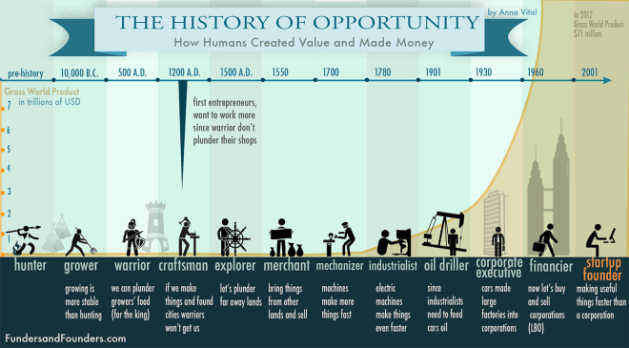
I really enjoyed this article “The History of Creating Value“. It has a great timeline showing how people made money through the ages. Stefan Jovanovich writes:

Warrior — “We can plunder grower’s food for the King”. Actually, not. Food is grown and taxed under the King’s authority so that the King can afford a standing army that picks fights with other standing armies.

Craftsman — “If we make things and found cities, warriors won’t get us.” Kings need palaces and priests need temples and they are sure as hell not going to be stuck out in the boonies.

Skipping forward…

Oil Driller — “since industrialists need to feed cars, oil” . Oil was used first for illumination, then for furnaces (both for direct heat and for steam), and only then for gasoline, which begins its history because the Russian oil production has created a kerosene glut.

Corporate Executive — “cars made large factories into corporations” – So this is why the East India Company and the Pennsylvania Railroad are really outliers.

Ms. Vital is the new winner of the Historicity Prize and is entitled to a full case of scuppernog.

Gibbons Burke writes:

The underlying thrust of this timeline is to argue that being a startup founder is the route to wealth and value creation today. Which is a great idea, and in line with Distributist economic organization, which holds that the main problem with capitalism is not when you have too many capitalists, but too few. The more owners there are in the society, the better.

But while the idea is a good one, the reality is that the road to wealth proposed by these startup evangelists is not to found and create a company which will provide a way to generate value for the owner over his lifetime, but to come up with a novel idea, develop it to the point where it has a proprietary advantage, and sell it to some corporate behemoth who has decided it it easier and much less risky to outsource its research and development to masses of proles living the startup dream. When one emerges with a good idea, simply snap it up and bring it into the corporate umbrella, and either monetize it and develop it further, or kill it because of the disruptive threat it poses to the existing herd of corporate cash cows.

The History of Creating Value

Anna Vital  /  April 24, 2013

At this point in history, startup entrepreneurship has become the fastest way to create value, and thus the fastest way to move upward in life. But this opportunity is unlike other opportunities humans had in history. Here is how you could create value before:
The Hunter Age. After hunter-gatherers became growers and herders, some people realized that it is faster and easier to go take other people’s crops and cattle than grow your own. War became popular. And wealth got a bad reputation. Read more of this post

Sun Yat-sen portrait up on Tiananmen Square for May Day

Sun Yat-sen portrait up on Tiananmen Square for May Day

2013-05-01 03:42:19 GMT2013-05-01 11:42:19(Beijing Time)  SINA.com

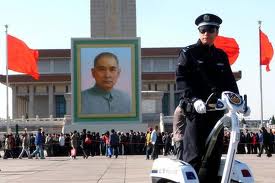
A portrait of Dr. Sun Yat Sen, a revered revolutionary leader who played a pivotal role in overthrowing imperial rule in China, is now up on Tiananmen Square for the May Day holiday.

SYS

Warren Buffett’s Analogy About About Boobs And Porn Shop Operators Is Just Brilliant

Warren Buffett’s Analogy About About Boobs And Porn Shop Operators Is Just Brilliant

Sam Ro | Apr. 30, 2013, 10:02 PM | 6,067 |

This week is the annual shareholder meeting for Berkshire Hathaway, the gigantic conglomerate run by billionaire Warren Buffett.

Buffett has a way of explaining complicated finance topics so that they’re fun and understandable.

Carleton English of Belus Capital Advisors points us to this gem of a quote from 2008 where he takes a jab at private equity.

Someone had asked the Oracle of Omaha why people sell their companies to him instead of private equity firms.  This is the type of question that you might hear later this week.  Here’s Buffett’s response: “You can sell it to Berkshire, and we’ll put it in the Metropolitan Museum; it’ll have a wing all by itself; it’ll be there forever. Or you can sell it to some porn shop operator, and he’ll take the painting and he’ll make the boobs a little bigger and he’ll stick it up in the window, and some other guy will come along in a raincoat, and he’ll buy it.”

According to Bloomberg, Buffett delivered this doozy during some Q&A with a 300 executives in Toronto. He’s basically explaining that there is more than one way for a company to get to a certain market value. Private equity often involves a lot of debt, a lot of cuts, and usually a lot of risk before a company is turned around and sold back on the market. Berkshire and Buffett, on the other hand, often take a more passive approach.  Typically, Buffett seeks out what he considers to be undervalued, yet well run companies.  And then he just waits for them to get to their intrinsic values. Anyways, we hope this weekend’s events in Omaha yield some more great quotes.

Warren Buffett Says Sell to Me, Not `Porn Shop,’ as Growth Dips

By Richard Teitelbaum – Jun 25, 2008

June 25 (Bloomberg) — Warren Buffett is in Toronto, fielding questions from a crowd of 300 executives. One asks what makes people want to sell their companies to him.

The Berkshire Hathaway Inc. chief executive officer replies that he tells a prospective seller to think of the company as a work of art.

“You can sell it to Berkshire, and we’ll put it in the Metropolitan Museum; it’ll have a wing all by itself; it’ll be there forever,” he says at the February meeting. “Or you can sell it to some porn shop operator, and he’ll take the painting and he’ll make the boobs a little bigger and he’ll stick it up in the window, and some other guy will come along in a raincoat, and he’ll buy it.” Read more of this post

The Ozery brothers, who have expanded Pita Break into their market into the U.S. and come up with new product lines, say innovation is in the company’s DNA

Ozery’s Pita Break makes healthy eating its bread and butter

Denise Deveau | 13/04/30 | Last Updated: 13/04/30 2:53 PM ET

0430pita

Alon Ozery’s success story started out in a small neighbourhood sandwich shop in Toronto. Within 15 years, he grew his fledgling bakery operation into the renowned Ozery’s Pita Break brand. After numerous expansions, he and his brother Guy continue to introduce new flatbread and snack products to a market hungry for healthy baked goods. In 2010, the brothers decided it was time to take the biggest leap of faith since the business started. Not only did they invest in doubling production capacity, they made their first serious efforts to expand into the U.S. market in earnest. Mr. Ozery says throughout the growth and upheaval, the key to success was staying true to the brand’s quality standards.

Read more of this post

Don’t fear the fire: Why entrepreneurs need all the criticism they can get

Don’t fear the fire: Why entrepreneurs need all the criticism they can get

Rick Spence | 13/04/29 8:54 AM ET
Last week, I took part in a business event in Peterborough, Ont., called Bears’ Lair. As you might guess, it’s a Dragons’ Den type format where entrepreneurs compete to win prizes for making the most compelling pitch for their business.

Sponsored by the local Workforce Development Board and organized by three dynamic women entrepreneurs, Bears’ Lair was done right. The competition started in January with 25 entrepreneurs entering on Facebook, and ended in April with four finalists facing off in front of a panel of four judges and 150 boisterous fans. The winner received $5,000 in cash and $20,000 in products and services from various sponsors, which included office equipment, advertising credits, Web development, Internet marketing coaching, accounting services and even fashion consultation. That the runners-up also won a number of free services showed the generosity of Peterborough’s business community.

But this event got me thinking: Why bears? Why dragons? Why do we associate entrepreneur pitch-offs with such violent concepts? “If you don’t win, you’ll be eaten by bears. Or consumed in dragon fire.” This doesn’t happen to aspiring singers (they become “Idols”) or apprentices (after being fired by Donald, they go home in a limo).

Still, I think there’s good reason for adopting this carnivorous imagery. Entrepreneurs deserve it. Read more of this post

How to Influence People with Your Ideas

How to Influence People with Your Ideas

by John Butman  |  11:00 AM April 30, 2013

One of my young clients, let’s call her Julie, is on a mission. Julie has an idea, one that has been gestating in her mind for quite some time, but now she realizes that for her idea to have any impact at all she will have to “go public” with it. Julie believes there are countless intelligent, talented but disadvantaged kids who, for a variety of reasons, have been shut out of traditional educational pathways and are therefore at risk of never achieving their full potential. Her idea, which she is passionate about, is to help these forgotten kids realize their potential by offering them practical guidance for achieving their goals and dreams. She has done some public speaking on the topic to educational groups and associations, and her ideas have been featured in various content venues, but now she wants to crank it up a level. She wants to start a movement.

She asked me: What do I have to do to get my idea out there? Should I blog and tweet? Write a book? Conduct a survey? Try for TEDx? Lead a seminar? In what combination? In what order? In essence, Julie wants to become what I call an “idea entrepreneur” — a person who builds a coordinated effort around a deeply-felt idea with the goal of achieving influence, affecting how people think and behave, and thus making some change in an organization or system. Aspiring idea entrepreneurs are everywhere: in businesses, classrooms, and communities of all kinds, all over the world. Maybe you know one. Maybe you are one. But you don’t have a massive influence-creation machine behind you (few people do) and you wonder how to get your idea heard above all the others competing for attention. How do you proceed?

You have to take your idea public, which means entering the “ideaplex” — that glamorous, treacherous place where videos go viral, TED stardom beckons, a thousand new authors publish each day, and think shops like IDEO make a business of idea generation. Julie’s inclinations were right. She would certainly need to do plenty of blogging, tweeting, surveying, speaking — the works. But none of these would be totally effective without answering the following questions, too:

1. What is my purpose? People are driven to go public for all kinds of reasons, from the thirst for fame and fortune to the dream of leading a crusade. Those who gain genuine, long-lasting influence are the ones who want to create positive change for other people. So ask yourself: Why am I doing this? Idea entrepreneur Cesar Millan (he has built quite an empire around his ideas including books, tv shows, DVDs and merchandise) is a dog behavioralist (“the dog whisperer”), but his deeper motive is to reduce maltreatment of animals — and kids — in our society.  Read more of this post

Berkshire size, Buffett age cloud annual gathering

Berkshire size, Buffett age cloud annual gathering

12:11pm EDT

By Jonathan Stempel and Jennifer Ablan

(Reuters) – Warren Buffett may be on safari for major acquisitions, which he likes to call elephants, but shareholders may wonder if his Berkshire Hathaway Inc has become the biggest elephant in the room. Berkshire has grown to look more and more like corporate America, as Buffett expands outside its core insurance business into such areas as energy, industrial products, newspapers, and in February ketchup, when he teamed up with Brazil’s 3G Capital investment firm to buy H.J. Heinz Co for $23.2 billion. Few of the 35,000 or more people who will this weekend make a pilgrimage to Berkshire’s hometown of Omaha, Nebraska for the company’s annual shareholder weekend, which Buffett calls “Woodstock for Capitalists,” are likely to criticize that strategy. While Buffett has managed to handily beat the Standard & Poor’s 500 so far this year, outperforming the overall market is getting tougher for Berkshire as it grows and diversifies, investors and analysts said.

Buffett, 82, and Vice Chairman Charlie Munger, 89, will at Saturday’s annual meeting field five hours of questions about the company, governance, the economy and – with a $15 billion cash cushion even after the Heinz purchase is completed – their next elephant. “Larger deals are needed to move the needle,” said Doug Kass, founder of hedge fund Seabreeze Partners Management Inc, who has shorted Berkshire stock partly because its size, including a $262 billion market value, makes it more difficult to record market-beating returns. Kass has been tapped by Buffett as a “credentialed bear” to ask questions and “spice up” the meeting. Buffett himself recognized the performance question when he noted in his March shareholder letter that Berkshire has lagged the broader market since the latter bottomed out four years ago. Read more of this post

Monster parents breeding brats in HK; “The city is at high risk as it is producing spoilt children who are overconfident about themselves”

Monster parents breeding brats in HK

“The city is at high risk as it is producing spoilt children who are overconfident about themselves,” said Associate Professor Annis Fung from City University of Hong Kong. -ST

Tue, Apr 30, 2013
The Straits Times

HONG KONG – “Monster” parents in Hong Kong are turning out a generation of spoilt brats with an inflated view of their abilities and who may resort to aggression to get ahead, the South China Morning Post (SCMP) reported on Wednesday, citing a latest study.

“The city is at high risk as it is producing spoilt children who are overconfident about themselves,” said Associate Professor Annis Fung from City University of Hong Kong.

“Monster” parents, who practise an authoritarian education style and over-emphasise children’s academic performance, could increase their children’s complacency, reported the Wen Wei Po newspaper on Wednesday. Read more of this post

13 year-old cancer girl from Florida fashions her big dream

Cancer girl fashions her big dream

yt_talia

Tuesday, Apr 30, 2013
The New Paper

At 13, she has already been made a honorary face of CoverGirl, a US cosmetics brand. Talia Joy Castellano also has a video blog on YouTube which has generated about 39 million views so far. Talia is from Orlando, Florida, and despite having terminal cancer, dreams big. She has now achieved another dream – to become a fashion designer. Talia is set to launch a collection for teenagers with Los Angeles-based designer, Urbana Chappa, the Daily Mail reported. Ms Chappa, who runs a women’s wear label called Maison De Urbana, decided to help fulfil Talia’s dream of becoming a fashion designer after hearing the teen’s inspirational story on The Ellen DeGeneres Show last year. She flew to Florida on April 15 to meet her at the Arnold Palmer Hospital for Children in Orlando, to help bring her design ideas to life. They discussed about launching the brand in the coming weeks. Talia said she wanted to “show young teens that they can express themselves with clothes”. Read more of this post

New Book on Buffett: “The Oracle & Omaha: How Warren Buffett and His Hometown Shaped Each Other”

The Oracle & Omaha: How Warren Buffett and his hometown shaped each other

Warren Buffett, “The Oracle of Omaha,” often speaks fondly of his hometown. The city provided him a comfortable home base, away from Wall Street’s distractions. In return, Omaha benefited from the worldwide attention that came his way and from the generosity of his early investors. It turned out to be a profitable relationship for both The Oracle & Omaha.

THE_ORACLE_AND_OMAHA_BOOKCOVER.jpg[1]


Buffett’s decision to hire two investment lieutenants is paying off for Berkshire Hathaway, and it’s paying off for the two younger money managers, too.

PUBLISHED MONDAY, APRIL 29, 2013 AT 1:00 AM / UPDATED AT 7:28 AM

BERKSHIRE’S MONEYMAKERS

Investors earn handsome paychecks by handling Buffett’s business

By Steve Jordon
WORLD-HERALD STAFF WRITER

Warren Buffett’s decision to hire two investment lieutenants is paying off for Berkshire Hathaway, and it’s paying off for the two younger money managers, too. Todd Combs, 42, and Ted Weschler, 51, are expected to receive bonuses exceeding $50 million each based on their investment results in 2012, evidence that they and Buffett made the right choices when they connected. Weschler and Combs had admired Buffett long before meeting him, and both actively sought connections that led to their hiring.  Read more of this post

Obama spends more time playing golf and on holiday (976 hours) than on the economy (474 hours) since his Jan 2009 elections: Government Accountability Institute Report

Obama spends more time playing golf than on the economy: Report

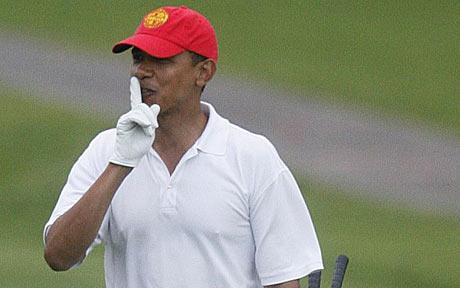
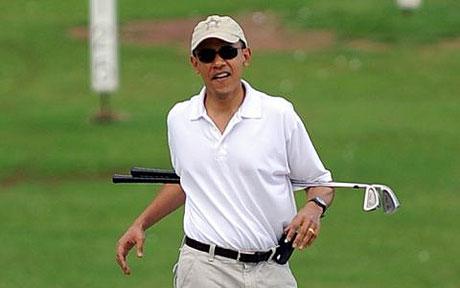
LONDON — In an analysis of the presidential diary and newspaper reports, the Government Accountability Institute found that United States President Barack Obama has spent 976 hours since his January 2009 election on holiday and playing golf.

4 MIN 22 SEC AGO

Obama-Golfgolf-obama-club

LONDON — In an analysis of the presidential diary and newspaper reports, the Government Accountability Institute found that United States President Barack Obama has spent 976 hours since his January 2009 election on holiday and playing golf. In contrast, he has only spent 474.4 hours in economic meetings. “As a government watchdog group, we just tabulate the numbers and let others decide how to interpret them,” said Mr Peter Schweizer, president of GAI, which compiled the report. “People understand that presidents have the most stressful job in the world and need a break from time to time. There will be some who will be encouraged by the numbers and some who will wish the president spent more time in economic meetings.” The American news website Breitbart claimed that the survey may have underestimated Mr Obama’s time devoted to recreation. GAI calculated a round of golf as taking four hours, but Breitbart pointed out that Mr Obama said last year that playing golf is “the only time that for six hours, I’m outside”. “Like most people, presidents still do work while on vacation,” said Mr Schweizer. “So we really went out of our way to fairly and accurately reflect how the president spends his time.” Breitbart also said that the analysts had been generous when calculating how much time Mr Obama spent in economic meetings. Anything on the White House calendar even remotely connected to economics, such as “Obama meets with Cabinet Secretaries” or “Obama has lunch with four CEOs” counted as an economic meeting. The president said in 2011 that the economy was his main priority, reported The Daily Telegraph. “You should know that keeping the economy growing and making sure jobs are available is the first thing I think about when I wake up every morning,” he told an audience of UPS workers. “It’s the last thing I think about when I go to bed each night.” But the GAI report showed that the amount of time spent on the economy has fallen significantly in the years since his 2009 election. In 2009, Mr Obama spent 187.2 hours in economic meetings. A year later that number dropped to 127.8 hours. In 2011 the total fell to 73 hours. By the end of 2012, the president had spent 100 fewer hours on finance than in his first year in office, with a total of 80.4 hours devoted to the economy. AGENCIES

How Entrepreneurs Come Up With Great Ideas: There is no magic formula. But that doesn’t mean there’s no formula at all.

April 29, 2013

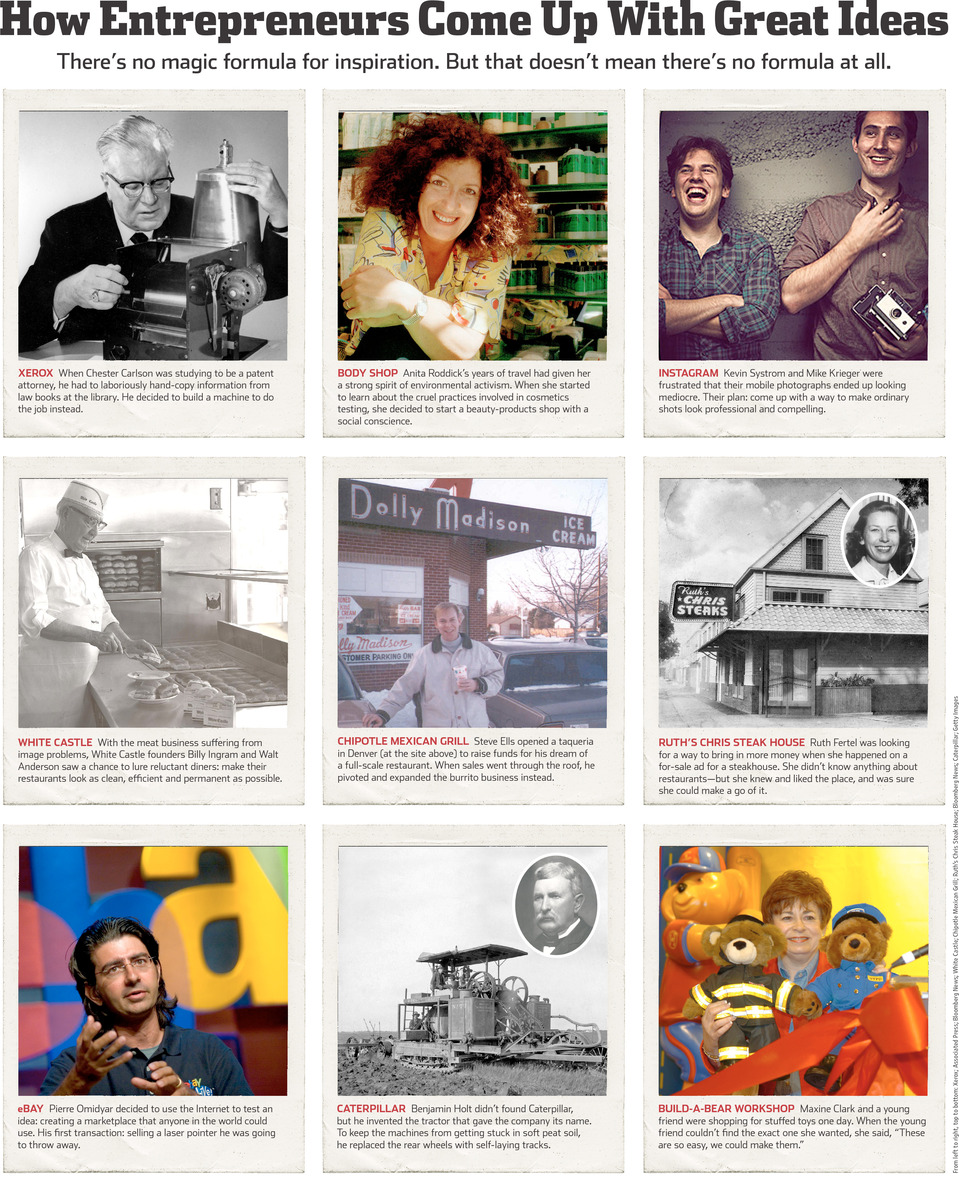
How Entrepreneurs Come Up With Great Ideas

There is no magic formula. But that doesn’t mean there’s no formula at all.

SM-AA713_SMCOVE_G_20130425114620

At the heart of any successful business is a great idea. Some seem so simple we wonder why nobody thought of them before. Others are so revolutionary we wonder how anybody could’ve thought of them at all. But those great ideas don’t come on command. And that leaves lots of would-be entrepreneurs asking the same question: How did everybody else get inspiration to strike—and how can we work the same magic? To find out, we turned to the experts—investors, advisers and professors who have seen and heard countless success stories, as well as entrepreneurs who have written success stories of their own. They saw inspiration coming from all sorts of sources—everyday puzzles, driving passions and the subconscious mind. Here’s what they had to say. Read more of this post

Billionaires Flee Havens as Trillions Pursued Offshore

Billionaires Flee Havens as Trillions Pursued Offshore

Billionaire Dmitry Rybolovlev, Russia’s 14th-richest person, and his wife, Elena Rybolovleva, have been brawling for almost five years in at least seven countries over his $9.5 billion fortune. In a divorce complaint originated in Geneva in 2008, Rybolovleva accused her husband of using a “multitude of third- parties” to create a network of offshore holding companies and trusts to place assets — including about $500 million in art, $36 million in jewelry and an $80 million yacht — beyond her reach. She has brought legal action against the 48-year-old Rybolovlev in the British Virgin Islands, England, Wales, the U.S., Cyprus, Singapore and Switzerland, and is seeking $6 billion.

The suits provide a window into the offshore structures and secrecy jurisdictions the world’s richest people use to manage, preserve and conceal their assets. According to Tax Justice Network, a U.K.-based organization that campaigns for transparency in the financial system, wealthy individuals were hiding as much as $32 trillion offshore at the end of 2010. Fewer than 100,000 people own $9.8 trillion of offshore assets, according to research compiled by former McKinsey & Co. economist James Henry.

“For a lot of people, it’s not just the objective of not paying taxes,” Philip Marcovici, an independent Hong Kong-based tax lawyer and board member of Vaduz, Liechtenstein-based wealth adviser Kaiser Partner Group, said in a telephone interview. “It’s the objective of obtaining the human right to privacy and seeking confidentiality about their financial affairs.” Read more of this post

Building A Culture That Works: The CEO As The Cultural Epicenter

Building A Culture That Works: The CEO As The Cultural Epicenter

PETER LEVINE

posted 33 mins ago

Editor’s note: Peter Levine is a partner at Andreessen Horowitz. He has been a lecturer at both MIT and Stanford business schools and was the former CEO of XenSource, which was acquired by Citrix in 2007. Prior to XenSource, Peter was EVP of Strategic and Platform Operations at Veritas Software, where he helped grow the organization from no revenue to more than $1.5 billion, and from 20 employees to over 6,000. Follow him on his blogand on Twitter @Peter_Levine.

As a former CEO and senior executive, there was a time when I did not quite understand the profound impact a CEO has on the culture of a company, even though I always knew culture was important. The organization reflects the behavior and characteristics of the CEO, and that establishes the culture. Foster an environment of open communication and the organization inherits a culture of open communication. Operationally detailed? The organization becomes operationally detailed. Political? The organization becomes political. Curse a lot? The organization curses. Angry? The organization gets angry. Have a big office? Everyone wants a big office. It doesn’t matter what’s written on a coffee mug or on a “culture” slide, what you do as a CEO, day in and day out, and how you behave will define your company’s culture. Read more of this post

Invest in people, not resources; Most workplaces seem diabolically designed to kill creativity, intelligence, and productivity, and thus drive away talent

Invest in people, not resources

BY BOB GOWER 
ON APRIL 26, 2013

There is a supply-and-demand paradox brewing in the software business, and it’s getting worse by the day. Companies are searching for rock-star talent, while at the exact same moment talented people are searching for great work. People on both sides of this issue are frustrated — companies can’t find the right workers, or enough of them and talented workers feel stifled, bored, and in many cases exhausted, and even oppressed, by the work they do find. It’s an easy field for employers to stand out in, and yet so few fail to create the kind of engaging workplaces that attract top talent. Most blame their troubles on the market or a lack of money, but it’s hard to take this argument seriously when Wikipedia attracted an army of volunteers with seemingly little effort, and then produced so much value it drove Microsoft’s well-funded Encarta out of business. How did Wikipedia attract and motivate so much unpaid talent, and how does this hugely popular project keep doing it?

The secret to hiring top talent is simple — but not easy. Most workplaces seem diabolically designed to kill creativity, intelligence, and productivity, and thus drive away talent. If you want to hire well, you need to first engage and inspire the talent you do have, and that’s not about money. It’s about treating people like people. It’s a matter of helping them align toward a compelling common vision, giving them the tools and environments they need, then getting out of their way.

Read more of this post

Sibling success: When brothers and sisters work together in a family business the scope for problems is huge. But if managed carefully these relationships can be both productive and fulfilling

SIBLING SUCCESS

ARTICLE | 25 APRIL, 2013 09:30 AM | BY ATTRACTA MOONEY

There’s hardly a sadder tale of sibling problems than that of the Chadha brothers, the family behind Indian conglomerate Wave. The beginning of the story will be familiar to many families – a migrant father who started a small retail business and a second generation that took that company to a new level, turning it into a successful empire with interests in food processing, technology, distilling and real estate among others. But behind the scenes, things were far from rosy. Much has been reported recently about the problems between the second-generation brothers, although little has been confirmed. But it’s fair to say eldest brother Gurdeep Singh Chadha, better known as Ponty, who drove the changes at the family business, and younger sibling Hardeep didn’t always see eye to eye. And in an incident that grabbed headlines around the world, both ended up dead last year after a shootout, allegedly over the ownership of family assets (the funeral pictured, right). An investigation is ongoing. It might be an extreme case, but sibling rivalry is nothing new. Indeed, it’s in some of mankind’s oldest myths and most enduring and resonant stories. Think of Cain and Abel, or Joseph and his brothers. Think of the rivalry King Lear created among his daughters. More prosaically, look at the long-running and gruesomely fascinating slanging matches between musicians Noel and Liam Gallagher.

The world of family business is also full of stories of siblings who didn’t see eye to eye. There’s the very public and long-running spat between the Ambani brothers, Asia’s richest siblings, whose family business Reliance had to be split following their father’s death. In Europe, the brothers behind the Aldi supermarket empire decided to divide the company in two, rather than work together. In Canada, a similar story played out with McCain brothers Harrison and Wallace. Despite working well together in their frozen-food empire for years, a feud over succession saw Wallace forced out of the company in the 1990s. He later took over rival Maple Leaf Foods. Read more of this post

Made-in-Taiwan school still standing amid China’s Sichuan Ya’an earthquake rubble

Made-in-Taiwan school still standing amid Ya’an rubble

Hong Chao-chun and Staff Reporter, 2013-04-26

62586_992240020.423.2316_2013資料照片_copy1

One of the school buildings. (Photo/Hung Chao-chun)

The quality of the Made in Taiwan brand has passed the test after a Taiwan-designed elementary school withstood the 7.0 earthquake that destoyed thousands of buildings and caused 193 deaths in southwestern China’s Sichuan province, our sister paper Want Daily reports.

Taiwanese architect Hsu Yan-chi designed and built the elementary school in Ya’an city after the May 2008 Wenchuan earthquake, which devastated the region and left 87,000 people dead or missing. Last week’s earthquake ocurred on the morning of April 20, with the epicenter just south of the provincial capital Chengdu. Public buildings in the city of Ya’an were almost completely leveled except for the school designed by the Taiwanese architect. The building was funded by donations from Taiwan’s public. Read more of this post

Meet The Accidental Designer Of The GitHub And Twitter Logos

Meet The Accidental Designer Of The GitHub And Twitter Logos

SIMON OXLEY, AN ISTOCKPHOTO POWER USER, WAS LAUNCHED TO FAME AFTER HIS DRAWINGS WERE BOUGHT BY TWITTER. NOW, HE DESIGNS LOGOS FOR STARTUPS ALL OVER THE WORLD.

1672164-slide-750-catsSimonOxley

Simon Oxley was drinking beer and watching TV on his couch (like any good freelancer) when he noticed that a hot new startup called Twitter was using his art as a logo. At first, he thought he was drunk. “I checked the label on the beer I was drinking and called my wife to come see,” he says. “It was a total, surreal surprise.”

Oxley, who is British-born and Tokyo-based, was (and is) a freelance contributor to iStockphoto, one of the web’s most popular resources for stock photos and illustrations. He originally joined the service because Adobe Creative Suite came with a free membership. But since then, he’s become a power user, uploading almost 10,000 images and selling 100,000. He was even asked to design iStockphoto’s own logo, in 2009.

His biggest sales, though, have been from startups like Twitter, who paid “a relatively small amount of money” for a library of images including the bird and the robot, which still appears when you visit a broken link. The tweeting bird has since been replaced by a succession of avian variations, but thanks to the long memory of the Internet, it resurfaces every now and then. “It always makes me laugh when I still see organizations using my bird to link to their Twitter feed,” Oxley says. “Thank you!”

Shortly after his name emerged as the designer of Twitter’s original mark, Oxley was approached by GitHub, the open source code community. They purchased a package of graphics from Oxley’s stock library as well, including their Octocat logo, for a flat fee. As you might imagine, the GitHub community remakes the logo on a regular basis: there arehundreds of iterations, including a Homer Simpson version, a Shepard Fairey version, and–predictably–a Nyan Cat version. Read more of this post

Ex-Buffett in-law looks behind his success

Ex-Buffett in-law looks behind his success

Thanong Khanthong
The Nation April 27, 2013 1:00 am

30204900-01_big

Will Warren Buffett live forever? He might not, but his legendary value-investment strategies will certainly outlive any other.

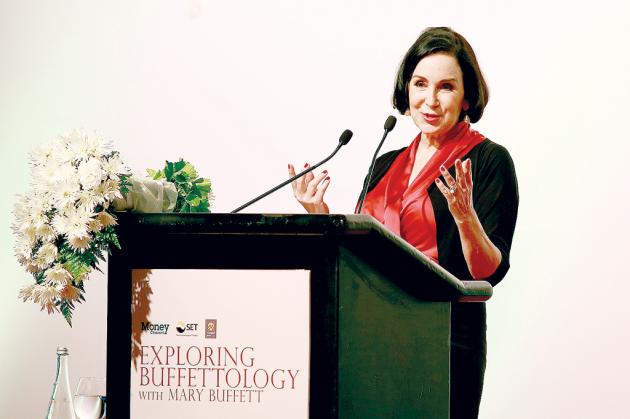
And who is in a better position to know him and relate his ideas and messages better than Mary Buffett, his former daughter-in-law, who spent 12 years in the family? At a talk-show event called “Exploring Buffettology with Mary Buffett” in Bangkok yesterday, she provided several insights and anecdotes related to the investmtne guru, apart from laying down his strategies that beat the stock market for the long haul. Read more of this post

How Jenna Lyons transformed J.Crew into a cult brand

HOW JENNA LYONS TRANSFORMED J.CREW INTO A CULT BRAND

SEE HOW JENNA LYONS HAS TAKEN J.CREW FROM UGLY DUCKLING TO FASHION ARBITER.

BY: DANIELLE SACKS

2009-07-07-HS5D9750

Jenna Lyons is in her corner office sucking on an iced coffee as if it were manna. The room looks like a cross between a boudoir and an artist’s loft, with a peach fur draped over a white leather eames chair. The industrial windows stretch up and up, like Lyons’s legs, which are punctuated by a pair of metallic, sparkled 3-inch stilettos. But the coffee just isn’t cutting it. “I’m so hungry. I haven’t eaten in 10 days,” says the executive creative director and president of J.Crew, not hyperbolically. “I was like,errrr! errrr! with every pair of pants,” she adds, making that grunting sound familiar to all women at some point in their lives. Turns out even the most fashionable manager in America can have a bad clothing day. “The inside button would pop before I even zipped it. I was like, Oh, God!” So Lyons went on an organic-juice-cleanse-plus-Isogenics bender and has consumed nothing but liquids for more than a week. “I’m a little bit mangry. Hangry mangry,” she confesses, within five minutes of my arrival.

It’s surprising, though comforting, to find out that Lyons is humanly imperfect. Since her coronation as creative head of J.Crew in 2008, the company once known for its preppy Nantucket ancestry has become a force in fashion, with Lyons at the center of its evolution. She has created a high-low look that reflects her own boy-girl style–androgyny with some sequins and a dash of nerdy glasses. Along with annual revenue that has more than tripled to $2.2 billion since 2003, the cult of J.Crew has blossomed like a CMO’s fantasy, with fashion blogs wholly devoted to the brand (fromJCrewIsMyFavStore to TheJCRGirls) and a fan base that includes Michelle Obama and Anna Wintour. At Fashion Week this February (J.Crew’s fourth season there, itself a symbol of the retailer’s growing influence), one attendee whispered, as if Lyons were Madonna or Bono, “I am just totally obsessed with Jenna.” Read more of this post

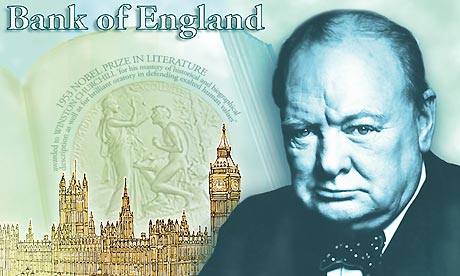
Britain to honor Winston Churchill on new banknote; The “blood, toil, tears and sweat” quotation will be inscribed beneath a portrait photograph taken in 1941

Britain to honor Winston Churchill on new banknote

8:33am EDT

Winston Churchill on next £5 bank note

LONDON (Reuters) – Britain is set to honor its revered wartime leader Winston Churchill with a banknote featuring his portrait and famous declaration “I have nothing to offer but blood, toil, tears and sweat”.

The governor of the Bank of England, Mervyn King, traveled to Churchill’s former home Chartwell in Kent, southern England on Friday to announce plans for Churchill’s image to appear on a new five-pound ($8) note to be issued in 2016.

“Sir Winston Churchill was a truly great British leader, orator and writer. Above that, he remains a hero of the entire free world,” outgoing central bank governor King told members of the Churchill family. Read more of this post