How to Lie, by Novelist Jesse Ball

How to Lie, by Novelist Jesse Ball

By Jesse Ball on April 11, 2013

To lie effectively, it’s crucial that you remove all feelings of discomfort and moral quandary so you can control your demeanor. If you do not, they will hang from your tail like a tin can, and you’ll be found out.

Step 1. Profile your mark. Go over him with a fine-toothed comb and figure out as many things as you can. The more you know about him, the easier it will be to deceive him.

Step 2. Decide on what you want to achieve with the lie. Then find a way to tie that lie into a concept that supports the world the mark believes in. An easy way to understand this is to imagine the mark saying the phrase that contains the lie to someone else. Imagine overhearing the mark repeating what you’ve said because it supports the basic tenets of his life. Your lie should be embedded in such a phrase. The effect of this is that the mark will not consider the truth or falsity of your claim because he accepts the truth of the entire statement.

Step 3. Do not add to the lie in a weak-kneed way in order to repair it while in the midst of your deception. Simply let it stand. Never be the one to delineate the lie’s silhouette. Permit the silhouette to stand in obscurity. If the mark wants to figure out what’s true or not, let him do that work. People are often too lazy to think illogical propositions all the way through, and that’s why they don’t realize the propositions are incorrect.

Step 4. Don’t feel that in lying you’re trying to persuade. Lying isn’t about persuasion, it’s about manipulation. If you try to persuade someone, you’re trying to change a person’s belief. That’s hard work. You don’t want to do that. You want to trick the mark into believing that your lie fits with everything else he already believes. Nobody likes to be persuaded of things. Every person believes himself stubborn. Don’t fight that! Just make the mark believe you are agreeing with him when you lie to him.

Remember, to lie well is to take advantage of the mark’s faulty perception. A great liar is a great perceiver of truth. A mark has a romanticized idea of the world. To keep that idealistic view, the mark must lie to himself. He probably does that every day, just to stay sane. In fact, everyone does this. To be human is to lie!

• Ball is an assistant professor at the School of the Art Institute of Chicago. He teaches courses on lying and wandering, among other subjects.

How to Argue Like a Pundit, by PR Expert Rich Masters

How to Argue Like a Pundit, by PR Expert Rich Masters

By Rich Masters on April 11, 2013

3ht_arguelikeapundit16__01__630x420

There are two schools of thought on how to win an argument on television. You can memorize the talking points that the DNC or the RNC sends you and spit ’em out at whoever you’re up against. We call that rip and read, which gets a little stale. The other school is the Joe Biden school of extemporaneous blather. It has the virtue of appearing more genuine and helps you connect with your audience. Face it, Biden is everybody’s favorite D.C. interview. But message discipline and Joe? Oxymoronic.

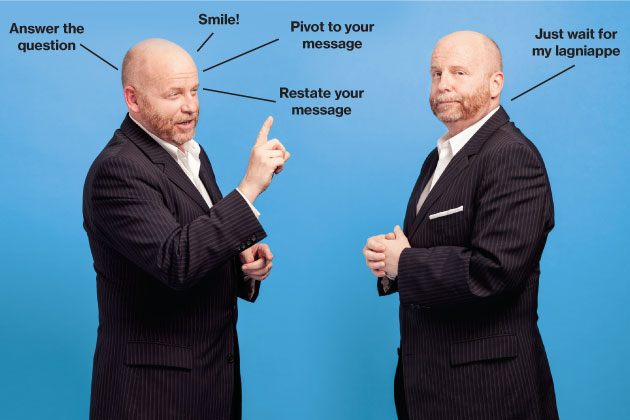
So how do you combine the message discipline of school No. 1 with the spontaneity of school No. 2? By using something I call the message diamond. When the host asks a question, the very first thing you do is answer it. Don’t duck it, don’t hide, don’t run from it. Then pivot to your message, and back that with a little Biden: an interesting anecdote, an example that amplifies the major point you’re making. Then you close out by restating your message. That way, no matter how it’s edited, no matter how it comes out, you’ve hammered home your message and added a story to make it stick.

Now, for debate shows, it takes a little something extra. First: Smile while you swing. If folks don’t like you, they won’t care if you win. Next: You want to know your opponents’ arguments as well as your own. If you know what they’re going to say in advance—and 99 percent of the time you know exactly what they’re going to say—you’ll be able to take their own argument, twist it around their neck, and kick ’em off the bridge with their own words. And finally: a big zinger, something unusual that they weren’t anticipating. That’s what viewers will take away, that something special. In Louisiana, where I cut my teeth debating, it’s what we call a lagniappe.

• Masters is a partner at public relations agency Qorvis Communications. As told to Joshua Green

How to Reinvent a Brand, by Coach CEO Lew Frankfort; Coach (COH) was a $550 million business in 2000 when it went public and a $5 billion one a decade or so later

How to Reinvent a Brand, by Coach CEO Lew Frankfort

By Lew Frankfort on April 11, 2013

Coach (COH) was a $550 million business in 2000 when it went public and a $5 billion one a decade or so later. Now we’re transforming it again into a lifestyle brand for women, with shoes, outerwear, and capsule collections of tops and bottoms. A transformation has to be careful, nurtured. You have to understand what’s distinctive about your brand and build on who you are. Consumers are smart—if you try to be something you’re not, they’ll see you as an impostor. Modify your product first and build interest and loyalty into what is coming. Understand your consumers and what motivates them. It’s generally a fatal mistake to believe you can leave your customers behind and find new ones. The opportunity is to bring them along with you. You should also know your employees and what they’re capable of. To help pull off our current transformation, we brought in three additional creative leaders from Paul Smith, Nike (NKE), and Selfridges. We do an enormous amount of research. Don’t bet the ranch without any consumer insights or experience. We triangulate between research and instincts, or gut feelings. If we do research that doesn’t reinforce our instincts, we go back and do more research. We pause. We might take a different turn. A full transformation generally takes five times what you think it will. Not time, not money, but reach. It has to be comprehensive. And you’re never done. You can’t accept any applause for things that are going well. You have to fear failure.

• Frankfort is the chairman and chief executive of Coach. As told to Susan Berfield

Ten-Year Old Girl Appeals for Help from China’s First Lady

Ten-Year Old Girl Appeals for Help from China’s First Lady

Posted on April 11, 2013 by Yaxue Cao

e5ae89e5a6ae e5bca0e5ae89e5a6aee7bb99e5bdade4b8bde5aa9be79a84e4bfa1

In my recent blog “Lock Up and Lock Down” about crackdowns on dissidents and activists during the Two Meetings, I mentioned an incident about a ten-year-old girl whose father is a dissident in Hefei, Anhui (安徽合肥):

“In a particularly egregious episode of this year’s clamping down on dissidents, on February 27 in Hefei, Anhui (安徽合肥), four men kidnapped Zhang Anni (张安妮), the 10-year-old daughter of Zhang Lin (张林), after the school let out, and took her to the local police station. There she was detained for 20 hours without being given food or water, or even a blanket to stay warm. Later, the police also searched Zhang Lin’s home, taking away his computer, cell phone, cash, and other important necessities. The father and daughter have since been deported to Bengpu (蚌埠) where Anni, scared and refusing to talk for days, has no school to go for the time being.

“A Tsinghua-trained nuclear physicist, Zhang Lin is a veteran dissident who has served three prison terms since the 1980s, totaling 13 years.”

Anni (安妮) still has not been able to go back to school. Before the Two Meetings, Zhang Lin lived in Hefei where Anni went to Hupo Elementary School (琥珀小学) and Anni’s older sister attends college in the same city. For Zhang Lin, a single father now (I believe), Hefei is where he wants to live to be close to both children, but he has been repeatedly forced out of the city and back to Bengbu (安徽蚌埠), his hometown. For Anni, she has made it clear to her dad that she wants to go back to Hupo ES because “there are only 23 kids in my class!” (the typical class size in China is twice as big.)

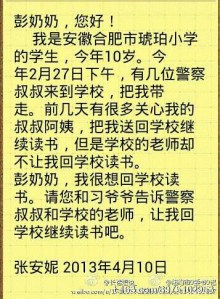
Monday, in an action called “Sending Anni Back to School,” 40 some lawyers and netizens from across China arrived in Hefei to protest on behalf of Anni, demanding that the child be allowed to resume school in Hupo ES. The school’s representative came out on Monday telling the father to go to the “relevant organ” to get a guarantee that the child will never be taken away from school by unidentified people. Today the school said that Zhang Anni does not meet the requirements for enrollment. The crowd protested in front of various government sites in Hefei, including the Public Security Bureau and the Education Bureau, but no one has come out to speak to them except for scores of plain clothes and uniformed policemen watching over the crowd, videoing taping them, getting into a couple of scuffles with them, and taking some to police stations to interrogate. Having no place to turn, Anni wrote a letter today to Peng Liyuan, China’s first lady, appealing for help:

“Grandma Peng, how do you do? I’m a student at Hupo Elementary School in Hefei, Anhui. I’m ten years old. In the afternoon on February 27 this year, several policemen came to my school and took me away. A few days ago, many uncles and aunties who are concerned about me wanted to send me back to school, but the teachers in my school won’t let me. Grandma Peng, I really want to go back to school. Please, can you and Grandpa Xi tell uncle policemen and the teachers to let me go back? Zhang Anni, April 10, 2013.”

The letter is a hot topic on Tencent Weibo and has been re-posted many times. Will Grandma Peng hear Anni and help her out? We shall see. Meanwhile, I’ll let out a deep sigh: China Dream.

Mark Zuckerberg: The keys to a knowledge economy; Immigrants can help take our nation to new heights — if we let them

The keys to a knowledge economy

By Mark Zuckerberg, Thursday, April 11, 10:16 AM

Mark Zuckerberg is founder and chief executive of Facebook and co-founder of Fwd.us.(Washington Post Co. Chairman Donald E. Graham is a member of Facebook’s board of directors.)

Earlier this year I started teaching a class on entrepreneurship at an after-school program in my community. The middle-school students put together business plans, made their products and even got an opportunity to sell them.

One day I asked my students what they thought about going to college. One of my top aspiring entrepreneurs told me he wasn’t sure that he’d be able to go to college because he’s undocumented. His family is from Mexico, and they moved here when he was a baby. Many students in my community are in the same situation; they moved to the United States so early in their lives that they have no memories of living anywhere else.

These students are smart and hardworking, and they should be part of our future.

This is, after all, the American story. My great-grandparents came through Ellis Island. My grandfathers were a mailman and a police officer. My parents are doctors. I started a company. None of this could have happened without a welcoming immigration policy, a great education system and the world’s leading scientific community that created the Internet. Read more of this post

Brains as Clear as Jell-O for Scientists to Explore

April 10, 2013

Brains as Clear as Jell-O for Scientists to Explore

By JAMES GORMAN

11brain-2-popup

A mouse brain, with dye, after it was made transparent using a new method

The visible brain has arrived — the consistency of Jell-O, as transparent and colorful as a child’s model, but vastly more useful.

Scientists at Stanford University reported on Wednesday that they have made a whole mouse brain, and part of a human brain, transparent so that networks of neurons that receive and send information can be highlighted in stunning color and viewed in all their three-dimensional complexity without slicing up the organ.

Even more important, experts say, is that unlike earlier methods for making the tissue of brains and other organs transparent, the new process, called Clarity by its inventors, preserves the biochemistry of the brain so well that researchers can test it over and over again with chemicals that highlight specific structures and provide clues to past activity. The researchers say this process may help uncover the physical underpinnings of devastating mental disorders like schizophreniaautismpost-traumatic stress disorder and others. Read more of this post

Robert Edwards, Pioneer of In-Vitro Fertilization, Dies; “Edwards overcame one technical hurdle after another in his persistence to discover a method that would help to alleviate infertility”

Updated April 10, 2013, 3:52 p.m. ET
ROBERT EDWARDS 1925-2013
Scientist Who Developed In-Vitro Fertilization

Robert Edwards was a feisty British embryologist who fundamentally transformed human procreation by developing in vitro fertilization.

OB-XA185_0410ed_G_20130410150759

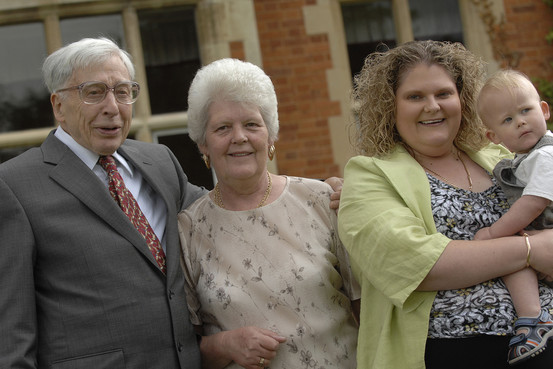
Professor Robert Edwards (left) posing for pictures with the world’s first IVF baby Louise Brown, (second right) her son Cameron (right) and her mother Lesley Brown in 2008. during a celebration ahead of Louise’s 30th birthday at Bourn Hall Clinic in Cambridge, England.

Dr. Edwards, who died Wednesday in England at age 87, was awarded the 2010 Nobel Prize in medicine for his discovery, which resulted in the first test-tube baby and provided the basis for genetic screening and stem cell research.

Louise Brown, the first baby conceived via IVF, was born in England on July 25, 1978. More than four million IVF babies since have been born world-wide.

Working with gynecologist Patrick Steptoe, who died in 1988, Dr. Edwards overcame political and religious hostility, as well as the disapproval of many other scientists.

“By a brilliant combination of basic and applied medical research, Edwards overcame one technical hurdle after another in his persistence to discover a method that would help to alleviate infertility,” the Nobel Prize committee said in its award citation. Read more of this post

Schaefer, Caterpillar CEO Who Changed Company Name, Dies

Schaefer, Caterpillar CEO Who Changed Company Name, Dies

George Schaefer, who led Caterpillar Inc. (CAT) from losses to a period of record profits from 1985 to 1990 and removed “Tractor” from its name, has died. He was 84.

He died today in Peoria, Illinois, where Caterpillar is based, according to a statement by the company. No cause was given. Caterpillar is the world’s largest maker of construction equipment and, since 1991, has been one of the 30 companies that make up the Dow Jones Industrial Average.

Schaefer’s five years as chairman and chief executive officer culminated a 39-year career with the company that began in accounting. Caterpillar, which had endured losses and initiated a cost-cutting campaign in the early 1980s, posted record profits during Schaefer’s tenure and took steps toward worker-manager collaboration, according to accounts in the New York Times.

“George Schaefer will be remembered as one of the great leaders in Caterpillar’s history,” current chairman and CEO Doug Oberhelman said in the statement. “He pushed the company to move away from a centralized model to its current business unit structure during the late 1980s, a significant and difficult decision that positioned Caterpillar for the remarkable growth and success that has followed.”

Schaefer’s decision in 1986 to change the company’s name from Caterpillar Tractor Co. recognized “that we had become much more than just a tractor company,” Oberhelman said. Read more of this post

Can Firms Aim to Do Good if It Hurts Profit? A dozen states now recognize benefit corporations, for-profit companies that pursue social and environmental goals

April 10, 2013, 8:23 p.m. ET

Can Firms Aim to Do Good if It Hurts Profit?

Investors Could Sue, Citing Corporate Governance Laws, but Some States Are Providing Cover Via Benefit Corporations

By ANGUS LOTEN

MK-CC313_SBCORP_G_20130410182114

Blake Jones of Boulder, Colo., is one of the many modern entrepreneurs who say their goals extend beyond increasing the bottom line to such pursuits as reducing child poverty or protecting the environment. But he worries that embracing a mission other than maximizing profits could open the door to shareholder lawsuits because of decades-old corporate governance laws.

A co-founder and chief executive of Namaste Solar, Mr. Jones says his eight-year-old company gives 20% of its annual after-tax profits to local projects, such as a nearby children’s museum and a bicycle-recycling program. It also offers up to $30,000 in solar-system installation grants to schools and other nonprofits. But “according to state law,” he says, “we don’t have any legal protection for doing business the way we do” even though such practices attract customers who also “want to do good.”

A dozen states in the past three years, including New York and California, have adjusted their incorporation laws—the same laws that set the “Inc.” or the “Co.” after a company name—to create a new corporate structure known as a benefit corporation. These structures seek to provide some legal cover for entrepreneurs such as Mr. Jones to consider the local community or the environment in corporate decisions, rather than just their shareholders. Read more of this post

Givers take all: The hidden dimension of corporate culture; By encouraging employees to both seek and provide help, rewarding givers, and screening out takers, companies can reap significant and lasting benefits.

Givers take all: The hidden dimension of corporate culture

By encouraging employees to both seek and provide help, rewarding givers, and screening out takers, companies can reap significant and lasting benefits.

April 2013 • Adam Grant

After the tragic events of 9/11, a team of Harvard psychologists quietly “invaded” the US intelligence system. The team, led by Richard Hackman, wanted to determine what makes intelligence units effective. By surveying, interviewing, and observing hundreds of analysts across 64 different intelligence groups, the researchers ranked those units from best to worst.

Then they identified what they thought was a comprehensive list of factors that drive a unit’s effectiveness—only to discover, after parsing the data, that the most important factor wasn’t on their list. The critical factor wasn’t having stable team membership and the right number of people. It wasn’t having a vision that is clear, challenging, and meaningful. Nor was it well-defined roles and responsibilities; appropriate rewards, recognition, and resources; or strong leadership.

Rather, the single strongest predictor of group effectiveness was the amount of help that analysts gave to each other. In the highest-performing teams, analysts invested extensive time and energy in coaching, teaching, and consulting with their colleagues. These contributions helped analysts question their own assumptions, fill gaps in their knowledge, gain access to novel perspectives, and recognize patterns in seemingly disconnected threads of information. In the lowest-rated units, analysts exchanged little help and struggled to make sense of tangled webs of data. Just knowing the amount of help-giving that occurred allowed the Harvard researchers to predict the effectiveness rank of nearly every unit accurately.

The importance of helping-behavior for organizational effectiveness stretches far beyond intelligence work. Evidence from studies led by Indiana University’s Philip Podsakoff demonstrates that the frequency with which employees help one another predicts sales revenues in pharmaceutical units and retail stores; profits, costs, and customer service in banks; creativity in consulting and engineering firms; productivity in paper mills; and revenues, operating efficiency, customer satisfaction, and performance quality in restaurants.

Across these diverse contexts, organizations benefit when employees freely contribute their knowledge and skills to others. Podsakoff’s research suggests that this helping-behavior facilitates organizational effectiveness by:

  • enabling employees to solve problems and get work done faster
  • enhancing team cohesion and coordination
  • ensuring that expertise is transferred from experienced to new employees
  • reducing variability in performance when some members are overloaded or distracted
  • establishing an environment in which customers and suppliers feel that their needs are the organization’s top priority

Yet far too few companies enjoy these benefits. One major barrier is company culture—the norms and values in organizations often don’t support helping. After a decade of studying work performance, I’ve identified different types of reciprocity norms that characterize the interactions between people in organizations. At the extremes, I call them “giver cultures” and “taker cultures.” Read more of this post

Interviewed for a job by Sophie the robot

Interviewed for a job by Sophie the robot

PUBLISHED: 18 HOURS 35 MINUTES AGO | UPDATE: 4 HOURS 53 MINUTES AGO

92fb87bc-a0df-11e2-ba96-3567734839cb_725989455--646x363

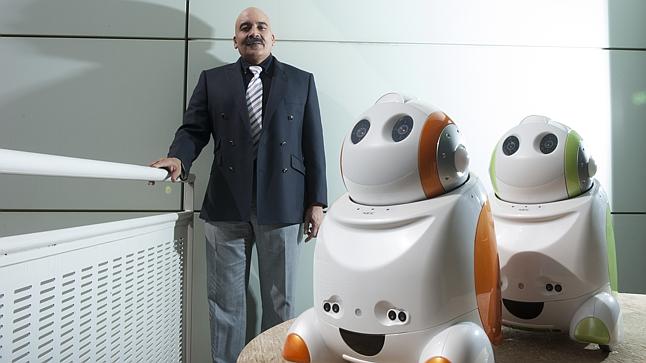
Professor Rajiv Khosla believes robots in the workplace can improve emotional wellbeing. Photo: Jesse Marlow

RACHEL NICKLESS

With big eyes, a feminine voice and some interesting dance moves, Sophie is rather cute but don’t let that fool you.

Sophie could soon be conducting your toughest-ever job interview, monitoring not just what you say but tiny twitches in your eyebrows that give clues about how you really feel.

Sophie and her fellow “human-like” robots Charles, Matilda, Betty and Jack plus two as yet unnamed robots are the product of a research joint venture between La Trobe University Business School in Melbourne and global electronics giant NEC Corporation in Japan.

NEC provided the robots and La Trobe is adapting them for use in recruitment, health care and as “emotionally engaging learning partners” in Australia. Rajiv Khosla, who has been driving the project since its inception, says the robots are a “world first in the area of recruitment”. Read more of this post

This Is What A $2.3 Million Pizza Looks Like; Jacksonville resident Laszlo Hanyecz purchased a pizza 3 years ago for 10,000 Bitcoin, or $25, now worth $2.3 million

This Is What A $2.3 Million Pizza Looks Like

Rob Wile | Apr. 9, 2013, 2:07 PM | 14,765 | 9

The price of a Bitcoin now stands at $234. That is really, really high. Especially given that just three years ago, Bitcoins were worth one-quarter of one cent. It was at this price when, according to Internet lore, Jacksonville resident Laszlo Hanyecz purchased a pizza for 10,000 BTC, or $25. Vice’s Brian Merchant actually had this story several days ago. But the pizza was then only worth $750,000. Here’s Hanyecz’ original post, from Bitcointalk.org:

I’ll pay 10,000 bitcoins for a couple of pizzas.. like maybe 2 large ones so I have some left over for the next day.  I like having left over pizza to nibble on later.  You can make the pizza yourself and bring it to my house or order it for me from a delivery place, but what I’m aiming for is getting food delivered in exchange for bitcoins where I don’t have to order or prepare it myself, kind of like ordering a ‘breakfast platter’ at a hotel or something, they just bring you something to eat and you’re happy! 
I like things like onions, peppers, sausage, mushrooms, tomatoes, pepperoni, etc.. just standard stuff no weird fish topping or anything like that.  I also like regular cheese pizzas which may be cheaper to prepare or otherwise acquire. If you’re interested please let me know and we can work out a deal.

Thanks,
Laszlo

As user The_egg_came_first points out on Reddit, that pizza has now cost the original purchaser over $2 million at today’s prices. At the time, Hanyecz updated a series of photos proving the purchase — here’s one:

img0984small

Mike Lazlo

This episode is a big lesson and a big cautionary tale: Anyone transacting in Bitcoin is liable to feel like an idiot the next day, as the price surges or collapses. Hence it makes more sense to just speculate, and not do anything real.

This Magical Electricity-Creating Fabric Will Soon Be Everywhere; It could revolutionize cheap, renewable energy

This Magical Electricity-Creating Fabric Will Soon Be Everywhere

Robert Ferris | Apr. 9, 2013, 2:32 PM | 5,529 | 9

david carroll - wake forest university

David Carroll is a nanotechnologist working on a simple material that he thinks will soon be a part of everything you own.  

Carroll’s research group at Wake Forest University developed a flexible fabric that makes electricity from heat or movement. It could revolutionize cheap, renewable energy.

Thermoelectrics are not exactly new, but usually made of materials that are brittle, heavy, and expensive.

Carroll’s fabric, on the other hand, is lightweight, feels like wool felt, and can be wrapped around surfaces or even sewn into clothing.

While energy can’t be “created” this fabric can essentially pull electricity out if thin air, from heat and movement.

The fabric Carroll’s group has can turn heat — from your body, the sun, anywhere — into usable electricity.

And unlike anything ever before, it can simultaneously collect power from vibrations or movement — letting your smartphone case bounce on a carseat during a long drive could charge your phone.  So could a shirt flapping in the wind.

Listening to Carroll, you get the sense that this power felt is going to be everywhere. It can be wrapped around your house, and every appliance inside it. Before you know it eager smartphone users will be fighting over heating grates instead of outlets.   Read more of this post

Prosperity requires more than rule of law; The requirements for a stable and wealthy economy go beyond property rights; while countries can learn from history, they cannot reproduce histories

April 9, 2013 5:29 pm

Prosperity requires more than rule of law

By John Kay

The requirements for a stable and wealthy economy go beyond property rights

The idea that “institutions matter” is a relatively recent amendment to the standard corpus of economic thinking. Only in the past two decades has it become a mantra of development economists.

The trigger was the recognition that plans to promote growth after decolonisation had failed. The continued poverty of many countries could not be fully explained by a shortage of capital or the legacy of foreign exploitation. Economic historians emphasised that the industrial revolution was the product not just of technological change and related investment in plant and machinery; it had also required the contemporaneous evolution of political and economic institutions.

A visit to Hong Kong is a reminder of how much institutions matter. A Chinese population under British administration created an island of prosperity, while the mainland stagnated under warlords and erratic dictators. When Chinese institutions achieved greater stability after the death of Mao Zedong, Hong Kong became a hub for the spectacular growth of the whole country. Read more of this post

Little girls can’t stop talking about “Sofia the First,” the new princess Disney has cooked up; An inside look into how five years of development and testing plot lines on preschoolers gave rise to the anti-Cinderella

April 9, 2013, 8:05 p.m. ET

Test-Marketing a Modern Princess

Sofia the First Doesn’t Need a Prince to Rescue Her, but She Sure Has a Nice Tiara

By KATHERINE ROSMAN

PJ-BN621A_SOFIA_G_20130409225502

Little girls can’t stop talking about “Sofia the First,” the new princess Disney has cooked up. Katie Rosman has an inside look into how five years of development and testing plot lines on preschoolers gave rise to the anti-Cinderella. Photo: Disney Enterprises Inc.

What makes a princess irresistible to little girls who love pink—and tolerable to their parents who want modern role models?

Walt Disney Co., DIS +0.54% a company that has built mammoth product franchises out of traditional princesses, thinks she should be confident, resourceful and focused on being a good person. She should not be valued most of all for her beauty. Her royal family should include exactly zero evil stepmothers.

For five years, a Disney team of writers, child-development and early-education experts and storytelling consultants worked to create this new sort of royal girl: Sofia the First.

“We knew we didn’t want it to be a young woman looking for a man,” says Nancy Kanter, senior vice president of original programming and general manager of Disney Junior Worldwide.

“Sofia the First” was introduced to children last November when Disney Channel and Disney Junior aired a heavily promoted 45-minute pilot. Then a weekly animated program began to run on Disney Junior on Jan. 11.

The show is this year’s most-watched cable series among children 2 to 5, according to Nielsen Holdings NV NLSN +0.17% data provided by Disney. An illustrated storybook released last fall by Disney is in its fifth printing. The soundtrack ranks fourth on Billboard’s children’s music chart. Sofia is already a live attraction at Disney California Adventure and Disney Hollywood Studios in Orlando, Fla. A wide release of dolls and action figures will hit toy-store shelves this summer. Read more of this post

Forex in Delivery Room Shows Asian Women Wealth Managers Top Men; “I don’t know whether it was the baby or the exchange rate” causing the heavy breathing

Forex in Delivery Room Shows Asian Women Wealth Managers Top Men

Tan Su Shan felt her first pangs of labor while trading yen for a wealth-management client.

What to do? She took her laptop and mobile phone to a Singapore delivery room and set up a foreign-exchange operation lying flat on her back as doctors administered nitrous oxide to ease the pain of giving birth.

“I was taking gas, calling the client and trying to go, ‘Haaaaah,’” recalled Tan, 45, who was working for Morgan Stanley (MS) at the time and now heads private and consumer banking at DBS Group Holdings Ltd. (DBS) (DBS) “I don’t know whether it was the baby or the exchange rate” causing the heavy breathing.

Women like Tan are one reason why female private bankers outnumber men in Asia 3-to-2 when it comes to managing the money of the wealthy, according to executive-recruiting firm Korn Ferry International. By contrast, the female-to-male manager ratio in the U.S. is 1-to-4. In Switzerland, the world’s largest wealth-management center, it’s 1-to-9. Read more of this post

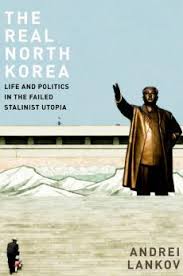
The Real North Korea–Life and Politics in the Failed Stalinist Utopia; “I have had enough of listening to talk about an irrational and unpredictable North Korea; they could be the greatest bunch of Machiavellians in the modern world”

April 9, 2013, 11:22 AM

North Korea Expert’s New Book Explores Regime’s Inner Logic

By Alexander Martin

NKorea

Andrei Lankov is one of the world’s top experts on North Korea with decades of experience studying the inner workings of the isolated regime. Born in St. Petersburg, Russia, he graduated from the Leningrad State University, while spending time in the mid-1980s studying as an exchange student at Pyongyang’s Kim Il Sung University. He speaks Korean and now teaches history at Kookmin University in Seoul.

In his new book, “The Real North Korea–Life and Politics in the Failed Stalinist Utopia,” Mr. Lankov delves into what he calls the “inner logic of the North Korean behavior,” and the peculiarities of a society that has seen it survive until this day despite mounting international pressure and domestic economic woes.

Mr. Lankov argues that contrary to the common Western portrayal of the North as a country run by irrational, sadistic madmen, its leaders were in fact cold-minded manipulators who have used saber-rattling successfully for decades to ensure its survival.

“I have had enough of listening to talk about an irrational and unpredictable North Korea … they could be the greatest bunch of Machiavellians in the modern world,” he told KRT. Read more of this post

Adults Skipping Medicines to Save Money, Research Finds

Adults Skipping Medicines to Save Money, Research Finds

Adults who haven’t reached retirement age were twice as likely as those who have to skip their prescribed medications to save money, a U.S. study found.

About 20 percent of adults regardless of age have asked their doctors for a lower cost treatment, according to the study released today by the Atlanta-based Centers for Disease Control and Prevention. Spending on drugs is expected to increase an average of 6.6 percent a year from 2015 through 2021, the Kaiser Family Foundation has reported.

Americans spent $45 billion out-of-pocket on retail prescription drugs in 2011, the CDC said. The Affordable Care Act is expected to expand access in 2014 when medication coverage is considered an essential benefit of any health plan offered in new insurance marketplaces called exchanges.

“If you’re not insured or you face high co-payments, you’re going to stretch your prescriptions,” said Steve Morgan, an associate professor at the University of British Columbia’s School of Population and Public Health in Vancouver. “Even among insured populations, there is this invincibility mindset among the very young. Older people are more likely to adhere to chronic therapies over a longer period of time than younger.”

Today’s study found 13 percent of those ages 18 to 64 reported not taking their medications as prescribed to reduce costs compared with 5.8 percent of those 65 and older. The 2011 data came from the National Health Interview Survey. Most U.S. adults are eligible at age 65 for Medicare, the federal government’s health program. Read more of this post

My favorite photos of Margaret Thatcher

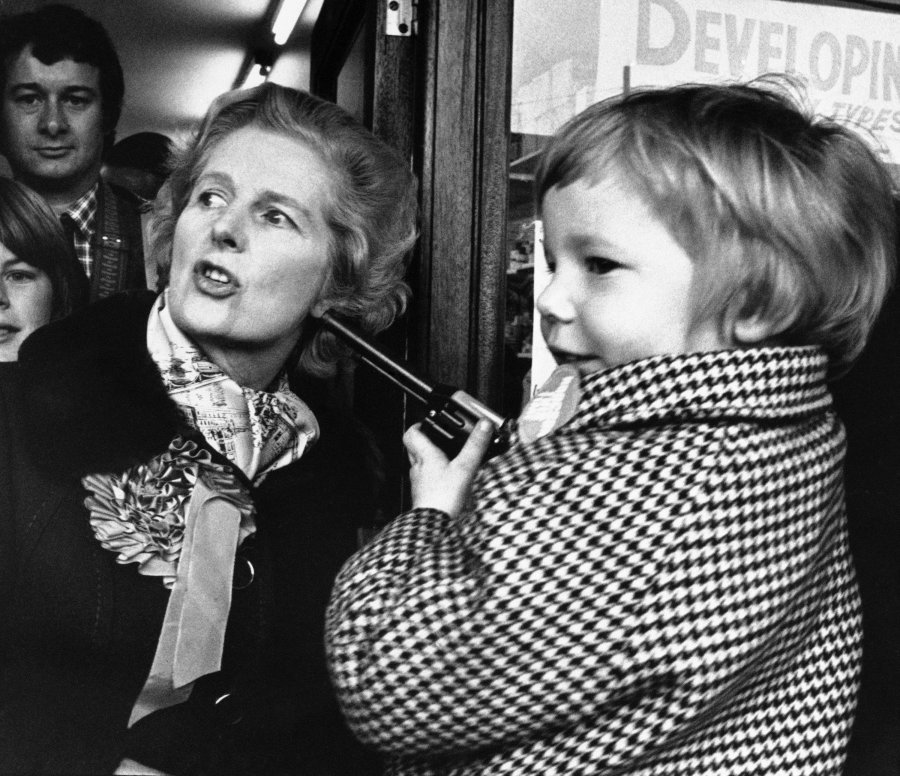
then-conservative-party-leader-margaret-thatcher-chats-with-a-gun-toting-four-year-old-in-1976

Then-Conservative Party Leader Margaret Thatcher chats with a gun-toting four-year-old in 1976

thatcher-sits-in-the-commanders-cupola-of-a-chieftain-on-a-visit-to-troops-in-west-germany-in-1983

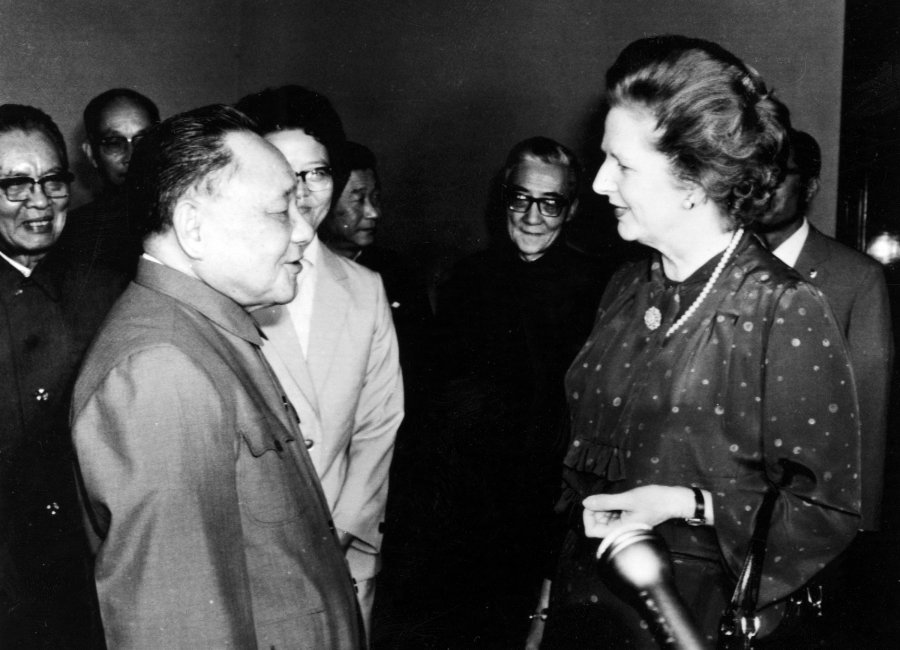
Thatcher sits in the commander’s cupola of a Chieftain on a visit to troops in West Germany in 1983by-1986-thatcher-looked-pretty-comfortable-riding-in-the-turret-of-a-tankheres-thatcher-in-1982-meeting-with-chairman-deng-xiaoping-in-beijing-who-is-widely-credited-with-bringing-a-market-economy-to-the-peoples-republic-of-china

Here’s Thatcher in 1982 meeting with Chairman Deng Xiaoping in Beijing, who is widely credited with bringing a market economy to the People’s Republic of China
the-managing-director-of-jcb-welcomes-the-pro-business-thatcher-with-a-ceremonial-arch-of-mechanical-diggers-in-1987

The managing director of JCB welcomes the pro-business Thatcher with a ceremonial arch of mechanical diggers in 1987
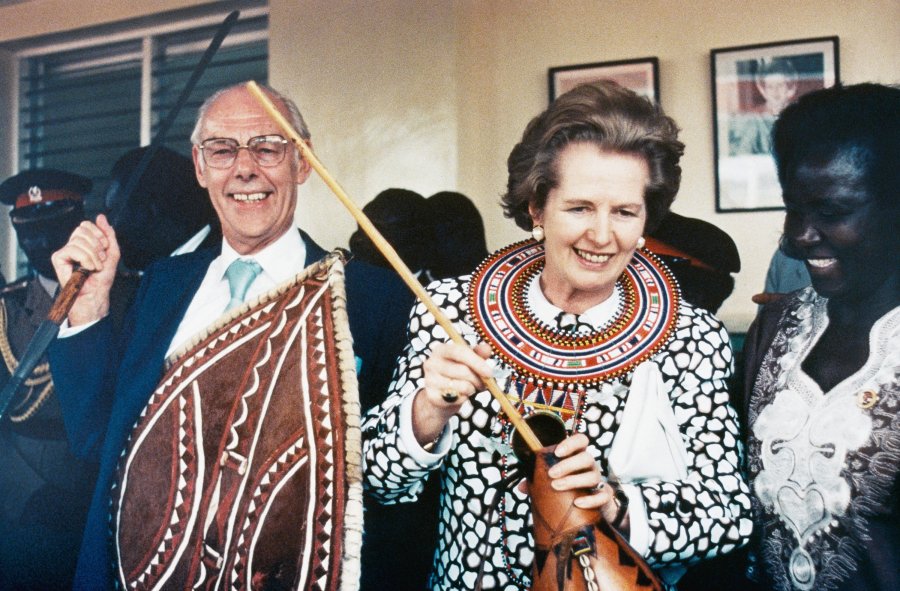
thatcher-and-her-husband-dennis-don-traditional-tribal-garb-on-a-visit-to-kenya-in-1988

Thatcher and her husband Dennis don traditional tribal garb on a visit to Kenya in 1988

Why Thatcher Wouldn’t Succeed in Our ‘Lean In’ Culture

Why Thatcher Wouldn’t Succeed in Our ‘Lean In’ Culture

There could never be another “Iron Lady.”

That was the first thought that came to some minds today with the news that Margaret Thatcher, the U.K.’s great prime minister, had died.

This is an odd reaction. Women in the developed world now routinely hold more top jobs than they did in 1975, when the 49-year-old Thatcher first assumed leadership of the Conservative Party. The No. 1 bestseller on the New York Times list is “Lean In,” by a woman holding one of the highest of those positions, Sheryl Sandberg, the chief operating officer of Facebook Inc. (FB)

A look at what Sandberg, the granddaughter of a retailer, recommends and what Thatcher, a grocer’s daughter, did, reveals similarities. But there are also such great differences between the two women that you wonder whether a Thatcher might make it today in politics or at a publicly traded company.

Sandberg advises women to learn from female mentors, and Thatcher certainly did. Her tutor at Oxford University, the scientist Dorothy Hodgkin, encouraged the young Margaret Roberts to logically work through problems to their conclusion. That is so Sandberg: Sheryl plans her career moves in an Excel spreadsheet.

Taking Risks

Sandberg admonishes younger women to “lean in,” to push harder at work, in order to advance. Thatcher did lean in, and up, ascending by force the lowest rungs of the Tory ladder, starting with the Oxford University Conservative Association as a student. Sandberg specifically counsels women to take risks early and Thatcher certainly did that, too. While still in her 20s, Thatcher dared to run twice for office in a Labour Party stronghold, Dartford, and lost both times. Nor did Thatcher temper her risk-taking as she rose.

Her party tended to cave and reverse policy under political pressure, but not Thatcher: “This lady’s not for turning,” she famously declared. Read more of this post

Beware of Economists Peddling Elegant Models; Mathematics can be beguilingly elegant. It can also be dangerous when people mistake its elegance for truth.

Beware of Economists Peddling Elegant Models

Mathematics can be beguilingly elegant. It can also be dangerous when people mistake its elegance for truth.

Albert Einstein’s theory of general relativity might be the best example of elegant math, capturing a wide range of subtle and surprising phenomena with remarkable simplicity. Step toward the practical, though, and physics moves quickly away from elegance to makeshift usefulness. There’s no pretty expression for the operation of a nuclear reactor, or for how air flows past the swept wings of an aircraft. Understanding demands ugly approximations, or brute-force simulation on a large computer.

In one very practical and consequential area, though, the allure of elegance has exercised a perverse and lasting influence. For several decades, economists have sought to express the way millions of people and companies interact in a handful of pretty equations.

The resulting mathematical structures, known as dynamic stochastic general equilibrium models, seek to reflect our messy reality without making too much actual contact with it. They assume that economic trends emerge from the decisions of only a few “representative” agents — one for households, one for firms, and so on. The agents are supposed to plan and act in a rational way, considering the probabilities of all possible futures and responding in an optimal way to unexpected shocks. Read more of this post

Managers Trek to Omaha In a Crush of Buffett Fans

Updated April 7, 2013, 7:18 p.m. ET

Managers Trek to Omaha In a Crush of Buffett Fans

By JONNELLE MARTE

IF-AB091_BUFFET_G_20130403183707

IF-AB099_BUFFET_NS_20130404144509

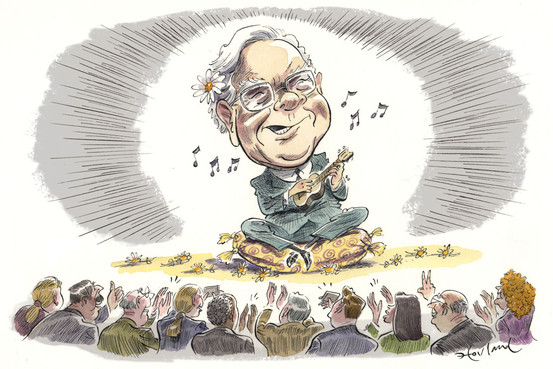
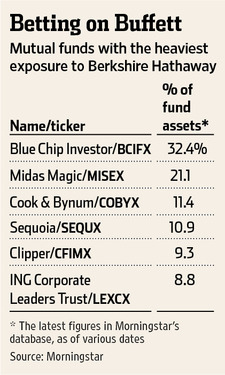
As attendance at the annual Berkshire Hathaway Inc. BRKB -0.94% shareholders’ meeting has ballooned over the years, mutual-fund managers say it’s become trickier to land some personal time with Warren Buffett—but easier to take a piece of him home.

Just ask Steven Check, manager of the $19 million Blue Chip Investor fund, who owns a coin with Mr. Buffett’s face on it, a never-been-used deck of cards that feature the Oracle of Omaha as the king, and bobbleheads of Mr. Buffett and his partner,Charlie Munger, among other Berkshire-themed possessions.

“Ten years ago you could run into him several times a night and shake his hand,” says Mr. Check, who also scored a few framed photos of himself and Mr. Buffett together during those earlier years. These days, you’re much more likely to walk away with just a Berkshire Hathaway golf club or money clip, or with some of the goods offered by the company’s subsidiaries, he says.

At the 194,300-square-foot hall that will be set up next to the meeting area next month and at other nearby vendors, you can get an insurance quote, upgrade your wardrobe or even buy a share of a private jet through one of Berkshire’s companies.

Buffett time or no Buffett time, Mr. Check and other fund managers say the real reason they make the trek to Omaha each year is to recharge with lessons from one of the best in the business. “It’s good to go there and get a reset, to clear your mind,” says Mr. Check. “I get a refresher course on the principles of investing.” Read more of this post

Watch Margaret Thatcher Slap Down A Socialist Politician For Wanting To Make The Poor Even Poorer

Watch Margaret Thatcher Slap Down A Socialist Politician For Wanting To Make The Poor Even Poorer

Joe Weisenthal | Apr. 8, 2013, 8:18 AM | 2,849 | 12

The sad news today is that former UK PM Margaret Thatcher has died.

She was incredibly influential among conservatives, and she was beloved for stuff like this.

Watch as she slams an opposition labor politician, for, in her words, advocating policies that would prefer to make the poor poorer so long as it resulted in more equality.

10 Memorable Quotes From Margaret Thatcher ; “Economics are the method; the object is to change the heart and soul.”

10 Memorable Quotes From Margaret Thatcher — One Of The Most Quoteworthy Politicians In History

Rob Wile | Apr. 8, 2013, 8:49 AM | 10,357 | 17

Former British PM Margaret Thatcher has died.

Thatcher was one of the more quotable politicians in recent memory.

Her wit and sharp lines about socialism have helped cement her reputation as “The Iron Lady.”

Via Wikiquote, here are some great ones.

“I don’t think there will be a woman Prime Minister in my lifetime.” — BBC, March 5, 1975

“If a Tory does not believe that private property is one of the main bulwarks of individual freedom, then he had better become a socialist and have done with it.” — Daily Telegraph, Jan. 30, 1975.

“The Russians are bent on world dominance, and they are rapidly acquiring the means to become the most powerful imperial nation the world has seen. The men in the Soviet politburo don’t have to worry about the ebb and flow of public opinion. They put guns before butter, while we put just about everything before guns. They know that they are a super power in only one sense—the military sense. They are a failure in human and economic terms.” Speech, Jan. 19, 1976 (The Russians would respond by calling her the “Iron Lady.”) —

“Socialist governments traditionally do make a financial mess. They always run out of other people’s money. It’s quite a characteristic of them.” Speech, Feb. 5, 1976

“Pennies don’t fall from heaven, they have to be earned here on earth.” Speech, Nov. 12, 1979

“No one would remember the Good Samaritan if he’d only had good intentions; he had money as well.” Weekend World, Jan. 6, 1980

“Economics are the method; the object is to change the heart and soul.” Sunday Times, May 1, 1981

“I came to office with one deliberate intent: to change Britain from a dependent to a self-reliant society — from a give-it-to-me, to a do-it-yourself nation. A get-up-and-go, instead of a sit-back-and-wait-for-it Britain.” Speech, Feb. 8, 1984

“It was a lovely morning. We have not had many lovely days. And the sun was just coming through the stained glass windows and falling on some flowers right across the church and it just occurred to me that this was the day I was meant not to see.” Channel 4, Oct 15, 1984, following an assassination attempt by the IRA.

“I like Mr. Gorbachev. We can do business together.” — BBC, Dec. 17, 1984

“No. No. No.” — House of Commons, Oct. 30, 1990

Margaret Thatcher, the former British prime minister who became one of the most influential global leaders of the postwar period, died at age 87

Updated April 8, 2013, 8:03 a.m. ET

Margaret Thatcher Dies

By ALISTAIR MACDONALD

OB-WZ086_0408Th_G_20130408075452

LONDON—Margaret Thatcher, the former British prime minister who became one of the most influential global leaders of the postwar period, died on Monday, three decades after her championing of free-market economics and individual choice transformed Britain’s economy and her vigorous foreign policy played a key role in the end of the Cold War. Mrs. Thatcher, who grew up in an apartment without hot water above her father’s grocery store in Grantham, eastern England, went on to become Britain’s first female prime minister and arguably the country’s dominant political figure since Winston Churchill. She was 87.

She was a key ally and close friend of former U.S. President Ronald Reagan, sharing with him a view on free-market, monetarist solutions to the economic problems of the day, as well as an uncompromising stance on how to handle the former Soviet Union, earning her the nickname “the Iron Lady.” Together the two led a rightward shift in Western politics that extolled the virtues of a free-market economic system with little government intervention that has largely endured, though aspects, such as the deregulation of financial services, have been questioned during the credit crisis. In moves that were widely copied, Mrs. Thatcher took on Britain’s all-powerful trade unions and privatized state-run industries, governing with a take-no-prisoners style that earned her both admiration and dislike.

Shanghai McDonalds Slashes McNuggets Price By Nearly Half As Birdflu Fears Drive Away Buyers

Shanghai McDonalds Slashes McNuggets Price By Nearly Half As Birdflu Fears Drive Away Buyers

Tyler Durden on 04/07/2013 22:48 -0400

How do you know when the people “just say no” to chicken over rampant bird flu concerns? When even McDonalds (whose ad campaign for the past decade “I am loving it” continues to be an anagram for “ailing vomit“) is forced to slash chicken-related prices, in this case the 20 piece McNuggets, from CNY36 to CNY20. Pretty soon not even giving away the McMystery meat will clear out the shelves of all chicken-related fast food first in Shanghai and soon elsewhere in China. Finally, we dread to imagine the horrors that will befall Yum (read China KFC sales), now that after so much pain, the fast-food chain had finally reported a modest bounce in Chinese sales. So much for that.

McD Nuggets Shanghai

First zoo in S’pore rated ‘wonderful’ by Albert Einstein

First zoo in S’pore rated ‘wonderful’ by Einstein

Nation’s status as a hub for animal collectors is featured in exhibition. -ST
Melody Zaccheus

Mon, Apr 08, 2013
The Straits Times

Singapore’s first zoo, which had its beginnings at a family bungalow in Serangoon Road, has at least one unique bragging right.

Albert Einstein, the father of modern physics, was among the first visitors to the private zoo, which was run by animal lover William Lawrence Soma Basapa from 1920 to 1922.

His zoo and the history of Singapore’s status as a hub for animal collectors in the late 18th and early 19th century, are part of a travelling exhibition by the National Heritage Board. Read more of this post

British class system alive and growing, survey finds

British class system alive and growing, survey finds

Wed, Apr 3 2013

LONDON (Reuters) – British people can now aspire to and despise four new levels of social classes, according to a new survey conducted by researchers in partnership with public broadcaster the BBC.

The Great British Class Survey found that the prevailing notions of a system comprised of the Upper Class, Middle Class and Working Class only related to a slice of the UK population, when analyzed according to income, assets, social connections and social activities.

An “Elite” class and a “Precariat” (precarious proletariat)were the two most extreme groups at either end of a new social scale of seven classes produced by researchers from the London School of Economics (LSE) and University of Manchester based on two surveys conducted by the BBC and research firm GfK.

“It is striking that we have been able to discern a distinctive elite, whose sheer economic advantage sets it apart from other classes,” LSE Professor Mike Savage said.

“At the opposite extreme, we have discerned the existence of a sizeable group (the Precariat) – 15 percent of the population – which is marked by the lack of any significant amount of economic, cultural, or social capital.” Read more of this post

To crack human brain’s code, a search for visionaries

To crack human brain’s code, a search for visionaries

Sun, Apr 7 2013

By Deborah Zabarenko

WASHINGTON (Reuters) – To crack the code of the human brain, Cori Bargmann figures it’s best to keep an open mind.

As one of two leaders of a scientific “dream team” in the initial phase of President Barack Obama’s ambitious $100 million project to map the brain, Bargmann said the first step is to find the right combination of people to set research priorities.

“You might start with people who are very senior and are household words in their fields, and then you may realize that what (you) actually need is the young Turk who’s a visionary wild man,” Bargmann said.

Bargmann, a neurobiologist at The Rockefeller University in New York, and William Newsome, a neurobiologist at Stanford Medical School in California, are the co-chairs of a committee announced by the White House on Tuesday for the Brain Research through Advancing Innovative Neurotechnologies Initiative. That long title has been dubbed BRAIN for short.

Both Newsome and Bargmann are at the top of the neurobiology pyramid, professors at premiere institutions, winners of dozens of scientific honors and awards, authors of research papers in prestigious journals. As Newsome noted wryly, “I don’t need this aggravation, to some extent, but I think this is really important.”

Bargmann, who recalls watching the first Apollo moon landing in 1969 as an 8-year-old, this year won a $3 million Breakthrough Prize in Life Sciences for her work on the genetics of neural circuits and behavior and synaptic guidepost molecules. Read more of this post

Be like the bamboo, not the oak (Today, 8 April, 2013); “Singapore is too small and its talent pool is too small to produce a world-class manufacturing giant of the Fortune 500 class,” Singapore’s founding Prime Minister Lee Kuan Yew once said. A cryptic remark, indeed, because it does not imply that he thinks Singapore cannot produce knowledge-based giants, or resilient “bamboo innovators”

Be like the bamboo, not the oak
“Singapore is too small and its talent pool is too small to produce a world-class manufacturing giant of the Fortune 500 class,” Singapore’s founding Prime Minister Lee Kuan Yew once said. A cryptic remark, indeed, because it does not imply that he thinks Singapore cannot produce knowledge-based giants, or resilient “bamboo innovators”.
BY KEE KOON BOON –
6 HOURS 19 MIN AGO

“Singapore is too small and its talent pool is too small to produce a world-class manufacturing giant of the Fortune 500 class,” Singapore’s founding Prime Minister Lee Kuan Yew once said. A cryptic remark, indeed, because it does not imply that he thinks Singapore cannot produce knowledge-based giants, or resilient “bamboo innovators”.

Why bamboo innovators? Bamboos bend, not break, even in the most terrifying storm or devastating earthquake that would snap the mighty oak tree. It survives, therefore it conquers.

Disruptive industry trends and black-swan crises have become a permanent fixture in today’s marketplace. How wonderful it would be if countries, companies and individuals can stay resilient amid such upheavals and unorthodox challenges.

The study of bamboo innovators could inspire companies to be productive innovators in order to surpass stall-points in their business models during tumultuous periods, particularly for small and medium enterprises aspiring to scale up to become global champions.

But why is it that Asian companies are predominantly product manufacturers in the first place? This could ironically be a result of the Asian values of hard work and sacrifice.

It is far easier for the Asian entrepreneur to be the middleman taking orders from a few important anchor multinational corporation customers with access to the end-customers, take capital risk investing in tangible assets and work hard to produce the required products with quality and efficiency — than to attempt to build business models that have direct ownership of the hundreds and thousands of end-customers.

As a result, these entrepreneurs are unwilling to share the rewards with their “undeserving” staff who took neither risk nor sacrifice. They treat employees as expenses and not intangible assets, make most or all of the decisions and hoard most resources and information, running the firm as a “one-man show”. Eventually, they may face the challenge of business continuity arising from succession woes.

NEW IDEAS

Keyence is an example of the unconventional Asian firm. Founder Takemitsu Takizaki liberated the firm from manufacturing conventions and built a knowledge-based enterprise in laser sensors for factory automation, serving more than 100,000 customers in 70 countries.

Despite having less than 1 per cent global market share in a commodity-like product and only around 3,000 employees, Keyence commands a US$17-billion (S$21.1 billion) market value — approximately similar to Singapore’s Keppel Corp, a global leader in offshore oil rig design and building.

Mr Takizaki understood keenly that Keyence cannot improve on Japan’s legendary manufacturing efficiency. So, unlike its manufacturing-based competitors who leave sales to distributors, wholesalers and agents, it deliberately avoids making products, except for manufacturing steps that involve trade secrets kept in-house.

Most of its employees are either “sales” or “research” staff. In their direct contact with the customers, Keyence’s in-house “sales” team picks up new product ideas on frequent factory visits. For instance, its front-liners observed from the production lines at instant noodle factories that the noodle quality was compromised because the noodles were manufactured at variable thicknesses. Laser sensors that could measure noodles to 1/100th of a millimetre were developed to ensure consistency.

A quarter of sales at Keyence is generated from such new products every year, more than what 3M achieves. To excel in these areas, Keyence had to cultivate a meritocratic culture, and it is known for having some of the highest-paid employees in corporate Japan.

Bright young people from rival firms are attracted to Keyence by the performance-based pay. The average salary there is US$100,000. Engineers also get to do their own research, rather than labouring for years under grey-haired supervisors.

THE EMPTY CORE

Keeping the front line or the “periphery” resilient and innovative, and the centre or the “core” diffused, and enforcing meritocratic values at all levels have compounded immense value at Keyence. This “core-periphery” growth pattern is also that of the bamboo: The vitality of its growth revolves around its “empty” centre.

Instead of constructing itself inch by solid inch, like a tree, the nutrients and moisture that would have been exhausted making and maintaining its empty centre can be utilised for growth of its periphery in the stem. From a builder’s viewpoint, the architecture of the bamboo presents a powerful configuration: Fibres of greatest strength occur in increasing concentration towards the periphery.

Manufacturing and project-based companies often tout the size of their order book and their idea of “team” is about having high-profile dealmakers who can bring in the sales orders; the job of “everyone else” is to execute efficiently and “productively”.

The well-connected dealmakers may be able to pull in high-dollar projects, but because of the difficulties in coordinating and executing large-scale complex projects, these deals cannot be repeated and the hype associated with a big order book starts to fade, particularly when cost overruns and delivery delays rear their ugly heads. Bigger becomes riskier.

Even in manufacturing, the only way to perform and execute large-scale complex projects repeatedly is to create a culture of excellence where the interests of emotionally engaged front-liners matter in the innovation and value creation process.

Customers are attracted to this contagious performance culture rather than to the dealmakers on a relationship basis, resulting in a valuation breakthrough beyond the billion-dollar market value barrier that many Asian companies find difficult to break.

“Fortune 500”? With “emptiness” in business model design, Singapore can instead aim for its own resilient “Bamboo Innovator 500” powerhouse with a US$10-trillion value.

ABOUT THE AUTHOR:

Kee Koon Boon, a former lecturer of accounting at the Singapore Management University, has been an investment professional for the past decade. He is a presenter at the Emerging Value Summit 2013 on April 9-10.