James Altucher: Unschool Yourself!

Unschool Yourself!

Posted by James Altucher on March 28th, 2013 at 9:36 am

I want to put on Google Glasses, stare at the sun until I go blind, and have a Google Hangout with all my friends at the same time while the sun burns my vision away. Everyone will see what I will be seeing (or not seeing. Because of going blind) because of the Google Glasses. I feel like that would make me a master of the universe. My teachers from grade school would be proud. They might rename the school after me. I told my kids, “You’re always complaining about school. If you don’t like school just don’t go. I don’t care at all.” And guess what? They practically spit in my face in rebellion. They didn’t shoot up crack heroin. Or get tattoos. They went to school. HOW DARE THEY! I wasn’t even trying to do any reverse psychology on them. Reverse psychology is for people afraid to say the truth. It was like reverse reverse psychology. My kids can do what they want. What I give them is not freedom but choice. They choose to go to prison. That’s fine. School was like a mental institution for me where I was force fed the following drugs:

1) Lots of facts. At talks I ask people, “When was Charlemagne born?” I have yet to get a response that is correct within 200 years. Research shows that 90% of what we learn in a class we forget after 45 minutes. The reason is: our brain likes to have 2 or more things going for it before it is convinced it has a worthy fact for memory. So, “passion + awe” are two things. But boring facts disappear quickly.

2) Perfectionism. Schools celebrate the A+ and punish the C-. Whenever my daughter tells me she got an A+ I ask her why she wants to take a class that is too easy for her. The C- shows you so much more: What you need to learn. What you might not be interested in. How to deal with imperfection. How to deal with the pride of others. How to deal with insecurity. As some woman tweeted on twitter the other day, @jaltucher is a C-. I have room to improve!

3) Cliques. My best friend Jimmy Biondo punched me in the back at my locker and I fell to the ground and started crying. I think I was 15. In school you have a small group of people to choose from for friendship. This makes for political, spiteful, gossip-filled, often Lord-of-the-Flies-style friendships. Yeah, I’m the ugly kid that got killed in the book. And no, I did not read the book in school. I read the Cliff’s Notes.

) Science and Math. While these are beautiful subjects I often feel that my kids are encouraged to drop their creativity at the door if it involves art or storytelling. Everything is rote, then tested. Then rote again, then tested again. For twenty years. That’s only a tiny part of the brain. Humans are meant to use their entire brain. It’s our entire brain that let’s us DESTROY and RULE the animal kingdom.

5) Work. From 7am to often 10pm, my kids are “working”. They sit in classrooms all day, barely moving, and then they are often working on homework until they fall asleep. They learn to work hard. But…

But as an adult, if you want to succeed, be creative, learn to fail, learn to sell ideas, learn to build momentum around your life, you need to UNLEARN:

HOW TO UNSCHOOL YOURSELF:

A) Play. Playing (however you want to define that word) reduces stress, encourages creativity, increases happiness, is FUN. Nothing wrong with that. Maybe people think they HAVE to be working. Else they are unproductive. They get this reactive stress when they aren’t “at work”. Because we got addicted to working back in our school daze. What should you play at? I don’t know! Do whatever you want. Go to a museum. Or a movie in the middle of the day. Or pee in public places, take pictures of the pee, and make a photo exhibit. Who cares? Homework! – think of five things you can “play” at today.

B) Creativity.  Sometimes I’m sick of writing this blog. So I do other stuff. I draw. Or I take photographs of my urine in public places. Or I plan my upcoming run for Congress! (Don’t tell Claudia. She is against it). This makes my brain feel good. I can literally feel the neurons light up. It makes my brain feel loved by me. Every day I try and exercise different parts of my brain. Homework! – What are some ways you can be creative today outside your normal work schedule?

C) Friendship. It turns out we don’t have to be friends with the people immediately around us. That was only a school thing. We can choose to be friends, instead, just with the people who love us and who we love. Like how I’m friends with Oprah. Hi honey! I didn’t learn this for a long time. And this one aspect of my life made me desperately unhappy. Maybe I finally learned it in 2010. I was 42 years old. Some people, thank god, learn it much earlier. But I had to “unschool” myself from all that I learned about friendship in ninth grade.

D) Imperfectionism. A friend of mine once told me she wanted to go to Paris because she’d really be able to paint there. Good fucking luck. Situations are never perfect. We’re never perfect. It’s 20 years later and she hasn’t gone through one color on her watercolor set. Being comfortable with imperfection gives us a lot more opportunities. And helps us love ourselves more. And we don’t get easily ashamed, which translates to deeper honesty and relationships. Perfectionism is a cage that has captured our happiness and won’t let it out. I lost a lot of friends when I stopped pretending to be perfect. I was afraid people would not like and I was right. That’s ok. See “C” above. Finally, all of life is a sculpture chiseled with the knife of imperfection. Realizing that allows us to be kind to the chaos we see everywhere. We’re all going through a hard time just trying to live.

E) Make shit up. Facts are for boring people. I can look up any fact on Google. It doesn’t make me stupid. It makes room in my brain to have fun. I only read the things I’m passionate about. I look up the things I could care less about but maybe need to know for a split-second every now and then. (Charlemagne was born in 742 AD. Thank you Wikipedia!). So just read about stuff you’re interested  in. Today I’m reading “New Ideas in Backgammon” so I can crush Dubner the next time I play him. (MEGA-CHAMPION!)

F) Independence. Finally, they never teach this in school. So it’s hard to learn it as an adult. We lose the habit. But once you learn to be creative, to have positive friendships. to have ideas, to be imperfect, you also have to learn how to sell your ideas to people who believe in them. This is the beginnings of independence. This means you graduate life and get the keys to the kingdom. Start unschooling yourself today. Unschooling is not ust for kids. Read more of this post

26 Tips On How To Read People

26 Tips On How To Read People

Kim Bhasin and Max Nisen | Mar. 27, 2013, 2:18 PM | 192,193 | 1

Few people are so rigidly controlled that they don’t give clues as to what they’re thinking or feeling. Learning to read these can be a big advantage in business and life.

There’s no single, consistent recipe — and even the best mind readers on the planet are only right 80 percent of the time — but there’s a lot to be learned.

According to UCLA professor Albert Mehrabian55 percent of what you convey comes from body language, 38 percent from the tone of your voice, and only 7 percent from what you actually say. 

We’ve compiled tips from Psychology Today and elsewhere that will help you stay one step ahead of everyone else.

To start, always get a baseline reading so you can distinguish personal quirks from real tells.

Notice others trying to read your baseline with seemingly innocuous questions like, “How are you today?” Read more of this post

Cao Shiru, the woman behind Zhongnanhai’s Hongqi supermarket; “In business, it is not enough to be self-possessed, you also need innovation”; Cao gives her staff the freedom to carry out their plans and backs them strongly if she believes that their ideas are right.

Cao Shiru, the woman behind Zhongnanhai’s Hongqi supermarket

Staff Reporter 2013-03-28

CFP409141893-153133_copy1

Until its mysterious closure, Hongqi of Chengdu was the only supermarket chain to operate an outlet in Zhongnanhai, the government compound in the heart of Beijing that houses the State Council and the headquarters of the Communist Party.

Despite the setback, the chain’s founder Cao Shiru has proved herself a canny operator in the retail industry, reports the semi-monthly China Entrepreneur.

“The first two characters of my name are pronounced the same as supermarket in Mandarin,” Cao told the magazine, explaining why she has a strong affinity for the retail sector.

Cao’s chain employs over 13,000 workers, and while around 80% of them are female, most of her senior executives are men.

Yu Shi, the company’s deputy general manager, told the magazine that Cao gives her staff the freedom to carry out their plans and backs them strongly if she believes that their ideas are right. Read more of this post

Bubbles and bankruptcy: a British history

Bubbles and bankruptcy: a British history

We review the Bubbles and Bankruptcy exhibition at the British Museum, which charts four hundred years of British bank collapses and the frenzied asset bubbles that all too often beguiled investors.

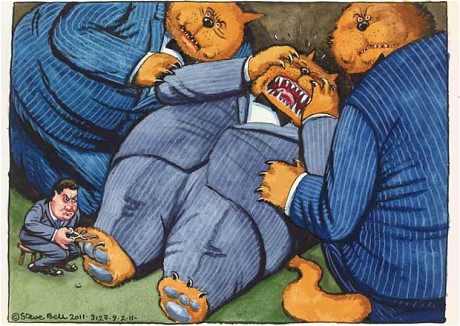
UK history – as the British Museum reveals in its “Bubbles and Bankruptcy” exhibition – is crammed with examples of wily banking scams, bailouts and asset bubbles.

financial-crisis-2_2521054c

Steve Bell’s ‘Bank Levy’ at the British Museum

By Helia Ebrahimi, Senior City Correspondent

2:47PM GMT 27 Mar 2013

No man is an island. But try telling General Gregor MacGregor that.

He invented one, the Principality of Poyais, which he claimed to rule before selling shares in the South American colony. It turned out to be totally uninhabitable.

He also pre-fixed his name with “Sir”. As you do. His honour, as it turned out, was also fictitious.

Still, in many ways, the general was a prototype investment banker. Not that far removed, perhaps, from those who packaged up sub-prime mortgages known to be worthless before selling them to hapless investors.

In fact, UK history – as the British Museum reveals in its “Bubbles and Bankruptcy” exhibition – is crammed with examples of wily banking scams, bailouts and asset bubbles.

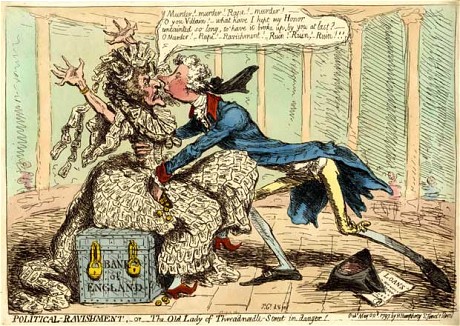
From the South Sea bubble, to tulip speculation, it turns out that naughty bankers have always had a knack of getting rich while others pick up the bill. Not least the Old Lady of Threadneedle Street – aka the Bank of England.

The exhibition takes an amusing look at Northern Rock’s collapse, which is placed alongside a collage of defunct credit cards from HBOS, RBS and Lloyds – now propped up only by taxpayer funds.

financial-crises-1_2521051c Read more of this post

Cool pictures of a soy sauce factory in Pudong, Shanghai that has been recognized by State Council for its intangible cultural heritage for its use of traditional processes to ferment the sauce

官酱名天下

作者:金兮敏  | 2013年03月27日 08:44 | 栏目: 城市景深 原创

3月24日,上海博联部分博友,应邀赴地处浦东外高桥保税区的上海钱万隆调味品有限公司参观。 2008年6月,国务院公布了第二批国家级非物质文化遗产保护名录,”钱万隆酱油酿造技艺”成为中国酱油行业唯一的”国家级非物质文化遗产”的中华老字号品牌。钱万隆”官酱园”以其129年的历史传承,特有的酿造技艺,生产出纯正滋味的高品质酱油。得知天然特晒酱油的抗氧化剂保健作用高出红酒10倍,更感到传统酿造业的大有可为。

11734_1364342497l00U11734_1364342499JIs1

Liberate Your Employees and Recharge your Business Model

Liberate Your Employees and Recharge your Business Model

by Karan Girotra and Serguei Netessine  |   1:00 PM March 27, 2013

It finally seems that the uproar over Marissa Meyer’s diktat banning flexible work policies at Yahoo is dying down. While good arguments were made on both sides of the issue, what got lost in the charged debate was the potential for evolving traditional business models through changing the employee-employer relationship.

Our research on identifying replicable templates for business model innovation shows that innovating how a company engages with its workforce is an often overlooked way of increasing business model performance. The basic structure of the firm-employee relationship has not changed much over the last 50 years. Relying on a forecast of organizational needs, firms select the nature and number of employees, who are then assigned some working hours and tasks to do in those hours.

But a few pioneering companies are challenging each aspect of this traditional model and are offering unprecedented opportunities along the way.

Rethinking Who Your Employees Are

Traditional organizations identify a set of individuals as their “employees” before they are fully aware of the employee’s talents and their needs.  Read more of this post

How to build a $37 million online cat empire

How to build a $37 million online cat empire

March 28, 2013 – 3:30PM

art-Ben-working-on-XPS-12-Convertible-Ultrabook-on-bed-420x0

The man who built an online cat empire

I have cats. I like taking photos of them. I love sharing these pictures with my friends. But I don’t have a $37 million company. That’s because I’m not Ben Huh, an entrepreneur whose websites have gained cult-like status around the world. And it all started with a simple website full of cute cats with funny captions.

Of course, no person in their right mind could have predicted that cats would become one of the most popular and most shared personalities on the internet. But Huh tapped into the zeitgeist and he’s laughing all the way to the bank. Huh is CEO of the Cheezburger Network, a business that runs around 50 sites at any one time, all based on humour. Along with the original cat site I Can Has Cheezburger?, the other sites include This is a Photobomb and Totally Looks LikeRead more of this post

Helene Rey made a side trip on her way to the hospital to give birth to her daughter in September 2006: She stopped off at the main office of London Business School, where she teaches economics, to turn in a report on a doctoral defense. “If I hadn’t, the student couldn’t have graduated,” she said.

Proving Greenspan Wrong Shows Why Rey Became Worthy to Bernanke

Helene Rey made a side trip on her way to the hospital to give birth to her daughter in September 2006: She stopped off at the main office of London Business School, where she teaches economics, to turn in a report on a doctoral defense.

“If I hadn’t, the student couldn’t have graduated,” she said.

Rey’s dedication has led to teaching posts at Harvard University, the University of California at Berkeley, the London School of Economics and Princeton University. The department chairman who hired her there, Ben S. Bernanke, is now chairman of the Federal Reserve. Just yesterday, she became the first woman to win the Yrjo Jahnsson Prize, for a European economist under age 45 whose research is significant to Europe.

It was at Princeton that France-born Rey co-authored a paper showing how the U.S. position at the center of global finance gives it an edge to borrow cheaply and safely in the short term and make high-return, riskier investments. The study addressed concerns about the nation’s ballooning current-account deficit: By 2004, then-Fed Chairman Alan Greenspan was warning that foreigners might be unwilling to keep buying dollars.

The research caught the attention of economists at the Fed and the International Monetary Fund, and spread through academia. Read more of this post

100 Years of Georg Wilhelm Claussen: A Century for Brands and People. He stands for continuity and innovation, for successful brand management and humane cooperation.

100 Years of Georg Wilhelm Claussen: A Century for Brands and People

  • For almost 75 years Georg W. Claussen has been part of the success story of Beiersdorf
  • For more than three decades he shaped the development of world brands like NIVEA, Eucerin, Labello, 8×4, Hansaplast and tesa as Chairman of the Board and on the Supervisory Board
  • On June 5th the Hamburg-native will turn 100

Hamburg, June 4, 2012 – Georg W. Claussen is an unusual German company figure – the grand nephew of Dr. Oscar Troplowitz, the man who in 1911 invented the largest skincare brand with NIVEA – he consistently lived corporate responsibility and embodies like no other the values of Beiersdorf. He stands for continuity and innovation, for successful brand management and humane cooperation.

_Original_9916_1477624_georg_w_claussen_beiersdorf
Record Setting Life Achievement
As a young man in 1938, Claussen entered the company and starting in 1952, he was a member of the board. In 1957 he became the Chairman of the Managing Board of the then 75-year old Beiersdorf AG. For 22 years he held this position until he switched to the Supervisory Board for another nine years. More than three decades long he shaped the development of world brands like NIVEA, Hansaplast, 8×4 and tesa. Since 1989, he has been part of the company as an Honorary Chairman of the Company. He completed 58 Annual General Meetings behind the podium, first as Chairman of the Board, later as Chairman of the Supervisory Board, then as Honorary Chairman of the Company – surely a unique record in German economy.

An Impressive Figure
The “Elder”, as he is lovingly and respectfully named at Beiersdorf, is in very close contact with the company. Until recently he still worked regularly in his office on the 5th floor of company headquarters on Unnastrasse. “Mr. Claussen was a partner in dialogue for the board and management on many subjects,” said HR and Finance Board Member Dr. Ulrich Schmidt, who has known Claussen for almost 30 years. “As a businessman, not only the brands and markets were important to Claussen, but also the people.” And he embodies something that has become rare today: “Hanseatic Understatement.” He does good without having to talk about it. In this way his outstanding engagement for his home city of Hamburg, and his generous support of numerous institutions and facilities of art, culture, science and social work have earned great respect. The Claussen Simon Foundation, for example, founded in 1982, supports science and its offspring. Read more of this post

Beiersdorf’s Longest-Serving Chief Claussen Dies at 100; Nivea, which Troplowitz developed from the discovery of water-and-oil emulsifier Eucerit, is Hamburg-based Beiersdorf’s biggest source of revenue.

Beiersdorf’s Longest-Serving Chief Claussen Dies at 100

Georg W. Claussen, who was the longest-serving chief executive officer at Nivea skin-cream producer Beiersdorf AG (BEI), has died. He was 100.

Claussen, died on March 21 in his hometown of Hamburg surrounded by his family, Beiersdorf said on its website today. He was the grand nephew of Oscar Troplowitz, who invented Nivea in 1911, it said. Claussen joined Beiersdorf’s management board in 1954 and was CEO from 1957 until 1979.

Nivea, which Troplowitz developed from the discovery of water-and-oil emulsifier Eucerit, is Hamburg-based Beiersdorf’s biggest source of revenue. CEO Stefan Heidenreich, who joined the company at the beginning of 2012, has pledged to return the Nivea brand to its roots, creating a new logo and packaging inspired by the product’s traditional box.

“We have lost a towering businessman and luminary,” Heidenreich said in today’s statement. Claussen “has left a lasting mark on Beiersdorf, and what he achieved laid the foundation for today’s success.” Read more of this post

The Secret To 17-Year-Old Nick D’Aloisio’s $30 Million Success: Amazing Hustle

The Secret To 17-Year-Old Nick D’Aloisio’s $30 Million Success: Amazing Hustle

Jay Yarow | Mar. 26, 2013, 12:05 PM | 18,310 | 22

Now that 17-year-old Nick D’Aloisio sold his company to Yahoo for $30 million, he’s gaining widespread attention. However, in tech media circles, D’Aloisio was already well known. In 2011, Gizmodo‘s Casey Chan wrote about making D’Aloisio cry. Chan covered apps for Gizmodo. So, D’Aloisio emailed Chan to see if he would write about his app, which was called Trimit at the time. Chan said he was interested in the app. This led to D’Aloisio going nuts. “Over the course of a few days, D’aloisio berserker barraged me with over a hundred e-mails about Trimit,” says Chan, “I saw him go from calm to excited to a nervous wreck to suffering a nervous break down to threatening to bat shit crazy to borderline suicidal.” D’Aloisio never mentioned that he was only 15 at the time. After not getting quick responses from Chan, he went on to email everyone else at Gizmodo. In response to D’Aloisio’s email barrage, Gizmodo decided to name Trimit the “worst app of the week.” But, the editors felt bad about that, so they just pulled the coverage altogether. This sent D’Aloisio over the edge. He wrote to Chan:

I can’t believe this. Please just put us back on the list. Anywhere.

I feel like crying I’m that disappointed. Please.

You don’t understand what this means if we don’t get featured. We’ll go bust and I’ll end up unemployed.

Why have you done this. I can’t actually believe this is happening.

Please, seriously Casey, don’t destroy my livelihood.

I’ll do anything just please put us back. Seriously I’ll do anything I can’t let my boss see this.

We’d planned so much marketing and SEO for this feature. Now we’re not going to get the visibility and get into debt. Casey, you must understand what this will do to us if you don’t put us back on the list. I thought you liked the app, why do you want to destroy it.

Come on man, please forgive me. We all make mistakes. Why didn’t you tell me days ago to stop emailing you! I thought you weren’t getting them, that’s why I kept sending them.

Seriously without this feature we will lose ranking and then we won’t pay back our purchases and then will have to stop the business.

I plea for you to put it back to how it was before. I plea.

Now we’ve wasted $10,000 as we dont have the article to accompany the efforts.

That puts us in debt and we can’t pay that back for ourselves so now I’m going to have to go without food for the next month.

I am new, we’ve just started the startup, and I’ve never been in PR so I’m not familiar with these journalistic conducts and etiquettes I seem to have broken. I was not meaning to hurt any of you guys or disrupt your work at all; none of that was intentional. I WILL GET FIRED now because of all of this but I guess I can’t change what has happened now. Our marketing has failed since we were not featured and now I have massive debt which is my responsibility to fix.

I’ll ask you for the final time to understand the seriousness of the situation and change it back to the way it was. What is stopping you? Why ruin my livelihood and my app? Why would you want that, seriously?

Please man. Please.

I really need to know what’s going on! My boss is asking.

While this appears to be the ramblings of a crazy person, it also shows someone with a dedication, focus, and energy to succeed. (And, again, he was 15!) Gizmodo wasn’t the only publication that got aggressive emails from D’Aloisio. He was in our writers’ inboxes too. While we don’t want to encourage others to bomb our inbox with pitches, we think his behavior reveals a big part of the reason he’s successful. The kid is a hustler. He works hard. He’s aggressive. He went after his investors, he pursued the media. In one of his interviews from yesterday he told people who want to be like him: “If you have a good idea, or you think there’s a gap in the market, just go out and launch it because there are investors across the world right now looking for companies to invest in.” This is obviously an oversimplification, but it’s not terribly far from the truth. If you have a good idea, and you’re willing to work incredibly hard like D’Aloisio, you’ll probably find success.

Panera extends pay-what-you-want idea to menu item at all St. Louis-area cafes; “People do the right thing and are willing to take care of each other.”

Panera extends pay-what-you-want idea to menu item at all St. Louis-area cafes

By Associated Press, Updated: Wednesday, March 27, 1:08 PM

Panera Pay What You Want.JPEG-0675f

ST. LOUIS — Order a bowl of turkey chili at a St. Louis-area Panera Bread cafe and it’ll cost you a penny. Or $5. Or $100. In other words, whatever you decide.

Three years after launching the first of five pay-what-you-want cafes, the suburban St. Louis-based chain on Wednesday quietly began its latest charitable venture that takes the concept on a trial run to all 48 cafes in the St. Louis region.

The new idea experiments with a single menu item, Turkey Chili in a Bread Bowl, available at each St. Louis-area store for whatever the customer chooses to pay. The new chili uses all-natural, antibiotic-free turkey mixed with vegetables and beans in a sourdough bread bowl. The suggested $5.89 price (tax included) is only a guideline. All other menu items are sold for the posted price.

Panera calls it the Meal of Shared Responsibility, and says the potential benefit is twofold: Above-the-cost proceeds go to cover meals for customers who cannot pay the full amount and to St. Louis-area hunger initiatives; and for those in need, the 850-calorie meal provides nearly a day’s worth of nutrition at whatever price they can afford. Read more of this post

Sir Luke Johnson: Online help for would-be founders; Keeping connected via the internet is more important than ever for entrepreneurs

March 26, 2013 4:14 pm

Online help for would-be founders

By Luke Johnson

Keeping connected via the internet is more important than ever for entrepreneurs

Starting a business can be lonely, and keeping connected via the internet and online publications is more important than ever.

There are a host of websites and magazines for entrepreneurs, but no one who works for themselves can afford to spend hours a day surfing. So I have selected a handful of my favourite sites to save you time. I have not included typical blogs because there are too many and they are mostly rather personal. Read more of this post

New York’s wonder shows planners’ limits; Unplanned social interactions are the key to vibrant cities and companies

March 26, 2013 5:59 pm

New York’s wonder shows planners’ limits

By John Kay

Unplanned social interactions are the key to vibrant cities and companies

The Financial Times reader visiting New York might typically stay or shop in midtown and speed to Wall Street by car or subway. With a few hours to spare, I chose to wander in the area in between, with no particular destination in mind. Greenwich Village, Chelsea, the Bowery and the Lower East Side are full of quirky buildings, eccentric shops and charming cafés, and layer upon layer of American social history.

This is hardly an original observation. It was made to brilliant effect 50 years ago by Jane Jacobs in The Death and Life of Great American Cities. That book was the product of her campaign to stop Robert Moses, the city and state public works executive, building the Lower Manhattan Expressway, an elevated highway that would have enabled motorists to speed directly from Queens to New Jersey via the Williamsburg Bridge and the Holland Tunnel. In the process, it would have destroyed the character of the area through which it passed.

Jacobs explained, through meticulous observation, how the life of cities is the product of multiple, unplanned social interactions. The density of urban living, far from being an evil, is the source of its vitality. Short streets divided into many blocks lead residents and visitors to take a multiplicity of routes and acquire a variety of experiences. Jacobs explained why the planned cities of the world such as Canberra, Brasília, Chandigarh and Letchworth Garden City are so boring. And her readers were told how the expressways Moses had built had damaged the life of the outer boroughs of New York. Read more of this post

What Will You Create to Make the World Awesome? Like the poet Mary Oliver’s beautifully haunting question: “Tell me, what is it you plan to do with your one wild and precious life?”

What Will You Create to Make the World Awesome?

by Greg McKeown  |  12:00 PM March 26, 2013

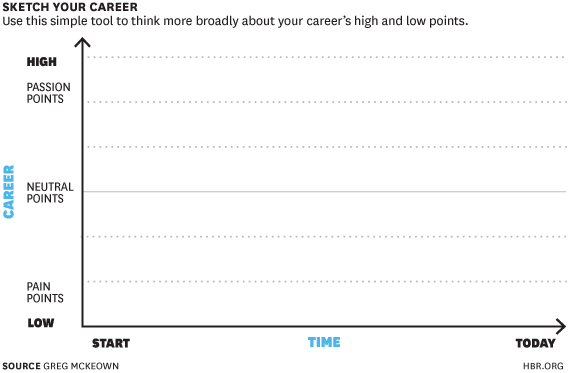
sketchyourcareer-thumb-580x373-3574connectthedots-thumb-580x373-3577

When web designer Ben Blumenfeld was working for a major TV network, he was responsible for creating websites for mainstream shows. One day, he made a breakthrough that led to a significant uptake on a show, but the success struck Ben in a way he had not expected. His success meantmore people would spend even more time watching TV, and he ultimately didn’t see that as a goodthing.

The moment proved to be an inflection point for Ben. He decided to stop thinking of his career as something separate from himself, and the values, ideals and principles that were important to him. He believed in making a positive impact in his community, and realized his day-to-day work wasn’t aligned with that. He decided it was time to pursue a path that baked his mission into his career. Read more of this post

Corporate Field Trip: Learning From Startups

Updated March 26, 2013, 4:13 p.m. ET

Corporate Field Trip: Learning From Startups

By RACHEL EMMA SILVERMAN

Maybe Goliath can learn a few things from David.

A handful of large companies, including PepsiCo Inc. PEP +1.40% and snack company Mondelez International Inc., MDLZ +1.37% are sending small groups of employees to work stints at technology and media startups, learning how smaller companies get things done with fewer resources, often at a quicker pace.

The hope, managers say, is that workers who spend time immersed in small, emerging firms will bring some of that scrappy spirit back to headquarters and change the way things get done.

At Mondelez, a corporation of about 110,000 employees created when it was spun off from Kraft Foods KRFT +1.20% last year, managers wanted to jump-start efforts to shift more of its marketing to mobile devices. So they chose nine mobile-technology startups to host Mondelez staff, among them inMarket, a two-year-old Los Angeles mobile-marketing firm with a staff of 20. Read more of this post

Integrating foreigners isn’t a lost cause

Integrating foreigners isn’t a lost cause

On a recent trip to present a research paper in Tokyo, I was surprised to not hear a single mobile phone ringing or a commuter talking loudly on the subway. Despite the train coach being notoriously crowded, the quiet was deafening.

Zhang Jianlin is a Senior Lecturer in Economics at SIM Global Education.

5 HOURS 1 MIN AGO

On a recent trip to present a research paper in Tokyo, I was surprised to not hear a single mobile phone ringing or a commuter talking loudly on the subway. Despite the train coach being notoriously crowded, the quiet was deafening.

Just as I was starting to wonder why the Japanese were behaving so considerately towards others, I heard announcements, first in Japanese then in English, over the sound system that all mobile phones must be switched to silent mode inside the coach.

What can we learn from the Japanese subway management to help our foreign friends better integrate in Singapore? Our Government has in recent times been sounding the refrain that foreigners whom Singapore welcomes to its shores must do their part in learning and adapting to our culture. Will this be a call in vain?

From a behavioural economist’s view, I believe not. It is in one’s self-interest not to deviate from the social norms of the society we live in. Read more of this post

Academic castes that dog us for life

Academic castes that dog us for life

Our school years hold many memories. Some of us remember playing football every day after school; others cringe at the memory of their younger, awkward selves. It was a mixed package for me.

FROM OLIVER MICHAEL –

26 MARCH

Our school years hold many memories. Some of us remember playing football every day after school; others cringe at the memory of their younger, awkward selves. It was a mixed package for me.

School was a stage for the drama of academic caste life. Hailing from a school with over a century of tradition and history, there were Express pupils who mocked Normal (Academic) pupils who, in turn, would sometimes look down on Normal (Technical) pupils.

Even within the Express stream today, there is a constant race to be the best. Secondary schools have a system where being first is more important than doing well.

Some would argue that such is school life. Unfortunately, these formative years have a lasting influence. Some pupils never outgrow their shell, and carry the burden of being called “stupid” into adulthood, lacking self-esteem. Read more of this post

How Stiglitz weakens change in S’pore; From an outsider’s standpoint, the “model” Singapore pitch is perhaps meant as praise. People who care about Singapore should reject this cheap thrill.

How Stiglitz weakens change in S’pore

Mr Joseph Stiglitz’s commentary, “Singapore’s lessons for an unequal America” (March 20), does disservice to both Singaporeans and Americans.

FROM TEO YOU YENN –

4 HOURS 34 MIN AGO

Mr Joseph Stiglitz’s commentary, “Singapore’s lessons for an unequal America” (March 20), does disservice to both Singaporeans and Americans. Graduate student Kirsten Han points out in news publication Quartz that Singapore’s Gini coefficient is the second-highest among developed countries; that exploitable migrant labour has allowed employers to suppress wages; that workers’ rights to collective action are curtailed. Mr Stiglitz mistakes these realities and overlooks the cost of inequality on social well-being here. More importantly, because he is a Nobel economist, a position of legitimacy, his claim that Singapore is a model for dealing with inequality diminishes Singaporeans’ calls on the state to reform the welfare regime, address inequalities and ensure social inclusion. In praising, for example, the Central Provident Fund (CPF) system for compelling individuals to save, he affirms the Singapore state’s claim that individuals should ultimately be responsible for themselves. As various civil society members have pointed out in recent years, this individualised view of solutions leaves many needs unresolved and generates inequalities across groups. The healthcare system, heavily dependent on individuals’ “responsibility” in ensuring lifelong employment and hence on their CPF savings, disadvantages those who are unable to have continuous, full employment. As the CPF is tied to an individual’s income, wage differentials translate into unequal access. The Association of Women for Action and Research has been particularly concerned that women doing unpaid domestic and care labour have greater difficulty accessing this basic need. Like Mr Stiglitz, various civil society groups, scholars and citizens are interested in drawing comparative lessons from cases. We have come to different conclusions about “the Singaporean model”. We have pointed out differences from the Nordic countries, in principles and outcomes. For example, the Singapore model is premised on women being responsible for fertility decisions and child support; men have limited rights to be carers. In education, while Singaporean children do test well, this has come about at significant cost for certain classes of parents; that enrichment and tuition centres are thriving signals the large private investments going into education. In considering reform, Americans would be better served by looking at social policies in Scandinavia that generate greater equality across class or gender, as various scholars do in books such as Gender Equality: Transforming Family Divisions of Labor.

From an outsider’s standpoint, the “model” Singapore pitch is perhaps meant as praise. Given that Singaporeans often read about chewing gum and caning as if these define our nation, reading a positive piece can evoke some feel-good sentiments. Yet, the failings of the piece are harmful. People who care about Singapore should reject this cheap thrill. Americans who care about reform in their case should not be thrown off by the use of a case that is closer to theirs than to genuinely desirable alternatives. Given ongoing debates regarding the future we want, and given that tensions in world views exist between state and society and within society, the rush to declare Singapore as a coherent, stable model for others undermines the very project to reform.

ABOUT THE WRITER:

Teo You Yenn is a board member at the Association of Women for Action and Research, assistant professor in sociology at the Nanyang Technological University and author of the book, Neoliberal morality in Singapore: How Family Policies Make State and Society.

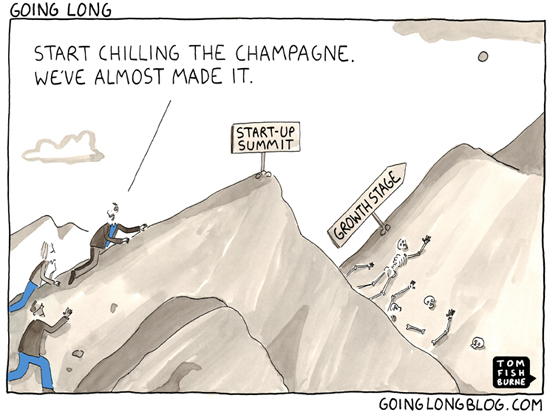
The Long March – Transitioning from a Start-up to a Growth Stage Company with Big Ambition; The Growth Stage Recipe – Ingredients Required to Build a Big Winner

The Long March – Transitioning from a Start-up to a Growth Stage Company with Big Ambition

Glenn Solomon (@glennsolomon) is a Partner with GGV Capital. Some of his recent investments include Pandora, Successfactors, Isilon, Square, Zendesk, Quinstreet and Nimble Storage. This post is part of a series for growth stage entrepreneurs who are thinking big; the full series can be found at www.goinglongblog.com.

Congratulations Ms. Entrepreneur. After years of toiling and challenging insurmountable odds, you’ve finally moved through the gates of start-up hell. You’ve established product/ market fit, you’re 10x better that your competition and you’ve begun to scale customers and revenues. You’ve also assembled a talented and passionate team who is bought into your culture. Take a breath. Take a bow. Now, come to the frightening realization… if you want to build a big company, you’ve got much more work ahead. The moves you make at the growth stage are increasingly important. Different challenges emerge and the bets become bigger, the stakes higher.

GGV.550.fourthpostGGV.550.firstpost

GGV.550.secondpost Read more of this post

Focus: Use Different Ways of Seeing the World for Success and Influence

Focus: Use Different Ways of Seeing the World for Success and Influence [Hardcover]

Heidi Grant Halvorson Ph.D. (Author), E. Tory Higgins Ph.D. (Author)

Release date: April 18, 2013

419SARVcDJL._SY320_

We all want to experience pleasure and avoid pain. But there are really two kinds of pleasure and pain that motivate everything we do. If you are promotion-focused, you want to advance and avoid missed opportunities. If you are prevention-focused, you want to minimize losses and keep things working. And as Tory Higgins has found in his groundbreaking research, if you understand how people focus, you have the power to motivate yourself and everyone around you.

Showing how promotion/prevention focus applies across a wide range of situations from selling products to managing employees to raising children to getting a second date, Halvorson and Higgins show us how to identify focus, how to change focus, and how to use focus exactly the right way to get results. Short, punchy, and prescriptive, Focus will help you see not just what’s going on around you— but what’s underneath. Read more of this post

Decisive: How to Make Better Choices in Life and Work

March 25, 2013 3:44 pm

Decide and make your move

By Philip Delves Broughton

Good management is about nothing if not good decision making. Unfortunately, decisiveness has been seen as a character trait like courage: there are those who can pull the trigger – the great executives – and those who can’t – the armies of wafflers who are terrified of being forced to accept the consequences of their actions.

A new wave of social scientists, however, is upending this view by digging into the psychological and social factors that influence our decisions. By developing better processes, they hope to make decision making less like voodoo and more like carpentry.

Chip Heath, a professor at Stanford’s business school, and his brother Dan Heath, a fellow at Duke University’s Center for the Advancement of Social Entrepreneurship, have already written two excellent books of pop social science: Made to Stick and Switch . Their latest, Decisions: How to Make Better Choices in Life and Work digs into the latest findings on decision making.

“Being decisive is itself a choice,” they write. “Decisiveness is a way of behaving, not an inherited trait. It allows us to make brave and confident choices, not because we know we’ll be right but because it’s better to try and fail than to delay and regret.” Read more of this post

When going gets tough, spicy foods become popular; the pain-relieving effects of capsaicin, the substance that makes peppers hot.

2013-03-25 17:40

When going gets tough, spicy foods become popular

By Rachel Lee

A popular belief, backed by a sense of economics, would have it that in an economic slump, women wear shorter skirts and opt for lipsticks of vivid colors. Here is one more myth to be added: when the going gets tough, people prefer spicier food. Take this new maxim with a hint of skepticism because the “fact” is provided by related industries but don’t dismiss it outright, considering the pain-relieving effects of capsaicin, the substance that makes peppers hot. According to Sun At Food, a leading food and dining company, sales of its Sichuan House restaurant’s popular Spicy Chili Beef Hotpot have gone up three–fold from November of last year to the end of January. Another dish, Sichuan Chili Chicken, saw a six-fold increase in sales.

Read more of this post

What Would Steve Do? 10 Lessons from the World’s Most Captivating Presenters

Why America Is Called America

March 25, 2013

Why America Is Called America

By JOHN NOBLE WILFORD

26SCIB-popup-v2

A plate of the 1507 world map made by the clerics Martin Waldseemüller and Mathias Ringmann

A DECADE AGO, the Library of Congress paid $10 million to acquire the only known original copy of a 1507 world map that has been called “the birth certificate of America.” The large map, a masterpiece of woodblock printing, has been a star attraction at the library ever since and the object of revived scholarly fascination about the earliest cartography of the New World. The research has also rescued from obscurity a little-known Renaissance man, the 16th-century globe maker Johannes Schöner, who was responsible for saving the map for posterity.

We call ourselves Americans today because of the map’s makers, Martin Waldseemüller and Mathias Ringmann, young clerics in the cathedral village of St.-Dié, France. By incorporating early New World discoveries, their map reached beyond the canonical descriptions of Old World geography handed down from Ptolemy in the second century. On a lower stretch of the southern continent, the mapmakers inscribed the name “America” in the mistaken belief that Amerigo Vespucci, not Columbus, deserved credit for first sighting a part of that continent, South America. Read more of this post

Pursuing a passion into a career change may bring the success you dream of. But disaster is also a possibility; “Suffering comes from being attached to the outcomes. If you stop worrying about the outcomes, you will achieve a better outcome.”

March 25, 2013

Following Your Bliss, Right Off the Cliff

By KAI RYSSDAL and MEGAN LARSON

JOBS-articleLarge

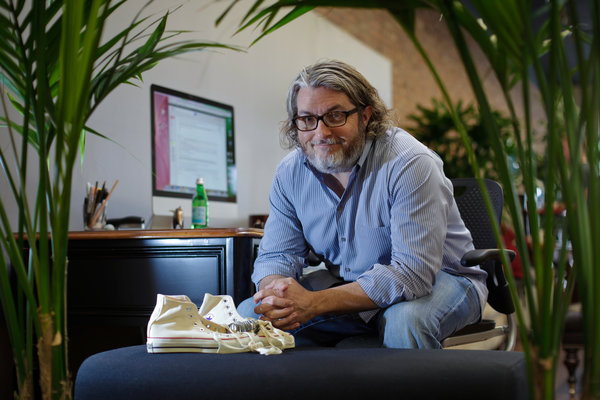
Michael Dearing with the last pair of shoes from his former shoe business, which he called a “splat-against-the-wall failure.” 

SO you want to be a writer. Or an artist. Or to open a cupcake shop. What you’ll hear, often, is that you should pursue your dream. Follow your passion. Quit your job and live the life you want.

That advice should come with a bright yellow warning sticker: your dream may end in disaster. Read more of this post

Following your gift: Dietary coffee producer shakes off slum upbringing to rake it in. NatureGift claims a 50% market share in dietary coffee in Thailand

Following your gift

Dietary coffee producer shakes off slum upbringing to rake it in.

Published: 26 Mar 2013 at 00.00

485350

Life was a slog for Kritsada Jangchaimonta, growing up in a slum for 23 years. But the 3-by-4 metre room he lived in together with seven others in Bangkok failed to discourage him from dreaming of becoming a millionaire one day.

Mr Kritsada claims white bean supplements are the key to losing weight because they offer an energy boost.

With an engineering degree from Chulalongkorn University, he started work at the Metropolitan Electricity Authority before joining a private company. Then in 1976, Mr Kritsada set up a company selling electrical appliances, before experimenting with other products ranging from shrimp feed to hydroponic vegetables.

In 2002, his company NatureGift launched food supplement capsules. But it wasn’t an immediate success so he thought of trying other products such as coffee, soap and toothpaste.

“At that time, I had debts of 20 million baht. While it took 30,000 baht to produce toothpaste, coffee required around 50,000 baht,” recalled the 66-year-old. Read more of this post

Your Survival Instinct Is Killing You: Retrain Your Brain to Conquer Fear, Make Better Decisions and Thrive in the 21st Century

Updated March 25, 2013, 7:23 p.m. ET

Healthy Reader

By LAURA LANDRO

Your Survival Instinct Is Killing You: Retrain Your Brain to Conquer Fear, Make Better Decisions and Thrive in the 21st Century

Marc Schoen
Hudson Street Press, $25.95

From primitive times, the survival instinct has enabled mankind to handle major threats to existence. In the modern world, we have become such creatures of comfort that even the slightest annoyance—such as facing a long line at airport security—sends our self-preservation programming into overdrive, resulting in dangerous levels of stress.

‘Discomfort may very well be the most powerful change agent we have in our arsenal for becoming all that we can be.’

Think Differently

Dr. Schoen’s tips for quelling uncomfortable ‘inner survivalist’ feelings

Expand your comfort zone: Drive to a less-familiar location without GPS or a map.

Embrace discomfort: Delay or refrain from use of medications to fall asleep or cope with pain (if medically safe to do so).

Commit to the present: Fully engage with people without responding to texts or emails.

Delay gratification: Sit with hunger before reaching for food; forgo that drink after work sometimes. Read more of this post

For One Chinese Student, a Tough Job Hunt; Grateful son and “Iron Chicken” Gao Yueqing is set to graduate this June with a degree in accounting, the most practical major he and his father could agree upon. But the younger Mr. Gao, like many Chinese college students, is finding it hard to nail a job

March 25, 2013, 10:33 p.m. ET

For One Chinese Student, a Tough Job Hunt

By BOB DAVIS

SHIJIAONAO, China—Four years ago, Gao Shangming was convinced that his son Yueqing needed to remain in the family’s one-room apartment and help harvest corn rather than go to college. “Our financial situation wasn’t good,” the 50-year-old peasant farmer says.

But Gao Yueqing was determined to escape the dusty north China mountain village of 200 households where nearly all young people either become farmers or migrate to nearby cities to work in restaurants. His father’s relatives talked up young Gao’s case, as did a respected high-school teacher who told the elder Gao how hardworking his son was.

The clincher: “He told me, ‘If I let him get a college degree, he’d make more money,'” the elder Gao recalls.

So the father put in extra hours in nearby coal mines to pay his son’s 10,000 yuan ($1,600) annual tuition and expenses at Shanxi University’s business school in Taiyuan, in the heart of China’s coal country. His grateful son was so frugal that his roommates nicknamed him “Iron Chicken,” because it was as hard to separate him from a yuan as it would be to pluck a feather from an iron fowl.

Gao Yueqing is set to graduate this June with a degree in accounting, the most practical major he and his father could agree upon. But the younger Mr. Gao, like many Chinese college students, is finding it hard to nail a job, especially one that pays decently. Read more of this post

‘Tall white foreigner from Wales singing songs about communism’ is hit in China

‘Tall white foreigner from Wales singing songs about communism’ is hit in China

A British singer has become an overnight celebrity in China after entering the TV talent show China’s Got Talent.

Iain-Inglis_2519637b

Iain Inglis sings communist revolutionary songs while dressed in a Red Army uniform Photo: WALES NEWS

Wales News Service

9:14PM GMT 25 Mar 2013

Iain Inglis, 30, shot to fame after singing traditional communist revolutionary songs while dressed in a Red Army uniform.

The university lecturer made it to the semi-finals of the show and now performs for up to £5,000 a night.

“I’m a tall, white foreigner from Wales singing songs about communism in Chinese,” Mr Inglis, from Cardiff, said. “It was a bit of fun to start off with but the more performances I did, the more I was hooked. For some reason the Chinese people seem to find it quite hilarious.” Read more of this post