A publication designed to be an authoritative guide to financial planning hit bookstore shelves Monday; Kevin Keller, CFP Board president and chief executive, drew a parallel between the book and medical volumes that describe diseases and treatments for doctors and consumers; “I like to think of this as the Merck Manual of financial planning.”

CFP Board publishes ‘Merck manual’ of planning

735-page book targeted at students, profs and practitioners

By Mark Schoeff Jr.   |  April 1, 2013 – 4:28 pm EST

A publication designed to be an authoritative guide to financial planning hit bookstore shelves Monday.

The 735-page “Financial Planning Competency Handbook” is the first book published by the Certified Financial Planner Board of Standards Inc. Written for college students and professors, as well as financial planners, the book is the CFP Board’s attempt to build an academic foundation for financial planning and define the field’s body of knowledge.

Kevin Keller, CFP Board president and chief executive, drew a parallel between the book and medical volumes that describe diseases and treatments for doctors and consumers.

“We think it is a seminal work for the financial planning profession,” Mr. Keller said. “I like to think of this as the Merck Manual of financial planning.” Read more of this post

Frank Sherman’s Horizon Coach Lines is one of the largest privately owned of its kind in North America. “You have to know how to handle 5,000 people an hour”; “We are changing the culture of Horizon from the ground up”; “We kept it asset-light”

Value Added: His bus business moves big crowds for big profits

By Thomas Heath, Monday, April 1, 6:05 AM

ValueAdded0401voisard081364673307

Frank Sherman runs his sprawling, Sandy Spring-based special-events bus business — with its 1,250 coaches and shuttles — with military precision.

He has to when dealing with the hordes who need to board his buses at events such as technology exhibitions, Republican conventions and Major League Baseball All-Star games.

If the buses aren’t present and the line doesn’t move, people lose faith. A docile crowd can turn unruly, ruining his reputation in an afternoon.

“You have to know how to handle 5,000 people an hour,” said the 52-year-old businessman, who has been riding the bus business since he was a kid, helping his father’s tour service whisk customers to weekend trips in New York and New England. Read more of this post

In China, anger grows over abuse of street vendors; “They are no different than bandits”, the fruit vendor whose detention along with her 2-year-old daughter this month sparked much outrage

In China, anger grows over abuse of street vendors

By William Wan, Monday, April 1, 3:38 AM

2013020713626168786591965605463

BEIJING — In a country infamous for heavy-handed officials, the government employees who harass and sometimes beat and extort money from street vendors are among the most despised.

Their official name is “chengguan,” which means city management, but the word has become slang for someone who uses excessive force to solve life’s problems.

In recent weeks, anger against the officials has reached a fever pitch as several cases of apparent abuse have been widely reported in Chinese microblogs, sparking a flood of online comments.

In a video posted online last week, witnesses say chengguan officers beat up a blind man, shown sitting in a pool of water, then took his cane, his begging cup and the change inside.

In another recent case, photos posted online show a swarm of officers roughing up and handcuffing a fruit vendor as her 2-year-old daughter cries inconsolably in the background. Read more of this post

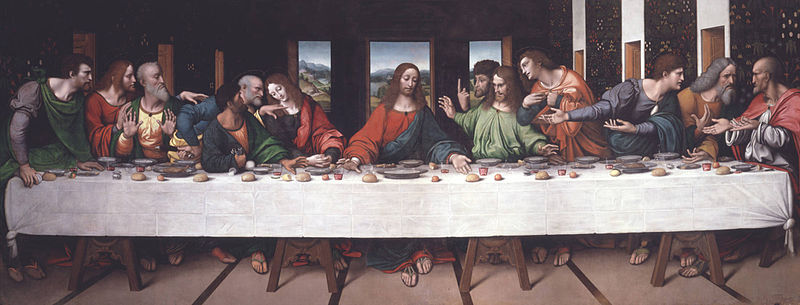
James Altucher: The Only Good Idea is an Unoriginal Idea; “The Last Supper was totally unoriginal. Leonardo was a plagiarist”

The Only Good Idea is an Unoriginal Idea

Posted by James Altucher on March 31st, 2013 at 12:50 pm

ART161812

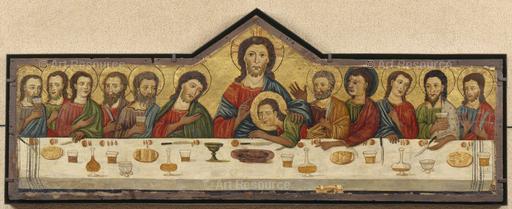
Here’s a painting from the 13th century: Ugh. BORING!

Giampietrino-Last-Supper-ca-1520 Read more of this post

What Are Foundations For?

What Are Foundations For?

Rob Reich

This article leads off our debate on philanthropy, with responses from Stanley Katz, Diane Ravitch, Larry Kramer, and others.

Graham Smith

Judge Richard Posner, one of the foremost American jurists outside the Supreme Court, once observed, “A perpetual charitable foundation . . . is a completely irresponsible institution, answerable to nobody. It competes neither in capital markets nor in product markets . . . and, unlike a hereditary monarch whom such a foundation otherwise resembles, it is subject to no political controls either.” Why, he wondered, don’t we think of these foundations as “total scandals”? If foundations are total scandals, then we have a massive problem on our hands. We are now living through the second golden age of American philanthropy. What Andrew Carnegie and John D. Rockefeller were to the early twentieth century, Bill Gates and Warren Buffett are to the early twenty-first century. Read more of this post

High-Tech Means of Production Belies the Nostalgic Image of Maple Syrup; Gathering sap to boil into maple syrup, long a tradition in places like Vermont, has become a more high-tech process, with miles of plastic tubing and powerful vacuums that draw the sap out of the trees using reverse osmosis machines

March 30, 2013

High-Tech Means of Production Belies the Nostalgic Image of Maple Syrup

By JULIA SCOTT

SYRUP-1-articleLarge

Gathering sap to boil into maple syrup, long a tradition in places like Vermont, has become a more high-tech process, with miles of plastic tubing and powerful vacuums that draw the sap out of the trees.

EAST MONTPELIER, Vt. — The rich, sweet tang of sap being boiled into maple syrup greeted tourists at Burr Morse’s sugar shack here this month — along with Mr. Morse, every inch the rural maple farmer in worn baseball cap and syrup-stained jacket, stirring the steaming evaporator with an old-fashioned dipper.

“People want to have a nostalgia trip,” said Mr. Morse, 65, a seventh-generation maple syrup farmer and the patriarch of Morse Farm Maple Sugarworks. “They want to see something natural, like taking sap from a tree.”

Forty years ago, Mr. Morse would snowshoe into the forest with his father to collect sap from galvanized buckets and load them onto a tractor. The farm has not changed much since then, but the winters have. So has the maple syrup ritual itself.

Scientists say the tapping season — the narrow window of freezing nights and daytime temperatures over 40 degrees needed to convert starch to sugar and get sap flowing — is on average five days shorter than it was 50 years ago. But technology developed over the past decade and improved in recent years offers maple farmers like Mr. Morse a way to offset the effects of climate change with high-tech tactics that are far from natural.

Today, five miles of pressurized blue tubing spider webs down the hillside at Morse Farm, pulling sap from thousands of trees and spitting it into tubs like an immense, inverse IV machine. Modern vacuum pumps are powerful enough to suck the air out of a stainless steel dairy tank and implode it, and they help producers pull in twice as much sap as before.

“You can make it run when nature wouldn’t have it run,” Mr. Morse said. His greatest secret weapon is a reverse-osmosis machine that concentrates the sap by pulling it through sensitive membranes, greatly increasing the sugar content before it even hits the boiler. The $8,000 instrument with buttons and dials looks like it belongs in a Jetsons-era laboratory more than in a Vermont sugarhouse. But it saves more fuel and money than every other innovation combined. With it Mr. Morse can process sap into syrup in 30 minutes, something that used to take two hours. Read more of this post

How to Be a Successful Luxury Brand; If You’ve Got a Story, Tell It

HOW TO BE A SUCCESSFUL LUXURY BRAND

ARTICLE | 26 MARCH, 2013 10:10 AM | BY JEREMY HAZLEHURST

The spread of luxury is the story of the early 21st century. Take this fact: Louis Vuitton, which started life as a trunk-making business in Paris in 1854, will soon open a swanky new store in Kazakhstan. This follows the opening of a massive new store in Shanghai, right at the heart of what was once a hardline Communist state. Luxury goods are the quintessentially modern products, charting the spread of wealth and aspiration to the most unlikely places. Campden looks at five things that luxury brands have to do if they are to flourish in this strange new world.

1: IF YOU’VE GOT A STORY, TELL IT
Human beings love stories, so brands that have good tales are wise to use them as much as possible. “Naturally, it is easier to sell your story if it starts with depuis 1833” says Anastasia Kourovskai of Millward Brown, a brand research agency. “Such brands as Chanel, Dior and Yves St Laurent have real stories behind the brand,” she says. Other newer ones, however, have created their brand stories.

Look at Tiffany’s, whose name is forever linked to Audrey Hepburn’s classic chic through the film Breakfast at Tiffany’s. Or Ralph Lauren, founded by a chap named Ralph Lifshitz from The Bronx, the son of immigrants from Belarus, but which has brilliantly used advertising and store design to link the brand with the WASPish pursuit of polo.

Mark Henderson, chairman of Savile Row tailor Gieves & Hawkes (founded in 1771) agrees that the stories matter. “I think that is why tradition and family heritage are such an important part of the brand,” he says. Read more of this post
‘Medieval style’ in modern exams; Take, for example, the Cantonese word for accounting. It sounds like wui kai in everyday Cantonese. But, in the exam, it should be pronounced as kui kai

‘Medieval style’ in modern exams

Mary Ma

Thursday, March 28, 2013

The shift from the conventional secondary education to the new “3-3-4” system is supposed to keep our education system up to date. Understandably, there were bound to be hiccups in the transition, such as the confusion over liberal studies. Though liberal studies is designated as a compulsory subject alongside Chinese language, English and mathematics, a complaint that is most frequently heard is that it is a “subject at large” without a clear scope.

But that shortcoming is being overcome.

However, when it comes to Chinese, some so-called “mistakes” are laughable. Read more of this post

Superstitious investors jittery as bad omen actor Adan Cheng releases movie; Cheng has appeared in some 17 television series since 1992. The market fell while 11 of them were on air

Superstitious investors jittery as bad omen actor Cheng releases movie

Friday, 29 March, 2013, 8:06pm

Jeanny Yu jeanny.yu@scmp.com

Bulls beware. Adam Cheng Siu-chow is coming to a cinema near you.

The Hong Kong actor, whose every new television drama is said to herald a stock market crash, is returning to the big screen with a new release on April 4. And stock investors are scared stiff.

“It’s a self-fulfilling prophecy. Many locals, especially retail investors, are very superstitious,” said Ben Kwong Man-bun, chief operating officer at KGI Asia. “If everyone buys into this negative association and starts selling in panic, a sharp fall is inevitable.”

The new movie, Saving General Yang, is based on the legendary generals of the famed Yang family during the early years of the Northern Song dynasty. Cheng plays the senior General Yang, who fought a battle to defend the Song’s borders from foreign invaders.

The 66-year-old Cheng’s tryst with infamy began in 1992, when TVB launched a drama series called The Greed of Man. Cheng played the role of Ting Hai, an actor who makes a killing by short-selling derivatives and stocks in a bear market. The Hang Seng Index fell up to 13 per cent while the show was on. His bad influence on the index has been dubbed the “Ting Hai effect” since, and has proven largely true over the past decade. Cheng has appeared in some 17 television series since 1992. The market fell while 11 of them were on air. In 1997, when another series, Legend of Yung Ching , was running, the index fell below 10,000 points. TVB also happened to launch a new Cheng series in 1998, when the Asian financial crisis erupted, and in 2000, when the technology bubble burst. Read more of this post
Beijing University is in possession of a bamboo-strip version of the Laozi / Daode Jing that they date to the Western Han

Transcription of Beida Laozi Manuscript On-Line

As many of you know, there are more and more excavated texts making their presence known in our field. Beijing University is in possession of a bamboo-strip version of the Laozi / Daode Jing that they date to the Western Han.

LaoTzu_Bamboo Read more of this post

Helping leadership teams to leave their comfort zone

Helping leadership teams to leave their comfort zone

Published: 1 Apr 2013 at 00.00

‘Khun Tada, I envy you. Your company has done well.”

“I wish I could say I was pleased, Khun Kriengsak. The thing is, I’m worried.”

“Why is that?”

“Our business has been successful for the past three years. This year looks even more promising. I think we can achieve our business targets easily. But my teams are new. They’re young and inexperienced because we promoted them faster than usual due to the fast growth we’ve been experiencing.

“But we know that there’s no guarantee for smooth growth. We will face some threats. I worry that when that time arrives, my teams may not be ready to cope with adversity.”

“Why not?”

“Because we’ve been trapped in our comfort zone too long. You know, it’s like any sport _ when you get too comfortable, you have a tendency to be complacent and lazy. You don’t practice as much. Once you meet with a tough opponent, you lose easily.”

“That makes sense, Khun Tada. What do you plan to do to prevent that from happening in your business?” Read more of this post

Datuk Hafsah Hashim, CEO of SME Corp Malaysia: Creating global champions from local companies was never heard of before. And, no one has ever given a thought to a Malaysian local company becoming a multinational corporation (MNC) in another far away land! Who says that it is impossible?

How much is a brand worth?

Published: 2013/04/01

In a blink of an eye, we are already in the second quarter of 2013… time really flies! How I wish I have the super power to stop time, just enough to encompass the moment to sit and reflect on how my life has changed ever since I embarked on this journey to do my bit in assisting small businesses.

Indeed, these little business entities are like own children. My life’s little pleasures are watching them grow from start-ups to become local and, thereafter, global champions. I watch their every little success as they etched their mark, the challenges they go through and the triumphs they get from winning contracts. The joy and satisfaction of being with them as they move from zero to hero is indeed immeasurable!

Creating global champions from local companies was never heard of before. And, no one has ever given a thought to a Malaysian local company becoming a multinational corporation (MNC) in another far away land! Who says that it is impossible? In any case, if we break the words of “impossible” into three parts, it becomes “I m possible”.  Read more of this post

Creating ‘bamboo innovators’ in S’pore (Straits Times, April 1, 2013)

http://www.stasiareport.com/premium/opinion/story/creating-bamboo-innovators-spore-20130401

Creating ‘bamboo innovators’ in S’pore

Uncertain conditions can breed innovative businesses, where risk-taking educators nurture flexible students.

Published on Apr 01, 2013
Check Point Software Technologies CEO and founder Gil Shwed, an Israeli inventor and entrepreneur who started the Firewall security software. — PHOTO: CHECK POINT SOFTWARE TECHNOLOGIE
By Kee Koon Boon For The Straits Times
Read the published version below and the unedited longer version hereRead more of this post

How Funds Massage Numbers, Legally

March 31, 2013

How Funds Massage Numbers, Legally

By CAROLYN T. GEER

OB-WW353_31IBc_G_20130328162432

Most investors are familiar with the boilerplate disclaimer that past performance doesn’t guarantee future results. Far fewer are aware of how past performance numbers themselves can be misleading.

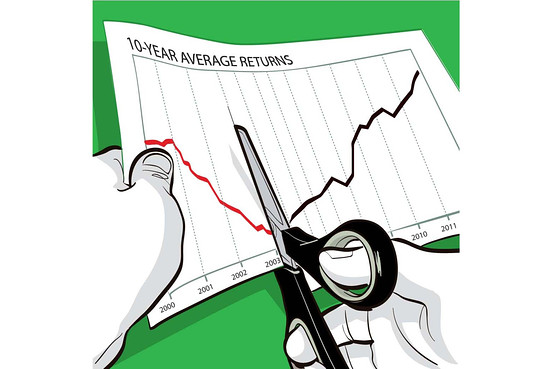
Sometimes only a “trick of the calendar” is to blame, as noted in a recent market commentary from Vanguard Group. The 10-year average annual return of the total U.S. stock market shot to 8% as of year-end 2012, from 4% a year earlier. Sure, U.S. stocks were up 16% in 2012, versus 1% for 2011. But more important, the negative 21% return from 2002—the last year of the 2000-2002 bear market—rolled out of the 10-year return calculations.

This year, the negative 37% return from 2008 rolls off the five-year return calendar, so that even if stocks go nowhere in 2013, their five-year average annual return will jump from the current 2% to 12%, by Vanguard’s calculations. Read more of this post

The Art of Observation and How to Master the Crucial Difference Between Observation and Intuition

The Art of Observation and How to Master the Crucial Difference Between Observation and Intuition

Why genius lies in the selection of what is worth observing.

“In the field of observation,” legendary disease prevention pioneer Louis Pasteur famously proclaimed in 1854, “chance favors only the prepared mind.” “Knowledge comes form noticing resemblances and recurrences in the events that happen around us,” neuroscience godfather Wilfred Trotter asserted. That keen observation is what transmutes information into knowledge is indisputable – look no further than Sherlock Holmes and his exquisite mindfulness for a proof – but how, exactly, does one cultivate that critical faculty?

From The Art of Scientific Investigation (public library; public domain) by Cambridge University animal pathology professor W. I. B. Beveridge – the same fantastic 1957 compendium that explored the role of the intuition and imagination in science and how serendipity and “chance opportunism” fuel discovery – comes a timeless meditation on the art of observation, which he insists “is not passively watching but is an active mental process,” and the importance of distinguishing it from what we call intuition. Though a number of celebrated minds favored intuition over rationality, and even Beveridge himself extolled the merits of the intuitive in science, he sides with modern-day admonitions about our tendency to mislabel other cognitive processes as “intuition” and advises:

It is important to realize that observation is much more than merely seeing something; it also involves a mental process. In all observations there are two elements : (a) the sense-perceptual element (usually visual) and (b) the mental, which, as we have seen, may be partly conscious and partly unconscious. Where the sense-perceptual element is relatively unimportant, it is often difficult to distinguish between an observation and an ordinary intuition. For example, this sort of thing is usually referred to as an observation: “I have noticed that I get hay fever whenever I go near horses.” The hay fever and the horses are perfectly obvious, it is the connection between the two that may require astuteness to notice at first, and this is a mental process not distinguishable from an intuition. Sometimes it is possible to draw a line between the noticing and the intuition, e.g. Aristotle commented that on observing that the bright side of the moon is always toward the sun, it may suddenly occur to the observer that the explanation is that the moon shines by the light of the sun. Read more of this post

Need a Job? Invent It; the goal of education today, argues Harvard’s Tony Wagner, should not be to make every child “college ready” but “innovation ready” — ready to add value to whatever they do

March 30, 2013

Need a Job? Invent It

By THOMAS L. FRIEDMAN

WHEN Tony Wagner, the Harvard education specialist, describes his job today, he says he’s “a translator between two hostile tribes” — the education world and the business world, the people who teach our kids and the people who give them jobs. Wagner’s argument in his book “Creating Innovators: The Making of Young People Who Will Change the World” is that our K-12 and college tracks are not consistently “adding the value and teaching the skills that matter most in the marketplace.”

This is dangerous at a time when there is increasingly no such thing as a high-wage, middle-skilled job — the thing that sustained the middle class in the last generation. Now there is only a high-wage, high-skilled job. Every middle-class job today is being pulled up, out or down faster than ever. That is, it either requires more skill or can be done by more people around the world or is being buried — made obsolete — faster than ever. Which is why the goal of education today, argues Wagner, should not be to make every child “college ready” but “innovation ready” — ready to add value to whatever they do. Read more of this post

New book shares insights from Steve Jobs’ 1st boss, Atari’s Steve Bushnell; Bushnell turned down an offer from his former employee to invest $50,000 in Apple during its formative stages, a one-third stake now worth $120 billion

New book shares insights from Steve Jobs’ 1st boss

(philstar.com) | Updated March 28, 2013 – 4:11pm

bushnell

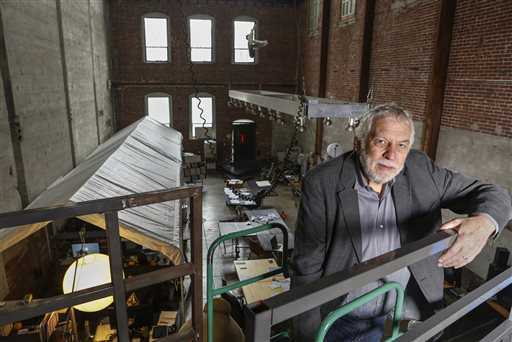
In this photo taken Wednesday, Mar. 20, 2013, Nolan Bushnell, the founder of Atari poses for a photo at “Two-Bits-Circus,” a Los Angeles idea factory focused on software, hardware and machines. Bushnell was the first guy to give Steve Jobs his first full-time job in Silicon Valley at Atari. (AP Photo/Damian Dovarganes)

SAN FRANCISCO (AP) — When Steve Jobs adopted “think different” as Apple’s mantra in the late 1990s, the company’s ads featured Albert Einstein, Bob Dylan, Amelia Earhart and a constellation of other starry-eyed oddballs who reshaped society.

Nolan Bushnell never appeared in those tributes, even though Apple was riffing on an iconoclastic philosophy he embraced while running video game pioneer Atari in the early 1970s. Atari’s refusal to be corralled by the status quo was one of the reasons Jobs went to work there in 1974 as an unkempt, contemptuous 19-year-old. Bushnell says Jobs offended some Atari employees so much that Bushnell eventually told Jobs to work nights when one else was around.

Bushnell, though, says he always saw something special in Jobs, who evidently came to appreciate his eccentric boss, too. The two remained in touch until shortly before Jobs died in October 2011 after a long battle with pancreatic cancer.

That bond inspired Bushnell to write a book about the unorthodox thinking that fosters the kinds of breakthroughs that became Jobs’ hallmark as the co-founder and CEO of Apple Inc. Apple built its first personal computers with some of the parts from Atari’s early video game machines. After Jobs and Steve Wozniak started Apple in 1976, Apple also adopted parts of an Atari culture that strived to make work seem like play. That included pizza-and-beer parties and company retreats to the beach.

“I have always been pretty proud about that connection,” Bushnell said in an interview. “I know Steve was always trying to take ideas and turn them upside down, just like I did.”

Bushnell, now 70, could have reaped even more from his relationship with Jobs if he hadn’t turned down an offer from his former employee to invest $50,000 in Apple during its formative stages. Had he seized that opportunity, Bushnell would have owned one-third of Apple, which is now worth about $425 billion — more than any other company in the world.

Bushnell’s newly released book, “Finding The Next Steve Jobs: How to Find, Hire, Keep and Nurture Creative Talent,” is the latest chapter in a diverse career that spans more than 20 different startups that he either launched on his own or groomed at Catalyst Technologies, a business incubator that he once ran. Read more of this post

When Simplicity Is the Solution; From tax forms to medicine bottles to store shelves, we are facing a crisis of complexity. But there’s a way out.

March 29, 2013, 8:22 p.m. ET

When Simplicity Is the Solution

From tax forms to medicine bottles to store shelves, we are facing a crisis of complexity. But there’s a way out.

Alan Siegel, author of “Simple” explains that America and the world are suffering from a crisis of complexity. WSJ’s Ryan Sager asks what this crisis is costing us and how we can achieve more simplicity.

By ALAN SIEGEL and IRENE ETZKORN

At the beginning of “Walden,” Henry David Thoreau makes a concise case against the complexity of modern life. “Our life is frittered away by detail. An honest man has hardly need to count more than his ten fingers, or in extreme cases he may add his ten toes, and lump the rest. Simplicity, simplicity, simplicity!” he writes. “[L]et your affairs be as two or three, and not a hundred or a thousand; instead of a million count half a dozen, and keep your accounts on your thumb-nail….Simplify, simplify.”

Every facet of our lives is complicated by an ever-widening array of choices, including dozens of options for jam or mustard or frozen foods.

That was the 19th century, though, and we live in the 21st. In a typical day, we encounter dozens—if not dozens upon dozens—of moments when we are delayed, frustrated or confused by complexity. Our lives are filled with gadgets we can’t use (automatic sprinklers, GPS devices, fancy blenders), instructions we can’t follow (labels on medicine bottles, directions for assembling toys or furniture) and forms we can’t decipher (tax returns, gym membership contracts, wireless phone bills).

Every facet of our lives, even entertainment and recreation, is complicated by an ever-widening array of choices delivered at a frantic pace. Read more of this post

Have We Evolved to Be Nasty or Nice?

March 29, 2013, 9:15 p.m. ET

Have We Evolved to Be Nasty or Nice?

It is futile to ask whether people are naturally cooperative or selfish. They can be either, in different circumstances.

By MATT RIDLEY

RV-AK078_RIDLEY_DV_20130329180224

A new study by Dirk Helbing at ETH Zurich in Switzerland and colleagues has modeled the emergence of “nice” behavior in idealized human beings. It’s done by computer, using the famous “prisoner’s dilemma” game, in which a prisoner has to decide between cooperating with a comrade to get a mutual reward or avoiding a punishment by being the first of the two to defect to the other side. The Zurich team found that so long as players in the game stay near their (modeled) parents, the birth of a nice guy predisposed to cooperate can trigger “a cascade” of generous acts.

In other words, more togetherness and physical proximity across the generations allows the development of more prosocial behavior. “The clustering of friendly agents, which promotes other-regarding preferences, is not supported when offspring move away.” They also argue that networking via social media can promote niceness, which might surprise regular users of Twitter. Read more of this post

Bing Gordon’s Founder Checklist: Animal Energy, Blind Confidence, And A Toupee.

Bing Gordon’s Founder Checklist: Animal Energy, Blind Confidence, And A Toupee.

DEREK ANDERSEN

posted 1 hour ago

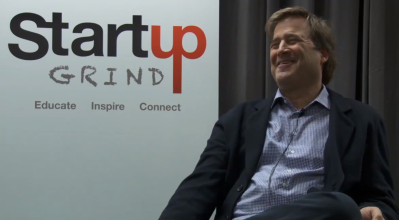
Editor’s note: Derek Andersen is the founder of Startup Grind, a 40-city community bringing the global startup world together while educating, inspiring, and connecting entrepreneurs.

screen-shot-2013-03-30-at-12-09-31-am1

As an Electronic Arts’ intern eight years ago, I asked Bing Gordon then the chief creative officer and the only remaining early founding team member, a question about vision. “How can I know where the puck is going to be?” While he delivered a satisfactory response, two weeks later I received an email from Bing saying, “I answered that question poorly a few weeks and I wanted to try again.” A few weeks ago Bing joined me at Startup Grind in Silicon Valley where he delivered some videogame history and founder advice. In 2010 Mark Pincus called KPCB general partner Bing Gordon (look for a bald guy on the front row) one of the world’s “great CEO coaches” supporting founders on the boards of companies like Amazon, Zynga, Klout, and Zazzle. Here are some excepts from our recent interview. Read more of this post

How Laithwaites turns wine into gold; Laithwaite is the biggest wine merchants in the world, excluding supermarket retailers.

How Laithwaites turns wine into gold

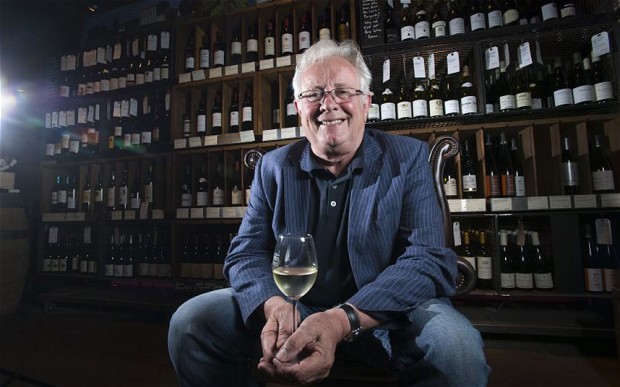
Charles Vallance and David Hopper meet a man who has made his fortune, and a company employing over 1,000 people, from his lifelong passion.

laithwaite_2523291b

The Laithwaites make wine at their collection of vineyards and wineries in Bordeaux and Australia. Photo: Ben Cawthra / Rex Features

By Charles Vallance and David Hopper

9:42PM GMT 29 Mar 2013

Were you to bump into Tony Laithwaite at the post office or at an airport check-in you would probably guess that he is a wine maker; put him in a vineyard and he looks like he belongs there — in the way that French existential philosophers look like they belong in street cafes on the Boulevard Saint-Germain.

The UK’s biggest wine company is eponymously named after Laithwaite and his wife, Barbara. In fact, according to some calculations, they are the biggest wine merchants in the world, excluding supermarket retailers.

Trading under his own name and several other subsidiaries, Laithwaite and his wife have built up a company with turnover in excess of £350m annually — which works out at around 50m bottles — with usually at least 2,500 wines in stock, and directly employing more than 1,000 people worldwide. Read more of this post

It’s not just long winters that push Swedes to innovate

It’s not just long winters that push Swedes to innovate

By Nathan Hegedus — 4 hours ago

Nathan Hegedus is a Stockholm-based journalist and communications consultant.

Innovation is a difficult quality to measure, but, by all accounts, Sweden is an innovative place and only getting more so, with top rankings in innovation surveys from the Legatum Institutethe World Intellectual Property Organization, and theWorld Economic Forum. The foundation for this economic strength seems to transcend the absolute terms by which many people view Sweden—either as socialist nightmare or a capital of cool or a place scarred by long winters and Lutheran angst.  In fact, Swedes seem to be pragmatically pulling from their entire heritage—a culture of entrepreneurship going back a century, the social stability of the welfare state, and that sense of pop culture—to reach forward into a globalized future. This is most obvious in a recent slew of stories on the vibrant Stockholm startup scene, headlined by Skype and Spotify, but now including hot companies likeiZettleKlarna and Wrapp.

But innovation in Sweden is not limited to techy startups. Sweden is a world leader in life sciences, with clusters in both the Stockholm area and in southern Sweden, in conjunction with Denmark. And it’s also long been considered on the cutting edge of clean tech, largely inspired in practice and principle by its vast natural resources—meaning its rivers, wind, seas and forests. The country actually imports800,000 tons of trash a year to fuel efficient waste-to-power plants and gets more of its energy from biomass than oil, has set a goal to be oil-free by 2020, and is the leader within the EU in renewable energy. All this creates a welcoming ecosystem for Swedish clean tech companies like gasification firm Chemrec and solar company ClimateWell. In the World Wildlife Fund’s 2012 Clean Tech rankings, Sweden ranked third behind only Denmark and Israel. From the report: Sweden and the USA show a common pattern, scoring well on “evidence of emerging cleantech companies” and “general innovation drivers”. Sweden edged out the USA by scoring stronger (on a relative basis) on the “evidence of commercialised cleantech innovation” factor mainly due to its relatively strong deployment of renewable energy. But Sweden and other Nordic countries across the board need to raise their manufacturing rate and be careful to avoid getting stuck as boutique innovators who never reach a larger scale.

So why does Swedish business “punch above its weight” in terms of innovation, as Skype founder Niklas Zennström recently put it? Read more of this post

Brands that have died in Britain live on elsewhere

British brands abroad

Going native

Brands that have died in Britain live on elsewhere

Mar 23rd 2013 |From the print edition

20130323_BRP003_0

BRITONS were fond of A.1. sauce until the 1950s, when it stopped being widely sold in the country that created it. But like other products the natives have wearied of, A.1. is still avidly consumed elsewhere. American omnivores prize it as a complement to steak.

There are many such commercial expatriates, brands born in Britain but now more at home abroad. Rinso is the top detergent in Indonesia. Italian bambini grow up on Mellin, the distant descendant of a Victorian producer of concentrated milk. Peardrax and Cydrax, fruit-based fizzy drinks sold in Britain until the 1980s, are still popular in Trinidad & Tobago.

The ultimate expatriate power brand is Lifebuoy. William Lever concocted the soap in 1894 and sold it as a means to combat cholera. By the 1930s Lifebuoy marketers had turned their guns on British body odour. It “knocks out B.O.”, the packages promised. Lifebuoy eventually lost its allure in Britain, perhaps because buying it came to be seen as an admission of smelliness. Now Unilever, Lever’s corporate heir, uses it to fight diarrhoea, a menace that kills 1.5m children a year. Hand-washing can cut that toll (and move a lot of soap), the multinational reckons. At this year’s Kumbh Mela, a triennial gathering of tens of millions of Hindus, Lifebuoy seared its hand-washing slogan into unleavened rotis, the pilgrims’ staple.

Empire gave brands “the ability to get global quickly”, notes Robert Opie, a consumer historian whose collection forms the basis of the Museum of Brands, Packaging and Advertising. Some stayed after the sahibs went home. Peek, Frean started baking biscuits in Britain in 1857 and in India in 1924. The Bermondsey factory closed in 1989 but Peek Freans (now comma-less) still take a big bite of the market in Pakistan, where they are baked by the nostalgically named English Biscuit Manufacturers. Mondelez, a food giant, continues to sell them in Canada. Read more of this post

The Manual of Ideas: The Proven Framework for Finding the Best Value Investments

The Manual of Ideas: The Proven Framework for Finding the Best Value Investments [Hardcover]

John Mihaljevic (Author)

51Kfbwn7N9L._SY300_

Book Description

Publication Date: August 19, 2013

Reveals the proprietary framework used by an exclusive community of top money managers and value investors in their never-ending quest for untapped investment ideas

Considered an indispensable source of cutting-edge research and ideas among the world’s top investment firms and money managers, the journal The Manual of Ideas boasts a subscribers list that reads like a Who’s Who of high finance. Written by that publication’s managing editor and inspired by its mission to serve as an “idea funnel” for the world’s top money managers, this book introduces you to a proven, proprietary framework for finding, researching, analyzing, and implementing the best value investing opportunities. The next best thing to taking a peek under the hoods of some of the most prodigious brains in the business, it gives you uniquely direct access to the thought processes and investment strategies of such super value investors as Warren Buffett, Seth Klarman, Glenn Greenberg, Guy Spier and Joel Greenblatt.

  • Written by the team behind one of the most read and talked-about sources of research and value investing ideas
  • Reviews more than twenty pre-qualified investment ideas and provides an original ranking methodology to help you zero-in on the three to five most compelling investments
  • Delivers a finely-tuned, proprietary investment framework, previously available only to an elite group of TMI subscribers
  • Step-by-step, it walks you through a proven, rigorous approach to finding, researching, analyzing, and implementing worthy ideas

8 business lessons from the birds and the bees; So-called biomimicry, in which scientists copy nature to solve human problems, is taking hold in industries from energy to consumer goods

8 business lessons from the birds and the bees

So-called biomimicry, in which scientists copy nature to solve human problems, is taking hold in industries from energy to consumer goods. Imagine a day when bees provide inspiration for energy efficient buildings and cars that drive themselves, sharks offer the promise to reduced hospital infections and geckos give ideas for hanging big-screen TV sets. It’s already here. The burgeoning field of biomimicry, in which scientists copy nature to solve human problems, has drawn interest across industries — from energy to consumer goods. “There is a whole pipeline of people inventing by looking to the natural world,” says Janine Benyus, founder of Biomimicry 3.8, a consultancy that has helped Colgate-Palmolive (CLFortune 500), Levis, Nike (NKEFortune 500) and Boeing (BAFortune 500) reformulate products using biomimicry Here’s a look at how nature is breeding new ideas.

Geckos

Amherst University scientists studied how geckos cling flat to surfaces to develop a copycat reusable fabric for hanging heavy loads. The gravity-defying secret: a unique arrangement of tendons and skin. The fabric, called “geckskin,” could be on the market in 2014. A piece the size of an index card could hold everything from glass to a 42-inch TV screen — anything up to 700 pounds — on a flat surface.

Bees

Bees coordinate to do amazing tasks like building nests and chasing off invaders. Now Toronto-based Regen Energy has applied that “swarm logic” to develop software that lets heating and cooling units in big box stores work together wirelessly to decide when and how often units run to maximize energy efficiency. Target (TGTFortune 500) and Sears (SHLDFortune 500)rely on Regen Energy to manage energy at their stores.

Lotus Leaf

Germany’s stucco and coating company Sto AG created a unique kind of exterior paint modeled after the lotus leaf’s ability to dry quickly and stay clean after a rainstorm. Sto copied the plant’s bumpy microstructure to come up with Lotusan paint, designed to stay cleaner and last twice as long as traditional paint.

Lotus Leaf II

Mussels

Northwestern University researchers studied the sticking power of mussels and found that they have unique protein-based adhesives that works well in wet environments. They then copied that makeup to create polymer surgical glue that one day could repair fetal membranes and hopefully prevent preterm labor.

Termites

Termite mounds inspired African architect Michael Pearce when designing a Zimbabwe shopping center. The finished Eastgate Centre copies the mounds’ natural thermal design, using ducts and 48 huge chimneys to move hot daytime air out. The building uses 60% less energy than traditional buildings.

Fish

Nissan is researching how schooling fish and bumblebees can work together to change direction, traveling side-by-side at the same speed and navigating intelligently to avoid obstacles. The goal: mimic that system in cars that drive themselves, avoiding traffic jams and collisions.

Sharks

A University of Florida professor discovered that the tiny microscopic diamond-shape patterns on a shark’s skin actually allow the animal to stay free of marine bacteria. Now Sharklet Technologies in Aurora, Colo., mimics those mathematical patterns to create antibacterial surface textures for medical devices and hospital countertops. Depending on the pathogen, the textures can cut bacteria by 90% to 99.9%.

Fireflies

The inspiration behind better light bulbs in your home? Fireflies. Scientists in Belgium, France, and Canada studied then copied the firefly’s jagged pattern on its reflector panels to come up with a new coating for brighter LED lights. The result: a 55% boost in efficiency compared to traditional LED lights. Researchers hope the innovation will lead to better LEDs in camera phones, televisions, cars, and residential lighting.

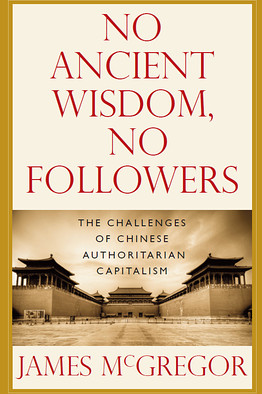
NO ANCIENT WISDOM, NO FOLLOWERS: The Challenges of Chinese Authoritarian Capitalism

NO ANCIENT WISDOM, NO FOLLOWERS: The Challenges of Chinese Authoritarian Capitalism [Paperback]

James McGregor (Author)

Publication Date: November 6, 2012

OB-UU147_mcgreg_DV_20121001022644

In the past three decades, China has risen from near collapse to a powerhouse — upending nearly every convention on the world stage, whether policy or business. China is now the globe’s second largest economy, second largest exporter, a manufacturing machine that has lifted 500 million of its citizens from poverty while producing more than one million US dollar millionaires. Then why do China’s leaders describe the nation’s economic model as “unstable and unsustainable”? Because it is.

James McGregor has spent 25 years in China as a businessman, journalist and author. In this, his latest highly readable book, he offers extensive new research that pulls back the curtain on China’s economic power. He describes the much-vaunted “China Model” as one of authoritarian capitalism, a unique system that, in its own way, is terminating itself. It is proving incompatible with global trade and business governance. It is threatening multinationals, which fear losing their business secrets and technology to China’s mammoth state-owned enterprises. It is fielding those SOEs – China’s “national champions” — into a global order angered by heavily subsidized state capitalism. And it is relying on an outdated investment and export model that’s running out of steam. What has worked in the past, won’t work in the future. The China Model must be radically overhauled if the country hopes to continue its march toward prosperity. The nation must consume more of what it makes. It must learn to innovate. It must unleash private enterprise. And the Communist Party bosses? They must cede their pervasive and smothering hold on economic power to foster the growth, and thus social stability, that they can’t survive without. Government must step back, the state-owned economy must be brought to heel, and opportunity must be freed.

During the Tang Dynasty, an official in the imperial court observed: “No ancient wisdom, no followers.” He was lamenting that regime was headed alone into dangerous and uncharted waters without any precedent for guidance. Again today – as McGregor makes clear – this is China’s greatest challenge.

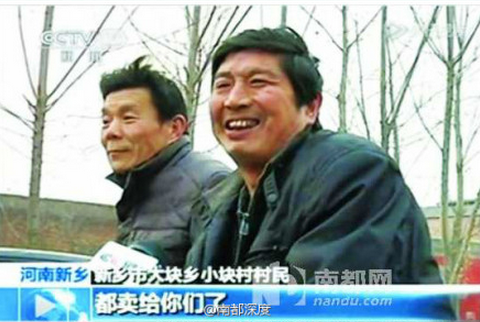
Henan farmers on potentially toxic wheat: “They are all sold to you. We don’t eat them.”

Henan farmers on potentially toxic wheat: “They are all sold to you. We don’t eat them.”

Alia | March 28th, 2013 – 10:56 pm

Farmers in Xiaokuai village, Henan province, have recently been found to use unprocessed paper mill wastewater to irrigate their wheat farms. Admittedly, these wheat, if harvested, are more likely to be toxic than not. But questionable grain in China due to water and soil pollution isn’t exactly news. What surprises a lot of people in this case is the farmers’ reaction. Dongfeng Paper Mill was set up in 1982 in the village, currently with an annual production of 500 thousand tons of paper. To meet growth needs, the mill has been digging deeper and deeper wells over the past 30 years, slowly draining away local underground water. Unable to afford wells as deep, local farmers turned to a convenient source – the wastewater pipe located just a few yards from their farmlands. They cut it open and use unprocessed wastewater for irrigation directly. As a result, local farmlands are covered with a thick, grey, cardboard-feel layer, as if the wheat is growing out of concrete. When asked about whether they themselves dare to eat wheat harvested from such farmlands, one farmer thus responded…with a big smile on his face: “They are all sold to you. We don’t eat [wheat soaked in wastewater]. There are still wheat farms irrigated by [clean] water from the wells. We eat those.” This is not the first time when we observe similar “not me” effect when it comes to food safety problems in China. Every so often we hear about news exposing small food workshops or factories that use excess chemicals, toxic addictives or questionable ingredients to produce food products. For example, the countless underground gutter oil shops, and the businesses that send out the following card to purchase dead pigs. The people behind these businesses must very well know that their products may endanger people’s health or even life, but it’s “the other” people. The assumption is somehow that they themselves, or their family and friends, are not subject to the risk of toxic food. The irony is, China has way too many people in the food industry who think the same way that nobody is safe. Like a popular online saying goes: “China has become a country where pig farmers don’t eat pork, and cow farmers don’t drink milk.” And wheat farmers no longer eat wheat…Netizen 原味呼吸 asked: “When “you” think “you” have nothing to do with “us”, an era of people killing people comes. If you don’t care about others, who would care about you?” Most netizens viewed it as a lose-lose situation due to China’s at-all-cost development model. Like netizen 亚当孙今生  commented: “This is beyond a conflict of the poor and the rich. To farmers, urban residents are rich, who, at the same time, have no choice but to eat toxic rice.” Netizen 书剑2002 commented: “The cities have been exploiting the farmers. And the farmers are poisoning urban dwellers. At the end, no one survives.” When things deteriorate to this level, everyone is guilty. Like netizen 123zzq pointed out: “I blame the government for doing nothing. I blame the paper mill for dumping unprocessed wastewater. I blame the farmers for using wastewater for irrigation with knowledge. “ The paper mill has already been close for investigation. But the same story is probably happening somewhere else in China, right now.

“All sold to you.”

511

16 Secrets To Creating Breakthrough Ideas; Culturematic: How Reality TV, John Cheever, a Pie Lab, Julia Child, Fantasy Football . . . Will Help You Create and Execute Breakthrough Ideas

16 Secrets To Creating Breakthrough Ideas

Mariana Simoes | Mar. 28, 2013, 2:08 PM | 18,954 | 1

What do Arianna HuffingtonJay-Z and the founders of Twitter all have in common?

They changed the face of American culture forever.

They have enabled us to “see ourselves, or something in the world, differently,” explains author Grant McCracken. In his book  “Culturematic,” McCracken discusses how these and other innovators came up with revolutionary concepts that helped shape the way we see the world today.

McCracken describes “culturematic” as “a little machine for making culture. It’s an ingenuity engine.” The cultural innovators practicing this art form all get one key thing right: They challenged the traditional order in which our world is run. “They speak to us because they go against the grain of expectation,” McCracken shares.

We chose 16 of the most valuable secrets from their successes.

Twitter Founders: Don’t do it for others, do it for yourself

“In the early days, the founders of Twitter — Biz Stone, Jack Dorsey and Evan Williams — thought Twitter might appeal to ‘technical geeks’ in San Francisco, who would use it ‘to fool around with and to find out what each other’s up to.’ … At this early stage they were driven by personal passion. So it didn’t especially bother them that, as Stone recalls, ”for the first nine months or so everyone just thought we were fools [and that Twitter] was the most ridiculous thing they’d ever heard of…’ First we make the tech, then the tech makes up.”

Jay-Z: Always be versatile and willing to reinvent yourself

“Many hip-hop artists are unabashedly in it for the money. Some of the point of the exercise is, in the words of 50 Cent, ‘to get rich [or] die trying.’ In 1998 Jay-Z released Vol.2: Hard Knock Life, [which] went to the top of the charts. …The song in question, ‘Hard Knock Life’ attracted immediate attention for its use of a refrain from the Broadway musical ‘Annie.‘ This looked like a deliberate effort to make Jay-Z look less threatening and more accessible, less gangsta more pop. … His choice was, in the words of one critic, ‘completely unexpected.'” Read more of this post

Food Fraud Hits New Low: Dog Meat In British Curry

Food Fraud Hits New Low: Dog Meat In British Curry

03/28/2013 15:34 -0400

Submitted by Michael Krieger of Liberty Blitzkrieg blog,

The food fraud story has now progressed from somewhat humorous with the undersized Subway footlong subs, to the highly disturbing with the revelations of horse meat and fake tuna, to the really creepy with the now potential emergence of dog meat in UK lamb curry.  No you can’t print lamb folks, which is exactly why many humans are now eating worse than their pets in the Western world.

A mystery meat, which has defied the best efforts of scientists to identify it, has been found in a lamb curry as part of an investigation into food fraud. The discovery raises new questions about just what is going into the nation’s takeaways and processed foods. The meat in a Beef in Black Bean Sauce dish turned out to contain high levels of chicken material including blood, while a burger contained no beef at all, other than blood and heart. However, most alarming of all was a curry. A spokesman for the programme said: ‘Just when we thought things couldn’t get any worse, the results came in for an Indian Lamb Curry. ‘It did contain meat, but that meat was not lamb, not pork, nor was it chicken or beef. Not horse, and not goat either. All of the many tests to date by the lab used by the programme have failed to identify exactly which animal was the source of the meat. The revelation raises many grim possibilities. There is evidence from Spain, for example, of meat from dog carcasses being processed for use in pet food. At the same time, a meat cutting plant in Wales has been accused of supplying horsemeat from an abattoir in Yorkshire to companies making kebabs and burgers for hundreds of independent take-aways. Read more of this post

Hunt Brothers Becomes Billionaire on Bakken Oil After Bankruptcy from Silver Manipulation 33 Years Ago

Hunt Becomes Billionaire on Bakken Oil After Bankruptcy

William Herbert Hunt was once one of the wealthiest men on Earth. With his brother, Nelson Bunker Hunt, the billionaire bought more than 195 million ounces of silver — 60 percent of the U.S. market — in the 1970s. By early 1980, their stake was valued at more than $9 billion.

The Hunts’ position imploded when silver prices plummeted 80 percent over the course of a few weeks in March 1980, culminating 33 years ago this week on what traders called Silver Thursday. The crash rattled Wall Street and sent the Texas brothers into bankruptcy.

Hunt is once again a billionaire, this time with oil. In October, he sold 43 percent of the North Dakota petroleum assets owned by his closely held Petro-Hunt LLC for $1.45 billion to Houston-based Halcon Resources Corp. (HK) The cash and stock deal made Hunt Halcon’s largest shareholder and boosted his net worth to $4.2 billion, according to the Bloomberg Billionaires Index. Read more of this post