Warhol’s Mao Works Censored in China

March 25, 2013, 2:35 PM

Warhol’s Mao Works Censored in China

By Doug Meigs

OB-WU807_mao_G_20130324222426

Andy Warhol’s ‘Mao’ pieces are some of his best-known works.

Mao Zedong’s face has long graced trinkets and kitsch sold at tourist markets across China. But in the country’s top art museums, his most famous portrayal by a Westerner isn’t welcome.

Sorry, Andy Warhol.

Although the scion of Pop Art passed away in 1987, Warhol is still generating controversy. A vast traveling retrospective of his work, “Andy Warhol: 15 Minutes Eternal,” has already made stops in Singapore and Hong Kong as part of a two-year Asia tour, but when it moves to mainland China next month, the artist’s Mao paintings won’t be coming along. Read more of this post

Character is at the heart of global leadership

CHARACTER IS AT THE HEART OF GLOBAL LEADERSHIP

By Professors Stewart Black and Allen Morrison – March 2013

Ironically, most people think that the higher you go, the more authority and control you have.But our research finds that in today’s complex, global environment, the higher you go, the more you get things done because of the goodwill and trust you develop, not because of your formal authority.As one C-suite executive put it to us, “I can make proclamations all day long but the world is just too big.There are too many places to hide.By the time I find out that they are not following through in Russia or wherever, it’s too late.It takes goodwill and trust–it takes personal relationships–to really make things happen on a global scale.

Our research identified two primary aspects of personal character that lead to the trust and goodwill needed to get things done in a global business today.

Emotional connections

Global leaders need to establish personal, empathetic relationships with people from all backgrounds inside their company, and in the broader community. Doing this requires three distinct abilities: sincere interest in other people, a heightened ability to listen, and a strong capacity for understanding different viewpoints. Read more of this post

Taiwanese-Canadian designer Jason Wu who created fashion for Michelle Obama: From sewing toy clothes to running a $24 million fashion business

From sewing toy clothes to running a $24 million fashion business

First+Lady+Michelle+Obama+Donates+Inaugural+6pRPIWe5ZSQl

New York – For a man who is small in build, Jason Wu certainly has big dreams and he has taken calculated steps to make sure they are being realised.

In the past year alone, the slim, 1.7m-tall Taiwanese-Canadian designer has already collaborated with Brazilian plastic footwear label Melissa to launch a collection (priced from $100 for a pair of sandals); designed a one-off collection for American mass-market retailer Target (prices start from US$129 or S$160 for a blouse); and released his own contemporary diffusion line called Miss Wu (from US$195 for a silk crepe blouse to US$865 for a leather shift dress).

This September, he has announced, he is slated to launch his own make-up range with beauty giant Lancome.

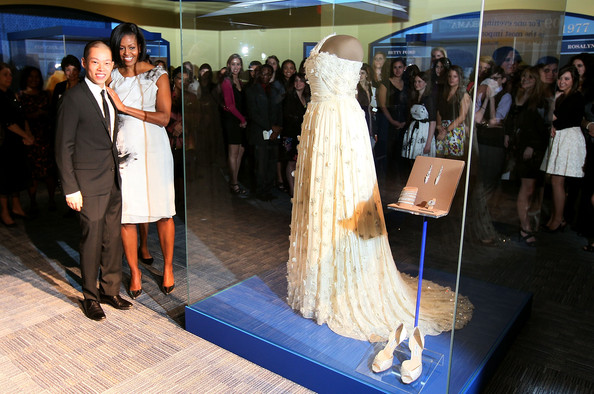
And need we even mention the ruby red inauguration ball gown he created for Michelle Obama?

Having the global spotlight trained on him with that dress since January may mean extra pressure to do more, but he feels otherwise.

“Inauguration or not, there is always pressure to give something better than the last,” says the 30-year-old. “I need to constantly keep moving. You’re only as good as your last project, you know?” Read more of this post

Psy shares the pain of creation; the Korean superstar released a photo of himself apparently struggling to get some writing done, with one hand clutching his forehead

Psy shares the pain of creation
Posted: 25 March 2013 1449 hrs

SEOUL: Millions of people around the world have seen Korean singer Psy dance, thanks to his ultra-popular “Gangnam Style” music video, which currently holds the title of most-watched YouTube video of all time. But what does he look like when he’s working? Fans finally got a peek into Psy’s life away from the glitz and glamour of the stage, when the Korean superstar released a photo of himself apparently struggling to get some writing done, with one hand clutching his forehead, over Twitter on Thursday. Psy even posted the photo under the hashtag #PAINofCREATION. With his new single due to drop in April, it’s no wonder the 35-year-old singer is hard at work. While he has carved a niche for himself in the Korean entertainment industry prior to “Gangnam Style”, it’s still the song that put him on the international music map, and it will be his new single that decides whether he will be able to further develop his music career outside of Korea, when “Gangnam Style” loses its shine.

display_image


Steve Blank: An Epitaph for Entrepreneurs

March 25, 2013, 12:27 PM

Steve Blank: An Epitaph for Entrepreneurs

STEVE BLANK: Raising our kids and being an entrepreneur wasn’t easy. Being in a startup and having a successful relationship and family was very hard work. But entrepreneurs can be great spouses and parents.

This post is not advice, nor is it recommendation of what you should do. It’s simply what my wife and I did to raise our kids in the middle of starting multiple companies. Our circumstances were unique and your mileage will vary.
Biological Clocks

I met my wife on a blind date and we discovered that not only did we share the same interests, but we were both ready for kids. My wife knew a bit about startups. Out of Stanford Business School she went to work for Apple as an evangelist and then joined a startup of a Mac-database.

Our first daughter was born about four months after I started at my fourth startup. We ended up sleeping in the hospital lounge for five days as she ended up in intensive care. Our second daughter followed 14½ months later.

Family Rules

My wife and I agreed to a few rules upfront and made up the rest as went along. We agreed I was still going to do startups, and she knew what that meant –probably more than most spouses. To her credit, she also understood that meant that child-raising wasn’t going to be a 50/50 split. I simply wasn’t going to be home at 5 p.m. every night.

In hindsight, this list looks pretty organized, but in reality we made it up as we went along, accompanied with all the husband and wife struggles of being married and trying to raise a family in Silicon Valley. Here are the some of the rules that evolved that seemed to work for our family.

We would have a family dinner at home most nights of the week. Regardless of what I was doing I had to be home by 7 p.m. (My kids still remember mom secretly feeding them when they were hungry at 5 p.m., but eating again with dad at 7 p.m.) But we would use dinner time to talk about what they did at school, have family meetings, etc. Read more of this post

Singapore’s ex-HDB CEO: During my time, HDB flats were 3X median annual salary

ex-HDB CEO: During my time, HDB flats were 3X median annual salary

March 24th, 2013 |  Author: Editorial

ex-HDB CEO, Dr Liu Thai Ker

At a lecture on the Singapore Public Housing Story, organised by the Centre for Liveable Cities on 20 Mar, Dr Liu Thai Ker, who was the ex-CEO of HDB and URA, made the call for Public Housing to return to the basics. Dr Liu said the end goal should be affordability. Dr Liu’s call was also backed by former Senior Minister of State and HDB Chairman Aline Wong, who reiterated that the purpose of public housing is to “provide a shelter over everybody’s heads”. Dr Aline Wong said, “The asset part comes along because … property appreciates over a long time. But that is not our primary objective. People make money, accumulate savings … but we cannot promise that they will not lose (value in their property), depending on the property cycle.” Dr Liu said, “Maybe we should go back to the basics in the sense that we should not, say, emulate condominiums — that require more expensive materials, extra this, extra that … go back to basics, keep housing prices affordable, let residents embellish the houses, embellish the interiors.” He reiterated that the “core mission” of the HDB is to “provide affordable housing”. “And in the process of providing that, we try to use whatever budget available to create the biggest possible floor area for the people and with minimum frills, minimum decorations and so on. By minimum decorations, it doesn’t mean that the buildings are not beautiful … if the buildings are well-proportioned, they are beautiful.”

Dr Liu added, “When I was CEO, we looked at the per capita GDP (gross domestic product) growth, the sector of people eligible for public housing, their income … and then matching that to our selling price and to our flat sizes. It was really a very detailed study.” Dr Liu noted that in those days, flats typically cost about three years of an owner’s annual salary. Read more of this post

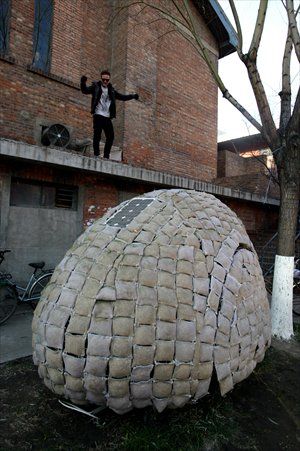
“Egg-house” resident finds his new home outside Beijing

“Egg-house” resident finds his new home outside Beijing

2013-03-23 06:10:01 GMT2013-03-23 14:10:01(Beijing Time)  Global Times

U158P5029T2D574556F24DT20130323141001U158P5029T2D574556F26DT20130323141001

After years of living in humbler dwellings, Dai Haifei, 27, finally owns his own house, joining tens of millions of Chinese who are paying off mortgages. But Dai is not your average new homeowner. Back in 2010, he drew headlines nationwide for living in an egg-shaped house of his own design, a move which many took to be a silent protest against skyrocketing housing prices, but Dai says that’s all nonsense.

For many, Dai’s ovular abode, and its relative the “capsule apartment,” represented the struggle that the average person on the lower strata of society must face, and the memory that his famed homestead has imprinted on millions of Chinese has long outlived the two months he actually lived there. Read more of this post

My favorite quotes from Oprah’s “Super Soul Sunday” with Brene Brown, author of “Daring Greatly: How the Courage to be Vulnerable Transforms the Way We Live, Love, Lead”

http://www.oprah.com/own-super-soul-sunday/Full-Episode-Oprah-and-Brene-Brown-on-Daring-Greatly-Video

Brene Brown: “… perfectionism is not about striving for excellence, or healthy striving, which I’m for. It’s a cognitive behavioral process, a way of thinking and feeling that says this: ‘If I look perfect, do it perfect, work perfect, and live perfect, I can avoid or minimize shame, blame, and judgment.”

Oprah Winfrey: “Perfectionism is the ultimate fear… that the people who are walking around as perfectionists, who have to have everything so perfect, that they are ultimately afraid that the world is going to see them for who they really are and they won’t measure up. It’s fear. It’s very different from trying to be excellent and working hard and doing your best.”

Brene: “I call perfectionism the 20-ton shield. We carry it around thinking it’s gonna protect us from being hurt. But it protects us from being seen.”

Oprah: “I love cultivating a resilient spirit: letting go of numbing and powerlessness. A lot of people are numb to life… the key element that you discovered from people who are successful or not, who live a whole-hearted life or not, is that they feel a sense of worthiness.”

Brene: “That is the absolute bottom line… they engage the world from a place of worthiness.”

Oprah: “… the cultivation of joy and gratitude is the way home. There is no joy without gratitude.”

Brene: “If you ask me what is the most terrifying, difficult emotion that we experience as humans, I would say ‘Joy’… When we lost our tolerance for vulnerability, joy becomes forboding. I’m not gonna feel you. I’m not gonna soften into this moment of joy. Because I’m scared. I’m scared it’s gonna be taken away. The other shoe’s gonna drop. And so what we do in moments of joyfulness is, we try beat vulnerability to the punch. I interviewed a man who told me, ‘My whole life, I never got too excited, too joyful about anything. I just kind of stayed right in the middle. That way, if things didn’t work out, I wasn’t devastated. And if they did work out, it was a pleasant surprise.’ He said in his 60s, he was in a car accident. His wife of 40 years was killed. And he said, ‘The second I realized that she was gone, the first thing I thought was I should have leaned harder into these moments of joy. Because that did not protect me from what I feel right now.’ In a culture of scarcity, we’re all chasing the extraordinary. When I interviewed people who went through horrific things.. the loss of children, genocide, violence, trauma.. And I talked to them about what’s the hardest loss. They never talked about the extraordinary things. They said, ‘I miss the ordinary moments. I miss hearing the screen door slam and knowing my husband’s home from work. I miss hearing my kids fighting in the backyard. I miss the way my wife set me table.’ And those are the moments that are in front of all of us every day that we could stop and say, ‘God, I’m grateful for this.””
How Not To Worry: A 1934 Guide to Mastering Life; Many of life’s hard situations cannot be explained. They can only be endured, mastered, ad gradually forgotten

How Not To Worry: A 1934 Guide to Mastering Life

“We must gain victory, not by assaulting the walls, but by accepting them.”

As far as vintage finds go, they hardly get more fortuitous than You Can Master Life (public library) – a marvelous 1934 compendium of sort-of-philosophical, sort-of-self-helpy, at times charmingly dated, other times refreshingly timeless advice on cultivating “the power to think, to create, to influence and be influenced by others, and to love,” in the spirit of the 1949 gem How To Avoid Work. Though written by a Christian pastor named James Gordon Gilkey and thus a little too God-heavy for these corners of the internet, the slim volume shares a good amount in common with Alain de Botton’s modern-day advocacy of the secular sermon.

Read more of this post

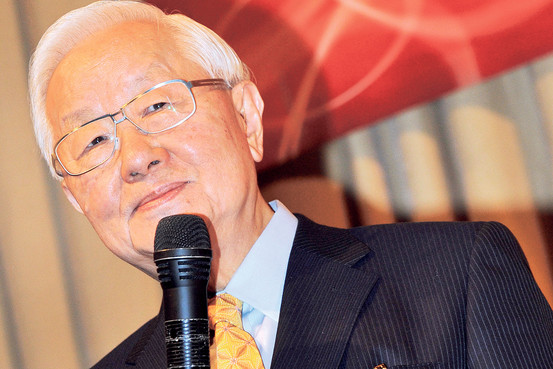
World’s Best CEOs: Morris Chang, Founder/Chairman of TSMC (Market Cap $85 Billion) Rides the Train

Rich Taiwanese Businessman Morris Chang Rides the Train

by Stuart Dingle on Thursday, October 11, 2012

From Yahoo Taiwan:

Taiwan_Morris_Chang_Rides_Train_021

Morris Chang riding the train to work? Its true. Photo spreading on internet like wildfire

TSMC chairman Morris Chang also rides the train to work? Today a photo rapidly spread around the internet, showing TSMC Chairman Morris Chang surprisingly riding the train with the general public, the big boss gave up his luxury car to ride on the general public transit system, leading to widespread discussion among netizens, who rapidly spread the news. Because a ‘big boss riding the train’ is truly too difficult to imagine, when this photo was exposed on Facebook, it was first suspected to have been photoshopped, or simply showed someone who ‘looks a lot like Morris Chang’ riding the train. However, some attentive netizens compared the photos with others, and discovered that this March, ‘Commonwealth magazine’s‘ 492nd edition featured Morris Chang on the cover page,and both the tie worn by Morris Chang on the cover,and the tie worn by Morris Chang in the photo, had an identical style and colour, meaning that the man in the photo is unmistakeably Morris Chang.

It’s understood that when Morris Chang attended this year’s TSMC shareholder meeting, he was worried about being delayed by traffic, so the punctual Morris Chang took the train before getting on the High Speed Rail to Taipei, not only reducing carbon emissions but also ensuring he won’t be delayed. The female student pictured in the photo sitting next to Morris Chang was immersed in her study on the train, with some netizens jokingly saying that if this student would just raise her head and talk to Morris Chang for ten minutes, it would be worth 10 years of study.

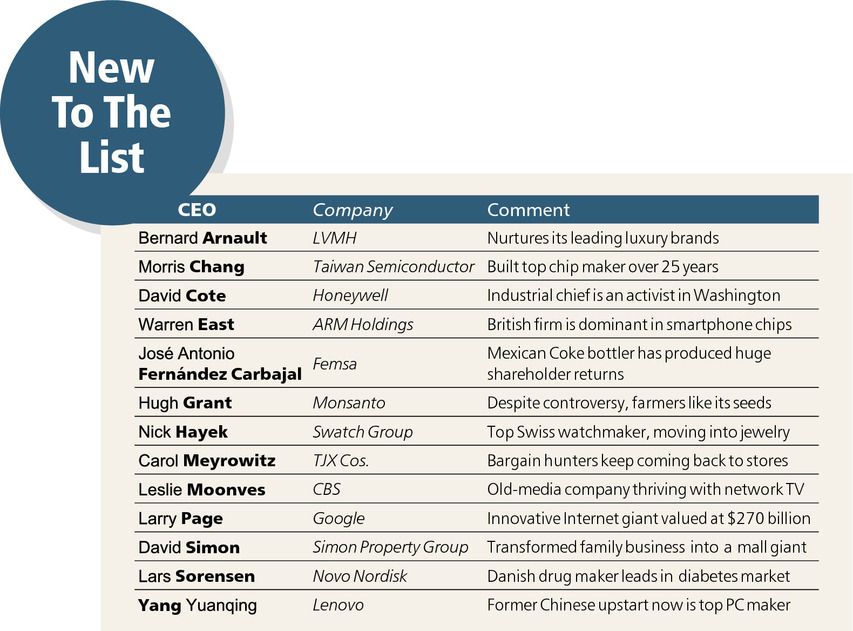
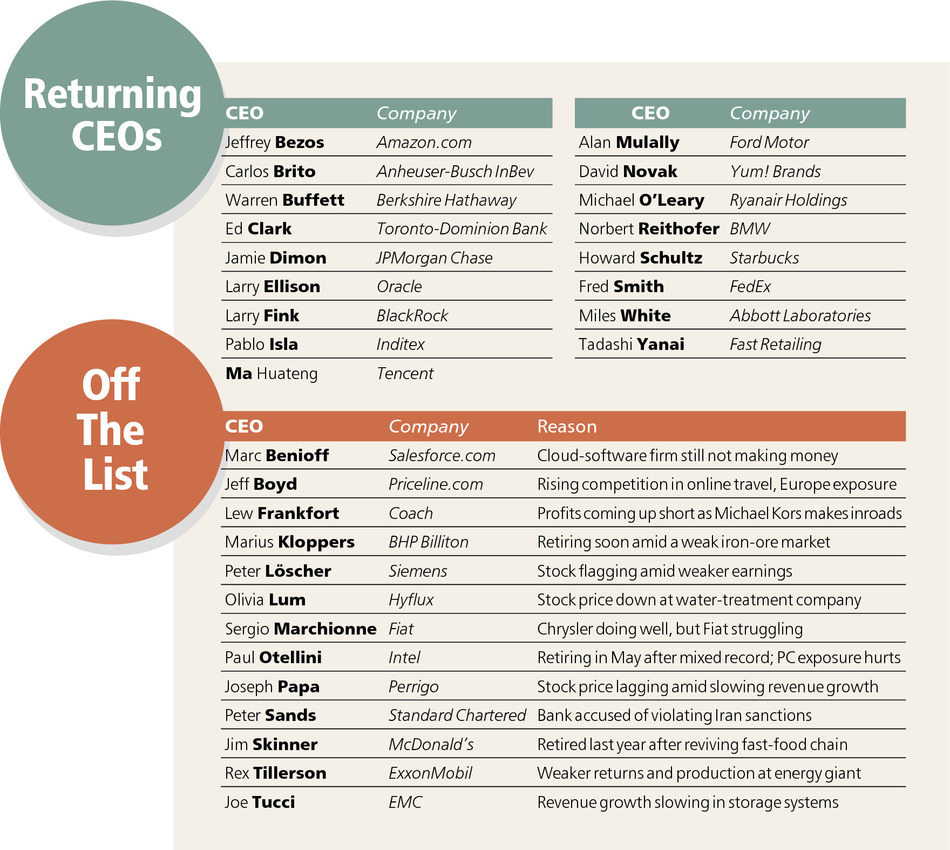
World’s Best CEOs; Profiles of the World’s Best CEOs — Many Paths to Greatness

SATURDAY, MARCH 23, 2013

Profiles of the World’s Best CEOs — Many Paths to Greatness

Profiles of our 30 superstars at Google, BlackRock, BMW — and more.

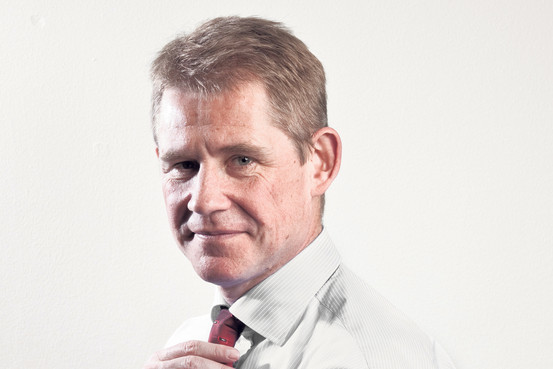
BA-BB432_ceo_so_G_20130323003833BA-BB369_ceo_ch_G_20130322235543

ON-BA406_NEWCEO_G_20130323013610

ON-BA405_CEOs03_G_20130323013605 Read more of this post

This Young Woman Escaped From North Korea And Gave An Incredible TED Talk About It; “I saw something terrible that I can’t erase from my memory. A lifeless woman was lying on the ground, while an emaciated child in her arms just stared helplessly at his mother’s face. But nobody helped them, because they were so focused on taking care of themselves and their families.”

This Young Woman Escaped From North Korea And Gave An Incredible TED Talk About It

Paul Szoldra | Mar. 22, 2013, 4:04 PM | 4,857 | 11

Growing up in North Korea, Hyeonseo Lee believed her life — witnessing public executions, studying the history of Kim Il-Sung with vigor — was totally normal. Lee had no idea that people were suffering, until one day when she walked past a train station.

From TED:

I saw something terrible that I can’t erase from my memory. A lifeless woman was lying on the ground, while an emaciated child in her arms just stared helplessly at his mother’s face. But nobody helped them, because they were so focused on taking care of themselves and their families. At the age of 14, she was able to escape and became a refugee in China. But her life there was not easy. She had no family, and at one point, she was picked up for a harsh interrogation by Chinese police — and if it was found she was North Korean, she would’ve been sent back. She gave a TED Talk about her incredible experience, which was published online March 20.

What Extremely Successful People Were Doing At Age 25; Warren Buffett was working as an investment salesman in Omaha.

What Extremely Successful People Were Doing At Age 25

Vivian Giang and Max Nisen | Mar. 22, 2013, 1:33 PM | 586,853 | 27

Some people know what they want to do from an early age and focus on it relentlessly.

Others reinvent themselves, changing careers and industries until they find something that works.

Billionaire Mark Cuban struggled when he first started, writing in “How To Win At The Sport Of Business that “when I got to Dallas, I was struggling — sleeping on the floor with six guys in a three-bedroom apartment.”

As a reminder that the path to success is not always linear, we’ve highlighted what Richard BransonArianna Huffington, and 17 other fascinating and successful people were doing at age 25.

Warren Buffett was working as an investment salesman in Omaha.

In his early 20s, Buffett worked as an investment salesman for Buffett-Falk & Co. in Omaha before moving to New York to be a securities analyst at age 26. During that year, he started Buffett Partnership, Ltd., an investment partnership in Omaha.

New York just wasn’t for him, Buffett told NBC. “In some places it’s easy to lose perspective. But I think it’s very easy to keep perspective in a place like Omaha.” Read more of this post

The Cambrian explosion: Chinese palaeontologists hope to explain the rise of the animals

The Cambrian explosion

Chinese palaeontologists hope to explain the rise of the animals

Mar 23rd 2013 | Nanjing |From the print edition

AMONG the mysteries of evolution, one of the most profound is what exactly happened at the beginning of the Cambrian period. Before that period, which started 541m years ago and ran on for 56m years, life was a modest thing. Bacteria had been around for about 3 billion years, but for most of this time they had had the Earth to themselves. Seaweeds, jellyfish-like creatures, sponges and the odd worm do start to put in an appearance a few million years before the Cambrian begins. But red in tooth and claw the Precambrian was not—for neither teeth nor claws existed.

Then, in the 20m-year blink of a geological eye, animals arrived in force. Most of the main groups of the animal kingdom—arthropods, brachiopods, coelenterates, echinoderms, molluscs and even chordates, the branch from which vertebrates went on to develop—are found in the fossil beds of the Cambrian. The sudden evolution of this megafauna is known as the Cambrian explosion. But two centuries after it was noticed, in the mountains of Wales after which the Cambrian period is named, nobody knows what detonated it.

A group of Chinese scientists, led by Zhu Maoyan of the Nanjing Institute of Geology and Palaeontology, plan to change that with a project called “From the Snowball Earth to the Cambrian explosion: the evolution of life and environment 600m years ago”. The “Snowball Earth” refers to a series of ice ages that happened between 725m and 541m years ago. These were, at their maxima, among the most extensive glaciations in the Earth’s history. They alternated, though, with periods that make the modern tropics seem chilly: the planet’s average temperature was sometimes as high as 50°C. Add the fact that a supercontinent (illustrated above, viewed from the Earth’s south pole) was breaking up at this time, and you have a picture of a world in chaos. Just the sort of thing that might drive evolution. Dr Zhu and his colleagues hope to find out exactly how these environmental changes correspond to changes in the fossil record. Read more of this post

72% Of Professors Who Teach Online Courses Don’t Think Their Students Deserve Credit

72% Of Professors Who Teach Online Courses Don’t Think Their Students Deserve Credit

GREGORY FERENSTEIN

posted 13 hours ago

This is not a good sign for online education: 72 percent of professors who have taught Massive Open Online Courses (MOOCs) don’t believe that students should get official college credit, even if they did well in the class. More importantly, these are the professors who voluntarily took time to teach online courses, which means the actual number of professors who discount the quality of MOOCs is probably much (much) higher. The survey reveals the Grand Canyon-size gap between the higher-education establishment and the coalition of tech companies and lawmakers that are mandating college credit  for online courses. Read more of this post

E-gadgets distract from literacy, critical thinking

E-gadgets distract from literacy, critical thinking

Created: 2013-3-21

Author:Wan Lixin

20130321_526492_01

THE other day I was going down the elevator in my apartment building. It stopped at another floor, where a boy of about five was busy touching the panel of an iPad, with his mother beside him.

The mother shouted: “Get in!” The boy marched in without taking his eyes off the panel.
While the elevator was going down, the mother gave the boy a severe dressing-down, but there was no knowing if the boy heard the diatribe, for he was so concentrated on his toy.
Then the elevator stopped at the ground floor, and the mother shouted: “Get out!” and the boy exited, his eyes still glued to the screen. Read more of this post

Watch Nokia CEO Stephen Elop Throw A Reporter’s iPhone On The Floor

Watch Nokia CEO Stephen Elop Throw A Reporter’s iPhone On The Floor

Steve Kovach | Mar. 22, 2013, 1:12 PM | 4,673 | 9

In an interview with a Finnish television reporter, Nokia CEO Stephen Elop took a moment to verbally and physically bash the iPhone. A lot of people are passing the clip around today, so we thought we’d share it with you too. The reporter asked Elop about the Lumia 928, a device that’s rumored to launch on Verizon soon. Elop refused to comment on the rumor, so the reporter pulled out his iPhone and said he’s rooting for Nokia to make a new phone.

“I don’t want to have an iPhone,” the reporter said. “Oh, how embarrassing,” Elop said when he saw the iPhone. “I can take care of that for you.”

Then he snatched the iPhone from the reporter’s hand and chucked it off camera. You can hear the iPhone make thud on the floor. The reporter, to his credit, didn’t even blink. He kept asking about the rumored Lumia 928. Elop said he’d replace the discarded iPhone with a Nokia phone.

Nassim Taleb: Lectures on Risk and(Anti)fragility

https://docs.google.com/file/d/0B_31K_MP92hURjZxTkxUTFZnMVk/edit?pli=1

KidZania, the world’s fastest growing “edutainment” brand from Mexico, on Friday inaugurated its largest indoor site in the world in Bangkok

KidZania opening largest indoor site

Published: 22 Mar 2013 at 17.13

484349

KidZania, the world’s fastest growing “edutainment” brand from Mexico, on Friday inaugurated its largest indoor site in the world in Bangkok.

Developed at a cost of 810 million baht, the attraction will officially open to the public on Martch 29.

The 10,000-square-metre park for children between four and 14 years old, located on the fifth floor of Siam Paragon, offers role play for real-world professions among its attractions.

Xavier Lopez Ancona, KidZania’s global CEO and founder, said he expected the company’s 12th location in the world to become a new landmark attraction for Bangkok, increasing the capital’s appeal as a regional destination with a sophisticated family entertainment and educational product. Read more of this post

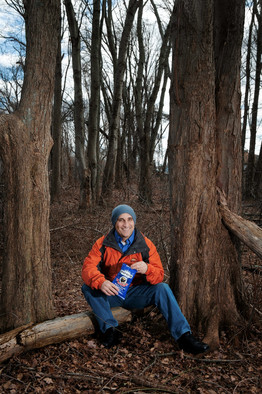
A Daring Designer of Snazzy Snacks; Jim Goldberg founded Deep River Snacks, whose kettle chips are sold in high-end delis from Darien to Dubai. How he bags aficionados

March 22, 2013, 9:00 p.m. ET

A Daring Designer of Snazzy Snacks

By AMY GAMERMAN

RV-AK004_CREATI_DV_20130322175033RV-AK028_CREATI_G_20130322181316

Jim Goldberg found one of his best potato-chip ideas in a pickle bowl. The founder of Deep River Snacks, whose kettle chips are sold in high-end delis from Darien to Dubai, was eating lunch at Katz’s Delicatessen in New York one day when he bit into a pickled green tomato.

“I said, ‘Holy crap, someone’s got to make something this good,’ ” he recalls. “We gotta do this!”

What Mr. Goldberg does is turn taste sensations into potato chips: chips that taste like they’ve come off a mesquite grill or bathed in a dish of olive oil and rosemary. So as soon as he had finished his pastrami sandwich, Mr. Goldberg made calls to four seasoning companies. “I said, ‘I want it to be a little bit spicy. It’s got to have good dill flavor—it’s really got to taste like the pickle.’ ”

After six months of experimentation, Deep River’s New York Spicy Dill Pickle kettle-cooked chip hit store racks last year. Unlike conventional “flat” chips, which are fried as they move along a production line, kettle chips are cooked in vats of oil. Mr. Goldberg makes 11 varieties.

“For the price and value, it’s the best chip,” says Charlie Moore, grocery buyer for the Fairway chain of stores. A 2-ounce bag of Sweet Maui Onion or Sea Salt & Vinegar retails for between 99 cents and $1.39. Mr. Goldberg says that he sold more than 24 million bags of his chips last year: a crumb compared with Lay’s, but not bad for an 11-year-old company with headquarters above a varicose-vein clinic in Old Lyme, Conn. Read more of this post

Sleeping Like a Baby, Learning at Warp Speed

March 22, 2013, 8:45 p.m. ET

Sleeping Like a Baby, Learning at Warp Speed

By ALISON GOPNIK

Babies and children sleep a lot—12 hours a day or so to our eight. But why would children spend half their lives in a state of blind, deaf paralysis punctuated by insane hallucinations? Why, in fact, do all higher animals surrender their hard-won survival abilities for part of each day?

Children themselves can be baffled and indignant about the way that sleep robs them of consciousness. We weary grown-ups may welcome a little oblivion, but at nap time, toddlers will rage and rage against the dying of the light.

Part of the answer is that sleep helps us to learn. It may just be too hard for a brain to take in the flood of new experiences and make sense of them at the same time. Instead, our brains look at the world for a while and then shut out new input and sort through what they have seen.

Children learn in a particularly profound way. Some remarkable experiments show that even tiny babies can take in a complex statistical pattern of data and figure out the rules and principles that explain the pattern. Sleep seems to play an especially important role in this kind of learning. Read more of this post

A refugee economist created an irresistibly useful approach to understanding how dissent shapes organizations

March 22, 2013, 7:40 p.m. ET

The Choice: To Squawk or to Go?

A refugee economist created an irresistibly useful approach to understanding how dissent shapes organizations

By ROGER LOWENSTEIN

Four decades ago, an economist named Albert O. Hirschman prophesied a rising gap in the quality of schools. As he reasoned: If the quality of public schools deteriorated, affluent families would switch to private schools. Hirschman labeled this the “exit” option. The parents of the remaining kids would try to restore quality via “voice”—that is, by appearing at school board meetings, speaking out, writing letters.

But these activists would be doubly handicapped. Public schools—being insensitive to profit—are less responsive to voice. And the desertion of wealthier parents would tend to deprive the public schools of influential voices.

Once you start looking at the world through the Hirschman lens, the paradigm of exit and voice is all around. Suppose you are unhappy at work: Should you complain to the boss or simply quit? Or maybe you are the boss: How much should you mollify employees—or customers—to keep them from leaving? It might depend on the presence of a third Hirschman factor: loyalty.

Broadly speaking, markets are all about exit: If the stock is a lemon, sell it. Politics deals in voice (just listen to talk radio).

What Hirschman grasped is that the strongest organizations (in either sphere) foster exit as well as voice. Both corporations and school districts have customers or members whom they need to retain—though at some point, it’s best to let the dissenters go. Read more of this post

No single government or nation deserves blame for World War I. But the question remains: How could such a calamity have occurred?

March 22, 2013, 4:57 p.m. ET

When the Lamps Went Out

No single government or nation deserves blame for World War I. But the question remains: How could such a calamity have occurred?

By WILLIAM ANTHONY HAY

The historian Fritz Stern described World War I as “the first calamity of the twentieth century, the calamity from which all other calamities sprang.” It takes only the barest knowledge of the war to grasp his point. The war and its appalling slaughter strained combatant nations to the breaking point. By the end, it had overthrown dynasties, shattered empires and reconfigured the map of Europe—unleashing all sorts of political forces and intensifying sympathies and resentments that would themselves wreak havoc on history. In various ways, as we now know in retrospect, World War I helped to bring about the Russian Revolution and yet another world war.

How could such a calamity have occurred? Or to put the matter more pointedly: Who caused the war, and for what reasons? Such questions have made the origins of World War I the great whodunit of modern history. The political implications of assigning blame have only heightened the importance of the answer. Read more of this post

The Brains of the Animal Kingdom; New research shows that we have grossly underestimated both the scope and the scale of animal intelligence. Primatologist Frans de Waal on memory-champ chimps, tool-using elephants and rats capable of empathy

March 22, 2013, 7:15 p.m. ET

The Brains of the Animal Kingdom

New research shows that we have grossly underestimated both the scope and the scale of animal intelligence. Primatologist Frans de Waal on memory-champ chimps, tool-using elephants and rats capable of empathy.

By FRANS DE WAAL

Who is smarter: a person or an ape? Well, it depends on the task. Consider Ayumu, a young male chimpanzee at Kyoto University who, in a 2007 study, put human memory to shame. Trained on a touch screen, Ayumu could recall a random series of nine numbers, from 1 to 9, and tap them in the right order, even though the numbers had been displayed for just a fraction of a second and then replaced with white squares.

I tried the task myself and could not keep track of more than five numbers—and I was given much more time than the brainy ape. In the study, Ayumu outperformed a group of university students by a wide margin. The next year, he took on the British memory champion Ben Pridmore and emerged the “chimpion.”

How do you give a chimp—or an elephant or an octopus or a horse—an IQ test? It may sound like the setup to a joke, but it is actually one of the thorniest questions facing science today. Over the past decade, researchers on animal cognition have come up with some ingenious solutions to the testing problem. Their findings have started to upend a view of humankind’s unique place in the universe that dates back at least to ancient Greece.

Aristotle’s idea of the scala naturae, the ladder of nature, put all life-forms in rank order, from low to high, with humans closest to the angels. During the Enlightenment, the French philosopher René Descartes, a founder of modern science, declared that animals were soulless automatons. In the 20th century, the American psychologist B.F. Skinner and his followers took up the same theme, painting animals as little more than stimulus-response machines. Animals might be capable of learning, they argued, but surely not of thinking and feeling. The term”animal cognition” remained an oxymoron.

A growing body of evidence shows, however, that we have grossly underestimated both the scope and the scale of animal intelligence. Can an octopus use tools? Do chimpanzees have a sense of fairness? Can birds guess what others know? Do rats feel empathy for their friends? Just a few decades ago we would have answered “no” to all such questions. Now we’re not so sure. Read more of this post

The Secrets of Happy Families: How to Improve Your Morning, Rethink Family Dinner, Fight Smart, Go Out and Play, and Much More

March 15, 2013

The Stories That Bind Us

By BRUCE FEILER

I hit the breaking point as a parent a few years ago. It was the week of my extended family’s annual gathering in August, and we were struggling with assorted crises. My parents were aging; my wife and I were straining under the chaos of young children; my sister was bracing to prepare her preteens for bullying, sex and cyberstalking.

Sure enough, one night all the tensions boiled over. At dinner, I noticed my nephew texting under the table. I knew I shouldn’t say anything, but I couldn’t help myself and asked him to stop.

Ka-boom! My sister snapped at me to not discipline her child. My dad pointed out that my girls were the ones balancing spoons on their noses. My mom said none of the grandchildren had manners. Within minutes, everyone had fled to separate corners.

Later, my dad called me to his bedside. There was a palpable sense of fear I couldn’t remember hearing before.

“Our family’s falling apart,” he said.

“No it’s not,” I said instinctively. “It’s stronger than ever.”

But lying in bed afterward, I began to wonder: Was he right? What is the secret sauce that holds a family together? What are the ingredients that make some families effective, resilient, happy? Read more of this post

Cherry trees reach full bloom in Tokyo; The spectacle marks the second earliest blossoming in the capital on record; Japanese culture prizes the perfect but delicate blossom, whose transience – they only last a week – is a reminder of the fragility of life.

Cherry trees reach full bloom in Tokyo

20130322.183308_che

The spectacle marks the second earliest blossoming in the capital on record. -AFP 

Fri, Mar 22, 2013
AFP

TOKYO – Tokyo’s cherry trees were in stunning full bloom on Friday, Japan’s weather agency said, marking the second earliest blossoming in the capital on record. Read more of this post

How Franklin Roosevelt Secretly Ended the Gold Standard

How Franklin Roosevelt Secretly Ended the Gold Standard

On March 4, 1933, Franklin D. Roosevelt became president for the first time, promising an “adequate but sound” currency. The next day, a Sunday, he closed the nation’s banks. “We are now off the gold standard,” he privately declared to a group of advisers. Goldbugs in the president’s circle immediately began prophesying doom. One of his aides, Lewis Douglas, proclaimed “the end of Western civilization.”

How Roosevelt took this fateful step has been the subject of debate among historians, many of whom believe that the president flailed his way through his first weeks in office, and only gradually came to the decision to take the country off gold that April. But the evidence suggests that Roosevelt intended to do so from Day One for very specific reasons, although he delayed letting the rest of the country in on his plans.

Minutes after FDR had made his unsettling private disclosure, a secretary told him that reporters were clamoring to know if the U.S. had left the gold standard. “Tell them to ask a banker,” Roosevelt said. He clearly did not yet wish to say the truth publicly. First, he needed depositors to return the gold they had withdrawn in panic in the weeks preceding his inauguration. Read more of this post

Russian Gynecologist Becomes Billionaire in Cyprus Entity

Russian Gynecologist Becomes Billionaire in Cyprus Entity

Mark Kurtser, a 59-year-old Russian gynecologist, has become a billionaire after shares of his MD Medical Group Investment Plc, Russia’s largest private provider of women’s and children’s health care, surged 42 percent in five months.

Kurtser, MD Medical’s chairman, controls 68 percent of the operation through Cyprus-based investment entity MD Medical Holding. The company sold shares in a London initial public offering in October, raising $154 million for expansion. The billionaire collected another $135 million from the IPO.

“I did not imagine it when I was starting this business,” Kurtser, who is worth $1 billion, according to the Bloomberg Billionaires Index, said in a telephone interview. “I am a doctor first.”

Kurtser founded the company as a private Moscow hospital in 2006. Today, MD Medical runs 13 medical centers in Russia and Ukraine, offering childbirth, gynecological and in vitro fertilization services. It generated 3.5 billion rubles ($117 million) in revenue in the 12 months ended June 30, 2012, up 48.6 percent in a year. The company’s net income doubled to 1.2 billion rubles in three years. Read more of this post

Migrants living in containers in Shanghai urged to leave; landlord charges a rent of 500 yuan ($80) per month for each container

Migrants living in containers in Shanghai urged to leave

2013-03-22 00:02:41 GMT2013-03-22 08:02:41(Beijing Time)  SINA.com

U47P5029T2D574094F32DT20130322080241U47P5029T2D574094F36DT20130322080241 Read more of this post

World With More Phones Than Toilets Shows Water Challenge

World With More Phones Than Toilets Shows Water Challenge

There are more mobile phones on Earth than clean toilets, one of the most vexing challenges facing governments on the 20th anniversary of the United Nations’ World Water Day.

Solving that developmental dilemma has so far confounded leaders, some of whom will meet today in The Hague to discuss water cooperation. There are 6 billion mobile phones, according to the International Telecommunication Union, while 1.2 billion of the planet’s 7 billion people lack clean drinking water and 2.4 billion aren’t connected to wastewater systems. Read more of this post