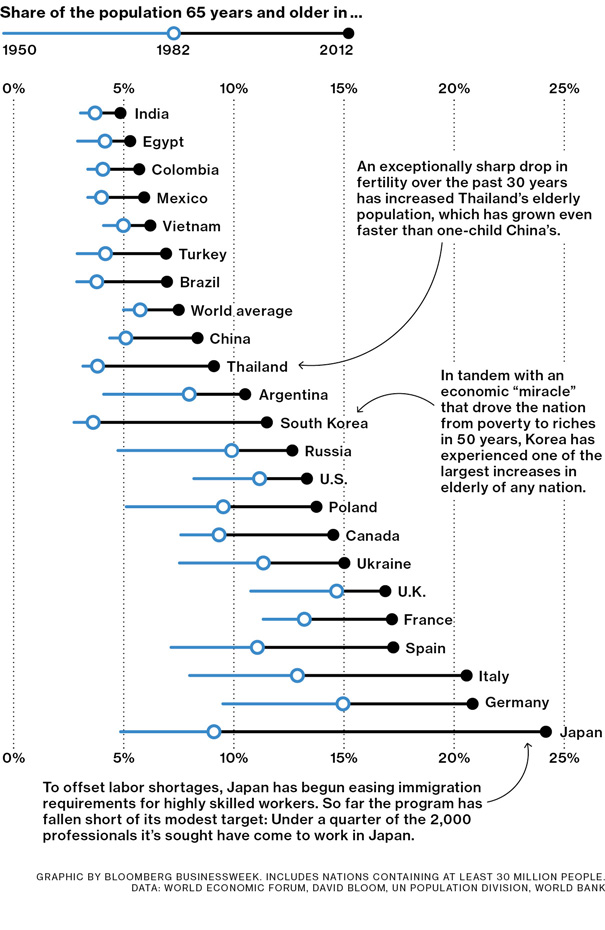
East Asia’s “tiger” economies, once home to a big supply of young labor, are seeing the fastest rise worldwide in the percentage of their elderly population. Is a grayer nation destined for decline? Harvard economist David Bloom says such fears may be overblown, if the developed world is a template. Labor force participation among older citizens has actually risen in Organisation for Economic Co-operation and Development nations, increasing the supply of productive workers.
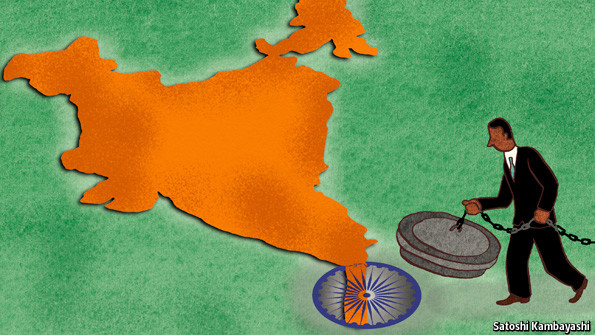
King Canute had it easy. Indian Finance Minister Palaniappan Chidambaram has battled currency markets for two months, trying to stem the collapse of the Indian rupee from 55 to a dollar in May to 65 this week. He has found commanding currency markets even harder than commanding the ocean waves.
He should stop trying. A weaker rupee is not inherently a terrible thing. Rather than frantically shoring up the currency, Chidambaram should target the structural impediments in the economy that have caused both Indian and foreign investors to lose faith in the once-glowing India story. Read more of this post
NEW DELHI (Reuters) – The collapse of the rupee is derailing India’s hopes of raising more than $6 billion from the sale of stakes in state-run firms, jeopardizing a key plank of Finance Minister P.Chidambaram’s blueprint to reverse the country’s economic malaise. Investor confidence has evaporated amid fears over the rising cost of funding India’s gaping current account deficit, prompting New Delhi to delay plans to raise much-needed funds through partial privatizations, finance ministry sources said. Read more of this post
There are 3,200 utilities that make up the U.S. electrical grid, the largest machine in the world. These power companies sell $400 billion worth of electricity a year, mostly derived from burning fossil fuels in centralized stations and distributed over 2.7 million miles of power lines. Regulators set rates; utilities get guaranteed returns; investors get sure-thing dividends. It’s a model that hasn’t changed much since Thomas Edison invented the light bulb. And it’s doomed to obsolescence. Read more of this post
Visitors to 10 Savile Row in London are greeted by photographs of the current Sultan of Oman in full military regalia. Deeper inside the shop of tailor Dege & Skinner, above a rack of silk handkerchiefs, hangs a smaller picture of Prince William. There’s a reason for the sultan’s exalted status: Half of Dege & Skinner’s revenue comes from outside the U.K., and that share is growing. Read more of this post
In case you didn’t notice, the world’s potash markets went haywire last week, after the announcement that Russia’s OAO Uralkali, the world’s largest producer of this crucial ingredient in fertilizer, suspended its participation in an alleged cartel with its long-time Belarus partner Belaruskali. Their joint marketing venture, the Belarusian Potash Co., produced at its peak 40 percent of the world’s potash, with much of the balance coming from Canpotex Ltd., another syndicate based in North America. Together these two set production quotas and divided global markets, ensuring stable prices and steady profits. Read more of this post
HOW quickly the mood can turn. Barely a year ago Indonesia was the toast of emerging-market investors. The country revelled in the world’s demand for its vast reserves of coal, oil and other resources, and celebrated with a consumer boom: economic growth clipped along at over 6%. Politics was stable, macroeconomic policy sound. Foreign investors were scrabbling to get into a market of 240m people and apparently boundless potential. Read more of this post
JAKARTA (Reuters) – In Indonesia’s capital Jakarta, a buzzer is not an alarm or a bell, but someone with a Twitter account and more than 2,000 followers who is paid to tweet. Jakarta is the world’s tweet capital and advertisers eager to reach the under-30 crowd are paying popular Twitter users to spread their word through social media, starting at about $21 per tweet. While celebrity endorsements via Twitter are common worldwide, Indonesia is unusual because advertisers are paying the Average Joes too. Read more of this post
Gone are the days when Taiwan’s trade and production data acted as a barometer of the health of developed economies, particularly the U.S. Last year, as the U.S. economy expanded 2.8%, Taiwan’s exports to the U.S. dropped 9.3%. In the first seven months of this year the island’s exports to the U.S. were off 1.1% from a year earlier, despite the quickening U.S. recovery.
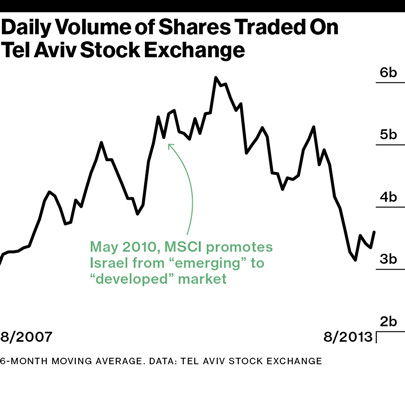
In the minds of many investors, Israel left the ranks of emerging markets in 2010. In May of that year, MSCI (MSCI), the New York-based firm that builds popular investing indexes, added the country to its benchmark of developed nations. The promotion was a sign of Israel’s success: Its economy had recovered from the financial crisis faster than most advanced nations, and foreign money was pouring into its stock market. In 2009, Israel’s benchmark TA-25 stock index gained 75 percent. “We’re playing with the big boys now,” said Ester Levanon, then the chief executive officer of the Tel Aviv Stock Exchange (TASE), after winning MSCI’s approval. Read more of this post
Is Germany Repeating American Errors at Bretton Woods?
At the founding of the Bretton Woods international monetary system in 1944, the world’s dominant creditor nation, the U.S., set out to revive a fixed exchange-rate system by offering a war-torn, debt-ridden world a new deal in monetary relations, one to be supported by concessionary dollar loans from a new International Monetary Fund.
Today, Germany is trying to resuscitate the periphery of the crisis-stricken euro area in much the same way, and it is worth looking back at the formation of Bretton Woods for clues as to how this will play out. Read more of this post
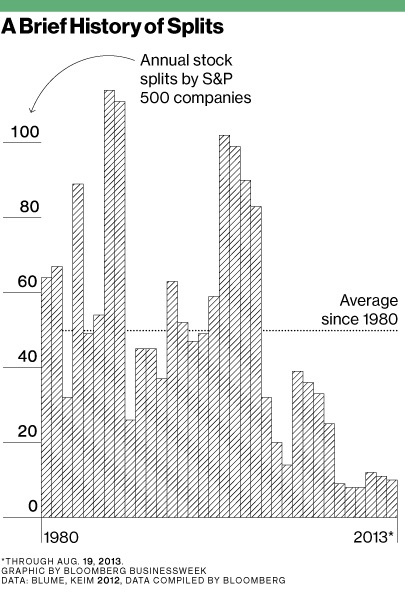
Priceline.com (PCLN), Apple (AAPL), and MasterCard (MA) would seem ideal candidates for a stock split. The latter two are trading at more than $500 per share, and online travel site Priceline is flirting with $1,000, making the inveterate dot-com-era survivor the most expensive stock in the Standard & Poor’s 500-stock index. Yet splits have lost their allure to executives even amid a four-year-plus bull market that has sent the number of stocks trading above $100 to a record. Sixty-three companies in the S&P 500 are now above that threshold, twice the level in 2010, according to data compiled by Bloomberg. Just 10 have split their stock this year, compared with an average of 48 annually since 1980.
A generation ago, when the stock market crashed on Oct. 19, 1987, the Nasdaq stock market appeared to have done much better than the New York Stock Exchange. While the Dow Jones industrial average fell 23 percent that day, the Nasdaq composite index was off just 11 percent.
It was not, it turned out, that Nasdaq stocks were more highly regarded. It was, instead, a question of the technology used. Read more of this post
Emerging markets central banks’ emergency reserves drop by $81bn
By Robin Wigglesworth in London
Central banks in the developing world have lost $81bn of emergency reserves through capital outflows and currency market interventions since early May, even before renewed turmoil in emerging markets. The figure, which excludes China, is equal to roughly 2 per cent of all developing country central bank reserves, according to Morgan Stanley analysts, who compiled the data from central bank filings for May, June and July. However, some countries have suffered more precipitous drops. Indonesia has lost 13.6 per cent of its central bank reserves from the end of April until the end of July, Turkey spent 12.7 per cent and Ukraine burnt through almost 10 per cent. India, another country that has seen its currency pummelled in recent months, has shed almost 5.5 per cent of its reserves. Read more of this post
The buyout frenzy reached its peak in 2007 when US firm KKR and Axa Private Equity backed the £11.1bn buyout of Alliance Boots. Photograph: Ian West/PA
It seems a long time ago when private equity was the unacceptable face of capitalism in Britain. But on the eve of the banking crisis, in June 2007, prominent British representatives of the industry were hauled before parliament’s Treasury select committee to explain themselves as political and public disquiet over the sector reached a peak. Read more of this post
Now the Brics party is over, they must wind down the state’s role
By Anders Aslund
Nations did not take advantage of the good years to improve their economies, says Anders Aslund
After a decade of infatuation, investors have suddenly turned their backs onemerging markets. In the Bric countries – Brazil, Russia, India and China – growth rates have quickly fallen and current account balances have deteriorated. The surprise is not that the romance is over but that it could have lasted for so long. From 2000 to 2008 the world went through one of the greatest commodity and credit booms of all times. Genesis warns that after seven years of plenty, “seven years of famine will come . . . and the famine will ravage the land”. Perhaps the combined commodity and credit cycle, from which the Bric countries have benefited more than their due, is divinely appointed. Read more of this post
Moody’s Mulls Downgrade of Big Banks as U.S. Support Wanes
Moody’s Investors Service may cut debt ratings on at least four of the six largest U.S. banks as it examines whether the government would be less likely to ensure creditors are repaid in a crisis. Goldman Sachs Group Inc. (GS), JPMorgan Chase & Co. (JPM), Morgan Stanley (MS) and Wells Fargo & Co. (WFC) may be downgraded, Moody’s said today in a statement. Bank of America Corp. (BAC) and Citigroup Inc. (C) are under review, with the direction of any rating change uncertain, Moody’s said. Bank of New York Mellon Corp. and State Street Corp. were already under review, Moody’s said. Read more of this post
CCP: UK lenders got up to 60% commission for mis-sold insurance
By Sharlene Goff
UK lenders that have agreed to pay up to £1.3bn to customers who were mis-sold credit card insurance received commission rates of up to 60 per cent, according to the regulator.
The Financial Conduct Authority said on Thursday that 13 banks and other card issuers would refund credit card customers who they referred to CPP, an insurance provider, for extra protection against stolen cards and identity theft. Read more of this post
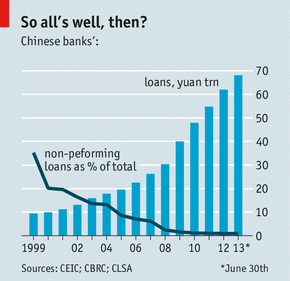
NEWS surfaced this week that Cinda, an asset-management company (AMC) created during China’s last round of banking bail-outs, is talking to bankers about a stockmarket flotation. That raises an intriguing question: how would the Chinese government handle its next banking crisis? If experience is a guide, it will be through a combination of enormous injections of public money, the creation of complicated structures and the obfuscation of data. Read more of this post
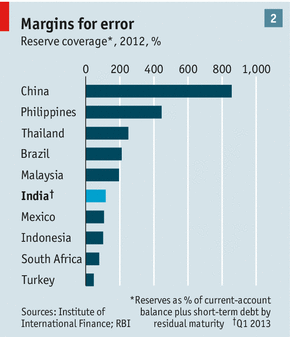
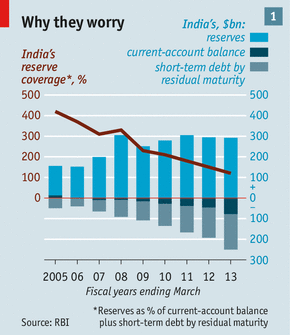
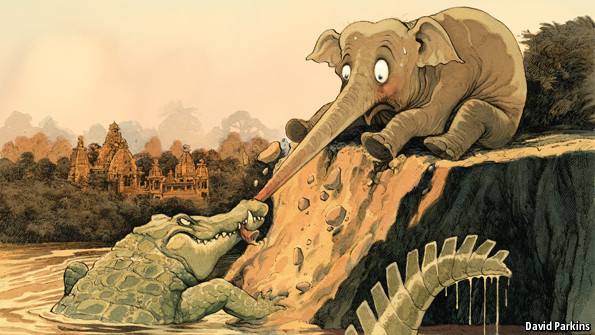
ON THE morning of August 17th most of India’s economic policymakers gathered in the prime minister’s house in Delhi. They were there to launch an official economic history of 1981-97, a period which included the balance-of-payments crisis of 1991. The mood was tense. India, said Manmohan Singh, the prime minister, faced “very difficult circumstances”. “Does history repeat itself?” asked Duvvuri Subbarao, the outgoing head of the Reserve Bank of India (RBI). “As if we learn nothing from one crisis to another?” Read more of this post
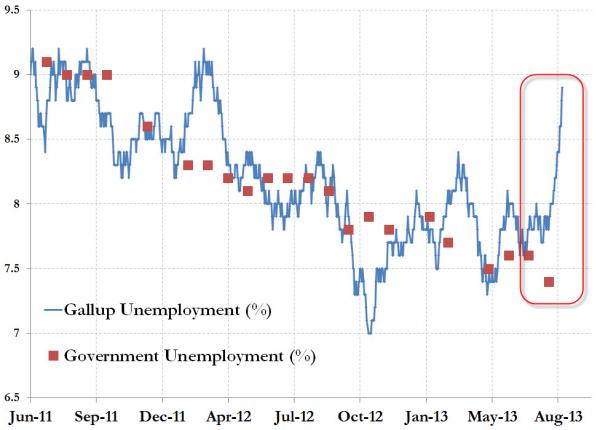
Gallup tracks daily the percentage of U.S. adults, aged 18 and older, who are underemployed, unemployed, and employed full-time for an employer, without seasonal adjustment. Due to the lack of Arima-X ‘magic’ the results are specifically not comparable to the BLS data, but, as the chart below suggests, the correlation is high. What is most worrying about the latest data is the rapid rise in both unemployment and underemployment that the Gallup poll finds (to 8.9% unemployment and 17.9% underemployment. Unemployment rates have jumped notably in the last month to their highest in 13 months. Will the Fed ‘allow’ this data to filter into the BLS data and ‘avoid the Taper’ or are there non-economic reasons (G-20,deficits,technicals,sentiment) that the Fed needs to SepTaper.
BEIJING (Reuters) – A Chinese industry group is collecting information on the pricing and business practices of foreign and local makers of medical equipment for the government in a survey that sources said was unusual in the amount of detail it sought.
Two industry sources who have seen the questionnaire said it was unclear if regulators were about to investigate China’s $20 billion medical devices market following multiple probes into corruption and possible price fixing in the pharmaceuticals sector. Read more of this post
HONG KONG (Reuters) – In “American Dreams in China”, Cheng Dongqing is giving a lecture in an abandoned factory in Beijing. Snow falls through the damaged roof and a power cut sends students reaching for their flashlights.
The movie, about how young Chinese in the 1990s tried every means to learn English so they could study overseas, is part of a boom in domestic productions that is outpacing foreign films at the box office in China – the world’s second-largest market after the United States and Canada. Read more of this post
Options Market Suffers Biggest Disruption Since April
When Scott Maidel of Russell Investments answered the phone 20 minutes after the start of U.S. equity trading on Aug. 20, there was a Goldman Sachs (GS) Group Inc. employee on the line with a request: stop sending orders for stock options.
Confusion was sweeping trading desks as prices for equity derivatives swung without reason, leading to speculation a computer program had gone haywire at one of the 12 U.S. options exchanges. Contracts traded for $26 one minute and $1 the next. Read more of this post
Proving CEOs Overpaid for Luck Helped Stir Pay Backlash
Marianne Bertrand helped unleash a shareholder backlash against CEO pay with research she began while still in graduate school.
In a 2001 paper based on her work as a Ph.D. candidate at Harvard University, the 43-year-old labor economist documented that chief executive officers at U.S. oil companies got raises when their company’s fortunes improved because of changes in global oil prices beyond their control. The same pay-for-luck phenomenon occurred with multinational businesses when currency fluctuations, rather than management strategies, boosted results, she found. Read more of this post
India’s Richest Man Loses $5.6 Billion as Rupee Stumbles
Mukesh Ambani, India’s richest man, is the biggest loser among the country’s billionaires as the rupee’s slump to record lows erased 24 percent of his fortune.
The chairman of Reliance Industries Ltd. (RIL), operator of the world’s biggest oil refinery complex, has lost $5.6 billion of his wealth since May 1, as the rupee’s plunge accelerated. The 56-year-old is left with a net worth of $17.5 billion, according to the Bloomberg Billionaires Index. Read more of this post
Indonesia Stocks Enter Bear Market After Losing 20% Since May
Indonesian stocks fell, with the benchmark index entering a bear market after losing 20 percent from a record high three months ago.
The Jakarta Composite Index (JCI) declined 1.1 percent to close at 4,171.41, the lowest since Sept. 13, 2012. Animal feed producer PT Charoen Pokphand Indonesia dropped 13 percent and was the biggest drag on the index. PT Bank Rakyat Indonesia, the country’s second largest lender by assets, fell 4.4 percent.
A record current-account deficit in the second quarter and worse-than-expected economic growth and inflation data spurred investors to offload stocks and send the rupiah to its weakest level since April 2009. Foreign investors sold a net of $434.7 million worth of equities this week through yesterday. Read more of this post
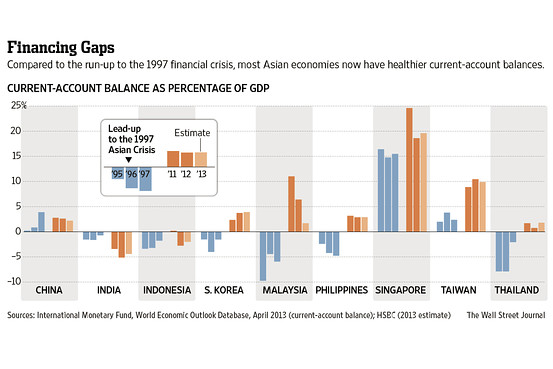
It seems all too familiar. Currencies are plunging. Current account deficits are widening. Central bankers are tripping over themselves to settle markets. So is this the 1997-98 Asian Financial Crisis redux? For one economist who lived through the crisis, history isn’t repeating itself just yet. “If the Asian financial crisis was a 10. I’d still be on a 3. My instinct is this is a short term portfolio adjustment that will pass,” says Stephen Schwartz, chief Asia economist for BBVA. He saw the Asian financial crisis up close as an International Monetary Fund staffer covering the region, and later lived in Indonesia working for the IMF as Asia licked its wounds during the 2000s.
LONDON/STOCKHOLM, Aug 21 (Reuters) – Sweden is demanding that private equity firm EQT Partners and some of its employees pay 647 million Swedish crowns ($100 million) in tax on past profits as it cracks down on buyout firms. Sweden has been trawling through tax returns and earnings declarations going back to 2005 of private equity firms that were paying tax at low rates or, in some cases, not at all. It wants to tax the majority of private equity carried interest, a share of profit on deals, at the highest income tax rate of 55 percent, not at the capital gains rate of up to 30 percent. The prominent and powerful Wallenberg family’s EQT, said the Swedish tax authorities would retroactively tax about 20 current and former employees of EQT as well as the company itself for income between 2007 and 2009. The tax authority said it had asked EQT to pay 334 million crowns and the employees 313 million for that period. It has already demanded 100 million crowns more for 2006. EQT said it would challenge the demand. “The parties concerned have followed all rules and regulations in Sweden, fully declared income and provided all relevant information to the tax authorities. Our view is that nothing new has been found in the investigations that warrant a retroactive change,” chief operating officer Johan Bygge said. EQT said income declarations from the individuals concerned had been approved by the tax authorities for the last 18 years. “The behaviour of the tax authorities creates a high level of uncertainty for EQT Partners AB and its employees,” the company said in a statement. Among other buyout firms facing retrospective tax charges, Nordic Capital was asked for $118 million and nearly $32 million of penalties in 2010. It is also contesting the tax demand and is yet to pay anything.
Tax attack
Leveraged buy-outs face legal scrutiny
Both cases relate to a tax loophole used by private-equity firms in America and much of Europe. Under “carried interest” rules, buy-out executives pay (relatively low) capital-gains taxes on profits made from buying and selling companies, in the same way investors or entrepreneurs do. This is odd, given that the money wagered on private-equity deals comes overwhelmingly from outside investors, not the executives themselves. It would make more sense for these profits to be taxed like salaries, or bankers’ bonuses, at the (higher) income-tax rate.
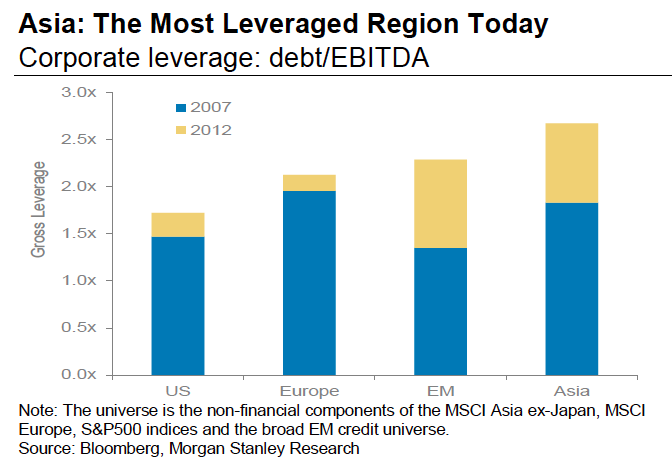
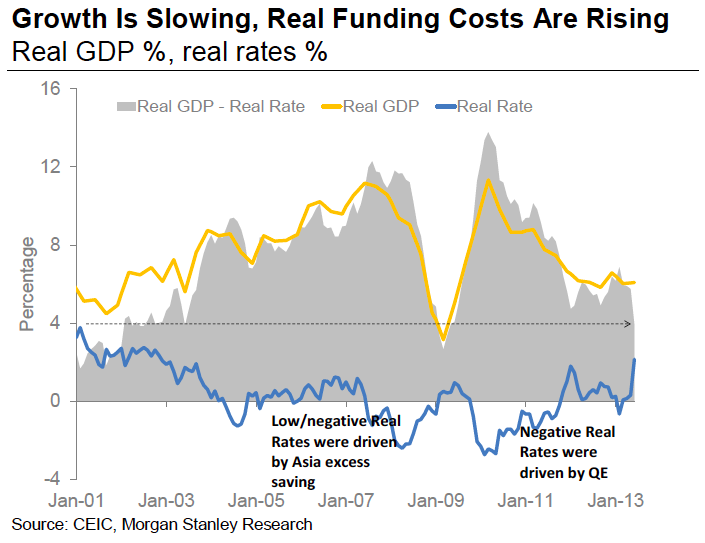
From Morgan Stanley, here are two charts that should have you a bit concerned about corporate debt in Asia. First, Corporate Asia is the most leveraged in the world. And second, growth is slowing, while real interest rates (borrowing costs) are rising. So between massive leverage, slowing growth and rising rates… there are some reasons to be concerned.
H.E.R.O. stands for “Honorable. Exponential. Resilient. Organization.” and is operationalized into a unique, systematic 4-step investment process to identify the winners. The investment objective seeks to capture long-term investment returns created by disruptive forces and innovation by focusing on high-quality and liquid listed equities in the Asia-Pacific region that ride on and benefit from them. Through our cross-sector and in-depth fundamental research process, the Fund aim to provide access to companies whom we believe are run by high-integrity, honorable and far-sighted owner-operators with a higher sense of purpose in solving High-Value Problems for their target customers and society, and have unique, scalable and wide-moat business models with sustainable competitive advantages and innovative products, services, and processes to create, expand and service their total addressable market, including the resiliency and balance sheet strength to maintain or grow profitability, pricing power and market positions through up/downturns in the economy.