Iran’s LNG Dreams Vanish as U.S. Shale Gas Looms

Iran’s LNG Dreams Vanish as U.S. Shale Gas Looms

Iran’s ambition to exploit the world’s biggest natural gas reserves, stymied for years by U.S. sanctions, faces an even sterner test as rising global output and the North American shale boom threaten to erode prices.

The Persian Gulf state would need a decade to build planned export capacity of at least 40 million metric tons a year of liquefied natural gas even if unfettered by economic curbs over its nuclear program, say analysts including Tony Regan at Tri-Zen International Pte. A surge in U.S., Canadian and Australian gas from shale deposits may depress prices for new LNG projects by 35 percent, according to Barclays Plc and Royal Bank of Canada, reducing Iran’s potential profit from selling the fuel. Read more of this post

Chevron Indonesia graft case spooks investors

July 9, 2013 7:11 am

Chevron Indonesia graft case spooks investors

By Ben Bland in Jakarta

When Endah Rumbiyanti, an environmental manager for Chevron, left her Sumatra home for Jakarta to be interviewed about a corruption case, she told her five young children she would be back in two days. After arriving in the Indonesian capital, however, she was detained by the attorney-general’s office and held for 63 days before her lawyers had the detention ruled illegal. Her arrest appeared to also come as a surprise to her captors: she was held in a parking lot until a cell was found for her in a men’s prison. It was one of many Kafkaesque aspects of a case in which Ms Rumbiyanti, 37, and four other employees of Chevron – the US company that is Indonesia’s biggest crude oil producer – are accused of corruption and causing millions of dollars of losses to the state, even though no government funds have been disbursed. The case has highlighted the unpredictable nature of Indonesia’s justice system as officials and departments fight for power in a democracy that is still evolving 15 years after the end of General Suharto’s 32-year dictatorship. Read more of this post

Crisis of confidence in government handling of corruption, survey shows

Crisis of confidence in government handling of corruption, survey shows

1:07am EDT

By Erik Kirschbaum

BERLIN (Reuters) – A majority of people worldwide believes corruption has worsened in the last two years and they see governments as less effective at fighting it since the 2008 financial crisis, a survey by Transparency International organization showed on Tuesday. The “Global Corruption Barometer” is the biggest ever conducted by the Berlin-based watchdog, with 114,000 people responding in 107 countries in the survey of opinions on corruption and which institutions are considered most corrupt. Read more of this post

Indonesian voters losing faith in lawmakers

Indonesian voters losing faith in lawmakers

About 49 million, or 29 per cent of the electorate, failed to vote in 2009. -ST
John McBeth
Wed, Jul 10, 2013
The Straits Times

Wracked by corruption allegations, President Susilo Bambang Yudhoyono’s (centre) majority Democrats are expected to take a major hit at next year’s general elections though his personal popularity remains high.

INDONESIA – Something quite astonishing has happened to Indonesia’s political parties ahead of next year’s general elections: An unprecedented 90 per cent of the candidates are incumbents. And all but a handful are standing in the electorates they currently represent. How and why is difficult to explain. In previous elections – in 1999, 2004 and 2009 – there was a 70 per cent to 75 per cent turnover in each new Parliament. This was either because sitting legislators were dropped by their parties or failed to make the cut at the ballot box. Read more of this post

DoubleLine Webcast On “The End Of QE As We Know It” With Bond Rout Update

DoubleLine Webcast On “The End Of QE As We Know It” With Bond Rout Update

Tyler Durden on 07/09/2013 16:20 -0400

Jeff Gundlach may not be present at today’s DoubleLine live webcast titled ominously enough “The End of QE as We Know It”, which will be led by the firm’s Jeffrey Sherman, but the firm is sure to provide some guidance on how the recent bond rout has impacted bond funds, and what the future of risk duration is in a time when Bernanke seems hell bent on pushing everyone out of bonds and into stocks.

U.S. SEC says audit firms hinder accounting fraud probes at U.S.-listed Chinese firms

U.S. SEC says audit firms hinder accounting fraud probes

Mon, Jul 8 2013

By Sarah N. Lynch

WASHINGTON, July 8 (Reuters) – U.S. federal regulators tried to persuade a judge on Monday to sanction the Chinese arms of the world’s top five accounting firms, saying their refusal to hand over audit work papers has hindered investigations into fraud at U.S.-listed Chinese firms.

In testimony during a hearing at the U.S. Securities and Exchange Commission, an SEC official alleged that Deloitte Touche Tohmatsu LLP’s failure to turn over audit records has stalled a three-year-old probe into financial fraud at a large solar power company. Read more of this post

Has China President Xi’s graft crackdown run out of steam? Analysts say candid coverage of ‘consultations’ may indicate leadership lacks will to take action

Has Xi’s graft crackdown run out of steam?

Tuesday, 09 July, 2013, 12:00am

Cary Huang cary.huang@scmp.com

Analysts say candid coverage of ‘consultations’ may indicate leadership lacks will to take action

President Xi Jinping has consulted retired party leaders on his anti-corruption and austerity campaign, the Communist Party’s official newspaper reported on Monday – a move some analysts believe is a sign that the current leadership lacks the confidence or political will to ring the changes of real political reform.

People’s Daily yesterday gave a rare glimpse into behind-the-scenes details of the intensive politburo meetings on June 22-25. The meetings assessed the anti-corruption and frugality measures that Xi launched earlier this year. Read more of this post

Chinese Cash Squeeze Causes Auto Dealer Panic

Chinese Cash Squeeze Causes Auto Dealer Panic, Group Says

By Bloomberg News – Jul 9, 2013

China’s money-market squeeze, which sent interbank borrowing costs soaring last month, may prompt auto dealers to cut vehicle orders and slow expansion plans to conserve cash, according to an industry group.

“The cash crunch has led to psychological panic among dealers over access to financing,” Luo Lei, deputy secretary-general of the China Automobile Dealers Association, said in a telephone interview from Beijing today. “So far, it hasn’t caused any real damage to the industry, but if the cash crunch continues, the impact will spread to auto dealers.” Read more of this post

Canada Loses Luster as Destination for Corrupt Chinese Cash; Canada became the first country to reach a deal with China to share forfeited assets in an effort to target international organized crime

July 6, 2013, 5:20 AM

Canada Loses Luster as Destination for Corrupt Chinese Cash

Chinese fugitives who touched down in Vancouver or Toronto with suitcases of illicit cash might find it harder to keep their fortunes.

Canada became the first country to reach a deal with China to share forfeited assets in an effort to target international organized crime, according to the official Xinhua News Agency. Once the pact is signed, one country will be able to get money back if a fugitive transfers illegal assets to the other, according to Xinhua.

“Canada is not, and will not be seen as, a safe haven for the proceeds of crime,” said Canadian Foreign Affairs Minister John Baird in a news release about the pact. Read more of this post

Koreans Find Breaking Up With Chaebol Hard to Do

Koreans Find Breaking Up With Chaebol Hard to Do

Everyone loves a good perp walk. For South Koreans, Lee Jay Hyun’s made great theater.

The sight of Lee — chairman of the conglomerate CJ Group and grandson of Samsung’s legendary founder — being led away by police last week on embezzlement and tax-evasion charges has been portrayed as an early victory for President Park Geun Hye’s five-month-old government. The arrest supposedly shows that Park is serious about reining in the chaebol — family-owned behemoths that continue to dominate Asia’s fourth-biggest economy and hog much of the nation’s wealth.

The reality, of course, is far more complicated. Past attempts to bring tycoons to heel have also been greeted with great fanfare, only to fizzle out. In April 2008, Lee’s uncle, Samsung Chairman Lee Kun Hee, resigned after being charged with criminal tax evasion. His ignominious fall was heralded as the end of the chaebol — until then-President Lee Myung Bak pardoned him eight months later, allowing Korea’s richest man to return to work. Read more of this post

LVMH Acquires Cashmere Clothier Loro Piana for $2.6 Billion

LVMH Acquires Cashmere Clothier Loro Piana for $2.6 Billion

LVMH Moet Hennessy Louis Vuitton SA (MC) agreed to pay 2 billion euros ($2.57 billion) for 80 percent of Italian cashmere clothier Loro Piana SpA, adding a high-quality textile producer to its burgeoning portfolio of luxury brands.

The transaction, which is subject to approval by competition authorities, values Quarona, Italy-based Loro Piana at 2.7 billion euros, LVMH said yesterday in a statement after the market closed. The family owners of the maker of $1,385 cashmere sweaters will retain a 20 percent stake in the business, Paris-based LVMH said.

“Loro Piana is quintessentially high-end while a lot of LVMH is mass luxury,” said Luca Solca, an analyst at Exane BNP Paribas in London, adding that he expects the market to favor the deal. With the purchase, “LVMH can acquire a trophy asset” and get growth opportunities for the future without stretching its balance sheet. Read more of this post

Food companies are experimenting more and more with exotic flavors and ethnic staples to appeal to a rising number of Latino and Asian immigrants

July 8, 2013

American Tastes Branch Out, and Food Makers Follow

By STEPHANIE STROM

FOOD-A-articleLarge

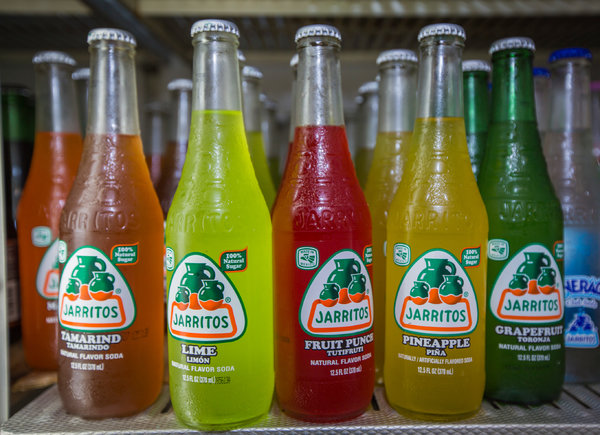
Jarritos, the Mexican fruit-flavored soda in brilliant hues rarely found in nature, has entered the mainstream in California and will soon be in conventional groceries elsewhere.

NEW BERN, N.C. — If chicken producers could breed a bird with three legs, they would. These days, they can hardly keep up with the demand for thighs and other pieces of dark meat that had once been among the least desirable parts of a chicken. “Demographics are changing,” Bill Lovette, chief executive of Pilgrim’s Pride, a division of JBS S.A., told a group at the recent Chicken Media Summit here. “There is a growing population that prefers dark meat.” While the effect of changing demographics has been seen in voting patterns and employment trends, the growing influence on America’s palate of the influx of immigrants from Latin America and Asia has been more subtle, even as grocery shelves increasingly display products containing ingredients like lemon grass and sriracha peppers. Read more of this post

China faces a difficult credit bubble workout; It will take Beijing years to tackle excess credit and over-investment

July 8, 2013 11:50 am

Markets Insight: China faces a difficult credit bubble workout

By Gavyn Davies

It will take Beijing years to tackle excess credit and over-investment

The financial shock which has recently hit the emerging markets stemmed in part from a period of severe stress in the Chinese money markets, which has now been brought under control. But the challenges facing China are chronic, not acute. And since the country is much more than “first among equals” in the Brics, a prolonged slowdown in its economy would keep all emerging market assets under pressure for a long while. Read more of this post

Australia’s stock market regulator will increase scrutiny of analysts as part of a clampdown on selective briefings after questions were raised over coverage of Newcrest Mining

Australia Aims Spotlight on Disclosure After Newcrest Slump

Joe Schneider and David StringerJul 08, 2013 2:41 am ET

July 8 (Bloomberg) — Australia’s stock market regulator will increase scrutiny of analysts as part of a clampdown on selective briefings after questions were raised over coverage of Newcrest Mining Ltd. The Australian Securities & Investments Commission will make spot checks on company briefings and communications with analysts in the current half of the year, the regulator said yesterday in a statement. Newcrest shares fell 12 percent in the two days before the company announced a possible A$6 billion ($5.5 billion) writedown, raising concern of selective briefing. Australia requires companies to disclose all market-sensitive information to the Australian Stock Exchange. Newcrest has said it didn’t selectively brief analysts ahead of the announcement. Read more of this post

Why I Became a Chinese Shadow Banker

Why I Became a Chinese Shadow Banker

In the fall of 2010, as deputy head of China investment banking at UBS AG, I spoke to a group of wealthy investors in Beijing about the outlook for Chinese stocks. A rumpled, 50-something man from Hangzhou named Wang Zhigang pulled me aside afterward and asked for my advice about investing. Until then, he had made his money through curbside lending, not stocks. But, he lamented, his returns had dropped from more than 30 percent a year to a mere 23 percent. He worried about his personal fortune, which he had built up from nothing to almost 3 billion yuan (about $445 million back then).

He hardly needed my advice, I told him. “With your performance, even Ba-Fei-Te should farm out some money for you to manage!” I said, referring to Warren Buffett’s name in Chinese. Read more of this post

Shadow banking bolsters China Inc as Beijing tightens credit? “There’s the risk of quenching thirst by drinking poison”

Shadow banking bolsters China Inc as Beijing tightens credit

9:14pm EDT

By Samuel Shen and Michael Flaherty

SHANGHAI/HONG KONG (Reuters) – Wang Zhiyong, the founder of a Shanghai-based gift card company, tried twice to get a bank loan for his business and failed both times. So Wang turned to China’s vast network of alternative lenders, opting for a so called “curb side” loan. Such a loan is just one segment of the country’s shadow banking system, which includes pawn shops, credit guarantee firms, trust companies and other mechanisms as sources of funds for Chinese borrowers. “Banks never lend a hand to start-ups like us,” said Wang, 40. “They only go after big companies and state-owned firms.” The dearth of bank credit available to China’s millions of small to mid-sized companies is expected to tighten as authorities seek to rebalance the world’s second-biggest economy. Read more of this post

India Suspends ‘Buy India’ Provisions after just five months

Updated July 8, 2013, 5:55 p.m. ET

India Suspends ‘Buy India’ Provisions

R. JAI KRISHNA

NEW DELHI—India on Monday suspended its “Buy India” guidelines, which had come under fire, after just five months. The entire policy “will be revisited and reviewed,” according to a statement on the prime minister’s website. The guidelines, introduced in February, mandated that electronic goods purchased by the government contain a certain proportion of locally made hardware. “There have been some reservations,” India’s telecommunications secretary, M.F. Farooqui, said on the sidelines of an industry event in New Delhi. “We wanted to address that.” Global investors had requested that India reconsider the policy, said Guarav Verma, head of the New York office for the U.S.-India Business Council. International companies had told the government that the policy might prompt them to set up operations elsewhere, he added. Read more of this post

Fracking Firms Face New Crop of Competitors; Schlumberger, Halliburton, Baker Hughes Struggle to Distinguish Themselves as Smaller Rivals Crowd the Marketplace

July 8, 2013, 7:31 p.m. ET

Fracking Firms Face New Crop of Competitors

Schlumberger, Halliburton, Baker Hughes Struggle to Distinguish Themselves as Smaller Rivals Crowd the Marketplace

ALISON SIDER

MK-CE563_FANCYF_G_20130708173005

So many companies have jumped into the hydraulic-fracturing business that the price of performing the key part of the oil- and gas-drilling technique has plunged in recent years, forcing fracking’s pioneers to play up new technologies to stand out. Schlumberger Ltd., SLB +0.94% Halliburton Co. HAL +0.48% and BJ Services, a company that is now a subsidiary of Baker Hughes Inc., BHI +1.25% once did nearly all the hydraulic-fracturing work in the U.S., helping energy companies unlock previously unreachable oil and natural gas in shale formations and ushering in a boom in domestic energy production.

Read more of this post

Central Bankers Hone Tools to Pop Bubbles

July 8, 2013, 11:04 p.m. ET

Central Bankers Hone Tools to Pop Bubbles

DAVID WESSEL and ALEX FRANGOS

P1-BM220_MACROP_NS_20130708181808P1-BM222_MACROP_NS_20130708182103P1-BM223_MACROP_NS_20130708182106P1-BM221_MACROP_NS_20130708181507

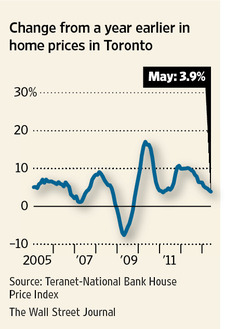
In Seoul’s upscale Gangnam neighborhood, made famous by pop star Psy’s viral music video, government curbs on real-estate lending froze a market in which home prices had been rising as fast as 25% a year. In Toronto, housing prices reversed their rapid rise and fell for five months after the government changed rules to effectively increase monthly payments on new loans. But in Tel Aviv, home prices kept right on climbing—up 11% over the past year for a three-bedroom apartment—even after the central bank boosted minimum down payments and made mortgage lending less attractive to banks.

Central bankers everywhere else are watching these experiments closely, among them Ben Bernanke, chairman of the U.S. Federal Reserve. He and his counterparts around the world, seared by the worst financial crisis in 75 years, are searching for ways to halt borrowing binges before they morph into bubbles, and to push lenders to shore up their defenses before the next crisis arrives. Read more of this post

LVMH’s Bernard Arnault has collected scores of brands but his quest for Hermès has ignited a fierce handbag war

July 8, 2013 6:55 pm

Luxury: Object of desire

By Scheherazade Daneshkhu

LVMH’s Bernard Arnault has collected scores of brands but his quest for Hermès has ignited a fierce handbag war

Bernard Arnault, the billionaire head of French luxury goods group LVMH, once dismissed a question about a rival group, saying: “As far as competitors, there are two I admire: Chanel and Hermès.” That was soon after Mr Arnault’s tenacious “handbag war” for control of Gucci, the Italian leather goods maker, ended in rare defeat at the hands of arch-rival François Pinault’s PPR group (now known as Kering) more than a decade ago. Now Mr Arnault is involved in a second handbag war – this time for Hermès – regarded as the crème de la crème of luxury goods companies for the quality and craftsmanship of its bags and silk scarves and ties. Read more of this post

Hedge funds lose 2-second edge on econ report; Reuters agreed to end its practice of giving high-frequency traders an early look at potentially market-moving consumer survey results that could mean millions of dollars in profits

Hedge funds lose 2-second edge on econ report

Kevin McCoy, USA TODAY11:45 a.m. EDT July 8, 2013

STORY HIGHLIGHTS

Results from consumer surveys will no longer go early to high-frequency traders

High-speed computers are able to make trades within the two-second gap

Reports also not being distributed early to news organizations

Financial information giant Thomson Reuters Monday agreed to end its practice of giving high-frequency traders an early look at potentially market-moving consumer survey results that could mean millions of dollars in profits. Changing the policy amid an investigation by New York Attorney General Eric Schneiderman, the company said it would no longer provide early access of the University of Michigan consumer survey findings issued every other Friday at 9:55 a.m ET. Financial information giant Thomson Reuters Monday agreed to end its practice of giving high-frequency traders an early look at potentially market-moving consumer survey results that could mean millions of dollars in profits. Read more of this post

China’s Ordos, the Chinese ghost city known for its empty skyscrapers is struggling to repay debt and has resorted to borrowing from companies to pay workers

China’s Ordos Struggles to Repay Debt: Xinhua Magazine

A Chinese city known for its empty skyscrapers is struggling to repay debt and has resorted to borrowing from companies to pay workers, a magazine published by the official Xinhua News Agency reported. Some district governments of Ordos, Inner Mongolia, had to borrow money from companies to pay salaries of municipal employees, Economy & Nation Weekly said in a July 5 report on its website. Ordos local-government entities have amassed 240 billion yuan ($39 billion) of debt, while the city had 37.5 billion yuan of revenue last year, the publication said without specifying annual interest costs. The report adds to signs of strains in an economy that probably decelerated for a second straight quarter as overseas and domestic demand slowed and Premier Li Keqiang reined in credit growth. China Rongsheng Heavy Industries Group Holdings Ltd. (1101), the country’s biggest shipyard outside state control, said last week it’s seeking financial support from the government after orders plunged. “Isolated default cases will happen in places like Ordos – – people know investment in these places is unsustainable,” said Ding Shuang, senior China economist at Citigroup Inc. in Hong Kong. Two phone calls to Ordos’s government general affairs office went unanswered. The city is also known as Erdos. Vice Finance Minister Zhu Guangyao said last week that China should be on “high alert” to risks in local government debt. Coal-rich Ordos is known for a building frenzy in recent years, including a new area named Kangbashi that was designed to accommodate 300,000 people.

To contact Bloomberg News staff for this story: Xin Zhou in Beijing at xzhou68@bloomberg.net

China Cash Squeeze Seen Creating Vietnam-Size Credit Hole

China Cash Squeeze Seen Creating Vietnam-Size Credit Hole

China’s money-market cash squeeze is likely to reduce credit growth this year by 750 billion yuan ($122 billion), an amount equivalent to the size of Vietnam’s economy, according to a Bloomberg News survey. The number is the median estimate of 15 analysts, whose projections last week ranged from cuts of 20 billion yuan to 3 trillion yuan. The majority of respondents also said they approve of the government’s handling of the credit crunch and said the episode reinforces their expectations for policy reforms such as loosening controls on interest rates. Read more of this post

“Made In America”

“Made In America”

MATT BURNS

Friday, July 5th, 2013

we-can-do-it

The five-day work week. Chevrolet. Grand Funk Railroad. Steel plants on the shores of Lake Michigan. This is America.

There is a rebirth happening right now. It’s happening all over the country. Pockets of makers here, a consumer electronics company there. A startup accelerator in beautiful Harbor Springs, Mich. They’re appearing all over this land. And it’s all heavily advertised. “Made in America” is, sadly, in vogue right now. “Imported from Detroit”, “This American buys American.” All bumper sticker catch phrases fueling America’s greatest innovation: capitalism. And why not? Manufacturing is the brawn that built this land but capitalism is the beating heart. Capitalism drives this country. And it drove companies out, too. Labor is cheaper elsewhere. Tim Cook’s supply chain management became the norm. Profit and loss statements trended towards “build it somewhere else.” “Made in China”. It’s stamped on the bottom of my coffee mug. On the back of my phone. It’s everywhere because we put it there. There was a time not all that long ago that America was the center of manufacturing and innovation. General Motors. Bell Labs. Motorola. Fairchild Semiconductor. Silicon Valley. The lone entrepreneur making it big. America has always been a land of chance. Risk it all and move out west. Find gold. Build with silicon. It’s this sense of entrepreneurship that makes the country great. Most startups fail. A dramatic amount fail. But it’s that sense of possibility that initially made America great and is fueling its current growth. Read more of this post

The Difference Between Innovation and Disruption, and Why China Needs the Latter

The Difference Between Innovation and Disruption, and Why China Needs the Latter

July 8, 2013 by C. Custer

Last Friday, I wrote an article about why China doesn’t produce many disruptive technologies, in which I argued that China’s political system is biased towards maintaining the status quo in industries like internet and telecommunications, where state-owned firms dominate. In response, I got a lot of arguments like this:

That’s misleading. The real reason China doesn’t innovate is that it doesn’t have a mature enough (or risk-taking enough) investment environment or strong enough IP laws, so big new ideas often can’t get the funding and protection they need to grow and thrive.

That’s all very true, but innovativeness and disruptiveness are not the same thing. And especially in China, where foreign players are often shut out of the market either by legislation or by the formidable language and culture barriers, a product does not need to be innovative at all to be highly disruptive. Read more of this post

Red tape, graft mean India not such a super market for Wal-Mart

Red tape, graft mean India not such a super market for Wal-Mart

5:12pm EDT

By Nandita Bose

MUMBAI (Reuters) – Wal-Mart’s India expansion is stalled. When India announced last September that it would allow foreign supermarket chains to take majority ownership of their Indian operations, it marked a victory for Wal-Mart Stores Inc (WMT.N: Quote, Profile, Research, Stock Buzz), which had spearheaded efforts to open the market and said its first retail store would open within two years. Now, two sources within the Bentonville, Arkansas-based company’s Indian unit say it is unlikely to apply for its first retail store license before March 2015. The company has said it needs a further 12 to 18 months after winning government approval to open each store, which means its first retail outlet in the country would open in 2016 at the earliest. Read more of this post

Some Korean family-run brokerage firms and securities units of conglomerates are under fire for paying out high dividends to their shareholders despite worsening profitability

2013-07-08 19:01

Hyundai, Daishin under criticism

Firms pay high dividends despite poor performance
By Na Jeong-ju
Some family-run brokerage firms and securities units of conglomerates are under fire for paying out high dividends to their shareholders despite worsening profitability.
Hyundai Securities, an affiliate of Hyundai Group, paid 44.4 billion won in dividends last year although the firm recorded 2.1 billion won in losses. The securities firm’s largest shareholder is Hyundai Merchant Marine with a 25.9 percent stake. Other Hyundai affiliates are also key shareholders of Hyundai Securities. Read more of this post

Xi’an to invest US$6bn to rebuild palace of China’s first emperor Qin Shihuang; Beijing calls for gov’t agencies to cut spending by 5%

Xi’an to invest US$6bn to rebuild palace of China’s first emperor

Staff Reporter 2013-07-08

CFP438376080-173708_copy1

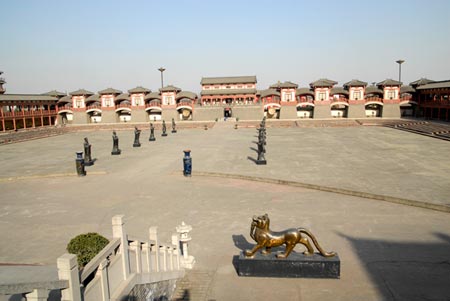
The Epang Palace in Xi’an was the seat of Qin Shihuang, the first emperor to rule a unified China. (Photo/CFP)

The government of Xi’an in northwestern China has signed a contract worth 38 billion yuan (US$6.2 billion) to develop tourism centered on the the Epang Palace, an ancient palace more than 2,000 years in the provincial capital of Shaanxi, reports the China Business Journal run by the Chinese Academy of Social Sciences. The city government has signed the contract with the Beijing Capital Group, a state-owned enterprise with interests in infrastructure, real estate and financial services. The project plans to invest 3 billion yuan (US$480 million) to rebuild a park for the palace and make it the center of the tourist attraction. An additional 8 billion yuan (US$1.3 billion) will be invested in further tourist infrastructure at the site. The project will develop human resources around the site, said a staff member from the city government, who said a museum, arts center, conference center and cultural center will be built. The Epang Palace was located in western Xi’an. It was a palace complex built in the Qin Dynasty in 212 BC and was the home of Qin Shihuang, the first emperor to rule a unified China.

Beijing calls for gov’t agencies to cut spending by 5%

Xinhua 2013-07-08

China’s Ministry of Finance has issued a circular ordering central government agencies to cut their general expenditures this year by 5%, a move to push the frugality campaign launched by the current leadership under president Xi Jinping. According to the circular, a whole slew of fees shall be cut including money spent on the building and renovation of government offices, meetings, domestic and overseas trips, vehicles and official receptions. The circular also calls for more efficient uses of money by the government agencies, with the aim of improving people’s livelihood. Xi Jinping and his government have vowed to fight corruption and extravagance since he took office early this year.
Salesmen march against HK property cooling measures as deals ‘dive to SARS-crisis levels’

Salesmen march against HK property cooling measures

Sunday, Jul 07, 2013

AFP

reuters_salesmenprotest

HONG KONG – Thousands of real estate agents took to Hong Kong’s streets Sunday in protest at government efforts to curb soaring property prices, saying new transaction taxes and other measures are threatening their business. “There are 37,000 agents in Hong Kong and there were only 3,000 transactions last month,” said Raymond Ho, a spokesman for the rally organisers. “The policies have frozen the market. A lot of small property agent firms will close in the future,” he told AFP. Read more of this post

Is struggling shipbuilder China Rongsheng too big to fail?

Is struggling shipbuilder China Rongsheng too big to fail?

5:05pm EDT

By Koh Gui Qing and Yimou Lee

AM-AZ309_RONGSH_NS_20130708005703

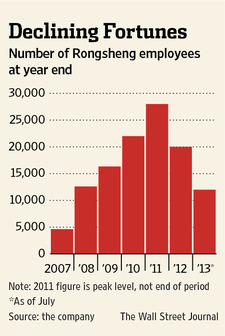
HONG KONG/BEIJING (Reuters) – An appeal for government financial support from China’s biggest private shipbuilder presents authorities with some stark choices between protecting a big employer and its jobs or letting the firm go under to ease pressure on a sector suffering from overcapacity and sharply falling new orders. Since Beijing appears intent on telling investors it is serious about changing the investment-led growth model of the world’s second-biggest economy and controlling a credit splurge, it may seem like the writing is on the wall for China Rongsheng Heavy Industries Group (1101.HK:Quote, Profile, Research, Stock Buzz). Yet analysts say the government is more likely than not to judge that Rongsheng, which employs around 20,000 workers and has received state patronage, is too big and well connected to fail. Read more of this post