Axa cuts 450 jobs as it ends face-to-face financial advice

Axa cuts 450 jobs as it ends face-to-face financial advice

Insurer blames regulations banning commission payments for move affecting staff based in UK bank branches

guardian.co.uk, Monday 15 April 2013 15.41 BST

Axa says it has withdrawn its in-branch financial advice because it could not find a profitable model. Photograph: Tom Saunderson for the Guardian

Insurer Axa is cutting 450 jobs in branches of the Co-operative, Yorkshire and Clydesdale banks under plans to cease face-to-face financial advice.

The group blamed the decision on new regulations that banned commission payments, forcing customers to pay up front. Read more of this post

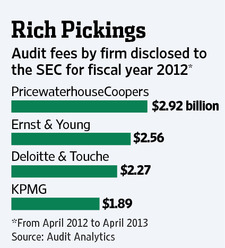
It is time to audit our auditors; Investors can only trust capital markets if they trust their auditors; Big Four earn annual audit fees of US$10 billion in US

April 16, 2013 7:30 pm

It is time to audit our auditors

By Anthony Catanach

MI-BV384_AUDITH_NS_20130416174803

Investors can only trust capital markets if they trust their auditors, writes Anthony Catanach

The revelation that a partner at KPMGleaked privileged information to a “golfing buddy” for a few silver coins is not just another accounting scandal. A 29-year veteran of the accounting firm provided advance notices of client earnings releases and merger plans in exchange for more than $50,000 in cash and gifts, including a $12,000 Rolex watch. It would be easy to dismiss this event, given its minor monetary consequences relative to some of the auditing blunders of the past decade. But this event just may be a watershed.

Investors can view today’s global capital markets as secure only if they trust the financial statements issued by publicly traded companies. Fundamental to this is the belief that information provided by market participants is accurate, complete, and reliable. Accountants have been given the task of certifying this. Investors must, therefore, trust that public company auditors are not only knowledgeable and experienced, but also independent and possess the highest levels of integrity.

There is already mistrust of the profession. The auditors who allowed Enron to flatter their balance sheets have not been forgotten. Nor those who signed off on the infamous Lehman Brothers “Repo 105” accounting wheeze, which magically transformed loans into sales. Such cases cause one to wonder if our current levels of trust in the auditing profession may be too high. What makes the KPMG case so important is that it involves a senior partner with authority over 50 other partners and more than 500 staff in one of the firm’s largest offices. He placed his own self-interest before that of his clients, much less the investing public. As a result, KPMG has withdrawn several years of audit reports for some clients. This is quite a moment: it is the first significant withdrawal of an audit report since 2007, when PwC did the same for Yukos, the bankrupt oil company, over concerns about the accuracy of information provided to the auditor by the management. Read more of this post

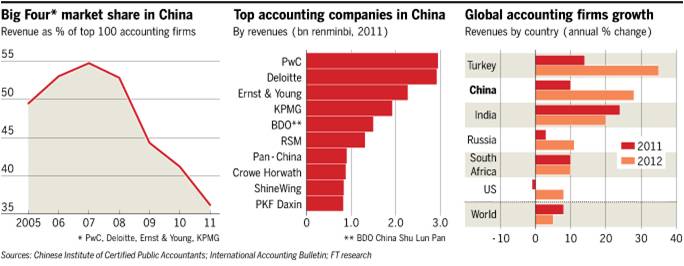
Accounting: Stalking the Big Four; Scandals have given Chinese accounting a toxic reputation internationally

April 16, 2013 7:18 pm

Accounting: Stalking the Big Four

By Adam Jones and Simon Rabinovitch

Homegrown auditors are eroding the influence of established western firms in China

China Big Four

When Zhang Ke left Coopers & Lybrand in 1999 to set up his own accounting firm, some doubted the upstart would survive. Outside Coopers – now part of PwC – and the other big western outfits, the profession in China was weak. This did not deter Mr Zhang. “I thought China was so big, it should have some of its own accounting firms,” he recalls. Little more than a decade later, the gamble has paid off. ShineWing, the firm he started, is snapping at the heels of the industry’s biggest names in China and the avuncular, soft-spoken Mr Zhang has become perhaps the most influential accountant in the land. “He is the dean of the accounting profession right now in China,” says Paul Gillis, a professor at Peking University. “He’s the guy.” Such praise will be hard to swallow in some quarters. Scandals have given Chinese accounting a toxic reputation internationally. Instead of Zhang Ke, the name on the lips of many western investors is Muddy Waters, the research firm that has levelled accounting fraud accusations against several Chinese companies. Carson Block, Muddy Waters’ founder, has said questionable auditing is endemic in the fast-growing Chinese market. But even as weaknesses continue to be exposed in the way accounts are drawn up and vetted in China, a subtler trend has emerged. The local dominance of the world’s leading audit and consulting networks – PwC, Deloitte, Ernst & Young and KPMG – is being eroded by ShineWing and other homegrown rivals after two lucrative decades. Read more of this post

India’s first theme park opens its gates, the world’s first to boast a ride involving a gigantic six-armed animatronic Hindu god, standing astride a trio of curly-horned fire-breathing rams

April 16, 2013 11:18 am

India’s first theme park opens its gates

By James Crabtree in Mumbai

India’s debut theme park is also almost certainly the world’s first to boast a ride involving a gigantic six-armed animatronic Hindu god, standing astride a trio of curly-horned fire-breathing rams.

But the opening of the Adlabs Imagica complex on Thursday on a 65-acre site between the major western cities of Mumbai and Pune marks a first of a different sort too, as India takes an initial step into a market where, so far at least, the likes of Disney have feared to tread.

Set up by Bollywood entrepreneur Manmohan Shetty, the park expects up to 3m visitors a year to enjoy its roughly two dozen international-standard rides, raising hopes that India’s nascent industry might in time follow a recent theme park boom in China.

Speaking before the launch, Mr Shetty said global operators like Disney and Universal Studios should now rethink concerns about infrastructure, land acquisition and cost-conscious customers, which have so far led them to avoid the country’s 1.2bn-strong market. Read more of this post

Foreign investment: Brazil is now ‘ugly mirror image of Mexico’ in beauty parade

April 17, 2013 12:08 am

Foreign investment: Brazil is now ‘ugly mirror image of Mexico’ in beauty parade

By Joe Leahy in São Paulo

Brazil has become used to being top of the class rather than the dunce at the back as far as rating agencies have been concerned in recent years.

So it was with some surprise it recently received a slap on the wrist from Fitch, which warned that the country’s difficulties in kick-starting its flagging economic growth were “weighing” on its rating.

“With a slower growth trajectory, making inroads into fiscal consolidation becomes harder,” said Shelly Shetty, a Fitch analyst.

It is not that Brazil is facing any kind of crisis. It still has one of the world’s largest foreign exchange reserves, at about $377bn, a sound financial system and a government and central bank still more or less committed to targeting inflation and maintaining a floating exchange rate.

It is just that Brazil, the original currency warrior accustomed to discouraging capital inflows during the boom years between 2009 and 2011, now finds itself in a different world in terms of foreign exchange and capital markets trading. Read more of this post

Forget Gold, the Gourmet-Cupcake Market Is Crashing

Updated April 16, 2013, 8:06 p.m. ET

Forget Gold, the Gourmet-Cupcake Market Is Crashing

By EMILY MALTBY and SARAH E. NEEDLEMAN

MK-CC455_CUPCAK_G_20130416171918

Sales at gourmet cupcake maker Crumbs have softened lately.

The icing is coming off America’s cupcake craze. The dessert became a cultural and economic phenomenon over the last decade, with gourmet cupcake shops proliferating across the country, selling increasingly elaborate and expensive concoctions. The craze hit a high mark in June 2011, when Crumbs Bake Shop Inc.,CRMB -3.41% a New York-based chain, debuted on the Nasdaq Stock MarketNDAQ +0.35% under the ticker symbol CRMB. Its creations—4″ tall, with fillings such as vanilla custard, caps of butter cream cheese, and decorative flourishes like a whole cookie—can cost $4.50 each. After trading at more than $13 a share in mid-2011, Crumbs has sunk to $1.70. It dropped 34% last Friday, in the wake of Crumbs saying that sales for the full year would be down by 22% from earlier projections, and the stock slipped further this week. Crumbs in part blamed store closures from Hurricane Sandy, but others say the chain is suffering from a larger problem: gourmet-cupcake burnout. “The novelty has worn off,” says Kevin Burke, managing partner of Trinity Capital LLC, a Los Angeles investment banking firm that often works in the restaurant industry.

MK-CC467_CRUMBS_G_20130416164203 Read more of this post

Gold’s fall costs billionaire hedge fund manager John Paulson $1.5bn this year

April 16, 2013 6:00 pm

Gold’s fall costs Paulson $1.5bn this year

By Dan McCrum in New York

The tumbling gold price has personally cost billionaire hedge fund manager John Paulson at least $1.5bn so far this year, as a decline in the price of the metal turned into a rout.

The estimated losses for Mr Paulson, who has made and lost more money on gold than almost any other hedge fund manager, reflect a bold all-in bet on the precious metal.

While many investors hold some gold in case of financial calamity or a return of the rampant inflation of the 1970s, since 2009 Mr Paulson has allowed clients of Paulson & Co to denominate their holdings in gold, rather than US dollars. Mr Paulson enthusiastically embraced the option, according to people familiar with the situation, and has about 85 per cent of his personal capital in the firm linked to the gold price. Read more of this post

Tears, reality TV and the Chinese dream

April 16, 2013 7:34 pm

Tears, reality TV and the Chinese dream

By Patti Waldmeir in Shanghai

Xi Jinping is cooking up the China of the future, writes Patti Waldmeir

His wife acts like Jackie Kennedy and he sounds like JFK: Xi Jinping, the new president of China, seems to have beamed us all back to 1960.

It is not just that Peng Liyuan, Mr Xi’s celebrity wife, looks like a clone of America’s First Fashionista. There is also the fact that Mr Xi seems unable to open his mouth without uttering the phrase “Chinese dream” – with all that evokes of the saccharine sentimentality and social mobility of the Kennedy era. The American dream may have had a bad 50 years since JFK’s untimely demise but Mr Xi seems to think it is ripe for reinvention now, halfway across the world in China.

He is not the only one. Mainland television magnateshave figured out that the Chinese dream also sells well in the form of reality TV shows such as MasterChef China, the local version of the cookery cliffhanger that has a global audience of 250m. This month, millions of mainlanders watched the coronation of a new MasterChef: “desperate housewife” Zhao Dan, who rose from the obscurity of her provincial kitchen to win Rmb1m ($160,000) and a future in the restaurant business by cooking up a plate of ribs and frying a slab of goose liver on national TV.

There was no shortage of culinary skill involved in the finale, which pitted a cleaver-wielding Ms Zhao against an unemployed Taiwanese single father who, like all the other contestants, had never cooked a meal professionally in his life. But the contestants’ sob stories may turn out to be more memorable than their stir-fries. Read more of this post

False Start: Urbanization Drive Fails to Meet Expectations in China

False Start: Urbanization Drive Fails to Meet Expectations – Economic Observer Online – In-depth and Independent

By Kang Yi, Jiang Yunzhang, Zhang Xiaodong and Xiao Wei (康怡,降蕴彰, 张向东 ,肖薇)

Issue 615, April 15, 2013

After a period of optimism spurred on by high hopes for rapid urbanization, the steel industry is now wistfully watching customers change the way they buy steel in order to capitalize on falling prices. Ge Xin (葛昕), a researcher with the Beijing Lange Steel Information Research Center, reports that he heard of this trend recently at an industry meeting. He says in the past companies might book 10,000 tons of steel from a trader two months before construction and pay the entire cost upfront. Now however, they might divide shipment of that 10,000 tons over eight weeks and pay whatever the market price of the steel is at the time of delivery. Lower cash availability among these companies is one reason for delaying purchases, but it has more to do with a desire to take advantage of falling steel prices.

“At the end of last year and especially in January this year, people all felt steel had a bright future,” Ge said. “It appeared that the steel market was booming. After Chinese New Year almost all steel factories increased production, and these increases were quite large.” However, in March, the price for reinforcing steel (rebar) dropped more than 200 yuan per ton. The steel industry over the past three months has been described as a “roller coaster” and producers now feel they were overly optimistic. Read more of this post

What Happens When Asia’s Water Tower Dries Up? Drought in the Yunnan province of China affects most of the major rivers of Asia

What Happens When Asia’s Water Tower Dries Up?

Drought in the Yunnan province of China affects most of the major rivers of Asia

By Coco Liu and ClimateWire  | Tuesday, April 16, 2013 | 11

what-happens-when-asias-water-tower-dries-up_1

Lijiang Old City, Black Dragon Park. The whole region repeatedly suffers from drought. Recently, they have become more frequent.Image: Flickr/Winston Smith

LIJIANG, China — After photographing Black Dragon Lake here for eight years, He Jiaxin knows of more places where he can get the lake to mirror the majesty of its surrounding mountains than anyone else. But this year, he has a problem: The lake has disappeared.

Since its springs dried up last year, no water has flowed into Black Dragon Lake for more than 400 days. At the same time, hot weather caused a high evaporation rate, turning a large part of the lake into a play yard for children.

“I’ve never seen such a dry-up before,” He, a 36-year-old local photographer, said while staring at the parched lake bed. “It hasn’t rained in Lijiang for a really long time.”

Lijiang is hardly alone. Similar situations are happening across other parts of Yunnan province, which usually has more rain than half of China’s regions. But it has experienced extremely low rainfall for the past three years. Read more of this post

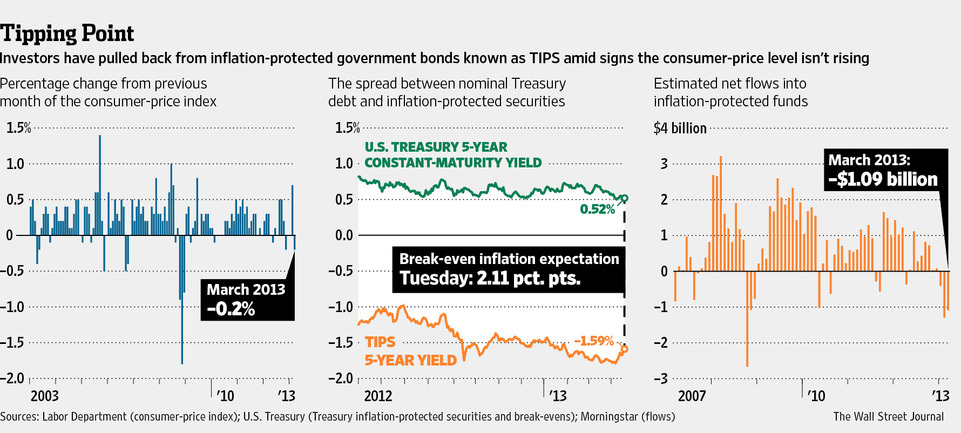
TIPS Investors Rush for Exit

April 16, 2013, 8:48 p.m. ET

TIPS Investors Rush for Exit

Treasury Inflation-Protected Securities Lose Favor as Fears of Rising Prices Ease

By CAROLYN CUI

MI-BV391_MKTLED_G_20130416174506

A surprise drop in gasoline prices has jolted a corner of the bond market, easing investors’ inflation fears and triggering an exodus from a popular form of Treasury securities.

Bond investors have been pouring into the $883 billion market for Treasury inflation-protected securities, or TIPS, over the past year, in a bid to protect their purchasing power in case of rising prices. TIPS holders receive adjustments to the principal value of their bonds tied to the rate of inflation, protecting their holdings from being eroded by rising price levels. Read more of this post

A senior Chinese auditor has warned that local government debt is “out of control” and could spark a bigger financial crisis than the US housing market crash.

Last updated: April 16, 2013 5:32 pm

China local authority debt ‘out of control’

By Simon Rabinovitch in Beijing

A senior Chinese auditor has warned that local government debt is “out of control” and could spark a bigger financial crisis than the US housing market crash.

Zhang Ke said his accounting firm, ShineWing, had all but stopped signing off on bond sales by local governments as a result of his concerns.

“We audited some local government bond issues and found them very dangerous, so we pulled out,” said Mr Zhang, who is also vice-chairman of China’s accounting association. “Most don’t have strong debt servicing abilities. Things could become very serious.”

The International Monetary Fund, rating agencies and investment banks have all raised concerns about Chinese government debt. But it is rare for a figure as established in the Chinese financial industry as Mr Zhang to issue such a stark warning.

“It is already out of control,” Mr Zhang said. “A crisis is possible. But since the debt is being rolled over and is long-term, the timing of its explosion is uncertain.” Read more of this post

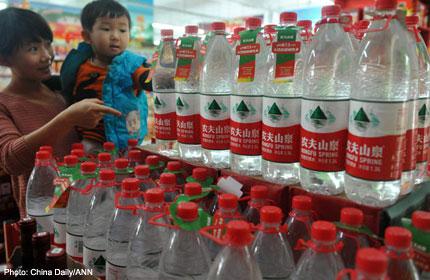
Quality concerns over China’s bottled water

Quality concerns over China’s bottled water

chiday_water

Wednesday, Apr 17, 2013
China Daily/Asia News Network
By Wang Zhenghua and Yan Yiqi

CHINA – A debate over the production standards adopted by bottled water giant Nongfu Spring has aroused safety concerns.

Several bottled water retailers in eastern China approached by China Daily said they have yet to see a major setback in sales of Nongfu Spring’s bottled water, but some consumers remain sceptical about the quality of its products. Read more of this post

IMF: Financial instability shifting from banks to pensions

Financial instability shifting from banks to pensions

17 April 2013

Author: Rachel Fixsen

Financial sector risk may be shifting to pension funds and other institutions as a result of global central banks’ exceptionally easy monetary policy – including bond-buying programmes – according to a new report from the International Monetary Fund (IMF).  Read more of this post

Moves to curb house prices trigger fake divorces in Shanghai

Moves to curb house prices trigger fake divorces in Shanghai

Staff Reporter, 2013-04-16

China’s recent attempts to cool the country’s overheated housing market have triggered a wave of phony divorces in Shanghai, with critics questioning the long-term effectiveness of government attempts to hold down soaring prices.

Jiahegongcheng, a Chinese non-profit offering marriage consultancy, said it had recently provided services to many couples staging a fake divorce in order to sidestep restrictions and purchase an additional home. The trend began after the Shanghai government limited families to buying only one additional new home among other measures started in 2010.

There were 43,964 couples in Shanghai which filed for divorce in 2012 and 8,068 of them later remarried, according to statistics.

Fake divorce has become a common way to avoid the law, and the government should not allow the trend to continue, said Hu Zonggen, a real estate consultant based in Shanghai. He suggested during a conference in March that the city should address the issue by banning new home purchases to people in their first year after a divorce. Read more of this post

FAW-Volkswagen Car chairman resigns amid corruption scandals; 10 billion yuan (US$1.6 billion) had evaporated from the group’s real estate business

FAW Car chairman resigns amid corruption scandals

Staff Reporter, 2013-04-17

First Automobile Works Group chairman Xu Jianyi has resigned as chairman and as member of the board at the group’s subsidiary FAW Car. The development has fueled speculation that his exit is a result of the series of corruption scandals within the state-owned enterprise.

FAW Car released a statement on Friday saying Xu’s resignation was due to work demands and he will not be taking up any other posts at the subsidiary. Xu will however remain as chairman of the group.

The statement came a day after reports that 10 billion yuan (US$1.6 billion) had evaporated from the group’s real estate business and that 200 senior managers had been whisked away by investigators for questioning. Read more of this post

China’s department stores losing out to e-commerce, higher costs; Retailing specialists said many department stores are being used purely as “fitting rooms” as shoppers have taken to trying on clothes at the store and then placing their orders online to save money

China’s department stores losing out to e-commerce, higher costs

Staff Reporter,  2013-04-17

Department stores in China have been under increasing pressure from rising rent and labor costs as well as greater competition from online retailers.

Department stores reported a total of 228.2 billion yuan (US$36.8 billion) in sales in 2012, up 8.92% from 2011, a rate far lower than the average annual growth rate of 16.5% recorded between 2006 and 2011, according to the China Commerce Association for General Merchandise.

Retailing specialists in China said local department stores were currently reporting net profits of only 2%-3% due to rising labor and rental costs. Labor costs have been increasing at a rate of over 10% annually, while rent has jumped over 10-fold during the past eight years.

Increased competition from e-commerce websites has also contributed to the slide.

Retailing specialists said many department stores are being used purely as “fitting rooms” as shoppers have taken to trying on clothes at the store and then placing their orders online to save money. Read more of this post

LDK Delinquency Flags Chance of Another Solar Bust: China Credit

LDK Delinquency Flags Chance of Another Solar Bust: China Credit

LDK Solar Ltd. (LDK)’s failure to fully pay notes this week has raised the prospect of China’s second solar-industry failure this year as the company needs to repay a loan 10 times larger by June.

The world’s second-biggest maker of wafers that convert sunlight into power couldn’t repay all of the $23.8 million of dollar-denominated convertible bonds that matured on April 15, according to a company statement yesterday. Before the delinquency, its 2014 yuan notes dropped below 50 yuan per 100 yuan face value, according to data compiled by Bloomberg. The yield reached a six-month high of 125 percent last week, compared with the 79 percent for Bonn-based Solarworld AG. (SWV)

LDK, which will probably report a second year of losses tomorrow, must repay a $240 million loan unless it spins off its polysilicon unit by June 3, according to regulatory filings. Suntech Power Holdings Co. (STP), once the world’s largest panel maker, was dragged into insolvency days after it defaulted on a $541 million bond repayment on March 15.

LDK failed to repay about $7 million of bonds for which it could not reach a settlement, and may receive a notice of default, said Edward Guinness, a fund manager at Guinness Atkinson Funds in London who oversees about $800 million, including a “tiny” position in LDK.

“It’s out of LDK’s hands,” he said in an interview yesterday. “The lenders can choose to give them an extension. It’s up to them to push LDK into bankruptcy.” Read more of this post

If Gold < $1175, Then Cyprus Out Of Eurozone?

If Gold < $1175, Then Cyprus Out Of Eurozone?

Tyler Durden on 04/16/2013 12:16 -0400

One of the unexpected consequences of the recent plunge in the price of gold (for whatever reason, and there are many proposed explanations for why gold has tumbled, none of them completely accurate or comprehensive) is that when the European Commission set the precedent with the forced sale of Cypriot sale for a total of €400 million “to cover ELA losses” as Mario Draghi dictated to the aptly named head of the Cyprus Central Bank, Panicos, he set a line in the sand especially when it comes to German expectations. Because while the size of the Cypriot bailout will likely keep expanding, the one fixed component is the €10 billion loan that Merkel has still to get approval for in parliament. This number is set in stone, and any additional bailout “funding” will have to come from either further depositor impairment (until eventually even the insured depositors become impaired, again) or as the case may be, the country is forced to sell all of its sovereign hard assets, like its gold. Which means that no matter what, Cyprus will have to sell enough gold to cover a €400MM shortfall, as point 29 of the Debt Sustainability Analysis demanded.

And therein lies the rub.

While a week ago, when gold was $1600/ounce the self-funded component (read “gold sale”) of the Cypriot bailout amounted to just over 10 tons of gold, as of today’s price and EURUSD rate, Cyprus would now have to sell 12 tons of gold to cover the gap, if it were to hit the sell button today (assuming a price of $1385/ounce and a 1.315 EURUSD exchange rate). As far as we know, Cyprus hasn’t sold one ounce yet. But what if gold keeps tumbling as it has in the past three days? Well, the problem as most know, is that as of March based on IMF data, Cyprus only has 13.9 metric tons of “excess” (as the EC defined it) gold.

This means one can extrapolate below what price Cyrpus is out of luck and the proposed European Commission bailout fails as one of the key self-funded elements simply will not have enough cash to fill the €400 MM hold.  That price for gold, once again assuming a 1.315 EURUSD, is roughly $1175/ounce. Read more of this post
Since Friday morning, the value of total above-ground stocks of gold bullion has fallen by more than $1 trillion, “could fall to $1,050”

Gold loses $1 trillion of total global value, “could fall to $1,050”

BY BEN TRAYNOR

April 16, 2013 • Reprints

Spot market gold prices fell to a fresh two-year low in Tuesday’s Asian trading, dropping to $1,322 per ounce, before rallying back above $1,386, as stock markets extended yesterday’s losses.

Silver dropped to its lowest level since September 2010 at $22.10 an ounce before it too recovered some ground. Oil was down on the day by lunchtime in London, while copper ticked slightly higher.

Since Friday morning, the value of total above-ground stocks of gold bullion, estimated by metals consultancy Thomson Reuters GFMS at around 174,000 tonnes, has fallen by more than $1 trillion. Read more of this post

Pension Funds Ignoring Kim Buy Cheapest Korea Stocks Since 2007

Pension Funds Ignoring Kim Buy Cheapest Korea Stocks Since 2007

South Korea’s biggest investors are buying more equities than ever at a time of worsening relations with North Korea, lured by the cheapest shares since 2007.

Domestic institutions bought a net 2.2 trillion won ($1.97 billion) of stocks in the two weeks after North Korea announced its highest combat level on March 26, the first among escalating threats from Kim Jong Un’s regime. The purchases were larger than those following seven previous flare-ups, from North Korea’s first nuclear test in 2006 to its detonation of a nuclear device in February, data compiled by Bloomberg show.

While the Kospi index has retreated 3.1 percent since March 26 amid 2.2 trillion won of net equity sales by foreigners, Korea Teachers Pension and Shinyoung Asset Management Co. added to holdings as valuations fell to the lowest level in six years relative to MSCI Inc.’s Asia Pacific Index. Investors who bought Kospi shares in the two weeks after previous bouts of tension were rewarded with three-month gains of 5 percent on average.

“There’s ample upside in the Kospi this year from the current level,” Young Soo Shim, the head of asset outsourcing team at Korea Teachers Pension, the nation’s second-largest public pension fund with the equivalent of $12.5 billion under management, said by phone on April 12. “We spent more than initially planned in March as we have flexibility in executing money, with North Korea continuing to ratchet up threats.” Read more of this post

Malaysian Poll Upset Would Pose Risk to Tycoons: Southeast Asia

Malaysian Poll Upset Would Pose Risk to Tycoons: Southeast Asia

Malaysian companies controlled by billionaires T. Ananda Krishnan and Syed Mokhtar Al-Bukhary face the risk of increased competition and government scrutiny should opposition parties win next month’s election.

Anwar Ibrahim’s three-party Pakatan Rakyat, or People’s Alliance, pledged in its manifesto to abolish monopolies in industries including pay television, which is dominated by Ananda’s Astro Malaysia Holdings Bhd. (ASTRO) Anwar said in a March 8 interview he will scrutinize government agreements made with Syed Mokhtar, whose DRB-Hicom Bhd. (DRB) bought a 32 percent stake in the national postal service in 2011.

Astro and DRB shares have fallen at least 5 percent this year, compared with the FTSE Bursa Malaysia KLCI Index (FBMKLCI)’s 0.7 percent gain. Polls show Pakatan Rakyat is poised to wrest more seats from Prime Minister Najib Razak’s Barisan Nasional coalition in elections due on May 5. Najib’s approval rating slipped in February to the lowest level in 18 months, according to a survey by the Merdeka Center for Opinion Research.

“Things seem to be shaping up to be a fairly close election,” Rahul Bajoria, regional economist for Asia at Barclays Plc, said by phone from Singapore on April 12. “There is some market concern generally that the PR coalition has indicated that they will be reviewing contracts.”

The opposition holds 75 seats in the 222-seat parliament, while Najib’s Barisan has 137 seats, according to data on the parliamentary website. Either side needs at least 112 seats to form a government. Barisan currently holds power by the slimmest margin since Malaysia’s independence from the British in 1957. Read more of this post

Turks Aim to Emulate Israel Tech as Erdogan Excoriates Netanyahu; The country “really needs to switch to higher value- added exports” and improve its education system to “compete with innovative countries like Israel,”

Turks Aim to Emulate Israel Tech as Erdogan Excoriates Netanyahu

Prime Minister Recep Tayyip Erdogan wants to catapult Turkey into the top 10 of the global economic elite over the next decade. To get there, he may need to spend more time mimicking the country he’s been feuding with.

While Turkey and Israel have both shifted to manufacturing from farming since the Jewish state was established in 1948, it’s Israel that has succeeded in building high-margin industries. The tech index on Turkey’s Borsa Istanbul has 16 members and a market value of about $790 million. Israel’s TA BlueTech-50 Index (TACT), in an economy less than one-third the size, is valued at $16.5 billion.

During Erdogan’s decade in power, which followed years of unstable and short-lived coalitions, inflation and interest rates plunged from more than 30 percent as the budget deficit and national debt shrank. The gains from that good housekeeping may be running out of steam, with economists and ministers saying Turkey needs an industrial breakthrough to achieve the next stage.

“Turkey is nearing the limits of what it can do with macroeconomic stability,” said Serdar Sayan, a professor of economics at the TOBB University of Economics and Technology in Ankara. The country “really needs to switch to higher value- added exports” and improve its education system to “compete with innovative countries like Israel,” he said. Read more of this post

China slowdown shows struggle to channel money into real economy; Components of off-balance sheet financing soared

Analysis: China slowdown shows struggle to channel money into real economy

9:44am EDT

By Kevin Yao

BEIJING (Reuters) – A credit boom in China failed to keep economic recovery on track in the first quarter, suggesting the cash sloshing around the economy is not yielding the desired effect of stoking growth and could instead exacerbate property and inflationary risks.

A rapid rise in credit in recent months has been driven by the fast-growing shadow banking sector rather than formal bank lending, raising two major concerns.

One is that some of the new money is being used by debt-laden local governments to repay existing loans rather than being channeled into investment that might spur fresh economic activity.

The second is shadow banking has provided a lifeline to funding investment in the property sector, one area where the government is trying to restrict growth for fear that a house price boom could undermine the broader economy. Read more of this post

Counterfeit goods, mainly from China, have become as profitable for Asia’s criminal gangs as illegal drug trafficking, the United Nations said

April 16, 2013, 1:58 a.m. ET

Fake Goods Rival Drug Profits for Asia’s Criminals

By CAROLINE HENSHAW

SYDNEY—Counterfeit goods, mainly from China, have become as profitable for Asia’s criminal gangs as illegal drug trafficking, the United Nations said in a report published Tuesday.

The U.N.’s Office on Drugs and Crime, or UNODC, looked into international organized crime across much of the Asia-Pacific region. Its report, the first ever published by the agency on the topic, catalogues how rapid economic growth has led to the proliferation of criminal networks profiting from illegal trade in goods and people.

A surge in Asia’s exports, which have nearly quadrupled in the past decade or so to $5 trillion, according to the World Trade Organization, has been accompanied by a rise in the trafficking of fake-branded products including handbags and medicines, the U.N. report found. Read more of this post

Chinese billionaires nervous about BVI revelations exposed by journalists

Chinese billionaires nervous about BVI revelations: report

Staff Reporter, 2013-04-16

An in-depth report on global tax havens has made many wealthy individuals across the globe anxious due to the increasing possibility that their overseas fortunes will be exposed by journalists, reports the Guangzhou-based 21st Century Business Herald.

Reports by the International Consortium of Investigative Journalists said hundreds of thousands of billionaires around the world, including many from China, have hidden their wealth in territories like the Cayman Islands and British Virgin Islands to dodge taxes. While this is hardly a new revelation, the prospect that individuals could be named publicly has caused consternation among those who fear their financial affairs might come under investigation. Read more of this post

Cosmetic brands are targeting soldiers to secure future customers in the growing male cosmetics market

2013-04-15 19:58

Cosmetic brands targeting soldiers

Cosmetic brands are targeting soldiers to secure future customers in the growing male cosmetics market.

Lab Series, a male cosmetic brand affiliated with Estee Lauder, introduced a military membership service dubbed “LS Army,” designed exclusively for soldiers in service.

Those who sign up for membership will receive a 3,000 won telephone coupon with their first purchase. If they buy products worth more than 90,000 won, free delivery to their bases will be offered. The service is available only in Korea where army service is mandatory for all qualified male citizens.

“More Korean men realize they need to take care of their skin in the army, because the skin visibly gets worse with tough army schedules,” said Kimmie Kim, communications manager at Estee Lauder Korea. Read more of this post

Beijing defends ‘new look’ SOEs

April 15, 2013 1:43 pm

Beijing defends ‘new look’ SOEs

By Simon Rabinovitch in Beijing

The voice of the Communist party has defended the role of the state in China’s corporate sector, saying that government-owned companies are competitive on the global stage and paying important dividends to the country.

In a front-page article about the “new look” of state-owned enterprises, the People’s Daily said they were the backbone of the Chinese economy and stronger than at any point in the past two decades. Read more of this post

China’s banking regulator has banned the country’s lenders from creating new loans via local government financing vehicles (LGFV) as it tries to rein in ballooning risks with rising defaults

China Regulator Bans Lenders From Creating New LGFV Loans

04-15 16:26 Caijing

“For LGFVs with a lower-than-100 percent cash flow coverage ratio or higher-than-80 percent debt-to-assets ratio, their loans as a share of total bank lending should not be higher than that in the previous year”

China’s banking regulator has banned the country’s lenders from creating new loans via local government financing vehicles (LGFV) as it tries to rein in ballooning risks with rising defaults. Banks should control loans to LGFVs and must not increase its size, according to a guideline issued by the China Banking Regulation Commission. “For LGFVs with a lower-than-100 percent cash flow coverage ratio or higher-than-80 percent debt-to-assets ratio, their loans as a share of total bank lending should not be higher than that in the previous year,” the CBRC said. The CBRC has also reiterated banks should take a “cautious” approach in holding bonds from LGFVs, and bar local governments from using public assets as loan guarantees on behalf of their financing vehicles. Most Chinese local governments are forbidden from borrowing money directly. Some have set up special financial vehicles to help get round such restrictions and provide funding for costly infrastructure projects which usually take years to generate returns. Read more of this post

Slower China Growth Signals Days of Miracles Are Waning; Prices for knife fish, a delicacy, have fallen to $13 each from $220

Updated April 15, 2013, 10:11 p.m. ET

Slower China Growth Signals Days of Miracles Are Waning

By JAMES T. AREDDY and TOM ORLIK

Shanghai property developer Sun Ping recalled offering a bloc of villas for sale in 2006, a time when buyers queued overnight and traded spots in line for money. He sold 62 houses in three hours and figures those homeowners quickly saw their investments triple in value.

“That was a miraculous time,” Mr. Sun said. A recent open house he hosted drew only a handful of shoppers.

The days of miracles appear to be over in China, the world’s second largest economy. A cleanup is under way, following an economic party of epic proportions that lifted incomes but left behind debt, corruption and a mess of the environment.

After three decades of annual economic growth averaging around 10%, many industries are experiencing less bling and more blah. Read more of this post