If you had listened to Warren Buffett on gold a year ago you would have made a lot of money; The great thing about Warren Buffett is that all of his writing stands the test of time

If you had listened to Warren Buffett on gold a year ago you would have made a lot of money

Joe Weisenthal, Business Insider | Mar 1, 2013 10:05 AM ET
Warren Buffett‘s annual must-read shareholder letter is supposed to come out today, according to reports.

But the great thing about Buffett is that all of his writing stands the test of time.

Last year in his letter he made a great call on gold, explaining famously that for $9.6 trillion, you could buy all the gold in the world, and it would fit into a nice cube inside of a baseball field diamond.

Or for that money, you could buy all US cropland (400 million acres) + 16 ExxonMobils, and still have another $1 trillion in pocket money left over. Read more of this post

L’Oreal’s Lessons From Indian Homes L’Oréal India’s Pierre-Yves Arzel says home visits helped him understand Indians’ relationship with water, what beauty products they use and why

L’Oreal’s Lessons From Indian Homes

by Pierre-Yves Arzel | Mar 1, 2013

topimg_21297_pierre_yves_arzel_300x400

L’Oréal India’s Pierre-Yves Arzel says home visits helped him understand Indians’ relationship with water, what beauty products they use and why

I had never come here [India] before—not even on vacation. I definitely had a very wrong impression of India, the kind you get by reading books. When you don’t know a country, you are always influenced by the clichés that tell you only a part of the truth.

I’ve been very surprised. I knew there are plenty of languages and different states, but I wasn’t aware of the amazing diversity of the country, of the different types of people [here]. L’Oréal has studied all skin types in the world and we have found 66 skin types, of which 44 are in India.  Read more of this post

‘Winner’s curse’ entraps Hite-Jinro; Hite-Jinro has seen its market share fall in the beer industry with the firm failing to create synergy since Hite took over Jinro in 2005

2013-02-28 17:06

‘Winner’s curse’ entraps Hite-Jinro

OB rises to top on stellar sales

By Rachel Lee

130228_p18_winner

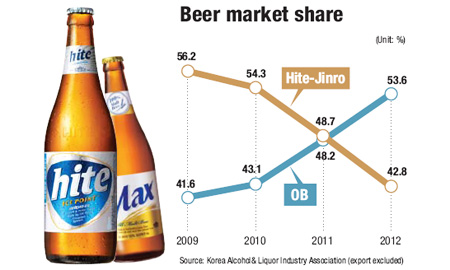
Hite-Jinro has seen its market share fall in the beer industry with the firm failing to create synergy since Hite took over Jinro in 2005. The setback is expected to deal a blow to the country’s leading beer and soju maker’s long-term plan to become a global alcohol beverage maker. Led by CEO Kim In-kyu, the firm has set a goal of achieving 100 percent growth in overseas sales by 2017 from 2011 and expanding exports to amount to 300 billion won by then.

The company, which had ruled the highly-competitive local beer market for 15 years, gave up the top position to archrival Oriental Brewery (OB) last year. Read more of this post

Investment Migrants Taking Billions out of China

Investment Migrants Taking Billions out of China – Economic Observer Online – In-depth and Independent

By Chao Xinrui and Wang Shulan (巢新蕊,王淑兰)

Issue 608, Feb 25, 2013

It’s been said that China’s rich are all either emigrating or planning to emigrate.

That may not be much of an exaggeration. In 2011, of those Chinese with personal assets of over 100 million yuan, 27 percent had already emigrated and 47 percent were considering emigration, according to The Annual Report on Chinese International Migration (2012), jointly issued by the Center for China & Globalization (CCG) and the Beijing Institute of Technology School of Law

The report showed that China is experiencing a third wave of large-scale emigration. Since the economic crisis of 2008, European and American countries have tightened policies on admitting skilled immigrants, but investment immigration policy has been relaxed.

Wang Huiyao (王辉耀), director of CCG and one of the editors of the International Migration report, said that in the past three years, Chinese who used overseas investment in order to obtain permanent residence in other countries took at least $15 billion out of China with them. Read more of this post

Hard Landing Ahead for China’s Local Governments?

March 1, 2013, 5:05 PM

Hard Landing Ahead for China’s Local Governments?

China’s use of land sales to fund local governments is no longer on such solid ground, according to a top legislator.

Just a few days ahead of the annual session of China’s National People’s Congress, which gets under way on Tuesday, Li Shenming vented his frustration with the government’s investment-driven economic growth policies and its reliance on selling land-use rights to fund local government operations.

He called for urgent changes and suggested that time was growing short for a policy shift.

“It’s getting so bad that if (local governments) don’t sell land, they can’t even pay salaries,” said Mr. Li, a member of the legislature’s Standing Committee, a grouping of its senior members.

“How long can this ‘land fiscal policy’ last? Another five years?” he moaned in front of an audience at a financial forum.

Local governments generally rely on land sales — and taxes on property transactions — for a hefty chunk of their revenues. That often makes them a reliable friend of property developers and makes them more than a little eager to eager to sell off land.

But that formula has been sorely tested as the central government continues itsprolonged clampdown on property speculation, banning purchases of multiple homes and squeezing credit to property developers. Revenue from land sales fell 14% nationwide last year, official data show, due to the central-government campaign.

The constant push for more land sales ensures lots of development projects – some of them of questionable economic value. It supports an economic growth model that relies on investment for economic growth, and has been widely criticized as one that won’t be sustainable over the longer term. And it often leads to forced evictions of farmers or urban residents to make way for development projects, at timesendangering social stability.

Mr. Li, who is also an economist and the vice president and deputy party chief of the Chinese Academy of Social Sciences, a top state think-tank, estimated that proceeds from land sales account for over 40% of revenue for most local governments.

Economists have called for broad reforms of China’s fiscal policies by giving local governments more authority in setting taxes, and allowing them to expand trial projects setting annual taxes on property values, rather than just property sales. The tax reform is currently being tested in Shanghai and Chongqing.

China’s legislators gather for a two-week session that generally is confined to endorsing policies set by Communist Party heavyweights but also allowing legislators to blow off a bit of steam. If Mr. Li’s pre-session outburst is an indication, land policies could be a steamy topic.

China’s Government-Run Auction House Is Unstoppable

China’s Government-Run Auction House Is Unstoppable

Cain Nunns, GlobalPost | 10 minutes ago | 17 | 

TAIPEI, Taiwan — In Huang Hung-jen’s plush office in old-money West Taipei, there hangs a 6-foot oil painting of US Marines manhandling an Iraqi family in their own home. The Iraqis look petrified, the Marines aggressive and overbearing. The piece, part of up-and-coming Chinese artist Yuan Liang-yu’s “War Series,” is a blunt metaphor for how China believes the human rights narrative is skewed in Washington’s favor. It’s also an example of how Beijing uses the arts to engender soft power at home and abroad. It goes without saying that Yuan wouldn’t be permitted the same artistic license were he protesting trouble spots closer to home, say in Tibet or riotous Xinjiang. But Huang, a Chinese art insider, doesn’t care about that. What he cares about is securing pieces for Beijing Poly International Auction Company, the fine arts arm of a powerful and opaque mainland Chinese business conglomerate. Read more of this post

Pine Nuts Rate Foie Gras Prices as Bugs to Drought Cut Harvests; “Pine nuts, being for the most part a product of wild ecosystems, follow the sad fate of their forests,”

Pine Nuts Rate Foie Gras Prices as Bugs to Drought Cut Harvests

French gourmets face a quandry: spend that last euro on foie gras or on a package of pine nuts.

The global harvest of the nuts — a key ingredient in classic Italian pesto sauce which graced prehistoric diets and was considered an aphrodisiac in ancient Rome — fell an estimated 47 percent last year, boosting prices to the highest in more than a decade. That’s prompting manufacturers and home preparers to substitute cheaper cashews or walnuts.

“Consumers will start treating them more like a luxury item, something of a tree-produced caviar,” said Leonid Sharashkin, pine-nut forestry adviser to Salem, Missouri-based Pinenut.com, which harvests and sells wild crops.

The crop in China, the biggest shipper, fell 90 percent last year, while yields dropped 63 percent in the Mediterranean region, the International Nut & Dried Fruit Council estimates. U.S. import prices for shelled pine nuts were the highest in at least two decades in 2012, while German buyers in November paid the most for Chinese nuts since at least 1998, trade data show.

French retailer Monoprix SA sells the nuts online starting at 78.40 euros ($103) a kilogram (2.2 pounds), more expensive than foie gras, 20-month-cured Parma ham or lumpfish eggs. Read more of this post

Palm Oil Inventory in China Is Seen at Record Amid Global Glut; Palm Oil Heads for Worst Losing Streak Since 2006 on Inventories

Palm Oil Inventory in China Is Seen at Record Amid Global Glut

Palm oil inventory held at ports in China, the second-biggest importer, expanded to a record last month driven by slow growth in demand and after the biggest-ever purchases in December, according to a Bloomberg survey.

Shipments stored at large ports rose to 1.4 million metric tons from 1.2 million tons in January, according to the median of a survey of three researchers and one trader yesterday. Buyers in China may slow purchases further to absorb the supply that’s accumulated, they said. A separate estimate today from researcher Grain.gov.cn put the reserves at 1.22 million tons.

The inventory in China adds to a glut in the world’s most- used cooking oil, which is caught in a bear market as supply expands to the biggest ever. Reserves in Malaysia, the largest producer after Indonesia, reached an all-time high in December. Futures in Kuala Lumpur fell for an eighth day today, poised for the worst run since 2006. Read more of this post

China’s Legions of ‘Housing Slaves’; In China’s affluent cities, it’s not uncommon for people to spend 40 times their annual income on an apartment.

China’s Legions of ‘Housing Slaves’

By Bonnie Cao and Zhang Dingmin on February 28, 2013

Sherry Sheng permitted herself one final splurge before joining China’s swelling ranks of homeowners: a 4,000 yuan ($642) black fur jacket. “I could never afford such a luxury after I start repaying my housing loans next month,” says the Shanghai policewoman. Servicing the two mortgages on the 1.1 million yuan one-bedroom Sheng bought on the city’s western outskirts will eat up about 70 percent of her salary.

Sheng is a fang nu, or housing slave, the popular name for a generation of middle-class Chinese who will need to work a lifetime to pay off their debts. A 1,076-square-foot apartment in one of China’s most affluent cities today costs about 40 years’ annual income, according to data supplied by the government and SouFun Holdings, a company that operates a popular real estate website. “The ‘housing slaves’ term is quite reasonable because it will put a lot of burden on home buyers if housing payments are more than half their incomes,” says Liu Li-Gang, an economist at Australia & New Zealand Banking Group.

Property prices on the mainland have almost tripled since China’s leadership began a push to encourage homeownership in 1998. That’s when Premier Zhu Rongji allowed residents in state-owned housing developments in urban centers to purchase their dwellings. The idea of buying a property with borrowed money didn’t become popular until several years later, when prices in major cities began to skyrocket. Read more of this post

In Japan, the Rising Cost of Elder Care—and Dying Alone

In Japan, the Rising Cost of Elder Care—and Dying Alone

By Kanoko Matsuyama on February 28, 2013

Itoko Uchida, 82, was counting on the nephew she raised to support her during old age. He refused, she says, forcing the Tokyo widow to pay 710,000 yen ($7,600) to a nonprofit, which will assist with her nursing home application and act in lieu of a close relative on health-care matters. Some 420,000 Japanese nationwide are waiting for a nursing home bed.

An erosion of traditional Confucian values, which stress the obligations children have to their parents, means fewer elderly are being cared for at home by relatives. By 2025, one in three citizens in Japan will be 65 or older, up from 12 percent of the population in 1990, the Organisation for Economic Co-operation and Development estimates. “The system is designed for the 1970s, when multiple generations lived together and family caregiving was thought to continue forever,” says Hiroshi Takahashi, a professor of health sciences at the International University of Health and Welfare in Otawara, north of Tokyo. “But that’s not the reality now.” Read more of this post

Expensive housing turning Australia into a nation of renters

Expensive housing turning Australia into a nation of renters

PUBLISHED: 01 MAR 2013 17:18:00 | UPDATED: 02 MAR 2013 02:42:28

ROBERT HARLEY

THE DREAM OF BUYING A HOME IS QUICKLY FADING FOR MANY AUSTRALIANS.THE RESIDENTIAL DEVELOPMENT COUNCIL’S CARYN KAKAS

Australians are headed to be a nation of renters, living increasingly in apartments, and, for the poor, crammed into more crowded homes.

On Friday the federal government’s independent adviser on housing, the National Housing Supply Council, released a major report warning of the long term consequences of constricted new supply and low affordability. Read more of this post

India’s Cycle of Recklessness and Reform; Unless Delhi holds itself accountable, it will periodically face crises

February 28, 2013, 12:21 p.m. ET

India’s Cycle of Recklessness and Reform

Unless Delhi holds itself accountable, it will periodically face crises.

By RUCHIR SHARMA

India’s cycle of crisis and reform is predictable as clockwork. Ever since it faced a balance of payments crisis in 1981, the country has found itself in some macroeconomic trouble at the start of every decade. This, in turn, has pushed its reactive policy makers into reform mode.

The same pattern has been at play over the past year, with the economy slowing sharply to 5%, inflation stubbornly high at 10% and the fiscal and current account deficits widening sharply. The threat last summer of India’s sovereign rating being downgraded to junk status finally galvanized policy makers into taking some corrective measures. They liberalized foreign investment in retail and airlines, and took aim at the subsidy system. Read more of this post

US companies in China: tougher times

US companies in China: tougher times

Feb 28, 2013 11:30am by Stefan Wagstyl

After a string of cautious statements on China from US companies ranging from Caterpillar to Yum!Foods, the American Chamber of Commerce in Shanghai has declared that the days of relentless sales and rising profits are over.

The “new normal” is one of slower economic growth, rising costs, skilled labour shortages and an increasingly competitive business environment. Tougher times “will be the rule rather than the exception in the years ahead,” AmCham says in a report. Read more of this post

Buffett’s Mentor Benjamin Graham’s Clever Idea for Averting Currency Wars

Benjamin Graham’s Clever Idea for Averting Currency Wars

Benjamin Graham is remembered primarily as the father of value investing, and as the former professor, employer, friend and investing mentor of Warren Buffett. Yet Graham did a lot more than dispense sound investment advice.

For one thing, he developed a subtle and clever idea for stabilizing currencies — and economies — that might bear closer examination today. He called it the commodity reserve currency.

Graham first formulated the idea in response to the recession of 1920-1921. During that crisis, Graham observed that the price of gold was remarkably stable while the prices of many other items, even basic commodities with far greater direct impact on the economy than precious metals, were dropping precipitously. From his perch on Wall Street, Graham saw these declining prices reflected in plummeting corporate earnings.

At the time, each U.S. dollar represented a fixed amount of gold. Graham noticed how that dynamic stabilized the price of gold (and, to a lesser extent, silver) while the price of other goods crashed. Gold producers were “exempt from the difficulties that bedeviled the rest of us,” he wrote.

So, with characteristic inventiveness, Graham wondered how much more stable the economy would be if, instead of precious metals alone, fixed quantities of more essential commodities would be pegged to the value of the dollar. He speculated that this would ensure that the prices of, say, petroleum or wheat would be as stable as that of gold. Read more of this post

Desigual’s Swiss Billionaire Meyer Forms Fortune With Kissing Party

Swiss Billionaire Meyer Forms Fortune With Kissing Party

Dressed in nothing but their lingerie and boxer shorts, more than 300 shoppers lined up outside the Desigual shop in the Soho neighborhood of New York City on Sept. 23, 2010, for a free outfit.

“I got out here at 1 a.m.,” said one customer in a video posted by the company on YouTube, her driver’s license stuffed into a pink bra as bypassers snapped pictures of the crowd, who were attending a marketing event Desigual called an Undie Party.

She emerged from the store hours later, posing in a black and green jacket. Other shoppers screamed with glee as they walked away in the color-splashed designs and prints the retailer is known for.

Such promotions — and others, like kissing festivals in London, Paris and Berlin — have helped make Thomas Meyer, the 50-year-old founder and owner of the Barcelona-based fashion chain, a billionaire.

Desigual, which is Spanish for “atypical,” has tripled its annual sales in the past five years to 700 million euros ($903 million), according to Orbis, a database of company information published by Bureau van Dijk. The company sold more than 22 million garments in 2012 through 330 of its own stores and 11,200 other points of sale in more than 100 countries.

Net Worth

Meyer has a net worth of at least $1.1 billion, according to the Bloomberg Billionaires Index. He has never appeared on an international wealth ranking.

“Desigual is a very unique, fast-growing brand that is doing well globally,” David Haigh, chief executive officer of Brand Finance Plc, a London-based consultancy, said by phone. Brand Finance releases an annual report on the most valuable publicly listed fashion companies in Spain. “They are very differentiated from other fashion brands. Their garments are edgy and complex.”

The company is valued at $1.6 billion, according to the Bloomberg ranking, based on the average enterprise value-to- earnings before interest and tax, and enterprise value-to-sales multiples of two publicly traded peers: Philadelphia-based Urban Outfitters Inc. (URBN) and Cheltenham, England-based Supergroup Plc. (SGP) Enterprise value is defined as market capitalization plus total debt minus cash. Read more of this post

Can’t sell the TV?…sell the office: Japan Inc fires up property market

Can’t sell the TV?…sell the office: Japan Inc fires up property market

4:44pm EST

By Junko Fujita

TOKYO (Reuters) – Japanese blue-chip firms, from electronics giants to brewers, are selling prime real estate to shore up battered balance sheets, stoking a resurgent property market. Some are moving into new offices to take advantage of relatively low rents.

Big downtown office buildings are coming up for sale as Tokyo’s property market regains growth momentum for the first time in almost five years, with plenty of interest among buyers, particularly Japan’s public real estate trusts, experts said. Read more of this post

China plans bond overhaul to fund $6 trillion urbanization

Exclusive: China plans bond overhaul to fund $6 trillion urbanization – sources

4:20pm EST

By Nick Edwards and Benjamin Kang Lim

BEIJING (Reuters) – China plans major bond market reform to raise the money the ruling Communist Party needs for a 40 trillion yuan ($6.4 trillion) urbanization program to buoy economic growth and close a chasm between the country’s urban rich and rural poor.

The Party aims to bring 400 million people to cities over the next decade as the new leadership of president-in-waiting Xi Jinping and premier-designate Li Keqiang seek to turn China into a wealthy world power with economic growth generated by an affluent consumer class.

The urban development would be funded by a major expansion of bond markets, sources with leadership ties, and a senior executive at one of China’s “Big Four” state banks, who was formerly at the central bank, told Reuters. Read more of this post

Yeltsin-Era Tycoons Sell Resources to Keep Distance From Kremlin

Yeltsin-Era Tycoons Sell Resources to Keep Distance From Kremlin

Russian billionaires who made their fortunes buying commodities assets in the 1990s are exiting natural resources to gain independence as Kremlin-backed oligarchs take their place.

Viktor Vekselberg, Russia’s third-richest man according to the Bloomberg Billionaire Index, said this year he will invest his share of the $28 billion sale of half of oil producer TNK-BP in technology, machinery and alternative energy, not resources.

Mikhail Prokhorov, Russia’s ninth-richest, sold his stake in Russia’s biggest gold producer, Polyus Gold International Ltd. (PGIL) for $3.6 billion last week, to diversify his investments. Sergey Popov, No. 27, sold his remaining stake in coal miner SUEK this year, the last of his resource assets.

“There is an evolution of interests among the wealthiest Russians and that evolution is in sync with the evolution of the Russian economy,” said James Beadle, an investment adviser at Societe Generale SA’s private banking unit in Monaco. “By saying that you are investing in areas other than commodities, you are both following the Kremlin’s nod and also following the economic logic of the situation.”

Russia’s government set targets to diversify the economy and cut its dependence on oil, gas and metals, which last year accounted for 81.3 percent of exports to countries excluding former Soviet republics, customs service data shows. Read more of this post

In a bid to make some major changes in Jakarta, a group of business tycoons has offered to lend a hand in seeking solutions to the city’s problems.

Indonesian tycoons lend city a hand

A group of business tycoons has offered to lend a hand in seeking solutions to the city?s problems. -Jakarta Post/ANN
Thu, Feb 28, 2013
The Jakarta Post/Asia News Network

In a bid to make some major changes in Jakarta, a group of business tycoons has offered to lend a hand in seeking solutions to the city’s problems.

Indonesian moguls with the President Executive Club met with Governor Joko “Jokowi” Widodo on Tuesday to discuss a number of urban issues the administration is trying to deal with.

During the discussion, Jokowi encouraged the billionaires to step out of their offices to see the capital’s issues first-hand and accompany him on a tour of some slums.

“After I visited numerous slum areas to better understand the problems here, I must admit everything seemed too complicated. For example, all the banks along Jakarta’s 13 rivers are occupied by squatters. I want to take all of you to visit these areas. There are acute socioeconomic disparities in this city,” Jokowi told the forum at the Batavia Tower in Central Jakarta.

The Ciputra Group’s owner, Ciputra; Lippo Group founder Mochtar Riady; and Jababeka president director SD Darmono were among the club’s members who attended the forum. Read more of this post

Singapore’s Canary Wharf-Topping Condos Damp Dollar: Currencies

Singapore’s Canary Wharf-Topping Condos Damp Dollar: Currencies

Currency strategists are abandoning their forecasts for a record-setting rally in the Singapore dollar as government measures to rein in property prices reduce pressure on the central bank to cool inflation.

The local dollar will likely rise 2.3 percent to S$1.21 versus its U.S. counterpart by Dec. 31, based on the median estimate of 26 analysts surveyed by Bloomberg. The forecast eased from an all-time high of S$1.19 at the end of last year, in the biggest outlook downgrade among Southeast Asian currencies. Singapore’s dollar won’t strengthen beyond the record of S$1.1992 until 2014, based on the polls.

Prime Minister Lee Hsien Loong is trying to curb property- market speculation with inflation almost double the 20-year average. A 1,636-square-foot (152-square-meter) condominium in the Marina Bay financial district sold for S$4.4 million ($3.6 million) in November, government figures show. A unit about the same size in London’s Canary Wharf was priced at 2.3 million pounds ($3.5 million), real-estate broker Foxtons Ltd said. Read more of this post

North Dakota Fracking Boom Leaves Oil Hub a Bust: Muni Credit

North Dakota Fracking Boom Leaves Oil Hub a Bust: Muni Credit

Oil extracted from wells ringing Williston, North Dakota, helped push the state’s surplus to a record $1.6 billion and generate the nation’s lowest jobless rate. Drilling also left the city broke.

While the U.S. Census counts about 16,000 residents, Williston says it provides services to more than 38,000, including workers living in temporary camps, hotels, and even vehicles. Keeping up with the load is spurring budget gaps that will deplete rainy-day funds, according to Standard & Poor’s, which cut city debt to BBB+ in December, three steps above junk.

The $5.8 million of debt the city sold in December for water and sewer work is a fraction of the $625 million officials say they need for roads, the airport, water supplies and other facilities to handle the Bakken oil boom. The issue, which is exempt from state taxes, included debt due in May 2019 priced to yield 1.5 percent, about 0.75 percentage point above benchmark municipal securities, data compiled by Bloomberg show. Read more of this post

Gas Boom Projected to Grow for Decades

February 27, 2013, 8:50 p.m. ET

Gas Boom Projected to Grow for Decades

By RUSSELL GOLD

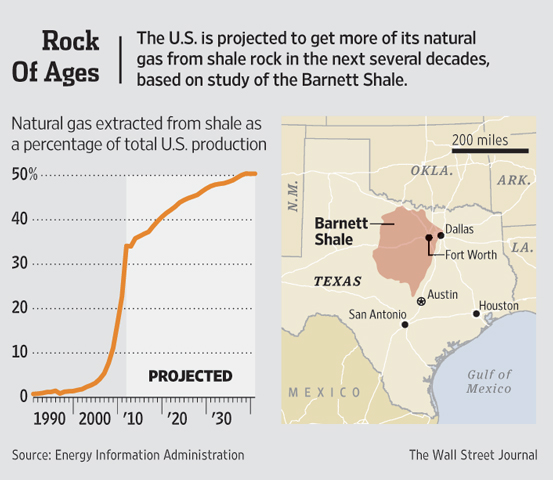
U.S. natural-gas production will accelerate over the next three decades, new research indicates, providing the strongest evidence yet that the energy boom remaking America will last for a generation.

OB-WM999_SHALE_G_20130227212402 Read more of this post

Wall Street Junk Kings Selling Debt Poised to Lose Value

Wall Street Junk Kings Selling Debt Poised to Lose Value

Wall Street junk-bond underwriters, selling debt at a record pace after the securities returned 19 percent last year, say it’s obvious that prices will drop when interest rates rise. So don’t blame the banks.

“Our job first and foremost is to properly structure deals for companies that can support their debt and perform well,” said Craig Packer, the New York-based head of Americas leveraged finance for Goldman Sachs Group Inc. (GS) “The interest-rate risk is just a law of nature.” Read more of this post

China Provinces Cut Growth Targets in Sign Debt Concerns Heeded

China Provinces Cut Growth Targets in Sign Debt Concerns Heeded

By Bloomberg News – Feb 27, 2013

Almost half of China’s provinces are setting their growth sights lower in the wake of the central government’s emphasis on the quality of expansion over speed, a sign of an increased focus on tackling rising debt.

Fourteen provinces have set lower targets for gross domestic product expansion this year than in 2012 and the other 17 left their goals unchanged, according to Nomura Holdings Inc. The weighted average target has dropped to 9.9 percent from 10.3 percent, Citigroup Inc. calculates.

Scaling back regional politicians’ growth-at-any-cost attitudes may limit China’s rebound from its weakest expansion in 13 years. At the same time, it may mitigate concerns that rising local-government defaults will threaten the financial system and pollution will worsen as leaders complete a once-a- decade power handover next month.

“In the future, the central government may look at more indicators, including pollution and debt, in assessing local officials,” said Zhang Zhiwei, chief China economist at Nomura in Hong Kong and a former researcher for the International Monetary Fund. “You can’t continue the traditional way of accumulating heavy debts to push up GDP in your term and then leave the trouble to your successor.” Read more of this post

Analyst: I Ain’t Afraid of No ‘Ghost Cities’

February 27, 2013, 4:34 PM

Analyst: I Ain’t Afraid of No ‘Ghost Cities’

For China bears, the empty “ghost cities” that dot the Chinese landscape stand as concrete evidence that economic doom is just around the corner.

In the aftermath of a construction frenzy that lifted China out of the Great Recession, Western hedge fund managers set off on trips to places like Ordos in Inner Mongolia to view the eerie phenomenon – and spooked themselves into believing that a massive oversupply of real estate meant a Chinese economic collapse was inevitable.

What happened? Well, housing prices and sales volumes have been steadily rebounding, to the point where the government is now contemplating new cooling measures. So much for the epic oversupply that bears predicted would wipe out growth.

“Hurray for Ghost Cities,” writes the economist and veteran China-watcher Jonathan Anderson in a recent note. Read more of this post

“To be Korean is to get plastic surgery. You must do it, or young people will think you’re weird.”

Gangnam, South Korea Is Becoming The Plastic Surgery Capital Of Asia

Geoffrey Cain, GlobalPost | 12 minutes ago | 251 | 

A crowd of young women wait nervously in the lobby of a popular plastic surgery clinic in Apgujeong, the affluent neighborhood at the heart of Gangnam.

Photographs of Korean pop singers and actresses line the walls, winsome customers who smile next to their cosmetic surgeons.

“It’s painful, but I really want a face like those Korean actress girls,” says a Chinese patient leaving a check-up — with her nose wrapped in a surgical bandage.

Many customers have traveled to this neighborhood — home to some 400 cosmetic surgery hospitals — all the way from China, Japan and Southeast Asia. They’re hoping to take home a little “Gangnam style” for themselves.

That isn’t just a Psy reference. Gangnam is popular from an Asia-wide trend made famous over the past decade: the popularity of Korean television shows and pop singers known as the “Korean Wave.”

Plastic surgery is a lucrative trade in South Korea, with citizens edging out Greece, Italy and the US as the most cosmetically enhanced people in the world. Read more of this post

The coming R&D crash

The coming R&D crash

By Brad Plumer , Updated: February 26, 2013

One of the few things Republicans and Democrats have been able to agree on in recent years is that the government should be spending more on basic scientific research — the sort of research that, in the past, has played a role in everything from mapping the human genome to laying the groundwork for the Internet.

“Government funding for basic science has been declining for years,” Mitt Romney wrote in his 2010 book No Apology. “It needs to grow instead.” In his most recent State of the Union address, President Obama sounded a similar note: “Now is the time to reach a level of research and development not seen since the height of the space race.”

So it’s notable that the exact opposite is, in fact, about to occur. Thanks to budget pressures and the looming sequester cuts, federal R&D spending is set to stagnate in the coming decade. The National Institutes of Health’s budget is scheduled to drop 7.6 percent in the next five years. Research programs in energy, agriculture and defense will decline by similar amounts. NASA’s research budget is on pace to drop to its lowest level since 1988.

As a result, scientists and other technology analysts are warning that the United States could soon lose its edge in scientific research — and that the private sector won’t necessarily be able to pick up the slack. Read more of this post

80% of Chinese gov’t office purchases above market price, with 70% of purchases at least 1.5 times higher

80% of Chinese gov’t office purchases above market price: report

Staff Reporter

2013-02-27

Around 80% of office products and equipment purchased by Chinese government departments last year were above average market value, with 70% of purchases at least 1.5 times higher, reports the Guangzhou-based 21st Century Business Herald. Read more of this post

The bizarre new Chinese trend of using rubber as loan collateral

The bizarre new Chinese trend of using rubber as loan collateral

By Naomi Rovnick — 10 hours ago

Chinese commodities consumption is often weird. Quartz has reported how, last year, many individuals and companies purchased copper in order to have some so-called “collateral” to pledge to banks as security for loans. The trend was a huge driver in world copper demand.

The same is now happening with rubber, Reuters reports, with Chinese borrowers sending the rubber price up to a ten month high.

The Chinese buy commodities to use as loan backing for two reasons. First, they need to tick the “yes” box on loan forms that says “do you have collateral”. In the US, factory owners might pledge their freehold land in exchange for a loan. But the Chinese government officially owns all land and can seize it from leaseholders any time, which can make banks understandably reluctant to take it as collateral.

Second, Chinese borrowers hope the commodity will rise in value so they can sell it at the end of their loan term for a profit. That all depends on car sales, since the rubber is used in tires.

An important question, though, is why on earth Chinese banks are accepting rubber, a commodity that has a short shelf life,  as loan security in the first place. According to Reuters, rubber can only be stored for around six months.

If China’s rubber-backed borrowers default on their loans, then banks will end up owning the rubber.  And while bank managers could probably sell off any factory equipment—or even copper—seized from borrowers who failed to repay loans, if the rubber isn’t bought up by tire-makers before it deteriorates, it quickly loses its value. And what would the banks do with it then?

In China, rubber-for-loans bet at risk from economy, car sales

Tue, Feb 26 2013

By Lewa Pardomuan and Rujun Shen

SINGAPORE (Reuters) – Chinese investors have been piling up rubber as collateral for financing, recently driving prices to 10-month highs, in what could be a risky bet as warehouses in the world’s top user fill up with a commodity that can only be stored for a limited time.

Copper, zinc and steel have been used as financing tools in China in the past few years, but the move into rubber to back loans has raised concerns about the potential impact on the rubber market from such large inventory overhang. Read more of this post

China property controls seen in Ping An Bank shift; Local Gov’ts Begin to Face Fiscal Crunch; Chinese Banks’ Bad Loan Ratio to Hit 3Pct in 2013: S&P Report; More Chinese cities ready for property tax pilots

China property controls seen in Ping An Bank shift

2013-02-27 09:29:24 GMT2013-02-27 17:29:24(Beijing Time)  SINA.com

A move by China’s Ping An Bank (000001.SZ) to ban its regional branches from approving mortgages may signal that Beijing is set to tighten controls on the property market to calm record prices, market sources said on Wednesday. Read more of this post