How Thaksin’s meddling sparked a new Thai crisis for PM sister

How Thaksin’s meddling sparked a new Thai crisis for PM sister

6:20am IST

By Andrew R.C. Marshall and Jason Szep

BANGKOK (Reuters) – Yingluck Shinawatra’s journey from political nobody to prime minister was breathtakingly swift. Her premiership’s descent into crisis has been just as rapid.

A political neophyte when she took office in 2011, the 46-year-old former business executive surprised many observers by steadying Thailand after years of often bloody political unrest. Read more of this post

China just became the biggest investor in Laos, and Laos’s neighbors are worried

China just became the biggest investor in Laos, and Laos’s neighbors are worried

By Adam Pasick @adampasick January 30, 2014

Land-locked Laos is one of the poorest countries in the world, but it has one thing in abundance: access to the massive Mekong River. The country’s hydropower potential has earned it the nickname “the Battery of Asia” and made it a magnet for investment from its neighbors: Thailand, southeast Asia’s second-biggest economy; Vietnam, a strategic Communist ally since the 1970s; and China, which is writing checks that put the rest to shame.

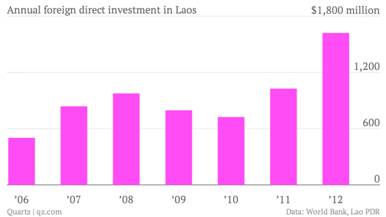
Guan Huabing, Beijing’s ambassador to Laos, announced today (Jan. 30) that China’s cumulative investment in Laos now stands at $5.1 billion, edging out Thailand and Vietnam. China is also building a controversial railroad linking its Yunnan province to the Lao capital Vientiane, at a cost of $7.2 billion that it is loaning to Lao government—equivalent to 75% of the Lao GDP.

image001-10

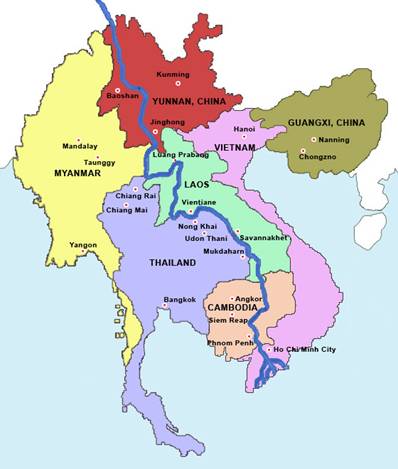
China’s increasing influence has long been a worry for Vietnam. It “feels threatened” by its increasingly marginalized role in Laos, according to a letter last year from the Vietnamese Communist Party to its Laotian counterpart that wasobtained by Radio Free Asia. And there is more to be lost than just political influence: Laos is upstream of Vietnam, Thailand, and Cambodia on the Mekong, so any dams that it builds there with Chinese assistance could have dire consequences for its neighbors.

image002-6

Dams built on the Laotian Mekong could affect Laos’s downstream neighbors.Mekong Tourism Coordinating Office

Of the nine dams being planned in the Laotian Mekong, Chinese developers and investors have interest in at least four, according to East Asia Forum, along with at least half of the 63 dams being planned on the Mekong’s many tributaries (the government lists its planned projects here). Environmental groups and Western governments have warned that poorly planned dams could cause untold damage to the region’s economy.

When US secretary of state John Kerry visited the region in December, he said: “No one country has the right to deprive another country of the livelihood and eco-system and its capacity for life itself that comes with that river. … That river is a global asset, a treasure that belongs to the region.”


Will the emerging market rout get even worse? Watch corporate bonds

Will the emerging market rout get even worse? Watch corporate bonds

By Matt Phillips @MatthewPhillips 7 hours ago

Global investors have suddenly remembered that emerging markets have a rich, recent history of florid financial crises.

The cracks are starting to emerge everywhere: wobbly “wealth management products” in China, the Turkish lira’s tumble, the selloff in Brazilian bond markets and last summer’s mini-rupee crisis. Read more of this post

For Korean-listed companies, new ardor for paying dividends

For listed companies, new ardor for paying dividends

Factors include shift in dominant industries, owner-family issues

Jan 30,2014

image001-8

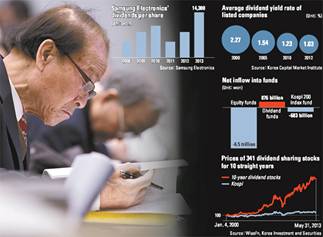
Samsung Electronics will pay dividends of 2.2 trillion won ($2 billion) for the financial year of 2013, a figure 79 percent higher than the previous year.
The company’s intention was to expand dividends to shareholders on a “significant level,” according to a Samsung investor relations manager.
Korean conglomerates are infamous for their stinginess in paying dividends; they have concentrated on growth and performance by reinvesting earnings. Investors didn’t ask for dividends because they also concentrated on corporate performance and higher stock prices.
But investors’ interest in dividends is increasing, and Samsung Electronics’ raising of its dividend rate from 0.5 percent to 1 percent of its annual average stock price is considered proof of that.
The interest in dividend income grew after the 2008-9 global financial crisis, and companies were expected to grow more slowly. As interest on bank deposits dropped to as low as 2 percent, dividends emerged as an alternate source of investment income. Aging investors are another factor.
“As society gets old, demand for stable incomes from dividends is increasing,” said Kang So-hyeon, a researcher at Korea Capital Market Institute.
Dividend funds are being recommended by fund experts, and local investors have bought about 876 billion won ($810 million) worth of these funds.
“Even those conservative investors wedded to bank deposits couldn’t endure the low interest rates anymore and moved on to the so-called income funds, which aggressively invest in overseas stocks with high dividends,” said Hwang Yoon-ah, a researcher from fund evaluator Zeroin.
About 310 billion won was poured into the dividend fund of Shinyoung Asset Management’s after last October, which took the lead among local equity funds. This fund invests in stocks that have been undervalued and offers high dividends. Another investment target is preferred stocks, which pay more dividends than regular stocks. As dividends were strong last year, the return on the Shinyoung fund was as high as 20 percent.
However, the dividend rate of listed companies in Korea averaged 1.03 percent in 2012 compared to 2.01 percent in the United States, 3.71 percent in the United Kingdom and 2.82 percent in Singapore. It is also significantly lower than China’s 3.64 percent.
In the 2000s, Korea’s average dividend rate for companies was 2.27 percent, but it started to drop. Conglomerates like Samsung Electronics and Hyundai Motor, whose profits expanded during the past decade, belong to the IT and consumer goods industries. Conventionally, they tend to pay smaller dividends, and those industries accounted for 52 percent of the stock market capitalization in 2012 compared to 30 percent in 2000.
Meanwhile, high-dividend-paying industries such as utilities accounted for 42 percent of stock market capitalization in 2000, which shrank to 16 percent in 2012.
After the global financial crisis, even those companies that once paid large dividends chose to pile up the profits in order to protect themselves from instability. The total corporate cash reserves of Korea’s top 10 conglomerates’ 82 affiliates that are listed in the stock market was 477 trillion won in 2013, up 44 percent compared to 2010.
Analysts say it will be difficult to ignore the investors’ demand for dividends going forward.
“When corporate growth slows, even those well-off IT companies tend to gradually expand dividends to comfort their investors,” said Oh Eun-soo, a researcher at Hyundai Securities. “Microsoft and Intel are two exemplary cases.”
Oh said that Apple, which just started to pay dividends last year, is in the same boat. When Steve Jobs was alive, Apple used to ignore shareholders’ dividend requests.
“An increasing proportion of institutional investors could also be a reason for growing dividend requests,” said Kang from the Korean Capital Market Institute. centered managements are another factor. “In the Western world, where CEO management is the norm, dividends are a significant tool for major shareholders to collect earnings,” said Park In-hee, securities manager at Shinyoung Asset Management. “In Korea, most conglomerates are directly run by the major shareholders, so they are mainly interested in expanding the corporate body by investing the profit internally, rather than sharing the cash with smaller shareholders.”
Korea’s tax system is also disadvantageous to dividend sharing. Smaller shareholders who profit from dividends are taxed, whereas they do not pay tax for profits gained on trading stocks. Analysts say another factor could accelerate the trend to greater dividends.
“As it is not easy for owner families to pass along their wealth, more families will do so by giving dividends to their children,” a security company head said.
Securities analysts recommend investors do their research into stocks that pay dividends.
“Investors have to distinguish [between] these two goals: obtaining higher dividends and investing in the brand itself,” said Jung Hoon-seok, a researcher at Korea Investment and Securities.
“Dividend stocks” refer to companies that generate constant and relatively high dividends.
According to a Korea Investment and Securities analysis over the past decade, the average stock price increase rate of 341 stocks that paid dividends for 10 straight years was 12 times higher than the index’s increase rate. The 126 dividend stocks in the Kosdaq market showed an increase of 16 times higher than the Kosdaq index’s.
Investors should think about dividend funds in a similar way. Dividend funds last year had high returns because those stocks were strong in the market, not because of large dividends.
“If utility stocks like Korea Electric Power Corporation, which is likely to give out dividends due to the ongoing public enterprise reform measures, make profits, then you could expect increases in the dividend rate,” said Park from Shinyoung Asset Management. “Dividend stocks are an alternative market that has emerged after the settling in of the low-growth trend,” said Oh Eun-soo of Hyundai Securities. “But you should be careful not to invest hastily because these stocks could languish for years as growth stocks are on the rise.”
BY CHO MIN-GEUN [jiyoon.kim@joongang.co.kr
Shanghai Zhenhua Heavy Industries, the world’s largest crane and steel structure manufacturer, supplied 250,000 incorrecly-sized bolts for the new eastern span of the San Francisco-Oakland Bay Bridge in California

Shanghai Zhenhua supplies the wrong bolts to California bridge

Staff Reporter

2014-01-30

Shanghai Zhenhua Heavy Industries, the world’s largest crane and steel structure manufacturer, supplied 250,000 incorrecly-sized bolts for the new eastern span of the San Francisco-Oakland Bay Bridge in California, reports the financial news website of financial market software developer Shanghai Great Wisdom. Read more of this post

Online investment products craze alerts China’s financial sector

Online investment products craze alerts China’s financial sector

Staff Reporter

2014-01-29

Several Chinese internet and fund companies recently launched investment products and promised a return higher than those available in the market by subsidizing investors, reflecting the impact of online operations on traditional banks, the Chinese-language Global Entrepreneur magazine reports. Read more of this post

The Temptation of the Central Bankers: Keeping global megabanks in business and highly profitable has become a key objective for policymakers. All too often, however, this means that central bankers defer to these firms’ executives

JAN 30, 2014

Simon Johnson, a former chief economist of the IMF, is a professor at MIT Sloan, a senior fellow at the Peterson Institute for International Economics, and co-founder of a leading economics blog, The Baseline Scenario. He is the co-author, with James Kwak, of White House Burning: The Founding Fathers, Our National Debt, and Why It Matters to You.
The Temptation of the Central Bankers

WASHINGTON, DC – The banking system has become most central bankers’ Achilles’ heel. This may seem paradoxical – after all, the word “bank” is in their job description. But most people currently at the top of our central banks built their careers during the 1980’s and 1990’s, when the threat of inflation was still very real, so this – rather than bank regulation and supervision – remains a major focus of their intellectual and practical concerns. Read more of this post

Malaysia’s capital city KL celebrates the 40th anniversary of the creation of the Federal Territory

Updated: Friday January 31, 2014 MYT 6:55:32 AM

A birthday wish for Kuala Lumpur

BY BRIAN MARTIN

The city has come of age and won accolades, but there is also room for improvement.

HAPPY Birthday Kuala Lumpur!

Our capital city celebrates the 40th anniversary of the creation of the Federal Territory tomorrow and boy has it come a long way. Read more of this post

Do High Interest Rates Defend Currencies During Speculative Attacks?

Do High Interest Rates Defend Currencies During Speculative Attacks?

by Tyler Cowen on January 29, 2014 at 12:01 am in Current AffairsEconomics | Permalink

That is the question posed by a paper (pdf) by Aart Kraay of the World Bank, written in 2001 and focusing mainly on fixed exchange rate scenarios.  It seems the high rates do not protect currency values, here is the abstract: Read more of this post

Devaluation stations: Et tu China?

Devaluation stations: Et tu China?

Izabella Kaminska

| Jan 30 13:50 | 6 comments Share

Part of the UP SHIBOR CREEK… SERIES

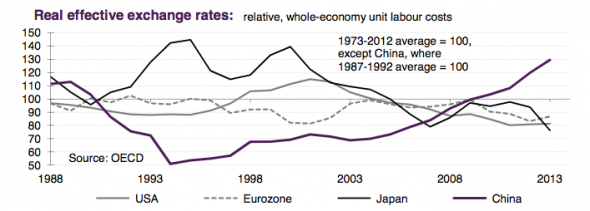
Lombard Street’s Charles Dumas charts the overvaluation of the Chinese currency:

image001-1

As he notes, 2011 was the first year that evidence for an overvalued yuan began to emerge: Read more of this post

What’s a chengyu for ‘subprime is contained’?

What’s a chengyu for ‘subprime is contained’?

Joseph Cotterill

| Jan 28 13:18 | 14 comments Share

There is a nice chengyu in the latest note from Bin Gao, BofAML’s China rates strategist: 居安思危, ‘be prepared’.

Oh yes, and the note also compares this week’s rescue of Credit Equals Gold No.1 to a Bear Stearns moment for China. Read more of this post

Myanmar risk: Alert – Banking reform begins to take shape

Myanmar risk: Alert – Banking reform begins to take shape

January 28th 2014

FROM THE ECONOMIST INTELLIGENCE UNIT

Progress is being made toward opening up the country’s banking sector to foreign involvement, a reform that was first announced last year. However, it will be a challenging process, and one that will prove a tricky balancing act in order to ensure that the local banking system is also adequately developed. Read more of this post

Dark Side Of Capital In Emerging Markets

Dark Side Of Capital In Emerging Markets

JAN. 30, 2014

By FLOYD NORRIS

It is no fun to be a central banker in an emerging-market country when investors suddenly grow doubtful.

If you don’t do what the foreign investors say you should do, your currency and your markets will be punished. Read more of this post

Investors encounter Fed stuck on autopilot

Last updated: January 30, 2014 9:12 pm

Investors encounter Fed stuck on autopilot

By Michael Mackenzie and Vivianne Rodrigues in New York

Equity and bond investors have long been accustomed to a plethora of information whenever the US Federal Reserve holds one of its policy meetings.

This week they encountered a central bank stuck on autopilot, with a circumspectpolicy statement confirming an expected $10bn reduction in its monthly bond purchases to $65bn and no follow-up press conference marking the final meeting chaired by Ben Bernanke. Read more of this post

Two-year construction boom in Philippines shows signs of slowing; ‘many middle class and ordinary people are already finding the prices too expensive.”

January 30, 2014 5:48 pm

Two-year construction boom in Philippines shows signs of slowing

By Roel Landingin in Manila

Despite a 30km commute to work that takes 90 minutes each way, Jun Siongson does not regret buying an 80 sq m apartment on the outskirts of Manila.

“My wife and I can now enjoy complete privacy,” says the 49-year old database developer who, until recently, had no choice but to live with his mother in an overcrowded flat in the capital. Read more of this post

Rating agencies criticise China’s bailout of failed $500m trust

January 30, 2014 8:32 am

Rating agencies criticise China’s bailout of failed $500m trust

By Josh Noble in Hong Kong

Global rating agencies – often among the more sanguine voices on China – have warned that this week’s bailout of a soured $500m trust loan was a wasted chance to address rising moral hazard in the country’s shadow banking sector. Read more of this post

India is still a contender in the great Asian race; The chaos of democracy blunts the impulses that once held the threat of break-up

Last updated: January 30, 2014 7:19 pm

India is still a contender in the great Asian race

By Philip Stephens

The chaos of democracy blunts the impulses that once held the threat of break-up

India is rushing headlong into chaos – the chosen chaos that comes with holding national elections in the world’s most populous democracy. The promised political convulsions doubtless will tempt some to hold up China as proof positive that autocracy is the surer guardian of economic progress. There may be moments when this is hard to gainsay. It is mistaken for all that. Read more of this post

Why the Fed is under pressure to continue innovating; A business-as-usual course is starting to look dangerously complacent

January 30, 2014 6:30 pm

Why the Fed is under pressure to continue innovating

By Gillian Tett

A business-as-usual course is starting to look dangerously complacent

This week the US government delivered two pieces of noteworthy news. One caused a splash: on Wednesday the Federal Reserve announced another $10bn cut in its monthly bond purchases, the second time it has tapered. Cue Twitter alerts and headlines. Read more of this post

Emerging markets: Fear of contagion; “Guys who used to come and buy a case of beer will now by a pack of 12 or six. A guy who used to buy a case of wine will now just buy one or two bottles,”

January 30, 2014 7:50 pm

Emerging markets: Fear of contagion

By James Kynge

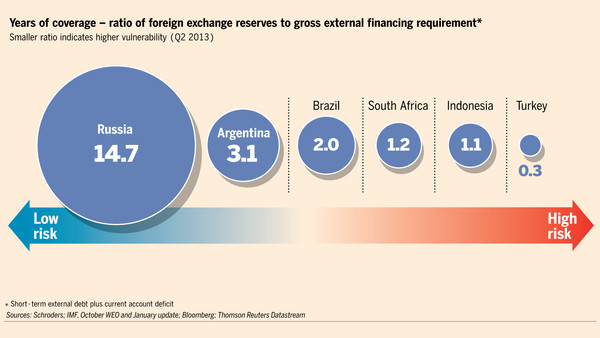
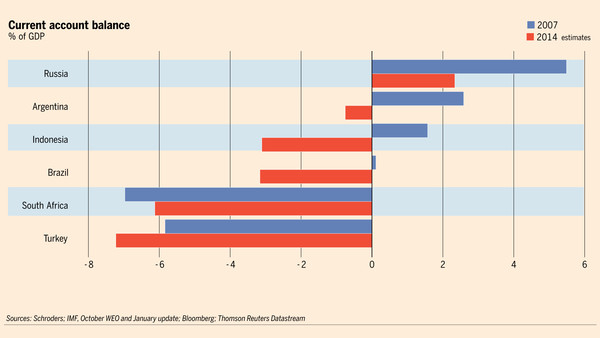
Policy makers from Argentina to Turkey are scrambling to defend their currencies

image001-5

image002-3

If every crisis has a defining precursor, then Argentina’s may have come in the shape of a Grammy statue. The trophy won in Las Vegas by the band Illya Kuryaki and the Valderramas, right, was impounded by customs, a victim of Buenos Aires’ aggressive import controls. Emmanuel Horvilleur, a band member, tweeted in frustration: “It is a prize, not a Rolex that I bought overseas!” Read more of this post

A Tale of Two Chinese Auditor Risk Factors

January 30, 2014, 4:57 PM ET

A Tale of Two Chinese Auditor Risk Factors

EMILY CHASAN

Senior Editor

Last week’s ruling against the Chinese units of the “Big Four” audit firms has already made its first appearance in initial public offering risk factors. Read more of this post

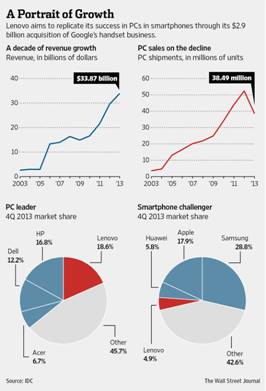
How Lenovo Built a Chinese Tech Giant; CEO Started Out Delivering PCs on Bicycles, Now ‘We Want to Be a Global Player’

How Lenovo Built a Chinese Tech Giant

CEO Started Out Delivering PCs on Bicycles, Now ‘We Want to Be a Global Player’

JURO OSAWA And LORRAINE LUK

Updated Jan. 30, 2014 1:13 p.m. ET

image001image002

Google sells handset business to Lenovo for nearly $3 billion. Bryan Ma of IDC tells the WSJ’s Aaron Back how Motorola phones will give Lenovo a shortcut into the competitive U.S. Market. Read more of this post

Divided Thailand Set for Chaotic Election

Divided Thailand Set for Chaotic Election

By Daniel Rook on 2:45 pm January 30, 2014.
Bangkok. Tens of thousands of police will be deployed across Thailand on Sunday for an election seen as a crucial test of the kingdom’s fragile democracy, with opposition protesters threatening to lay siege to polling stations. Read more of this post

Lunar New Year Has Dark Side for Vietnam Economy, Say Critics who are arguing that the beloved, protracted Tet holiday is actually hurting the already fragile economy

Lunar New Year Has Dark Side for Vietnam Economy, Say Critics

By Tran Thi Minh Ha on 3:40 pm January 30, 2014.
Hanoi. Packed shops, traffic chaos and kumquat trees everywhere can only mean one thing in Hanoi: a new lunar year is approaching. But not everybody is feeling festive. Read more of this post

India, Like Tata Motors, Is Stuck in Neutral Gear

India, Like Tata Motors, Is Stuck in Neutral Gear

By William Pesek on 11:11 am January 30, 2014.
The sudden death of managing director Karl Slym is a tragic and untimely loss for Tata Motors, one of the names India has long seen as projecting the core competencies and global ambitions of the world’s second-most populous nation. Read more of this post

LVMH Using Berluti Brand as a Steppingstone in Menswear; Bernard Arnault’s Son Antoine Focuses on High-End Men’s Lines

LVMH Using Berluti Brand as a Steppingstone in Menswear

Bernard Arnault’s Son Antoine Focuses on High-End Men’s Lines

CHRISTINA PASSARIELLO

Jan. 29, 2014 1:45 p.m. ET

PARIS— Bernard Arnault built LVMH Moët Hennessy Louis Vuitton SA MC.FR -1.54% into a luxury-goods empire by selling handbags and dresses to women. Now his son Antoine is targeting an underserved clientele: men, whose spending is increasing faster than that of women.

Antoine Arnault is spending upward of €100 million ($137 million) to develop Berluti, a small maker of expensive men’s shoes, into a full apparel and accessories house. The latest step in his project is the opening next week of Berluti’s first New York store, on Madison Avenue. He is also in charge of LVMH’s recent €2 billion acquisition of Loro Piana, the exclusive cashmere brand that gets half of its sales from men. Read more of this post

Welcome To The French Tech Ecosystem

Welcome To The French Tech Ecosystem

Posted 20 hours ago by Romain Dillet (@romaindillet)

This is the story of a city that keeps reinventing itself. Over the past three weeks, I’ve been walking around Paris to meet with the brightest minds of a tech ecosystem in the making. My experience is as personal as it is relevant about what makes a startup ecosystem work, and why Europe is the next frontier. Read more of this post

Thailand’s red shirts leader says ‘It’s time to get rid of the elite’

Thailand’s red shirts leader says ‘It’s time to get rid of the elite’

As election day approaches in Thailand, supporters of prime minister Yingluck Shinawatra vow to take to the barricades in her defence

image001-19

Ko Tee: “This is already a war, but so far it is an unarmed war” Photo: ANDREW CHANT

By David Eimer, Khon Kaen

10:42AM GMT 30 Jan 2014

Clad in a red beret, combat jacket and sunglasses, Ko Tee looks like a cliché of a 1970’s revolutionary as he gathers with the angry activists under his command. Read more of this post

As China’s Economy Slows, the Pain Hits Home

As China’s Economy Slows, the Pain Hits Home

By KEITH BRADSHERJAN. 29, 2014

HONG KONG — Piles of unsold coal line rural roads in north-central China. Some iron ore mines near Beijing are operating at a fraction of capacity. Chinese farm products are even increasingly scorned by the Chinese consumer. Read more of this post

An Indian newspaper just introduced a “smellable” ad with an evocative scent

An Indian newspaper just introduced a “smellable” ad with an evocative scent

By Heather Timmons @HeathaT

January 29, 2014

Baby products maker Johnson & Johnson has taken a leap into the brave new world of “smellables” with a full-page advertisement in the world’s largest-circulation English-language newspaper—on a page that was liberally scented with the company’s famous baby powder. Read more of this post

WeChat’s little red envelopes are brilliant marketing for mobile payments

WeChat’s little red envelopes are brilliant marketing for mobile payments

By Gwynn Guilford @sinoceros

January 29, 2014

image003-5

It’s not even Chinese New Year yet and the hongbao are already humming. (During Chinese New Year and certain special occasions, Chinese people use hongbao,or ”red envelopes,” to give money to relatives, employees and friends.) But the hot item in the Year of the Horse isn’t a paper envelope; it’s the “New Year Red Envelope” app launched on Jan. 28 on WeChat, Tencent’s social media app. Read more of this post