UCWeb: China’s Last Great Tech Takeover Target

UCWeb: China’s Last Great Tech Takeover Target

By Bruce Einhorn on May 30, 2013

It’s dealmaking time in Chinese cyberspace. As more mainlanders go online via smartphones and tablets, the country’s biggest Web players are gearing up for the era of mobile e-commerce. That’s one reason e-commerce giant Alibaba Group paid $586 million for 18 percent of Twitter-like service Weibo in April and $294 million in May for a 28 percent stake in mapping company AutoNavi (AMAP). Around that time, search engine Baidu (BIDU) set aside $370 million to buy the streaming video service of PPS Net TV, aiming to become the leader in mobile video.

Another potential prize is UCWeb, maker of China’s most popular mobile browser. The company hit the 300 million-user mark in March 2012 and by yearend was at 400 million, says Yu Yongfu, UCWeb’s chief executive officer. More than 60 percent of China’s Android users rely on it, according to the company. Of all the acquisition targets in China, UCWeb is “probably the last one that’s worth anything,” says Michael Clendenin, managing director of RedTech Advisors in Shanghai. In theory, buying the browser operator could help Baidu as it tries to keep up with Alibaba and Tencent (700), China’s biggest Web company by revenue. Baidu boss Robin Li and his team “need to make a big audacious, overpriced investment to get a stake in this guy,” Clendenin says. Read more of this post

Fundamentals of Web for Non-Developer

Coursera partners with 10 new US universities not just for online courses, but to add MOOC to their classes too

https://www.coursera.org/course/accounting

Coursera partners with 10 new US universities not just for online courses, but to add MOOC to their classes too

Emil Protalinski 30 May 2013

Coursera today announced it has partnered with 10 US state university systems and public university flagships to bring their faculty and course content online, plus a little more. The massive open online course (MOOC) provider regularly expands the list of its schools, but this time, it’s a two-way street: the schools are going to be adding MOOC to their own courses, too, collaborating on existing content.

The startup says the goal with this latest round is to “explore the possibilities” of using MOOC technology and content to “improve completion, quality, and access to higher education,” both across the combined audiences of these schools (approximately 1.25 million enrolled students) as well as among Coursera’s global classroom of learners (over 3.6 million as of May 2013). The schools are already pushing pilot programs, which will be evaluated based on their effectiveness in enhancing student success. Read more of this post

Disney gets into wearable tech with the MagicBand

Disney gets into wearable tech with the MagicBand

Matthew Panzarino

29 May 2013

Disney is introducing a new MagicBand device that ties into a new service that allows theme park visitors to make purchases and reserve experiences. Thomas Staggs, Chairman of Walt Disney Theme Parks and Resorts spoke about them at D11 today.

The new MagicBands will be enabled at Walt Disney World over the next few months after a roughly two-year pilot program, and those will be tied into the MyMagic+ service, which Disney has been working on for around six years. The bands are a colorful wrist device made of rubberized plastic that will allow visitors to the park to tap on check in points to enable various experiences. Read more of this post

“Twitter is the social soundtrack for TV”; Twitter CEO Costolo Says Investing ‘Heavily’ in TV

Twitter CEO Costolo Says Investing ‘Heavily’ in TV

Twitter Inc. Chief Executive Officer Dick Costolo said he sees television companies as valuable partners for its microblogging service and is investing accordingly.

“Twitter is the social soundtrack for TV,” Costolo said today in an onstage interview at the D: All Things Digital conference in Rancho Palos Verdes, California.

“We’ve decided to invest heavily in that,” said Costolo. “There’s a bunch of ways we can be complementary to broadcasters.”

Twitter is adding video content to bolster ad revenue in a bid to reach $1 billion in sales by 2014. Earlier this month, Twitter announced a partnership with the National Basketball Association to stream game highlights, as well as a deal with ESPN, a unit of Walt Disney Co., to show snippets from soccer matches, college football and other sports. Read more of this post

Mary Meeker’s 2013 Internet Trends

Mary Meeker’s 2013 Internet Trends: Mobile Makes Up 15% Of All Internet Traffic, With 1.5B Users Worldwide

RYAN LAWLER posted 40 mins ago

Kleiner Perkins Caufield Byers partner Mary Meeker unveiled her annual Internet Trends report for 2013 today at the D11 Conference, showing robust growth in the number of broadband and mobile users. All that said, there’s still a huge opportunity for smartphone adoption and mobile ad spend. There were more than 2.4 billion Internet users worldwide by the end of 2012, up 8 percent from the previous year. But more astounding than that was the growth in mobile users. There are about 1.5 billion global subscribers, up from 1.1 billion a year before. That represents about 30 percent growth. There’s also been intense growth in the number of smartphones over the past year. According to Meeker, there were fewer than a billion smartphone subscribers, but that grew to 1.5 billion by 2012. But with more than 5 billion mobile phone subscribers in the world, smartphone adoption still has a lot of growth ahead. Mobile usage continued to grow, making up about 15 percent of all Internet traffic, compared with 10 percent a year before. But there’s still upside for mobile ad spend. Total Internet ad spend was $37 billion, while mobile ad spend was only about $4 billion. Meanwhile, people spent about 12 percent of their time on mobile devices, which accounted for just 3 percent of ad spend. That compares to the 26 percent of time spent on the Internet, accounting for 22 percent of ad spend.

How is Apple Maps doing since its roll-out nine months ago?

How is Apple Maps doing?

By JP Mangalindan, Writer May 29, 2013: 6:22 AM ET

The company’s mapping switch was widely decried. Have things gotten any better?

It’s been nine months since Apple rolled out a criticized update of Maps. “In general, they’ve made some improvements, but I think they’re still behind in terms of features, functionality, accuracy, and the overall state of mapping technology,” says Brian Blau, Research Director at Gartner. Credit: Apple

FORTUNE — Nine months after Apple rolled out a much-criticized update to its Maps app for iPhones and iPads, some people are still not pulling punches.

“As most of you probably heard, last December, we launched Google Maps on the iPhone,” said Daniel Graf, Director of Google Maps, at this year’s Google (GOOG) I/O conference. “It has been a tremendous success. The feedback has been very positive. People called it sleek, simple, beautiful, and — let’s not forget — accurate.” Read more of this post

I BLEW IT: 11 VCs Regret The Huge Companies They Said “No” To

How One VC Completely Blew A Meeting With A Startup Founder, And How Another Nailed It

Alyson Shontell | May 28, 2013, 12:14 PM | 8,014 | 6

Cash is king, so venture capitalists often have the upper hand when it comes to meeting with early-stage entrepreneurs. But when startups become big and awesome, the tables turn. Some venture capitalists get that. Others don’t seem to. One frustrated entrepreneur, Andy Dunn, has met with a number of investors for his clothing startup, Bonobos. He wrote a rant that described “dumb VCs” he and other entrepreneurs have dealt with. Bonobos is an e-commerce company that has raised more than $70 million. Its clothing is sold online and nationwide in Nordstrom stores. Dunn raised $30 million in March, and that fundraising process may have inspired the rant. Dunn described one “dumb” investor he met with six times. That person never offered to invest but he also never turned Dunn down. Instead, he just wasted Dunn’s time. Later, when Dunn didn’t inform him about his funding round, the investor acted confused. “Dear Dumb VC, it’s not my job to call you. It’s your job to call me,” Dunn writes. “And the fact that we spent all that time together, and you never got me a term sheet is a strong indicator that you’d rather do what’s in your worst interests than what’s in my best.” Jeremy Lieu of Lightspeed, however, wowed Dunn. Lieu came into his first two meetings visibly prepared. “One of the reasons Jeremy Liew from Lightspeed is an investor in Bonobos is he showed up in our first two meetings wearing my pants!” Dunn writes. It proved Liew had tried Dunn’s product. Dunn concludes his post with another anecdote from a fellow entrepreneur. The founder is now working on a billion-dollar startup, but early on, he was blown off by a VC. “This VC was seventy-five minutes late to meeting with me. He never called to say he was running late. When he got to the office, I wouldn’t meet with him. He groveled to get into meeting with me, and my team was pressuring me to just take the conversation, but I told them to politely tell him that he missed the meeting. That night, as he had flown into town to see me, he kept offering drinks or dinner to make up for it via email. He then went so far as to say his partners would be livid with him for screwing this up. I never took the meeting with him and I never rescheduled. I’d never get another meeting with him if I blew off his time like this, so why should he get another meeting with me?” “Dumb VCs” aside, even good VCs have botched great startup deals. Here are some of their biggest regrets.

I BLEW IT: 11 VCs Regret The Huge Companies They Said “No” To

Alyson Shontell | Aug. 8, 2011, 12:26 PM | 96,026 | 3

We asked angel investors and venture capitalists to tell us about the startups that got away. That is, the startups they could have invested in early, but ultimately passed on for whatever reason. Even the best investors make mistakes. They overlook opportunities, aren’t aggressive enough, or miss out rounds. From Ron Conway to Fred Wilson, we have some good stories about who missed what and why. Read more of this post

The Rise of the Mobile-Only User

The Rise of the Mobile-Only User

by Karen McGrane  |   8:00 AM May 28, 2013

“They can just use their desktop computer to do that.”

One of the most persistent misconceptions about mobile devices is that it’s okay if they offer only a paltry subset of the content available on the desktop. Decision-makers argue that users only need quick, task-focused tools on their mobile devices, because the desktop will always be the preferred choice for more in-depth, information-seeking research. Read more of this post

At Sears, CEO’s Tech Focus Hasn’t Led to a Turnaround

Updated May 28, 2013, 8:03 p.m. ET

At Sears, CEO’s Tech Focus Hasn’t Led to a Turnaround

By SUZANNE KAPNER

Since taking over as chief executive of Sears Holdings Corp., SHLD -2.53% billionaire hedge-fund manager Edward Lampert has spoken eagerly of overhauling the retailer to accommodate “hyper-connected” shoppers with tablets and mobile phones.

Wall Street mainly wants to know when the company might be profitable again.

Bricks-and-mortar retailers face an important shift in consumer behavior and need to innovate. But some analysts worry that Mr. Lampert is overemphasizing his technological ambitions while sales results at his stores suffer. Read more of this post

Apple’s Cook Hints at Wearable Devices

May 28, 2013, 10:22 p.m. ET

Apple’s Cook Hints at Wearable Devices

By SHIRA OVIDE And EVELYN M. RUSLI

RANCHO PALOS VERDES, Calif.—Apple Inc. AAPL -0.83% Chief Executive Tim Cook, defending its prowess as a tech trend-setter, hinted that wearable devices may play a role in future product plans.

Mr. Cook, speaking during Tuesday’s opening interview at the D: All Things Digital conference, praised devices such as Nike Inc.’s NKE +0.78% FuelBand, an activity tracker worn on the wrist. He said such wearable products “could be a profound area for technology.” Read more of this post

Mr. Clean Tech Won’t Back Down

May 28, 2013, 8:17 p.m. ET

Mr. Clean Tech Won’t Back Down

By PUI-WING TAM

When renewable-fuels company KiOR Inc. KIOR +0.64% raised money in March, it didn’t tap the stock market, where it has faced a rocky reception since going public in 2011. KiOR turned instead to its earliest investor: billionaire venture capitalist Vinod Khosla.

Out of his own pocket, Mr. Khosla lent KiOR $50 million so the Pasadena, Texas, company could build a facility to turn wood and other nonfood sources of feedstock into a renewable crude oil using a proprietary technology that it further processes into gasoline and diesel fuel. That followed a $25 million loan to KiOR from Mr. Khosla’s venture-capital firm, Khosla Ventures, in early 2012.

KiOR and Mr. Khosla declined to detail terms of the loans. KiOR Chief Executive Fred Cannon said the venture capitalist “has been an outstanding supporter” even though the renewable-fuels sector is out of favor with investors. Read more of this post

WordPress is 10 years old today: Here’s how it’s changed the Web

WordPress is 10 years old today: Here’s how it’s changed the Web

Ken Yeung

27 May 2013

WordPress, the blogging and content management system, is 10-years old today. The platform has evolved in the past decade from being a basic blogging service to something that has helped people and brands become more social and changed how we communicate on the Web. Started by Matt Mullenweg and Mike Little, WordPress is an open source service where anyone can make modifications to the code to improve their blog and make it something that works for them. Bloggers who use WordPress are able to apply design themes to their sites while also integrating third-party plugins easily. Since it’s open source software, there isn’t a need for an approval process before someone can implement a new feature. As of this writing, the latest version of WordPress has been downloadedmore than 21 million times. Read more of this post

A Push to Quickly Switch Video-On-Demand Ads

Updated May 27, 2013, 8:42 p.m. ET

A Push to Quickly Switch Video-On-Demand Ads

19%: The average percentage VOD viewing has increased annually since 2009.

By AMOL SHARMA and SUZANNE VRANICA

A few weeks ago, Travel Channel viewers using cable video-on-demand services started seeing Land Rover ads. Viewers wouldn’t know it, but the spots were the result of a significant advance in TV-advertising technology that media companies hope will help shore up their bottom lines.

Scripps Networks Interactive Inc.,SNI +0.54% the owner of Travel Channel, is among several media companies also including ComcastCorp.’s CMCSA +0.31% NBCUniversal, A+E Networks, News Corp NWSA +0.67% .’s Fox broadcast and cable networks, and AMC NetworksAMCX -1.18% rolling out “dynamic ad-insertion” or working toward doing so, according to people familiar with the matter. The new technology is being introduced by a cable operator-owned venture that lets TV networks switch out and replace ads on programs that air on video-on-demand in as little as 24 hours—instead of having to wait weeks as is currently the case. Read more of this post

400 Million Users Strong: UCWeb CEO Shares Turning Points of the Company

400 Million Users Strong: UCWeb CEO Shares Turning Points of the Company

May 28, 2013

by Willis Wee

With more than 400 million users of its UC Browser, China’s UCWeb is probably one of most popular mobile browser makers in the world. UCWeb CEO Yu Yongfu tells us that that the company’s first product started as a BlackBerry Messenger type of service called UCMail. Unfortunately, it didn’t take off. But the team was quick to realize that people weren’t using UCMail. Rather, they wanted an application that could help them browse the web. So in 2004, UCMail rebranded to UCWeb, which stands for “U Can Web”, to being a full-fledged mobile browser. In 2006, with a team of 12, Yu Yongfu reorganized UCWeb and took over as the founder and CEO role. Today, under Yongfu, UCWeb has grown into a 1,500 employees company with 400 million users globally. Prior to UCWeb, Yongfu was a venture capitalist for six years focusing on the mobile internet sector. But he saw a lot of potential in the young company, so he chose to switch to the other side of the table to become an entrepreneur.

Read more of this post

Technology executives could be the next public enemies

May 27, 2013 4:41 pm

Technology executives could be the next public enemies

By Andrew Hill

About a year ago I was in San Francisco’s Pacific Heights, gazing down at the Golden Gate Bridge from one of Larry Ellison’s many spectacular homes. The Oracle chief executive wasn’t there – he had lent the house out for a reception. In any case, he would be the last person to apologise for enjoying the fruits of his success. But the view from technology executives’ balconies is getting stormier. After banks and bankers, could they be next to feel the sting of a populist backlash?

It sounds unlikely. For the tablet-toting, smartphone-stroking, Amazon-and-Googling masses – you and me, in other words – to attack companies that provide the products and services we love would be a case of biting the data feed they hand us. Read more of this post

Social commerce strategies: Wishbuuk showed how to convert followers into customers

May 27, 2013 4:41 pm

Social commerce strategies

By José Luis Nueno

The story

Wishbuuk is a Facebook application which was created after Fnac, the French books and music retailer, approached Flash2Flash digital, a marketing agency, for help introducing its brand into social networks. While marketing agencies such as Flash2Flash have helped brands create Facebook fan pages to attract followers, converting these followers into customers has proved difficult. Social commerce – using social media to buy products – is forecast to become a $30bn sector worldwide by 2015. Read more of this post

The Age of Big Data Has Created a Myth of Technocratic Infallibility

The Age of Big Data Has Created a Myth of Technocratic Infallibility

By Chrystia Freeland on 11:30 am May 27, 2013.
We are living in the age of the technocrats.

In business, Big Data, and the Big Brains who can parse it, rule. In government, the technocrats are on top, too.

From Washington to Frankfurt to Rome, technocrats have stepped in where politicians feared to tread, rescuing economies or at least propping them up.

Technocrats are in vogue within the intelligentsia, too. It is well nigh impossible to pick up a book about any social or political issue nowadays (including my own) without coming across some data-heavy social science research. Read more of this post

Bidding war between Tencent and LINE for Kakao; Tencent already own nearly a third of Kakao

Thomas Clayton: Bidding war between Tencent and LINE for Kakao

BY JACKY YAP | MAY 28, 2013 | ASIA

Thomas Clayton, CEO and founder of Bubble Motion shares his thoughts on Asian startups and the impending bidding war between LINE and Tencent for Kakao.

There are only a handful of companies in the region which managed to grow and subsequently raise multiple round of fundings. Singapore-based Bubble Motion is one of them. Founded back in 2005, Bubble Motion is the Twitter for Voice, and raised a total of US$50 million in funding from investors such as Sequoia Capital, Comcast Ventures, SingTel Innov8, JAFCO Asia, and many others. Bubble Motion now serves over 19 million users globally.

Of course, a great company is led by a great team. CEO and founder Thomas Clayton has had extensive experience and prior to starting Bubble Motion, Tom has started, worked for and ran numerous high-tech companies. Thomas also recently wrote an article on “Why the Largest Social Network in 2015 Won’t be Facebook, and Will Be From Asia“. Prior to his keynote at Echelon, we spoke to Thomas about the opportunities in Asia. Read more of this post

Why Extravagant New HQs Planned At Apple, Google, Amazon And Facebook Are Negative Indicators

Why Extravagant New HQs Planned At Apple, Google, Amazon And Facebook Are Negative Indicators

Bill Rigby and Alistair BarrReuters | May 27, 2013, 8:41 AM | 2,027 | 1

SEATTLE/SAN FRANCISCO (Reuters) – While much of corporate America is retrenching on the real estate front, the four most influential technology companies in America are each planning headquarters that could win a Pritzker Architecture Prize for hubris.

Amazon.com this week revealed plans for three verdant bubbles in downtown Seattle, joining Apple’s circular “spaceship,” Facebook’s Frank Gehry-designed open-office complex and a new Googleplex on the list of planned trophy offices.

“It signals a desire, a statement, to say that we’re special, we’re different. We have changed the world and we are going to continue to change it,” said Margaret O’Mara, associate professor of history at the University of Washington, who has written about the building of Silicon Valley. Read more of this post

GeoPay used the messaging ability that led to the earliest cellphones to create a mobile-banking platform in Central Asia

Reston firm turns to decades-old technology to set up mobile banking in Central Asia

By Abha Bhattarai, Monday, May 27, 5:31 AM

Not all new ideas for technology have to be, well, new.

As the start-ups around it tinkered with the cutting edge, a Reston company called GeoPay stuck by decades-old technology — the same used in messaging systems that led to the earliest cellphones — to create a mobile-banking platform.

The start-up, founded in 2011, provides cellphone-based banking services for people who might not otherwise have accounts at financial institutions. The simpler the interface, the more people the system could reach in the developing world, GeoPay said. Read more of this post

Robots to drones, Australia eyes high-tech farm help to grow food

Robots to drones, Australia eyes high-tech farm help to grow food

Sun, May 26 2013

By Colin Packham

SYDNEY (Reuters) – Moving carefully along a row of apple trees, two of Australia’s newest agricultural workers check if the fruit is ripe or the soil needs water or fertilizer.

Meet “Mantis” and “Shrimp”, agricultural robots being tested to do these tasks and more in a bid to cut costs and improve productivity in Australia’s economically vital farm sector, which exported A$39.6 billion ($38.8 billion)of produce in 2012.

Australia is one of the leaders in the field and, with a minimum wage of A$15.96 per hour and a limited workforce, has a big incentive to use robots and other technology such as unmanned aircraft to improve efficiency. Read more of this post

South Korea’s ‘export’ crisis; South Korea’s business and government circles were shocked to read a OECD report that said their nation ranked at the bottom of OECD member nations in terms of “technology trade balance”

South Korea’s ‘export’ crisis

MAY 27, 2013

On the streets of Seoul, there has lately been a conspicuous increase in the number of high-end imported cars with brand names like BMW, Mercedes-Benz and Lexus, in stark contrast to five years ago when the country’s auto market was virtually monopolized by the two domestic names of Hyundai and Kia. Statistically imports in 2012 surpassed 10 percent of the South Korean car market for the first time in terms of volume and accounted for 23.2 percent in value. BMW, in particular, became the fourth-largest automaker in the Korean market in terms of sales value. This growth of imported cars can be attributed to a shift in South Korean car buyers’ tastes toward more sophisticated designs, performance characteristics and brand images. More important, this reveals the local manufacturers’ inability to design and build products with high added value and attractive brand images. This is true not only of automobiles but also of electronic products. Samsung Electronics, for example, did succeed in overwhelming all of its Japanese competitors but has no technologies or products of its own development that can be called the “first in the world.”

The South Korean manufacturing industry as a whole may well be entering the twilight years at an unexpectedly rapid pace due to this lack of innovative skills, coupled with recent cost increases, the rising value of the won currency and mounting instability on the Korean Peninsula. Read more of this post

Videogame industry legend Peter Molyneux says the time is right for people to play God on smartphones.

Videogame console icon turns mobile play god

Molyneux praised mobile devices for the intimacy of touchscreens and rapid-fire innovation compared to years-long cycles for generations of videogame console hardware. -AFP

download (2)

Mon, May 27, 2013
AFP

SAN FRANCISCO – Videogame industry legend Peter Molyneux says the time is right for people to play God on smartphones. The former Lionhead Studio chief and Microsoft Game Studios executive has teamed with Japan-based DeNA to get his latest project – GODUS – on the array of mobile devices powered by Android or Apple software. “There is something incredible happening on these devices,” Molyneux said while hefting a smartphone in one hand. “This is where the home of gaming should really exist.” Molyneux, whose background in the computer game industry stretches back to the early 1980s, left Microsoft Studios last year and founded startup 22Cans.

He revealed his latest project, which 22Cans is building and DeNA will distribute, the same week that Microsoft unveiled a new Xbox One console designed to be at the heart of home entertainment in the Internet Age. “When I decided to leave Microsoft and come to this space, the first thing I had to do is think in a completely different way,” Molyneux said of the shift to play on smartphones and tablets. “Console games are the equivalent of making films, whereas mobile is much more like television soap operas,” he continued. Read more of this post

Flash sales have taken hold in the book business, helping older books soar from the backlist to the best-seller list

May 26, 2013

One-Day Deals Making E-Books Brief Best Sellers

By JULIE BOSMAN

One Sunday this month, the crime thriller “Gone, Baby, Gone,” by Dennis Lehane, sold 23 e-book copies, a typically tiny number for a book that was originally published in 1998 but has faded into obscurity.

The next day, boom: it sold 13,071 copies.

“Gone, Baby, Gone” had been designated as a Kindle Daily Deal on Amazon, and hundreds of thousands of readers had received an e-mail notifying them of a 24-hour price cut, to $1.99 from $6.99. The instant bargain lit a fire under a dormant title. Read more of this post

NetSuite and Workday are poised to cash in on the migration to cloud computing services and perhaps elbow aside today’s corporate software giant

May 26, 2013

A Legacy Feud in Tech

By QUENTIN HARDY

27workday4-popup

More than two decades ago, David Duffield built a global software company, becoming a billionaire.

SAN FRANCISCO — If the Hatfields and McCoys lived in Silicon Valley, they’d be fighting with piles of cash and lines of software code instead of knives and shotguns. And the fight would be over who wins the most customers in the computer industry’s growing “cloud” of software services. That’s how it is for Aneel Bhusri and Zachary Nelson, whose companies are in contention over the next major shift in computing. In a way, the men are reliving history. Two decades ago, their mentors feuded, and that time, too, the dispute took place against the backdrop of a major shift in corporate computing — when customers gave up their mainframes and moved to software that relied on personal computers closely connected to a server. Mr. Nelson, the chief executive of NetSuite, used to work for Lawrence J. Ellison, the billionaire chief executive of Oracle.

Mr. Bhusri, the co-founder of a competitor company called Workday, used to work for David Duffield, a rival of Mr. Ellison’s. Mr. Duffield is the low-profile founder of PeopleSoft, a once-powerful maker of corporate software that Oracle acquired in a bitter, 17-month hostile takeover fight. Read more of this post

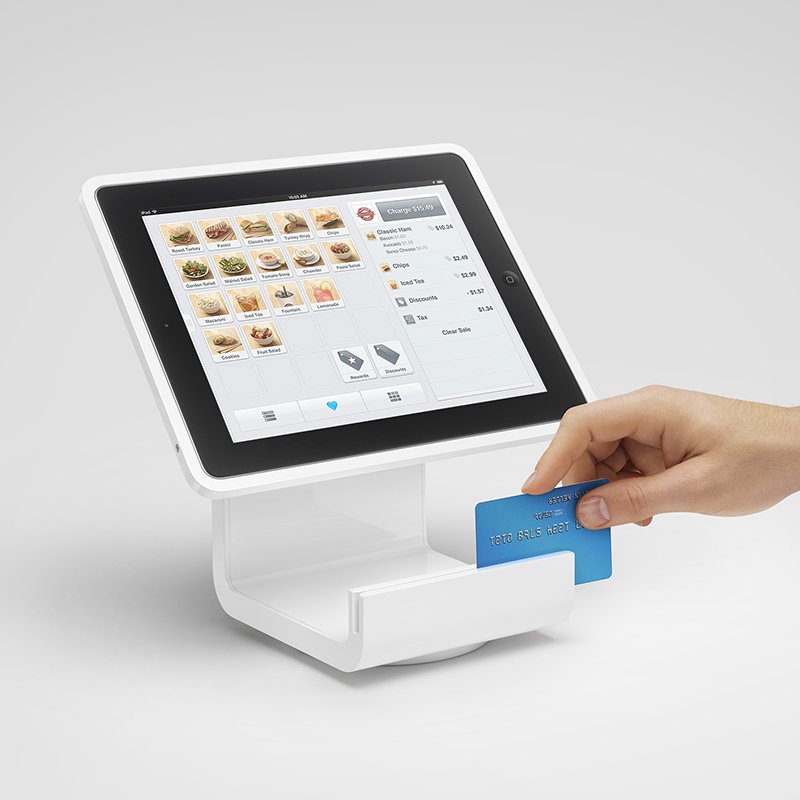
Jack Dorsey Says This Beautiful ‘Square Stand’ Will Replace Ugly Checkout Tills

Jack Dorsey Says This Beautiful ‘Square Stand’ Will Replace Ugly Checkout Tills

Matt WarmanThe Telegraph | May 26, 2013, 8:34 AM | 3,414 | 8

stand-swipe

On nearly every shop counter around the world, there’s a till that’s hardly changed in two or three decades. Usually grey, always ugly, these machines clutter the single point that every customer is guaranteed to see when they go to buy something. Little wonder that luxury brands from Hermes to Burberry would rather take your credit card away, deal with the dirty business of payment and then bring back a bill neatly encased in a leather wallet for customers to sign.

Jack Dorsey doesn’t think things have to be this way. Not content with co-founding micro-blogging site Twitter, this superstar of Silicon Valley now wants to change how the world pays for things. With his own worth now estimated at $1.1billion, he should know a thing or two about money.

The vehicle for that transformation is a company called Square: it’s built its burgeoning reputation on a small, square credit card reader that plugs in to the headphone jack of an iPhone and lets any user take credit card payments via a simple app. Once you’ve used a card once and registered it, receipts are emailed automatically. Read more of this post

Making Sense Of The Internet Of Things

Making Sense Of The Internet Of Things

MATT TURCK

posted 1 hour ago

Editor’s note: Matt Turck is a managing director of FirstMark Capital. Follow him on Twitter@mattturck.

The emerging Internet of Things — essentially, the world of physical devices connected to the network/Internet, from your Fitbit or Nest to industrial machines — is experiencing a burst of activity and creativity that is getting entrepreneurs, VCs and the press equally excited. The space looks like a boisterous hodgepodge of smart hobbyists, new startups and large corporations that are eager to be a part of what could be a huge market, and all sorts of enabling products and technologies, some of which, including crowdfunding and 3D printing, are themselves far from established. The chart to the right is an attempt at making sense of this frenetic activity. From bottom to top, I see three broad areas – building blocks, verticals and horizontals:

internetofthings2 Read more of this post

How Twitter Is Reshaping The Future Of Storytelling

How Twitter Is Reshaping The Future Of Storytelling

WRITTEN BY: Rita J. King

We might have fewer characters to work with, but we still hunger for narrative. New mediums aren’t destroying fiction, they’re allowing us to innovate even more in how we create and consume our stories. Plus: an appearance by John Hodgman!

Every five days, a billion tiny stories are generated by people around the world. Those messages aren’t just being lost in the ether, like the imaginary output of monkeys randomly attempting to produce the works of Shakespeare. Instead, the tweets are being archived by the Library of Congress as part of the organization’s mission to tell the story of America. The archive now includes 170 billion posts and counting.

The patterns of human life will be stored in this Twitter archive like a form of digital sediment. Every meme and revelation will leave an imprint in the record constructed of posts by half a billion Twitter users around the world (and over 150,000 more signing up every day).

How has the future of storytelling been influenced by Twitter? Read more of this post

As more people do their banking and investing online, the lack of a paper trail poses a problem for business partners, executors and heirs

May 24, 2013

Leaving Behind the Digital Keys to Financial Lives

By PAUL SULLIVAN

BOB GINSBERG, a retired production manager for an educational publisher, is worried that he does not know any of the logins and passwords for online accounts belonging to his partner or brother and they do not know his.

At 72, he said his concern was not about Facebook or e-mail. It was for their financial lives, which have migrated online, making paper account statements anachronistic. Now, when people die without disclosing their financial affairs to anyone, there is often no paper trail for heirs to follow.

“You’d never know someone else’s financial arrangements, but if it was paperwork you’d have a clue,” Mr. Ginsberg said. “I’m entirely comfortable doing absolutely everything online. But if I have to take over for my brother or my partner, I don’t have any of their information.” Read more of this post