Taobao Turns Ten: A Look Back

Taobao Turns Ten Today: A Look Back

By Tracey Xiang on May 10, 2013

Taobao – “exploring treasures” in Chinese – now is a household name in China. Ten years ago, Alibaba wanted to try out the online auction by putting up a Nokia phone online. That phone turned out to be the first item on the customer-to-customer platform. eBay-like auction, however, never prevailed in China. Taobao simply became the biggest marketplace for online retailing. The total value of transactions processed through Taobao was 34 million yuan in 2003 while the number for 2012 (Tmall is included) was over one trillion yuan ($ 161 bn). It processes 24 million yuan worth of sales each day, said Jack Ma at Taobao’s tenth anniversary event tonight. There are over 6 million retailers on the platform serving almost every Chinese netizen. Peripheral industries including e-commerce solution and logistics were created or boosted thanks to Taobao. To this day, in most places in China, even if some Chinese don’t buy anything on Taobao with their own fingers, they must have young colleagues in the office or relatives to do it for them — recognizing it, Taobao even rolled out a program called Cousin letting people who are capable of using Taobao to purchase and make payments for other people. Read more of this post

Four simple strategies for monetizing your video content

Four simple strategies for monetizing your video content

BY FRANK BESTEIRO 
ON MAY 24, 2013

Recently, some of YouTube’s content partners have expressed their displeasure with the returns they’ve been seeing from the video behemoth. While views have continued to increase over the last few years, ad revenue remains unimpressive. And while content creators would be well advised not to bet the house on YouTube to begin with, the problem of successful monetization is one that the industry has yet to fully master. Even the biggest creator networks and media companies still struggle to justify the expenses involved in video production. While there’s no magic bullet for this issue, content creators should be aware of all of their options in order to drive the best returns.

Here are four worth considering: Read more of this post

Twitter Introduces Charts By Genre And Popularity For Its #Music Service; Everyone in a band wants to know how well they stack up against others. In fact, some artists didn’t see the service coming at all, and were pleased with all of the new attention they were getting

Twitter Introduces Charts By Genre And Popularity For Its #Music Service

DREW OLANOFF

Wednesday, May 22nd, 2013

We’ve confirmed with Twitter that it has rolled out a new part of its #Music service for the web, charts that we were accustomed to from the company We Are Hunted, that it acquired and now powers the service. The charts are broken up into a few areas: the familiar genre breakdown, as well as some categories like “Superstars” and “Unearthed” that appear to be built based on current Twitter trends and trajectory of artist mentions. This is leveraging all of the data that Twitter is collecting from tweets that include links to tracks from popular and emerging artists.

screenshot_5_22_13_11_58_am Read more of this post

Tech giants are finding lots of bolt-on acquisitions to splash out on

Tech giants are finding lots of bolt-on acquisitions to splash out on

May 25th 2013 | SAN FRANCISCO |From the print edition

20130525_WBC679

BLOGGERS worried that Yahoo could stifle the youthful, rebellious spirit of Tumblr, a blogging service that it bought for $1.1 billion on May 20th, might want to keep an eye on whether Tumblr’s boss, David Karp, is asked to tone down his language. In a message on his firm’s staff blog this week, Mr Karp stressed that the deal with Yahoo would leave Tumblr with plenty of independence—“We’re not turning purple,” he wrote, referring to the corporate colour scheme of its new owner—before signing off with a distinctly uncorporate: “Fuck yeah, David.”

It is not surprising that Yahoo’s purchase has unnerved many Tumblr users. After all, the internet giant has a record of buying promising young tech firms such as Delicious, an online-bookmarking service, and GeoCities, which hosts websites, and then neglecting them. The rich price paid for Tumblr, which reportedly made just $13m of revenue last year, is also fuelling doubts about the deal. According to an estimate by John Saroff, a former Google executive, Tumblr would need to generate at least $108m of revenue a year to return more than the opportunity cost of the capital that Yahoo is tying up in it. Read more of this post

INFOGRAPHIC: Inside The Mobile Real-Time Bidding Ad Ecosystem

INFOGRAPHIC: Inside The Mobile Real-Time Bidding Ad Ecosystem

Josh Luger | May 24, 2013, 3:30 PM | 1,279 | 

Real-time bidding, or RTB, is a style of programmatic buying in which digital advertising opportunities are auctioned off in real-time. The auctions take place in milliseconds as advertisers bid on the right to show you an ad immediately after you open an app or click to a new web page. On the desktop it’s a powerful technique to deliver the right ad to the right consumer at the right time and place. On mobile, it could be more powerful since consumers take their devices everywhere — to the mall, the car dealership, Starbucks, etc. In a recent reportBI Intelligence analyzes programmatic bidding and real time bidding, analyze how it may help solve the mobile advertising CPM problem, and detail its recent impact and successes. We also examine the potential obstacles to its widespread adoption, and look at how the holy grail of mobile advertising – controls and efficiencies – may be reached through its use. By all accounts, RTB grew tremendously in 2012 across the mobile advertising ecosystem. Some of the most promising highlights include: Adfonic: Launched a mobile demand-side platform with RTB in October 2012, says it saw a quarterly increase of 22 billion RTB ad requests in the third quarter of last year — a full three-quarters of its growth— thanks to Android and iOS RTB inventory.  Nexage: A mobile ad exchange, it reported that RTB more than doubled its share of revenue on the platform between May and October of last year. RTB’s revenue share grew 37% every month.  MoPub: A mobile ad exchange, it reported that the number of winning RTB auctions increased 162% over the third quarter of 2012. It’s not just that more real-time auctions are happening. There are also more bids being placed on each RTB-mediated ad request, a metric sometimes referred to as “bid depth.” Nexage, whose mobile RTB exchange is 18 months old, saw the number of bids per auction grow 96% between the second and third quarter of last year. MoPub reported bid depth of 1.6 bids per auction in June 2012, up from 0.4 bids per auction in January.

slide2-13

reddit secret plan for world domination

Personality, social media and marketing: A plan to assess people’s personal characteristics from their Twitter-streams

Personality, social media and marketing: A plan to assess people’s personal characteristics from their Twitter-streams

May 25th 2013 |From the print edition

IN AMERICA alone, people spent $170 billion on “direct marketing”—junk mail of both the physical and electronic varieties—last year. Yet of those who received unsolicited adverts through the post, only 3% bought anything as a result. If the bumf arrived electronically, the take-up rate was 0.1%. And for online adverts the “conversion” into sales was a minuscule 0.01%. That means about $165 billion was spent not on drumming up business, but on annoying people, creating landfill and cluttering spam filters.

Which might, in the modern, privacy-free world of sliced and diced web-browsing analysis, come as something of a surprise. Marketing departments gather terabytes of data on potential customers, spend fortunes on software to analyse their spending habits and painstakingly “segment” the data to calibrate their campaigns to appeal to specific groups. And still they get it almost completely wrong. Read more of this post

Eavesdropping on secret communications is about to get harder, thanks to quantum mechanics

Eavesdropping on secret communications is about to get harder

May 25th 2013 |From the print edition

20130525_STD001_0

CRYPTOGRAPHY is an arms race between Alice and Bob, and Eve. These are the names cryptographers give to two people who are trying to communicate privily, and to a third who is trying to intercept and decrypt their conversation. Currently, Alice and Bob are ahead—just. But Eve is catching up. Alice and Bob are therefore looking for a whole new way of keeping things secret. And they may soon have one, courtesy of quantum mechanics. Read more of this post

Inside Google’s Secret Lab

Inside Google’s Secret Lab

By Brad Stone on May 22, 2013

covertrail22_v3_304feature_google22__02__inline605Illustration by Rami Neimi“Anything which is a huge problem for humanity we’ll sign up for”feature_google22__03__inline605Illustrations by Rami Neimi“Incremental improvements are not good enough”


Illustration by Rami NeimiAbsurdity is not a barrier to considerationfeature_google22__01__inline605feature_google22__01__950

Last February, Astro Teller, the director of Google’s (GOOG) secretive research lab, Google X, went to seek approval from Chief Executive Officer Larry Page for an unlikely acquisition. Teller was proposing that Google buy Makani Power, a startup that develops wind turbines mounted on unmanned, fixed-wing aircraft tethered to the ground like a kite. The startup, Teller told Page, was seeing promising results, and, he added proudly, its prototypes had survived all recent tests intact.

Page approved Google X’s acquisition of Makani, which was being completed for an undisclosed amount at press time. He also had a demand. “He said we could have the budget and the people to go do this,” Teller says, “but that we had to make sure to crash at least five of the devices in the near future.” Read more of this post

Now this is why I would fork over $1500 and risk looking like a tool to wear a pair of Google Glasses: face recognition.

Google Glass gets face recognition

PUBLISHED: 9 HOURS 19 MINUTES AGO | UPDATE: 0 HOUR 0 MINUTES AGO

JOHN DAVIDSON

713a5e36-c3ef-11e2-821c-f7d31f9028fe_Google Glasses--646x363

Updated: Now this is why I would fork over $1500 and risk looking like a tool to wear a pair of Google Glasses: face recognition.

Lambda Labs, a San Francisco-based augmented reality company, says it has developed facial recognition software for Google’s not-so-soon-to-be-released Glasses, that will tell you the name of who you’re looking at. The software will be made available to Google Glass app developers within the week.

The software spots faces in your field of vision, and then puts names to that face, ranked in order of probability, based on a pool of mug shots that you’ve already uploaded to some servers somewhere. Presumably you can turn it off, so it’s not trying to name every passerby as you walk along the street, and you only turn it on when you arrive at a party or a meeting where you’re worried that you’ll forget a name. Read more of this post

IPhone Urinalysis Draws First FDA Inquiry of Medical Apps

IPhone Urinalysis Draws First FDA Inquiry of Medical Apps

An iPhone application that lets users check levels of blood, protein and other substances in their urine is the first target of U.S. regulators seeking boundaries in a burgeoning industry for medical diagnosis on-the-go.

Biosense Technologies Private Ltd.’s uChek system isn’t cleared by the Food and Drug Administration and the agency said it wants to know why not, in a first-of-its-kind letter to a maker of a mobile-device application. The app relies on users, such as diabetics checking their glucose, to dip test strips in urine and use the smartphone’s camera to allow the system to processes and generate automated results. Read more of this post

Is Supercell the Fastest-Growing Game Company Ever?

Is Supercell the Fastest-Growing Game Company Ever?

by Karsten Strauss | May 24, 2013

topimg_21727_ilkka_paananen_600x400IS THIS THE FASTEST-GROWING GAME COMPANY EVER.indd

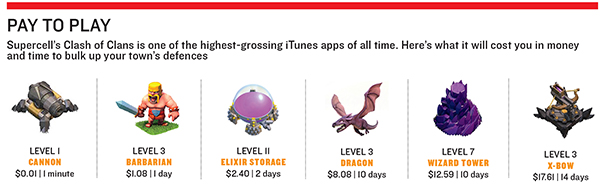
In less than a year, Supercell has launched two of the biggest apps in Apple’s history. It’s now grossing $70 million—a month

Ilkka Paananen says the best way to make money in mobile gaming is to stop thinking about it. Think about fun instead. Fighting a mild case of flu and jet lag from a San Francisco flight back home to Helsinki, Paananen says companies that place revenue above fun (we’re talking to you, Zynga) will ultimately fail. “It really is that simple—just design something great, something that users love,” says the 34-year-old.

Paananen is CEO of Supercell, a startup that has had astonishing growth almost overnight. It has only two titles in Apple’s App Store—a tower defence game called Clash of Clans and a social-farming game called Hay Day—but it grossed $100 million last year and $179 million in the first quarter of 2013. Supercell netted $104 million in the quarter, after expenses and Apple’s 30 percent cut. Read more of this post

Beijing Shuts Down Taobao’s ‘Take a Number’ Service for Hospitals, But Consumers Cry Foul

Beijing Shuts Down Taobao’s ‘Take a Number’ Service for Hospitals, But Consumers Cry Foul

May 24, 2013 by C. Custer

Chinese hospitals are, to put it mildly, a bureaucratic nightmare. Just checking into one generally involves, among other processes, waiting in line to take a number and often also waiting in another line to pay for taking that number. Monster e-commerce siteTaobao was attempting to take some of the sting out of that with a new service launched earlier this week that allowed customers to book numbers and in some cases also pay online. But yesterday, after just three days open, the service was shut down in Beijing by the city’s health department on the grounds that healthcare is an issue of “public interest” and thus ‘take a number’ services should be non-profit. It also suggested that providing health information to a third party caused a potential information security risk.

That would be a compelling argument, except that many of China’s hospitals themselves aren’t even non-profit, and even in non-profit hospitals there is often a fair amount of under-the-table cash expected from patients if they want to receive good service. Perhaps healthcare in China should be non-profit, but since it very clearly isn’t, why target Taobao for making money off of the convenience of online ‘take a number’ services when for-profit hospitals are profiting daily off of their patients? Read more of this post

Google Copies Amazon’s Playbook

May 23, 2013, 4:56 p.m. ET

Google Copies Amazon’s Playbook

By GREG BENSINGER And AMIR EFRATI

MK-CD229_COPYCA_NS_20130521180903

SAN FRANCISCO—Google Inc. GOOG -0.75% co-founders Larry Page and Sergey Brin say they don’t pay much attention to rivals. But the search company increasingly appears to be following Amazon.com Inc.’s AMZN -0.44% lead.

The latest example involves cable ties, AC-DC adapters, radiation detectors and the like. In April of last year, Amazon rolled out AmazonSupply, an e-commerce site featuring such industrial goods. Google followed suit this January, testing Google Shopping for Suppliers, which also helps shoppers find items tailored for businesses.

Both sites represent a relatively new foray for the technology companies—business-to-business sales—though Google’s doesn’t sell the items directly and its service is limited to suppliers of certain types of electrical equipment. Read more of this post

Amazon Vs. Costco: Which Is Better For Buying In Bulk?

Amazon Vs. Costco: Which Is Better For Buying In Bulk?

Stacey BumpusGoBankingRates.com | May 23, 2013, 2:08 PM | 3,685 | 

Saving money is on the minds of most Americans, which is why so many make a special effort to purchase items in bulk and join discount clubs. It’s also the reason so many businesses are creating opportunities for consumers to access those savings. One program to crop up in recent years is Amazon Subscribe and Save, which touts savings of up to 15 percent to members who meet specific criteria. But is this program as amazing as it seems, or is it possible that subscribers are actually losing dollars by committing to make purchases over the long term?

What Is Amazon Subscribe and Save?

If you are not accustomed to purchasing groceries and other household items online, or simply haven’t heard of this program, you may wonder what is Amazon Subscribe and Save? Amazon Subscribe and Save is a program launched in 2007 that offers discounts on items typically sold in bulk. In addition to a reduction in costs, the program offers free shipping. The lower costs are offered in exchange for a subscription agreement that involves having specific items automatically shipped every one, two, three, four, five or six months. But probably the biggest benefit of joining the program is paying no upfront fees to subscribe. Members only need to pay for items when they are shipped. You can probably see the similarities between Amazon Subscribe and Save and memberships to wholesale clubs like Costco with one clear exception: Amazon subscribers don’t have to worry about placing orders as they are placed automatically. With this and other conveniences, one would think there could be no downside to a program like Amazon’s. However, great discount programs are not always as fantastic as they seem.

How Amazon Subscribe and Save Compares to Costco

Individuals trying to decide whether to join Amazon Subscribe and Save or stick with a traditional wholesale membership with a company like Costco have several pros and cons to weigh. But before getting started, here are a few basics to know about Costco. Read more of this post

Twitter pitches to advertisers with system to track TV watchers

May 23, 2013 4:36 pm

Twitter pitches to advertisers with system to track TV watchers

By Emily Steel in New York

Twitter is attempting to secure its position at the nexus between television and digital media, announcing on Thursday a new TV ad-targeting programme along with a flurry of partnerships with media companies including Major League Baseball, Time Inc, Vevo and Vice.

The new ad product taps special technologies to “watch” television and note when a commercial airs. At the same time, it “listens” to Twitter for people posting about the same show. The technology then allows advertisers to target ads on Twitter to people who likely saw their commercials on television.

Twitter also unveiled its Twitter Amplify programme, a series of partnerships with media companies that will introduce into users’ news feeds more video clips as well as real-time sponsorships that link ads on television to promotions on Twitter. Amplify extends Twitter media partnerships beyond television to include magazine publishers, sports leagues and music groups. Read more of this post

CIOs Debate ‘Cockroach Technology’

May 23, 2013, 1:58 PM ET

CIOs Debate ‘Cockroach Technology’

Michael Hickins

CAMBRIDGE, MASS. — Several CIOs participating in panel discussions at the MIT Sloan CIO Symposium here Wednesday said vendors of cloud computing software are making their lives more difficult by selling directly to business users rather than going through traditional IT channels.

CIOs said so-called shadow IT often results in duplicate purchases of similar systems, and makes it difficult for CIOs to use data collected by organizations to best effect. But in a display of disagreement increasingly rare at industry events of this type, one CIO suggested that complexity has always been a way of life for CIOs, and that business users have had to go around IT to purchase cloud computing because IT hasn’t been responsive enough. Read more of this post

Enterprise companies, which sell software and services to businesses rather than individuals, have risen 37 percent, on average, in the two years since their IPOs, compared with 13 percent for consumer companies

ChannelAdvisor soars in debut

2:30pm EDT

By Alistair Barr and Tanya Agrawal

(Reuters) – ChannelAdvisor Corp shares soared more than 40 percent in their market debut on Thursday as investors bet the e-commerce software company will benefit from the rapid global spread of online buying and selling. The company’s shares opened up 25 percent, after its initial public offering of 5.8 million shares was priced at $14 per share, the high end of its pricing range. ChannelAdvisor shares were trading up 40 percent at $19.54 on the New York Stock Exchange. They touched an intraday high of $19.73, valuing the company at about $400 million. Other IPOs on Thursday did not perform as well. Global Brass and Copper and Ply Gem Holdings rose less than 20 percent and Constellium declined 5.5 percent. ChannelAdvisor, founded in 2001, helps companies sell via online marketplaces and websites such as Amazon.com Inc, Google Inc and eBay Inc. Customers include Ann Taylor, eBags.com, J&R Electronics and Jos. A. Bank Clothiers. E-commerce is growing at about 15 percent a year and Forrester Research estimates that global online consumer spending will top $1 trillion by 2016. ChannelAdvisor gets fees when its customers generate an agreed-upon volume of sales using its software. When sales exceed those levels, customers pay a little more in what the company calls a “shared-success model.” “We have about 2,000 customers and handled over $3.5 billion in gross merchandise volume last year,” said Scot Wingo, chief executive of ChannelAdvisor. “That’s really the tip of the iceberg. We have a lot of wood to chop, as these bankers like to say.” ChannelAdvisor generated a net loss of $4.9 million last year, compared with a loss of $3.9 million in 2011 and $4.7 million in 2010. Revenue rose to $54 million in 2012, up from $44 million in 2011 and $37 million in 2010, according to the company’s SEC filings. Read more of this post

Ten IT-enabled business trends for the decade ahead

Ten IT-enabled business trends for the decade ahead

As technological change accelerates and adoption rates soar, ten pivotal trends loom large on the top-management agenda.

May 2013 | byJacques Bughin, Michael Chui, and James Manyika

Three years ago, we described ten information technology-enabled business trends that were profoundly altering the business landscape.1 The pace of technology change, innovation, and business adoption since then has been stunning. Consider that the world’s stock of data is now doubling every 20 months; the number of Internet-connected devices has reached 12 billion; and payments by mobile phone are hurtling toward the $1 trillion mark.

This progress both reflects the trends we described three years ago and is influencing their shape. The article that follows updates our 2010 list. (For a more detailed treatment, download the related white paper [PDF–1MB] from the McKinsey Global Institute.) In addition to describing how several trends have grown in importance, we have added a few that are rapidly gathering momentum, while removing those that have entered the mainstream. Read more of this post

How Email App Mailbox Turned A Desperate Situation Into An ~$100 Million Exit 37 Days After It Launched

How Email App Mailbox Turned A Desperate Situation Into An ~$100 Million Exit 37 Days After It Launched

Alyson Shontell | May 22, 2013, 5:09 PM | 2,593 | 1

8551241646_ec6ceb9795_b

Gentry Underwood, co-founder of Mailbox

In January, an email organization app called Mailbox launched, and it promised to help users reach inbox zero. Thirty-seven days later, cloud storage company Dropbox acquired it for a reported $100 million. We sat down with the app’s founder, Gentry Underwood, who told us how he was able to flip the app so quickly and what it is like working for $4 billion Silicon Valley company, Dropbox. To summarize:

Underwood isn’t sure if his app is actually worth $100 million. He also wouldn’t confirm if that was the actual sale price.

Underwood says the quick sale was the result of Underwood’s team being able to determine product-market fit.

Mailbox went viral before the app even launched. Here’s how he drummed up attention for it: Read more of this post

VMware Public Cloud Software Challenges Amazon, Microsoft

VMware Public Cloud Software Challenges Amazon, Microsoft

VMware Inc. (VMW) is debuting a service that lets customers use the Web to access information and programs stored in its data centers, an effort to challenge Amazon.com Inc. (AMZN) and Microsoft Corp. (MSFT) in cloud computing.

Early testers of the vCloud Hybrid Service include News Corp. (NWSA)’s Fox Broadcasting and the state of Michigan, VMware Chief Executive Officer Pat Gelsinger in an interview. The product will be more widely available in the third quarter, he said.

VMware, the biggest provider of software that lets computers run multiple operating systems, is expanding in cloud-computing to bolster sales as U.S. customers trim technology spending. With the new product, VMware is entering the fastest-growing part of the cloud market, according to Gartner Inc., which estimates that sales of so-called infrastructure-as-a-service will surge by an average 38 percent annually to $30.6 billion by 2017 from $6.17 billion last year. Read more of this post

5 Mobile Payments Data Points That Will Blow Your Mind

5 Mobile Payments Data Points That Will Blow Your Mind

Josh Luger | May 22, 2013, 12:56 PM | 1,376 | 1

Consumers gravitate to convenience. That’s as true with payment technologies as it is with anything else. A prime example is the decades-old trend away from cash or checks and toward credit cards. Now, the mass adoption of smartphones and tablets has set the stage for a new move — away from fixed-point, card-based transactions and toward those completed on mobile. The old dream of the “digital wallet” is coming true in a very particular mobile-led fashion. In a recent report from BI Intelligence we explain the main types of mobile payments, analyze the state of the mobile payments race, examine the matchup between card readers and near-field communications (NFC), look at how traditional banks, credit card companies, and card processors are responding to the mobile payments threat, and detail who is furthest along in developing the all-in-one solution for merchants and consumers.

Here are 5 data points that help underscore the explosion:

$640 million: eMarketer has estimated mobile payments as adding up to $640 million in transaction volume in the U.S., up from $170 million in 2011. However, this figure does not include swipes on mobile credit card readers like Square and PayPal Here, only consumer-side mobile payments in-store.

$10 billion: Card readers are building real scale. Square’s mobile payments volume rose to $10 billion in 2012, up from $2 billion in 2011Starbucks is switching its credit and debit card processing to Square, and as of January 2013 accepts the “Square Wallet” app at 7,000 locations. 

$14 billion: Though much of that volume was from PayPal-enabled mobile commerce, and not in-store payments, that’s still evidence of mobile catching on as a transactional platform.

7.9 million: As of year-end 2012, only 7.9 million U.S. consumers (less than 90 percent of the total) had adopted a consumer-facing NFC-compatible system like “Google Wallet,” or apps that use QR codes or other methods to generate a payment. Card readers seem to be way ahead in the game.

$3.95 trillion: With more than $3.95 trillion of non-cash transaction volume recorded in the U.S. alone in 2011, the stakes are high in this space.

Once described as “China’s Amazon,” e-commerce website Dangdang.com is finding itself fighting to stay afloat due to rabid competition

Major e-commerce pioneer struggling to survive

English.news.cn   2013-05-22

BEIJING, May 22 (Xinhua) — Once described as “China’s Amazon,” e-commerce website Dangdang.com is finding itself fighting to stay afloat due to rabid competition.

The company started selling leftover stock on May 7 despite of an earlier strategy aimed at middle and high-end clothing. CEO Li Guoqing told the Beijing News that his company is struggling to balance its expansion. The price of Dangdang’s shares has dropped from 35 U.S. dollars per share to less than 5 U.S. dollars, despite a booming e-commerce sector that has enjoyed average annual growth of 66 percent. Read more of this post

The husband and wife behind Zaggora used social media to build a hot activewear brand

May 21, 2013 7:08 pm

A start-up that is fit for purpose

By James Pickford

©Charlie Bibby

Image matters: when deciding who should be the public face of the company, Malcolm and Dessislava Bell calculated that a female entrepreneur would generate more publicity

It was while road-testing the 21st prototype of her brainchild in the gym that Dessislava Bell realised she had made a breakthrough. “I lost a couple of inches off my waist in two weeks,” she says. Mrs Bell had alighted on an idea that, at first glance, holds little consumer appeal: skin-tight women’s exercise shorts designed to retain so much body heat that the wearer breaks into profuse, free-flowing sweat. Prompted by the effect of heat on physical performance and the fashion for high-sweat Bikram yoga, she spent months researching heat-inducing fabrics and design on the internet. The buying public appears to have reacted with anything but distaste to the calorie-burning “HotPants” produced by Zaggora, the London-based company founded by Mrs Bell, a 28-year-old former investment banker at JPMorganChase, and her husband Malcolm, an ex-investment manager. Read more of this post

Mobile Commerce Worth $4.29 Billion in Q1 in China, But One Company Dominates

Mobile Commerce Worth $4.29 Billion in Q1 in China, But One Company Dominates

May 21, 2013

by Steven Millward

We know that mobile commerce in China was worth $7.8 billion in 2012 – and is expected to rise to $41.4 billion in 2015 – but who are the biggest e-commerce brands among the nation’s mobile shoppers? New statistics from iResearch give us that answer and show that one company seriously dominates. The clear market leader for mobile-based shopping in China is Taobao, the iconic consumer-to-consumer shopping mall from Alibaba that’s been rocking China for a decade. In terms of the value of mobile purchases among Chinese consumers, Taobao leads with 75.1 percent market share. Some of that is from the parent company’s B2C marketplace Tmall. In second place in this sector is Jingdong (formally called 360Buy), which is also China’s second largest B2C e-tailer. Its share of the mobile sector is a lot lower than its share of the overall China B2C shopping market, suggesting that Jingdong – and, indeed, all other such Amazon-like brands – needs to seriously sharpen up its mobile strategy. I notice that, if we again compare mobile spending share with overall market share, it’s only two fashion e-commerce companies that are punching above their weight when it comes to mobile shoppers – own-brand clothing e-store Vancl and specialist handbag site Maibaobao. Here’s the market share pie chart: A fairly slow shift to m-commerce

iResearch estimates that Q1 2013 will see Chinese mobile netizens spending a total of RMB 26.6 billion ($4.29 billion) in all of these e-commerce companies. That indicates that 2013 will indeed be the biggest ever year for mobile commerce in China – possibly exceeding the research firm’s earlier estimates of $15.7 billion for the entire year: In Q1 2013, we see that PC-based shopping still dominates the country’s e-commerce sector , but mobile is rising fast, anticipated to reach 7.6 percent of purchases in the first quarter: If you can handle any more massive numbers you might like to know that China’s entire e-commerce industry looks set to be worth $177 billion in 2013. Keep an eye on our ‘e-commerce in China’ tag to get more news on this massive market.

Mobile-commerce-in-China-Q1-2013-stats-01Mobile-commerce-in-China-Q1-2013-stats-02Mobile-commerce-in-China-Q1-2013-stats-03

SAP seeks programmers with autism; “We share a common belief that innovation comes from the edges”; “[People with autism] have strong attention to detail and an ability to identify mistakes.”

May 21, 2013 9:20 pm

SAP seeks programmers with autism

By Chris Bryant in Frankfurt

SAP, the German business software company, wants to tap into a new talent pool by hiring hundreds of people with autism to programme and test its ­products.

SAP announced on Tuesday that it hoped people with autism – a developmental condition that can impair a person’s ability to communicate and interact with others – would ultimately account for 1 per cent of its 64,000 strong workforce.

Some people with autism, which affects about 1 per cent of the general population, score very highly on intelligence tests and possess extraordinary ­powers of observation and ­concentration. Read more of this post

Samsung-LG Misstep on TV Screens Creates Opening for Sony

Samsung-LG Misstep on TV Screens Creates Opening for Sony

Samsung Electronics Co. (005930) and LG Electronics Inc. (066570) are reworking their strategies for high-end TVs after spending billions of dollars on a new display technology that’s behind schedule and costs almost $10,000 a set.

The misstep by the Koreans has created an opening for Sony Corp. (6758), Sharp Corp. and Chinese maker Skyworth Digital Holdings Ltd. (751) Those companies are introducing TVs using conventional liquid-crystal displays that offer resolutions rivaling the new technology for about half the price.

The world’s two biggest television makers have struggled to profitably manufacture sets with organic light-emitting diodes, which have a brighter and sharper picture than the LCDs used in most TVs. Though both companies said they would mass-market OLED TVs last year, LG’s first model, priced at 11 million won ($9,900), hit stores in South Korea in January and Samsung still isn’t selling one. Read more of this post

Nintendo Adds to Companies Defeating Royalty Demands

Nintendo Adds to Companies Defeating Royalty Demands

Nintendo Co. (7974) fended off a second U.S. patent-infringement case this month against its Wii video-game system, adding to a trend of companies fighting royalty demands and winning.

Nintendo didn’t infringe licensing company Copper Innovations Group LLC’s patent for a way a computer interacts with a device such as a joystick, the Court of Appeals for the Federal Circuit in Washington ruled today. On May 13, the court said the Wii didn’t infringe a different licensing company’s patent for a system to track a game user’s position.

Companies including Kyoto, Japan-based Nintendo, discount retailer Overstock.com Inc. (OSTK) and electronics seller Newegg Inc. are winning cases brought by patent owners who rather than using their inventions to make products, are seeking royalties from those that make devices or provide services. Read more of this post

Apple Bonds Stick Buyers With $280.6 Million Loss as Rates Climb

Apple Bonds Stick Buyers With $280.6 Million Loss as Rates Climb

Apple Inc. (AAPL)’s bonds have lost $280.6 million of market value since buyers snapped up $17 billion of the iPhone maker’s debt last month, declining as yields climb from record lows.

The iPhone maker’s $3 billion of 30-year, 3.85 percent bonds, issued at 99.418 cents on the dollar, dropped 4.3 cents through yesterday to 95.145 cents on the dollar since the April 30 offering, creating a loss of $128.2 million and pushing the yield on the bonds to 4.1 percent, according to data from Trace, the bond-price reporting system of the Financial Industry Regulatory Authority.

Buyers of the biggest corporate-bond offering ever are losing as speculation the Federal Reserve may start scaling back its unprecedented stimulus efforts triggers the biggest increase in 10-year Treasury yields in 12 months. Average yields on dollar-denominated investment-grade bonds have climbed to 2.78 percent from 2.68 percent since Apple’s April 30 debt sale, the Bank of America Merrill Lynch U.S. Corporate Index shows. Read more of this post

Indian girl invents device that can charge phone in 20 seconds

Indian girl invents device that can charge phone in 20 seconds

2013-05-21 01:34:43 GMT2013-05-21 09:34:43(Beijing Time)  SINA.com

U47P5029T2D592225F24DT20130521093443U47P5029T2D592225F26DT20130521093553

The charging device has been dubbed a ‘supercapacitor’ by Esha Khare of Saratoga, California.

An 18-year-old Indian-origin girl in the US has developed a potentially revolutionary device that can charge a mobile phone in just 20 seconds, a media report said. The charging device has been dubbed a ‘supercapacitor’ by Esha Khare of Saratoga, California, the Daily Mail reported. Khare won $50,000 for her invention at the Intel International Science and Engineering Fair, held in Phoenix. Khare has only used her ‘supercapacitor’ to power a light-emitting diode (LED), but says that one day her invention will power cell phones, cars and any gadget that requires a rechargeable battery. Asked what inspired her to work on the technology, Khare said, “My cell phone battery always dies. It has a lot of different applications and advantages over batteries in that sense.” The ‘supercapacitor’ is flexible and tiny, and is able to handle 10,000 recharge cycles, more than normal batteries by a factor of 10. Khare is a student of nanochemistry, and is now heading to Harvard. Google has been in contact with Khare to explore how she plans to change the makeup of cell phone battery life, the report said.