Apple Seen Losing Innovation Magic by 71% in Global Poll

Apple Seen Losing Innovation Magic by 71% in Global Poll

Apple Inc., (AAPL) the world’s most valuable technology company, has lost its edge among investors, according to the latest Bloomberg Global Poll.

Hedge funds sold large stakes of the iPhone maker’s stock in the first quarter, Apple shares are down 40 percent from last year’s high and the company paid higher interest rates for a recent bond sale than Microsoft — in a PC trumps Mac moment.

Now, 71 percent of poll respondents say the Cupertino, California, company has lost its cachet as an industry innovator, which includes 28 percent who say it is permanent and 43 percent who say it may be a temporary hiccup. There are still true believers; 23 percent said Apple remains the best in the business. Six percent were unsure.

“They’ve definitely lost their momentum,” said Lionel Mellul, 43, head of the cash equity business at Sunrise Brokers in New York, a poll respondent. “It’s still at the point where they might turn things around. They still have a strong brand.” Read more of this post

Connecting everything: A conversation with Cisco’s chief technology and strategy officer Padmasree Warrior

Connecting everything: A conversation with Cisco’s Padmasree Warrior

Cisco’s chief technology and strategy officer describes how the exponential growth of connectivity between people and devices, both mobile and network, will change commerce, business systems, and individual behavior.

May 2013

Despite two decades of increasing connectivity between people and devices over high-tech networks, only 1 percent of what could be connected in the world actually is, argues Padmasree Warrior, Cisco Systems’ chief technology and strategy officer. As the level of connection swells over mobile and other platforms during the next decade, she expects sweeping changes in how consumers shop, businesses handle data, and individuals grapple with the data available about themselves. This interview was conducted by McKinsey’s Rik Kirkland in Davos, Switzerland. What follows is an edited version of Warrior’s remarks.

Interview transcript

Connecting everything

We believe that today only 1 percent of what can be connected in the world is actually connected. As an industry, it took us about 20 years to connect 1 percent of the world. And in the next ten years, we believe that number will go up dramatically. We’ll make significant progress in connecting the 99 percent that’s still unconnected. That will be people, that will be devices, and that will be a lot more information on the network. Read more of this post

How InMobi Grew From a Startup to a Giant Mobile Ad Network

How InMobi Grew From a Startup to a Giant Mobile Ad Network

May 16, 2013

by Willis Wee

Founder and CEO of mobile ad network giant, InMobi, Naveen Tewari, has come a long way. Naveen is an engineer by training, studied at Harvard Business School, and worked at consulting firm McKinsey. In between all that, Naveen also had some experience working in startups while he was in Silicon Valley.

Entrepreneurs being entrepreneurs, Naveen was very fascinated with the rapidly changing mobile internet. He wanted to build something which he could call his own. Naveen and his team started to dabble and among their first few projects was a VOIP application and also a chat application. But it was too early for the market back then. So the team started to question, “What are the things that could work? Maybe there’s a play for us if we were to build a fundamental service?” Read more of this post

Google CEO Larry Page Shares His Philosophy At I/O: “We Should Be Building Great Things That Don’t Exist”

Google CEO Larry Page Shares His Philosophy At I/O: “We Should Be Building Great Things That Don’t Exist”

DREW OLANOFF posted yesterday

img_87131

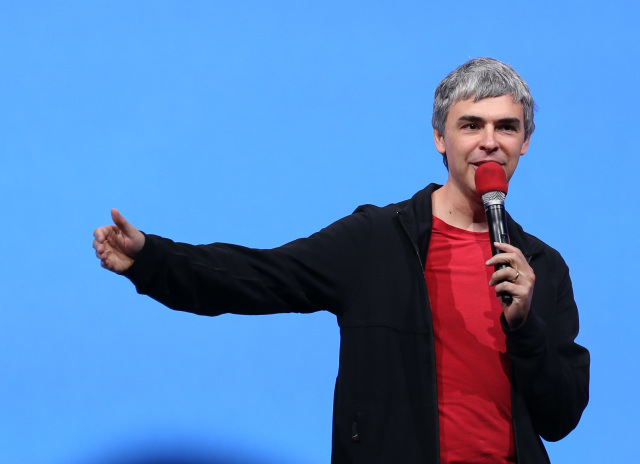
Today, a day after discussing his voice issues, Google CEO Larry Page took the stage at the I/O keynote. He skipped last year’s conference and a few earnings calls due to those same voice problems, which he has noted are improving. Page even did something a little new for I/O — taking questions at the end of his talk.

Page discussed how important it is for both the developers and Google to keep dedicating themselves to technology, to make sure that people everywhere can get access to it. He also discussed his relationship with his father, and how important that was in influencing him when it comes to innovation:

My dad was really interested in technology. He drove me and my family all across the country to go to a robotics company. Then we got there, he thought it was so important his son would go to the conference. Read more of this post

Death By A Thousand Cuts? Google Wallet’s Plan To Take On PayPal Leverages Chrome, Android, Google+, Gmail & More

Death By A Thousand Cuts? Google Wallet’s Plan To Take On PayPal Leverages Chrome, Android, Google+, Gmail & More

SARAH PEREZ posted yesterday

send_money-hero

Flying under the radar amid a flurry of announcements from today’s Google I/O developer conference is the bigger news of how Google is stepping up its efforts to compete with online payment giants, such as PayPal. It plans to do so with a revamped checkout process for the web, mobile web, within mobile applications running on Android, and more. It’s a proposed death to PayPal by a thousand cuts, leveraging everything from Chrome to Android and even Gmail. What Google hasn’t quite worked out yet is how all this will tie together in the long run, but you can see the plan beginning to form.

Read more of this post

Online apparel retailers are finding that showing their clothing on real people causes customers to engage more and buy more often

Updated May 15, 2013, 7:19 p.m. ET

More Brands Want You to Model Their Clothes

By CHRISTINA BINKLEY

Online apparel retailers are finding that showing their clothing on real people causes customers to engage more and buy more often. On Style columnist Christina Binkley joins Lunch Break.

After Katherine Lin put out a photo of herself with friends at the Coachella music festival on Twitter and Instagram this spring, she was thrilled to discover the photo posted on the website of Dannijo.com, the retailer whose necklace she was wearing.

“It shows how much they want to connect with us as consumers,” says the 21-year-old University of Southern California student. Read more of this post

China’s E-Tail Revolution: China’s e-tail market is the world’s second largest (after that of the United States), with an estimated $210 billion in revenue last year

China’s E-Tail Revolution

Richard Cooper, Richard Dobbs

14 May 2013

SHANGHAI – When you think about centers of technological innovation, Silicon Valley, Seattle, and Seoul are probably the first places that come to mind. After all, they are the homes of Amazon, Apple, Facebook, Google, Intel, Microsoft, and Samsung – companies whose innovations transform the way other sectors, from financial services to telecoms and media, do business.

Now, however, the rise of “e-tail” (consumer-facing e-commerce) in China is enabling Hangzhou – the base of Alibaba, China’s largest online retailer – to join their ranks. Indeed, on April 29, Alibaba signaled its ambitions by buying an 18% stake in Sina Weibo, China’s version of Twitter. And, as with technology hubs elsewhere, innovations born in Hangzhou are determining the development path of related industries.

China’s e-tail market is the world’s second largest (after that of the United States), with an estimated $210 billion in revenue last year. Since 2003, the market has posted a compound annual growth rate of over 110%. By 2020, China’s e-tail market could be as large as today’s markets in the US, Japan, the United Kingdom, Germany, and France combined. Read more of this post

Lessons from a rare $2 billion LA tech win: “I was competing with both hands tied behind my back”

Lessons from a rare $2 billion LA tech win: “I was competing with both hands tied behind my back”

BY SARAH LACY 
ON MAY 15, 2013

You hear it over and over again: What the LA ecosystem needs is a big, publicly-traded, home-grown, multi-billion dollar company. Well, there actually is one in LA that almost no one talks about: Cornerstone On Demand, an enterprise software company that focuses on HR software. And it’s a real enterprise software company, not a consumer company with a  freemium model that’s calling itself enterprise to get money and headlines these days. Why doesn’t Cornerstone — with its $2 billion market cap – get more love and attention? It’s partially that the company hasn’t focused on press and also the fact that enterprise software companies just aren’t as widely covered as consumer or ecommerce companies. But it’s also because the company was bootstrapped for much of its existence, growing up in a time in the LA ecosystem when there was little press or attention paid to tech. In an effort to raise the profile of LA entrepreneurs generally, Cornerstone is sponsoring our month-long look at the LA ecosystem. But as the multi-billion tech company that no one in LA talks about, it is also just the type of company we should be surfacing in this report. I hopped on the phone with Cornerstone’s founder and CEO Adam Miller to talk about the pros an cons of building one of the only billion-dollar-plus companies out of LA — and one that doesn’t rely on celebrity endorsements to boot.

Read more of this post

8 Tech Execs Whose Trash-Talking Blew Up In Their Faces

8 Tech Execs Whose Trash-Talking Blew Up In Their Faces

Kevin McLaughlin | May 15, 2013, 9:33 PM | 8,371 | 4

Tech execs just love mixing it up with their rivals. Maybe it has something to do with the lack of sleep they get, or the drudgery of spending large portions of their lives making and giving PowerPoint presentations. Whatever the reason, when tech execs trash-talk other companies’ products, sometimes it backfires. Some products that are belittled end up being hugely successful. Other times, the exec who’s doing the trash-talking ends up getting fired, or his or her company falls on rough times. In some cases, executive trash-talk ends up being factually inaccurate. Microsoft CEO Steve Ballmer laughed at the iPhone when Apple introduced it. He also predicted the iPad would not have much success. Obviously, neither prediction panned out. We’re not going to include Ballmer’s trash-talking about Apple, since it’s pretty much common knowledge at this point. But others have done the same or worse …

Ex-HP CEO Leo Apotheker Questions Wisdom Of iPad Usage

Leo Apotheker, whose 9-month reign as HP CEO was full of turmoil, was convinced that Apple’s iPad was just a passing fad that wouldn’t have a lasting impact in businesses. “I saw someone using an iPad with a keyboard. Why would you want to carry that when you could carry a laptop?” Apotheker said in an interview with AllThingsD’s Walt Mossberg at its D9 conference in June 2011.  Millions of people who’ve been lugging around iPads instead of notebooks since then would disagree. Apple sold 19.5 million iPads last quarter and sold 22.9 million the quarter before that. Almost every Fortune 500 company is using iPads in some capacity. Meanwhile, HP’s TouchPad had a brief six-week run in the market, and Apotheker was shown the door in September 2011.  Read more of this post

Google Escalates the Competition in Map Services; “The future of search starts with maps. That’s where all the commerce is going to be done and that’s what everyone’s fighting out”

May 15, 2013

Google Escalates the Competition in Map Services

By CLAIRE CAIN MILLER

SAN FRANCISCO — Cartographers, beware: the map wars have begun.

First Apple built maps, and now Facebook wants its own mapping service. In the tech industry, maps have become essential, primarily because of the explosion of mobile devices, on which maps are a critical application. Maps are also seen as the gateway to commerce, both online and in the real world.

Yet even as maps have become a must-have service, Google, the leader in online mapping so far, is showing that experience pays dividends.

On Wednesday, Google unveiled a new Google Maps, by far the biggest redesign since it introduced Maps eight years ago. Google announced the maps at its annual I/O developers conference, where it also showed off new tools for search, photo editing and to-do lists, along with a music service and features for Android and Chrome apps. Many of the announcements had an undercurrent — one-upping Apple. From its new music and photo services to maps to voice commands that rival Siri on the iPhone, Google seemed to be offering alternatives to Apple products. Read more of this post

How Many Turns in a Screw? Big Data Knows; Raytheon is one of many manufacturers installing more sophisticated, automated systems to gather and analyze factory-floor data

Updated May 15, 2013, 7:57 p.m. ET

How Many Turns in a Screw? Big Data Knows

By JAMES R. HAGERTY

Companies’ pursuit of “big data”—collecting and crunching ever larger amounts of information—is often thought of as another way to figure out exactly what customers want. But big data is also a means of measuring millions of little things in factories, such as how many times each screw is turned.

That is what Raytheon Co. RTN +1.75% is doing at a new missile plant in Huntsville, Ala. If a screw is supposed to be turned 13 times after it is inserted but is instead turned only 12 times, an error message flashes and production of the missile or component halts, says Randy Stevenson, a missile-systems executive at Raytheon. Improvising with a defective screw or the wrong size screw isn’t an option, he says. “It’s either right or it’s not right.”

Raytheon is one of many manufacturers installing more sophisticated, automated systems to gather and analyze factory-floor data. The company uses software known as manufacturing execution systems, or MES, which has been around since the 1980s. Semiconductor and other high-tech companies were early adopters, but now “others are catching up,” says Tom Comstock, an executive vice president at Apriso Corp., one of the suppliers of this software. Other suppliers include General Electric Co., GE +1.00% SAP AG, SAP.XE +0.03%Siemens AG SIE.XE -0.28% and Rockwell Automation Inc. ROK -0.38% Read more of this post

Smartphone Locating Aid for Rescues Pushed as GE Objects

Smartphone Locating Aid for Rescues Pushed as GE Objects

Technology to help police locate wireless callers inside buildings advanced with a U.S. regulator past objections from General Electric Co. (GE), Google Inc. (GOOG) and the E-ZPass Group toll system that it may interfere with millions of devices.

Federal Communications Commission Chairman Julius Genachowski yesterday asked fellow commissioners to approve closely held Progeny LMS LLC’s location system, Neil Grace, an FCC spokesman, said today. To proceed, the measure needs a majority of commissioner votes.

Under Progeny’s proposal, smartphones would calculate their position using radio waves put out by the company, and would report that location during emergency calls. In tests, Progeny’s technology was able to pinpoint within 2 meters (2.2 yards) the vertical position of the calling party, “potentially revolutionizing the speed of emergency response in large multi-story urban environments,” the company said in a filing.

Progeny’s technology represents “a clear improvement” over current techniques, which don’t offer reliable location information for indoor calls from wireless phones, the International Association of Chiefs of Police, an Alexandria, Virginia-based membership organization, said in an FCC filing. Read more of this post

Startups’ Secret: More Are Facing Patent Suits

May 15, 2013, 2:32 p.m. ET

Startups’ Secret: More Are Facing Patent Suits

By PUI-WING TAM

Kate Endress is mired in a type of legal quagmire that is afflicting an increasing number of Silicon Valley startup entrepreneurs, but which few typically want to openly discuss.

Ms. Endress is chief executive and co-founder of San Mateo-based Ditto Technologies Inc., a website that sells designer eyewear. Founded in 2011 and backed by venture-capital firm August Capital, the site features 3-D virtual “try-on” technology that lets customers scale a pair of glasses to their face.

In February, Ms. Endress received a complaint from lawyers of 1-800 Contacts Inc., a Draper, Utah, online purveyor of contact lenses owned by WellPoint Inc. WLP -0.22%In its lawsuit, filed in U.S. District Court for the District of Utah’s Central Division, 1-800 Contacts said it had purchased a patent for the 3-D technology last year and alleged Ditto was infringing it. Read more of this post

Harvard-for-Free Meets Resistance as U.S. Professors See Threat

Harvard-for-Free Meets Resistance as U.S. Professors See Threat

Professors across the U.S. are criticizing a rush to offer free online college courses, challenging a movement designed to spread knowledge and reduce higher-education costs.

Amherst College faculty voted last month against joining an initiative led by Harvard University and Massachusetts Institute of Technology. The provost at American University issued a moratorium this month on such massive open online courses, or MOOCs. At San Jose State University, the philosophy department refused to use a free Web course from a Harvard professor.

As college costs soar, professors are concerned that MOOCs may primarily become a way for universities to reduce expenses. Even at Harvard, some faculty members said at a meeting last week that the movement could damage higher education by leading institutions to cut face-to-face instruction. Read more of this post

Intel and ARM: New leaders, same battle

Intel and ARM: New leaders, same battle

By Michal Lev-Ram, writer May 14, 2013: 5:54 AM ET

Intel’s new CEO starts Thursday. Chipmaker ARM’s begins later this year. The only thing not changing? What they’re fighting for.

FORTUNE — Much has been made of the upcoming leadership transitions at chip rivals ARM (ARMH) and Intel (INTC). But it’s unlikely that the battle plan will change for either side. Both companies chose long-time insiders to take the helm—Intel COO Brian Krzanich will become CEO later this week, and ARM’s Simon Segars, currently the company’s president, takes over in July. So it’s hard to imagine sweeping changes in either camp. Besides, it’s not clear that ARM, which licenses its chip architecture to the likes of Qualcomm (QCOM) and Nvidia (NVDA), is in need of massive transformation. Though much smaller than Intel, the British chip designer isn’t dependent on the lackluster PC market. ARM-based chips power 95% of mobile phones, and the company is now trying to venture into new markets like lower-power serversFortunerecently caught up with Segars, ARM’s incoming CEO, to find out about his plans for the company, the rivalry with Intel and the state of Moore’s Law.

FORTUNE: You’re often viewed as head-to-head competitors with Intel, yet you have such a different model. Is it fair to constantly compare you to them?

Segars: Intel is a semiconductor company; we are not. Qualcomm, Samsung, Nvidia, Marvell, etc. are semiconductor companies. In the mobile device, the competition is between Intel and all those other guys. All those other guys use the ARM architecture and are dependent on us to keep that relevant. But at the business level it’s Intel competing against ARM’s customers. For our part we take that very seriously. It’s a competition for sockets among Intel and our licensees, and we can’t just sait there and say, “Sorry you lost that one.” Because if those sockets are lost, then it impacts our volumes and our royalties. So we need to be sure that we keep developing great microprocessor technology to help support our customers in creating products which deliver the best user experience.

Intel’s greatest asset is its fabs and manufacturing power. What’s yours?

I think it’s the partnership base. You can have great technology, but the best technology doesn’t always win out. For us it’s been the combination of great technology deployed through the business model that has made ARM successful, and it’s helped people build innovative devices at lower cost. I think the benefit of that has been greater diversity in the silicon that’s enabled greater diversity in the end product. It’s about enabling choice so that as a consumer you can go into a store and go, “I’ll have that one.” You’ve got a lot of choice there because there is money available through the supply chain for innovation to happen at different points, unlike PCs where two people have controlled it and the person that makes PCs runs on 2% profit margin and can’t afford to innovate in anything other than which shade of grey the plastic is. Read more of this post
Baba Is 35-Year-Old Billionaire With Zombie and Bear Apps

Baba Is 35-Year-Old Billionaire With Zombie and Bear Apps

Naruatsu Baba, the 35-year-old founder of Japanese smartphone game maker Colopl Inc. (3668), has become one of the youngest billionaires in the world as Colopl stock leaped sevenfold since its December initial share sale.

The Tokyo-based app maker produces games such as “Catastrophic Zombies” and “Kuma’s Digging Adventure.” Baba holds a 69 percent stake in the company valued at $2.2 billion, according to the Bloomberg Billionaires Index. He has never appeared on an international wealth ranking.

Game app makers with hits in Japan have soared, contributing to an 86 percent advance in the JASDAQ Stock Index (JSDA) this year and minting billionaires in the world’s third-largest economy. Baba joins the ranks of GungHo Online Entertainment Inc. (3765) Chairman Taizo Son, whose bestseller “Puzzle & Dragons” generated first-quarter sales of $3.4 million a day. Son, the youngest brother of SoftBank Corp. (9984) President Masayoshi Son, is now worth $5.1 billion, up from $3.3 billion last week, according to the daily billionaires index.

“It’s a bubble market for mobile-game makers,” said Takashi Oka, an analyst at TIW Inc. in Tokyo, who rates Colopl stock “neutral plus.” “As a developer, president (Baba) probably developed games in the beginning, so with more developers it’s possible for the company to grow exponentially.” Read more of this post

Hipsters Flocking to Silicon Roundabout as Bankers Fade

Hipsters Flocking to Silicon Roundabout as Bankers Fade

Coffee houses hold a special place in London’s history. During the late 17th century, they were the birthplace of Lloyd’s of London and the London Stock Exchange — two institutions that helped make the square-mile City of London a global financial capital. Today, just north of where one of the City’s ancient gates once stood, the latest chapter in London’s economic history is being written in a new generation of coffeehouses, Bloomberg Markets will report in its June issue. At Shoreditch Grind on the Old Street roundabout, a gritty traffic circle, and at Ozone Coffee Roasters, a few blocks away, bearded young men and nose-ringed women huddle around laptops and discuss ideas for startup companies.

The surrounding offices, many of them in converted warehouses, are so crammed with technology startups — at least 300 — that the area has been dubbed, in mock seriousness, Silicon Roundabout. Increasingly, that nickname is losing its irony: Established technology players are moving in. Google Inc. (GOOG) recently opened Campus London, a kind of clubhouse for digital entrepreneurs, not far from the roundabout. Inside, techies hobnob in the bustling cafe and attend lectures and other free events; they can gain access to hot desks, printers and conference rooms operated by another company, TechHub, for a 375 pound ($560) annual fee. Springboard and Seedcamp Ltd., European tech incubators, rent space on two of Campus’s floors. Read more of this post

Thailand Now Has 18 Million Social Media Users

Puzzle & Dragons Maker GungHo Reaches $15 Billion Market Cap, Now Worth More Than Nintendo, or more than Mobage operator DeNA, GREE, and Zynga combined

Puzzle & Dragons Maker GungHo Reaches $15 Billion Market Cap, Now Worth More Than Nintendo

May 13, 2013 by Dr. Serkan Toto


I’ll say it again: if there is one mobile game out there right now that people in Japan will remember in 10 years, it’s Puzzle and Dragons. The game, which boasts 13 million registered users in this country (10 percent of the population), has generated US$113 million in sales in April. Since late last year, maker GungHo’s market cap at the Osaka Stock Exchange kept rising and rising – to about $10 billion – to the point that the company is worth more than Mobage operator DeNAGREE, and Zynga combined. And today, GungHo (3765.OS) shares jumped limit-up by 300,000 yen to 1,342,000 yen (up 28.8 percent) in just a few minutes of trading, until the stock was bid-only. As a consequence, the company’s market cap now reached 1.54 trillion yen, which translates to $15.1 billion. With this number, GungHo topped Nintendo’s market cap of US$1.53 trillion yen (or US$15.0 billion). The US$15.1 billion market cap is also higher than that of Nikon, Fujitsu, Isuzu, Sanyo, All Nippon Airways, Sharp, or Mitsubishi Motors. It’s a new world we live in. Other market caps (Monday, May 13 at 11:30am JST):

GREE: $2.8 billion

DeNA: $3.6 billion

Zynga at $2.6 billion

Electronic Arts: $6.7 billion

Activision Blizzard: $16.7 billion

GungHo’s new owner SoftBank can be very happy.

France set to tax smartphones to protect culture in digital age

Last updated: May 13, 2013 6:51 pm

France set to tax smartphones to protect culture in digital age

By Hugh Carnegy in Paris

France is preparing to tax smartphones, tablets and all other internet-linked devices to help fund the production of French art, films and music.

The proposal was made in a government-commissioned report that was broadly endorsed by President François Hollande’s socialist administration.

In a trenchant defence of France’s “exception culturelle” in the digital age, the report proposed imposing a tax of up to 4 per cent on the sale of all devices, including gaming consoles and e-readers, that allow access via the internet to “cultural content”. Read more of this post

When Computer Games May Keep the Brain Nimble

Updated May 13, 2013, 7:12 p.m. ET

When Computer Games May Keep the Brain Nimble

By SUMATHI REDDY

PJ-BO258_YHEALT_DV_20130513172544

The computer game Double Decision helped boost players’ brain function, a study found. Doing crossword puzzles had no such benefit. A new study reveals that adults who played a video game helped their mental agility more than adults who did crossword puzzles. Your Health columnist Sumathi Reddy and University of Iowa public health professor Fred Wolinsky join Lunch Break with details. Photo: Double Decision.

The computer game’s concept is relatively simple. Find the matching motor vehicle and road sign amid a series of increasing distractions. Succeed and the challenge gets quicker and harder. Cognitive-training games like this one, Double Decision, are designed to improve brain functions and are at the center of a growing body of research looking at their effectiveness as scientists strive to find ways to ward off the cognitive declines that usually come with age. A government-funded study published this month found that playing Double Decision can slow and even reverse declines in brain function associated with aging, while playing crossword puzzles cannot. The study builds on an earlier large trial which found that older people who played various cognitive games had better health-related outcomes, driving records and performed better at everyday tasks such as preparing a meal. Read more of this post

ARM: “A lot of companies talk about collaboration, but they struggle with it because it’s not really in their DNA”. The company has established a strong level of trust with partners over 22 years in business, enabling partners to share proprietary information and intellectual property with ARM without reservations

Segars won’t rock the ARM boat

Dylan McGrath

5/10/2013 3:21 PM EDT

130509_churchill_arm1_423

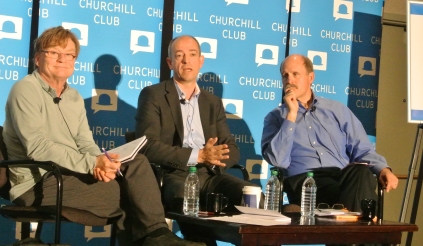
From left: James Moore, a former Harvard Berkman Center Fellow, Simon Segars, the incoming CEO of ARM, and Paul Saffo, a veteran industry forecaster at Discern Analytics, at the Churchill Club event Thursday. 

 Simon Segars, the soon-to-be CEO of processor IP licensor ARM Holdings plc, is obviously a believer in one timeless adage: If it ain’t broke, don’t fix it. Segars, who is set to take the reins at ARM from Warren East on July 1, said Thursday (May 9) he doesn’t plan any major changes to put his stamp on the company he’s worked for since 1991. “I’m going to do exactly the same things as we’ve been doing, cause they are working very well,” Segars told an audience of about 250 people at a Churchill Club event in San Francisco Thursday. “I truly believe that what has gotten us to this point is going to be what gets us through the next set of technology challenges,” Segars said. Segars, who last month told EE Times he wouldcontinue to emphasize driving down the power consumption of electronics as ARM CEO,would be wise to stick with what works. ARM has rocketed to prominence in recent years, even though—compared to perceived peers such as Intel Corp.—it’s still a relatively small company, with 2012 revenue of about $880 million. The Churchill Club even Thursday, moderated by Paul Saffo, a veteran industry forecaster at Discern Analytics, focused mainly on ARM’s collaborative ecosystem, considered a model for the industry. Saffo quipped during the event that the idea of collaboration has become any industry buzz term that many people pay lip service to but few actually make it a focus. “A lot of companies talk about collaboration, but they struggle with it because it’s not really in their DNA,” Saffo said. ARM, however, is the exception. Segars acknowledged that maintaining a large network of partners—membership in ARM’s Connected Community is approaching 1,000 companies—can be challenging, especially since many of the community’s members compete head to head in the marketplace. “They are in business to put each other out of business,” Segars said. But ARM mostly stays above the fray, Segars said. The company has established a strong level of trust with partners over 22 years in business, enabling partners to share proprietary information and intellectual property with ARM without reservations, he said. Occasionally, he said, ARM does find itself caught in the middle of disputes between its member companies. James Moore, a former Harvard Berkman Center Fellow who also participated in the Churchill Club event Thursday, raved about ARM’s business model, saying the firm focuses on openess and the proliferation of its technology instead of relentlessly focusing on profit margin, as many organizations do.  ARM doesn’t take as much profit as it could, Moore said, and does not attempt to lock partners in using its technology.  Moore, who was contracted by ARM to do a study of the company’s ecosystem, said the ARM ecosystem may well be unique. “The disruptive technology here is this organization, where people are willing to take less in favor of growth [in the use of its IP],” Moore said.

In Taiwan, Lamenting a Lost Lead; Fostering innovation has become a mantra among corporate leaders and government officials because Taiwan’s huge consumer electronics industry has run into serious trouble.

May 12, 2013

In Taiwan, Lamenting a Lost Lead

By KEITH BRADSHER

13taiwanweb1-articleLarge

Jonney Shih, the chairman of Asustek Computer, at Asus’s headquarters on the outskirts of Taipei in April.

TAIPEI, Taiwan — Jonney Shih, the chairman of Asustek Computer, has epitomized the Taiwanese electronics engineer for a generation: a slender figure in rumpled, baggy trousers, he once helped Intel solve heat problems in its Pentium 4 microprocessors. So it has been a surprise over the last several years to see Mr. Shih, now 60, reinvent himself with snug-cut Italian suits, innovative designs for tablet and notebook computers and scathing criticisms of Taiwan’s test-obsessed, engineering-oriented educational system.

“I don’t think the Taiwanese got very good training to drive the mentality of innovation,” he said during an interview at Asus’s headquarters here on the outskirts of Taipei. (Mr. Shih also demonstrated his flexibility in the interview, assuming the lotus position while wearing a dark blue Armani suit with a sky-blue Armani tie.) Fostering innovation has become a mantra among corporate leaders and government officials alike in Taiwan this year because the island’s huge consumer electronics industry has run into serious trouble. Read more of this post

Jack Ma’s Last Speech as Alibaba CEO

Jack Ma’s Last Speech as Alibaba CEO

May 13, 2013

“Small businesses are where most of the Chinese dreams live”

After a couple of hours of music and extravaganza – including Ma himself singing – he gave his speech to the roaring stadium audience of over 20,000 employees, merchants, and guests. Below is our unofficial translation of Jack’s speech. I do hope it captured a large part of what he communicated:

Jack Ma: In the last ten years, there are many people who have paid a big price to live this dream. For our dream, we have walked ten years. I have been thinking, even if someone had removed 99 percent of Alibaba’s assets, we are still worthy. We have no regrets. We have our team, our partners, and friends. What is the thing that has made Alibaba what it is today? What is the thing that has made me what I am today? I have no reasons to succeed. Alibaba and Taobao have no reasons to succeed either. But today, we have walked so far and for so many years with so many aspirations for the future. I believe, it is trust that has made us walk this far.

When no one believes in the future, we chose to believe… we chose to trust.. that 10 years later, China will be better. We chose to believe that our colleagues will do better than myself. I believe, the younger generation of Chinese will do better than us. I’m very thankful that my colleagues have trusted me. It’s tough to be a CEO but being a CEO’s employee is even tougher. At times when trust was doubted, people actually bought things online, even when they haven’t even seen the items before. Over thousands of kilometers, through an unknown person, the goods fall safely into your hands. Today’s China has trust and belief. Everyday, there are 24 million transactions on Taobao signifying China’s trust. Read more of this post

Rivals brace for Alibaba push into overseas markets

Last updated: May 12, 2013 8:06 pm

Rivals brace for Alibaba push into overseas markets

By Kathrin Hille in Hangzhou

When the thin man in the silver-coloured windbreaker walks on to the stage, a roar goes through the crowd. Then he starts singing: “Friends, we have walked together all our lives, but those days are over,” and the audience goes crazy. But this is not a pop concert. The 40,000 in the Yellow Dragon Stadium in Hangzhou on Friday night were Alibaba Group employees and their family, and the man on stage was Jack Ma, saying farewell to the business he founded that has now grown into one of the world’s largest ecommerce companies. At 48, Mr Ma has handed the job of chief executive to Jonathan Lu, his trusted lieutenant and 13-year Alibaba veteran, and gone into semi-retirement as executive chairman. The change at the top comes as the group is preparing what could become one of the largest-ever internet initial public offerings. A listing in the US, expected at the end of this year or in early 2014, would allow Alibaba to buy back up to half of Yahoo’s 24 per cent stake in itself and raise $60bn or more from public investors.

Mr Lu inherits a formidable business. Alibaba operates the world’s largest online marketplace for trade between companies. It has also built an unrivalled online retail platform in China. Taobao.com, the group’s eBay-like consumer-to-consumer website, accounts for 90 per cent of China’s online retail transaction value in this segment. TMall, its business-to-consumer platform, accounts for half of online business-to-consumer sales in China by transaction value, according to McKinsey. Read more of this post

Here’s Why Facebook Wants To Spend $1 Billion On Waze, According To Industry Sources Who Are Smarter Than We Are

Here’s Why Facebook Wants To Spend $1 Billion On Waze, According To Industry Sources Who Are Smarter Than We Are

Nicholas Carlson | May 12, 2013, 11:09 AM | 7,060 | 8

According to several reportsFacebook is in talks to buy an Israeli startup called Waze for $1 billion. Waze makes a “social” mapping app for smartphones. It was founded in 2009, and it has been backed by investors that include Horizons Ventures Hong Kong and Kleiner Perkins. Last July, when Waze hit 20 million users, this is how BI’s Alyson Shontell described the service: Waze relies on the community to give real-time traffic reports. If a user is on Waze while driving and hits traffic, a red line will appear behind the vehicle on Waze’s map to alert others in real time. Drivers can take pictures of accidents so other drivers will know why they’re not moving. They can also alert other drivers of upcoming speed traps. Why does Facebook want to buy a mapping app? We asked a few industry sources. Three came up with interesting answers. These sources asked to remain anonymous because they do business with Facebook, they wanted to be candid in their thoughts, and it’s just easier to talk to a reporter if they are allowed to be on background. We’ve presented lightly edited versions of those answers below.

Industry source #1:

Facebook is buying Waze because each of the major tech companies want to own a mapping service. MicrosoftGoogle, and Apple own one. Now, so would Facebook.   Waze is a crowdsourced map. Users turn on Waze and as they drive around, roads are drawn. They can tell traffic by how fast people are moving around on the roads via GPS.   Read more of this post

Cisco Tries Reinvention in Tough Time

Updated May 12, 2013, 7:58 p.m. ET

Cisco Tries Reinvention in Tough Time

By DREW FITZGERALD

Cisco Systems Inc. CSCO +1.30% shares tumbled this time last year after executives warned their biggest corporate customers were ordering less equipment. If history repeats itself this week, the networking giant will join a dreary but growing club.

A wide range of companies—from Cisco rival Juniper Networks Inc. JNPR +0.12% to tech juggernaut International Business Machines Corp. IBM +0.61% —have caught investors off guard in recent weeks as corporate belt-tightening saps their growth. Read more of this post

Google+ struggles to attract brands, some neglect to update

Google+ struggles to attract brands, some neglect to update

8:03am EDT

By Alexei Oreskovic

SAN FRANCISCO (Reuters) – To mark the Cinco de Mayo holiday this year, Domino’s Pizza festooned its Facebook page with a string of posts, including an image of a Mexican-themed guacamole pizza that garnered over 2,000 “likes”. But visitors to Domino’s companion Google+ page on that day found less festive fare: The most recent post was from October 2012. Two years after introducing its social network, Google Inc is struggling to win over the brands and businesses that have been its most loyal customers in the Internet search market. For Google+ to thrive, it is vital to draw in household names, not just to lay the groundwork for potential future business, but also because users of the site have come to expect being able to follow, comment on or even vent about their favorite brands. Progress has been slow. Rival services from Twitter to Amazon.com Inc are increasingly competitive in vying for corporate attention and marketing budgets, while technical shortcomings of Google+ have put off some companies accustomed to the flexibility of Facebook, marketing and corporate executives say. Read more of this post

How Is an IPO Like a Marriage? The Billionaire Founder of China’s Alibaba Goes Public. “I’m like a bride on her wedding day. All she knows how to do is grin.”

May 10, 2013, 8:38 p.m. ET

Weekend Confidential: Jack Ma of Alibaba

How Is an IPO Like a Marriage? The Billionaire Founder of China’s Alibaba Goes Public.

By ALEXANDRA WOLFE

OB-XK963_wolfew_DV_20130510115032

‘I want to get back to normal,’ he insists. ‘I think if you asked Bill Gates, he wants to be back to himself.’

A week before he was set to step down as chief executive of Alibaba, one of the world’s largest e-commerce companies, Jack Ma was enjoying breakfast on an outdoor patio in Santa Monica, Calif. Worth an estimated $4.2 billion, the Chinese entrepreneur may grow even richer if the company he founded 14 years ago goes public. Philanthropy has brought him to California on this trip, but he has no intention of joining the famous billionaires’ pledge and donating at least half his money to charity. “This idea of giving your money out was not created by Gates and Buffett. It was created by the Communist Party in the 1950s!” he says with a laugh.

That wasn’t the only thing that had Mr. Ma, 48, chuckling. Since he announced his transition to executive chairman in January—he handed over the reins Friday—he has stoked speculation about a potential Alibaba IPO. With an estimated value of about $60 billion, the company could be one of the year’s hottest tech offerings if it makes the move. Read more of this post

Wikipedia’s crystal ball: Hedge funds must raise their game to beat web analytics

May 10, 2013 6:58 pm

Wikipedia’s crystal ball

Hedge funds must raise their game to beat web analytics

First it was the factory worker who was made obsolete by technology. Now it is the hedge fund manager who looks increasingly redundant – and not just any hedgie but Wall Street’s finest. The Financial Times this week revealed that tips given by the best and brightest at last year’s Ira Sohn conference – where the industry’s stars offer their investment advice to raise money for charity – failed to outperform a passive US tracker fund. But even trackers struggle to compete with Wikipedia or Google. Academics have found a direct correlation between market movements and the number of visitors to articles on companies or financial topics. Wikipedia, the online encyclopedia, is best for predicting when the market is about to tumble, according to a paper published this week by academics from Warwick Business School, University College London and Boston University. The more page views on financial subjects, the greater the chance the Dow Jones index will fall. Last month the same team found that a trading strategy based on Google searches for the words debt, profit and loss could deliver well above average returns. Read more of this post