Roboticists developed a robot arm that moves and finds objects by touch, a vital ability if robots are ever to begin to undertake tasks in human environments

April 28, 2013

Researchers Put Sense of Touch in Reach for Robots

By JOHN MARKOFF

Finding and recognizing objects by touch in your pocket, in the dark or among items on a cluttered table top are distinctly human skills — ones that have been far beyond the ability of even the most dexterous robotic arms. Rodney Brooks, a well-known roboticist, likes to demonstrate the difficulty of the challenge for modern robots by reaching into his pocket to find a particular coin. Now a group of roboticists in the Department of Biomedical Engineering at the Georgia Institute of Technology in Atlanta, led by one of Dr. Brooks’s former students, has developed a robot arm that moves and finds objects by touch. In a paper published this month in the International Journal of Robotics Research, the Georgia Tech group described a robot arm that was able to reach into a cluttered environment and use “touch,” along with computer vision, to complete exacting tasks. This ability is vital if robots are to leave the world of factory automation and begin to undertake tasks in human environments, like patient and elder care or rescue missions during emergencies. Read more of this post
iTunes is 10 years old today. Was it the best idea Apple ever had? Steve Jobs in 2003: “The music business is a cruel and shallow money trench, a long plastic hallway where thieves and pimps run free, and good men die like dogs.”

iTunes is 10 years old today. Was it the best idea Apple ever had?

While the shares fall and the smartphone wars rage, Apple’s music store keeps growing – and tying users into its platform

Charles ArthurThe Observer, Sunday 28 April 2013

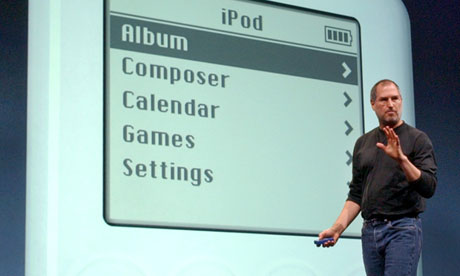
Steve Jobs launches Apples iTunes music store on 28 April 2003.

Steve Jobs launches Apple’s iTunes music store on 28 April 2003. Photograph: Paul Sakuma/AP

Steve Jobs put a new slide up on the huge screen. “We started about a year and a half ago to create a music store,” the Apple chief executivetold the audience. “That meant we have to go and negotiate with the big five music companies. Now, before we did this I was reminded of a quote from Hunter S Thompson about the music industry.”

He looked up at the screen. In giant letters it read: “The music business is a cruel and shallow money trench, a long plastic hallway where thieves and pimps run free, and good men die like dogs.” Jobs read it out and then paused to let the slide’s final line appear: “There’s also a negative side.” Laughter from the audience. “So I didn’t know what to expect,” Jobs added.

It was 28 April 2003, and Jobs was taking Apple into entirely new territory. Its iPod music player was just 18 months old, but after years of developing hardware and software, the company was now getting into services: specifically, selling music. It was a huge gamble, but one Jobs believed in. Read more of this post

How Big Data Is Playing Recruiter for Specialized Workers

April 27, 2013

How Big Data Is Playing Recruiter for Specialized Workers

By MATT RICHTEL

WHEN the e-mail came out of the blue last summer, offering a shot as a programmer at a San Francisco start-up, Jade Dominguez, 26, was living off credit card debt in a rental in South Pasadena, Calif., while he taught himself programming. He had been an average student in high school and hadn’t bothered with college, but someone, somewhere out there in the cloud, thought that he might be brilliant, or at least a diamond in the rough. That someone was Luca Bonmassar. He had discovered Mr. Dominguez by using a technology that raises important questions about how people are recruited and hired, and whether great talent is being overlooked along the way. The concept is to focus less than recruiters might on traditional talent markers — a degree from M.I.T., a previous job at Google, a recommendation from a friend or colleague — and more on simple notions: How well does the person perform? What can the person do? And can it be quantified? The technology is the product of Gild, the 18-month-old start-up company of which Mr. Bonmassar is a co-founder. His is one of a handful of young businesses aiming to automate the discovery of talented programmers — a group that is in enormous demand. These efforts fall in the category of Big Data, using computers to gather and crunch all kinds of information to perform many tasks, whether recommending books, putting targeted ads onto Web sites or predicting health care outcomes or stock prices.

Of late, growing numbers of academics and entrepreneurs are applying Big Data to human resources and the search for talent, creating a field called work-force science. Gild is trying to see whether these technologies can also be used to predict how well a programmer will perform in a job. The company scours the Internet for clues: Is his or her code well-regarded by other programmers? Does it get reused? How does the programmer communicate ideas? How does he or she relate on social media sites? Read more of this post

How three Australians took Twitter into music

How three Australians took Twitter into music

PUBLISHED: 23 HOURS 11 MINUTES AGO | UPDATE: 13 HOURS 26 MINUTES AGO

bd3b6708-ae46-11e2-b726-5af856bd2aa3_WeAreHunted_0888--646x363

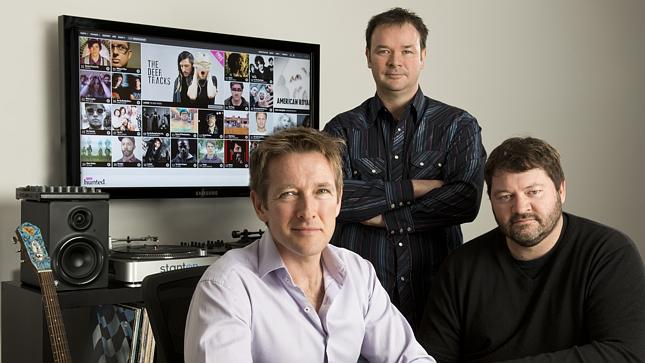
Richard Slatter, Michael Doherty, Stephen Phillips, who sold their business to Twitter in November. Photo: Mark Medeo

JESSICA GARDNER

The three unknown Australians behind the biggest digital product launch of the year had an unusual induction to Twitter. Having quietly signed a dream deal with the microblogging site in November – a deal that has made the trio from Brisbane and their backers a small fortune – they were secreted away to a nondescript office block in downtown San Francisco. It was just 10 minutes away from Twitter’s Market Street headquarters. But there would be no yoga room, free cafeteria, roof-top garden and colourful couches for Richard Slatter, Stephen Phillips and Michael Doherty. No casual contact with the mothership was allowed until the deal was announced four months later. Their new colleagues were to be kept completely in the dark.

It was an unlikely welcome to Silicon Valley, the technology hub that heaves on networking events and where introductions are like oxygen. But the Australians were happy to be working under the radar. The amount Twitter paid for their start-up, We Are Hunted, has not been disclosed but the price tag is likely to be in the tens of millions of dollars. Even for a technology company as big as Twitter – with its more than 200 million active users and 500 million registered accounts – it was a big bite. The new employees understood the need for secrecy as they worked away to meet the deadline for a highly orchestrated launch. Read more of this post

Built in LA report shows that the LA startup ecosystem has come a long, long way

Built in LA report shows that the LA startup ecosystem has come a long, long way

BY MICHAEL CARNEY 
ON APRIL 26, 2013

There has been no shortage of talk both in and out of Los Angeles about the rise of the LA startup ecosystem over the last 12 to 18 months. As someone who’s been on the ground and deeply embedded in the community, I can attest that it has been a period of astounding growth and maturation. The problem has always been that there was little data available to back up otherwise subjective claims like these. That’s no longer the case, thanks to a new Built In L.A. 2012 Digital Startup Report. The report, released on Wednesday of this week, details the year that was arguably the most prolific in terms of company creation than any in the city’s history. In total, some 220 startups launched in Los Angeles in 2012 – and believe it or not, not all of them came out of Mike Jones and Peter Pham’sScience. The ecosystem as a whole raised $847 million during the year from 170 different VCs and angel investors, with more than 100 companies securing funding of at least $1 million during the year. There were 11 fundings over $20 million in size, another 12 between $10 million and $20 million, and 20 more between $5 million and $10 million.

Additionally, 43 LA-based companies were acquired, the most of any year on record. The largest check written was Tencent’s acquisition of majority interest in Riot Games for $400 million, in a transaction valuing the company at $472 million. This deal was followed closely by Sony’s $380 million acquisition of Gaikai (which was located a few miles south in Orange County). Read more of this post

The great surveillance boom; Video surveillance is already big business. In the aftermath of the Boston Marathon bombings, expect it to get even bigger

The great surveillance boom

April 26, 2013: 4:56 PM ET

Video surveillance is already big business. In the aftermath of the Boston Marathon bombings, expect it to get even bigger.

By Keith Proctor

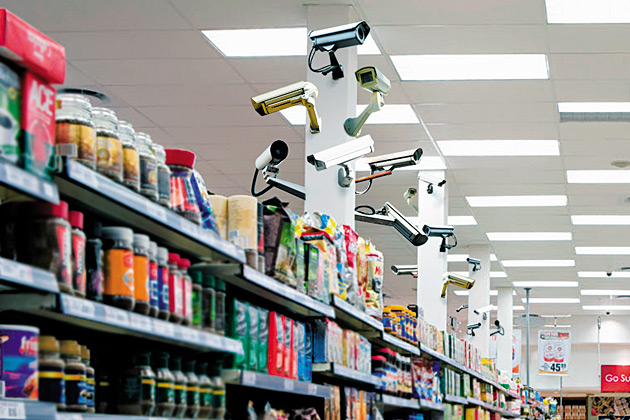
FORTUNE — Video surveillance is big business. Expect it to get bigger. After law enforcement used closed-circuit television (CCTV) cameras to help identify last week’s Boston bombing suspects, lawmakers and surveillance advocates renewed calls for increased numbers of cameras nationwide. “We need more cameras, and we need them now,” ran a Slate headline. Rep. Peter King (R-NY) agrees. In an interview the day after the bombings with MSNBC’s Andrea Mitchell, he called for more video surveillance so that we can “stay ahead of the terrorists.” “So yes, I do favor more cameras,” said King, who sits on the U.S. House Homeland Security and Intelligence committees and has also called for increased monitoring of Muslim Americans. “They’re a great law enforcement method and device. And again, it keeps us ahead of the terrorists, who are constantly trying to kill us.” Law enforcement officials in New York are almost certain to oblige. NYPD Commissioner Ray Kelly wants to “increase significantly” the amount of surveillance equipment in Manhattan, which already has one of the country’s most robust systems.

The argument for greater surveillance is straightforward. Horrible events in places like Boston remind us that we’re vulnerable. The best way to limit events like last week’s bombings, the argument goes, is to accept 24-hour surveillance in public spaces. And when you see someone maimed by bomb shrapnel, privacy concerns sound coldly abstract. No amount of security can completely eliminate risk, so it’s difficult to know where to draw the line. Are 10,000 cameras really twice as good as 5,000? In tragedy’s aftermath, it can be tough to have a serious conversation about how much to invest. But when the goal is to push risk as close to zero as possible, spending can asymptotically stretch into infinity. Read more of this post

3D printing: A new brick in the Great Wall; Additive manufacturing is growing apace in China vs “subtractive” technology of lathes, milling machines and cutting tools

3D printing: A new brick in the Great Wall; Additive manufacturing is growing apace in China

Apr 27th 2013 | BEIJING |From the print edition

20130427_STD001_0

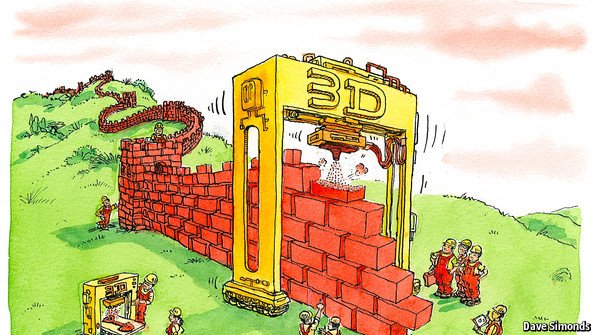
ALTHOUGH it is the weekend, a small factory in the Haidian district of Beijing is hard at work. Eight machines, the biggest the size of a delivery van, are busy making things. Yet the factory, owned by Beijing Longyuan Automated Fabrication System (known as AFS), appears almost deserted. This is because it is using additive-manufacturing machines, popularly known as three-dimensional (3D) printers, which run unattended day and night, seven days a week.

The printers require an occasional visit from a supervisor to top them up with the powdered materials they use as their “inks”, or to remove a completed item, but apart from that they can be left on their own. They build up the objects they are making one layer at a time, as the ink is sintered into place with a laser in a way that creates little waste and can make shapes impossible to achieve using the traditional “subtractive” technology of lathes, milling machines and cutting tools. Read more of this post

Cities are finding useful ways of handling a torrent of data

Cities are finding useful ways of handling a torrent of data

Apr 27th 2013 | CHICAGO |From the print edition

20130427_USD002_020130427_USC502

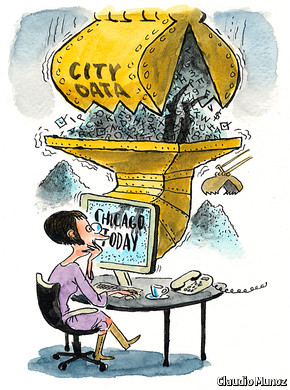
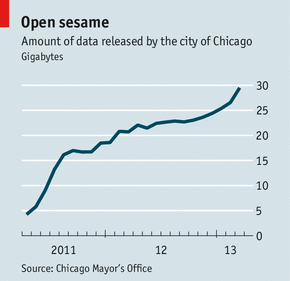
THANKS to Brett Goldstein, Chicago’s chief information officer, it is easy to discover a great deal about his city. In the past three months 5,973 vehicles were moved; since the start of 2011, 72,687 complaints about faulty lights in alleyways have been reported; and in the first half of 2012 the tourist-information website was apparently unavailable for 5,870 minutes. (The city says this was caused by a fault in the monitoring software.)

Needless to say, Mr Goldstein will want to get this fixed if he is to retain his annual salary of $154,992. Yet the nugget of data is a tiny detail in a vastly larger enterprise: to make Chicago’s data openly accessible and useful to the millions of people who live and work there.

Many cities around the country find themselves in a similar position: they are accumulating data faster than they know what to do with. One approach is to give them to the public. For example, San Francisco, New York, Philadelphia, Boston and Chicago are or soon will be sharing the grades that health inspectors give to restaurants with an online restaurant directory. Read more of this post

Shopping Tax Free on the Web Nears End

April 25, 2013, 7:48 p.m. ET

Shopping Tax Free on the Web Nears End

By ANN ZIMMERMAN in Dallas, GREG BENSINGER in San Francisco and JOHN D. MCKINNONin Washington

WASHINGTON—Online shoppers, beware. Freedom from sales taxes is on the way out. Late Thursday afternoon, in a 63-to-30 procedural vote, the Senate cleared the way for passage of a bill to effectively end tax-free shopping online. A final Senate vote is scheduled for May 6. The bill, called the Marketplace Fairness Act, would allow states to require online sellers around the country to collect sales tax for them on purchases made by their residents.

Big online sellers have expanded their physical operations nationwide, building warehouses and other facilities to speed delivery, while traditional stores increasingly have an online presence. That has turned the tables for the online retailers, which had benefitted richly from not having to charge shoppers a sales tax on their goods in most states. With their advantage eroding, the Web stores have become part of a surge of corporate support helping to propel the Senate bill toward likely passage, at least in that chamber and possibly also in the House. Read more of this post

Amazon’s success formula: move bits instead of boxes

Amazon’s success formula: move bits instead of boxes

3:17am EDT

By Alistair Barr and Ben Berkowitz

SAN FRANCISCO/NEW YORK (Reuters) – Amazon.com Inc appears to have figured out the secret to being more profitable: sell less physical stuff.

The company reported slowing revenue growth and offered a disappointing outlook for this quarter on Thursday, exacerbating uncertainty about the health of its business beyond the United States. But that may be masking a fundamental shift in its business on home turf. The Internet retail giant that once specialized in moving books and other physical items quickly is increasingly trying to do the same in the digital world, where profit margins are higher, partly because e-books, music and video files and are transmitted electronically at high speed. Throw in a fast-expanding third-party merchant business, where Amazon simply books a cut of sales from seller listings on its website, and the retail giant’s margin outlook is looking a lot better.

Read more of this post

New York Times Moves Toward Netflix Model as Ads Tumble

New York Times Moves Toward Netflix Model as Ads Tumble

New York Times Co. (NYT), the newspaper publisher betting its future on a shift toward digital subscriptions, posted lower sales last quarter as it failed to attract enough readers to make up for a steeper ad decline.

Advertising dropped more than 11 percent to $191.2 million in the first quarter, while subscription sales rose 6.5 percent to $241.8 million, the company said today in a statement. Total revenue fell 2 percent from a year earlier to $465.9 million, missing analysts’ estimates of $470.5 million on average, according to data compiled by Bloomberg. Excluding some items, profit was 4 cents a share, matching estimates.

The results represent Mark Thompson’s first full quarter as the company’s chief executive officer, following his arrival from the British Broadcasting Corp. last November. Thompson announced new strategic initiatives today in a bid to revive growth. The effort includes a lower-priced subscription plan, as well as a higher-priced option that would include access to events. The company also aims to entice more readers and advertisers with online videos.

“We mean to grow our business by launching new products and services based on the unique strengths of Times journalism and by investing in the rapid expansion of existing operations,” Thompson said in a statement. Read more of this post

WPP CEO Sorrell: Google Will Overtake News Corp As Our Largest Media Investment This Year Or Next

WPP CEO Sorrell: Google Will Overtake News Corp As Our Largest Media Investment This Year Or Next

INGRID LUNDENposted 22 hours ago

Martin Sorrell, the CEO of WPP, today laid out a stark picture of how significant a role digital is playing for the advertising giant. Speaking at the FT Digital Media Conference in London today, he said that digital now accounts for 34% of WPP’s media investment, amounting to some $72 billion, rising “from zero to over one-third in about ten years, the age of Google,” he said.

Google, he said, is the second-largest recipient of that digital spend at the moment, at around $2 billion for the quarter, but that it will soon overtake the single biggest beneficiary at the moment, News Corp. Sorrell described Google as “a media owner masquerading as a tech company.” Read more of this post

Chinese restaurant owner says robot noodle maker doing “a good job!” Chinese restaurants, industry develop taste for robots

CHINESE RESTAURANT OWNER SAYS ROBOT NOODLE MAKER DOING “A GOOD JOB!”

Written By: Peter Murray
Posted: 04/19/13 8:15 AM

image1

Noodle peelers should probably start looking for other things to do around the kitchen – there’s just no competing with these robots. Not only are they saving restaurants in China money in wages, they can work rapidly and tirelessly for hours.

We reported on the robots, invented by restaurant owner Cui Runguan, last August. Now, we’re hearing from another restaurant owner who has had one of the robots in his “employ” for a month. How is the indefatigable noodle-maker working out at the Jinhe Noodle Shop in Beijing? The restaurant owner, with the last name Zhao, loves it and tells China’s state-run Xinhua News Agency that “It does a good job!”

Runguan’s robots peel noodle strips from a firm piece of dough and tosses them directly into boiling water “before diners’ eyes can follow the whole process.” To Zhao and a growing number of restaurant owners in China, choosing robots over human noodle cooks is a no-brainer. While a cook doing the same job would make about 40,000 yuan ($6,400) per year, the robot cost him just 10,000 yuan ($1,600). And no human chef can work so tirelessly.

Read more of this post

Netflix Boss Reed Hastings Wrote An 11-Page Manifesto On The Future Of TV

How Netflix CEO Reed Hastings Sees the Future: Netflix Wins, Apps Win and So Do HBO, ESPN and the Cable Guys

APRIL 24, 2013 AT 1:27 PM PT

Fresh off a triumphant earnings report, and with investors once again clamoring for his shares, Reed Hastings has something to say. A lot to say: The Netflix CEO has written an 11-page essay that lays out his vision for the future of streaming video. If you’re looking for news, you won’t find much here — nearly everything in the document, published on Netflix’s investor website, is a repeat of things Hastings has said or written in recent years. But if you’re at all interested in the way Hastings thinks things are going to play out in the battle for video eyeballs, and why he thinks Netflix will win many millions of them, it’s well worth a read. I’ve embedded the document below so you can scan it at your leisure. If you’re in a hurry, some bullet points:

  • The one new nugget here is a Hastings prediction, held by many other people, that we’re moving to a world where “apps replace channels.” Hastings mentions apps nearly 3 dozen times in his essay, and makes it clear that he sees Netflix first and foremost as an app provider.
  • Hastings figures that lots of other video services will figure the same thing out. And he goes out of his way to mention others that are already there or close to it, citing ESPN, HBO and the BBC.
  • But those who don’t get it are screwed, he says: “Existing networks, such as ESPN and HBO, that offer amazing apps will get more viewing than in the past, and be more valuable. Existing networks that fail to develop first-class apps will lose viewing and revenue.”
  • In the past, Netflix has tacked back and forth on whether it is competing head to head with HBO. Now Hastings is back in “we’re coming for you” mode: “The network that we think likely to be our biggest long-term competitor-for-content is HBO … They have global reach and strengthening technology capacity.”
  • But while Netflix now has as many U.S. subscribers as HBO — and while Hastings thinks he can eventually double or triple his current 30 million — he figures it will take him a while to truly compete with HBO. “While we are passing HBO in domestic members in 2013, it will be several years before we are peers with them in terms of Original programming, Emmy awards, and international members. It wouldn’t be surprising to us if HBO does their best work and achieves their highest growth
    over the next decade, spurred on by the Netflix competition and the Internet TV opportunity.”
  • But Hastings also reiterates his argument that there’s room for lots of streaming video services, just like there are lots of cable channels today. Translation: Don’t worry, Jeff Bewkes: Just because we’re coming for you doesn’t mean we’ll crush you. Also, please keep selling us Time Warner’s content! Thanks!
  • Hastings also continues to offer olive branches to the entrenched cable guys, especially those that also sell broadband: “At times we have worried about the strategic motivations of ISPs that are also MVPDs, but the absence of cord-cutting has mitigated this concern. … Internet video services like Netflix, MLB.tv, iTunes and YouTube are not currently a material strategic problem for companies that are both an ISP and an MVPD.” Translation: Hey Comcast, Time Warner Cable, Verizon! It would be pretty cool if we figured out a way for you guys to bundle us along with your other video services! Let’s (continue to) talk!

Google search proves to be new word in stock market prediction

Last updated: April 25, 2013 9:47 pm

Google search proves to be new word in stock market prediction

By Richard Waters in London

Searches of financial terms on Google can be used to predict the direction of the stock market, according to an analysis of search engine behaviour stretching back nearly a decade. The research, by UK and US academics, is the latest attempt to mine online behaviour patterns for clues about future movements in financial markets.

The findings appeared to show that people do more searches on terms such as “stocks”, “portfolio” and “economics” when they are worried about the state of the markets, said Tobias Preis, associate professor of behavioural science and finance at Warwick Business School. Rises in search volumes for such terms are generally followed by stock market declines, according to the research published in the journal Scientific Reports. By contrast, a fall in financial searches often points to greater optimism among investors, leading to a rising market. Read more of this post

Startup Prism Skylabs is closely tracking shoppers via video surveillance to try to match the detail of data gleaned by e-tailers

To Catch Up With E-tail, Tools to Track Shoppers in the Store

By Brad Stone on April 25, 2013

tech_shopping18__01__630x420

Of the many advantages online retailers enjoy over their brick-and-mortar counterparts, the preponderance of data might be the most significant. While physical stores know how many customers visit and what they buy, e-commerce sites know which section customers head to first, how long they look at each product, and who browses but doesn’t make a purchase. Venture capitalist Marc Andreessen suggested in a Jan. 29 interview with startup news site PandoDaily that, in part because of this data gap, all of traditional retail will go the way of Circuit City and Borders. “The retail guys are going to go out of business, and e-commerce will become the place everyone buys,” he said.

U.S. Census data show physical stores still account for 95 percent of retail sales. Still, they’re growing at barely one-quarter the rate of online retailers, and so several technology startups are trying to find ways to provide them with e-commerce-level data. Prism Skylabs uploads and analyzes video from in-store surveillance cameras to track customer movement and the effectiveness of promotions. “All of retail is in a knife fight,” says Steve Russell, co-founder and chief executive officer of the two-year-old San Francisco startup. “There is a lot of pressure from the online world on physical retailers to change, and we are trying to facilitate that.” Read more of this post

Apple’s 10-Year-Old iTunes Loses Ground to Streaming; iTunes’ share of U.S. digital music sales has fallen from 69 percent to 63 percent as avid music listeners turn to streaming services.

Apple’s 10-Year-Old iTunes Loses Ground to Streaming

By Andy Fixmer on April 25, 2013

tech_ituneschart18_405

A decade ago, the newly started iTunes Store gave away a song called Over My Head (Cable Car) by an obscure Denver rock group called The Fray. That was, explains lead guitarist Joe King, the band’s big break. “I’ll never forget, our manager e-mailed and said there had been 300,000 downloads,” says King. “Immediately our fan base went from several hundred to thousands, everywhere. Our tour started selling out.” These days, iTunes doesn’t offer that kind of overnight success for undiscovered musicians, despite its 435 million registered users.

Apple (AAPL) opened the iTunes Store on April 28, 2003, as a legitimate, industry-supported alternative to online music piracy, selling most individual songs for 99¢ a pop. It was the first venue to make digital music purchases mainstream. “Consumers don’t want to be treated like criminals, and artists don’t want their valuable work stolen,” Apple co-founder Steve Jobs said in a statement at the time. “The iTunes Music Store offers a groundbreaking solution for both.” Paired with Apple’s ubiquitous iPod music players and, later, iPhones, it quickly became the Internet’s de facto record store, accounting for nearly 69 percent of digital U.S. music sales at its peak in 2010, according to estimates from market researcher NPD Group. Read more of this post

Should Bloomberg be afraid of Twitter?

Should Bloomberg be afraid of Twitter?

April 24, 2013: 6:35 AM ET

Social media analytics firms such as Dataminr are trying to take on Bloomberg in the race for fast-paced business news updates.

By Omar Akhtar, reporter

FORTUNE — Bloomberg LP has long prided itself on being the premier provider of financial data, news, and analytics, but can it deliver news faster than social media?

Millions of dollars can change hands through the rapid decisions investors make based on industry news. It’s why they’re willing to pay an average of $20,000 a year to use a Bloomberg terminal. The service, which makes up Bloomberg’s core business, aggregates information from more than 1,000 news organizations and 90,000 websites, vital to clients looking for any kind of advantage for their investment strategies. Companies like New York-based startup Dataminrclaim they can deliver market-moving information faster than the newswires by accessing and analyzing information available on social media. Read more of this post

Beyond the energy and cost savings, new types of lighting are now envisioned as ways to heal, soothe, invigorate or protect people.

April 24, 2013

New Technology Inspires a Rethinking of Light

By FELICITY BARRINGER

LIGHT-articleLarge

BETTER GUIDANCE Engineers with the Lighting Science Group Corporation, Mark Oostdyk, right, and Ran Zhou, testing road lights.

AFTER the joy of the birth itself, parenthood sometimes brings the unwelcome news that a newborn has jaundice and must wear goggles and be placed under special lights. Imagine how different this experience might be if there were no goggles, just a warm blanket covering the tiny body, a healing frequency of blue light emanating from its folds. That comforting scene, already a reality in some hospitals, is evidence of the fundamental rethinking of lighting now under way in research labs, executive offices and investor conferences. Digital revolutionaries have Edison’s 130-year-old industry, and its $100 billion in worldwide revenue, in their sights. Color, control and function are all being reassessed, and new players have emerged like a wave of Silicon Valley start-ups.

“This is the move from the last industrial-age analog technology to a digital technology,” said Fred Maxik, the chief technology officer with the Lighting Science Group Corporation, one of many newer players in the field. Read more of this post

Mixpanel, A Startup That Wants To Kill Pageviews And Other ‘BS Metrics,’ Now Measures 12 Billion Actions Per Month

Mixpanel, A Startup That Wants To Kill Pageviews And Other ‘BS Metrics,’ Now Measures 12 Billion Actions Per Month

Alyson Shontell | Apr. 24, 2013, 2:37 PM | 1,947 | 3

mixpanel-suhail-doshi-tim

Suhail Doshi is a no BS kind of guy. He believes it’s “BS” to report pageviews, a metric digital companies frequently use to show their site’s growth. Instead, Doshi wants digital and mobile companies to highlight monthly user engagement numbers, a metric he believes is much more important than pageviews. His startup, Mixpanel, helps companies track one key metric, and his engagement-first mentality is starting to catch on.Mixpanel is an analytics company that was founded in 2009. It helps 1,000 paying customers and tens of thousands of non-paying customers track “actions.” Any time a user engages in a powerful way with a brand (a user buying a rental on Airbnb, for example, posting a photo to Instagram, or “liking” content on Facebook), Mixpanel calls that an event or “action.” Doshi says his company now tracks 12 billion actions per month for its customers. That’s up from 10 billion the month before. It took one year for Mixpanel to track its first 1 billion actions. Read more of this post

Rise of the Maple Syrup Mafia; Can a successful exit by one Canadian tech firm jump-start innovation north of the border, a la Silicon Valley’s PayPal Mafia?

Rise of the Maple Syrup Mafia

April 24, 2013: 7:18 AM ET

Can a successful exit by one Canadian tech firm jump-start innovation north of the border, a la Silicon Valley’s PayPal Mafia?

By Ryan Holmes

FORTUNE — In 2002, PayPal, the online payments giant, was sold to eBay for a cool $1.5 billion. Overnight, many of PayPal’s core employees got very rich. Rather than calling it a day, however, theso-called PayPal mafia went on to found and invest in a wave of new startups. You may have heard of some: Facebook, LinkedIn, YouTube, Yelp, Zynga, and Kiva … to name just a few. From one buyout, an entire ecosystem of wildly successful tech companies was spawned. In fact, over the last decade, the PayPal mafia’s track record has been nothing short of extraordinary, with one promising startup after another propelled to billion-dollar status and well beyond.

So what’s their secret? Was there something in the water? Did PayPal (EBAY) co-founders Peter Thiel and Max Levchin teach employees some Jedi entrepreneurial magic? Maybe. (Thiel doesbelieve humans can live forever.) But the likeliest explanation is a bit more mundane: The PayPal buyout gave some very young, very ambitious people the confidence to try for another big win and an experienced network to fund them. If that’s all there is to it, then I’ve got a question. Why does Silicon Valley get to have a monopoly on innovation? Why aren’t new tech mafias springing up elsewhere? The Internet radically decentralized information and ideas. So why is startup success still confined mainly to one corner of California? Read more of this post

IBM’s Chief to Employees: Think Fast, Move Faster

Updated April 24, 2013, 9:24 p.m. ET

IBM’s Chief to Employees: Think Fast, Move Faster

By SPENCER E. ANTE

IBM is reassigning hardware chief Rodney Akins following poor performance results in the first quarter that sent the stock plunging. Spencer Ante reports on The News Hub. (Photo: AP)

International Business Machines Corp. IBM +0.05% Chief Executive Virginia Romettydelivered a rare companywide reprimand in the wake of a poor earnings report last week, saying the sprawling technology company needed to move faster and respond more quickly to customers. The comments came in a five-minute internal video message to the company’s 434,000 employees. In the video, Ms. Rometty salted the praise for employees in her regular post-earnings pep talk with unusually blunt comments that the company needs to speed its shift to new computing models to get back on track. “Where we haven’t transformed rapidly enough, we struggled,” Ms. Rometty said in the video published on IBM’s internal website and reviewed by The Wall Street Journal. “We have to step up with that and deal with that, and that is on all levels.” Read more of this post

India’s Biometric IDs Put Its Poorest on the Map

India’s Biometric IDs Put Its Poorest on the Map

People who grew up in Britain in the 1960s will remember a television program that built a cult following: “The Prisoner.” It was about an oddly luxurious detention camp — a kind of Guantanamo Bay by Four Seasons, spa services and brainwashing included. Even if you wanted to, trying to escape was pointless. A big balloon would chase you and bring you back. The residents didn’t have names, just numbers. The show’s tagline was: “I am not a number. I am a free man.”

The phrase came to mind while I listened this week to Nandan Nilekani, co-founder of Infosys Ltd. (INFY) and one of the world’s most successful information-technology entrepreneurs. Speaking at the Center for Global Development in Washington, he was describing India’s remarkable Unique Identification (UID) project, also called Aadhaar, which he is leading.

Nilekani explained that since the program began in 2010, more than 300 million Indians have acquired a unique ID number associated with 12 biometric markers — 10 fingerprints and two iris scans. (Collecting that much data for each enrollee minimizes errors.) At today’s stunning rate of progress, reaching the goal of covering India’s population of 1.2 billion will take less than five years. The audience listened admiringly, and asked not a single hostile question. Read more of this post

Sleeping ad giant Amazon finally stirs

Analysis: Sleeping ad giant Amazon finally stirs

1:09am EDT

By Alistair Barr and Jennifer Saba

SAN FRANCISCO/NEW YORK (Reuters) – Amazon.com Inc is known in the advertising industry as the “sleeping giant” because the world’s largest Internet retailer harbors a trove of consumer-spending data that many marketers have called an unrealized opportunity.

Now it’s awakening to the potential. After running ads on its own website for years, the company has taken the first steps toward becoming a true Internet advertising network, using the knowledge garnered from its data to place targeted ads for some of the world’s biggest advertisers across thousands of other websites.

An Amazon mobile ad network, launched late last year, is now blasting ads via apps on smartphones and tablets, including Apple Inc iPhones and devices powered by Google Inc’s Android operating system.

For Amazon, an ad business is a new revenue stream with fatter margins than its retail operations. To Google, Facebook Inc and other online ad leaders, Amazon is a threat because it has data they lack. Read more of this post

Swatch Turns Attention to Own Timepieces Amid Apple IWatch Talk

Swatch Turns Attention to Own Timepieces Amid Apple IWatch Talk

Swatch Group AG (UHR), skeptical about Apple Inc. (AAPL)’s possible entrance into the watch industry, will attempt to turn attention back to its own timepieces at a watch fair debut this week.

The Swiss watchmaker will hold a press conference tomorrow to showcase the “latest revolutionary Swatch innovation” and mark its 30th anniversary. It will be the first time that Swatch Group brings its namesake brand of inexpensive plastic timepieces to Baselworld, the world’s biggest trade fair for watches. Until now it has only used the event to showcase higher-end brands such as Omega and Breguet.

Swatch last year introduced self-winding automatic watches, which normally cost thousands of dollars, for as little as $170. The brand may expand in that area to differentiate its collection ahead of an expected offensive by Apple in high-tech watches, said Rene Weber, an analyst at Bank Vontobel in Zurich. Apple has about 100 product designers working on a watch device that may perform some of the tasks handled by an iPhone or iPad, people familiar with the plan said in February.

“There will be something special,” Weber said of this week’s announcement from Swatch. “There’s been rumors in the direction of an iWatch, which I don’t believe. I think it’ll be something more mechanical.” Read more of this post

The dumb things we say in the startup world

The dumb things we say in the startup world

BY BEN T. SMITH, IV AND MARK MENELL 

ON APRIL 23, 2013

You’ve got to give them credit. Entrepreneurs are the ultimate financial salmon, swimming upstream against a tidal wave of practical, operating, and financial disasters. The result is dedication and perseverance, yet under the pressure of building a startup from scratch, many entrepreneurs tend to develop an overly acute tunnel vision. These are the entrepreneurs that author the 100 slide PowerPoint investor deck where the last 99 slides try to convince you why you should invest after the first slide convinced you not to. Regardless of whether or not the entrepreneur makes it back to the upper reaches of the river, they can say and do some pretty dumb things along the journey. Over the years, we’ve heard a pretty lively assortment of dumb things, some of them issued from right beneath our own noses. No one is immune to wrong-headed thinking, and fortunately, we’ve managed to keep a record of some of the interesting examples. This has helped us guide other entrepreneurs through the troubled waters and makes for smoother sailing on our future ventures. So prepare yourself. Here are the 10 dumbest things we have heard…or maybe, um, we’ve said:

1. “We can’t give up that much ownership! What will we ever use that extra $2 million for?”

It sounds thoughtful, conservative, responsible, and careful. It’s usually just misguided. In terms of dilution, it’s good to maintain as much control as possible, but don’t let your ship go under in lieu of accepting the right financing deal during the crucial proving period.

2. “If you are not sleeping under your desk regularly, you are not committed to this.” 

You are putting everything on the line. All you ask in return from employees is absolute dedication. You can’t beat people into commitment. If your idea is so great, inspire them to be as dedicated as you are. If you can inspire people to be passionate, you can let go of rigid rules and authoritarian mandates because everyone will give all they have for the sake of the dream. Marissa Mayer is wrong — a dedicated, passionate team will do absolutely whatever it takes whether they are in the office, on the road or occasionally making it home to see their kids for dinner. Read more of this post

It’s Getting Harder to Make Money on YouTube

It’s Getting Harder to Make Money on YouTube

By Anita Hamilton on April 22, 2013

Despite success stories about YouTube (GOOG) sensations such as Jenna Marbles, the vast majority of the site’s users probably don’t think of it as a place to earn money. The video giant wants to change that. It’s trying to build a bench of talent that can support its ambition of competing with traditional TV. In the past year it has opened swanky new studios in Los Angeles, London, and Tokyo, launched more than 100 new original content channels, and made advances totaling more than $300 million to some of its top video makers.

For folks who dream of earning a living as YouTubepreneurs, the biggest change took effect last April, when the video site launched a new revenue-sharing program. Whereas before, creators who wanted to pair sponsors’ ads with their videos had to get YouTube’s permission, now the video platform has automated the process with a “monetize” button, essentially opening the flood gates to anyone who posts an original video. Creators get about half the advertising proceeds, according to industry analysts and video makers. (YouTube typically finds the advertisers, although creators can approach sponsors directly.) “If they can generate an audience, they can start making money,” says Tom Pickett, YouTube’s vice president of global operations. Read more of this post

Scotland’s tech start-up capital; Edinburgh is emerging as a start-up city because of the interplay bet­ween its strengths in academia, capitalists and a close-knit community that helps to build networks

April 23, 2013 5:28 pm

Scotland’s tech start-up capital

By Jonathan Moules

T he flowering of philosophical thinking in Edinburgh at the end of the 18th century earn­ed the Scottish capital its “Athens of the North” epithet. In the 21st century, the aspiration of several thinkers in the Scottish capital is to ape Silicon Valley.

There is some logic to this. Out of the near 1,600 university spinouts in the UK since 2001, 504 were from Scottish universities and almost half of those (244) were from Edinburgh university despite the country’s much smaller population and student numbers. This puts Edinburgh alongside Cambridge, another British city that investors and technologists around the world have long been interested in, and London, home to many of the UK’s digital start-up clusters.

Edinburgh is emerging as a start-up city because of the interplay bet­ween its strengths in academia, a tradition of those who have made money in the city to employ that wealth in helping others and a close-knit community that helps to build networks. Read more of this post

Why Tim Cook Is Like Steve Ballmer

APRIL 23, 2013, 6:00 AM

Why Tim Cook Is Like Steve Ballmer

By NICK WINGFIELD

On Monday, Matthew Panzarino of the Next Web, a tech news site, tweeted an ironic message that read “Fire Tim Cook!,” along with a link to a couple of charts showing the steady upward march of Apple’s revenue and profit over the last few years.

Looked at that way, the campaign by some of those who are bearish on Apple stock to unseat Mr. Cook, Apple’s chief executive, seems rather absurd.

It’s worth pointing out that Apple is not the only big tech company where there seems to be a disconnect, at least a superficial one, between the doom-saying of some investors and the company’s financial performance.

For many investors, Steve Ballmer, the chief executive of Microsoft, has long been one of tech’s favorite villains. His company’s stock has lost 43 percent in value since he got Microsoft’s top job on Jan. 13, 2000. Periodically, pundits, investors and even former executives call for Mr. Ballmer to get the boot.

During the 13 years Mr. Ballmer has led Microsoft, though, annual revenue at the company has grown 221 percent, to $73.72 billion, and profit has jumped 80 percent, to $16.98 billion. Read more of this post

Fab, ‘The World’s Alternative To Amazon And Walmart,’ Could Now Be A Billion-Dollar Company with $150 million revenue

Fab, ‘The World’s Alternative To Amazon And Walmart,’ Could Now Be A Billion-Dollar Company

Megan Rose Dickey | Apr. 23, 2013, 9:43 AM | 1,136 | 2

Fab is reportedly raising a massive round at a $1 billion valuation, just as it’s gearing up to announce its next pivot. The round is expected to be more than $100 million, TechCrunch’s Leena Rao and Alexia Tsotsis report. Fab has already raised $171 million in funding, but the highest valuation it received prior to this round was $600 million. Last year, Fab saw $150 million revenue, with sales growing nearly 300% from January 2012 to January 2013. Since it’s first pivot from a social network for gay men to a design flash sales site, Fab has grown to more than 11 million members. Fab also has great retention, with repeat buyers making up 67% of its daily sales. As Fab gears up to pivot, it will have a nice chunk of cash to fuel its next move. Fab’s previous investors include Andreessen HorowitzMenlo VenturesSoftTech VCFirst Round CapitalKevin RoseSV Angel, and many others. Business Insider has reached out to Fab CEO Jason Goldberg and a couple of Fab’s previous investors. We will update this story if we hear back.