Bing Gordon’s Founder Checklist: Animal Energy, Blind Confidence, And A Toupee.

Bing Gordon’s Founder Checklist: Animal Energy, Blind Confidence, And A Toupee.

DEREK ANDERSEN

posted 1 hour ago

Editor’s note: Derek Andersen is the founder of Startup Grind, a 40-city community bringing the global startup world together while educating, inspiring, and connecting entrepreneurs.

screen-shot-2013-03-30-at-12-09-31-am1

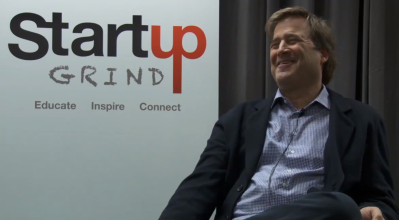
As an Electronic Arts’ intern eight years ago, I asked Bing Gordon then the chief creative officer and the only remaining early founding team member, a question about vision. “How can I know where the puck is going to be?” While he delivered a satisfactory response, two weeks later I received an email from Bing saying, “I answered that question poorly a few weeks and I wanted to try again.” A few weeks ago Bing joined me at Startup Grind in Silicon Valley where he delivered some videogame history and founder advice. In 2010 Mark Pincus called KPCB general partner Bing Gordon (look for a bald guy on the front row) one of the world’s “great CEO coaches” supporting founders on the boards of companies like Amazon, Zynga, Klout, and Zazzle. Here are some excepts from our recent interview. Read more of this post

Sequoia Capital In Singapore After A Year, Has Yet To Invest In A Local Startup

Sequoia Capital In Singapore After A Year, Has Yet To Invest In A Local Startup

VICTORIA HO

posted yesterday

When Sequoia Capital India landed in Singapore quietly in 2012, the buzz around town was that a big-name US fund being in the country was going to really jolt the market and provide serious cred to the startups here.

The Indian team running operations here, however, appears to have spent the last year of its time in the island state helping startups in its India portfolio expand into Singapore, rather than directly investing in startups here. Read more of this post

How Digital Technologies Change the Game: A Discussion with Five Leaders

How Digital Technologies Change the Game: A Discussion with Five Leaders

MARCH 25, 2013

During the dot-com era, “The Internet changes everything” was a popular refrain. The line was not wrong—just premature. Today, the Internet finally is changing everything.

The way we learn, form friendships, communicate, and do business has been permanently altered. Major industries, such as traditional media, have been disrupted, but all industries have felt the effects of big data, Internet connectivity, and social media. The Internet does not just change everything. It is everywhere, too. Asia and now Africa are quickly catching up with the rest of the world in terms of connectivity.

To understand what has changed and how businesses can respond, The Boston Consulting Group hosted a breakfast panel called “Digital Game Changers” at the World Economic Forum’s annual meeting in Davos, Switzerland. The august group of panelists included the following:

  • Marc Benioff, the founder of Salesforce.com, a leader in enterprise cloud computing
  • Matt Brittin, Google vice president of Northern and Central Europe
  • Arianna Huffington of The Huffington Post 
  • Steve Mollenkopf, president of Qualcomm, an innovator in wireless and next-generation technologies
  • Jimmy Wales, founder of Wikipedia

The quintet discussed the disruptive force of the Internet on industry economics and the transformative effect of connectivity on organizations and customer interactions. They also ranged over the rapid entry of emerging markets into the connected world, the delivery of mobile health care, the dangers of cyber attacks—and the need to unplug from it all from time to time. In short, the panelists knew how to pack a punch. Read more of this post

Meet Cyro, The Robotic Jellyfish That Will Haunt Your Dreams

Meet Cyro, The Robotic Jellyfish That Will Haunt Your Dreams

Matthew ShaerChristian Science Monitor | Mar. 29, 2013, 11:26 PM | 1,354 | 1

If you’re frightened of the ocean, or the creatures that lurk beneath the waves, we recommend that you read no further. According to the Los Angeles Times, engineers at aVirginia Tech lab are working on a giant, synthetic, robo-jellyfish, which one day could autonomously patrol the high seas. The project, which is funded by a $5-million grant from the US Naval Undersea Warfare Center and the Office of Naval Research, has already yielded one workable prototype: a 170-pound monster nicknamed Cyro. Geek.com reports that Cyro measures more than five feet in length, and behaves very much like its organic counterpart. Cryo consists of a central core of components in a waterproof shell connected to eight moving arms. Draped over this is a large and soft piece of white silicone, which comes into contact with each of the arms and remains flexible. Combined, the arms and silicone act as a propulsion system mimicking how real jellyfish move around. A video produced by Virginia Tech indicates that Cyro could eventually be used to keep tabs on ecologically-sensitive underwater areas or to help clean up oil spills. Jellyfish, after all, are extremely efficient swimmers – they require less energy than, say, a large fish to keep moving. Still, we stand by our original point. Regular jellyfish are scary enough. Robotic jellyfish? The stuff of horror flicks – or at least spy movies. “Imagine,” writes Matt Peckham of Time Magazine, “a fully-realized version of such a robot running underwater surveillance missions for the U.S. Navy – the marine version of a weaponless drone, in other words, perhaps poking around someone’s oceanfront property (or, heaven forbid, employed in a civilian capacity by ignoble paparazzi to stalk celebrities).” In related news, here’s a compendium of horror movies that include jellyfish. Among them: The 1965 epic “Sting of Death.”

Demand for ‘dislike’ button grows; Facebook users want icon to warn of swindling

2013-03-29 19:16

Demand for ‘dislike’ button grows

Facebook users want icon to warn of swindling
By Kwon Ji-youn

“The opposite of ‘like’ is not ‘un-like,’” said Choi Jung-hwan, 23, a technician. “It’s dislike.” On Facebook, users can “like” friends’ comments, photos, or statuses by clicking on a blue “thumbs-up” icon, to express agreement or interest. But users have been, for the past few years, calling for the introduction of a “dislike” button as well. It is technically possible to “un-like” a friend’s comment or photo. But in order for this to be effective, the profile owner must be aware the friend has first liked, then “un-liked,” the comment, which calls for careful monitoring of one’s Facebook profile page. Facebook surprised its user base with a “dislike” icon in 2010. However, the icon was a scam, which directed users’ to an existing Firefox add-on that allowed Facebook users to “dislike” posts.   Read more of this post

Making Robots Mimic the Human Hand

March 29, 2013

Making Robots Mimic the Human Hand

By JOHN MARKOFF

http://bcove.me/733p3d03

As part of a national research project to develop low-cost artificial hands, the Pentagon has released a video of a robot that can change a tire — almost. In the video, the two-armed robot uses a tool to remove a tire from a car. “We’re almost on the stage where we can put the the nuts back onto the bolts,” said Gill Pratt, a program manager at the Pentagon’s Defense Advanced Research Projects Agency, or Darpa.

The goal of the program, now in its third phase, is to develop robots and prosthetic devices for wide use. Until now, high cost as well as limits on dexterity and machine vision have been major obstacles to advanced robotic systems. Robotic hands that mimic the capabilities of the human hand have cost $10,000 or more, and computer vision systems have worked only in highly structured environments on a very limited set of objects. But it is becoming feasible to make hands that will cost less than $3,000 in quantities of 1,000. Two teams — from iRobot, a robot maker in Bedford, Mass., and the government’s Sandia National Laboratories in New Mexico — are working on the hand project; they employ a variety of widely available technologies, like cellphone cameras and sensors, to help lower costs. Read more of this post

Q&A: Upworthy CEO Eli Pariser on the unpredictable nature of viral

Q&A: Upworthy CEO Eli Pariser on the unpredictable nature of viral

By Hayley Tsukayama, Saturday, March 30, 2:48 AM

Upworthy, a site that tries to make meaningful videos, graphics and pictures go viral, recently celebrated its first anniversary by announcing that it now has 1.2 million fans on Facebook. The project is the brain child of Eli Pariser, formerly of the political publication MoveOn, and former Onion managing editor Peter Koechley. Pariser, now Upworthy’s chief executive officer, took some time to chat about what the company has learned from its first year and what’s on the horizon. An edited version of our conversation appears below:

Let’s start with a big question. What have you learned from this first year?

I think when we started we sat down with investors and partners and looked them in the eye and said people want substantive content on the Internet– secretly we wondered if that was really true. We were not sure if that was how it was going to turn out, you know, a lot of people said that thing about how you can lead a horse to water but you can’t make it drink. But we’ve found, yes, there’s an appetite. It doesn’t have to be all celebrities and pet tricks.

What kinds of things have you seen blow up that you weren’t expecting? What trends have you noticed?

It’s always surprising to us why things take off. The post about the GoldieBlox tool kit [a building toy set for girls, created by a female engineer] was such as huge hit, when other content about when girls becoming engineers wasn’t. In general, I would say we focus on the things that are visual, meaningful and shareable — that’s our triad and I think that’s served us well. Read more of this post

Wal-Mart is examining a groundbreaking plan to use shoppers in its stores to make deliveries to consumers who have ordered the retailer’s items online. The retailer could potentially offer a discount to entice shoppers to make the deliveries on their way home from stores.

Wal-mart to use its customers to deliver products

Wal-Mart is examining a groundbreaking plan to use shoppers in its stores to make deliveries to consumers who have ordered the retailer’s items online.

Wal-Mart is forecasting online sales of about $9bn (£5.9bn) this year

By Richard Blackden

8:58PM GMT 28 Mar 2013

The world’s biggest retailer is making a big push to drive online sales as more Americans stay connected to the internet throughout the day through phones and tablet devices. A small number of its more than 4,000 stores have begun delivering orders directly to consumers, rather than sourcing the items from warehouses. Using consumers in its stores would take that one step further. “I see a path to where this is crowd sourced,” Joel Anderson, who runs Walmart.com in the US, told Reuters. He said the retailer could potentially offer a discount to entice shoppers to make the deliveries on their way home from stores.

Read more of this post

The real Disney: The wonderful world of ESPN, the sports network which outmints Mickey Mouse; ESPN is probably responsible for 40% of Disney’s operating income, 60% of its free cashflow and as much as half of its share price

The real Disney: The wonderful world of ESPN, the sports network which outmints Mickey Mouse

Mar 30th 2013 |From the print edition

0225bz_0288dr

IN 1996 Warner Brothers released “Space Jam”, a film starring Bugs Bunny and Michael Jordan, a basketball star. It drew sniffy reviews from curmudgeonly critics but made pots of money. The plot was wildly implausible: Mr Jordan and Mr Bunny beat a team of evil aliens at basketball, thus saving everyone from having to work at an alien theme park called Moron Mountain. But that’s fiction. In real life, sports stars and cartoon characters would never work well together.

Or would they? In fact, at Warner Brothers’ great rival, they do. Disney is best known for cartoons that enchant children, from “Snow White” to “The Lion King”. But its most valuable asset is ESPN, a cable sports network beloved by beer-guzzling grown-ups. Disney owns 80%; Hearst, a privately-held media firm, controls the rest. Disney does not disclose the numbers, and estimates vary, but ESPN is probably responsible for 40% of Disney’s operating income, 60% of its free cashflow and as much as half of its share price. Read more of this post

Next Facebook May Be Chinese as Sites Innovate, Not Copy

Next Facebook May Be Chinese as Sites Innovate, Not Copy

Instagram, the photo-sharing app bought by Facebook Inc. (FB) last year, offers special effects that can give pictures a weathered black-and-white cast or retro tints. In Beijing, Xu Chaojun’s PaPa app does that, too. In addition, it lets users attach voice messages that can sound like robots or cats. PaPa notched 10 million downloads in five months from iPhone and Android users and the company released an English- language version, Wave, on Apple Inc. (AAP)’s iTunes on March 10. Chinese Internet companies, such as Alibaba.com Ltd. (1688), have been dismissed as imitators of successful U.S. enterprises like EBay Inc (EBAY) (EBAY). Some have been content to profit from their vast home market. Yet Xu’s firm and others aim to compete globally and many Chinese entrepreneurs are improving on the Western products that inspired them, said Kai-Fu Lee, the former head of Google Inc. (GOOG)’s China operation and founder of venture capital fund Innovation Works.

“Innovation, if it’s defined as inventing the light bulb, might still be a stretch for China,” said Lee, who helped fund PaPa. “To be the first to conceive of the next iPhone may be still a little difficult, but the prospect of making a Facebook, a Twitter or an Instagram, I think that is now, for the first time ever, within reach for the Chinese startup.” Read more of this post

Businesses Bet on Iron Man-Like Exoskeletons; Taking a nod from Iron Man, bionic suits are available for almost $70,000. About 20 individuals in Europe have bought them so far.

Businesses Bet on Iron Man-Like Exoskeletons

By Thomas Black on March 28, 2013

comp_ironsuits14__01__630x420

In the 1960s, the Incredible Hulk rose to fame as Marvel Comics’ green mutant antihero with superhuman strength and some serious anger issues. Now Lockheed Martin (LMT) is betting that a modern-day hulk—make that HULC—will one day bring it supersize sales. Lockheed, the world’s largest defense contractor, envisions a leap forward in battlefield mobility with its Human Universal Load Carrier (HULC), a wearable exoskeleton intended to let a soldier lug a 200-pound pack with minimal effort over a 20-kilometer (12.4-mile) hike. That’s no small feat, since back strain is the military’s most common noncombat injury because of the heavy packs soldiers carry. Exoskeletons hold “tremendous potential” to ease those burdens, says David Accetta, a spokesman for the U.S. Army Natick Soldier Research, Development, and Engineering Center, in an e-mail. The Army is planning a field demonstration of the device in May, and the HULC device is being refined to be more easily worn under a uniform. Neither Lockheed nor the Army would disclose funding details.

Lockheed, Parker Hannifin (PH), and a handful of startups are vying to find practical—and profitable—uses for the kind of bionic suits inspired by novelist Robert Heinlein’s 1959 novel Starship Troopers and Marvel editor Stan Lee’s Iron Man comic-book character. Wearable machines that enhance human muscle power may not only lighten soldiers’ loads but help factory workers hoist heavier tools and even enable some paraplegics to walk. “We’re now seeing a golden age in which we can produce this technology and derive benefit from it,” says Keith Maxwell, business development manager for Lockheed’s program. “There’s a host of industries where this works.” Read more of this post

How China’s exploding market for apps is exactly like Hollywood

How China’s exploding market for apps is exactly like Hollywood

By Christopher Mims — 11 hours ago

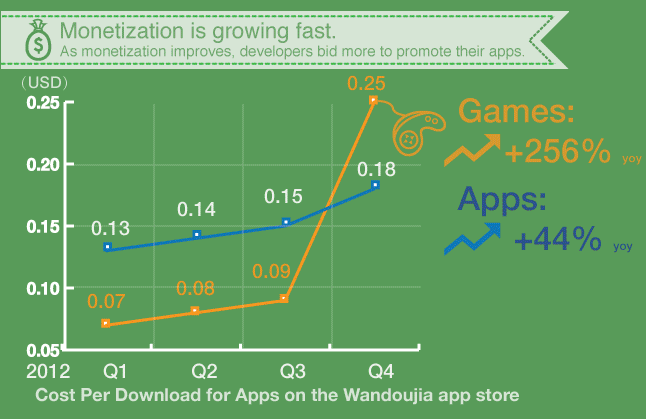
If you want to know how to make money on mobile apps in China, you should probably look at how Hollywood makes money on its films in that country. The parallels are uncanny: In movies, it’s action films that do best; in apps—or more specifically games—it’s the same. Simplicity, a conspicuous absence of plot, and lots of violence and/or explosions are, it seems, the DNA of popular entertainment. Check out this chart from Chinese app store Wandoujia. In apps, as in love, we are often surprised by what is chosen by others. As in the US, apps are dominated by social media and utilities, and companies from outside China represent just 1 in 10 of the most downloaded apps (i.e., Google Maps). But games are a completely different story, with 7 of 10 game apps coming from outside China, and primarily US development studios.

china_top_apps

in-china-devs-pay-app-stores-for-downloads Read more of this post

New York City Subways Are Getting A New Touchscreen Network

New York City Subways Are Getting A New Touchscreen Network

Megan Rose Dickey | Mar. 28, 2013, 3:27 PM | 2,664 | 6

New York City is planning to install at least 77 new touchscreen kiosks in subway stations throughout its five boroughs. In 2011, the MTA installed similar high-tech touchscreens, dubbed “On the Go!” travel stations, at five subway stations throughout Manhattan, Brooklyn, and Queens. Now, the MTA has partnered with Control Group and CBS Outdoor to deploy up to 90 additional digital kiosks in New York subway stations. The new displays will feature subway planning tools, information about service updates and delays, as well as advertisements.  Each 47-inch touchscreen will be packed with sensors, video cameras, microphones, and Wi-Fi to facilitate communication between subway riders and the MTA. In the future, Control Group envisions sponsored experiences making their way to the touchscreens, like streaming media or even a networked game of Jeopardy, Control Group Partner Colin O’Donnell recently told Fast Company’s Mark Wilson. The goal is to change the face of the New York commuting experience as we know it. Eventually, the map will feature points of interest to further drive tourism in the city. Third-party developers will also be able to build additional features into the system.

With the new kiosks, you’ll be able to quickly figure out where you are and where you need to go. Now, scheduled service changes shouldn’t catch you off guard. If they do, the kiosks will help you plan accordingly. The kiosks will also keep you up to date with train delays and out-of-service escalators.

the-kiosks-will-also-keep-you-up-to-date-with-train-delays-and-out-of-service-escalatorsnow-scheduled-service-changes-shouldnt-catch-you-off-guard-if-they-do-the-kiosks-will-help-you-plan-accordingly

To plan your trip, tap any two places on the map to receive directions.

to-plan-your-trip-tap-any-two-places-on-the-map-to-receive-directions

And voila!

and-voila

Invest in Proprietary Data for Competitive Advantage; Without such data it is simply too easy for competitors to let you do the hard work of innovation, then copy your insights and erode your competitive advantage.

Invest in Proprietary Data for Competitive Advantage

by Thomas C. Redman  |   2:00 PM March 28, 2013

Nearly 30 years ago, Stephen Brand made one of the more prescient observations about the unfolding data revolution: “On the one hand, information wants to be expensive, because it’s so valuable. The right information in the right place just changes your life. On the other hand, information wants to be free, because the cost of getting it out is getting lower and lower all the time. So you have these two fighting against each other.”

This assessment is spot on. Data promises a lot of new value, from insights that lead to better-targeted advertising, to ideas for new products, to “this changes everything” discoveries — the “expensive” half of Brand’s observations. But realists fully appreciate the “free” half. Translating those insights into profitable new and improved services and sustained competitive advantage is another matter altogether.

So how can a company spend more time on the valuable, expensive side and less on the free side? The key lies in developing and exploiting “proprietary data” — data that you and you alone possess. Without such data it is simply too easy for competitors to let you do the hard work of innovation, then copy your insights and erode your competitive advantage. Read more of this post

Samsung Tests Whether Three Heads Are Better than One

Samsung Tests Whether Three Heads Are Better than One

by David Heenan  |  10:00 AM March 28, 2013

The announcement last week that the Samsung Electronics is elevating two executives, Boo-Keun Yoon and J. K. Shin, to the CEO role was met with interest in leadership circles. We have seen this kind of co-CEO arrangement grow over the years. All the more interesting: the South Korean giant’s current CEO and vice chairman Oh-Hyun Kwon isn’t even vacating the seat. All three men will now share the role.

“We can do as partners what we cannot do as singles,” the great orator Daniel Webster once proclaimed. That seems to be the belief in a growing number of boardrooms that have decided that power will not reside in a single person in the corner office. Shareholders evidently support the idea of “co-leadership.” Research at the University of Missouri suggests that the mere announcement of a co-CEO structure produces a positive reaction from the market. Read more of this post

Japan’s Investors Are GungHo for iPhone Game; Tokyo-based GungHo Online Entertainment has seen a 23-fold increase in its share price this past year, with its market capitalization swelling to $4.9 billion

March 28, 2013, 11:57 a.m. ET

Japan’s Investors Are GungHo for iPhone Game

By JOHN JANNARONE

image_thumb75MI-BV002_Gungho_NS_20130328173604

gungho-online_kazuki-morishita_450

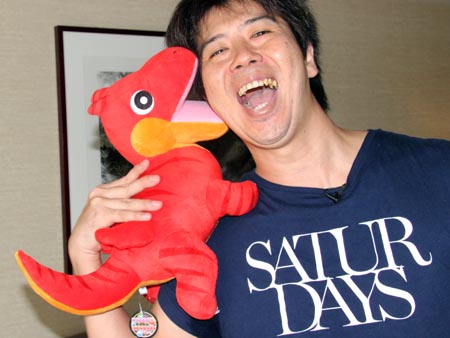
Kazuki Morishita in playful mood with dragon friend

The Japanese may love videogames, but some look downright smitten.

Tokyo-based GungHo Online Entertainment has seen a 23-fold increase in its share price this past year, with its market capitalization swelling to $4.9 billion.

The excitement centers on GungHo’s smartphone game “Puzzle & Dragons.” While free to download, a fraction of users spend freely on extra virtual items that enhance play. It became Japan’s top iPhone game within several days of its February 2012 launch and remains No. 1, with GungHo’s revenue rising each of the last few quarters. Read more of this post

This Is The Most Innovative Startup From This Year’s Y-Combinator Class; Thalmic Labs positions its MYO armband as the next generation of gesture control, enabling you to control other devices using your movements, and without the need for a camera

This Is The Most Innovative Startup From This Year’s Y-Combinator Class

Megan Rose Dickey | Mar. 27, 2013, 10:41 AM | 3,498 | 2

Silicon Valley’s most prestigious accelerator Y Combinator just hosted its Demo Day for its Winter 2013 class. Even though this class was smaller than its previous batches, the talent was just as good. Out of the 47 startups that presented at YC’s Demo Day, Thalmic Labs really caught our attention. Thalmic Labs positions its MYO armband as the next generation of gesture control, enabling you to control other devices using your movements, and without the need for a camera. Many current gesture control technologies like Microsoft‘s Xbox Kinect, for example, require you to be in front of a camera. It also forces you to use pre-programmed gestures. But with MYO, it can track even the most subtle gestures. The armband works by sensing the electrical activity in your muscles to control your computer, video games, or even a drone. But Thalmic has opened up its API so developers can come up with more ways to use MYO. Already, Thalmic has sold 25,000 MYO devices and brought in $3.7 million in revenue. You can pre-order your own MYO for $149 here.

How Samsung Became the World’s No. 1 Smartphone Maker

Here’s Bloomberg Businessweek’s Cover About How Samsung Became The King Of Smartphones

Steve Kovach | 59 minutes ago | 18 | 

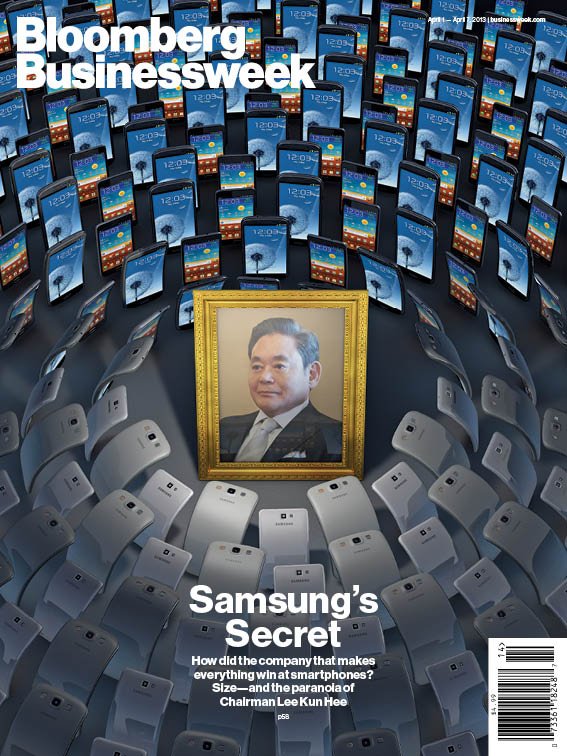
Bloomberg Businessweek’s cover story this week is all about the rise of Samsung. Here’s a sneak peek at the cover art:

4-1-13 newsstand

How Samsung Became the World’s No. 1 Smartphone Maker

By Sam Grobart on March 28, 2013

I’m in a black Mercedes-Benz (DAI) van with three Samsung Electronics PR people heading toward Yongin, a city about 45 minutes south of Seoul. Yongin is South Korea’s Orlando: a nondescript, fast-growing city known for its tourist attractions, especially Everland Resort, the country’s largest theme park. But the van isn’t going to Everland. We’re headed to a far more profitable theme park: the Samsung Human Resources Development Center, where the theme just happens to be Samsung.

feature_samsung14__01__inline605feature_samsung14__04__inline605

Photograph by Tony Law for Bloomberg BusinessweekSamsung’s Human Resources Development Center

feature_samsung14__01__304

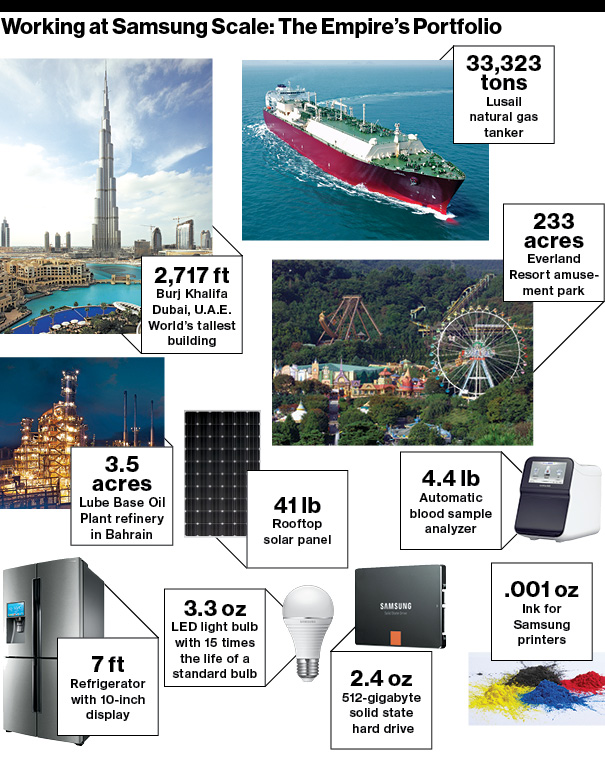
feat_samsung14_samsungscale-chart_605

feat_samsung14_mobile-chart_605 Read more of this post

The Brilliant, Unusual Way Media Startup Upworthy Grew To 10.4 Million Monthly Readers In Its First Year

The Brilliant, Unusual Way Media Startup Upworthy Grew To 10.4 Million Monthly Readers In Its First Year

Alyson Shontell | Mar. 27, 2013, 1:44 PM | 2,680 | 4

screen shot 2012-11-05 at 1.52.25 pm51542599-0c46-4b24-8c68-215fcac01582

Eli Pariser, co-founder of Upworthy.

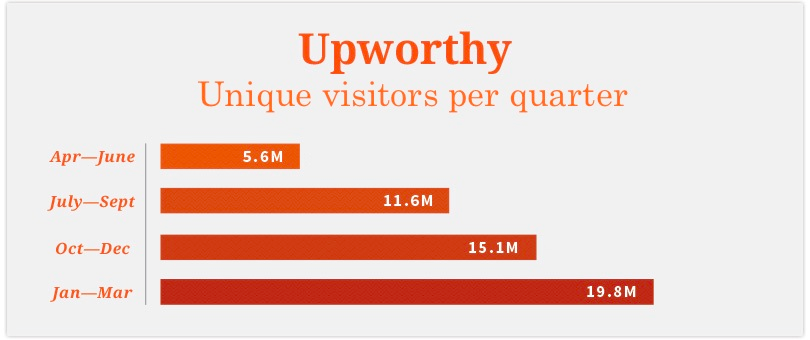
Most media companies focus on covering the latest news. Eli Pariser and his army of bloggers at Upworthy don’t, yet they have grown from no readers last year to 10.4 million last month.

If The New York Times is a designer store with new, original items that keep readers informed, Pariser is running an antique shop, recognizing the value in old gems, and selling them for much more.

Essentially, Upworthy goes dumpster diving in the Internet’s archives, hoping to find gold. They’re looking for any scrap of a moving, visual story they can tell that was, for some reason or another, initially overlooked by readers. They polish it off with a catchy headline, send it out into the Twitterverse and Facebook, and watch the readers flock to the page.

When you’re promoting old stories, there’s not much competition either. News sites compete to be the first to a story, so there’s a lot of overlapping coverage. It’d be hard for another site to stumble upon the same older content Upworthy finds at exactly the same time.

To find the hidden gems, Upworthy’s content curators spend a large portion of the day scouring YouTube and other visual sites. They don’t crank out dozens of stories each; Pariser estimates only 60 pieces of content are created per week. Interest, not timeliness, is what matters when it comes to social content.   Read more of this post

A Data Scientist’s Real Job: Storytelling

A Data Scientist’s Real Job: Storytelling

by Jeff Bladt and Bob Filbin  |   2:00 PM March 27, 2013

Every morning at DoSomething.org, our computers greet us with a report containing over 350 million data points tracking our organization’s performance. Our challenge as data scientists is to translate this haystack of information into guidance for staff so they can make smart decisions — whether it’s choosing the right headline for today’s email blast (should we ask our members to “take action now” or “learn more”?) or determining the purpose of our summer volunteer campaign (food donation drive or recycling campaign?).

In short, we’re tasked with transforming data into directives. Good analysis parses numerical outputs into an understanding of the organization. We “humanize” the data by turning raw numbers into a story about our performance. Read more of this post

Dutch Co-Founder of Tudou.com: Why I’m leaving China

Why I’m leaving China – opinion

By Marc van der Chijs @CNNMoney March 27, 2013: 10:08 AM ET

130319015856-marc-van-der-chijs-620xa

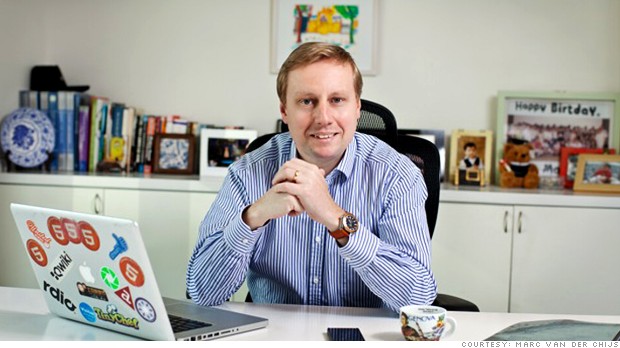
After doing business in China for more than a decade, Marc van der Chijs is moving to Vancouver.

When I first came to China as an expatriate in early 2000 to work for Daimler, I had no plans to stay.

But I fell in love with this country and ended up making China my home for more than 13 years. I stayed for the business opportunities, as well as the entrepreneurial vibe that runs through cities like Shanghai and Beijing.

While living in China I was able to co-found several companies, including online video site Tudou.com, the Asian operations of Dutch online game company Spil Games and online fashion site UnitedStyles.com. I also invested in many Chinese Internet and tech startups and helped them to grow.

However, about two years ago I realized that my love for China was slowly changing, and I first started thinking about moving to a different place.

Over the years, doing business had become more and more difficult for a non-Chinese. Although many areas have opened up for foreign investment, outsiders are not always able to do business on equal terms with Chinese entrepreneurs.

For example, foreigners need more capital to set up a business. Once you have a business up and running, it will be more closely scrutinized than Chinese firms. There are still tons of business opportunities available in China, but I generally felt less welcome in recent years as a foreign entrepreneur.

Much more important than this, however, was the fact that air pollution and food quality were getting worse in my adopted home. Read more of this post

A fast-growing crowd of mobile messaging apps with funny names like WhatsApp, WeChat and KakaoTalk is rankling technology giants from Silicon Valley to Seoul

March 27, 2013, 8:13 p.m. ET

The Messaging Apps Taking on Facebook, Phone Giants

By EVELYN M. RUSLI

On a recent Saturday, Johan Dijkland, a 23-year-old student in Emmen, Netherlands, opened a free messaging app called Line on his iPhone. Then he tapped on a virtual sticker of a sleepy panda with a “good night” speech bubble and pressed send to a friend.

With that action, Mr. Dijkland’s text joined the tens of billions of messages that are processed every day from a fast-growing crowd of mobile messaging apps.

These messaging apps—with funny names like WhatsApp, WeChat and KakaoTalk—have become an indispensable form of communication for hundreds of millions of people world-wide.

They are also rankling technology giants from Silicon Valley to Seoul. That is because when users like Mr. Dijkland send messages using Line, his mobile carrier Vodafone Group VOD.LN -0.05% PLC and iPhone maker Apple Inc. AAPL -2.00% don’t directly profit from the interaction. Read more of this post

When Apps Attack: Industries Under Pressure

Updated March 27, 2013, 7:59 p.m. ET

When Apps Attack: Industries Under Pressure

By GREG BENSINGER

The mobile-apps industry is still in its infancy, but it is already taking on giants.

Apps are cheap to make and easy to distribute, forcing many old-line industries to rethink the way they do business.

With a single click, millions of Americans are comparing prices, hailing taxis and downloading addictive videogames to their smartphones.

“You don’t have to be a huge company with billions of dollars to build a business anymore; you really can be two guys in a basement,” said Jeff Haynie, chief executive of Appcelerator, which licenses software for app developers. “Very traditional models are getting disrupted.”

That trend is set to continue as more consumers switch from simple mobile phones to smartphones that spur app consumption. Last year marked the first time more U.S. mobile phone users had smartphones than simpler feature phones, according to data from comScore Inc.SCOR -0.24%

Here are four industries under pressure because of the rise of apps: Read more of this post

How to build a $37 million online cat empire

How to build a $37 million online cat empire

March 28, 2013 – 3:30PM

art-Ben-working-on-XPS-12-Convertible-Ultrabook-on-bed-420x0

The man who built an online cat empire

I have cats. I like taking photos of them. I love sharing these pictures with my friends. But I don’t have a $37 million company. That’s because I’m not Ben Huh, an entrepreneur whose websites have gained cult-like status around the world. And it all started with a simple website full of cute cats with funny captions.

Of course, no person in their right mind could have predicted that cats would become one of the most popular and most shared personalities on the internet. But Huh tapped into the zeitgeist and he’s laughing all the way to the bank. Huh is CEO of the Cheezburger Network, a business that runs around 50 sites at any one time, all based on humour. Along with the original cat site I Can Has Cheezburger?, the other sites include This is a Photobomb and Totally Looks LikeRead more of this post

Gadget Makers Seeking Twitter Fame Flock to Texas

Gadget Makers Seeking Twitter Fame Flock to Texas

Hardware makers will tussle with application developers for the limelight at the South by Southwest Interactive festival, a conference better known for showcasing startups such as Twitter Inc. focused on software.

“There is more hardware happening at South by Southwest this year than ever before,” Hugh Forrest, the lead organizer of the event, said in an interview. “It’s a new thing, and that newness is always sexy.”

Memoto AB is touting tiny cameras that clip to a shirt, letting users capture a running photo log, while Leap Motion Inc. will try to lure attention to computers that respond to hand motions. MakerBot Industries LLC, meantime, is promoting a three-dimensional printer at the annual gathering of technology tastemakers that gets under way today in Austin, Texas.

Entrepreneurs and investors are growing more interested in gadgets, aided by an increase in websites that make it easier to raise funding and greater access to contract manufacturers that can help build products at a reasonable cost. That’s helping hardware gain ground at a conference, better known as SXSWi, which in previous years gave rise to software sensations Twitter and Foursquare Labs Inc. Read more of this post

Merchants paid an estimated $600 billion last year to let their customers use plastic to shop. Now, some stores are turning to a Swedish company that says it can slash those credit and debit card fees in half.

Former Trader’s Software Skips Visa to Challenge Google Wallet

Merchants paid an estimated $600 billion last year to let their customers use plastic to shop. Now, some stores are turning to a Swedish company that says it can slash those credit and debit card fees in half.

Those hidden fees to banks and card companies such as Visa Inc. (V) and Mastercard Inc. (MA) eat into profits that could have gone to lower prices for customers, said Seamless Distribution AB (SEAM) Chief Executive Officer Peter Fredell. While other apps let smartphone users pay without wallets, Seamless’s SEQR is the only one that saves merchants money with no investment, he said.

“This is huge, especially when many of these merchants have an operating margin of 1 percent,” Fredell said over lunch from his office overlooking a construction site on the outskirts of Stockholm.

Seamless cut its teeth on the streets of cities such as Accra, Riga and Mumbai, where its software lets mobile users top up their pre-paid cards without a modern banking infrastructure. After 12 years, the company is harnessing the booming use of smartphones to promise savings to merchants because it can route payments directly to and from bank accounts, dodging traditional card-handling fees. Read more of this post

Grooms at $18 Fuel IPO Ambitions for Indian Matchmaker; “Whether its bottom of the pyramid, top of the pyramid, online, offline, the idea is that, we need to help them find a suitable life partner.”

Grooms at $18 Apiece Fuel IPO Hope for Indian Matchmaker: Retail

Indian parents’ anxiety to find their children suitable spouses is a constant in a country that spends $37 billion annually on weddings.

Matrimony.com Pvt., whose website has brokered more than 2 million marriages, is banking on that desire to woo investors for a potential share sale.

The company, whose private equity funders include Bessemer Venture Partners and Canaan Partners, is expanding a wedding empire that includes websites to help parents arrange marriage by caste, complexion (dark to fair) and family values (orthodox to liberal). It is now preparing to ramp up growth by selling products for the less affluent — such as lists of 10 potential suitors for 1,000 rupees ($18).

“Marriages within the community is still very much the norm and I don’t see that changing,” said Chief Executive Officer and founder Murugavel Janakiraman, who met his own wife on the site. “This is a market that will keep growing for a very long time so the demand is strong.” Read more of this post

EMC Losing Ground as Smartphones Displace RSA Tokens; “There’s a lot of innovation going on right now because it’s a dangerous world,” Lee Congdon, chief information officer at Red Hat

EMC Losing Ground as Smartphones Displace RSA Tokens

Security tokens used to safeguard computer networks risk going the way of the rotary phone as EMC Corp. (EMC)’s RSA unit, the top maker of the devices, is challenged by smartphones deployed as cyber-protection tools. Vasco Data Security International Inc. (VDSI) and Gemalto NV (GTO), two companies with identification-software that runs on tokens, tablets and smartphones, saw their market share roughly double last year, reducing RSA’s portion to 60 percent from 76 percent in 2011, according to WinterGreen Research Inc. As an increasing number of consumers shop and bank online and more workers access corporate networks via mobile devices, global sales of identity-protection products will surge to $6.43 billion by 2016, from $4.51 billion last year, according to IDC. Software startups seized on an opening created after hackers compromised millions of RSA tokens two years ago to promise corporate customers better protection at a lower price.

“There’s a lot of innovation going on right now because it’s a dangerous world,” Lee Congdon, chief information officer at Red Hat Inc. (RHT), said in an interview. “Malicious people are becoming more adept. Folks are actively trying to steal your secrets and money.” Red Hat, the biggest seller of Linux operating system software, began replacing RSA tokens with Gemalto’s tools last month, Congdon said. “It’s considerably less expensive,” Congdon said. Gemalto’s tokens, paired with a free mobile application, cost less than half the price of protection from RSA, he said. Read more of this post

The Secret To 17-Year-Old Nick D’Aloisio’s $30 Million Success: Amazing Hustle

The Secret To 17-Year-Old Nick D’Aloisio’s $30 Million Success: Amazing Hustle

Jay Yarow | Mar. 26, 2013, 12:05 PM | 18,310 | 22

Now that 17-year-old Nick D’Aloisio sold his company to Yahoo for $30 million, he’s gaining widespread attention. However, in tech media circles, D’Aloisio was already well known. In 2011, Gizmodo‘s Casey Chan wrote about making D’Aloisio cry. Chan covered apps for Gizmodo. So, D’Aloisio emailed Chan to see if he would write about his app, which was called Trimit at the time. Chan said he was interested in the app. This led to D’Aloisio going nuts. “Over the course of a few days, D’aloisio berserker barraged me with over a hundred e-mails about Trimit,” says Chan, “I saw him go from calm to excited to a nervous wreck to suffering a nervous break down to threatening to bat shit crazy to borderline suicidal.” D’Aloisio never mentioned that he was only 15 at the time. After not getting quick responses from Chan, he went on to email everyone else at Gizmodo. In response to D’Aloisio’s email barrage, Gizmodo decided to name Trimit the “worst app of the week.” But, the editors felt bad about that, so they just pulled the coverage altogether. This sent D’Aloisio over the edge. He wrote to Chan:

I can’t believe this. Please just put us back on the list. Anywhere.

I feel like crying I’m that disappointed. Please.

You don’t understand what this means if we don’t get featured. We’ll go bust and I’ll end up unemployed.

Why have you done this. I can’t actually believe this is happening.

Please, seriously Casey, don’t destroy my livelihood.

I’ll do anything just please put us back. Seriously I’ll do anything I can’t let my boss see this.

We’d planned so much marketing and SEO for this feature. Now we’re not going to get the visibility and get into debt. Casey, you must understand what this will do to us if you don’t put us back on the list. I thought you liked the app, why do you want to destroy it.

Come on man, please forgive me. We all make mistakes. Why didn’t you tell me days ago to stop emailing you! I thought you weren’t getting them, that’s why I kept sending them.

Seriously without this feature we will lose ranking and then we won’t pay back our purchases and then will have to stop the business.

I plea for you to put it back to how it was before. I plea.

Now we’ve wasted $10,000 as we dont have the article to accompany the efforts.

That puts us in debt and we can’t pay that back for ourselves so now I’m going to have to go without food for the next month.

I am new, we’ve just started the startup, and I’ve never been in PR so I’m not familiar with these journalistic conducts and etiquettes I seem to have broken. I was not meaning to hurt any of you guys or disrupt your work at all; none of that was intentional. I WILL GET FIRED now because of all of this but I guess I can’t change what has happened now. Our marketing has failed since we were not featured and now I have massive debt which is my responsibility to fix.

I’ll ask you for the final time to understand the seriousness of the situation and change it back to the way it was. What is stopping you? Why ruin my livelihood and my app? Why would you want that, seriously?

Please man. Please.

I really need to know what’s going on! My boss is asking.

While this appears to be the ramblings of a crazy person, it also shows someone with a dedication, focus, and energy to succeed. (And, again, he was 15!) Gizmodo wasn’t the only publication that got aggressive emails from D’Aloisio. He was in our writers’ inboxes too. While we don’t want to encourage others to bomb our inbox with pitches, we think his behavior reveals a big part of the reason he’s successful. The kid is a hustler. He works hard. He’s aggressive. He went after his investors, he pursued the media. In one of his interviews from yesterday he told people who want to be like him: “If you have a good idea, or you think there’s a gap in the market, just go out and launch it because there are investors across the world right now looking for companies to invest in.” This is obviously an oversimplification, but it’s not terribly far from the truth. If you have a good idea, and you’re willing to work incredibly hard like D’Aloisio, you’ll probably find success.

10 Mind-Blowing Facts About Amazon.com; Its warehouses are the size of 700 Madison Square Gardens; Amazon.com employees spend two days every two years working at the customer service desk, even the CEO

10 Mind-Blowing Facts About Amazon.com

Kevin Smith | Mar. 27, 2013, 7:37 AM | 16,228 | 1

Amazon.com is well-known for its Kindle, lightning fast shipping, and selling virtually anything online.

The e-tailer’s revenue totaled $61 billion in 2012 and it currently sits at No.5 on ComScore’s list of top 2,000 domains on the web.

But did you know that the massive website started in founder Jeff Bezos‘ garage? Or that Amazon’s operation has become so massive that it’s warehouses have more square footage than 700 Madison Square Gardens?

Take a look at some other mind-blowing facts we found.

Amazon.com was almost called “Cadabra” as in “Abracadabra”. That idea was struck down because CEO Jeff Bezos’ lawyer misheard the word as “cadaver”. Read more of this post