FTC to tighten control on chaebol’s overseas units

2013-10-31 17:03

FTC to tighten control on chaebol’s overseas units

By Kim Tae-jong
The Fair Trade Commission (FTC) is considering regulating conglomerates’ intra-affiliate deals involving overseas units amid growing criticisms of a loophole in the nation’s anti-trust law. The move came about after lawmakers criticized the nation’s anti-trust watchdog. So far it has strengthened rules against inter-affiliate deals taking place domestically, although there are growing intra-group transactions through offshore affiliates. Read more of this post

Financial watchdog probes into Gamevil, CJ E&M’s information leakage

Financial watchdog probes into Gamevil, CJ E&M’s information leakage

Hwang Ji-hye, Oh Soo-hyun

2013.10.31 14:47:48

The Financial Supervisory Service (FSS) launched an investigation on suspicions that information about Gamevil’s rights offering and CJ E&M’s third quarter (Q3) earnings was leaked prior to the release of such information to the public. Allegedly, the confidential information was delivered only to certain institutions so that some groups exploited it to make profits.  Read more of this post

Sony’s Loss Is Black Eye for CEO

Sony’s Loss Is Black Eye for CEO

Electronics Giant Cuts Full-Year Guidance After Second-Quarter Loss

JURO OSAWA and KANA INAGAKI

Updated Oct. 31, 2013 8:18 a.m. ET

AM-BA914_SONYHE_G_20131031063309

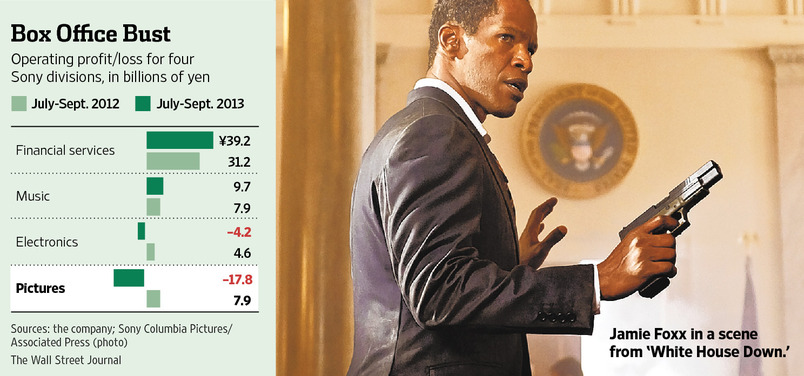
TOKYO— Sony Corp.’s 6758.TO -1.73% turnaround strategy was thrown into doubt after the electronics giant unexpectedly reported weak results and slashed its full-year profit forecast by 40%. The poor numbers are a black eye for Kazuo Hirai, who came in as chief executive last year, vowing to finally push Sony out of a prolonged slump that began when its vaunted TV business started weakening. The results for the quarter ended Sept. 30 were particularly disappointing since signs of progress had been emerging with Sony’s TV division turning profitable in the previous quarter. Since last year, Sony has been cutting costs by slashing jobs and has been focusing on expanding its smartphone business under Mr. Hirai’s leadership. Read more of this post

Japan Salaries Extend Fall as Abe Urges Companies to Raise Wages

Japan Salaries Extend Fall as Abe Urges Companies to Raise Wages

Japan’s salaries extended the longest slide since 2010, even as Prime Minister Shinzo Abe urges companies to raise workers’ wages as part of his bid to reflate the world’s third-largest economy. Regular wages excluding overtime and bonuses fell 0.3 percent in September from a year earlier, marking a 16th straight month of decline, according to labor ministry data released today. Total cash earnings rose 0.1 percent. Read more of this post

Japan electronics firms struggle to regain glory days

Updated: Thursday October 31, 2013 MYT 5:14:08 PM

Japan electronics firms struggle to regain glory days

TOKYO: Japan’s top electronics firms on Thursday reported mixed earnings, with Sony slashing its full-year profit outlook while hard-hit Panasonic turned in strong earnings and boosted its annual forecast. The firms have undergone painful restructuring to stem years of losses as they struggle to keep up in the low-margin television business, while rivals including Apple and South Korea’s Samsung surge ahead in the lucrative smartphone sector. Read more of this post

Indonesians stage nationwide strike over pay

Indonesians stage nationwide strike over pay

POSTED: 31 Oct 2013 06:20
Workers across Indonesia begin a two-day strike on Thursday to demand higher salaries, the latest industrial action in Southeast Asia’s top economy as people push for a greater share of the profits from stellar growth.

JAKARTA: Workers across Indonesia begin a two-day strike on Thursday to demand higher salaries, the latest industrial action in Southeast Asia’s top economy as people push for a greater share of the profits from stellar growth. Calls have been growing in recent months for a hike in the minimum wage as the cost of living skyrockets due to high inflation. Read more of this post

As costs rise, Indonesian construction firms seek force majeure on govt contracts

As costs rise, Indonesian construction firms seek force majeure on govt contracts

Wed, Oct 30 2013

By Randy Fabi and Fathiya Dahrul

JAKARTA (Reuters) – Work on billions of dollars worth of new roads, bridges, dams and power plants in Indonesia could soon come to a standstill unless the government takes emergency action to help construction firms cover rising production costs, an industry trade group said. In an unprecedented step, the Indonesian Contractors Association this month asked the finance ministry to declare force majeure on all rupiah-based government infrastructure projects after federal and state agencies refused to pay more for the cost of labor and raw materials. Government-funded public projects this year are estimated to be worth more than $12 billion. Read more of this post

Coffee drinkers treated to more arabica as prices sink

Coffee drinkers treated to more arabica as prices sink

Wed, Oct 30 2013

By Sarah McFarlane

LONDON (Reuters) – Coffee drinkers in Brazil, America, Eastern Europe and the Middle East are expected to down more arabica beans in their brew in the coming year as cheap prices attract additional demand for the higher spec product. A surplus from top grower Brazil after two successive bumper crops helped drag arabica prices to a four-and-a-half-year low this week, which is likely to prompt roasters to increase the use of the bean in their blends. Read more of this post

Chocolate Factory, Trade War Victim; From the Baltic to the Black Sea, a chocolate wall has descended across the continent of Europe

October 29, 2013

Chocolate Factory, Trade War Victim

By ANDREW E. KRAMER

KIEV, Ukraine — From the Baltic to the Black Sea, a chocolate wall has descended across the continent of Europe. The output of the sprawling brick factory, formerly known as the Karl Marx chocolate works, has never before been so hard to sell in Russia. Since July, when Russian regulators banned all chocolate, cake, cookie and candy imports from its Ukrainian parent company, Roshen, ostensibly over health concerns, production at the plant here has plummeted 14 percent. Read more of this post

Oil Gambit Helps India Mining Billionaire Lead Rio: Commodities

Oil Gambit Helps India Mining Billionaire Lead Rio: Commodities

Until three years ago, Anil Agarwal never thought he should branch into oil. Today the business helps the Indian mining magnate keep his place among billionaires. Agarwal’s $8.7 billion purchase of Cairn India Ltd. (CAIR), the country’s biggest onshore oil producer, diversified investors in his Sesa Sterlite Ltd. (SSLT) metals group against a slump in mining stocks. Sesa jumped in recent months, bringing its gain to about 5 percent since the 2011 deal to Oct. 29, while BHP Billiton Ltd. (BHP) rose 0.9 percent and Rio Tinto Group (RIO) fell 6 percent. Read more of this post

Family Feud Fells Newspaper Editor in India

Family Feud Fells Newspaper Editor in India

In India, “Hindu” signifies a vast religious universe, “The Hindu” the vast journalistic one — 1.5 million copies sold every day — of one of the nation’s oldest and best English newspapers. In a time of widespread journalistic dilettantism, the Hindu is renowned for its commitment to public-spirited journalism and editorial integrity, merits that compensate for the tepidity of its presentation, the fustiness of its prose style and the rigidity of its left-wing orientation. Read more of this post

Can the Indian government curb the country’s insatiable appetite for gold?

October 30, 2013 6:07 pm

India: Part of the fabric

By Avantika Chilkoti and James Crabtree

Can the government curb the country’s insatiable appetite for gold? Amid the rush of Mumbai’s chaotic international airport, customs officers beckon a passenger to step aside. A cardboard box held together by a large number of tiny staples catches their attention. Closer inspection reveals the joins are made of gold, moulded and coloured to resemble steel stationery. Read more of this post

Ruchir Sharma: China’s Illusory Growth Numbers; Huge new flows of credit and public investment are delaying needed reforms and inflating a real estate bubble

Ruchir Sharma: China’s Illusory Growth Numbers

Huge new flows of credit and public investment are delaying needed reforms and inflating a real estate bubble.

RUCHIR SHARMA

Oct. 30, 2013 7:09 p.m. ET

ED-AR440_Sharma_G_20131030185905

Beijing appears to be on track, yet again, to hit its official growth target. According to China’s National Bureau of Statistics, gross domestic product rose 7.8% in the third quarter of 2013, well on its way toward hitting the official target of 7.5% GDP growth for the year. But can these numbers be trusted? Beijing has a long tradition of setting and then claiming to exceed high growth targets, which makes growth appear both rapid and stable. For years, China reported much less volatile economic growth than other developing nations, but lately volatility has all but disappeared. Since the start of 2012, China has reported a GDP growth rate within a few decimal points of the official target—every quarter. Read more of this post

Top Chinese Banks Post Biggest Bad-Loan Surge Since 2010

Top Chinese Banks Post Biggest Bad-Loan Surge Since 2010

China’s top four banks posted their biggest increase in soured loans since at least 2010 as a five-year credit spree left companies with excess manufacturing capacity and slower profit growth amid an economic slowdown. Nonperforming loans at Industrial & Commercial Bank of China Ltd. (601398), China Construction Bank Corp. (939), Agricultural Bank (1288) of China Ltd. and Bank of China Ltd. (3988) rose 3.5 percent in the three months to Sept. 30 from June to a combined 329.4 billion yuan ($54 billion), according to data compiled by Bloomberg News based on third-quarter results. Profit rose to 209 billion yuan. Read more of this post

‘The Human Brand’: Our Relationships with Companies

‘The Human Brand’: Our Relationships with Companies

Oct 24, 2013 Books North America

Customers describe how they feel about companies and brands in profoundly personal ways. We hate our banks; we love our yoga pants. We can’t stand the cable company, but we consider our smartphone one of our very best friends. How are we making these judgments? According to a new book titled, The Human Brand: How We Relate to People, Products, and Companies, by Chris Malone, an expert in customer loyalty, and Susan T. Fiske, a professor of psychology at Princeton University, our perceptions are the result of spontaneous judgments on warmth and competence – precisely the same elements that drive our impressions of other people. As a result, customers evaluate, judge and form relationships with companies in ways that are remarkably similar to how they evaluate and behave toward people. Malone recently talked to Knowledge@Wharton about his book. To achieve success in the future, companies must build more genuine relationships with customers that display warmth, competence and worthy intentions, says Malone, who got his MBA at Wharton and has held senior marketing positions at companies such as Coca-Cola, ARAMARK and Choice Hotels. An edited transcript of the conversation follows.

Knowledge@Wharton: Your book’s hypothesis is that we relate with companies in much the same way that we do with people. Explain.

Chris Malone: In their struggle for survival, primitive humans were forced to develop a genius for making two specific kinds of judgments quickly and accurately. One: What are the intentions of other people toward me? And two: How capable are they of carrying out those intentions? In the academic world, these dimensions of perception are called warmth and competence. Warmth involves whether we view others to be honest, trustworthy, kind or friendly, while competence relates to whether they seem capable, intelligent or skilled. These spontaneous perceptions drive most of our emotions and behavior toward other people. Read more of this post

It’s Time for Chinese Firms to Play Offense Against the Shorts; Boosting transparency from the start can keep investors from questioning the books

It’s Time for Chinese Firms to Play Offense Against the Shorts

Boosting transparency from the start can keep investors from questioning the books.

MATT FORNEY AND PAUL GILLISMatt Forney

Oct. 30, 2013 12:55 p.m. ET

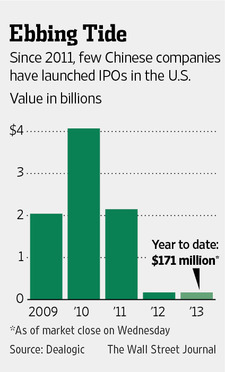
Once again, China has New York on edge. Despite renewed faith in China’s economy, a sudden shock among investors has reversed a steady climb in the share prices Chinese companies listed in the U.S., and rising fears of Chinese firms may even imperil the pending initial public offerings of four Chinese firms that have filed with the Securities and Exchange Commission. The sudden volatility of Chinese stocks comes from one source: short-side attacks. The most prominent shorter, U.S.-based Muddy Waters, struck again last week with its 81-page skewering of NQ Mobile, NQ +11.26% a Chinese maker of mobile-phone security software. The report says the company’s cash balances are misstated, revenues are inflated and customers are non-existent. NQ Mobile denies the allegations and has released information on its bank accounts and taken the extraordinary step of transferring some of its cash to another bank. Read more of this post

A World Without Maps

A World Without Maps

MELIK KAYLAN

Oct. 29, 2013 4:42 p.m. ET

Measuring and Mapping Space: Geographic Knowledge in Greco-Roman Antiquity

Institute for the Study Of the Ancient World

PJ-BR345_Maps_G_20131029183519

Ptolemy’s Earth, from a Florentine manuscript (c. 1460). New York Public Library

The contradiction may seem insuperable—that the main point of an exhibition about ancient maps is that there weren’t any, or any that have survived. But don’t let that put you off. The show at the Institute for the Study of the Ancient World (ISAW) is titled “Measuring and Mapping Space: Geographic Knowledge in Greco-Roman Antiquity.” Its explanatory circular tells of focusing on “ancient cartography and the ways in which Greek and Roman societies perceived and represented both the known and unknown worlds.” All of which certainly suggests that you will see maps. And you will, but not what you expect. Read more of this post

‘Mission in a Bottle’: Making Honest Tea

‘Mission in a Bottle’: Making Honest Tea

Oct 28, 2013 Books Podcasts North America

When Seth Goldman and Barry Nalebuff, co-founders of Honest Tea, set out to make a tea that they would want to drink, they knew they wanted to create a product that wasn’t too sweet and build a brand that was socially responsible and environmentally friendly. But they had no idea what it would take to get the tea to market. Their new book, Mission in a Bottle: The Honest Guide to Doing Business Differently and Succeeding, tells the story of their start-up in a graphic novel format. Nalebuff is a professor at the Yale School of Management; Goldman, a graduate of the school, is one of his former students. Recently, Knowledge@Wharton had an opportunity to talk with Goldman and Nalebuff about how they created a financially sustainable company that serves a mission, how they navigated the beverage distribution challenges, why they decided to sell the company to Coca-Cola — and how they did it on their own terms. An edited transcript of that conversation follows.

Knowledge@Wharton: The simple answer to why you started Honest Tea — and it’s on all of the bottles — is that you were thirsty. You talk in the book about how you wanted to create a beverage for people like you, who thought most of what was already on the market was too sweet. But what was it about tea that really captured your imaginations, that told you this was the venture you wanted to pursue as entrepreneurs? Read more of this post

China’s talk of reform leaves investors cool toward state giants

China’s talk of reform leaves investors cool toward state giants

5:02pm EDT

By Umesh Desai and Vikram Subhedar

HONG KONG (Reuters) – For all the grand talk of far-reaching reforms when China’s leadership meets early next month, foreign investors have refused to become carried away, with most choosing to shun the country’s mammoth state-owned enterprises (SOEs). The new leadership has been in place for a year, and investors are keen to see its strategy to keep the world’s second largest economy growing, as it enters a more mature phase of slower expansion. Read more of this post

High Tech’s Secret Weapon: The Whiteboard; Fast, Big and Easy to Use, These Dry-Erase Boards Are a True Innovation Tool

High Tech’s Secret Weapon: The Whiteboard

Fast, Big and Easy to Use, These Dry-Erase Boards Are a True Innovation Tool

FARHAD MANJOO

Oct. 30, 2013 5:52 p.m. ET

MK-CH445A_HIGHT_G_20131030171803

The headquarters of the popular note-taking app Evernote are typical of many Silicon Valley firms. There’s a cafeteria brimming with free food, vending machines offering up free tech supplies, and conference rooms bearing morale-boosting wacky names. (Evernote’s theme is videogames: You might have a meeting in Ace Combat, Elder Scrolls, or Dig Dug.) And then there are the whiteboards—or, more accurately, the whitewalls. When the company moved last year into the Redwood City, Calif., building, it painted almost every surface with IdeaPaint, a substance that makes walls amenable to dry-erase markers. Read more of this post

China Companies Line Up for U.S. IPOs

China Companies Line Up for U.S. IPOs

Debut of 58.com Thursday Will Show Market’s Appetite

PAUL MOZUR in Beijing, DANIEL INMAN in Hong Kong and TELIS DEMOS in New York

Oct. 30, 2013 3:45 p.m. ET

MI-BZ408_CHINAI_NS_20131030172403

When China’s equivalent of Craigslist sells shares in New York on Thursday, it will offer the best indicator yet of whether U.S. investors have found a taste for Chinese stocks again after a two-year case of indigestion. 58.com Inc. is set to list on the New York Stock Exchange on Thursday, the first in a string of Chinese Internet companies looking to debut in the U.S. in coming months. A strong reception for 58.com would indicate that investors have become more comfortable with Chinese shares after alleged accounting fraud at a handful of companies hammered some of these stocks two years ago and led to a broad retreat by U.S. investors. Read more of this post

In the Global Movie Business, China Aims for a Starring Role

In the Global Movie Business, China Aims for a Starring Role

Oct 29, 2013 Strategic Management Asia-Pacific China

“Chinese Titan Takes Aim at Hollywood,” said a New York Times report last month, referring to the plans of Wang Jianlin, China’s wealthiest investor and founder of the $30 billion real estate group Dalian Wanda, to build a movie-themed real estate project in the upscale seaside town of Qingdao. Price tag: 50 billion Yuan ($8 billion). “It is estimated that China’s film box office revenue will surpass North America’s by 2018 and will double it by 2023 — that is why I believe the future of the world’s film industry is in China,” the Times quoted Wang as saying. Read more of this post

A decade after SARS swept through the world and killed more than 750 people, scientists have made a troubling discovery: A very close cousin of the SARS virus lives in bats and it can likely jump directly to people

Study: Bat-to-Human Leap Likely for SARS-Like Virus

GAUTAM NAIK

Updated Oct. 30, 2013 7:07 p.m. ET

A decade after SARS swept through the world and killed more than 750 people, scientists have made a troubling discovery: A very close cousin of the SARS virus lives in bats and it can likely jump directly to people. The findings create new fears about the emergence of diseases like SARS, or severe acute respiratory syndrome. The virus spread quickly from person to person in 2003 and had a mortality rate of at least 9%. Worries of a severe pandemic led the World Health Organization to issue an emergency travel advisory. Read more of this post

Research for AIDS Cure Advances as HIV Fought in Monkeys

Research for AIDS Cure Advances as HIV Fought in Monkeys

Antibodies derived from the blood of HIV-infected people suppressed the virus in the blood of monkeys in two studies that suggest the experimental approach may improve AIDS therapy or point the way toward a cure. One study showed that a single injection of antibodies reduced the simian, or monkey, version of HIV to undetectable levels in three to seven days — much faster than regular AIDS drugs — and the effect lasted for almost two months. The research, led by Dan Barouch, professor of medicine at Harvard Medical School, is published today online by the journal Nature. Read more of this post

Teva, the world’s largest generic-drug maker, have plunged 42% since their 2010 peak. Now the man hired to turn the company around just 18 months ago is gone, and analysts say it may be tough to find a replacement

Teva Seen Struggling in CEO Search as Board Under Fire

The shares of Teva Pharmaceutical Industries Ltd. (TEVA), the world’s largest generic-drug maker, have plunged 42 percent since their 2010 peak. Now the man hired to turn the company around just 18 months ago is gone, and analysts say it may be tough to find a replacement. Jeremy Levin, a former Bristol-Myers Squibb Co. executive, joined Israel-based Teva as chief executive officer with a reputation as one of the industry’s top dealmakers. A rift over the company’s future with Phillip Frost, the U.S. billionaire who is board chairman and Teva’s biggest individual shareholder, led to Levin’s ouster, opening questions about the ability of a high-powered replacement to manage Teva going forward. Read more of this post

Peter Zaldivar’s Hotel Shilla Pitch at Invest For Kids Chicago

Peter Zaldivar’s Hotel Shilla Pitch at Invest For Kids Chicago

Posted: 29 Oct 2013 11:24 PM PDT

Peter Zaldivar’s Presentation at Invest For Kids Chicago

•    International focus; looks for smaller underloved companies
•    Hotel Shilla (008770) 
•    $2.4 billion market cap
•    2 hotels in Korea (10% of sales) and duty free shops (90% of sales)
•    6 locations generate $6 billion of sales
•    Duopoly – 35% versus 50% Lotte (private)
•    Fast growth of 15% and accelerating
•    Barriers to entry are scale and government licenses
•    Chinese are getting richer – number of rich Chinese are growing substantially
•    Korea wants tourism and China is only 90 min away
•    Cosmetic surgery – world center for plastic surgery
•    Most important thing is that they sell luxury brands for less (as in 40% less than in mainland China)
•    South Korea has a tourist police force that verify authenticity
•    Chinese half of customer base and growing at 30% per year
•    More Chinese are getting passports – still less than 10%
•    Yet Hotel Shilla is trading at 17.2x 2014E earnings
•    28% upside in a base case
•    69% upside implied by a slight premium to comps
•    Same P/E as European counterparts would imply a 60% gain

Rally in China Internet Stocks Begins to Stall; Much of Gains ‘Built on Hope’

Rally in China Internet Stocks Begins to Stall

Much of Gains ‘Built on Hope’

MIA LAMAR

Updated Oct. 30, 2013 5:45 p.m. ET

HONG KONG—A blistering four-month rally in Chinese Internet stocks is starting to stall as investors question whether expectations are running ahead of reality. After months of big gains, shares in Chinese Internet stocks have roughly doubled so far this year and are now valued at around 30 times expected 2013 earnings, BarclaysBARC.LN +0.90% said in a report. That compares with a gain of around 30% this year for the Nasdaq NDAQ -0.79% Composite Index, home to U.S. technology bellwethers GoogleInc. GOOG -0.56% and Apple Inc., AAPL +1.59% Barclays said. Read more of this post

Internet Games Prove Challenging for South Korea

October 31, 2013, 7:21 AM

Internet Games Prove Challenging for South Korea

By Jaeyeon Woo

South Korea’s government may find it difficult to stake out a winning position regarding online games if victory means coordination between the appendages of two arms of government. On one hand, ruling-party lawmakers are calling for measures to curb the playing of online games, citing antisocial side effects, while on the other, a ministry says the industry is an important cog in a strategy of vouchsafing the country’s economic success in creative industries. Read more of this post

Facebook’s Feast Can’t Last Forever; Social-Media Company Still Remains a One-Trick Advertising Pony

Facebook’s Feast Can’t Last Forever

Social-Media Company Still Remains a One-Trick Advertising Pony

MIRIAM GOTTFRIED

Oct. 30, 2013 6:31 p.m. ET

What’s not to like?

Facebook FB -0.78% reported third-quarter earnings Wednesday that beat expectations. But all eyes were on its revenue, particularly the portion that came from mobile. Overall revenue rose 60% to $2.02 billion, with ad sales rising 66% to $1.8 billion. Mobile ads represented 49% of that, up from 41% in the second quarter. Facebook’s ability to manage the shift to mobile is crucial. And its ability to do so while also rapidly expanding overall revenue means it isn’t simply moving sales around. Read more of this post

UPS Crunches Data to Make Routes More Efficient, Save Gas

UPS Crunches Data to Make Routes More Efficient, Save Gas

United Parcel Service Inc., the world’s biggest package shipping company, is using data from customers, drivers and vehicles in a new route guidance system that will save time and money and reduce fuel burn. The On-Road Integrated Optimization and Navigation, or Orion, system is being introduced this year to 10,000 of the Atlanta-based company’s 55,000 U.S. drivers, UPS said today. Orion has been in development nearly 10 years and is the company’s biggest technological advancement in the same timeframe, UPS said. Read more of this post