The Not-So-Hidden Cause Behind the A.D.H.D. Epidemic

The Not-So-Hidden Cause Behind the A.D.H.D. Epidemic

By MAGGIE KOERTH-BAKER

OCT. 15, 2013

Between the fall of 2011 and the spring of 2012, people across the United States suddenly found themselves unable to get their hands on A.D.H.D. medication. Low-dose generics were particularly in short supply. There were several factors contributing to the shortage, but the main cause was that supply was suddenly being outpaced by demand. The number of diagnoses of Attention Deficit Hyperactivity Disorder has ballooned over the past few decades. Before the early 1990s, fewer than 5 percent of school-age kids were thought to have A.D.H.D. Earlier this year, data from the Centers for Disease Control and Prevention showed that 11 percent of children ages 4 to 17 had at some point received the diagnosis — and that doesn’t even include first-time diagnoses in adults. (Full disclosure: I’m one of them.) Read more of this post

The New Science Behind Medical Investing: Big pharma companies increasingly are relying on venture capitalists who generate their own ideas and then build companies around them

SATURDAY, OCTOBER 19, 2013

The New Science Behind Medical Investing

By JACK WILLOUGHBY | MORE ARTICLES BY AUTHOR

Big pharma companies increasingly are relying on venture capitalists who generate their own ideas and then build companies around them.

The senior management of Third Rock Ventures knows something about making money from biotechnology. Back in 2008, co-founder Kevin Starr and his partners, Mark Levin and Bob Tepper, raked in $8.8 billion for themselves and investors by selling Millennium Pharmaceuticals, a global drug giant, to a Japanese drug maker. After a celebratory weekend in Las Vegas, the three decided they wanted to try their hand at medical start-ups in a new kind of venture firm that would address what they thought was a broken model for funding biotech and drug introductions. In six years, they’ve raised $1.3 billion in three funds, backed three successful initial public offerings, and had a couple of their fledgling companies acquired. The IPOs include gene-therapy maker Bluebird Bio(ticker: BLUE), up more than 48% from its June pricing, cellular-metabolism specialistAgios Pharmaceuticals (AGIO), which has gained more than 52% following its July pricing, and Foundation Medicine (FMI), which provides molecular information about cancer patients and has seen its stock rise 91% since its September pricing. In light of their success in a revved-up market for biopharmaceutical IPOs and the debate about the state of American health care, we thought it a good time to chat with Starr at the firm’s offices on Newbury Street in Boston. Read more of this post

Underground, overground: London has built about as good a transport network as it could, given its constraints. Time to remove the constraints

Underground, overground: London has built about as good a transport network as it could, given its constraints. Time to remove the constraints

Oct 19th 2013 |From the print edition

20131019_BRC594 20131019_BRM993

FROM his offices high above Victoria station, Glenn Keelan, an engineer, looks down on a hive of activity. Huge diggers chew up and spit out earth just outside the 19th-century façade of the original station. Nearby, workers are lowered in boxy metal cages to work on an emergency entrance. By the time the extension is finished in 2018, the Tube station will be three times bigger. It needs to be: Victoria now has more people going through it than Heathrow airport, and its traffic has increased more quickly over the past four years. Read more of this post

How Jeff Bezos Makes Decisions

How Jeff Bezos Makes Decisions

by Dan McGinn  |   1:00 PM October 18, 2013

Over the last 19 years, Amazon.com has revolutionized the way we shop—and for much of that time, journalist Brad Stone has been watching closely. This week Stone, a senior writer at Bloomberg Businessweek, published The Everything Store: Jeff Bezos and the Age of Amazon. I talked with Stone about the evolution of Bezos as a decision-maker. Some excerpts from our conversation:

In the course of your reporting, what did you observe about Bezos’s decision-making style?

Two factors come to mind. The first is an observation made by Rick Dalzell, his right hand guy. He says that Jeff does two things better than anyone else. One is that he tries to find the best truth at the time. That may sound obvious, but Rick says that while a lot of people know what the truth is, they don’t engage their thinking about how the truth may change. Second, Rick says that Jeff refuses to accept the conventional wisdom about the way things are typically done. He thinks about reinventing everything—even small things. Two weeks ago, for instance, Amazon introduced the new Kindle Fire tablets. Ordinarily when tech companies do this, they hold a big press conference. Instead, Jeff brought about two dozen reporters in to see him in small groups. He did all the product demos himself. Everyone left feeling like they had a special session with this dynamic CEO, and Amazon received great press coverage. It’s a small example of how he tries to reinvent how things are done. Read more of this post

Since its debut in August, the “Chinese Characters Dictation Competition” has exploded in popularity. The show has touched a nerve in China, where purists complain that smartphones are eroding language skills

Chinese TV’s Latest Hit Features a Character-Driven Plot

Show Aimed at Reviving the Country’s Written Language Explodes

ISABELLA STEGER

Updated Oct. 19, 2013 12:32 a.m. ET

101913bee_640x360

A hit Chinese game show is revealing a startling fact: Chinese youth are losing their writing skills. Photo: CCTV

The word “toad” would be a snap in an English-language spelling bee, but not in a nationally televised contest in China. In Chinese, toad has three characters that are made up of 46 individual strokes. Yu Shuang, a 14-year-old contestant, came close in an early round. As her teammates squealed and drew out the word in the air, Miss Yu quickly wrote the characters on a screen that projected her effort on a big display above her head. When she finished, one of three judges hit the buzzer signaling a correct answer, bringing cheers. But the other two didn’t agree, pointing out that the young girl had missed a single dot in the third character. “You were obviously very nervous just now,” said the judge, as Miss Yu’s teammates groaned in disappointment backstage. Miss Yu wasn’t alone. The show tested a group of adults in the audience, and just 30% of them could write toad correctly, state media lamented after the broadcast. “It’s a word that everyone knows,” said the Xinhua News Agency. Read more of this post

Nobel winner Robert Shiller talks about the forces that made him a questioning, data-driven economist

Robert Shiller: A Skeptic and a Nobel Winner

By JEFF SOMMER

OCT. 19, 2013

Robert J. Shiller, a professor at Yale, learned on Monday that he had wonthe Nobel Memorial Prize in Economic Science, along with Lars Peter Hansen and Eugene F. Fama of the University of Chicago. The Nobel committee described Professor Shiller as a founder of the field of behavioral finance, an innovator in incorporating psychology into economics and a pioneering analyst of speculative bubbles in the stock and real estate markets. He is also one of a group of eminent economists who write the Economic View column for Sunday Business, and has contributed 60 of those columns since August 2007. As the editor of that column, I have talked to him often about his work, and on Wednesday, he called me from the airport en route to a lecture at the Dutch central bank in Amsterdam. Here is an edited, condensed version of that conversation.  Read more of this post

Leslie Moonves turned CBS into the country’s No. 1 network and revolutionized the way broadcasters get paid for content. Why he believes the future of TV is still bright

SATURDAY, OCTOBER 19, 2013

The Hit Maker

By ROBIN GOLDWYN BLUMENTHAL | MORE ARTICLES BY AUTHOR

Leslie Moonves turned CBS into the country’s No. 1 network and revolutionized the way broadcasters get paid for content. Why he believes the future of TV is still bright.

BA-BD182_CEO_F1_G_20131018133308ON-BC461_SPOTLI_G_20131019023448

“The guy relaxes by working,” says superagent Ari Emanuel of Moonves.

There’s no business like show business, as the Irving Berlin song goes. Trouble is, too few in the trade understand the business as well as the show. Leslie Moonves, who has run CBS since its spinoff from Viacom in early 2006, is a notable exception, having restored the so-called Tiffany network to glory and profits with programming hits and savvy deal-making. Today, CBS is No. 1 among television networks, and a strong fall lineup of new shows, including The Crazy Ones with Robin Williams, seems likely to secure its coveted status.

Read more of this post

India’s MCX says CEO submits resignation

India’s MCX says CEO submits resignation

4:07am EDT

MUMBAI (Reuters) – The Multi Commodity Exchange of India Ltd (MCEI.BO: Quote, Profile, Research, Stock Buzz) said on Saturday its managing director and chief executive officer, Shreekant Javalgekar, had submitted his resignation from the company, in which Financial Technologies (FITE.NS: Quote,Profile, Research, Stock Buzz) holds a 26 percent stake. It did not specify a reason for the resignation in a statement. Financial Technologies also owns National Spot Exchange Ltd (NSEL). The NSEL has been under investigation by local police since last month after India’s commodities regulator ordered it to suspend trading over suspected violations of rules on contract duration. The MCX board will meet on Tuesday to discuss the appointment of a new CEO, its spokesman said.


To Catch Up, Walmart Moves to Amazon Turf

To Catch Up, Walmart Moves to Amazon Turf

By CLAIRE CAIN MILLER and STEPHANIE CLIFFORD

OCT. 19, 2013

SAN BRUNO, Calif. — A plucky Silicon Valley company, forced to compete for talented engineers, is trying it all — recruiting billboards on Highway 101; workplace perks like treadmill workstations and foosball tables; and conference rooms named after celebrities like Rihanna and Justin Bieber.

The name of that arriviste company?

Walmart.

The country’s largest retailer, which for years didn’t blink at would-be competitors, is now under such a threat from Amazon that it is frantically playing catch-up by learning the technology business, including starting @WalmartLabs, its dot-com headquarters. The two retail behemoths, one the king of the physical store and the other the conqueror of the online world, are battling over e-commerce — competing for the most talented engineers, trying to gain the upper hand in the new frontier of same-day delivery and warring over online pricing. Read more of this post

It’s Time for Amazon to Open Its Black Box; Amazon.com’s Kindle business is big and growing bigger. How big, and how fast? No one knows. A risk for investors

SATURDAY, OCTOBER 19, 2013

It’s Time for Amazon to Open Its Black Box

By ALEXANDER EULE | MORE ARTICLES BY AUTHOR

Amazon.com’s Kindle business is big and growing bigger. How big, and how fast? No one knows. A risk for investors.

In the coming days, Amazon.com will turn up its marketing muscle to promote its latest tablet, known as the Kindle Fire HDX. The device went on sale last Friday, and it has received hefty praise from gadget reviewers. At $229, the tablet undercuts Apple‘siPad mini by $100. If recent history is any guide, the new Fire will jump to the top of sales charts at Amazon, and the company will tout its success with a rather vague set of pronouncements. And then the news flow will come to a halt. Read more of this post

Jakarta Governor Joko Fires City Employee, But Not Agency Head, for Playing Video Games; “It’s actually alright to play games, but they should be able to process [permit applications] in five minutes”; Jokowi to wield axe in effort to slim down city’s bureaucracy

Joko Fires City Employee for Playing Video Games: Report

By SP/Deti Mega Purnamasari on 5:16 pm October 18, 2013.
Jakarta Governor Joko Widodo did not say a word to the employee caught playing video games during a surprise visit to the offices of the city’s small-and-medium enterprises agency. But on his way out of the building, Joko told his assistant to take down the employee’s name so that he could be fired. “It’s actually alright to play games, but they should be able to process [permit applications] in five minutes,” Joko said later, according to Indonesian news portal Merdeka.com. “But if they need two weeks to process [permits], how can they play games?” He visited the East Jakarta offices unannounced on Friday — the second time he has done so. Accompanied by East Jakarta Mayor H.R. Krisdianto and integrated services (PTSP) head Husnul Chotimah, Joko proceeded directly to the PTSP offices.

“How does one get a SIUP [business permit]?” he asked an employee. “How many days does it take? Where should I go after this?”

“Three days, sir,” the official reportedly replied,

But an applicant named Rofi Nata who was in line for a permit told the governor that the process takes two weeks. Joko went to the third floor, bringing with him a list of the companies and business that had registered for permits. He asked office staff there to teach him how to input the information so that he could do it himself.

“How do I input this?” he asked. “What’s the password?”

Office staff told him that agency head Johan Afandithe was the only one who knew the password, but he was nowhere to be found and no one knew where he was. At this point, Joko reportedly saw an employee trying to covertly close down a computer game he had been playing. The governor threw the papers he had been holding onto a table, asked for the names of all third floor staff, and while two officials tried to explain the situation, he walked to his car without speaking and slammed the door. PTSP is still a pilot project in Jakarta. The governor made his first unannounced visit there on July 16. Back at City Hall, Joko said the agency needed to become more efficient. “The speed should be faster,” he said. “Just type some sentences, input the information, fill in the form, type it, enter, sign it and issue it. It’s not difficult.” Read more of this post

A New Map of How We Think: Top Brain/Bottom Brain: Forget dated ideas about the left and right hemispheres. New research provides a more nuanced view of how we plan our lives and experience the world. Which cognitive mode best describes you?

A New Map of How We Think: Top Brain/Bottom Brain

Forget dated ideas about the left and right hemispheres. New research provides a more nuanced view of the brain

STEPHEN M. KOSSLYN and G. WAYNE MILLER

Oct. 18, 2013 7:57 p.m. ET

Who hasn’t heard that people are either left-brained or right-brained—either analytical and logical or artistic and intuitive, based on the relative “strengths” of the brain’s two hemispheres? How often do we hear someone remark about thinking with one side or the other? A flourishing industry of books, videos and self-help programs has been built on this dichotomy. You can purportedly “diagnose” your brain, “motivate” one or both sides, indulge in “essence therapy” to “restore balance” and much more. Everyone from babies to elders supposedly can benefit. The left brain/right brain difference seems to be a natural law. Read more of this post

Investing for the Fun of It: Many fans of stock indexing set a little money aside to bet on riskier investments. Here’s how to do it safely.

Investing for the Fun of It: Many fans of stock indexing set a little money aside to bet on riskier investments. Here’s how to do it safely.

LIAM PLEVEN

Oct. 18, 2013 6:06 p.m. ET

BF-AF991_19play_DV_20131018164108

Investors flock to index funds because they are simple, inexpensive and often likely to generate higher returns than taking a chance on hot stocks, highflying money managers or a brother-in-law’s tips. The hitch: Passive is dull, as even its fans admit. John Miller, a partner in a Fayetteville, Ga., law firm, set up an account several years ago with about 5% of his investments and started buying individual stocks. Most of his investments are in index funds. He placed a wager on Bank of AmericaBAC -0.20% stock when prices were near financial-crisis lows, and won big. He also purchased shares in a solar-energy firm that he says fell about 85% before he sold. Through it all, he enjoyed himself—without worrying that a disastrous bet would ruin his financial future. Read more of this post

Datuk Soh Chee Wen and the Blumont-Asiason-LionGold saga; Every counter that Datuk Soh Chee Wen owned in Malaysia used to be sought after by punters and market players because their gains were extraordinary

Updated: Saturday October 19, 2013 MYT 7:43:02 AM

Lim, Azlan claim no link to Soh

BY B.K. SIDHU

20131020_asiaons_capital_st

BIZD_MM_1910_p20a_ jaredlim azlan

Soh has been s een as a prominen t mark e t play er in the Malay sian and Singaporean stock exchang es for more than a decade . DATUK Jared Lim and Datuk Mohamed Azlan Hashim have denied any links to tycoon Datuk Soh Chee Wen, whose name has become a topic of conversation at coffee tables and trading rooms of late. The reason is the spectacular rise and collapse of shares in three Singapore companies recently which begs the question as to who is behind the volatile movements of the counters. Lim and Azlan are the Malaysian shareholders in SGX listed-Asiasons Capital, one of the three companies whose share prices once recorded extraordinary gains but caused a mayhem when they plummeted beginning Oct 3. The other two companies are Blumont Group and LionGold Group. Read more of this post

Innovative dynamism is the key to economic success and personal satisfaction, Nobel-winner Edmund Phelps argues in ‘Mass Flourishing’

Book Review: ‘Mass Flourishing’ by Edmund Phelps

Innovative dynamism is the key to economic success and personal satisfaction, a Nobel-winner argues

EDWARD GLAESER

Oct. 18, 2013 5:22 p.m. ET

Edmund Phelps’s “Mass Flourishing” could easily be retitled “Contra-Corporatism,” for at its heart this fine book is an attack on that increasingly common “third way” between capitalism and socialism. Mr. Phelps cogently argues that America’s current economic woes reflect a reduction in the innovative dynamism that generates economic success and personal satisfaction. He places little hope in the Democratic Party, which “voices a new corporatism well beyond Franklin Roosevelt’s New Deal or Lyndon Johnson’s Great Society,” or in Republicans in the thrall of “traditional values,” who see “the good economy as mercantile capitalism plus social protection and social insurance.” He instead yearns for legislative solons who “could usefully ask of every bill and regulatory directive: How would it impact the dynamism of our economy?” Read more of this post

Hans Riegel, the eccentric billionaire confectioner who gave gummi bears their global bite

October 18, 2013 7:28 pm

Hans Riegel, confectioner who gave gummi bears their global bite

By Michael Steen

For nearly seven decades, Hans Riegel was the eccentric chief confectioner, autocratic business leader and one-man marketing machine who propelled Haribo, purveyor of colourful fruit-flavoured “gummi bears”, from a Bonn backstreet to an envied prominence in global confectionery. Riegel represented, in concentrated form, traits typical of Germany’s family-owned Mittelstand companies. As the business grew, he flew Willy Wonka-like in the face of modern corporate convention, eschewing everything from market research to bank loans and opportunities to take the group public. Read more of this post

Lego builds a solid business, even in the age of multimedia; Lego CEO doesn’t give out business cards when he goes to a meeting. Instead, he fishes out a tiny plastic Lego figurine bearing his likeness

PUBLISHED OCTOBER 19, 2013

Lego builds a solid business, even in the age of multimedia

World’s No 2 toymaker sets up regional headquarters in Singapore, remains confident of Lego’s lasting appeal

LEE U-WEN LEEUWEN@SPH.COM.SG

BT_20131019_UWLEGO19AAZJQ_802172

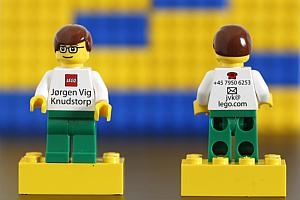
JORGEN Vig Knudstorp, president and CEO of Lego, doesn’t give out business cards when he goes to a meeting. Instead, the 44-year-old reaches into his pocket and fishes out a tiny plastic Lego figurine bearing his likeness – dark-rimmed spectacles and all – with his full name, telephone number and e-mail address printed on the toy’s clothes. It’s a small but telling sign of the level of creativity that goes on behind the scenes at the Danish company famous for making those colourful interlocking plastic bricks. Read more of this post

Rebooting our brains: ‘The next big scientific frontier lies not in a distant galaxy – but deep inside our minds’

October 18, 2013 4:25 pm

Rebooting our brains

By Gillian Tett

‘The next big scientific frontier lies not in a distant galaxy – but deep inside our minds’

Afew years ago John Donoghue, professor of neuroscience at Brown University in Providence, Rhode Island, met Cathy Hutchinson, a young woman who was suffering from locked-in syndrome following a stroke. Until recently, this would have condemned her to a life of helplessness and hopelessness: locked-in syndrome means that somebody cannot move their limbs, even if their brains are functioning normally (as Jean-Dominique Bauby described so movingly in The Diving Bell and the Butterfly).

But Hutchinson had a dream: she longed to drink a cup of coffee on her own, in one vestige of normality. And Donoghue was convinced he could help. Over the past few years, he has run a project called Braingate that combines the latest advances in computing science, engineering and mathematics with neuroscience, to map the connections inside the brain – and replicate them on a computer. Read more of this post

Longboard Asset Management: In Five Years Microsoft Will Be The Market’s Most Valuable Company

ASSET MANAGER: In Five Years Microsoft Will Be The Market’s Most Valuable Company

LINETTE LOPEZ OCT. 18, 2013, 2:49 PM 111,311 26

The last time we saw a slide deck from Cole Wilcox, of Longboard Asset Management, the firm was  arguing that Tesla is the new Apple, and that the stock was headed up to $200 a share. Now the Longboard is out with a new “next Apple” to share with the market. It’s the old Apple, actually — Microsoft. In its presentation, Longboard says that the current perception that Microsoft is, well, soft, is ignoring the success of Office 365, their #1 cloud business, and the potential earning power of Windows + Android hybrid devices.

jpg (30) Read more of this post

The Map and the Territory, by Alan Greenspan, Review by Lawrence Summers

October 18, 2013 7:09 pm

The Map and the Territory, by Alan Greenspan

Review by Lawrence Summers

The Map and the Territory: Risk, Human Nature, and the Future of Forecasting, by Alan Greenspan, Allen Lane RRP£25/Penguin Press RRP$36, 400 pages

It was my privilege to work closely with Alan Greenspan for the eight years I served at the Treasury during the Clinton administration. His new book, The Map and the Territory, brings me back to fond memories of our conversations over the years. I haven’t always agreed with my friend but he has always left me wiser and with something to ponder. Read more of this post

Researchers have been working with tiny robots based on cockroaches as well as with actual roaches—controlled by an embedded chip— to explore collapsed buildings and other dangerous, hard-to-penetrate environments where the GPS doesn’t work

Send In the Cockroach Squad

DANIEL AKST

Oct. 18, 2013 9:16 p.m. ET

Most people hate cockroaches, but in an earthquake, the bugs may someday prove to be lifesavers. Researchers have been working with tiny robots based on cockroaches as well as with actual roaches—controlled by an embedded chip—as a possible means of exploring collapsed buildings and other dangerous, hard-to-penetrate environments where the Global Positioning System doesn’t work. Read more of this post

How Did ‘Intangibles’ End Up in Sports-Speak? A concept starts out in Latin and ends up in the mouth of the Red Sox manager

I Can’t Say What It Is, but He’s Got It

BEN ZIMMER

Oct. 18, 2013 9:01 p.m. ET

When Boston Red Sox manager John Farrell made the decision to keep light-hitting left fielder Jonny Gomes in the lineup against the Detroit Tigers in the American League Championship Series this week, he acknowledged that his choice had nothing do with the numbers. “The one thing that we can’t fully measure is the intangibles that Jonny Gomes brings,” Mr. Farrell said.

Last week, another Red Sox outfielder was hailed in a similar way. Tampa Bay Rays manager Joe Maddon, whose team lost to the Red Sox in the first round of the playoffs, had this to say of Shane Victorino : “He just drips with intangibles.”

In The Dickson Baseball Dictionary, Paul Dickson defines “intangible” as “an unknown, indefinite or elusive aspect of baseball that is not initially perceived.” How did this mystical-sounding term end up becoming so fixed in manager-speak (and not just to describe Red Sox players)?

As an adjective meaning “unable to be touched or measured,” “intangible” entered English in the 17th century from Latin by way of French. It soon made the transition to a noun, just as “imponderable” came to mean “something that is difficult to assess.” As early as 1713, the Church of England clergyman Francis Squire wrote, “as there is a wide difference betwixt sense and reason; so, betwixt their objects, visibles and invisibles, tangibles and intangibles.”

In the business world, “intangibles” can refer to intangible assets: those hard-to-pin-down but nonetheless valuable qualities such as customer goodwill or brand recognition. In the mid-20th century, as baseball brass increasingly began thinking of their players as assets to manage, “intangibles” made an easy transition from finance to sports.

The first player who was routinely praised for his “intangibles” was the scrappy second baseman Eddie Stanky, nicknamed “The Brat.” In the words of Leo Durocher, who managed Stanky with the Brooklyn Dodgers and New York Giants, “He can’t hit, can’t run, can’t field… All the little S.O.B. can do is win.”

When Stanky joined the Giants in 1950, he was keenly aware that his value to the team was hard to measure. After the season was over, the New York chapter of the Baseball Writers’ Association named Stanky the outstanding player of the year. “I want to thank you for appreciating my intangibles on the field,” he said in accepting the award.

“Intangibles” have persisted in baseball despite the advent of complex statistical analyses that seek to capture all facets of a player’s on-field talents. For stat-heads, talk of “intangibles” is a fuzzy-minded refusal to grasp empirical data. But until baseball is taken over by robots, there will always be a need to label natural gifts that elude quantification.

—Mr. Zimmer, a lexicographer, is executive producer of the Visual Thesaurus andVocabulary.com.

At McDonald’s, Salads Just Don’t Sell; McDonald’s has made a push to offer healthier options such as oatmeal, salads and smoothies, but sales growth has slowed despite a more diverse menu

At McDonald’s, Salads Just Don’t Sell

JULIE JARGON

Updated Oct. 18, 2013 8:33 p.m. ET

BF-AG027A_MCHEA_G_20131018180005

McDonald’s has rolled out coffee drinks, while Wendy’s and Taco Bell have succeeded selling less nutritious burgers and tacos. Bloomberg News

Is touting healthier menu items good for business? McDonald’s Corp. MCD -0.28% , trying to shed its “Super Size Me” image of a decade ago, has long since abandoned supersize portions, rolled out oatmeal and smoothies, and added apples to all its Happy Meals. Last month it said it would begin offering customers a choice of side salad, fruit or vegetable in place of fries in its value meals.

Read more of this post

KOPIKO, which is known for its world number one coffee extract candy, is making a comeback in the Malaysian market by offering stronger products in the coffee category and expanding its marketing and communication activities

Updated: Saturday October 19, 2013 MYT 8:18:54 AM

Kopiko makes a big comeback

BY INTAN FARHANA ZAINUL

bizw_1910_kb_pg25a

Poo (left) and Winarto Dharmo with some Kopiko products.

KOPIKO, which is known for its world number one coffee extract candy, is making a comeback in the Malaysian market by offering stronger products in the coffee category and expanding its marketing and communication activities. The Indonesia-based brand, once considered one of the important brands in its category but which has been rather quiet in recent years, is focusing more on marketing and advertising promotion activities by pumping in RM22mil for both candy and coffee this year to support its initiatives. Read more of this post

Paywalls are creating a knowledge aristocracy, says teen cancer pioneer Jack Andraka

Paywalls are creating a knowledge aristocracy, says teen cancer pioneer Jack Andraka

By Paul Sawers, Yesterday

Jack Andraka isn’t your typical teenager. Last year, the then 15-year-old received prizes and plaudits for his pioneering work in the early detection of pancreatic cancer – work carried out under his own steam and in his own spare time. He’s now in talks with a number of pharmaceutical companies to ensure his handiwork is made available far and wide, and at the Wired 2013 conference in London earlier today, Jack gave an impassioned and inspiring speech regaling how he battled against the naysayers to see his work through to fruition. But there’s a problem in academia, says Jack. Paywalls. Read more of this post

Meet the Hairblade: Dyson working on ‘silent’ hairdryer

Meet the Hairblade: Dyson working on ‘silent’ hairdryer

Dyson, the British engineering firm, is developing a new type of hairdryer that is much quieter than current appliances

Dyson-hairdryer_2706179b

Drawings of the hairdryer contained within Dyson’s patent application Photo: IPO/Dyson

By Richard Gray, Science correspondent

10:09AM BST 18 Oct 2013

35 Comments

They have already revolutionised the vacuum cleaner, now Dyson is attempting to reinvent another household item – by creating a quiet hairdryer. As most households will know, traditional hairdryers can be loud – creating noise in excess of 70 decibels – due to the powerful fans they use to blow air onto hair. However, new patent applications lodged by engineering company Dyson reveal plans for a new type of hairdryer that is far quieter than current models. Read more of this post

Google’s mobile strategy starts to pay off

Last updated: October 18, 2013 5:02 pm

Google’s mobile strategy starts to pay off

By Richard Waters in San Francisco

Google’s advertising business is firing on all cylinders as the internet search company waits for all the pieces of its mobile strategy to fall into place. That was the message from third-quarter results on Thursday that comfortably topped expectations and produced one of the surges in investor enthusiasm that occasionally punctuate Google’s earnings announcements. This time, the surge sent Google shares up more than 13 per cent on Friday to top $1,000 for the first time. Read more of this post

Tencent shows Facebook how to reinvent itself for a mobile era

Tencent shows Facebook how to reinvent itself for a mobile era

BY HAMISH MCKENZIE 
ON OCTOBER 18, 2013

One of Facebook’s vulnerabilities is its ongoing attempt to reconfigure itself for the mobile era. The social network was built for the desktop-first era and is saddled with the legacy of that time’s way of thinking. It’s not just that Facebook hasn’t been able to build strong mobile products – Home and Poke are both failures, and its flagship mobile app is a difficult rendering of its native desktop experience – but it’s also that it hasn’t enjoyed the advantage of starting from the ground up with mobile. Read more of this post

Zhaozhao Bets on People/Pet Tracking Market in China

Zhaozhao Bets on People/Pet Tracking Market in China

By Tracey Xiang on October 18, 2013

Zhaozhao

An average of 200 thousand Chinese kids from 0 to 14 years old that got lost every year. More than 4 million messages on Sina Weibo, the most popular micro-blogging platform in China, are for searching for lost pets. Zhu Liqiang mentioned those numbers to justify Zhaozhao, a gadget his company is working on. The accompanying iOS/Android app can track down whoever carrying the smaller-than-palm gadget, kids, seniors or pets, locating where they are and saving all the data onto the cloud platform which is powered by Baidu Cloud. You can see the surroundings of it at any given time, which is powered by Soso Streeview. Read more of this post

North Face slips, Kolon rises in Korea as the domestic outdoor fashion industry undergoes a major shakeup

2013-10-18 18:03

North Face slips, Kolon rises

By Park Ji-won
The domestic outdoor fashion industry is undergoing a major shakeup in pecking order, as The North Face, the industry leader, is struggling to maintain the top post, while competitors are catching up fast with aggressive marketing. The rapidly-changing business environment triggered by the prolonged economic slump has changed the landscape of the industry. The North Face is losing ground, while its rivals Black Yak and Kolon Sports have strengthened their foothold through aggressive marketing. Read more of this post