Auction.com Aims Bigger Than Holyfield’s 109-Room Mansion

Auction.com Aims Bigger Than Holyfield’s 109-Room Mansion

Jeff Frieden, chief executive officer of Auction.com LLC, learned to sell real estate by managing a room full of bidders with rapid-fire patter. “Gimme 100 here, 150 in the back, 175, 200,” Frieden said during an interview at his firm’s Irvine, California, headquarters, pointing to imaginary bidders while pretending to hold an auctioneer’s microphone and push product with his mouth. “I’ve been on the auction block for nine hours and sold 500 houses in a day. That was in the old days.” Read more of this post

Norway Heats Up as Wealth Fund Nears $1 Trillion: Nordic Credit

Norway Heats Up as Wealth Fund Nears $1 Trillion: Nordic Credit

Norway’s incoming Prime Minister Erna Solberg will have no shortage of cash for her campaign promises. The question is: how much does she dare use? The Labor government, which resigned yesterday, presented what it called a “cautious” budget, saying it would use 135 billion kroner ($22 billion) of Norway’s oil wealth to plug deficits next year, equal to 5.5 percent of mainland gross domestic product. That leaves Solberg’s administration with 54 billion kroner to spend before it breaches the nation’s fiscal policy rule. Read more of this post

Bitcoin Mining Rush Means Real Cash for Hardware Makers

Bitcoin Mining Rush Means Real Cash for Hardware Makers

Bitcoin, the virtual money that exists only in digital form, is spawning a real-world hardware boom. The currency, used to buy and sell everything from electronics to illegal drugs on the Web, has surged to about $135, more than 10 times its value a year ago. The rally has created a cottage industry of speculators eager to get their hands on Bitcoins, which can only be created digitally by using powerful computers to solve complex software problems. That has in turn boosted a market for high-powered machines, some costing more than $20,000 apiece, which are custom-made to unlock new Bitcoins in a process called mining, a nod to the excavation of minerals and metal ore. Read more of this post

Breaking Through Cancer’s Shield: The recent discovery that cancers can evade the immune system by wrapping themselves in a protective shield offered a bonus: a way to try to thwart their growth

October 14, 2013

Breaking Through Cancer’s Shield

By GINA KOLATA

For more than a century, researchers were puzzled by the uncanny ability of cancer cells to evade the immune system. They knew cancer cells were grotesquely abnormal and should be killed by white blood cells. In the laboratory, in Petri dishes, white blood cells could go on the attack against cancer cells. Why, then, could cancers survive in the body? The answer, when it finally came in recent years, arrived with a bonus: a way to thwart a cancer’s strategy. Researchers discovered that cancers wrap themselves in an invisible protective shield. And they learned that they could break into that shield with the right drugs. Read more of this post

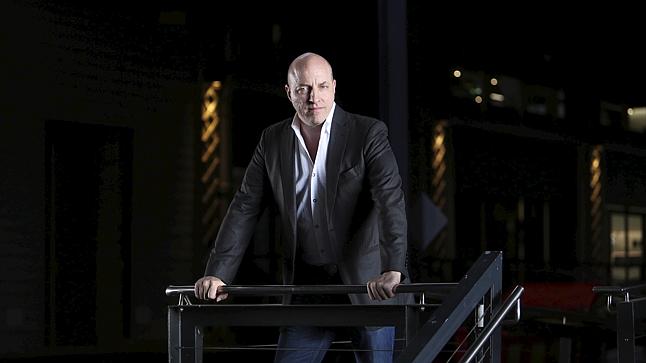
14 Jeff Bezos Quotes That Show Why Amazon’s Boss Is A Total Genius; On haters: “If you never want to be criticized, for goodness’ sake don’t do anything new.”

14 Jeff Bezos Quotes That Show Why Amazon’s Boss Is A Total Genius

JILLIAN D’ONFRO OCT. 13, 2013, 12:38 PM 222,527 21
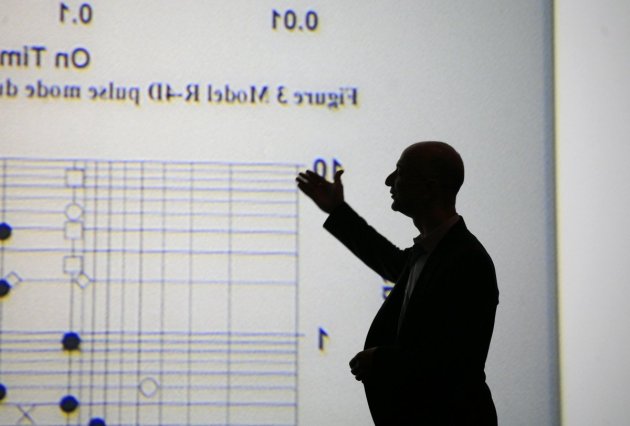
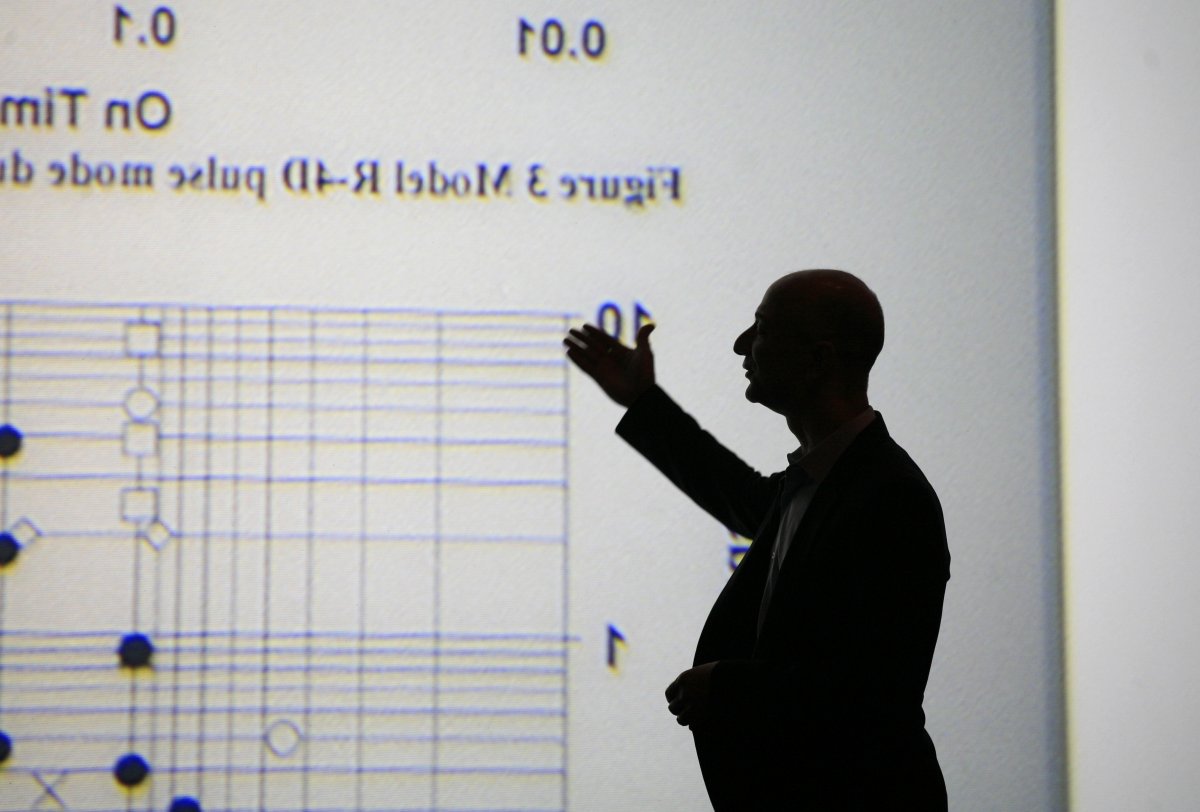
on-pricing-there-are-two-kinds-of-companies-those-that-work-to-try-to-charge-more-and-those-that-work-to-charge-less-we-will-be-the-second

Jeff Bezos, founder and CEO of Amazon, is a billionaire who’s had an amazing life and career: He’s building a mysterious 10,000-year clock in a West Texas cave. Earlier this year, he bought the Washington Post for $250 million. You wouldn’t want to get on his bad side. Bezos achieved so much success by being incredibly smart and business savvy, and so we rounded up some quotes that show his genius.

On complacency: “A company shouldn’t get addicted to being shiny, because shiny doesn’t last.”

On innovation: “I think frugality drives innovation, just like other constraints do. One of the only ways to get out of a tight box is to invent your way out.”

On progress: “If you’re competitor-focused, you have to wait until there is a competitor doing something. Being customer-focused allows you to be more pioneering.”

On developing company culture: “Part of company culture is path-dependent—it’s the lessons you learn along the way.”

On new ideas: “There’ll always be serendipity involved in discovery.”

On haters: “If you never want to be criticized, for goodness’ sake don’t do anything new.”

On motivation: “I strongly believe that missionaries make better products. They care more. For a missionary, it’s not just about the business. There has to be a business, and the business has to make sense, but that’s not why you do it. You do it because you have something meaningful that motivates you.”

On choosing friends: “Life’s too short to hang out with people who aren’t resourceful.”

On morals: “The one thing that offends me the most is when I walk by a bank and see ads trying to convince people to take out second mortgages on their home so they can go on vacation. That’s approaching evil.”

One strategy: “We’ve had three big ideas at Amazon that we’ve stuck with for 18 years, and they’re the reason we’re successful: Put the customer first. Invent. And be patient.”

On growth: “All businesses need to be young forever. If your customer base ages with you, you’re Woolworth’s.”

On pivoting: “If you’re not stubborn, you’ll give up on experiments too soon. And if you’re not flexible, you’ll pound your head against the wall and you won’t see a different solution to a problem you’re trying to solve.”

On marketing: “In the old world, you devoted 30% of your time to building a great service and 70% of your time to shouting about it. In the new world, that inverts.”

On pricing: “There are two kinds of companies, those that work to try to charge more and those that work to charge less. We will be the second.”
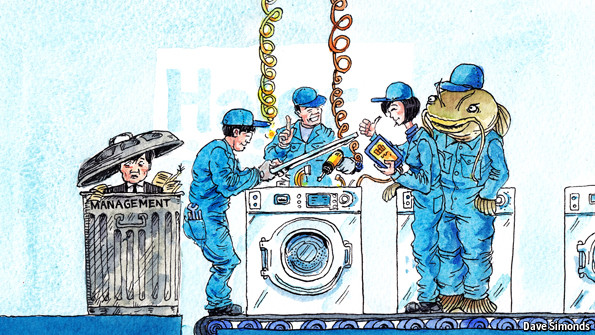
Haier and higher: The radical boss of Haier wants to transform the world’s biggest appliance-maker into a nimble internet-age firm

Haier and higher: The radical boss of Haier wants to transform the world’s biggest appliance-maker into a nimble internet-age firm

Oct 12th 2013 | QINGDAO |From the print edition

20131012_WBD001_1

“NO URINATION or defecation in the working area.” That admonition was among 13 rules that managers felt necessary to post on the walls of a shambolic fridge factory in Qingdao in the early 1980s. After several senior managers failed to turn it around, in 1984 the municipal government of the Chinese city appointed a young employee, Zhang Ruimin, as the firm’s boss. The gamble worked. Since then a lousy local firm has turned into the world’s biggest appliance-maker. Read more of this post

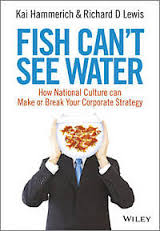
Fish Can’t See Water: How National Culture Can Make or Break Your Corporate Strategy

Fish Can’t See Water: How National Culture Can Make or Break Your Corporate Strategy Hardcover

by Kai Hammerich  (Author) , Richard D. Lewis (Author)

How national culture impacts organizational culture—and business success

Fish Can't See Water

Using extensive case studies of successful global corporations, this book explores the impact of national culture on the corporate strategy and its execution, and through this ultimately business success—or failure. It does not argue that different cultures lead to different business results, but that all cultures impact organizations in ways both positive and negative, depending on the business cycle, the particular business, and the particular strategies being pursued. Depending on all of these factors, cultural dynamics can either enable or derail performance. But recognizing those cultural factors is difficult for business leaders; like everyone else, they too can be blind to the culture of which they are a part. The book offers managers and leaders eight recommendations for recognizing those cultural factors that negatively impact performance, as well as those that can be harnessed to encourage superior performance. With real case studies from companies in Asia, Europe, and the United States, this book offers a truly global approach to organizational culture. Offers a fresh approach to the effects of national culture on organizational culture that is applicable to any country in any region

Based on case studies of such companies as Toyota, Samsung, General Motors, Nokia, Walmart, Kone and British Leyland

It describes the origins and nature of the most common corporate crisis and how culture impacts the response to such a crisis

Ideal for managers, business leaders, and board members, as well as business school students

A welcome response to the flat-Earth fad that argues we’re all alike, this book offers a nuanced and practical view of cultural differentiators and how they can enable or derail business performance. Read more of this post

Why the efficient markets hypothesis merited a Nobel

October 14, 2013 1:35 pm

Why the efficient markets hypothesis merited a Nobel

By Tim Harford

Any follower of Fama would have smelled a rat before the subprime crisis, says Tim Harford

Few Nobel-watchers will be surprised at the award of a Nobel Memorial Prize in Economics to Robert Shiller, the man who told us that markets could be irrationally exuberant. He has long been a favourite. More of a surprise is that Eugene Fama is one of the two men – with Lars Peter Hansen – sharing the prize with Professor Shiller. The old joke about the economics Nobel was that it had been shared by two men who disagreed with each other: Friedrich von Hayek and Gunnar Myrdal. Profs Fama and Shiller, at first glance, are another example: Prof Fama showed that markets were efficient; Prof Shiller showed that they were not. Read more of this post

Pilgrimages are a big business—and getting bigger; The haj, which all Muslims aspire to do at least once in their lifetimes, now brings in $16.5 billion, around 3% of Saudi GDP

Pilgrimages are a big business—and getting bigger

Oct 12th 2013 | BEIRUT AND CAIRO |From the print edition

MECCANS say they do not need agriculture, for God has given them the pilgrimage as their annual crop. Millions of Muslims are now setting out to take part in this year’s haj, a trek to Islam’s holiest site, in Saudi Arabia. The haj, which all Muslims aspire to do at least once in their lifetimes, now brings in $16.5 billion, around 3% of Saudi GDP. Jerusalem, a holy city for all three Abrahamic religions, also draws crowds of pilgrims, and huge numbers of Shia Muslims visit shrines in Iraq. The UN’s World Tourism Organisation estimates that over 300m people go on pilgrimages each year. Countless others visit shrines or sacred places. Read more of this post

The Rapid Advance of Artificial Intelligence

October 14, 2013

The Rapid Advance of Artificial Intelligence

By JOHN MARKOFF

15iht-1largeart-articleLarge

Baxter, made by Rethink Robotics, doesn’t rely on programming alone: It can sense what needs to be done and adapt itself to the task.

A gaggle of Harry Potter fans descended for several days this summer on the Oregon Convention Center in Portland for the Leaky Con gathering, an annual haunt of a group of predominantly young women who immerse themselves in a fantasy world of magic, spells and images. The jubilant and occasionally squealing attendees appeared to have no idea that next door a group of real-world wizards was demonstrating technology that only a few years ago might have seemed as magical. Read more of this post

Apple Hires Burberry C.E.O.

October 15, 2013

Apple Hires Burberry C.E.O.

By BRIAN X. CHEN

SAN FRANCISCO — Apple announced Tuesday that it hired Angela Ahrendts, the chief executive of Burberry, the British luxury fashion company, as a member of its executive team. The company said Ms. Ahrendts would serve in a newly created role as senior vice president overseeing the strategy and operation of its retail and online stores. She will start working for Apple in the spring. Read more of this post

As Microsoft Updates Mobile Software, a Cautionary Tale

OCTOBER 14, 2013, 8:00 AM

As Microsoft Updates Mobile Software, a Cautionary Tale

By NICK WINGFIELD

REDMOND, Wash. — If Microsoft has learned anything while competing against Google in the Internet search business, it’s that Google clings to a dominant position like a squatter does a house. The lesson is a relevant one for Microsoft’s mobile phone business. Microsoft is discovering that gains in market share for its phones are incremental, slowly acquired and ultimately dwarfed by Google’s position. Just as in search, Microsoft steadily rolls out nice improvements to its mobile products, the latest batch of which are being announced Monday. At least in the past, though, these refinements have not created a swell of people who find them compelling enough to choose Microsoft over Google’s Android system. Read more of this post

Premise taps into hunger for real-time data

October 15, 2013 5:22 am

Premise taps into hunger for real-time data

By Richard Waters in San Francisco

The rise in US food prices accelerated in September and has continued into October, according to a detailed study of retail prices – though the US federal government shutdown has robbed financial markets of any official measures of the state of the economy. These unofficial inflation figures, from a US start-up called Premise, highlight the growing use of massive data collection and analysis – known as “big data” – to supplement and in some cases replace official economic statistics. Read more of this post

Online work marketplace Freelancer.com has released its prospectus for its proposed float on the Australian Securities Exchange, giving the public the first real insight into the business

Caitlin Fitzsimmons Online editor

Under the hood of Freelancer.com: a cheat sheet to the prospectus

Published 15 October 2013 11:50, Updated 15 October 2013 14:51

dbd3f9cc-3533-11e3-89bf-107997ca3bd1_769951061--646x363

Matt Barrie will retain plenty of skin in the game when Freelancer lists. Photo: Sasha Woolley

Online work marketplace Freelancer.com has released its prospectus for its proposed float on the Australian Securities Exchange, giving the public the first real insight into the business. Here are the five most interesting things in the prospectus.

1. Finances

This is the first time Freelancer has disclosed its revenue: $8.46 million for the half year ended June 30, 2013 and a forecast of $18.3 million for the full year. It is growing fast, considering revenue was $10.63 million for the entire 2012 calendar year. However, it is a lot less than the $1.2 billion figure that has regularly been mentioned in connection with company in recent years. That figure represented the value of projects listed on the site. While the company never claimed it represented revenue it did sound impressive. Profit after tax is expected to be $471,000 for the full-year 2013 and earnings before interest, taxation, depreciation and amortisation is forecast at $736,000.

2. Valuation

The company is offering shares at 50¢ each, implying a market capitalisation of $218 million. Read more of this post

In IPO filings, Twitter restated revenue policy; Twitter uses estimates to determine some of its revenue

In IPO filings, Twitter restated revenue policy

By Stephen Gandel, senior editor October 14, 2013: 9:16 AM ET

The social media company uses estimates to determine some of its revenue.

FORTUNE — Twitter changed and expanded the description of how it tallies sales from some of its advertising deals in its IPO filings. The first version of its IPO filing, or S-1, which it confidentially filed to the SEC in July but did not initially release to the public, implied Twitter did not have a consistent policy to determine how much it stated on its financial statements it got from some deals. The company said its method was still evolving. In the deals involved, it wasn’t yet clear how much Twitter would be paid from advertisers. In these cases, Twitter said it would use its “best estimate of sales price,” when tallying up figures to compute its quarterly statements. And the way it calculates those estimates could change over time. Read more of this post

Bike-sharing: Sharing two wheels is becoming ever more popular

Bike-sharing: Sharing two wheels is becoming ever more popular

Oct 12th 2013 |From the print edition

IN MORE than 500 cities in 50 countries, shared bicycles have become a colourful addition to street life. Schemes have increased tenfold since 2004. Most work on the principle that a user hires a bicycle at one of a number of docking stations dotted around a city. The first 30 minutes are usually free for members (annual memberships range from a $35 deposit to a $145 fee), and charges rise the longer users hang on to the bikes. The two-wheelers vary from clanking, no-frills frames in Hangzhou, in China, to the luxury models with built-in GPS and smart tablets that will be launched in Copenhagen next month. Read more of this post

Media bosses hope mobile devices will help, rather than hurt, television

Media bosses hope mobile devices will help, rather than hurt, television

Oct 12th 2013 | CANNES AND SAN FRANCISCO |From the print edition

IN THE television business, as at buffets, people crave seconds. A series is deemed a success if it is renewed for another season. The industry is currently obsessed with the “second screen”—mobile phones and tablets that people play with while they watch TV. Around three-quarters of American internet users regularly fiddle with a mobile device while watching the gogglebox. Media executives are abuzz working out how to turn this distraction into profitable transactions. Read more of this post

The hunt for the Hispanic dollar; Companies are trying to attract a US population that is becoming less and less homogenous

October 14, 2013 5:35 pm

The hunt for the Hispanic dollar

By Barney Jopson

A new approach: Huggies last year took popular products from Mexico to the US; the retailer Target stocks the Mexican beauty brand Tio Nacho in Los Angeles and a cornflour popular with Venezuelans and Colombians in Miami; and Pepsi included a shot of a Mexican wrestling mask in its Super Bowl ad his year

Add up the headcount at a baby shower, says Lizette Williams, and you will understand that new arrivals in Hispanic-American families are a big deal. A Puerto Rican mother from New York, her own party four years ago attracted so many well-wishers that the shower of clothes and nappies became a downpour. All told there were 100 guests. “Just think about that,” she says. “Think about the kind of the stature in which it’s held. This is a major life event. It’s almost like a second wedding.” Read more of this post

Japan offers an unsettling glimpse of all of our futures

Last updated: October 14, 2013 6:54 pm

Japan offers an unsettling glimpse of all of our futures

By Gideon Rachman

A determination to maintain social cohesion is admirable, but the country has paid a price

Afew years ago Wired, the technology magazine, ran a regular feature called “Japanese schoolgirl watch”. The concept was not as dubious as it sounds. The idea was simply that the schoolgirls of Japan are technological trendsetters and that the gadgets they adopt today will go global tomorrow. These days, however, Japan is also a global trendsetter in other, more troubling ways. If the policy makers of Europe and North America want a sense of the social, economic and strategic challenges they may face in the coming years, they should visit Japan, as I did last week.

Read more of this post

‘End of the line for Japanese electricals’

‘End of the line for Japanese electricals’

Sony, Canon and other Japanese firms at centre of the Seventies and Eighties electronics revolution have ‘already lost in the global race’, according to a fund manager, who warned against funds that blindly follow these shares.

By Nicholas Weindlingm

8:00AM BST 15 Oct 2013

Stellar returns from Japan’s stock market after decades of malaise have got investors’ attention. This excitement is well founded. The aggressive economic reforms of ‘Abenomics’ – the economic policies implemented by Shinzō Abe, the current Prime Minister of Japan – are creating real structural change. Imagine if UK prices on everything from cars to clothes had gone down for years. You would always put off purchasing for a cheaper price tomorrow. That has been the Japanese reality until now. Under Abenomics, Japan is prompting consumers to buy today. This fuel for economic growth combined with what are still very low valuations translates to powerful opportunity in Japanese equities. Read more of this post

Alaska Milk Corp. named Marketing Company of the Year in Philippines

Alaska Milk Corp. named Marketing Company of the Year

(philstar.com) | Updated October 15, 2013 – 10:34am

5sm3

Officials of Alaska Milk Corp. accept their trophy at the Agora Awards 2013 last Oct. 9 at the Peninsula Manila in Makati City. L-R first row: Vicente Reyes (PMA President), Gwen Galvez (PMA Board Secretary), Arnold Abad (VP, Accounting & Controller), Joselito Sarmiento (Executive Vice President & CFO), Blen Fernando (VP, Marketing), Wilfred Uytengsu (President & CEO), Maureen Castaneda (PMA Chairman), Hildebrand Barcarse (PMA Director), Alex Flores (PMA Executive Director) L-R second row: Francisco Idian (AMC, Vice President, Sales), Andreas Mantis (Business Development Director) and Henk Pijffers (Operations Director) of Royal Friesland Campina.

MANILA, Philippines – In recognition of its innovative marketing programs that have resulted in its unprecedented growth from a family-owned company to a P15-billion corporation, the Philippine Marketing Association (PMA) named Alaska Milk Corporation the Marketing Company of the Year. Alaska Milk was cited as well for its good corporate citizenship and the high esteem it receives from peers in the industry as the PMA conferred its most prestigious accolade during the 34th Agora Awards held at The Peninsula Manila in Makati, recently. Read more of this post

Currencies funds feel strain of US deadlock

Last updated: October 14, 2013 8:21 pm

Currencies funds feel strain of US deadlock

By Delphine Strauss

Currencies traders do not know which way to turn. This was meant to be the year the dollar would come roaring back against other major currencies, as the US recovery picked up steam and the Federal Reserve began scaling back its vast stimulus programme. After years of near-zero interest rates in most developed economies, hedge fundswere hoping that divergent central bank policies would finally create clear-cut economic trends on which to trade. Read more of this post

Norway orders review of $790 bln wealth fund, responding to concerns that the fund is unwieldy and its returns too low

Norway orders review of $790 bln wealth fund

Mon, Oct 14 2013

* Review comes after criticism fund is too big, unresponsive

* Norway often bars sovereign wealth fund from investments

* Asks for greater scrutiny of Shell and Eni in Niger Delta

* Fund will also raise concerns with AngloGold

By Balazs Koranyi

OSLO, Oct 14 (Reuters) – Norway has ordered a review of its $790 billion wealth fund, one of the world’s biggest investors whose largesse helps underpin Norway’s generous social benefits, responding to concerns that the fund is unwieldy and its returns too low. The government also in a regular review of the fund’s investment ethics ordered it to sell stakes in several companies due to ethical issues and expressed concern over investments in oil companies Royal Dutch Shell and Eni. Read more of this post

Oil processing: A refined model; The European refining industry is undergoing a shake-out as new entrants see opportunities

October 14, 2013 7:04 pm

Oil processing: A refined model

By Sylvia Pfeifer

The European refining industry is undergoing a shake-out as new entrants see opportunities

Gary Klesch likes trouble. The American financier made his name in the City of London in the 1980s by buying debt in struggling companies, taking on groups such as Eurotunnel, Euro Disney and Heron International, the property group. Today his €5bn Klesch Group empire is focused on industrial commodities but his appetite for businesses in trouble is unabated. Just as some of the world’s biggest oil and gas companies are scrambling to get out of European refining, Mr Klesch is trying to get in. Read more of this post

How Your Knees Can Predict the Weather; Granny was right: Scientists find link between achy joints and the forecast

October 14, 2013, 7:12 p.m. ET

How Your Knees Can Predict the Weather

Granny was right: Scientists find link between achy joints and the forecast

MELINDA BECK

OG-AA275_Health_NS_20131014201701

The Wolff family of Paramus, N.J., was eyeing the gathering clouds and debating whether to cancel a planned park trip when 6-year-old Leora piped up with an idea: “Let’s call Grandma. Her knees always know when it’s going to rain!” Leora’s grandmother, Esther Polatsek, says she started being sensitive to the weather in her 20s, when a fracture in her foot would ache whenever a snowstorm approached. Now 66 and plagued by rheumatoid arthritis, Mrs. Polatsek says she suffers flare-ups whenever the weather is about to change. “It’s just uncanny. Sometimes it’ll be gorgeous out, but I’ll have this awful pain. And sure enough, the next morning it rains,” she says. “It may be just a few drops, but it makes my body crazy.” Do weather conditions really aggravate physical pain? It is one of the longest running controversies in medicine. Read more of this post

The Economics Nobel Highlights a Big Unanswered Question: We still don’t know nearly enough about why the prices of stocks, bonds and other assets move the way they do

The Economics Nobel Highlights a Big Unanswered Question

The awarding of a Nobel Prize to three economists with divergent views on the working of markets highlights a troubling truth about the state of the discipline: We still don’t know nearly enough about why the prices of stocks, bonds and other assets move the way they do. If the economics profession wants to help the world avert – – or at least better survive — financial crises, it will have to be more open to new ways of looking at this question. Read more of this post

Nobel Prize Shows Both Wisdom and Madness of Crowds

Nobel Prize Shows Both Wisdom and Madness of Crowds

Financial markets provide a useful reminder of just how humble we economists should be about our understanding of the world. The three winners of the 2013 Nobel Memorial Prize in Economic Sciences neatly capture this tension. Eugene Fama is the intellectual godfather of the view that financial markets are efficient, while no one has done more than Robert Shiller to highlight their inefficiencies. Lars Peter Hansen developed statistical techniques that both sides have used to help resolve their differences. Read more of this post

Fama’s Nobel Work Shows Active Managers Fated to Lose

Fama’s Nobel Work Shows Active Managers Fated to Lose

The work that earned Eugene Fama the Nobel Prize in economics provided the intellectual foundation for index-tracking funds, which have upended stock picking as investors abandon active money managers. Fama, 74, has argued that financial markets are efficient and that stock-price movements are unpredictable, making it impossible for even professional money managers to gain an advantage. His conclusion that investors would be better off in low-cost funds that track the market’s performance helps explain the success of Vanguard Group Inc., the biggest U.S. mutual-fund company, as well as the rise of passive investments, which had more than $2.6 trillion in U.S. assets between exchange-traded funds and mutual funds at the end of 2012. Read more of this post

Bristol-Myers, Merck and Roche Develop Drugs to Zap Tumors Via Immune System

Bristol-Myers, Merck and Roche Develop Drugs to Zap Tumors Via Immune System

RON WINSLOW and PETER LOFTUS

Oct. 14, 2013 7:25 p.m. ET

As genetically targeted therapies gain ground against cancer, another treatment strategy called immunotherapy is emerging as a potentially powerful new partner against malignancies. At least five major drug companies, including Bristol-Myers Squibb Co. BMY -0.02% ,Merck MRK -1.14% & Co. and Roche Holding AG ROG.VX +0.42% , are developing drugs known as immune checkpoint inhibitors that work by unleashing the body’s immune system to enable it to recognize and attack tumor cells. Small biotechnology companies are also embracing the approach. Read more of this post

When The New-York Daily Times began publication in 1851, China was ruled by a weak and stagnating Qing dynasty

OCTOBER 14, 2013, 10:31 AM

“Interesting From China.”

By AUSTIN RAMZY and PHILIP P. PAN

When The New-York Daily Times began publication in 1851, China was ruled by a weak and stagnating Qing dynasty. Hong Kong was a young British colony, ceded to Queen Victoria at the end of the first Opium War only nine years earlier. And the devastating Taiping Rebellion, which would leave at least 20 million dead, more than almost any other military conflict in history, had just begun in a corner of what is now the southern region of Guangxi. Read more of this post