How the rise of A2 milk in an industry that has been reshaped by low-cost generic milk from big supermarkets is adding millions to the fortune of Rich Lister Tony Perich and provides a powerful lesson about the importance of brand differentiation; A2 is 26 per cent-owned by health food company Freedom Foods

Andrew Heathcote Rich Lists editor

How the rise of A2 milk is adding millions to the fortune of Rich Lister Tony Perich

Published 13 August 2013 09:53, Updated 13 August 2013 10:31
cdf189f2-ffe4-11e2-b753-b5ebb80452f8_755991595--646x363

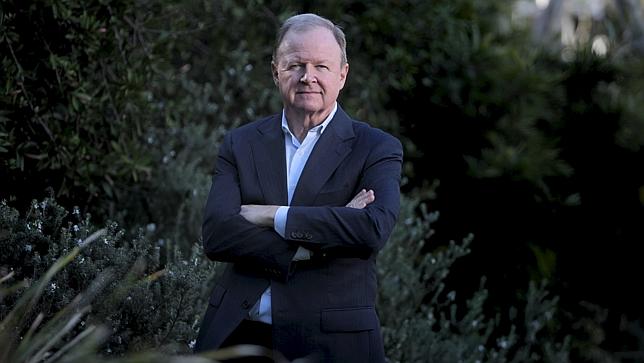
A2 Corporation chief executive Geoff Babidge expects some slowdown after the Fonterra scare.Sasha Woolley

The rise of milk group A2 Corporation in an industry that has been reshaped by low-cost generic milk from big supermarkets Coles and Woolworths provides a powerful lesson about the importance of brand differentiation in a highly competitive market. Having claimed a strong foothold in the domestic milk market, A2 is eyeing lucrative opportunities overseas but recent events in the Chinese infant formula market highlight the difficulties of entering new territories. A2, which is listed on the New Zealand sharemarket, is 26 per cent-owned by health food company Freedom Foods, one of the best performers on the ASX in the last 12 months. In the year to August 5, Freedom Foods’s share price rose from 56¢ to $1.98 – a 230 per cent increase. Few listed companies can lay claim to such a big rise, which has lifted Freedom Foods’s market capitalisation to $230 million. Read more of this post
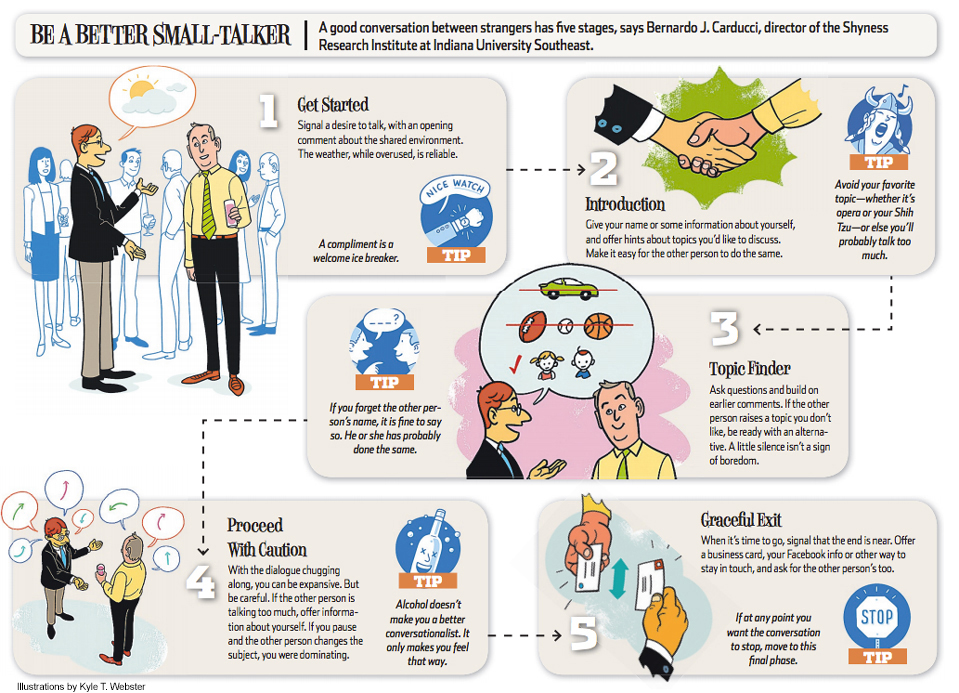
How to Be a Better Conversationalist; Good Small Talk Makes Us Likable, But It’s Easy to Get Rusty—How to Avoid Dominating and Being Dominated in a Conversation

Updated August 12, 2013, 10:16 p.m. ET

How to Be a Better Conversationalist

Good Small Talk Makes Us Likable, But It’s Easy to Get Rusty—How to Avoid Dominating and Being Dominated in a Conversation

ELIZABETH BERNSTEIN

BettersmalltalkV20813

Jason Swett still cringes when he remembers the party in Atlanta 10 years ago, where, drink in hand, he tried “to impress the local Southern belles,” he says, by talking—nonstop. He told the six or so people he’d just met the tale of how once at a grocery store he helped apprehend a thief who’d stuffed steaks down his pants. And the story about the time he spotted a bike at the bottom of a pond in a local park and jumped in to retrieve it. And then the one about how he smoked himself out of his own basement by setting off illegal fireworks. Eventually, Mr. Swett asked the group, “Wanna hear another one?” The reply was unanimous. “No!” six people shouted in unison. Read more of this post

Presentation Techniques: 6 Secrets To Giving Amazing Presentations

AUGUST 12, 2013 by ERIC BARKER

Presentation Techniques: 6 Secrets To Giving Amazing Presentations

Presentations can be unbearable. We average 5.6 hours each week in meetings and 69 percent of us feel they aren’t productive.

Which presentation techniques can help you improve your delivery and convince your audience?

1) To Inspire, Start With “Why” not “What”

What magic do both the speeches of Martin Luther King and the marketing of Apple have that move us to believe and act? Simon Sinek, author of Start with Why: How Great Leaders Inspire Everyone to Take Action, has an interesting theory:

People don’t buy what you do. They buy why you do it… Start with “Why.”

Start with the goal, the messianic mission, and get them on board emotionally. Then when you describe the solution, they’re already sold. Read more of this post

So Much for Serendipity in Personalized News

So Much for Serendipity in Personalized News

The Graham family’s sale of the Washington Post to Amazon.com Inc. (AMZN) founder Jeff Bezos has prompted intense discussion of the future of journalism. That discussion has yet to focus on a remarkable feature of the Post and other old-fashioned newspapers: They provide people with a great deal of content that they wouldn’t have chosen in advance.

Newspapers create what we might call an architecture of serendipity, in which readers encounter all sorts of stories, facts, ideas and opinions that they didn’t select. Much of what they encounter seems boring, irritating, wrong or offensive, but on occasion it turns out to be surprising, delightful, alarming, important and even life-changing. Read more of this post

The Making of McPaper: The Inside Story of USA Today

The Making of McPaper: The Inside Story of USA Today [Hardcover]

Peter S. Prichard (Author)

making-mcpaper-inside-story-how-usa-today-made-david-paperback-cover-art

Publication Date: September 1987

In 1982 the Gannett Company, the nation’s biggest newspaper chain, launched USA TODAY. USA TODAY celebrates its 25th anniversary in 2007. The brainchild of Al Neuharth, it was the most expensive, most closely watched newspaper debut in history. Journalists called it “McPaper,” the “titan of tidbits,” and “junk-food journalism.” No newspaper executive had ever put so many millions and so many careers on the line. This updated edition of Peter S. Prichard’s acclaimed 1987 release includes an afterward by longtime USA TODAY writer and editor David Colton. This updated section completes the story of the first century of “The Nation’s Newspaper.” Colton catches up with the founders and examines the journalistic achievements that have gained “McPaper” respect. Readers of USA TODAY – millions of them – will find this a fascinating, behind-the-scenes story of the battle to build a newspaper that has grown to redefine modern journalism. Readers of business histories will find it a classic case study of a bigrisk, big-reward business start-up. Read more of this post

The Best Of Jeff Bezos’ Lessons In Innovation From His Amazon Shareholder Letters

The Best Of Jeff Bezos’ Lessons In Innovation From His Amazon Shareholder Letters

TIM KASTELLE, INNOVATION FOR GROWTH AUG. 12, 2013, 6:53 AM 4,653 2

With Jeff Bezos in a news a fair bit right now, I thought it would a good time to look at some of the important innovation lessons that we can draw from his annual letters to Amazon shareholders.  It’s worthwhile to read them all, but here are some highlights:

 It’s All About the Long Term

The first letter is from 1997, and Bezos has included it as an appendix to every other annual letter that Amazon has sent out because it includes a summary of the firm’s long-run view. Here are a couple of the key parts of that:

We will continue to make investment decisions in light of long-term market leadership considerations rather than short-term profitability considerations or short-term Wall Street reactions.

We will continue to measure our programs and the effectiveness of our investments analytically, to jettison those that do not provide acceptable returns, and to step up our investment in those that work best. We will continue to learn from both our successes and our failures. Read more of this post

Crises Often Intrude When Presidents Take Vacation Breaks

Crises Often Intrude When Presidents Take Vacation Breaks

Call it the curse of the presidential vacation: Surf, sun, sand and crises.

It’s a ritual that Barack Obama became a part of during his first summer as president in 2009: He interrupted his August vacation in Martha’s Vineyard to reappoint Federal Reserve Chairman Ben S. Bernanke, protests against his health-care plan erupted at town-hall meetings across the U.S., and Massachusetts Senator Edward Kennedy, a Democratic Party icon, died. Obama, 52, returned to the resort island this week during another period of unrest. Facing growing tension with Russia before a Group of 20 summit in St. Petersburg, new concerns about al-Qaeda terrorism, and across-the-board budget cuts in military and domestic programs, Obama and his team are preparing for the unexpected. Read more of this post

That difficult conversation: Managers who put off having awkward discussions with staff can make matters worse

August 12, 2013 5:35 pm

That difficult conversation

By Naomi Shragai

A young entrepreneur owns and runs a thriving company. His job involves taking enormous financial risks, which he tackles with confidence and even excitement. Yet it is the prospect of having a difficult conversation with a colleague that keeps him awake at night. He has to tell one of his partners that their Amsterdam office is going to have to close, leaving her without a role in the business. However rational the decision, he is terrified of having to face her sadness and anger as well as his own guilty feelings. He rehearses the conversation in his head and the imagined scenario makes him panic. As a result, he keeps putting it off. Read more of this post

Lee Kuan Yew on fate of S’pore in 100 years’ time

Lee Kuan Yew on fate of S’pore in 100 years’ time

Tuesday, August 13, 2013 – 10:00

The Sunday Times

SINGAPORE – Former prime minister Lee Kuan Yew’s new book launched last Tuesday, One Man’s View Of The World, presents what he thinks about the future of major powers and regions. In these extracts, he speaks about death and dying, a younger generation of Singaporeans who have known only a thriving Singapore, as well as Japan’s ageing society and Europe’s currency woes. Read more of this post

Hang Seng Bank Ex-Chairman Li Quo-Wei Has Died at Age 95; After joining the lender in 1946, Lee was among those who transformed Hang Seng into the second-largest Hong Kong-based lender from a money-changing shop founded 13 years earlier

Hang Seng Bank Ex-Chairman Li Quo-Wei Has Died at Age 95

Lee Quo-wei, the former chairman of Hong Kong’s Hang Seng Bank Ltd. who fended off a bank run, helped peg the local currency to the U.S. dollar and rebuilt the reputation of the city’s stock exchange, has died. He was 95. Lee died on Aug. 10 at Prince of Wales Hospital in the city’s Shatin district, the unit of HSBC Holdings Plc said in an e-mailed statement on behalf of his family yesterday, without giving a cause of death. After joining the lender in 1946, Lee was among those who transformed Hang Seng into the second-largest Hong Kong-based lender from a money-changing shop founded 13 years earlier. Lee helped Hang Seng end a bank run in 1965 with a capital injection from Hongkong & Shanghai Banking Corp., later to become HSBC. Four years later he was part of the team that created the Hang Seng Index, the city’s benchmark stock gauge.

Read more of this post

Is Paul Krugman the Kim Kardashian of economics?

Paul Krugman and ‘reality TV economics’

I have been thinking a lot about whether to write this blog post or not because by doing so I will get involved in what I am trying to criticize – the emergence of what we could term ‘reality TV economics’. Even those of us who hate reality TV know about the Kardashians – not because we go looking for news of the reality TV family, but because the media around the world would write so much about the family that it is impossible not to come across “news” of the family. In fact every country in the world has a “Kardashian” – somebody who is only famous because they are famous. They are not famous because of their intellectual capacities or because they have been successful in business or sports. In fact many reality stars are reality stars because they have failed in what they aspired to do in the first place. Just think about the number of failed actors who today have their own reality TV show, but who are also unable to get an acting job. When your agent stops calling you will try to get your own reality TV show – it is unemployment insurance for Hollywood actors. One of the things that makes reality TV stars “interesting” is that they will do and say outrageous things. It seems like there is a genuine demand for this kind of thing. I must say I personally hate it and I try not to watch any form of reality TV, but it is not going away. In fact it seems like we are getting more and more of it every year. I am tempted to say it is market failure, but growing up in Scandinavia I have tried purely government run TV. I prefer bad reality TV to that.

Is Paul Krugman the Kim Kardashian of economics?

Unfortunately the reality TV phenomenon is spreading to the field of economics – or at least to economics blogs. The best example of this trend is Paul Krugman. He is surely the Kim Kardashian of the economic blogosphere. Read more of this post

GenSpring Family Office’s reputation revamp after client arbitrations related to a 2008-09 strategy of selling hedge funds with “bond-like risk with equity-like returns.” The hedge funds apparently didn’t perform that way, and outraged clients want their money back

August 12, 2013, 12:49 P.M. ET

GenSpring’s Reputation Revamp

By Robert Milburn

After years of management missteps atGenSpring Family Offices, freshly-minted chief executive officer Thomas Carroll, 39, is tasked with cleaning up the mess. Departed CEO Mel Lagomasino left Carroll holding the bag on client arbitrations related to a 2008-2009 strategy of selling hedge funds with “bond-like risk with equity-like returns.” The hedge funds apparently didn’t perform that way, and outraged clients want their money back, claiming GenSpring “mishandled” their investment accounts. Furthermore, a Penta investigation last year discovered GenSpring was inflating its assets on a seemingly reputable yet deeply conflicted ranking of wealth managers. Read more of this post

Black Hole Mystery: A paradox around matter leaking from black holes puts into question various scientific axioms: Either information can be lost; Einstein’s principle of equivalence is wrong; or quantum field theory needs fixing

August 12, 2013

A Black Hole Mystery Wrapped in a Firewall Paradox

By DENNIS OVERBYE

This time, they say, Einstein might really be wrong.

A high-octane debate has broken out among the world’s physicists about what would happen if you jumped into a black hole, a fearsome gravitational monster that can swallow matter, energy and even light. You would die, of course, but how? Crushed smaller than a dust mote by monstrous gravity, as astronomers and science fiction writers have been telling us for decades? Or flash-fried by a firewall of energy, as an alarming new calculation seems to indicate? Read more of this post

New York Times Chairman Arthur Sulzberger Jr. sold 50,000 shares in the company, according to an SEC filing, a day after the Ochs-Sulzberger family said the namesake newspaper is “not for sale.”

Updated August 12, 2013, 7:51 p.m. ET

Sulzberger Sells Tiny Slice of Times Stock

Deal Follows Family’s Declaration That Flagship Newspaper Isn’t for Sale

WILLIAM LAUNDER

New York Times Co. NYT +0.84% Chairman Arthur Sulzberger Jr. sold 50,000 shares in the company, according to a filing with the Securities and Exchange Commission, in a deal just one day after the Ochs-Sulzberger family declared the company’s namesake newspaper was “not for sale.” Mr. Sulzberger sold the shares Aug. 8 at $12 a share, raising a total of $600,000, the filing said. The stock represented a tiny portion of his overall stake. A spokeswoman for Times Co. said the stock sale was part of Mr. Sulzberger’s “regular estate planning.” Read more of this post

A brave new world in a melting Arctic; Opportunities bring challenges that require collaboration

August 12, 2013 6:25 pm

A brave new world in a melting Arctic

Opportunities bring challenges that require collaboration

Business adapts more quickly to changing times than politicians update their policies. Climate change is no different, as a burst of activity in the Arctic attests. Melting has cleared large ocean stretches of ice for much of the year. This is opening up new shipping lanes as well as prospects for resource exploitation in a part of the world that only years ago was deemed too inhospitable. Read more of this post

Surge of brain activity may explain near-death experiences

Surge of brain activity may explain near-death experiences

BY MEERI KIM

THE WASHINGTON POST

AUG 13, 2013

WASHINGTON – You feel yourself float up and out of your physical body. You glide toward the entrance of a tunnel, and a searing bright light envelops your field of vision. Rather than an ascent into the afterlife, a new study says these features of a near-death experience may just be a bunch of neurons in your brain going nuts. “A lot of people believed that what they saw was heaven,” said lead researcher and neurologist Jimo Borjigin. “Science hadn’t given them a convincing alternative.” Read more of this post

He risks death to keep his moustache

He risks death to keep his moustache

20130810_moustache_afp

Monday, August 12, 2013 – 03:00

The New Paper

PAKISTAN – Pakistani businessman Malik Amir Mohammad Khan Afridi has been kidnapped, threatened with death, forcibly displaced and lives apart from his family: All because of his enormous moustache. Impeccably trimmed to 76cm, Mr Afridi spends 30 minutes daily washing, combing, oiling and twirling his facial hair into two gravity-defying arches that reach to his forehead. “People give me a lot of respect. It’s my identity,” said the 48-year-old grandfather in the north-western city of Peshawar, when asked why he was prepared to risk his life for his whiskers. “I feel happy. When it’s ordinary, no one gives me any attention. I got used to all the attention and I like it a lot,” he told AFP. Read more of this post

‘Then I was the king. Now I’m a pauper’: Former playboy Raja reduced to living in a ‘mud hut’ in India

‘Then I was the king. Now I’m a pauper’: Former playboy Raja reduced to living in a ‘mud hut’ in India

Dean Nelson, The Telegraph | 13/08/13 3:19 AM ET

Raja Brajraj Kshatriya Birbar Chamupati Singh, 92, is the erstwhile king of Tigiria.

M_Id_409623_orissa_king.jpg

A former playboy Raja of one of India’s princely states is living as a pauper on the charity of commoners who were once his subjects.

Raja Brajraj Kshatriya Birbar Chamupati Singh, Mahapatra of Tigiria, the last surviving former ruler in Orissa, was once the life and soul of India’s royal party circuit. He kept a fleet of 25 vintage luxury cars and lived in a palace with 30 servants. He married a princess and was known throughout India for his prowess as a “shikari” – a big game hunter – who shot 13 tigers and 28 leopards. I would drink to my heart’s content and have a good time. But today, aged 92, he lives alone in a home described as a “mud hut” with a leaking roof and curtains of cobwebs, left by his wife and six children to the mercy of the villagers who bring him rice and lentils for lunch. A fellow royal, Jayant Madaraj, Raja of neighbouring Nilgiri, said he had known the former Raja of Tigiria since childhood when he was a close friend of his father. He had been known then for his generosity, his love of whisky jaunts to Calcutta, and his passion for fast cars and motorbikes. But his fortunes waned after Indian independence when he lost his state’s tax revenues and was given a privy purse of pounds 130 a year instead. He was forced to sell his palace in 1960 for pounds 900 and later separated from his wife. In 1975, the then prime minister, Indira Gandhi, withdrew the last remaining royal privileges and he lost his annual income. Read more of this post

Richard Branson: Forget the elevator – have your ‘anywhere pitch’ read to go

Richard Branson Contributor

Richard Branson: Forget the elevator – have your ‘anywhere pitch’ read to go

Published 08 August 2013 00:47, Updated 08 August 2013 11:08

When you’re preparing to tell investors about your idea for a business, people are going to tell you to prepare an elevator pitch, the standard summary selling a business idea in a minute or less. But there are many more locations and situations in which you may encounter a potential investor – anyone from a business leader in the industry to a family member – and you’ll need to be able to convince that person that your business will be game-changing. Why limit yourself or your imagination to elevators?

You need to think of it as your anywhere pitch. Read more of this post

A Glut of Antidepressants: Overdiagnosis of depression is seen as one factor in the rise in antidepressant use

AUGUST 12, 2013, 2:53 PM

A Glut of Antidepressants

By RONI CARYN RABIN

Over the past two decades, the use of antidepressants has skyrocketed. One in 10 Americans now takes an antidepressant medication; among women in their 40s and 50s, the figure is one in four. Experts have offered numerous reasons. Depression is common, and economic struggles have added to our stress and anxiety. Television ads promote antidepressants, and insurance plans usually cover them, even while limiting talk therapy. But a recent study suggests another explanation: that the condition is being overdiagnosed on a remarkable scale. Read more of this post

New Laws and Rising Costs Create a Surge of Supersizing Hospitals

August 12, 2013

New Laws and Rising Costs Create a Surge of Supersizing Hospitals

By JULIE CRESWELL and REED ABELSON

Hospital Merger

Hospitals across the nation are being swept up in the biggest wave of mergers since the 1990s, a development that is creating giant hospital systems that could one day dominate American health care and drive up costs. The consolidations are being driven by a confluence of powerful forces, not least of which is President Obama’s signature health care law, the Affordable Care Act. That law, many experts say, is transforming the economics of health care and pushing a growing number of hospitals into the arms of suitors. Read more of this post

Gene Breakthroughs Spark a Revolution in Cancer Treatment

August 12, 2013, 11:03 p.m. ET

Gene Breakthroughs Spark a Revolution in Cancer Treatment

RON WINSLOW

A growing number of cancer practices are sequencing the DNA of tumors to uncover their genetic abnormalities. The aim: to pair a drug with the specific mutation fueling a patient’s disease. UC San Francisco’s Dr. Trever Bivona discusses.

Kellie Carey’s doctor finally stopped dodging questions about how long she had to live six weeks after he diagnosed her lung cancer. “Maybe three months,” he told her in his office one sunny May morning in 2010, she recalls. Yet she is still alive, a testament to the most extraordinary decade of progress ever in the long scientific struggle against lung cancer. Tests found Ms. Carey’s lung cancer to be of a rare type that researchers had found just three years earlier by deciphering its genetic code. The 45-year-old businesswoman in 2010 went on a drug Pfizer Inc. PFE -0.07% was testing for that type. By pinpointing her cancer, the drug probably helped give her years more to live than chemotherapy would have, her doctors say. That is remarkable because lung cancer for decades defied efforts to find drugs that could extend an average patient’s life by even a few weeks. But an explosion in knowledge about the genetic mutations that cause tumors is just now offering the first real promise of drugs that can control what is the most-common and most-deadly cancer. Ms. Carey has one of at least 15 lung-cancer variations, almost all of which scientists didn’t know existed 10 years ago. Researchers have identified those variations, most of them in just the past four years, by decoding DNA in tumors—akin to how crime labs analyze DNA to genetically fingerprint suspects. Read more of this post

Drug companies are shifting their focus to researching complex molecules to enable more personalised treatments

August 12, 2013 7:21 pm

Pharmaceuticals: Back to the lab

By Andrew Jack

Drug companies are shifting their focus to researching complex molecules to enable more personalised treatments

He has promised no big shift in strategy or focus, spurned big acquisitions and suffered a series of research setbacks. Yet Pascal Soriot, who became chief executive of AstraZeneca last October, has been rewarded by investors as he attempts to turn round the Anglo-Swedish pharmaceutical group. Mr Soriot, who left a secure senior job at Roche to take the top post at AstraZeneca, has ridden a fresh wave of investor optimism towards the prescription medicines sector after a long period of gloom. “We are committed to science and innovation,” he says. “If we make the right choices, we’ll transform our portfolio.” Read more of this post

Autism Risk May Be Raised for Children When Labor Induced

Autism Risk May Be Raised for Children When Labor Induced

Boys born to mothers who needed their doctor to start or help along the birth may have a higher risk of autism, a study found.

Boys whose mothers had labors that were induced, which stimulates the uterus to bring on contractions, or augmented, which increases the strength, duration and frequency of contractions, had a 35 percent greater risk of autism then children whose mothers didn’t need those procedures to help the births, according to research today in JAMA Pediatrics.

Today’s study is the largest to examine the potential link between birth procedures and autism and to find that males may be more affected than females, said Simon Gregory, the lead author. While induced labors help reduce deaths among mothers and babies, more studies are needed to better understand why these procedures may raise autism risk, he said. Read more of this post

3-D Printing Stirs Copyright Clash on Homemade IPhone Gear

3-D Printing Stirs Copyright Clash on Homemade IPhone Gear: Tech

Fernando Sosa had no doubt his sword-covered iPhone dock inspired by the hit TV series “Game of Thrones” would become a top seller for his small manufacturing startup. Then he heard from HBO. Defending a copyright on electronics featuring its show, HBO in February demanded Sosa halt sales on his website. He did, and gave more than a dozen customers refunds for $49.99.

Read more of this post

Facebook to buy firm specialising in voice translation

Facebook to buy firm specialising in voice translation

POSTED: 13 Aug 2013 9:44 AM
– AFP/xq

Facebook has agreed to acquire Mobile Technologies, a firm specialising in voice translation software, the two companies said Monday, without providing financial details of the transaction. NEW YORK CITY: Facebook has agreed to acquire Mobile Technologies, a firm specialising in voice translation software, the two companies said Monday, without providing financial details of the transaction. Founded in 2001, Mobile Technologies is best known for developing the Jibbigo mobile application for speech-to-speech language translation. Read more of this post

How online print and poster retailer Easyart is trying to build the ‘Athena for the internet age’.

Easyart says online art sales are the big picture

How online print and poster retailer Easyart is trying to build the ‘Athena for the internet age’.

EASYART-forweb_2641943b

Marc Lickfett, left, pictured with chairman James Bidwell, says: “Easyart can democratise art a little more. This business is the Athena of the next generation”  Photo: Easyart

By Andrew Cave

5:26PM BST 12 Aug 2013

Andy Warhol forecast that everyone would be world-famous for 15 minutes. Easyart, which has the only licence to publish the late artist’s prints in Europe, wants to be around for a lot longer than that. The company was set up as Easyart.com in 1999 as a dotcom art prints and posters retailer, attracting legal action from Stelios Haji-Ioannou’s easyGroup to prevent it using the “easy” prefix to its name. The action was withdrawn before reaching the courts and Easyart.com became the UK’s largest website for posters and art. In 2011, the company merged with King Publishing, which had been formed in the 1980s as a traditional art publisher, converting to digital printing in 2007. “We’re printing everything digitally, which makes a massive difference,” says chief executive Marc Lickfett. “It’s similar to what’s happened in music and film. We have relationships with lots of museums and lots of major artists. We take out licences, print to order on canvas or on paper and frame and dispatch within 24 hours direct from our factory.” Read more of this post

Venture capitalists weigh in on MyFitnessPal, a calorie and fitness-tracking website and mobile app. “The field’s developed and moved beyond being a fringe behaviour for Star Trekkies into something that’s really mainstream”

August 12, 2013 5:10 am

Venture capitalists weigh in on MyFitnessPal

By April Dembosky in San Francisco

Kleiner Perkins Caufield & Byers has made its largest early-stage investment, leading an $18m round of venture capital financing for MyFitnessPal, a calorie and fitness-tracking website and mobile app. John Doerr, the partner at the venture capital firm who made early bets on Googleand Amazon, said usage of health-tracking gadgets and apps had reached an “inflection point” and was no longer only for star athletes or numbers-obsessed computer geeks. “The field’s developed and moved beyond being a fringe behaviour for Star Trekkies into something that’s really mainstream,” he said. Read more of this post

No fluffing up China’s slump; There is no entity today that has enough energy to rescue the global economy from a collapse that might be triggered by China

No fluffing up China’s slump

AUG 12, 2013

A big economic slump has started in China as predicted. The rest of the world has came to know about it through none other than Chinese President Xi Jinping and Prime Minister Li Keqiang. They disclosed to the world a steep rise in short-term interest rates, falling exports and a slump in the nation’s economic growth — undesirable facts and figures that those in power in Beijing would have concealed in the past. This is because the Xi-Li leadership has realized that the Chinese economy is in such dire straits that any further deterioration would cause a serious global impact. How should the whole world, including Japan, respond to this alarm? Read more of this post

Group-buying websites in China face funding crisis

Group-buying websites in China face funding crisis

Staff Reporter

2013-08-13

Group-buying websites emerged in China in March 2010 and immediately entered into cutthroat competition for market share. At the peak of the craze, 5,058 such websites were in the market, but there are only 943 left, chiefly due to a lack of funding, reports news portal Xkb.com.cn Last year, a total of 1,514 group-buying websites closed down or withdrew from the market, an average of four shutdowns per day, according to statistics from the China Electronic Commerce Research Center. Read more of this post