Industrialization has turned much of the Chinese countryside into an environmental disaster zone, threatening not only the food supply but the legitimacy of the regime itself

July 26, 2013, 6:33 p.m. ET

China’s Bad Earth

Industrialization has turned much of the Chinese countryside into an environmental disaster zone, threatening not only the food supply but the legitimacy of the regime itself.

JOSH CHIN and BRIAN SPEGELE

In Dapu, a rain-drenched rural outpost in the heart of China’s grain basket, a farmer grows crops that she wouldn’t dare to eat. A state-backed chemicals factory next to her farm dumps wastewater directly into the local irrigation pond, she says, and turns it a florescent blue reminiscent of antifreeze. After walking around in the rice paddies, some farmers here have developed unexplained blisters on their feet. “Nothing comes from these plants,” says the farmer, pointing past the irrigation pond to a handful of stunted rice shoots. She grows the rice, which can’t be sold because of its low quality, only in order to qualify for payments made by the factory owners to compensate for polluting the area. But the amount is only a fraction of what she used to earn when the land was healthy, she says. The plants look alive, “but they’re actually dead inside.” Read more of this post

What Warehouses? Amazon’s Quarterly Message Is All Digital; “This past quarter, our top 10 selling items worldwide were all digital products – Kindles, Kindle Fire HDs, accessories and digital content”

July 25, 2013, 6:44 PM

What Warehouses? Amazon’s Quarterly Message Is All Digital

By Tom Gara

One interesting line from Amazon’s Jeff Bezos, announcing quarterly results today:

“We’re so grateful to our customers for their response to Kindle devices and our digital ecosystem. This past quarter, our top 10 selling items worldwide were all digital products – Kindles, Kindle Fire HDs, accessories and digital content,” You would expect something close to this — of the company’s ten best selling electronics items, five are Kindles. In its Movies & TV category, the top three are all streaming items from Amazon’s Instant Video service, as are eight of the top ten. So long, DVDs! Amazon had $15.7 billion in sales in the quarter, and while it didn’t make any money — it lost $7 million — growing sales by 22% is still pretty impressive for a company this size. That was helped along by some of the newer, less conventional parts of the company’s digital business — Amazon Web Services, the cloud computing business, was responsible for almost 15% of the growth in U.S. revenues. For another sense of where management’s priorities are — or at least where management wants to say its priorities are — take a look at the “Highlights” section of the earnings announcement. Of the 19 dot-pointed highlights, only one is devoted to the company’s historical business of online retailing — a mention of the launch of its marketplace in India. Four more talk about achievements in the Amazon Web Services business, and the rest — the other 14 — are about the Kindle and its digital content store, or Amazon’s wider digital media business.

J.P. Morgan to Sell Commodities Business

Updated July 26, 2013, 7:54 p.m. ET

J.P. Morgan to Sell Commodities Business

Move Comes Amid Regulatory Scrutiny of Wall Street

DAN FITZPATRICK and CHRISTIAN BERTHELSEN

P1-BM480A_jpm_NS_20130726182709

NEW YORK—The largest U.S. bank is getting out of the power-plant and warehouse business, amid heightened regulatory scrutiny of Wall Street’s ownership of such assets. J.P. Morgan Chase JPM -0.80% & Co. said Friday it is putting its physical commodities operation up for sale, a major retreat for a company that last decade made a costly and bold effort to become No. 1 in the commodities field. J.P. Morgan joins rivals Goldman Sachs Group Inc. GS -0.39% and Morgan Stanley,MS -0.22%  which also are seeking buyers for such holdings. Regulators in recent months have ratcheted up scrutiny of banks’ power-market operations. The Federal Energy Regulatory Commission’s enforcement staff in March accused J.P. Morgan of manipulating energy markets in California and the Midwest. J.P. Morgan denied the accusations in a written response to FERC. The company is negotiating a $410 million settlement that would resolve those allegations. The Federal Reserve, meanwhile, is reviewing a decade-old policy allowing banks to hold physical commodity assets. Read more of this post

Deal Initiation in Mergers and Acquisitions

Deal Initiation in Mergers and Acquisitions

Ronald W. Masulis University of New South Wales – Australian School of Business; European Corporate Governance Institute (ECGI); Financial Research Network (FIRN)

Serif Aziz Simsir Sabanci University

June 30, 2013
ECGI – Finance Working Paper No. #371

Abstract: 
This study investigates deal initiation in the context of mergers and acquisitions. We investigate how bidder and target initiated merger offers differ. Our analysis reveals that target financial or economic weakness, target financial constraints and economy wide shocks are important motives for target-initiated deals. We also find that average bid premiums, target cumulative abnormal returns (CAR) measured around the merger announcement dates and the deal value to EBITDA multiples of target-initiated deals is significantly lower than in bidder-initiated deals. However, this gap cannot be explained by weaker financial conditions of targets immediately prior to merger announcements. After adjusting for self-selection, we find evidence that the private information held by target firms is the main driver of the lower premiums observed in target-initiated deals. Supporting this perspective, the premium gap between bidder- and target-initiated deals widen when the information asymmetry between the merging firms gets higher.

Moody’s Sees Local Chinese Debt Default as $21 Billion Matures

Moody’s Sees Local Default as $21 Billion Matures: China Credit

Local-government financing vehicles need to repay a record amount of debt this year, prompting Moody’s Investors Service to warn Premier Li Keqiang may set an example by allowing China’s first onshore bond default.

Some 127 billion yuan ($21 billion) of so-called LGFV notes expire in the second half, according to Everbright Securities Co., the most in its data going back to 2000 and more than double the 62.7 billion yuan that matured in the first six months. The yield premium over top-rated notes for one-year AA debt, the most common rating for LGFVs, widened to 67 basis points yesterday, the highest level since Jan. 16, Chinabond data show. The comparable gap in India is 47. Read more of this post
Boy Selling Candles Becomes Polish Billionaire Unhappy With Debt

Boy Selling Candles Becomes Polish Billionaire Unhappy With Debt

iKH9XcOc3agU

In Radom, a blue-collar Polish city better known for producing guns than entrepreneurs, Feliksa Pietruszka remembers the young boy from the neighboring apartment who sold candles at the cemetery opposite. “These were good kids,” said Pietruszka, 85, who still lives in the same building with outside toilets and coal-fired stoves for heating, as she sat in a kitchen barely big enough for two chairs and a table. “This was just a normal family.”

More than four decades and three changes of name later, that boy, Zygmunt Solorz-Zak, has turned his first zloty into a fortune exceeding $3 billion and a business spanning television, mobile phones, a bank and a power utility. Along the way, it also made him Poland’s biggest borrower as he expanded to compete with rivals funded by foreign investors and create the fastest mobile Internet service in the country. Read more of this post

Good Strategy, Bad Strategy by Richard Rumelt

Fed may decide that owning warehouses, pipelines and tankers does not fit with banks’ missions – meaning they could be ordered, or pressured, to divest those infrastructure assets

On U.S. banks and commodity trade, Fed unlikely to say no

12:03am EDT

By Jonathan Leff

NEW YORK (Reuters) – When it comes to commodity trading, the U.S. Federal Reserve has a habit of lengthy deliberation, deep enquiry and saying yes. The Fed granted its first authorization to trade physical commodities to Citigroup Inc (C.N: Quote, Profile, Research,Stock Buzz) in 2003 after nearly five years of study; the letter allowing it to keep its Phibro unit arrived just six days before a grace period ended. It spent another nine months scrutinizing one of its last such permits, given to the Royal Bank of Scotland (RBS.L:Quote, Profile, Research, Stock Buzz) in 2008 when it bought half of Sempra Commodities; the Fed’s deliberations delayed plans to close the deal by months, but it ultimately approved a vastly expanded array of activities. So even after a week of unprecedented public and political scrutiny on the multibillion-dollar commodity trading desks at Goldman Sachs Group Inc (GS.N: Quote, Profile, Research, Stock Buzz), Morgan Stanley (MS.N: Quote, Profile, Research, Stock Buzz) and JPMorgan Chase & Co (JPM.N: Quote, Profile, Research,Stock Buzz), a dozen legal experts and industry sources say the Fed is unlikely to turn back the clock to an era when banks were barred from touching gasoline cargoes or aluminum coils. Read more of this post
Google’s Instant Translators Could Become The Universal Tongue

Google’s Instant Translators Could Become The Universal Tongue

DARRELL ETHERINGTON

posted 2 hours ago

Google likes to create things that gather data, which can be used to determine intent and for all kinds of profitable purposes. There’s no bigger fish in that pond than the Babel fish – that invention of Douglas Adams’ in his Hitchhiker’s Guide to the Galaxy series that instantly translates one language to another to make communication seamless. That’s because Google would be processing literally everything a person says to another (at least while travelling), which adds up to a lot of mineable data. Read more of this post

CEO Overconfidence and Repurchases

CEO Overconfidence and Repurchases

Suman Banerjee Nanyang Business School

Mark Humphery-Jenner University of New South Wales – Australian School of Business; Financial Research Network (FIRN)

Vikram K. Nanda Georgia Institute of Technology – College of Management

June 8, 2013 FIRN Research Paper

Abstract: 
This paper analyzes how CEO overconfidence influences repurchase-decisions, dividend-repurchase substitution, and the market’s reaction to repurchases. Overconfident CEOs tend to over-estimate the value of investments and under-estimate their risk. We show that overconfident CEOs prefer repurchases to dividends as they represent less of a drain on future cash flows, reflecting overconfident CEOs’ positive beliefs about future projects and the need for cash to support them. This manifests in a substitution from dividends to repurchases. Further, consistent with the idea that an overconfident CEO believes their company to be under-valued, overconfident CEOs are even more likely to substitute CAPEX for repurchases. Overconfident CEOs are also more sensitive to a stock market decline than are other CEOs and are less sensitive to the company’s cash/cash-flow decision when making repurchases. Overconfident CEOs who are more insulated from internal or external discipline are more likley to act on these behavioral biases. We also find that overconfident CEOs’ excessive optimism results in repurchases conveying a weaker signal about the firm’s quality, leading the market to react less strongly to overconfident CEOs’ repurchases.

Are Institutional Investors Truly Skilled or Merely Opportunistic?

Are Institutional Investors Truly Skilled or Merely Opportunistic?

Gennaro Bernile Singapore Management University – School of Business; University of Miami – School of Business Administration

Alok Kumar University of Miami – School of Business Administration

Johan Sulaeman Southern Methodist University (SMU) – Edwin L. Cox School of Business

Qin Wang University of Michigan – Dearborn

July 25, 2013

Abstract: 
Using a large dataset of institutional trades, we examine whether superior intraquarter trading performance of institutional investors reflects superior trading skill or opportunistic access to information. Our conjecture is that true investment skill would not depend upon geographical proximity between investors and firms, while opportunistic access to information is likely to be location-dependent. Thus, if institutions are truly skilled, they would earn high average return and exhibit performance persistence in both their local and nonlocal trades. Our evidence indicates that institutions on average are not skilled and their superior intraquarter performance is more likely to reflect opportunistic access to short-term local information. They have high average local performance but this performance is not persistent. Further, we observe increased local trading activity and profitability prior to earnings announcements, particularly before negative news. In contrast, the average net non-local intraquarter trading profits are not significantly different from zero. There is persistence in non-local performance, however, which suggests that some investors in the cross-section may be skilled. Specifically, investors with superior non-local performance exhibit superior future performance in both non-local and local trades. This evidence indicates that superior performance in non-local trades is a better indicator of innate trading skill.

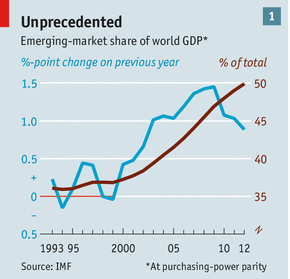
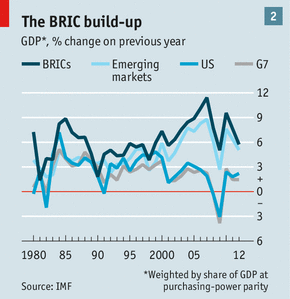
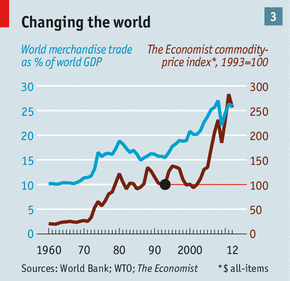
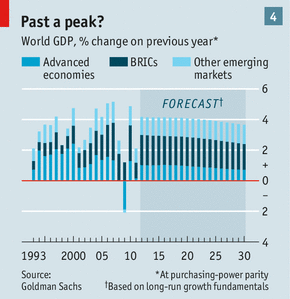
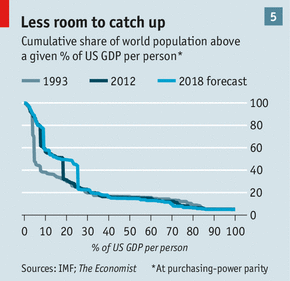
The Great Deceleration: The most dramatic, and disruptive, period of emerging-market growth the world has ever seen is coming to its close

The Great Deceleration

The emerging-market slowdown is not the beginning of a bust. But it is a turning-point for the world economy

Jul 27th 2013 |From the print edition

20130727_LDP001_020130727_FBC127 20130727_FBC130 20130727_FBC131 20130727_FBC128 20130727_FBC129

WHEN a champion sprinter falls short of his best speeds, it takes a while to determine whether he is temporarily on poor form or has permanently lost his edge. The same is true with emerging markets, the world economy’s 21st-century sprinters. After a decade of surging growth, in which they led a global boom and then helped pull the world economy forwards in the face of the financial crisis, the emerging giants have slowed sharply. Read more of this post
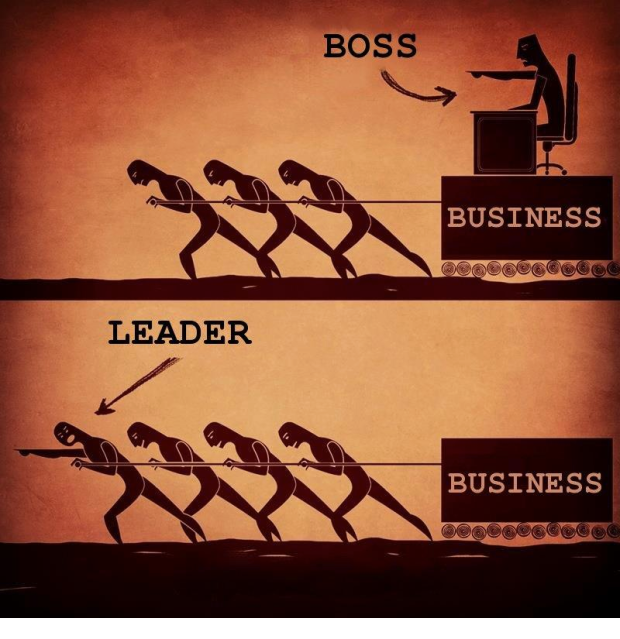
9 Easy-To-Steal Habits Of The Super Successful

9 EASY-TO-STEAL HABITS OF THE SUPER SUCCESSFUL

WE WISH THERE WAS A HANDBOOK FOR SUCCESS, BUT THERE ISN’T. HERE’S THE NEXT BEST THING: A LIST OF WAYS YOU CAN REALIZE YOUR DREAMS–AND BE A MORE PRODUCTIVE PERSON IN THE PROCESS.

BY: MILES KOHRMAN

3014736-inline-boss-vs-leader-1

Wouldn’t it be great if success was simple? But it isn’t. There’s no one-size-fits-all answer for success in work and life, but we will do our best to steer you in the right direction. Here’s a list of helpful habits of some highly successful–and wildly productive–people to get your started. On your mark, get set, and… Read more of this post

Tile creates tiny, Bluetooth-connected devices you can affix to anything you don’t want to lose–like your keys, laptop, or luggage

DUDE, WHERE’S MY STUFF? HOW TILE APP COULD CREATE A NATIONAL LOST-AND-FOUND

TILE CREATES TINY, BLUETOOTH-CONNECTED DEVICES YOU CAN AFFIX TO ANYTHING YOU DON’T WANT TO LOSE–LIKE YOUR KEYS, LAPTOP, OR LUGGAGE.

BY: CHRISTINA CHAEY

When Fast Company‘s assistant news editor Jessica Hullinger became the victim of a recent bike theft–shortly after she was gifted a brand-new bicycle–she had few options in terms of looking for it. Hullinger hadn’t registered the bike with the New York Police Department, so it had no identification number to track. She halfheartedly called some local bike shops and checked Craigslist for new “For Sale” listings in search of bicycles with descriptions that matched hers. But the bike had vanished. Read more of this post

Tower Crane Industry Awaits a Big Lift; Five Years After Commercial Construction Market’s Collapse, Utilization Rates and Sales Remain Soft

Updated July 25, 2013, 8:13 p.m. ET

Crane Industry Awaits a Big Lift

Five Years After Commercial Construction Market’s Collapse, Utilization Rates and Sales Remain Soft

BOB TITA

MK-CF043_CRANE_G_20130725180307

For a glimpse of how the U.S. commercial construction market is faring, Morrow Equipment Co. is worth a good look. Five years after the construction market collapsed, about 250 cranes—or half of Morrow’s fleet—remain idle. The market “is improving this year, but is still at a very low rate compared with where it used to be in the boom time,” said Christian Chalupny, president of Morrow, which is the nation’s largest supplier of rented tower cranes based on fleet size. Read more of this post

10 Recipes for Better Thinking; How action-focused business leaders can sharpen their thinking skills

10 Recipes for Better Thinking

Jul 24, 2013

How action-focused business leaders can sharpen their thinking skills

The fact is, when you teach business, you have to know business. So it’s no surprise that some of the best professors are those with significant experience from the world of business. Yet, I’ve found some significant distinctions between academia and practitioners. For example, while a professor relies heavily on concepts and theories and prefers to maintain neutrality, a businessperson favors taking action, relying on “what worked before,” and is unafraid to take a stance. Additionally, a professor focuses on a single discipline and appreciates diversity of thought, but a businessperson is required to respond to a variety of stimuli and is pressured to make quick decisions. In other words, a professor is required to think more than he or she acts, while a businessperson is expected to act far more than he or she thinks. Though the expectations and methods of reasoning may differ between these two worlds, their styles of thinking are not contrary to one another. In fact, combining elements of both styles of thinking actually prove quite beneficial for a businessperson. As such, I’ve discovered through my experience in both academics and business, ten strategies that can sharpen the thinking of business leaders, equipping them to make smarter, more informed decisions in their fast-paced environment.  Read more of this post

Change is the giant spotlight that can illuminate a corporation’s blemishes and betray its secrets, but the friction of which is also kinetic, its heat ready to ignite a magnificent oeuvre and to liberate talent

Departures, and what they mean

BY FRITZ NELSON 
ON JULY 25, 2013

I don’t believe much in soul mates, at least where corporations and executive leadership are concerned. I believe in calculated choices and fortuitous timing, in harmonious teams, in achievable but auspicious goals, articulated with inspirational verve and backed by unmitigated, obstinate will. New leaders emerge. Old ones leave to pursue the next dream, or get kicked out, sometimes for no good reason at all. Read more of this post

Would a family business by any other name be as profitable?

WOULD A FAMILY BUSINESS BY ANY OTHER NAME BE AS PROFITABLE?

ARTICLE | 25 JULY, 2013 03:42 PM | BY RHYMER RIGBY

Earlier this year the French luxury group Pinault-Printemps-Redoute changed its name to Kering. In doing so, it took big step – it shed the family name. The decision to do so was taken by the chairman and CEO, Francois-Henri Pinault, who is the son of the business’s founder (the Printemps and Redoute are from various takeovers). Pinault cited perfectly sound business reasons for the rebranding – chief among them that only 5% of the group’s sales now come from France. Nonetheless, this is a Rubicon many family businesses would struggle to cross. Read more of this post

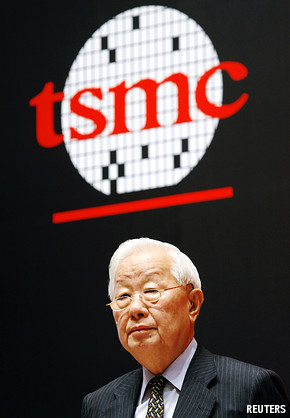
TSMC: A fab success; The smartphone boom has been a boon for a pioneer in semiconductors. TSMC has thrived on a mixture of serendipity and anticipation

TSMC: A fab success; The smartphone boom has been a boon for a pioneer in semiconductors

Jul 27th 2013 | TAIPEI |From the print edition

20130727_WBP001_0

WHEN he founded Taiwan Semiconductor Manufacturing Company (TSMC) in 1987, Morris Chang recalls, “Nobody thought we were going anywhere.” Back then the rule was that semiconductor companies both designed and made chips. TSMC was the first pure “foundry”, making chips for designers with no factories, or “fabs”, of their own. The doubts of others suited TSMC nicely. Mr Chang, at 82 still chairman and in his second stint as chief executive, says that meant it suffered no competition in its first eight years. Read more of this post

An open letter to Jeff Bezos: A contract worker’s take on Amazon.com

Brutal Letter To Jeff Bezos Says Way To Get Ahead At Amazon Is ‘Be A Pretty Girl Or A Dude Who Used Liberal Amounts Of Axe’

JIM EDWARDS JUL. 25, 2013, 5:24 PM 9,887 24

A former Amazon contract worker has written an open letter to Amazon CEO Jeff Bezos that brutally dissects his temp hiring policies: “the revolving door of new hires encourages low quality work, inconsistent productivity and wastes useful resources on training,” Steven Barker wrote, after a stint as a contract worker developing Amazon’s X-Ray for TV and Movies.  Barker alleges that Amazon has a policy of hiring temporary contract workers who are let go when they’ve served 11 months, preventing them from becoming permanent employees. The result is that important projects at Amazon such as X-Ray (which allows Kindle users to tap the screen for more info on characters in movies) end up being run by poorly motivated temps, and those temps end up training the new temps, in an endless cycle of increasingly inexperienced, demotivated employees who have no incentive to do quality work because Amazon is “a dead end.” (We’ve reached out to Amazon for a rebuttal; we’ll update this if we hear back.)

An open letter to Jeff Bezos: A contract worker’s take on Amazon.com

July 25, 2013 at 11:59 am by Steve Barker 30 Comments

Dear Jeff Bezos,

In your position, I imagine that you rarely have an opportunity to receive feedback from one of your temporary-contract employees. I thought you should have some input. I hope you find this useful. Read more of this post

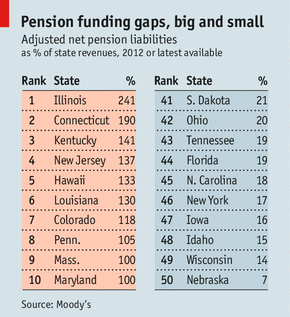
Retirement benefits: Who pays the bill? Pensioners are pushing many cities and states towards financial crisis

Retirement benefits: Who pays the bill? Pensioners are pushing many cities and states towards financial crisis

Jul 27th 2013 | CHICAGO AND LOS ANGELES |From the print edition

20130727_USD001_0 20130727_USC119 20130727_USD002_0

DETROIT may be an extreme case of fiscal incontinence. But its bankruptcy highlights a long-term problem faced by many American cities and states; how to fund generous pension and health-care promises that are no longer affordable. The problem has been decades in the making. It has always been easier for politicians to promise generous retirement benefits to public servants than to raise their wages. The bill for jam today falls due immediately; the bill for jam tomorrow can be delayed for decades. Read more of this post

Lo Hsing Han, heroin king and business tycoon, died on July 6th, aged about 80

Lo Hsing Han, heroin king and business tycoon, died on July 6th, aged about 80

Jul 27th 2013 |From the print edition

20130727_OBP001_0

MEN in his line of work rarely reach old age. They die in a hail of bullets from police sharpshooters or a rival gang, and are buried fast in shallow jungle graves. Not Lo Hsing Han. At his funeral a cavalcade of cars, some carrying his portrait garlanded with flowers, processed through the streets of Yangon, Myanmar’s capital, to his high-walled villa, right by the 16th tee of the city golf club. Crowds of villagers attended from his native region, in the Golden Triangle of Myanmar’s north-east. They rubbed shoulders with former generals, two cabinet ministers and the cream of Yangon society. Read more of this post

Shanghai cake factory is using drones to deliver cakes in Shanghai

Local company takes delivery of cakes to new heights – literally

Created: 2013-7-24 2:14:51, Updated: 2013-7-24 14:10:37

Author:Yang Jian

20130724_536045_01

Three women look up in amazement as a drone carries a cake along the Huangpu River.

HAVE the cake and eat it too. And get it delivered in style as well. In a crazy story that would make even spy master James Bond sit up and take notice, a local cake factory is using drones to deliver cakes in Shanghai! And China’s civil aviation authorities are not too happy about it. Read more of this post

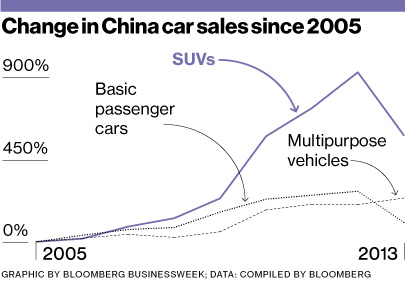
Great Wall Motor, China’s No. 1 SUV maker, has operating margins of 16 percent. That’s the highest of any carmaker

China’s Great Wall Motor Is Built on SUVs

By Tian Ying on July 25, 2013

comp_greatwall31__01__202 comp_greatwall31_405

Wang Jiangwei spent last summer sweating through a month of military drills—everything from marathon runs to rigorous calisthenics—conducted by Chinese People’s Liberation Army instructors. But Wang isn’t a soldier; he’s a researcher at Great Wall Motor (2333:HK). The training program is a creation of Great Wall’s quirky founder, Chairman Wei Jianjun, who has built China’s biggest maker of SUVs with a leadership style that stands out for its emphasis on discipline and frugality usually more common to the military. Read more of this post

Alibaba, e-concierge, soon at your service

Alibaba, e-concierge, soon at your service

English.news.cn   2013-07-26

BEIJING, July 26 (Xinhuanet) — Chinese e-commerce giant Alibaba Group Holding Ltd plans to boost its presence in China’s online market, and is adding services to ease consumers’ daily lives, from ordering food to booking movie tickets. The company expects the new business area to become a major revenue source in the future. Online shopping has become a new way of life for many Chinese consumers, said Zhang Jianfeng, vice-president of Alibaba Group. And the company has realized that customers are not satisfied with merely buying items on Internet. Read more of this post

Why Aren’t Many Going For the Billion-Dollar Ideas in Singapore

Why Aren’t Many Going For the Billion-Dollar Ideas in Singapore

July 25, 2013

by John Fearon

John Fearon is a lifelong serial entrepreneur. His 35 years have taken him from selling sweets as a child, to global digital marketing, to founding Dropmysite.com, one of the fastest growing cloud companies today.

Singapore is starting to look like the Silicon Valley of Asia – startups popping up everywhere, chock full of wealth being invested, and now they’re even drawing talent from MNCs around the world. However, one big difference is that on Sand Hill Road, everyone is looking to be a billion-dollar business but it seems only a few in the Lion City are. You need a ton of capital and sufficient length of time to go after the billion-dollar idea. Next, you need a world-changing idea, like indexing the entire internet in a search engine i.e. Google. Sometimes there just isn’t adequate cash or time or ideas on Singapore’s shores to propel a business into orbit. Read more of this post

Mobile Payments Service iBoxPay is the first company that has passed security accreditation of China UnionPay and Banking Card Test Center; More than 1 million deals have been sealed on iBoxPay platform with a turnover of RMB 1 billion

Mobile Payments Service iBoxPay Secured $10 Million Series B Financing

By Emma Lee on July 25, 2013

QQ截图201307241239341

iBoxPay, a Square-like mobile payment solution and platform provider, announced $10 million of Series B financing from SMIT, GSR Ventures and Atomic (announcement in Chinese). The company received 14 million yuan financing (about $2.3 mn) from GSR Ventures in 2011. iBoxPay features RFID reader, barcode scanner, the Square-function, USBKey for secure, e-signature etc, as described on the company’s official website. It stands out in the competitive domestic market as the first company that has passed security accreditation of China UnionPay and Banking Card Test Center. Acquiring accreditation from China UnionPay means that the POS devices of iBoxPay have reached the national financial security standards. It is so far the only company that won a China UnionPay accreditation for handset POS machines. More than 1 million deals have been sealed on iBoxPay platform with a turnover of 1 billion yuan.

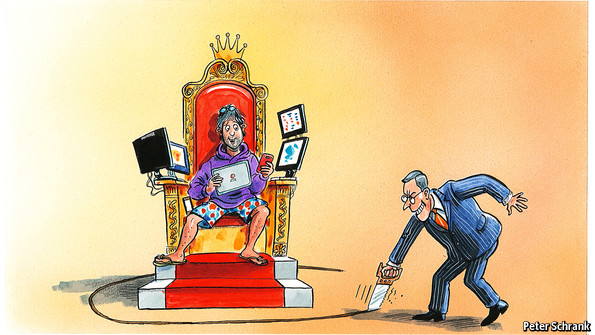
Tech firms and their founders: Monarchs versus managers; The battle over Dell raises the question of whether tech firms’ founders make the best long-term leaders of their creations

Tech firms and their founders: Monarchs versus managers; The battle over Dell raises the question of whether tech firms’ founders make the best long-term leaders of their creations

Jul 27th 2013 | SAN FRANCISCO |From the print edition

20130727_WBD001_0

THE epic struggle between two billionaires over the future of Dell has gone to another round. Michael Dell, the ailing computer-maker’s founder and biggest shareholder, has now been forced twice to postpone a vote on his proposal to buy out the firm and take it off the stockmarket, for fear that the deal’s critics, led by Carl Icahn, a veteran shareholder activist, may have enough support to scupper the plan. Read more of this post

Warby-As-A-Service? Backed By Reddit, Posterous Founders, Eponym Helps Brands Build And Distribute Their Own Eyewear

Warby-As-A-Service? Backed By Reddit, Posterous Founders, Eponym Helps Brands Build And Distribute Their Own Eyewear

RIP EMPSON

posted 4 hours ago

screen-shot-2013-07-25-at-4-52-40-am

Over the last few years, a new wave of startups has emerged to tackle a range of inefficient, ignored or offline segments within the massive world of fashion and retail. The maturation of the Web and digital commerce has allowed these startups to not only target specific niche groups of consumers and build communities and intimate relationships around these verticals, but to bypass brick-and-mortar gatekeepers and connect with customers directly through digital storefronts. Read more of this post

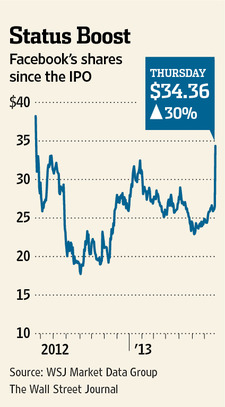
Facebook offers the dummy’s guide to mobile advertising? What advertisers like about news feed are the ads, with colorful photos, are hard to miss, right in the middle of the scroll of updates

July 25, 2013, 8:19 p.m. ET

Why Advertisers Are Warming to Facebook

Shares Soar 30% After Social Network Posts Better-Than-Expected Results

SUZANNE VRANICA and EVELYN RUSLI

MK-CF049_FB_NS_20130725180903

Facebook Inc. is winning more friends on Madison Avenue. The social-media giant’s better-than-expected second-quarter results, driven in part by a big increase in mobile advertising revenue, signaled that after a rough start, the company has made marketers feel more comfortable with spending money on the social network. “The service has improved and the company is a more attentive to advertisers now,” said Adam Shlachter, senior vice president of media for DigitasLBI, a digital ad agency owned by Publicis Groupe  SA. “A year or two ago, the company was a little difficult to work with because they were growing so fast and there was inconsistencies with its service.” Read more of this post