Shattering the myth of the ‘Startup Nation’

Shattering the myth of the ‘Startup Nation’

This lofty title has long served as a cover for the low productivity that plagues the Israeli economy.

By Amir Teig | Jul. 16, 2013 | 2:14 PM

Legend has it that a treasure trove of economic reforms is hidden deep down in the confines of the Finance Ministry’s budget department – dozens of important reforms formulated over the years just waiting for the day when the right politician will come along and pluck them out of the files. The department’s capable economists and senior bureaucrats cover all their bases by running everything through committees and past experts. Usually they identify clearly, and in real time, the numerous problems and challenges threatening the Israeli economy, and even formulate solutions. But this work usually goes no further than the filing cabinet: Barring the sense that there is a terrible crisis or a fire that needs to be put out, no politician will commit to risky long-term reforms. And yet, without them, Israel will always be behind. Read more of this post

Asia After the Money Flood; It’s time to prepare for the end of U.S. quantitative easing

Updated July 16, 2013, 6:59 p.m. ET

Asia After the Money Flood

It’s time to prepare for the end of U.S. quantitative easing.

Investors have awakened to the implications for Asia of a gradual unwinding of easy money policies in the West. Witness last month’s cash exodus and stock-market declines as investors re-evaluate their appetite for risk. Higher yields in America are expected to draw portfolio investment back from emerging markets.

The upshot is that Asian leaders accustomed to reaping the growth rewards of plentiful foreign capital are in for a shock. The investors who remain committed to the region will look for those countries that offer the most attractive mix of risk and return. It’s time to revisit economic reforms that will keep them hooked. Read more of this post

A very clear explanation of China’s economic woes; Are there good examples of boondoggles that have been created through this investment boom?

A very clear explanation of China’s economic woes

By Brad Plumer, Updated: July 16, 2013

One of the biggest economic stories in the world right now is the sharp slowdown in China’s economy. On Monday, the country reported that it had grown just 7.5 percent in the second quarter of 2013, a worrisome drop from previous quarters. To get a clearer sense of why China is in such economic turmoil — and whether it could drag the rest of the world down with it — I called up Patrick Chovanec, a longtime China watcher who is currently chief strategist at Silvercrest Asset Management and was formerly an associate professor at Tsinghua University’s School of Economics and Management in Beijing. A transcript of our talk follows.

Brad Plumer: Let’s assume I know nothing whatsoever about China. How would you explain why the country is suddenly facing all these economic problems and making headlines? It seemed like China was booming. Read more of this post

Online flash sales may become short-lived craze in China

Online flash sales may become short-lived craze in China

Staff Reporter

2013-07-17

With the trend of online group shopping on the downturn, “flash shopping” has been sweeping China’s e-commerce market. Flash shopping features sales of certain merchandise, mostly brand name products, at a 10-50% discount for members of e-commerce websites during a specific time frame. Vipshop.com pioneered the sales practice and its success has enabled its market value to grow six-fold in one year, prompting major e-commerce operators to join the fray. The participation of major e-commerce operators has aggravated the competition for flash sales, slashing profit margins. Vipshop.com revealed that flash sale operators used to collect 20-26% commission from vendors, a major source of their profit, but the commission has dropped to 5%, following the rollout of flash-sales channel by Vancl. As a business model, flash sales operators lack core competitiveness in customer traffic, service, supply chain and commission levels. Read more of this post

Unorthodox injections sustain China’s healthcare system

July 16, 2013 4:10 pm

Unorthodox injections sustain China’s healthcare system

By Leslie Hook in Beijing

New protesters arrive every couple of minutes at the unmarked gates of the Ministry of Health in Beijing, coming in the faint hope that the national authorities will be able to help where their local hospitals and clinics have failed. One young mother carries a tattered notebook full of medical records, baby ultrasounds and official letters. She says she is trying to get treatment for her son, now aged eight, who has organ damage after drinking toxic infant formula as a baby. Another young woman unfurls graphic pictures of her injuries after a violent beating by police, and says she is here to protest against a local hospital that refused to treat her.

Read more of this post

For Global Drug Manufacturers, China Becomes a Perilous Market

July 16, 2013

For Global Drug Manufacturers, China Becomes a Perilous Market

By KATIE THOMAS

ChinaHealthcare

Multinational drug companies now employ more sales agents in China than they do in the United States, their largest market. Several, including Merck and GlaxoSmithKline, are making huge scientific investments in the country, including building research and development centers. Within the next few years, China is poised to surpass Japan as the world’s second-largest pharmaceutical market. The booming Chinese demand for drugs could not come at a better time for Western manufacturers, whose sales have been slumping because of patent expirations in the United States and stringent price controls in Europe. Read more of this post

Myanmar aims to set up its first stock exchange by 2013; many industry players said they are skeptical on whether a stock exchange can actually be operational so soon.

Myanmar aims to set up its first stock exchange by 2013

By May Wong
POSTED: 16 Jul 2013 11:57 PM
Myanmar government is pushing hard to set up its first stock exchange in order to build up their capital markets.

YANGON: Myanmar hopes to set up its first ever stock exchange before the end of this year. It expects Parliament to pass the Security Exchange Law within this month during the current session. Myanmar wants to model its stock exchange after the Japan and Singapore stock exchanges. It feels that both exchanges bear many similarities and meet the needs as well as objectives of Myanmar. Read more of this post

China Slowdown Endangers Southeast Asia: ADB; Singapore Exports Fall 8.8% in Longest Slump Since Global Crisis

China Slowdown Endangers Southeast Asia: ADB

By Dion Bisara on 9:03 am July 17, 2013.
China’s cooling economy threatens to impact growth in Southeast Asia, including Indonesia, the Asian Development Bank said in its outlook update on Tuesday. The Manila-based lender trimmed the region’s economic growth forecast to 5.2 percent this year and 5.6 percent next year in the update to its Asian Development Outlook publication. Originally, the outlook published in April forecast growth to be 5.4 percent in 2013 and 5.7 percent in 2014. “Southeast Asia’s strong start to the year is being tempered by slower growth in the People’s Republic of China and continued weak demand from advanced economies for exports,” the bank said. Read more of this post

Blogger Completely Dismantles Malcolm Gladwell Theory Connecting Korean Culture To Plane Crashes

Blogger Completely Dismantles Malcolm Gladwell Theory Connecting Korean Culture To Plane Crashes

MAX NISEN JUL. 16, 2013, 11:47 AM 5,697 17

Malcolm Gladwell is one of the most famous popular science writers in the world. That doesn’t mean he gets everything right.The recent Asiana plane crash dredged up a prime example, a blog post at Ask A Korean argues. One of the chapters from “Outliers,” his third book, is called “The Ethnic Theory of Plane Crashes,” and connects pilots’ national origin to crashes. Once, in an interview, Gladwell claimed that culture of origin is “the single most important variable” in determining if a plane crashes. The chapter heavily focuses on Korean culture, and the 1997 crash of a Korean Air flight. Gladwell argues that it was caused in part by the respect for hierarchy inherent in Korean culture, and the indirect nature of the Korean language.  Read more of this post

Federal regulators have launched an antitrust investigation into the merger of the two largest funeral services companies in the US, probing the industry as it prepares for a surge in business from a generation of baby boomers. “It’s a distress purchase, and people spend more when their thinking is clouded because someone has died.”

July 16, 2013 7:09 pm

Consumer groups push for funeral deal to be put six feet under

By April Dembosky

Federal regulators have launched an antitrust investigation into the merger of the two largest funeral services companies in the US, probing the industry as it prepares for a surge in business from a generation of baby boomers. The Federal Trade Commission will examine the market impact of the $1.4bn purchase by Service Corporation International(SCI), the largest chain of funeral homes and cemeteries in the US by sales, ofStewart Enterprises, the second-largest company in the field, several people familiar with the matter said. The FTC declined to comment. Read more of this post

French dreams of a start-up renaissance

July 16, 2013 3:55 pm

French dreams of a start-up renaissance

By Hugh Carnegy

On a Friday morning in a modest office block in eastern Paris, Bastien Cazenave is huddled with colleagues behind a computer screen. They are putting the finishing touches to the latest episode in his young company’s online murder-mystery game.

There is an air of quiet intensity as Pretty Simple Games releases its weekly instalment of Criminal Case, a sleuthing game that has rocketed up the social gaming charts this year. It is now the second most-played game on Facebook after King.com’s Candy Crush, overtaking those of Zynga, the biggest maker of Facebook games. Read more of this post

Bad loans cast long shadow over Indian banks

July 16, 2013 3:01 pm

Bad loans cast long shadow over Indian banks

By James Crabtree

System is left vulnerable to setbacks such as this week’s liquidity tightening

Growing concerns about bank asset quality, hidden bad loans and a general lack of transparency, all set against the backdrop of an economic slowdown. This may sound like a description of worries about China’s shadow banking system. But it could equally apply to the increasingly parlous situation in India too. Politicians in Asia’s second-largest emerging economy often talk with pride about their banks, which are typically cautious and well capitalised. Most made it through the global financial crisis with little difficulty. But signs of stress have become unmistakable over the past year, in particular among the same supposedly reliable state-backed institutions that control about three-quarters of banking assets. And they are getting worse. Tuesday’s sudden moves by the Reserve Bank of India to tighten liquidity, designed to stem recent falls in the rupee, only deepened the problem. Read more of this post

Top fund managers were blindsided by U.S. bond market carnage

Top fund managers were blindsided by U.S. bond market carnage

8:32pm EDT

By Jennifer Ablan and Katya Wachtel and Tim McLaughlin

(Reuters) – The plunge in the U.S. Treasuries market in the past couple of months may well have been one of the most well-telegraphed reversals in financial market history. Top money managers and investment strategists had warned the U.S. Federal Reserve was likely to soon begin paring back its bond-buying stimulus if U.S. economic data remained robust. Bill Gross, who is known on Wall Street as “the Bond King,” said on May 10 he believed “the 30-yr secular bull market in bonds” had likely ended at the end of April. Other leading Wall Street figures told the New York Fed they were concerned about the exposure of mom-and-pop investors in the event of a bonds slump. Read more of this post

Is the Singapore soil fertile for creativity?

Is the Singapore soil fertile for creativity?

Singapore’s drive for productivity has focused attention on a key component to boosting organisational performance — innovation. While companies espouse the importance of innovation, the truth of the matter is that many companies have, consciously or unconsciously, put up barriers to innovation.

4 HOURS 43 MIN AGO

Singapore’s drive for productivity has focused attention on a key component to boosting organisational performance — innovation. While companies espouse the importance of innovation, the truth of the matter is that many companies have, consciously or unconsciously, put up barriers to innovation. Barriers to innovation could exist within the structure of the organisation, the mindset of its leaders and managers or within the culture itself. The starting point for any company that wishes to foster innovation and creativity should be to recognise these barriers. Read more of this post

Nike’s Lost Year in China Serves as Cautionary Tale

Nike’s Lost Year in China Serves as Cautionary Tale

Not long ago, Nike Inc. (NKE) could simply open stores in China and wait for newly minted middle-class shoppers to show up. No longer. Though it has been in China for 30 years, the world’s largest sporting-goods maker is losing customers to Adidas AG (ADS)’s more fashionable street wear and Hennes & Mauritz AB (HMB)’s cheap, hip clothing. Making matters worse, Nike is knee-deep in unsold merchandise after a projected post-Olympics sales bump didn’t materialize. Eighteen months ago, Nike was so bullish on China it predicted sales there would double to $4 billion in four years. Now it says China sales will probably fall for the next two quarters, which would make it five in a row. Read more of this post

‘Invisible’ Man Steers China’s Reserves; Zhu Changhong, a former physicist, plays a key role in the allocation of China’s trillions of dollars of foreign reserves, but little is known about him

July 16, 2013, 2:53 p.m. ET

China’s Zhu Changhong Helps Steer Nation’s Currency Reserves

Nation’s Media Call Former Physicist ‘Invisible’

By LINGLING WEI and BOB DAVIS

MI-BX255_ZHU_NS_20130716181803

BEIJING—At an official Chinese New Year’s party earlier this year, a former bond trader named Zhu Changhong was hailed for the smart choices he made investing the world’s largest stash of cash: China’s $3.5 trillion in foreign reserves. Tweaking the lyrics of a famous revolutionary song that extolled Mao Zedong, Mr. Zhu’s colleagues jocularly lauded him: “The east is red, the sun rises. From China arises Zhu Changhong…he is SAFE’s savior,” people with knowledge of the event say. SAFE is China’s State Administration of Foreign Exchange, the division of the central bank that manages China’s currency reserves and is one of the most powerful investors in the world.

Read more of this post

India makes risky bet with rupee defense

India makes risky bet with rupee defense

12:22pm EDT

By Rafael Nam and Subhadip Sircar

MUMBAI (Reuters) – India’s boldest attempt yet to prevent a rout in the rupee delivered only a modest lift in the currency but shares slumped and bond yields jumped as investors worried that policymakers might overplay their hand and damage economic growth. The government said on Tuesday the moves were an attempt to stabilise the currency, which hit a record low last week and is down nearly 10 percent since the start of May. Analysts say longer-term economic reforms are what India really needs.

Read more of this post

Unease as property fuels rise in Singapore household debt

Unease as property fuels rise in household debt

Tuesday, Jul 16, 2013

Goh Eng Yeow

The Straits Times

SINGAPORE – During the global financial crisis five years ago, one local bank boss quipped that his management went through so many stress tests on the loans book that they were stressed out themselves. Well, stressful times are back. You can’t blame analysts for going into overdrive trying to suss out the various economic scenarios that could emerge here after the United States central bank flagged a possible tightening of its monetary policy. Read more of this post

Alibaba Invests in Chinese Travel-Website Qyer; Taobao Travel hosts more than 800 travel agencies offering more than 100,000 hotel rooms, while China-based Qyer.com, founded in 2004, has more than 10 million users

July 16, 2013, 10:26 a.m. ET

Alibaba Invests in Chinese Travel-Website Qyer

JURO OSAWA

HONG KONG—Alibaba Group Holding Ltd. invested in travel website Qyer.com, the latest in a series of deals by China’s largest e-commerce company. Alibaba, which operates Taobao and other online shopping sites, declined to disclose the terms of the deal. Qyer’s travel-related information and services will complement travel-booking site Taobao Travel, Alibaba said Tuesday. Taobao Travel hosts more than 800 travel agencies offering more than 100,000 hotel rooms, while China-based Qyer.com, founded in 2004, has more than 10 million users, Alibaba said. The Qyer deal follows two other investments by Alibaba in the past few months. In April Alibaba agreed to buy an 18% stake in Sina Corp.’s SINA +1.08% Twitter-like Weibo microblogging business for $586 million, gaining an opportunity to tap into the site’s mobile-user base. Alibaba agreed in May to buy a 28% stake in Chinese mapping-software firm AutoNavi Holding Ltd. AMAP +3.97% for $294 million, another move to strengthen its mobile-based business. Read more of this post

‘Clone factory’ Rocket Internet by German Samwer brothers fires into the big time after securing $400m investment

Last updated: July 16, 2013 7:51 pm

‘Clone factory’ Rocket Internet fires into the big time after $400m investment

By Henry Mance and Tim Bradshaw

Three German brothers seeking to rivalAmazon and Alibaba for dominance of global e-commerce have secured an investment of $400m from backers including Russian-born billionaire Len Blavatnik, bringing their fundraising total for the past eighteen months to almost $2bn.

Rocket Internet, founded by Alexander, Marc and Oliver Samwer, has financed and built one of Latin America’s largest online fashion retailers, as well as dozens of businesses in Russia, Asia and the Middle East, since emerging in 2007. Read more of this post

Musicals, the stalwart of the Korean performing arts market, have hit a slump; Interpark accounts for more than 70 percent of ticket sales in the country

2013-07-16 16:47

Musicals sing summer blues

By Baek Byung-yeul

Musicals, the stalwart of the Korean performing arts market, have hit a slump despite efforts to bolster summer ticket sales. As people tend to travel, summer is generally considered the offseason for musical companies. But in a market where some 400 productions are staged in a year, even the sticky months are seen as a time to promote musicals. The trend was validated last year, when the smash hit musical “Wicked” drew in more than 200,000 during the summer and early fall. Not so this summer. Read more of this post

Here are the kings and queens of the Malaysian e-commerce scene

Here are the kings and queens of the Malaysian e-commerce scene

e-commerce.milo 17, Jul 2013Malaysia 

top_ecommerce_sites_malaysia ecommerce_companies_malaysia

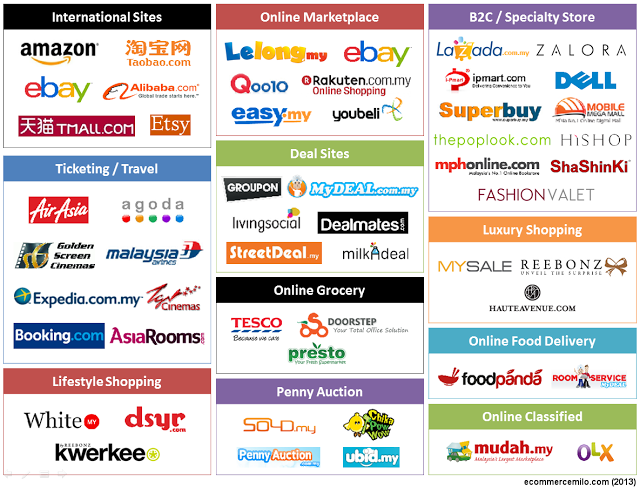
Malaysia’s e-commerce scene has been relatively crowded these days. But who’s dominating each vertical? Which are the top or most popular e-commerce sites in Malaysia? Here, we are compiling the rankings by segment or the nature of the e-commerce business. Our methodology is pretty straightforward by retrieving the data from Alexa’s top 500 sites in Malaysia (on 1 July 2013). However, some popular names are missing from the top 500 so we are including them here as well. Do take note that some notable names such as Parkson Online, Trosworld, Bubucaca. PostMe, and AirAsiaMegastore are missing from this compilation as their Alexa rankings are marginally below their competitors in respective segment. However, some of the sites above might continue to grow and we will observe them again in the near future. Before we start, you might want to read our post earlier on e-commerce history & milestones in Malaysia. Let’s get started with a visual first, followed by the rankings & tables. Read more of this post

Thai startup bubble will burst, and only the best will survive

Thai startup bubble will burst, and only the best will survive

BangkokStartup 15, Jul 2013News 

After a long chat with Krating Poonpol from DTAC, a Thai telecom conglomerate, we learnt that there is indeed a Thai startup bubble. AIS, DTAC and True. It is evident that these large telecommunication companies in Thailand are committed to the startup community. AIS has run StartupWeekends since 2011 and recently sent NoonSwoon to Echelon. The second telco hopping on the startup train is DTAC. DTAC went for a full accelerator program right away, invited international speakers to their weekly events and even hosted Geeks on the Plane. While DTAC might not be the first to play the startup game, they definitely push hard. We spoke with Krating Poonpol and his team at the DTAC House to find out how, what and why they are doing what they are doing. Read more of this post

On the 30th anniversary of Nintendo’s iconic console, the company is facing an existential crisis

On the 30th anniversary of Nintendo’s iconic console, the company is facing an existential crisis

By Christopher Mims @mims 9 hours ago

nintendo-market-share

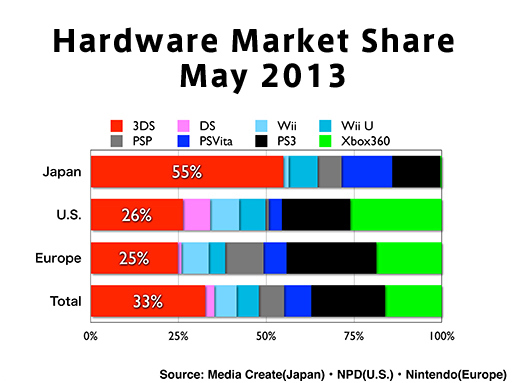
On Monday, the original Nintendo game console turned 30, but it’s looking increasingly unlikely that the company that made it will last another 30 years. Nintendo’s issues are many. The company took losses in its last two fiscal years despite maintaining revenue—mostly because of a strong yen, says CEO Satoru Iwata. Meanwhile, stiff competition from Microsoft and Sony and the advent of mobile gaming have eaten into the company’s growth. Nintendo’s recent Q&A with shareholders included a number of pointed questions that highlight the company’s weaknesses: Read more of this post

Whatsapp, The Granddaddy of Messaging Apps, Finally Goes For A Subscription Model on iOS

The Granddaddy of Messaging Apps, WhatsApp, Finally Goes For A Subscription Model on iOS

KIM-MAI CUTLER

posted 2 hours ago

While messaging has become a veritable war with apps like Line, KakaoTalk, WeChat, Path and Facebook Messenger across Asia and Western markets, there’s been one longstanding app that’s presided over the space with very few apparent changes. WhatsApp, the Sequoia-backed messaging app that dominates in Europe and that is often tipped as an attractive acquisition candidate for companies like Google and Facebook, just went freemium finally on iOS. The app has been paid for years on the iPhone at a $0.99 price point. Read more of this post

Codoon: The Chengdu-based company behind Baidu Wristband

Codoon: The Company behind Baidu Wristband

By Knight Liao on July 16, 2013

122

Codoon Wristband and App

Codoon Wristband, one of the first wearable devices produced by Chinese companies, was launched in the past June. Previously known as an appcessory developed by Baidu, this  fitness-tracking gadget, however, was made by Codoon, a Chinese startup based in Chengdu. Shen Bo founded Codoon in October 2009. In April 2011, Codoon received funding from Chinese online gaming company Shanda. Codoon Wristband is its latest product. By partnering with Baidu, Codoon can leverage its Cloud platform. The two sides also plan to come up with personalized services based on user data.

Read more of this post

Smartphone that can bend into a smart watch

Smartphone that can bend into a smart watch

July 17, 2013 – 9:14AM

Vignesh Ramachandran

art-limbo-flex-watch-620x349

Bend it: Jeabyun Yeon’s concept for a smartphone that bends into a smart watch.

This post was originally published on Mashable.

As technology advances, the list of gadgets we own grows longer: laptops, music players, smartphones, tablets, smart TVs, Google Glass – it’s endless. Now, with the buzz around smart watches, you may be wondering whether you want yet another gadget to charge, sync and carry around. Earlier this year, South Korean designer Jeabyun Yeon showcased his concept for a bendable smartphone that could transform into a watch. At 6.1-millimetres thick, the “Limbo” smartphone would be able to flex, so you could mount the 4.3-inch display on your wrist. Read more of this post

Apple Said Developing Ad-Skipping as Part of TV Strategy

Apple Said Developing Ad-Skipping as Part of TV Strategy

Apple Inc. (AAPL) is developing ad-skipping technology that would let owners of its Apple TV set-top box and future television devices watch shows without commercials, people with knowledge of the matter said.

Apple executives have briefed at least two owners of broadcast TV networks and cable channels, as well as some of the biggest U.S. pay-TV systems, said the people, who asked not to be identified because the talks are private. One proposal is for Apple to reimburse programmers for skipped ads, they said. Read more of this post

Google Said to Discuss Web TV With Media Companies

Google Said to Discuss Web TV With Media Companies

Google Inc. (GOOG), operator of the world’s most-popular search engine, has held discussions with media companies to introduce its own online-television service, people with knowledge of the matter said.

The product would offer viewers television packages that bypass cable subscriptions, said the people, who asked not to be identified because the matter is private. The talks, which also cover issues related to online piracy, are preliminary and nothing is imminent, the people said. Read more of this post

Verdict Still Out on Baidu’s $1.9 Billion App Store Deal; “Baidu has come to the realization that mobile search doesn’t work the same way that web search does”

Jul 16, 2013

Verdict Still Out on Baidu’s $1.9 Billion App Store Deal

By Paul Mozur and Isabella Steger

Baidu Inc. BIDU +4.04% just pulled off its biggest acquisition ever: forking out $1.9 billion to buy a Chinese app store operator from gaming company NetDragon Websoft Inc. 0777.HK +0.21% But investors in Hong Kong-listed NetDragon certainly didn’t like the deal, with its shares plunging as much as 21% during the day. It might also be awhile before Baidu investors learn the true value of the purchase. Nasdaq-listed Baidu is paying $1.9 billion for 91 Wireless Websoft Ltd., which posted first-quarter revenue of only $20 million. Clearly, what Baidu is after is not cash, but mobile users, who come in droves to 91′s app store HiMarket, one of the most popular in China, and one of an increasingly dwindling number of big nonaligned Chinese mobile assets. Read more of this post