Firms Find Ways to Cut Big-Data Costs; Facebook-Inspired Designs Are Helping Some Companies Build Data Centers On the Cheap
April 4, 2014 Leave a comment
Firms Find Ways to Cut Big-Data Costs
Facebook-Inspired Designs Are Helping Some Companies Build Data Centers On the Cheap
RACHAEL KING
March 23, 2014 4:56 p.m. ET
Hardware costs can add up quickly in the era of big data.
As large companies collect, analyze and store increasing quantities of information, the expense of adding servers, hard drives and other equipment is threatening to crimp their big-data plans. Indeed, hardware sales related to corporate-data projects are expected to more than double to $15.7 billion in 2017 from $7.16 billion last year, according to Wikibon, a Marlborough, Mass., research organization.
Against that backdrop, more companies may take a page from Facebook Inc.,FB +0.40% which has managed to squeeze hardware costs, largely by designing and building its own servers and data centers. The Menlo Park, Calif., social-networking company says the strategy has helped it save $1.2 billion over the past three years.
Since data equipment and the power to run it accounted for the biggest portion of Facebook’s infrastructure costs, the company abandoned off-the-rack hardware and built “vanity free” servers, which were simplified and stripped of nearly 6 pounds of material. Because the servers can operate at higher temperatures, it costs much less to cool them. At its Prineville, Ore., data center, Facebook uses outside air to cool the servers.
“If you look at any business like Facebook, the data center is our factory floor. It is the single largest expenditure in the business,” says Frank Frankovsky, vice president of hardware design and supply-chain operations at Facebook. “Growing the infrastructure cost-effectively and efficiently is absolutely critical to the business.”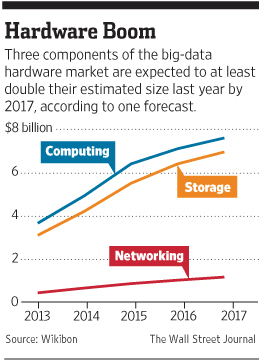
In 2011, Facebook started the Open Compute Project to share its knowledge with developers from other companies, including Goldman Sachs Group Inc.,GS -1.34% Fidelity Investments and Riot Games, and to learn from their experiences, as well.
Riot Games, which runs an online multiplayer game called League of Legends, supports 27 million players each day on thousands of servers in its data centers—more than double the 12 million players it supported in October 2012.
About half of its servers have been purchased wholesale from manufacturers based in China and loaded with software based on Open Compute Project standards.
“We’re trying to stay right in Facebook’s wake,” says Ron Williams, vice president of operations at the Santa Monica, Calif., firm, adding that Riot Games has benefited directly from Facebook’s innovation.
By using Facebook-inspired designs, Riot Games has saved $10 million over the past year on equipment, about 50% of what it would have paid to a commercial supplier.
For example, Riot Games might be able to buy a commercial enterprise server, after discounts, for roughly $4,000. A comparable server bought wholesale and equipped with Open Compute software might run about $2,000, according to Mr. Williams.
Similarly, Fidelity Investments is applying lessons gleaned from the Open Compute Project as it constructs a new data center in Omaha, Neb., says George Brady, the company’s executive vice president of enterprise infrastructure. Fidelity says its data-collection efforts are growing significantly each year.
Purchasing servers, storage and networking equipment from wholesalers instead of commercial suppliers saves Fidelity about 50%, he says. About one-third of the servers throughout all of Fidelity’s data centers are now purchased from wholesale suppliers. “We see that going to close to 80% over the next several years,” says Mr. Brady.
 About bambooinnovator

