Monkeying Around with the Nobel Prize: Wu Chen’en’s “Journey to the West”; On Wu Cheng’en’s “Journey to the West,” one of the masterworks of classical Chinese writing

Monkeying Around with the Nobel Prize: Wu Chen’en’s “Journey to the West” by Julia Lovell

On Wu Cheng’en’s “Journey to the West,” one of the masterworks of classical Chinese writing.
October 13th, 2013RESET+

Wu-Cheng’en--243x366

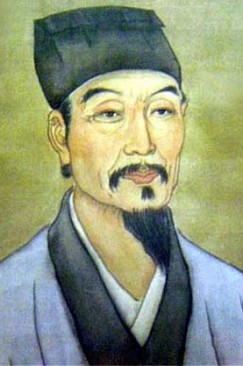
SAY WHAT YOU LIKE about the Nobel Prize, it does achieve one thing: through its strong media presence, it draws attention to “serious” literature for at least one day a year. This international spotlight has at times been particularly welcome for writers outside the Anglophone and Western European publishing centers that still dominate our understanding of world literature. And given how little-known many of the masterpieces of the Imperial Chinese literary canon are to Western readers, the Los Angeles Review of Books asked me to nominate one pre-20th-century work or writer deserving of the Nobel publicity boost. I’ve settled upon Journey to the West,which may or may not have been authored by a failed official–turned–hermit poet called Wu Cheng’en (c. 1500-1582). I’ve chosen it for its dazzling combination of slapstick effervescence and thought-provoking meditations on existential conundrums: the tragedy of mortality, the obstacles to self-perfection, the violence and chaos of the human and animal worlds. Read more of this post
Taleb reveals unsettling truths; Western economy is overcentralised, creating extra risk

October 13, 2013 2:25 pm

Commonsense ideas behind Taleb’s rhetorical flourishes

By John Authers

Western economy is overcentralised, creating extra risk

How fragile we are. Five years on from the Lehman Brothers collapse, political and regulatory errors have made the world’s financial system even more fragile. This alarming line of thought comes from Nassim Nicholas Taleb, best known for The Black Swan, which explained markets’ difficulties in pricing extreme events for which they had no precedent. Mr Taleb, who spoke to me in London last week, divides opinion. For some he is a genius, for others a charlatan. What seems clear, however, is that his gloriously charismatic act and polymath choice of imagery, drawn from philosophy, mathematics and the Classics, can get in the way of underlying ideas which are not in fact far-fetched. Indeed they contain a hard kernel of commonsense truth. Read more of this post

Secrets of great second bananas: Rather than be CEO someplace else, three tough executives each chose to operate as No. 2 at winning corporations. The masters of hands-on tell why — and how — they do it.

Secrets of great second bananas (FORTUNE, 1991)

October 13, 2013: 10:22 AM ET

Editor’s note: Every Sunday Fortune publishes a favorite story from its magazine archives. This week, FORTUNE displayed Facebook’s COO Sheryl Sandberg on the cover as one of the Most Powerful Women in business. In this week’s Sunday throwback, we take a look at a story from 1991 highlighting a few other powerful no. 2 executives. 

Rather than be CEO someplace else, three tough executives each chose to operate as No. 2 at winning corporations. The masters of hands-on tell why — and how — they do it.

By John Huey REPORTER ASSOCIATE Andrew Erdman

101113_classic-1 101113_classic-3 101113_classic-2

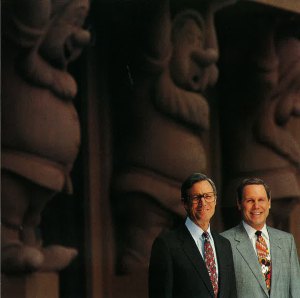
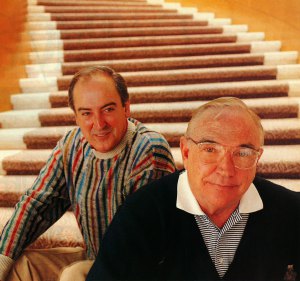
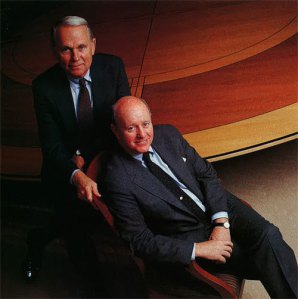
Keough (right) with Goizueta at a Palm Springs resort. In 30 years, Burke (left) and Murphy of Capital Cities/ ABC have “never disappointed each other,” Burke says. Wells (left) and Eisner in front of the 20-foot versions of the Seven Dwarfs that hold up Disney headquarters.

ROBERTO GOIZUETA, now celebrating his tenth anniversary as chairman and CEO of Coca-Cola Co., still recalls the evening of February 14, 1980, as a crucial moment in his career — and in the history of the company. Edgar M. Bronfman threw a birthday party for then Coke chairman J. Paul Austin at Manhattan’s Four Seasons restaurant, and afterward the Goizuetas and their friends the Donald Keoughs repaired to the King Cole Bar at the St. Regis hotel. ”Our wives were talking in one corner,” Goizueta says, ”and Don and I began talking about who was going to succeed Paul.” Unbeknownst to either of them, the imperious, isolated Austin was suffering from both Alzheimer’s and Parkinson’s diseases, personal tragedies that largely explained Coke’s paralysis. As Keough remembers the conversation, ”Roberto and I said, ‘Look, nobody knows how this is going to work out. The two of us are quite compatible, and we have different skills. So let’s sleep at night. Whoever comes out on top, let’s put the other one to work immediately.’ ” Read more of this post

Six things leaders can learn from orchestra conductors

Fiona Smith Columnist

Six things leaders can learn from orchestra conductors

Published 14 October 2013 11:28, Updated 14 October 2013 14:23

Every organisation wants to hire the best, the most talented, the most dynamic people. But what happens when you throw them all together and start telling them what to do? Each employee is highly skilled and has their own vision of what they want to achieve – and each vision is valid. As a leader, how do you keep these people engaged and prevent the onset of anarchy? Sometimes, it can help to look at dilemmas through a different lens – and an orchestra can present a situation that many business leaders (particularly those with a creative workforce) can learn from. Three orchestra conductors were recently interviewed on ABC Classic FM, talking about how they managed to get the best from their musicians, without crushing their creativity. British conductor Christopher Seaman warns that conductors (which could be read as business leaders) have to be careful not to get in the way. Read more of this post

10 Ways Today’s Purpose-Driven Brands Can Bring Their Core Values To Life

10 Ways Today’s Purpose-Driven Brands Can Bring Their Core Values To Life

How businesses can take their beliefs and make them real for consumers.

Today’s brand must live and breathe through its core values in order to survive. Purpose is king, and there’s no turning back. When 87% of global consumers believe business should place equal weight on societal issues and business issues, the better a brand brings its societal purpose to life in everyday operations, the more successful both business and social impact will be. Emotional impact on your customers will be in direct proportion to the social impact of your purpose. Read more of this post

Fama, Hansen, Shiller Share Nobel Economics Prize, Academy Says

Fama, Hansen, Shiller Share Nobel Economics Prize, Academy Says

Eugene F. Fama, Lars Peter Hansen and Robert J. Shiller shared the 2013 Nobel Prize in Economic Sciences for their work toward deepening an understanding of how asset prices move. The prize was awarded for “their empirical analysis of asset prices,” the Royal Swedish Academy of Sciences, which selects the winner, said in a statement today in Stockholm. Read more of this post

China’s spelling bees aim to punctuate written word; If you think digital devices and predictive text are hurting Americans’ writing skills, consider the Chinese, who must master 4,000 complex calligraphy-style characters to be considered functionally literate

China’s spelling bees aim to punctuate written word

Calum MacLeod, USA TODAY12:46 p.m. EDT October 12, 2013

If you think digital devices and predictive text are hurting Americans’ writing skills, consider the Chinese, who must master 4,000 complex calligraphy-style characters to be considered functionally literate.

STORY HIGHLIGHTS

Two hit TV shows test ability to write Chinese characters

Smartphones, computers have left many Chinese forgetting how to write common words

Chinese tripped up by characters for sneeze, chin, lizard, toad

BEIJING — China is feeling embarrassed — but just can’t spell it. In one episode of China’s latest hit TV show, a handwriting version of America’s Scripps National Spelling Bee, only one-third of the studio audience correctly wrote the Chinese characters for “gan ga,” meaning embarrassed, the Beijing Review magazine reported. Almost 99% admitted to forgetting how to write words in a survey reported by the China Youth Dailynewspaper in August. For many Chinese, proud of their ancient and complex writing system, such amnesia spells crisis. Read more of this post

Family concerns come second to cult of the entrepreneur

October 13, 2013 11:30 pm

Family concerns come second to cult of the entrepreneur

By Emma Boyde

In the US the family-owned enterprise seems to be the poor relation of the business world. Entrepreneurs such as Jeff Bezos, the founder of Amazon, and Mark Zuckerberg, who founded Facebook, are household names. Becoming an entrepreneur is the fashionable route that many want to travel. As a result, business schools are geared up to teach students how to launch their own companies. The ethos is that entrepreneurs, not families, create jobs. Read more of this post

Annual Kusu pilgrimage season losing Singapore devotees

Annual Kusu pilgrimage season losing devotees

Published on Oct 13, 2013

2013Kusu01Pic1310e

A man prays to the Guan Yin (Goddess of Mercy) at Kusu Island’s Da Bo Gong Temple on Oct 13, 2013. The annual Kusu pilgrimage season, which coincides with the ninth lunar month and is ongoing from Oct 5 to Nov 2, appears to be losing its lustre. — ST PHOTO: MARK CHEON

By Walter Sim

The annual Kusu pilgrimage season, which coincides with the ninth lunar month and is ongoing from Oct 5 to Nov 2, appears to be losing its lustre. Last year, some 47,000 devotees made the 15-minute ferry trip to Kusu Island, according to the Sentosa Leisure Group, which manages the island located 5.6km away from Singapore. This year, about 14,000 people have made the pilgrimage so far, said Mr Ryden Fang, general manager of Singapore Island Cruise & Ferry Services, which exclusively runs scheduled ferry trips to Kusu. He added there has been a drop in visitorship of about 5,000 people each year since 2007.


Many young Taiwanese starting their own businesses

Many young Taiwanese starting their own businesses

Lee Seok Hwai, The Straits Times/ANN, Taipei | Business | Mon, October 14 2013, 3:27 PM

Web entrepreneur Jeff Yang has grand plans for his third business venture despite the failure of his first two efforts. His auction website, Sajawa, which he co-founded in 2009 with a university classmate, is billed as the world’s first auction site where the lowest unique bid wins – meaning the bid price that has only one submitter and is among the lowest. It has sold 16,000 items, including motorbikes, smartphones, household appliances and skincare products, at an average price of NT$28 (US$0.95) each in Taiwan since December 2009. Yang’s company profits from the fee it charges customers for each bid placed. Products put up for auction are largely provided by companies that see it as a form of advertising. Read more of this post

CEOs to Face Berkshire-Loyalty Test; Some investors and analysts are beginning to think about whether Berkshire Hathaway will remain such a desirable place to work for senior executives after Warren Buffett turns over the reins

CEOs to Face Berkshire-Loyalty Test

ANUPREETA DAS

Oct. 13, 2013 8:32 p.m. ET

When Cathy Baron Tamraz , chief executive of Business Wire Inc., first read about Warren Buffett’s management style, she wrote to the billionaire investor and asked him to buy her company. And why not? As she said at the time, Mr. Buffett is renowned for his hands-off approach, which in turn generates loyalty—and stability—in the dozens of individual companies that make up Berkshire Hathaway Inc. BRKB +0.84% Berkshire bought Business Wire in 2006 and still owns it today. Ms. Baron Tamraz, who declined to comment, remains at the head of the company. Read more of this post

2013 Nobel Prize in Literature Laureate Alice Munro on the Secret of a Great Story

2013 Nobel Prize in Literature Laureate Alice Munro on the Secret of a Great Story

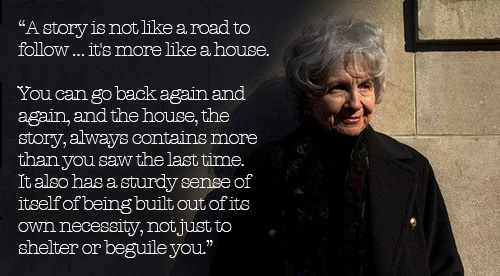
“A story … has a sturdy sense of itself of being built out of its own necessity, not just to shelter or beguile you.”

alicemunro_story1

The question of what makes a great story has occupied the minds of some of our most celebrated storytellers. Kurt Vonnegut had his eight tips and Barnaby Conrad his six, Ken Burns devised a formula, and John Steinbeck defied the very notion of such formulas. A good story, nonetheless, is hardly a relative notion: To use one of pop culture’s most tired yet most expressive similes, it’s like pornography – you know it when you read it. But what, then, makes a story great? In the introduction to her 1996 anthology Selected Stories (public library), 2013 Nobel Prize in Literature laureate Alice Munro (b. 1931) adds to the collected wisdom of great writers and builds a beautiful metaphor for “the hermeneutical path taken up in the reading process”: Read more of this post

Singapore must guard against going the way of Venice; From 1315, the Venetian elite “pulled up the ladder” and transformed into an extractive state”, where ruling elites extract as much wealth as they can from the rest of society

Singapore must guard against going the way of Venice

As our water taxi pulled away from the Rialto Bridge stop along Venice’s world-famous Grand Canal, our audio guide sounded a warning: “Venice is in decline. Once Europe’s largest financial centre, it dominated trade in the Mediterranean with a population of 175,000 at its peak. Now though, this historic city has under 60,000 residents with a quarter of these aged over 64. There could be no more full-time, native-born inhabitants by 2030.”

BY TAN SHENG HUI –

4 HOURS 53 MIN AGO

As our water taxi pulled away from the Rialto Bridge stop along Venice’s world-famous Grand Canal, our audio guide sounded a warning: “Venice is in decline. Once Europe’s largest financial centre, it dominated trade in the Mediterranean with a population of 175,000 at its peak. Now though, this historic city has under 60,000 residents with a quarter of these aged over 64. There could be no more full-time, native-born inhabitants by 2030.” Read more of this post

Rapt: Attention and the Focused Life; much of the quality of your life depends not on fame or fortune, beauty or brains, fate or coincidence, but on what you choose to pay attention to

Rapt: Attention and the Focused Life Paperback

by Winifred Gallagher  (Author)

41ua8mE1tKL
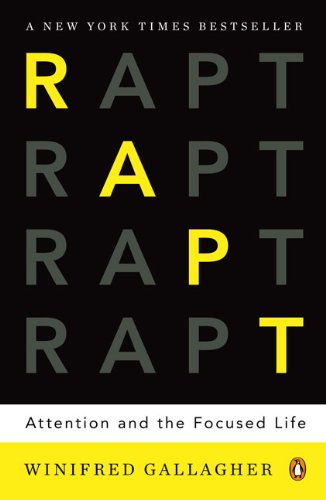
Acclaimed behavioral science writer Winifred Gallagher’s Rapt makes the radical argument that much of the quality of your life depends not on fame or fortune, beauty or brains, fate or coincidence, but on what you choose to pay attention to. Rapt introduces a diverse cast of characters, from researchers to artists to ranchers, to illustrate the art of living the interested life. As their stories show, by focusing on the most positive and productive elements of any situation, you can shape your inner experience and expand your world. By learning to focus, you can improve your concentration, broaden your inner horizons, and most important, feel what it means to be fully alive. Read more of this post

Epictetus on How to Live and the Ability to Choose

Epictetus on How to Live and the Ability to Choose

by SHANE PARRISH on OCTOBER 7, 2013

The Enchiridion (“The Manual”) is a short read on stoic advice for living. Epictetus’ practical precepts might change your life.

What’s in our control and what’s not

Some things are in our control and others not. Things in our control are opinion, pursuit, desire, aversion, and, in a word, whatever are our own actions. Things not in our control are body, property, reputation, command, and, in one word, whatever are not our own actions. Work, therefore to be able to say to every harsh appearance, “You are but an appearance, and not absolutely the thing you appear to be.” And then examine it by those rules which you have, and first, and chiefly, by this: whether it concerns the things which are in our own control, or those which are not; and, if it concerns anything not in our control, be prepared to say that it is nothing to you. Read more of this post

Edison and the Rise of Innovation (Foreword by Bill Gates, Authored by Leonard DeGraaf)

Edison and the Rise of Innovation [Hardcover]

Leonard DeGraaf (Author), Bill Gates (Foreword)

download (25)

Publication Date: October 1, 2013 | ISBN-10: 1402767366 | ISBN-13: 978-1402767364

Edison presents, in intimate detail, the man who helped engineer the modern world. One of history’s most prolific inventors, and perhaps America’s first celebrity, Thomas Alva Edison did more than bring incandescent light into every household and industry; he created a world-renowned brand, raised capital to support research and business, and pursued patents for his 1,000+ inventions. Leonard DeGraaf, archivist for the Thomas Edison National Historical Park, chronicles Edison’s life and work, making lively and lavish use of never-before-published primary sources, including Edison’s personal and business correspondence, lab notebooks, drawings, and advertising material, along with both historic and modern photographs. Read more of this post

Napoleon’s Fatal Mistake; Given an independent command, they acted well, especially if his orders were explicit and the task reasonably simple. But on their own, they tended to be nervous, looking over their shoulders, unresourceful in facing new problems he had not taught them how to solve

Napoleon’s Fatal Mistake

by SHANE PARRISH on OCTOBER 9, 2013

“Nothing is more powerful than an idea whose time has come.”
— Victor Hugo

France of the 1790′s provided an ideal place for Napoleon Bonaparte’s unlikely rise to the top. Paul Johnson explains in Napoleon: A Life:

It demonstrated the classic parabola of revolution: a constitutional beginning; reformist moderation quickening into ever-increasing extremism; a descent into violence; a period of sheer terror, ended by a violent reaction; a time of confusion, cross-currents, and chaos, marked by growing exhaustion and disgust with change; and eventually an overwhelming demand for “a Man on horseback” to restore order, regularity, and prosperity.

Napoleon epitomized opportunism. Read more of this post

Drinking With Your Eyes: How Wine Labels Trick Us Into Buying

Drinking With Your Eyes: How Wine Labels Trick Us Into Buying

by MICHAELEEN DOUCLEFF

October 11, 201311:05 AM

wine-06_custom-6ef943ba84ef0e3410ebafba0682984c0972c73f-s40-c85
Shelf pop: Brilliant red ink and an arresting illustration make Scarlett stand out in a sea of Napa cabernet sauvignons. A splash of gold adds richness and elegance.

We’re all guilty of it. Even if we don’t want to admit it, we’ve all been suckered into grabbing a bottle of wine off the grocery store shelf just because of what’s on the label. Seriously, who can resist the “see no evil” monkeys on a bottle of Pinot Evil? But the tricks that get us to buy a $9 bottle of chardonnay — or splurge on a $40 pinot noir — are way more sophisticated than putting a clever monkey on the front. A carefully crafted label can make us think the bottle is way more expensive than it is, and it can boost our enjoyment of the wine itself, says David Schuemann of CF Napa Brand Design, who has been designing wine packaging for more than a decade. In his new book 99 Bottles of Wine, Schuemann spills the industry’s secrets about how wine labels tickle our subconscious and coerce us into grabbing a bottle off the shelf. The book is also a feast for the eyes, with about 100 photographs of the sleekest, most eye-catching winelabels in the business. Read more of this post

Is Music the Key to Success? What it is about serious music training that seems to correlate with outsize success in many diverse fields?

October 12, 2013

Is Music the Key to Success?

By JOANNE LIPMAN

CONDOLEEZZA RICE trained to be a concert pianist. Alan Greenspan, former chairman of the Federal Reserve, was a professional clarinet and saxophone player. The hedge fund billionaire Bruce Kovner is a pianist who took classes at Juilliard. Multiple studies link music study to academic achievement. But what is it about serious music training that seems to correlate with outsize success in other fields? The connection isn’t a coincidence. I know because I asked. I put the question to top-flight professionals in industries from tech to finance to media, all of whom had serious (if often little-known) past lives as musicians. Almost all made a connection between their music training and their professional achievements. Read more of this post

Slaying The Dragon And Other Ways To Create Killer Content Narratives

SLAYING THE DRAGON AND OTHER WAYS TO CREATE KILLER CONTENT NARRATIVES

THE “MERE EXPOSURE EFFECT” COMPELS PEOPLE TO LIKE SPECIFIC CONTENT SIMPLY BECAUSE THEY ARE FAMILIAR WITH IT. HERE’S HOW TO TELL A SUCCESSFUL STORY.

BY: DUKE GREENHILL

There is a system for successful storytelling. Actually, there are many systems. Sometimes we call them platforms. Sometimes we call them structures. Sometimes we call them strategies. But they’re all essentially the same. They’re the framework we deliberately select to support what we hope will be a successful story. Whether the metric of success is shares, comments, views, clicks, albums sold, box office receipts, or artistic immortality, the systems are there. While content marketing, social marketing, and native advertising are new media of sorts, in their most fundamental ways, they are no different than the stories we’ve been telling each other since the dawn of humankind. Read more of this post

How To Become As Interesting As Malcolm Gladwell

HOW TO BECOME AS INTERESTING AS MALCOLM GLADWELL

KNOW WHAT YOUR PERSONAL BRAND COULD REALLY USE RIGHT ABOUT NOW? A BEST SELLER.

BY: DRAKE BAER

To be made into an adjective is probably the closest to immortality that any of us are going to get–and every time Malcolm Gladwell comes out with a new book, we’re reminded of the writer’s everlasting ability to remain interesting. But what is it to be “Gladwellian”? With the release of his new book, David and Goliath,we can see that the adjective summons constructive criticism, as in SlateGQ, andTime. And when the New York Times asked him how he feels when a book is called “Gladwellian,” he said: I’m flattered, naturally. Although I should point out that it is sometimes said that I invented this genre. I did not. Richard Nisbett and Lee Ross did. Aside from setting us scrambling for the work of Nisbett and Ross–who authored The Person and the Situation: Perspectives of Social Psychology, a book exploring how our individual identities are so dang socially contextual–Gladwell’s answer on the question “Gladwellian” still feels incomplete. Read more of this post

The German’s language’s ability to express the inexpressible explains why so many words have been embraced into English

SchottWeb600sub2

The 41 Most Unusual Economic Indicators

The 41 Most Unusual Economic Indicators

MATTHEW BOESLER AND STEVEN PERLBERG OCT. 11, 2013, 2:51 PM 163,114 7

With the government shutdown showing no sign of abating, it looks like we could be left without some of our favorite economic indicators for some time. For example, economists and market watchers won’t get their hands on the Bureau of Labor Statistics’ jobs report — the oft-hyped monthly indicator — until Congress can produce a budget. The good news is there are other economic indicators to supplement our view of the economy. Though some, like Tylenol usage and the Mosquito Bite Indicator, are stranger than others. Read more of this post

Dilbert Creator Scott Adams’ Secret of Success: Failure

October 11, 2013, 4:57 p.m. ET

Scott Adams’ Secret of Success: Failure

What’s the best way to climb to the top? Be a failure.

“Dilbert” creator Scott Adams talks to WSJ editor Gary Rosen about how to draw lessons, skills and ideas from your failures—and why following your passion is asking for trouble.

SCOTT ADAMS

If you’re already as successful as you want to be, both personally and professionally, congratulations! Here’s the not-so-good news: All you are likely to get from this article is a semientertaining tale about a guy who failed his way to success. But you might also notice some familiar patterns in my story that will give you confirmation (or confirmation bias) that your own success wasn’t entirely luck. If you’re just starting your journey toward success—however you define it—or you’re wondering what you’ve been doing wrong until now, you might find some novel ideas here. Maybe the combination of what you know plus what I think I know will be enough to keep you out of the wood chipper. Let me start with some tips on what not to do. Beware of advice about successful people and their methods. For starters, no two situations are alike. Your dreams of creating a dry-cleaning empire won’t be helped by knowing that Thomas Edison liked to take naps. Secondly, biographers never have access to the internal thoughts of successful people. If a biographer says Henry Ford invented the assembly line to impress women, that’s probably a guess.

But the most dangerous case of all is when successful people directly give advice. For example, you often hear them say that you should “follow your passion.” That sounds perfectly reasonable the first time you hear it. Passion will presumably give you high energy, high resistance to rejection and high determination. Passionate people are more persuasive, too. Those are all good things, right?

Here’s the counterargument: When I was a commercial loan officer for a large bank, my boss taught us that you should never make a loan to someone who is following his passion. For example, you don’t want to give money to a sports enthusiast who is starting a sports store to pursue his passion for all things sporty. That guy is a bad bet, passion and all. He’s in business for the wrong reason. Read more of this post

Why Productive People Work Well With Their Opposites; If you’re a cobra, find yourself a mongoose.

WHY PRODUCTIVE PEOPLE WORK WELL WITH THEIR OPPOSITES

IF YOU’RE A COBRA, FIND YOURSELF A MONGOOSE.

BY: DRAKE BAER

Opposites, as you may know, attract. But they also do something else: Pairing up with someone who provides complementary contrast may actually make the both of you more productive. “We’re self-medicating with the other person’s personality,” says Leigh Thompson, a professor of management at Northwestern University’s Kellogg School of Management and author of the Creative Conspiracy. “When you have a deep work-style diversity, that’s going to help groups be much more productive. I need to find someone who drives me nuts, but that person is going to be a good check on my behavior.” She calls it the reverse Noah’s Ark theory: Instead of two of every kind, you’re looking for two of every complement[. So when you’re looking for your cofounder or at-work BFF, find someone who drives you crazy in just the right way. Organizational psychologists talk about automators and assessors: While the automator acts, the assessor considers. The assessor might think the automator is reckless, while the automator thinks the assessor is always delaying. Which, strangely enough, is why they work so well together.

Read more of this post

How Often Do Gamblers Really Win? New data provide some answers on the real odds on gambling

October 11, 2013, 1:56 p.m. ET

How Often Do Gamblers Really Win?

New data provide some answers on the real odds on gambling

What are the odds? Not good. Some casinos get 90% of their revenue from 10% of customers

MARK MAREMONT and ALEXANDRA BERZON

The casino billboards lining America’s roadways tantalize with the lure of riches. “Easy Street. It’s Only a Play Away,” screams one in Arizona. “$7.1 Million Every Day. We’re a Payout Machine,” reads another. But how often do gamblers really win? What are the chances that a gambler will win on a single day or over a longer period? Don’t bother to ask the casinos. Although they gather vast quantities of data about their customers for marketing purposes, including win and loss tallies for many regulars, casinos keep such information a closely-guarded secret. Now, thanks to an unprecedented trove of public data detailing the behavior of thousands of Internet gamblers over a two-year period, The Wall Street Journal can provide some answers. On any given day, the chances of emerging a winner aren’t too bad—the gamblers won money on 30% of the days they wagered. But continuing to gamble is a bad bet. Just 11% of players ended up in the black over the full period, and most of those pocketed less than $150. Read more of this post

Japanese technologies behind Nobel Prize in Physics

Japanese technologies behind Nobel Prize

20131011_nobelprize_yomiurishimbun

Friday, October 11, 2013 – 10:33

The Yomiuri Shimbun/Asia News Network

Two European researchers have won the 2013 Nobel Prize in Physics, but behind the achievement were Japanese companies’ advanced technologies and Japanese researchers’ contributions. Francois Englert of Belgium and Peter Higgs of Britain were awarded the Nobel Prize on Tuesday for uncovering the mystery of why matter has mass. However, what played a decisive role in winning the prize by providing proof to their theory was the discovery of the so-called Higgs boson particle, in which Japanese companies and researchers have made a huge contribution. Read more of this post

Tycoon Robert Kuok keeps himself rooted despite leaving his hometown

Tycoon keeps himself rooted despite leaving his hometown

Singapore – There is a bit of a romantic streak in South-east Asia’s richest man, it seems. Four decades ago, Mr Robert Kuok decamped Malaysia for Hong Kong. The ostensible reason: lower taxes in Hong Kong. What some say: a fierce dislike of Malaysia’s controversial New Economic Policy favouring the bumiputeras and the resulting cronyism. Whatever it was, today, Mr Kuok says of the country in which he was born: “I haven’t lost my affection for Malaysia.” In a telephone interview with The Straits Times on Tuesday, the tycoon elaborated on his donation of RM100 million (S$39 million) to build Xiamen University’s first overseas campus in Salak Tinggi, Selangor. The largess was announced last week during a lunch with Chinese President Xi Jinping when the latter visited Malaysia. “It is a gesture of appreciation. I wish Malaysia only well,” says Mr Kuok. The magnate, who marked his 90th birthday on Sunday and is known for being averse to media interviews – he had not granted one to the international media for 16 years barring one to Bloomberg in January – showed little signs of his age except in some impact on his hearing. Read more of this post

Can’t Buy Them Love: China’s Heiresses Struggle With Singleness

October 11, 2013, 4:19 PM

Can’t Buy Them Love: China’s Heiresses Struggle With Singleness

This story was originally published on The Wall Street Journal’s Chinese website under the headline “中国女富二代为何难找夫婿

Wealth has its privileges, particularly in China where worship of money conveys high status on the rich. But for the well-educated single daughters of Chinese tycoons, wealth can also be a curse. Kelly Zong, the daughter of Chinese billionaire beverage tycoon Zong Qinghou, said earlier this year that she has never had a boyfriend. The 30-year-old hard-charging businesswoman, who looks after overseas deals at Wahaha Group,  bemoaned in a recent interview that she feels “pessimistic about love” after so many men have been found wanting. Ms. Zong is just one of several female members of China’s so-calledfu’erdai, or second-generation rich, who say they are finding it hard to find a suitable mate – a trend that complicates the future for several of China’s family-owned businesses, and is giving new purpose to some of the country’s entrepreneur networks. Read more of this post

Inspiring ad: The spirit of giving without expecting anything in return

To some viewers, this three-minute video, produced by Thai telecommunications companyTrueMove, can evoke more emotions than a full-length Hollywood movie. According to Gawker, the inspiring ad, which stems from the company’s belief in the spirit of giving without expecting anything in return, has sparked major buzz since it was posted on YouTube just four days ago, on 11 September. It tells a story of how a veggie soup seller gets rewarded for a lifetime of being a good samaritan, especially when he helped a boy, who was caught shoplifting medicine for his sick mother.  The man paid for the boy’s medicine, and even gave him a pack of soup for the mother. He was rewarded 30 years later, when he was struck by what appears to be heart attack. The doctor handling his treatment turned out to be the boy whom he had helped. As a reward, the boy paid for the medical expenses of close to S$30,000. The most moving scene comes at around the second minute of the video when the soup seller’s daughter, who never seemed happy with her father’s generosity, appeared deeply touched by the kind reward. She cried while reading the hospital bill.