SAP seeks programmers with autism; “We share a common belief that innovation comes from the edges”; “[People with autism] have strong attention to detail and an ability to identify mistakes.”

May 21, 2013 9:20 pm

SAP seeks programmers with autism

By Chris Bryant in Frankfurt

SAP, the German business software company, wants to tap into a new talent pool by hiring hundreds of people with autism to programme and test its ­products.

SAP announced on Tuesday that it hoped people with autism – a developmental condition that can impair a person’s ability to communicate and interact with others – would ultimately account for 1 per cent of its 64,000 strong workforce.

Some people with autism, which affects about 1 per cent of the general population, score very highly on intelligence tests and possess extraordinary ­powers of observation and ­concentration. Read more of this post

Leaders everywhere: companies that empower and train people at all levels to lead can create competitive advantage

Leaders everywhere: A conversation with Gary Hamel

The management writer and academic explains why he believes companies that empower and train people at all levels to lead can create competitive advantage.

May 2013

The latest M-Prize challenge, cosponsored by Gary Hamel’s Management Innovation eXchange (MIX), Harvard Business Review, and McKinsey, asks managers to submit examples of how their organizations are empowering and training individuals to lead even when they lack formal authority. In this video, Professor Hamel discusses why he believes it is vital for companies to “syndicate the work of leadership” across the organization, to redistribute power, and to change the role of the top team. This interview was conducted by McKinsey Publishing’s Simon London. What follows is an edited transcript of Hamel’s remarks.

Interview transcript

Syndicating the work of leadership

The Management Innovation eXchange is the world’s first open-innovation platform, where we’re trying to elicit bleeding-edge practices in the world of management and organization and leadership. Every so often, we run a McKinsey–Harvard Business Review management prize (M-Prize) to pull those amazing new practices and those bleeding-edge ideas up to the surface. This time around, the challenge is what we call Leaders Everywhere. And the thought underneath this is that we live in a world where never before has leadership been so necessary but where so often leaders seem to come up short. Our sense is that this is not really a problem of individuals; this is a problem of organizational structures—those traditional pyramidal structures that demand too much of too few and not enough of everyone else. Read more of this post

What Our Words Tell Us: Gradual shifts in language use over the centuries reflect tectonic shifts in culture

May 20, 2013

What Our Words Tell Us

By DAVID BROOKS

About two years ago, the folks at Google released a database of 5.2 million books published between 1500 and 2008. You can type a search word into the database and find out how frequently different words were used at different epochs.

The database doesn’t tell you how the words were used; it just tells you how frequently they were used. Still, results can reveal interesting cultural shifts. For example, somebody typed the word “cocaine” into the search engine and found that the word was surprisingly common in the Victorian era. Then it gradually declined during the 20th century until around 1970, when usage skyrocketed. Read more of this post

Stefano Pessina, the Italian billionaire you’ve never heard of, is reshaping the fast-evolving, global pipeline that determines whether your prescription drugs are in stock when you need them

May 20, 2013, 6:50 p.m. ET

Stefano Pessina, the Man Shaking Up U.S. Pharmacy Distribution

Head of Alliance Boots Says Partnership With Walgreen, AmeriSource Bergen Will Streamline System

By TIMOTHY W. MARTIN

MK-CD373_PESSIN_G_20130520183604MK-CD383_PASSIN_DV_20130520174911

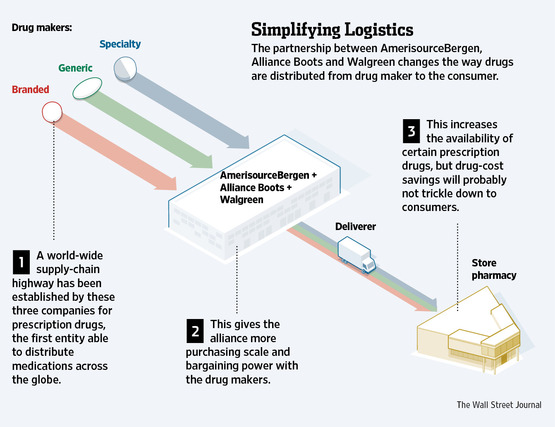
Stefano Pessina, the Italian billionaire you’ve never heard of, is reshaping the fast-evolving, global pipeline that determines whether your prescription drugs are in stock when you need them.

Mr. Pessina, who speaks fluent Italian, English and French, is the executive chairman of European pharmacy giant Alliance Boots GmbH. In the past four decades, he transformed his family’s fledgling Italian warehouse into a European drug retailing and wholesaling powerhouse by doing 150 “significant deals,” the biggest of which was taking the company private in a leveraged buyout, valued at $18.5 billion—still one of the largest ever.

Far from retiring, the 71-year-old has designs on America, where he thinks the U.S. health-care system, compared with Europe’s, is “quite rich, quite fat” and “not particularly efficient at all.” Read more of this post

When Social Skills Are a Warning: Behavior Changes Serve as an Early Signal of Mental-Health Issues; Starting Treatment Sooner

Updated May 20, 2013, 7:11 p.m. ET

When Social Skills Are a Warning

Behavior Changes Serve as an Early Signal of Mental-Health Issues; Starting Treatment Sooner

By SHIRLEY S. WANG

PJ-BO379_LAB_DV_20130520154859

With many neurological disorders, from Alzheimer’s to ADHD, the first clue something is wrong may be atypical social behavior. Shirley Wang reports on Lunch Break. Photo: Getty Images.

An uncle starts believing all your sarcastic comments. Or a kindhearted friend never understands anymore how you feel. These people may not just be momentarily off. Recent research indicates they may be exhibiting early signals that something is going awry in their brains.

Changes in social behavior, such as difficulty detecting insincere comments or feeling empathy, can be a window into our neurological health, scientists say. That is because how we interact with other people is one of the more complex functions the brain must perform. It requires a symphony of neurons firing throughout the brain and working together in networks so that we can detect, decode and interpret social signals. Deterioration in social functioning can begin even while executive functions like planning and organizing remain intact during the early stages of mental disorders. Behavior changes can serve as an early signal of mental-health issues. Read more of this post

Should we let wunderkinds drop out of school?

Should we let wunderkinds drop out of school?

NEW YORK — It’s one thing to say tech geniuses don’t need degrees. After all, Mr Bill Gates, the late Steve Jobs and Mr Mark Zuckerberg all dropped out of college.

BY –

32 MIN 19 SEC AGO

NEW YORK — It’s one thing to say tech geniuses don’t need degrees. After all, Mr Bill Gates, the late Steve Jobs and Mr Mark Zuckerberg all dropped out of college.

But now we’ve got Mr David Karp, who doesn’t even have a high school diploma. The 26-year-old founded Tumblr, the online blogging forum, and sold it to Yahoo for US$1.1 billion (S$1.38 billion) yesterday (May 20).

Which raises the question: When is it okay for a wunderkind to drop out of school? Read more of this post

Before Tumblr, Founder Made Mom Proud. He Quit School.

May 20, 2013

Before Tumblr, Founder Made Mom Proud. He Quit School.

By JENNA WORTHAM and NICK BILTON

Karp-articleLarge

David Karp, Tumblr’s founder, in 2011. He left Bronx High School of Science at 14 to focus on computers, on his mother’s advice.

When David Karp was 14, he was clearly a bright teenager. Quiet, somewhat reclusive, bored with his classes at the Bronx High School of Science. He spent most of his free time in his bedroom, glued to his computer.

But instead of trying to pry him away from his machine or coaxing him outside to get some fresh air, his mother, Barbara Ackerman, had another solution: she suggested that he drop out of high school to be home-schooled.

“I saw him at school all day and absorbed all night into his computer,” said Ms. Ackerman, reached by phone Monday afternoon. “It became very clear that David needed the space to live his passion. Which was computers. All things computers.” Read more of this post

Indian girl invents device that can charge phone in 20 seconds

Indian girl invents device that can charge phone in 20 seconds

2013-05-21 01:34:43 GMT2013-05-21 09:34:43(Beijing Time)  SINA.com

U47P5029T2D592225F24DT20130521093443U47P5029T2D592225F26DT20130521093553

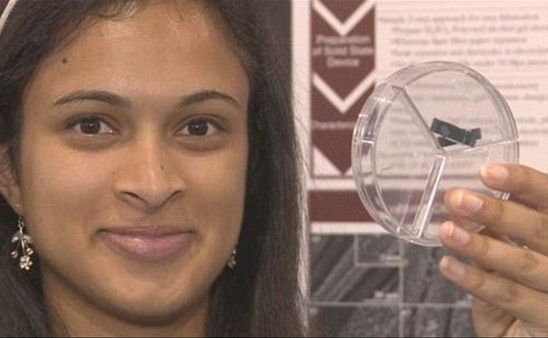
The charging device has been dubbed a ‘supercapacitor’ by Esha Khare of Saratoga, California.

An 18-year-old Indian-origin girl in the US has developed a potentially revolutionary device that can charge a mobile phone in just 20 seconds, a media report said. The charging device has been dubbed a ‘supercapacitor’ by Esha Khare of Saratoga, California, the Daily Mail reported. Khare won $50,000 for her invention at the Intel International Science and Engineering Fair, held in Phoenix. Khare has only used her ‘supercapacitor’ to power a light-emitting diode (LED), but says that one day her invention will power cell phones, cars and any gadget that requires a rechargeable battery. Asked what inspired her to work on the technology, Khare said, “My cell phone battery always dies. It has a lot of different applications and advantages over batteries in that sense.” The ‘supercapacitor’ is flexible and tiny, and is able to handle 10,000 recharge cycles, more than normal batteries by a factor of 10. Khare is a student of nanochemistry, and is now heading to Harvard. Google has been in contact with Khare to explore how she plans to change the makeup of cell phone battery life, the report said.

Seeing red: Chinese applicants for Mars One mission want money back

Seeing red: Chinese applicants for Mars One mission want money back

Staff Reporter

2013-05-21

Chinese applicants for the Mars One mission — launched by a Dutch nonprofit organization to send four people to the red planet in 2023 — have expressed doubts after the state-run Xinhua news agency quoted Bas Lansdrop, co-founder and CEO of Mars One, as saying that the goal may not be achieved.

“If we decide that the project cannot be achieved, we will certainly stop,” Lansdrop told Xinhua.

More than 10,000 Chinese nationals have paid the US$11 application fee to volunteer for the Mars One mission, but many are now demanding their money back. Read more of this post

“There are now probably more eagles in Germany than at any time in the nation’s history”; German Eagle Flourishes as Farm Runoff Boosts Fish Stocks

German Eagle Flourishes as Farm Runoff Boosts Fish Stocks

The white-tailed eagle, Germany’s national emblem, has tripled to record levels since East joined West in 1990 as conservation programs nurtured their growth. Behind the population boom may be murkier roots: farm runoff.

The agriculture industry inadvertently boosted the fish the eagle feeds on when runoff added nutrients to waterways, helping them flourish while suppressing other flora and fauna in a process known as eutrophication. Corn farming that fuels biogas growth in Germany indirectly spurred the comeback of Europe’s biggest eagle, almost wiped out by bounty hunting 100 years ago.

“There’s nothing comparable in the past century,” said Peter Hauff, coordinator for white-tailed eagles in the Baltic state of Mecklenburg-West Pomerania, which has Germany’s largest number of eagles. “There are now probably more eagles in Germany than at any time in the nation’s history,” he said in an interview at his Neu Wandrum village farmhouse. Read more of this post

Amid frenzy over map apps, new focus on 16th century world view

Amid frenzy over map apps, new focus on 16th century world view

Sat, May 18 2013

By Deborah Zabarenko

Conservators at the Library of Congress prepare a map for its encasement in Washington

WASHINGTON (Reuters) – As online titans compete to deliver instant maps to smartphones, the Library of Congress in Washington is focusing attention on an antique “cosmology” printed in 1507 that serves as America’s birth certificate.

The black-and-white map created by Martin Waldseemuller, a French cleric, was the first time the name America had appeared on any map.

Waldseemuller was prescient enough to show the Rocky Mountains and the Pacific Ocean at a time when no one else in Europe thought they were there.

The map, purchased a decade ago at a cost of $10 million, is the centerpiece of an exhibit at the Library of Congress running through June 22 that features a collection of artifacts from Waldseemuller and his colleagues. Read more of this post

Bamboo Innovator Workshop for the Singapore Public: In Search of Compounding Stocks in Uncertain Times (Series #1 of 4)

http://valueinvesting-series1.eventbrite.sg/

From the Fund Management Jungles: Value Investing Exposed and Explored (Workshop Series)

In Search of Compounding Stocks in Uncertain Times (Series #1 of 4)

FE Asia Consultancy Pte Ltd

Saturday, 13 July 2013 from 09:00 to 17:00 (SGT)

Singapore, Singapore

Event Details

“In business, I look for economic castles protected by unbreachable ‘moats’.”

– Warren Buffett

With unresolved crises on the horizon, investors are often immobilized in making investment decision. “Wait for the clouds to clear” is the mantra. Value investing appears to provide a way out to see opportunities in cloudy weather by using the “cheap” price signal to identify “out-of-favor” neglected stocks and invest in them for “reversion back to mean”. Hence, pick stocks with “cheap” valuations based on conventional metrics and ratios – how much lower can they go anyway? – and they will bounce back up to their historical average levels. Or simply wait for a market dip, or a crash, before declaring some magical list of top ten stock tips to invest in. This is NOT value investing.

When Li Ning, the “Nike of China”, announced that its founder is going into industrial park and property development in September 2010, the stock has been a darling, having a competitive “moat” with brand recognition and it has recovered strongly since its bottom in March 2009 by climbing 140% to HK$24 per share. Oh, it is already expected that the market will react negatively to the property news, now it is down 20% to HK$19, value stock, be contrarian, BUY! Down another 20% to HK$15, getting cheaper and it’s out-of-favor, it will bounce back up, BUY! And the value investor catches the falling knife until below HK$5 now; while Nike hits an all-time high.

How do value investors distinguish whether “cheap” stocks are value traps or opportunity?Without an understanding of the underlying business model dynamics and analyzing the durability of the economic moat, an investment decision based on price and macro signals and historical valuation metrics can be misleading and costly. Without an understanding of business model, one would also have sold Wal-mart after it was listed in 1972 as the stock crashed over 60% in the next three years. Wal-mart went on to compound 1,200-fold since 1972 to over US$250 billion in market cap – a $100,000 investment in Wal-Mart becomes a $120 million treasure trove. So why is Wal-mart able to bounce back to scale new heights but the same cannot be said for the “Nike of China”?

Can resilient business models – Bamboo Innovators – outperform even in stormy periods? When Shanghai Composite Index crashed 70% from its peak of 6,000 in October 2007 to below 2,000 at the bottom in March 2009, Yunnan Baiyao was UP around 8%. As the index bounce to 2,200, still down 60% from its peak, Baiyao is up over 220% during the same period. Increasingly, such resilient business models are outperforming in Asia and globally; while the “cheap” stocks get cheaper and they become the fertile ground for “insiders” (庄家) who manipulate prices and volumes and inject “action” via exciting corporate news announcement of “sexy” projects or M&As, luring investors in and then offloading to them in a pump-and-dump cycle. Sophisticated value investors can overcome poor and uncertain macro conditions by investing in resilient compounders because they have their own internal rhythm to create value, like the bamboo, which bend, not break even in the wildest of storm that would have snapped the once-mighty oak tree.

Course Highlights:

– Mr Kee, one of the few Asian fund manager being invited to speak at a number of top banking & finance conferences around the world alongside with renowned speakers such as Praveen Kadle, Chief Executive Officer of Tata Capital & Lauren Templeton, President of Lauren Templeton Capital Management

– Learn from an experienced & qualified instructor who has taught in local Universities

Program Outline and Key Learning Points:

  • LEARN the R.E.S.-ilience factors in the business model and economic moat analysis of how Bamboo Innovators create extraordinary value, particularly the “E” factor which stands for “emptiness” in the business model.
  • GAIN the surprising insight of sophisticated institutional investors who understand why growth in sales, profit and tangible asset may not translate to market capitalization growth and sustainable share price gains.
  • ATTAIN the critical knowledge of 12 types of sophisticated institutional investors that climbing from $50 million to $1 billion in market cap takes an entirely different business model dynamics as compared to scaling up sustainably from $1 billion to $20 billion in market cap.
  • RECOGNIZE the 12 types of business models and their profit patterns and acquire the ability to scan through different businesses in various industries to understand the key levers for growth ahead of the investment curve.
  • UNDERSTAND why and how businesses hit a stall point in growth and without a transformation in business model, bigger can be riskier. Thus “Grow or Perish” become “Grow AND Perish”
  • DISSECT a wide range of real-world cases of Asian and global Bamboo Innovators in various industries and understand the intricacies of their business models, their critical success – and failure – factors.
  • UNIFY at the end of the day all the previously disparate loose-hanging concepts, descriptive facts and “checklists” you have learnt from various sources into the practical Bamboo Innovator mental model when it comes to real investment decision-making.

Understand more about the Instructor’s investment approach with the following published articles:

About the Instructor:

Koon Boon is the founder and managing director of the Singapore-based Bamboo Innovator Institute to establish the thought leadership of resilient value creators around the world. KB has been rooted in the principles of value investing for over a decade as a fund manager and analyst in the Asian capital markets. He was a fund manager and head of research/analyst at a Singapore-based investment management organization dedicated to the craft of value investing in Asia. He had been with the firm since 2002 and was also part of the core investment committee in significantly outperforming the index in the 10-year-plus flagship Asian fund. He was previously the portfolio manager for Asia-Pacific equities at Korea’s largest mutual fund company. He received his Masters in Finance (magna cum laude) and double degree in Accountancy and Business Management (both summa cum laude) from the Singapore Management University (SMU). He had taught accounting at his alma mater in SMU and lectures at SIM University for working professionals. He had published cutting-edge empirical research in the Special Issue of Istanbul Stock Exchange 25th Year Anniversary of the Boğaziçi Journal, Review of Social and Economic Studies, as well as wrote articles about value investing and corporate governance in the media. He had also presented in top banking and finance conferences in Sydney, Cape Town, HK, Beijing and in the recent Emerging Value Summit 2013. He is also an internationally-featured value investor in Greatinvestors.TV and BeyondProxy.com. He had trained CEOs, entrepreneurs, CFOs, management executives in business strategy, macroeconomic and industry trends in Singapore, HK and China.

The grandson of the Swedish brand’s H&M founder says price is not the only way to judge a company

May 19, 2013 6:00 pm

Karl-Johan Persson, chief executive, Hennes & Mauritz

By Richard Milne in Stockholm

Karl-Johan Persson pauses on his way out of the headquarters of Hennes & Mauritzin central Stockholm. The 38-year-old grandson of the founder has just spent an hour discussing the challenges of running the world’s second-largest fashion retailer – from sourcing clothes from Bangladesh to its rivalry with Spain’s Inditex. But on his way to one of the many H&M stores nearby for a photo shoot, he remembers another big test: modelling. At a fashion show for creative director Margareta van den Bosch’s 70th birthday last year, Mr Persson had to strut his stuff on a catwalk in a leather jacket and white jeans from H&M’s collaboration with Maison Martin Margiela. “This, this was my greatest challenge,” the photogenic Swede says, grinning. Mr Persson’s four years as H&M’s chief executive – following in the footsteps of both his father Stefan and grandfather Erling – have been filled with many tests. His starting point was hardly auspicious, taking the reins of the purveyor of cheap chic in 2009 just as the financial crisis hit consumers with full force. In 2011, H&M was overtaken as the world’s biggest fashion retailer by market capitalisation by Inditex, the owner of Zara. And last month’s factory collapse in Bangladesh, with the loss of more than 1,100 lives, has shone a spotlight on the country’s biggest buyer of clothes: H&M.

The paradox, however, is that even if H&M is focused on “fast fashion” and the shortest-term trends, Mr Persson runs the company with an almost stubbornly long-term approach. Some deride this as leaving H&M looking slow compared with the nimbleness of Inditex as the Swedish group takes its time developing new brands and launching online sales. But Mr Persson still views H&M – the largest listed company in Sweden with a market capitalisation of $58bn and annual sales of $21bn – as a family business with all the planning for future generations that this entails. Read more of this post

The Apathy Epidemic: Why your startup will suck you dry

The Apathy Epidemic: Why your startup will suck you dry

BY PETER SHALLARD 
ON MAY 17, 2013

With entrepreneurs, there’s rarely a lack of drive, at least in the beginning. After a while, though, as your idea matures into an actual startup, apathy can rears its ugly head. Almost every entrepreneur experiences this, though is usually loathe to admit it. It might present itself as a slow decline in motivation, with each day feeling a little less exhilarating than the one before, or a sudden slack of the wind in the sails.

Everyone, no matter how unconventional the business he’s in, is at risk. It happened, for example, to Andy Drish, founder of TheFoundation.com, a-software-as-a-service education platform that preaches a bootstrap philosophy. Last year’s product launch, though wildly successful, left Drish and his team in a slump.

“We were so focused on the launch that we made the mistake of not asking ourselves what the following hundred days of business looked liked,” Drish says. “The launch was so fun — immediately after that, it changed. Our customers felt the results of that too. It felt like depression.” Read more of this post

Is there a link between suicide and weakened social ties? The problem is that as it’s grown easier to be remarkable and unusual, it’s arguably grown harder to be ordinary

May 18, 2013

All the Lonely People

By ROSS DOUTHAT

OVER the last decade, the United States has become a less violent country in every way save one. As Americans commit fewer and fewer crimes against other people’s lives and property, they have become more likely to inflict fatal violence on themselves.

In the 1990s, the suicide rate dipped with the crime rate. But since 2000, it has risen, and jumped particularly sharply among the middle-aged. The suicide rate for Americans 35 to 54 increased nearly 30 percent between 1999 and 2010; for men in their 50s, it rose nearly 50 percent. More Americans now die of suicide than in car accidents, and gun suicides are almost twice as common as gun homicides.

This trend is striking without necessarily being surprising. As the University of Virginia sociologist Brad Wilcox pointed out recently, there’s a strong link between suicide and weakened social ties: people — and especially men — become more likely to kill themselves “when they get disconnected from society’s core institutions (e.g., marriage, religion) or when their economic prospects take a dive (e.g., unemployment).” That’s exactly what we’ve seen happen lately among the middle-aged male population, whose suicide rates have climbed the fastest: a retreat from family obligations, from civic and religious participation, and from full-time paying work. Read more of this post

How Wall Street titan Leon Cooperman stays on top in investing and philanthropy

SATURDAY, MAY 18, 2013

Cues From Cooperman

By LAWRENCE C. STRAUSS | MORE ARTICLES BY AUTHOR

How Wall Street titan Leon Cooperman stays on top in investing and philanthropy.

Leon Cooperman has never been afraid to blow his stack. In fact, his volcanic tendencies are so well known on Wall Street that almost no one was fooled when the late Barton Biggs, Morgan Stanley’s longtime market strategist, introduced a character named Greg in Hedgehogging, a 2006 investment memoir. “Greg has a reputation of being difficult to work for and a screamer,” Biggs wrote, attempting to disguise Cooperman. “A screamer is a hedge-fund guy who yells at the people who work for him when they are wrong or careless.”

Asked about that description in a recent interview, Cooperman, 70, offered a warm, gentle smile. He is not a screamer, he said, but does take pride in being a “demanding” boss. Just look at it from his investors’ perspective, he said. “If you are paying somebody two and 20, as opposed to 1%, you basically have the right to expect more from that person,” he says. “And that’s what I tell my people: You’ve elected, for better or worse, to be in the two-and-20 game, so you have to be on the balls of your feet at all times.” Read more of this post

63 Brand-New Quotes From Warren Buffett; “More kids are ruined by the behavior of their parents than the size of their inheritance.”

63 Brand-New Quotes From Warren Buffett

By Matt Koppenheffer | More Articles | Save For Later
May 12, 2013 | Comments (8)

The tried and true “classic” Warren Buffett quotes are classics because they’re great, timeless bits of investing wisdom. But sometimes they can also feel a bit too well worn. Following are 63 brand-new quotes from Buffett, fresh from the May 4 Berkshire Hathaway (NYSE: BRK-A  ) (NYSE: BRK-B  ) shareholder meeting.

1. On playing table tennis with Ariel Hsing at Borsheims: “If you’re courageous you’ll show up with your paddle and you’ll look like an idiot.”

2. “If the market continues as it has in 2013, this will be the first five-year period that Berkshire has underperformed. … It won’t be a happy day, but it won’t totally discourage us.”

3. On what makes ISCAR great: “[They] never stop improving the product, never stop trying to make customers happy.”

4. Responding to a shareholder who thanked him for letting attendees in early from the cold and rain: “If we had a company that sold coats, we would have left you out there.”

5. On his successor: “It would be rejected like a foreign tissue if we got the wrong person in there.” Read more of this post

Why Low-Risk Innovation Is Costly

Why Low-Risk Innovation Is Costly

Companies are finding it hard to churn out “the next big thing”. Instead of the disruptive products, services and business models of yesteryears, innovations coming to market today are typically line extensions.

An Accenture survey of more than 500 executives has found that while one in five (18 percent) respondents rate innovation as their top strategic priority and two-thirds depend strongly on innovation for their long-term strategy success, and more than half feel they have a sluggish innovation process. Companies are seeking to innovate but are increasingly less satisfied with the results. The respondents also have an answer to why this is happening. They are aware that a cautious approach and reduced investment by companies to generate renovation or, at best, incremental innovation is a potentially perilous strategy. By putting formal systems in place to manage innovation, companies can protect themselves from such risks. Enterprises able to successfully innovate at a breakthrough level are far more likely to dominate and prosper in the new markets they create. They can also position themselves to master change.

Last updated: May 17, 2013 10:26 pm

Companies see innovation without results

By Paul Taylor

The vast bulk of corporate innovation initiatives are failing to deliver the results that senior executives expected. Despite increased investment in innovation, only 18 per cent of executives believe their company’s innovation efforts deliver a competitive advantage, according to a survey conducted by Accenture and published this week. Read more of this post

What Value Creation Will Look Like in the Future

What Value Creation Will Look Like in the Future

by Jack Hughes  |   9:00 AM May 17, 2013

Organizations have nearly perfected implementing the industrial model of managing work — the effort applied toward completing a task. For individuals, this model ensures that we know what we’re supposed to do each day. For organizations, it guarantees predictability and efficiency. The problem with the model is that work is becoming commoditized at an increasing rate, extending beyond manual tasks into knowledge work, as data entry, purchasing, billing, payroll, and similar responsibilities become automated. If your organization draws value from optimizing repetitive work, you’ll find that it will be increasingly difficult to extract that value.

The value of products and services today is based more and more on creativity — the innovative ways that they take advantage of new materials, technologies, and processes. Value creation in the past was a function of economies of industrial scale: mass production and the high efficiency of repeatable tasks. Value creation in the future will be based on economies of creativity: mass customization and the high value of bringing a new product or service improvement to market; the ability to find a solution to a vexing customer problem; or, the way a new product or service is sold and delivered. Read more of this post

The ‘Believe It or Not’ Life of Ripley: The godfather of reality shows and purveyor of freaks empathized with struggling people; he’d been there.

May 17, 2013, 9:17 p.m. ET

The ‘Believe It or Not’ Life of Ripley

The purveyor of freaks and godfather of reality TV empathized with people on the margins; he’d been there

OB-XM977_0517Ri_H_20130516182614

The man primarily responsible for mainstreaming our voyeuristic tendencies was Robert ‘Believe It or Not!’ Ripley. In his cartoons and books, on radio and TV, the globe-trotting Ripley tapped into Americans’ appetite for the oddly titillating, the unbelievable, the uncomfortable.

By NEAL THOMPSON

America’s TV and computer screens are crammed with people doing extreme, dangerous, exotic, bizarre or embarrassing things. They crab-fish or dive for gold in Alaska; they compete in little-girl beauty pageants or run moonshine in the South; they attempt outrageous feats, striving to set records and, above all, get noticed.

Our obsession with peculiar people is nothing new, though, nor did it originate with P.T. Barnum, whose genius was for sideshow spectacle. The man primarily responsible for mainstreaming our voyeuristic tendencies was Robert “Believe It or Not!” Ripley. In his cartoons and books, on radio and TV, the globe-trotting Ripley tapped into Americans’ appetite for the oddly titillating, the unbelievable, the uncomfortable.

Until his death in 1949, at age 59, Ripley was the unrivaled impresario of freaks of the natural world (compare today’s “River Monsters”), exposes of popular falsehoods (cue “Mythbusters”) and celebrations of charismatic underdogs (“Here Comes Honey Boo Boo”). He gave a platform to every sort of specialist in self-abuse and pseudo-torture: sword swallowers, glass-eaters, contortionists and self-mutilators, from the man who lifted weights with hooks in his eyelids to the one who took a shot in the gut with a cannonball to the one who ate an entire sack of portland cement. During the Depression, as Americans sought affordable means of escape and entertainment in a world before television, Ripley provided both in abundance. In his day, he possessed the combined cultural clout of YouTube, “American Idol” and Monday Night Football. Read more of this post

The Tyranny of the Micromanager: It is notoriously difficult to get rid of a micromanager once he or she holds power. They rule without mercy, turning the minute and the mundane into weapons of war.

May 17, 2013, 9:09 p.m. ET

The Tyranny of the Micromanager

It is notoriously difficult to get rid of a micromanager once he or she holds power.

RV-AK567_FOREMA_DV_20130517183658

By AMANDA FOREMAN

As anyone who has had the misfortune to work for a micromanager knows, success only makes the manager worse. Nor is this observation limited to CEOs of Fortune 500 companies.

Frederick the Great of Prussia was a notorious micromanager of his generals. During the battle of Zorndorf in 1758, he shunted around his battalions like a boy playing with tin soldiers. Finally, goaded to the point of exasperation by the king’s interference, his brilliant cavalry general Friedrich von Seydlitz had the following message relayed to headquarters: “After the battle the king can do what he likes with my head, but during the battle will he please allow me to use it?”

Frederick partially relented, once he made sure that their plans for battle were essentially the same, and Seydlitz went on to achieve a decisive victory against the Russians. But the following year at Kunersdorf, poor Seydlitz was not so lucky, and Frederick insisted on sending his beloved cavalry straight into the waiting guns of the Russian artillery.

It’s notoriously difficult to get rid of a micromanager once he or she holds the reins of power. They rule without mercy, turning the minute and the mundane into weapons of war. The trick is to recognize the danger signs early on and take the appropriate preventive measures. Read more of this post

The Book of Kings: A fast-paced, blood-soaked history of the dynasty that transformed England from a loosely-governed patchwork into a powerful nation

May 17, 2013, 3:30 p.m. ET

The Book of Kings

A fast-paced, blood-soaked history of the dynasty that transformed England from a loosely-governed patchwork into a powerful nation.

By STEPHEN BRUMWELL

In April 1349, as an epidemic of bubonic plague devastated his subjects, King Edward III of England staged a lavish tournament at Windsor Castle. This spectacular festival of jousting culminated in the creation of an exclusive club, the Order of the Garter. Edward was fascinated by stories of the legendary King Arthur. In founding a new order of chivalry, he sought to establish his own Knights of the Round Table, with an expanded Windsor standing in for Camelot.

Yet as Dan Jones amply demonstrates in “The Plantagenets: The Warrior Kings and Queens Who Made England,” such ostentatious display amid the horrors of the Black Death was justified by harsh personal experience: Edward’s father, Edward II, had been deposed and murdered in 1327 because of his failure to win the respect of his war-minded nobles. By inviting them to join his new fraternity, Edward III was not only rallying the military support he needed to pursue a claim to the crown of France—he had invaded the country in 1346 and warred there consistently through 1359—but taking steps to ensure that he would never share his father’s dismal fate. Read more of this post

Scientist who beat Nasa to the ozone hole: Joe Farman, physicist and environmental hero, 1930-2013

May 17, 2013 7:11 pm

Scientist who beat Nasa to the ozone hole

By Pilita Clark

Joe Farman was not long out of university when he nearly turned his back on the job that led him to make one of the most important discoveries in environmental science.

The young Cambridge physicist had spotted an advert in New Scientist magazine for a researcher to go to Antarctica. “I sort of blinked at it,” he later said, before eventually deciding: “Well if I don’t do it now I won’t ever do it.” That he applied was just as well. Farman, who has died aged 82, became the man who found the hole in the world’s ozone layer. Even so, it was not something that happened in the most straightforward way. By 1956 he had begun a life with what is now theBritish Antarctic Survey in Cambridge. “They were just doing curiosity-based research,” says Chris Rapley, a former BAS director. This included measuring the ozone in the stratosphere – the bluish-green gas that filters out ultraviolet solar rays, which hasten skin cancers, cataracts and other ills. Read more of this post

Financial Advice, Served Rare; A new wave of private firms that cater to clients’ every imaginable financial need are increasingly courting the merely wealthy

Financial Advice, Served Rare

A new wave of private firms that cater to clients’ every imaginable financial need are increasingly courting the merely wealthy. Here’s what they offer.

By Julie Steinberg, Kelly Greene

BF-AE961_WIOffi_G_20130517223802

You don’t have to be a Rockefeller to join a family office.

Family offices are private firms that manage just about everything for the wealthiest families: tax planning, investment management, estate planning, philanthropy, art and wine collections—even the family vacation compound.

Now many family offices are courting the merely rich.

The price of admission is still steep, and having your own personal chief financial officer doesn’t come cheap. But the help is worth considering.

Single-family offices gained popularity in the 1800s to manage the burgeoning fortunes of tycoons such as the Rockefellers. The offices offer many of the same services as top-tier private banks and wealth managers but are devoted to a single family. Read more of this post

Researchers at Princeton and Johns Hopkins universities used a 3-D printer to create bionic ears with auditory powers far beyond the natural human endowment. A look at the implications.

All Ears for a Revolution

By DANIEL AKST

The singularity may not be near, but it’s getting close enough that you might just hear it coming—if you had the kind of synthetic ears scientists recently developed.

The singularity is a term used by futurists for the merger of human and machine into an infinitely malleable, self-determining species with powers of intelligence that flesh-and-blood-mortals can only dream of. Although superhuman mental powers aren’t yet on the horizon, the new ears remind us that our future is very likely bionic.

Human ears are a problem for plastic surgeons. But writing in Nano Letters, researchers at Princeton and Johns Hopkins universities described how they used a standard 3-D printer to create bionic ears with auditory powers far beyond the natural human endowment. The technique lets scientists mimic the structural complexity of the ear while achieving a wider range of audible frequencies through the embedded electronics. They used the printed ear to culture genuine cartilage in vitro from calf cells. Read more of this post

Children’s Mental Illness Costs $247 Billion, U.S. Says

Children’s Mental Illness Costs $247 Billion, U.S. Says

Mental illness in children costs $247 billion annually, a figure increasing along with the number of kids hospitalized for mood disorders, substance abuse and other psychiatric disorders, according to a U.S. report.

As many as 1 in 5 children ages 3 to 17 years old has a mentally illness, with attention deficit hyperactivity disorder as the most prevalent diagnosis, according to the report from the Centers for Disease Control and Prevention. The rate of children hospitalized for mood disorders increased 80 percent from 1997 to 2010, the report said, citing a U.S. study from that year.

The CDC report released yesterday draws on a number of U.S. surveys that collect data on children’s mental health. The Atlanta-based agency uses the report to mark the prevalence of the disorders and promote public health initiatives to treat and prevent them. Researchers found that suicide, often stemming from mental illness, was the second-leading cause of death in 2010 among adolescents ages 12 to 17.

“Millions of children in the U.S. have mental disorders that affect their overall health and present challenges for their loved ones,” Thomas Frieden, the director of the CDC, said in a statement. “We are working to both increase our understanding of these disorders, and help scale up programs and strategies to promote children’s mental health so that our children grow to lead productive, healthy lives.” Read more of this post

Education 2.0 In Indonesia: Inspiring Bamboo Innovators (Jakarta Post)

Dear Friends and All,

“What use is an esoteric academic theory like Einstein’s theory of relativity?” Answering this question with the Bamboo Innovator framework can surprisingly lead to the uncovering of resilient compounders: the Indonesian-listed bread company Indosari, the largest mass-market producer of bread in Indonesia under the “Sari Roti” brand, and Mexican-listed Grupo Bimbo, the largest bread manufacturer in the world. Interestingly, Indosari’s market value of US$750 million (now over US$900 million) is almost 20-times smaller as compared to Mexico’s Grupo Bimbo’s US$15 billion, even though both Indonesia and Mexico have gross domestic product (GDP) of US$1 trillion. What is so unique about the business models at Indosari and Grupo Bimbo? Why are they Bamboo Innovators? I like to share the article that was published in Jakarta Post, the oldest and largest-circulated English newspaper (one of the few dailies who survived the 1997/98 Asian Financial Crisis): “Education 2.0 in Indonesia: Inspiring Bamboo Innovators”.

Education 2.0 In Indonesia: Inspiring Bamboo Innovators, May 11, 2013 (Weblink: Jakarta Post)
Jakarta Post_Bamboo Innovators

Below is the unedited version:

Education 2.0 in Indonesia: Inspiring Bamboo Innovators

April 2013

“What use is an esoteric academic theory like Einstein’s Theory of Relativity?” scoffed the “street-smart” students and “practical” businesspeople. Answering this question using the Bamboo Innovator framework can help foster resilient value creators in varied disciplines and remake Education 2.0 in Indonesia as we walk through the seemingly unrelated stories below and be amazed by how the dots connect towards the end.

Without Einstein’s modern physics theory, it would be impossible to use your iPhone to find your location on a map. The transistors in the phone rely on effects predicted accurately to several decimal places by quantum mechanics. The Global Positioning Satellites (GPS) that the phone uses to locate us incorporate in their software the deformation of space-time predicted by relativity theory to achieve navigation accuracy within about 15 meters of our actual position. Without the proper application of relativity, GPS would fail in its navigational functions within about 2 minutes. Thus, this theory plays a critical role in the multi-billion growth industry centered around the GPS.

GPS, in turn, has enabled the development of the GIS (Geographic Information System) to revolutionize the way we capture and analyze all types of geographical data for multiple applications from urban planning, disaster response, epidemic planning, mining and oil exploration to location-based services. ESRI is the GIS software pioneer, founded by Jack Dangermond in 1969. ESRI has an installed base of more than one million users in more than 350,000 organizations with over a billion in annual revenue achieved by 3,000 employees. ESRI grew by focusing on its users and employees, eschewing incentives such as sales commissions. “People want to do the right thing; they want to be purposeful in their life,” Jack said. “Throwing financial thresholds and goals — my experience in running at least my kind of organization is that it robs people of the culture of doing great things.”

ESRI, in turn, is linked to Singapore entrepreneur Wong Fong Fui who runs the conglomerate Boustead, which has exclusive country license to ESRI GIS software in South East Asia and Australia. Mr Wong is known as a turnaround specialist, having helped the loss-making unfocused QAF with a market cap of $15 million then in 1988 to build the Gardenia bakery brand in Singapore into a $500 million food business when it was sold, and now Boustead, which he bought for $14 million in 1996 and has a current market value of $580 million.

Interestingly, this $500 million market value has been exceeded by Wendy Yap who helped focus her family business Nippon Indosari to become a Gardenia 2.0 and the largest mass-market producer of bread in Indonesia under the “Sari Roti” brand with a market value of $750 million. Around the same time FF Wong got into Boustead, Wendy started Indosari in 1995 with her father Piet Yap, one of the Salim Group executive who co-founded Bogasari Flour Mills. The typical businessman might shrug and point out that for Indosari to be bigger than Gardenia is an obvious observation, since Indonesia is a far larger market than Singapore. However, many companies and MNC giants such as SaraLee had tried to expand in Indonesia earlier but all retreated with heavy losses. So why was Wendy Yap able to scale up while others with abundant tangible resources failed?

Indosari has adopted an open innovation business model in collaborating with Japan’s Shikishima Baking who helped Indosari in its technological processes in introducing Japanese-style soft breads that won over the Indonesian palate. Importantly, Indosari has built trust with retailers and customers to overcome the logistics nightmare that doomed its better-capitalized rivals through its strong distribution network for its highly-perishable products of more than 2 million pieces of bread daily, resulting in a dominant 90% market share. It sells its products through modern distribution channels and an innovative system of around 3,000 mobile tricycle carts to penetrate over 17,000 small traditional shops in the rural parts of Indonesia.

Yet, Indosari’s market value at $750 million pales in comparison to Mexico’s Grupo Bimbo’s $15 billion even though both Indonesia and Mexico have a GDP of $1 trillion. Bimbo is also the world’s largest bread manufacturing with over $13 billion in sales. So why is this “small white teddy bear”, Bimbo’s corporate image, which “began with great limitations” in 1945 from Mexico, a country where half the population lived below the poverty line, able to become the largest in the world and compound 24-fold in market value since 1994?

Given that over 80% of bread is sold in mom-and-pop stores in Mexico scattered miles from one another over poor roads, cultivating trust and support amongst its community of customers, suppliers and employees is critical to overcome the geographical limitations in scaling up. Small store owners tend to ask for credit which was provided informally by Bimbo. Its partnership with community bank FinComún leveraged upon the bank’s pioneering expertise in providing micro-loans to extend credit yet reduce bad debt and improve working capital position to free up more cash to carry out expansion. In a country known for the exploitation of workers, Bimbo has built an unusually people-oriented culture with its well-known policy of avoiding layoffs even in times of crisis and sponsoring its employees’ education which helped foster loyalty and committment. As a result, Bimbo was able to resist the 1991 threat from the arrival on the Mexican market of giant PepsiCo. While Bimbo innovated in integrating production-delivery-finance, none of it would amount to much if Bimbo had not offered the country affordable, edible aspiration, spreading this dream to nearly every remote corner of Mexico.

There is a common thread running through these stories: the resilient Bamboo Innovator. The vitality of the bamboo revolves around its empty hollow center in the same way as the “emptiness” of the Bamboo Innovator with its “indestructible intangibles” that derive its strength from “know-how” and “trust and support in the community”. The “emptiness” is why bamboo bend but not break in the wildest storms that snapped the mighty resisting oak tree. The intangible know-how in relativity theory has led to the multi-billion GPS industry which enabled the development of the GIS pioneered by Jack Dangermond’s ESRI whose leadership nurtured a culture of empowerment and innovations. FF Wong is attracted by this intangible know-how of ESRI, having built the “intangible” Gardenia brand. At the same time when FF Wong is building Boustead, Wendy Yap has scaled up a bigger, more focused Gardenia 2.0 at Indosari by cultivating trust and support in the company’s community of customers, suppliers, partners and employees, in the same way this “emptiness” worked wonders at Grupo Bimbo.

In the landscape of Education 2.0 in Indonesia, students can search for facts on Google, but Google and Facebook cannot tell them how to connect the dots in alignment with their talent and personality to pursue what they can excel in. With the Bamboo Innovator in their hearts, they will experience the uncanny: the raw sensual data reaching their eyes before and after are the same, but with this pertinent framework of meaning, the chaotic features and anomalies in the marketplace are visible. Instead of producing “grades”, “checklist-based holistic CV” and “high graduation salary”, the education system inspires students to be the Jack Dangermond inventor, the FF Wong and Wendy Yap entrepreneur, the quantum mechanics engineer and physics expert, the geography-based business and trade specialist, the teacher and the value investor, and so on. Their fate all intertwined as Bamboo Innovators to forge their own larger-than-self path to create value for Indonesia and the world.
2,557th birthday of Buddha celebrated in S. Korea

2,557th birthday of Buddha celebrated in S. Korea

Xinhua)  15:15, May 17, 2013

F201305171518414713119182

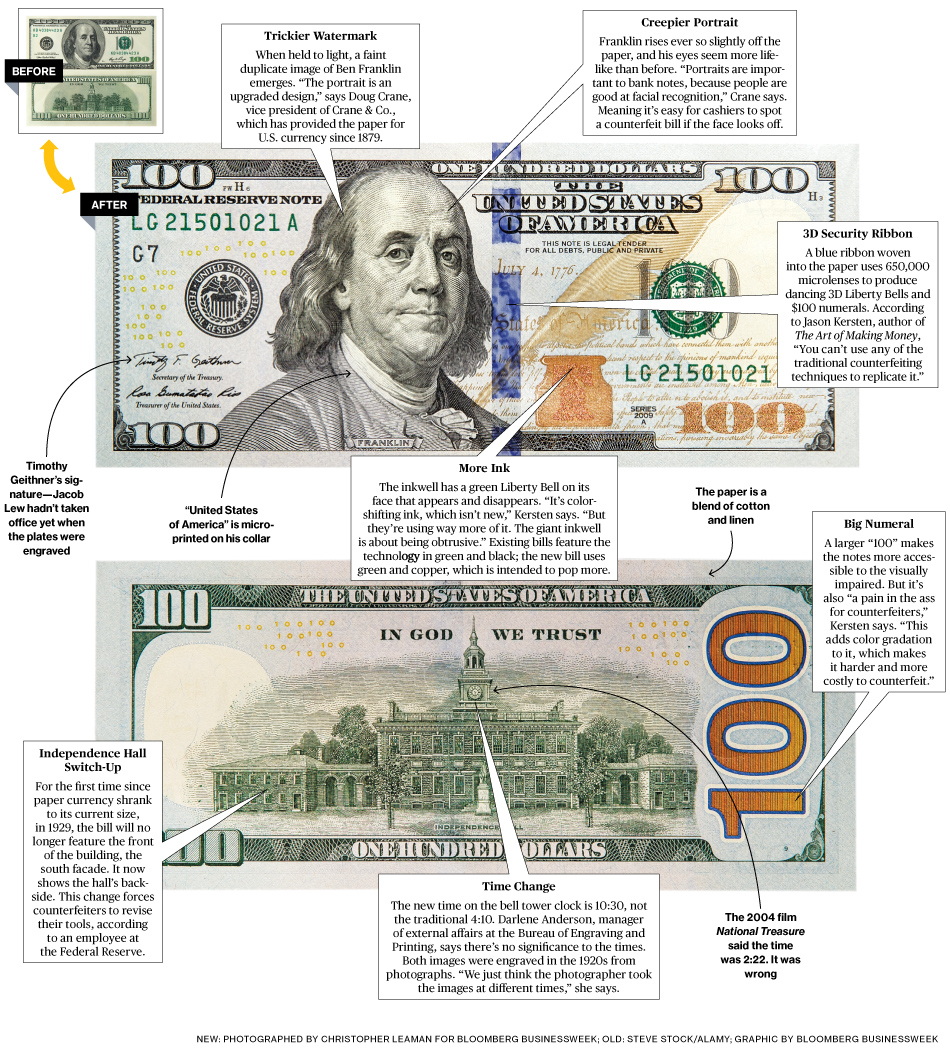
Ben Franklin’s Face-Lift: The New $100 Bill

Ben Franklin’s Face-Lift: The New $100 Bill

By Keenan Mayo on May 16, 2013

After a three-year delay, the new high-tech $100 bill enters circulation this fall. Here’s how it’s designed to beat the counterfeiters.

etc_money21_950

Education strategy and the philosophy of bicycle riding

Education strategy and the philosophy of bicycle riding

Budiono Kusumohamidjojo, Jakarta | Opinion | Tue, May 14 2013, 11:04 AM

Paper Edition | Page: 7

Indonesia is a vast country that should not tolerate dilettantish national policy formulations, let alone in the field of education, which should always be perceived as the most important undertaking of human investment.
With its population of 240 million people and abundant natural resources, it is a land that is badly in need of a state of the art education strategy.
Indonesia’s education strategy should be capable to withstand geopolitical shifts, yet, flexible enough for policy adjustments that may be called for by changes in the course of national development.  Read more of this post