AD OF THE DAY: What If Men Had Women’s Hair?

AD OF THE DAY: What If Men Had Women’s Hair?

Dominic Green | Mar. 21, 2013, 8:51 PM | 3,495 | 4

A new Dove commercial from Brazil investigates the question of what it would be like if men had hair like that seen in commercials for shampoo. It spends a lot of time waving seductively in the breeze, it turns out, even if you’re just sitting in the office. Upon realizing his hair has become long, shiny, and altogether too beautiful, the male protagonist sprints home to fix the problem with Dove Men + Care.

Formula 1 racing driver Jenson Button has urged young people to study science, technology, engineering and maths in school, arguing that the drama and glamour of racing wouldn’t exist without the world’s cleverest scientists and engineers.

Jenson Button: Young people should stick with science and maths

Formula 1 racing driver Jenson Button has urged young people to study science, technology, engineering and maths in school, arguing that the drama and glamour of racing wouldn’t exist without the world’s cleverest scientists and engineers.

jenson-button_2514713b

By Louisa Peacock

1:37PM GMT 21 Mar 2013

The McLaren driver is backing a campaign, run by Britain’s biggest pharmaceuticals company GlaxoSmithKline in partnership with McLaren, to inspire young people to stick with STEM subjects in school.

As part of the campaign, budding scientists are being challenged to devise a test which could be used to improve a Formula 1 driver’s reactions.

Winning schools will be given an opportunity to visit the McLaren Technology Centre and put their test into action with one of the team.

Mr Button said: “The speed, drama, noise and glamour of Formula 1 may seem very different from a school science lesson, but our sport wouldn’t exist without the tireless work and dedication of some of the world’s cleverest scientists, engineers and mathematicians.

“That’s why I think it’s so important for young people to stick with maths and science at school. In the future they might just find themselves designing a new grand prix car, or working in the pits analysing telemetry data. And, while not everyone can be a racing driver or work in Formula 1, maths and science can open up some amazing opportunities.” Read more of this post

The Odd, Enduring Power of ‘Praying Hands’; How a 16th-century sketch became an international symbol for piety—and an inspiration for kitsch; “Without a doubt, it’s the most famous drawing in the world. In every gas station, in every bank behind the teller, you have an image of the ‘Praying Hands’.”

Updated March 21, 2013, 8:32 p.m. ET

The Odd, Enduring Power of ‘Praying Hands’

How a 16th-century sketch became an international symbol for piety—and an inspiration for kitsch

By ANNA RUSSELL

AR-AB849_Bottom_DV_20130321174906AR-AB850_Prayer_G_20130321175148

DRAWING POWER: Albrecht Dürer

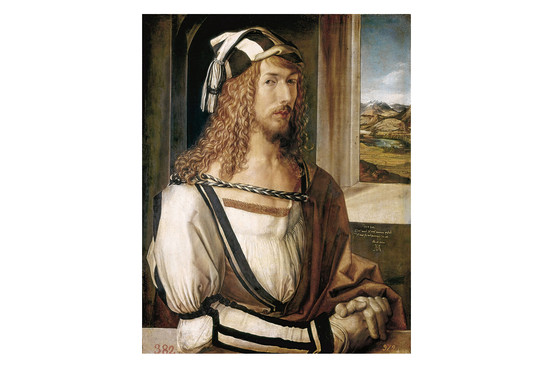
The image at the center of Albrecht Dürer’s drawing “Praying Hands” has traveled a long way from its roots in the German Renaissance. It is the most enduring work by one of the greatest draftsmen in the history of Western art, but it has also taken on a pop-culture life of its own, all over the world.

It is found on posters, dishes, washcloths, urns, aprons, coffee mugs, cellphone cases and pocketknives—and tattooed onto Justin Bieber‘s leg. Its likeness appears on Andy Warhol’s tombstone. Singer and songwriter Trey Bruce has a song called “Velvet Elvis and Prayin’ Hands.” Of the many tattoo takes on the image, one of the more exotic is that of pro basketball player Stephen Jackson, of the San Antonio Spurs, who has on his torso a rendering of “Praying Hands”—holding a handgun.

Now, the real thing will be on view at the National Gallery in Washington. The last time the drawing came to the U.S. was in 1984-85, when it was shown in Washington and New York. From Sunday through June 9, the museum will host “Albrecht Dürer: Master Drawings, Watercolors, and Prints From the Albertina,” comprising 118 works on loan from the Albertina Museum in Vienna.

“Without a doubt, it’s the most famous drawing in the world,” says Andrew Robison, a senior curator of prints and drawings at the museum. And one of the most appropriated. “In every gas station in the South, in every bank behind the teller, you have an image of the ‘Praying Hands,’ ” says Mr. Robison, who grew up in Memphis, Tenn. Read more of this post

Chinese university invents world’s lightest material; It is also exceptionally strong and is able to recover its original form after being compressed up to 80% over a thousand times. It can absorb oil 250-900x its volume

Chinese university invents world’s lightest material

Staff Reporter

2013-03-21

102474838-184804F_2013資料照片_copy1

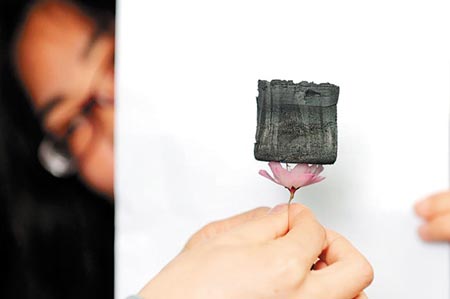
The aerogel produced by Chinese scientists is so light that it can be placed on a flower. (Photo/Xinhua)

Chinese scientists have successful developed an aerogel that they claim is the lightest material in the world. The density of the gel is only one sixth of air at 0.16 milligrams per cubic centimeter, 0.04 milligrams lighter than aerographite, a substance produced by German scientists last year which hitherto held the record.

Scientists led by professor Gao Chao from the Department of Polymer Science and Engineering at Zhejiang University, produced the aerogel by freezing graphene with a carbon nanotube, removing their liquid components and keeping only their structures, according to Chinese science website Science and Technology Daily.

The aerogel is so light that a mug made of the material would be able to perch on a green foxtail and would not bend a hair of the plant, said professor Gao.

It is also exceptionally strong and is able to recover its original form after being compressed up to 80% over a thousand times. It can absorb oil 250-900x its volume. Existing oil absorbers can only take in up to 10x their volume.

Professor Gao said that the material could be used to soak up oil leaks in the world’s oceans. Once the aerogel is soaked with the oil, people can squeeze the oil out and reuse the aerogel, according to the Chinese-language Dushi Kuaibao, published by the local Hangzhou Daily. Read more of this post

Brene Brown, author of “Daring Greatly: How the Courage to be Vulnerable Transforms the Way We Live, Love, Lead”, interviewed by Oprah in a two-part episode of “Super Soul Sunday”

Brene Brown interviewed by Oprah in a two-part episode of “Super Soul Sunday”

Posted by: Kate Torgovnick
March 20, 2013 at 5:30 pm EDT

On Sunday, Oprah Winfrey revealed that she and TED speaker Brené Brown are “soul mates.” As the pair sat down for an in-depth discussion on Super Soul Sunday— part one of which aired last Sunday, with part two to air next Sunday — they excitedly talked about many of the concepts which Brown raised in her classic TED Talk, “The power of vulnerability.” One interesting moment came when Brown shared a counterintuitive thought on what scares us the most. “As someone who studies shame and scarcity and fear, if you asked me, ‘What is the most terrifying, difficult emotion we experience as humans?,’ I would say joy,” says Brown. “When we lose our tolerance for vulnerability, joy becomes foreboding. So what we do in moments of joyfulness is we try to beat vulnerability to the punch … We try to dress-rehearse tragedy.” In fact, says Brown during the first part of this intervie,  fear seems to be an ever-present part of our experience. “I think there’s a thin film of terror wrapped around us,” says Brown. “If it’s not, ‘I’m not safe enough’ or ‘I’m not secure enough,’ it’s ‘I’m not liked enough,’ ‘I’m not promoted enough,’ ‘I’m not loved enough’ … at the very bottom, ‘I’m not good enough.’”

The most unbelievable rainbows around the world

The most unbelievable rainbows around the world

People’s Daily Online  08:18, March 21, 2013  

F201303210808553273936227

A rare picture of beautiful rainbow clouds floating over Mount Everest. 

F201303210808551149510252

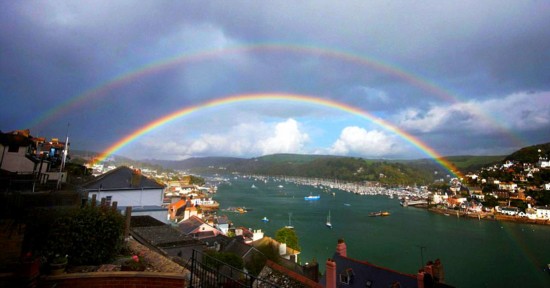
A double rainbow hangs on the sky of Dartmouth, Devon, UK. The British photographer has spent seven years for this moment. He had taken more than 2,000 similar photos before he successfully captured the perfect moment of the double rainbow

F201303210808541170712402

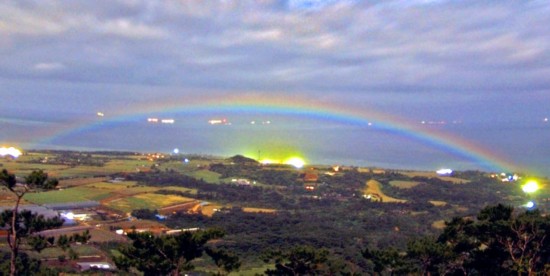
A rainbow observed in Ishigaki City, Okinawa, Japan. The rainbow was reflected by the moonlight.

F201303210808553247111431

A rainbow shows above the Niagara Falls while an American is performing tightrope walking

Fending off university-attacking zombies; Educators worldwide are moving away from a narrow and term-limited skills focus, and towards what one might call “renewable competencies”

Fending off university-attacking zombies

naylor

David Naylor, Special to Financial Post | 13/03/14 | Last Updated:13/03/14 3:26 PM ET

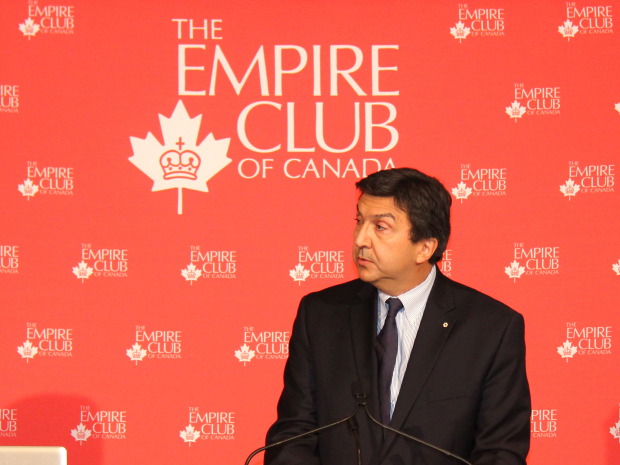
Last week, David Naylor, the president of the University of Toronto, made a speech to Empire Club of Canada members about what he describes as educational zombies — government and industry calls for more job-specific education at universities and more research aligned with industry needs. His speech was timely in that it responded to a growing chorus of criticism in the media and industry circles that a university education is no longer a ticket to meaningful and gainful employment, and that the ideals of a liberal arts education are no longer sufficient to prepare graduates for the workforce. Following is the abridged text of Mr. Naylor’s remarks.

12

Earlier this week, the University of Toronto made a wonderful decision in naming Meric Gertler as my successor as President.  As my term winds down, I have to say that it has been an extraordinary privilege to serve the University of Toronto community.

At the same time, impending retirement does mean that I am now something of a zombie…lurching around for a while in a transitional state.  And who better than a zombie president to tackle two zombie ideas about higher education and advanced research?

You may ask:  What’s a zombie idea?  Well, it’s one of those persistent and infectious pieces of misinformation, a meme that shouldn’t be alive but just won’t die.

There are two zombie ideas that trouble me these days.

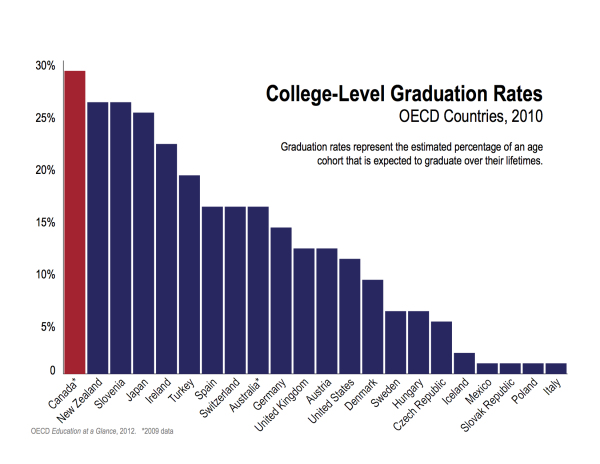
Zombie 1:  Universities ought to produce more job-ready, skills-focused graduates.  Stop all this liberal arts guff and this social science silliness.  What Canada needs to compete and win in the world economy are more folks with college diplomas, and universities that focus on preparing people for careers — for the real world.

Or, as the Governor of Florida memorably put in a radio interview 18 months ago: “You know, we don’t need a lot more anthropologists in the state.  It’s a great degree if people want to get it, but we don’t need them here.”

Zombie 2:  Those ivory towers full of fat-cat academics and loopy students asking unanswerable questions.  Their wilful irrelevance is a waste of taxpayers’ money.  Get them out of the public trough and get them doing things that Canadian business can really use.

The reason these zombie ideas are dangerous is not just because decision makers in the U.S. and Canada have been infected by them.  They are also hard to destroy because there is unquestionably some truth, and therefore some life, to both of them. Read more of this post

IBM Spent A Million Dollars Renovating And Staffing Its Former CEO’s Office

IBM Spent A Million Dollars Renovating And Staffing Its Former CEO’s Office

Max Nisen | Mar. 20, 2013, 8:21 AM | 1,843 | 1

Sam Palmisano was an excellent CEO for IBM. During his decade or so in charge of the company, he successfully transitioned it away from hardware into a services and software powerhouse.

Still, details in IBM’s latest proxy statement raised eyebrows this week. In addition to providing a historically large exit salary, the company disclosed it is paying around a million dollars to staff and furnish an office for its retired CEO.

Palmisano’s retirement package is worth approximately $271 million, according to Footnoted.com‘s Michelle Leder, who has been analyzing SEC filings since 2003.

According to the Wall Street Journal, if that figure is correct, Palmisano’s would be one of the 10 highest CEO pay packages in history. Only six US CEOs have left with packages valued in excess of $200 million.  Read more of this post

Singapore’s leading inventor Nelson Cheng: ‘I go around looking for trouble’

Singapore’s leading inventor: ‘I go around looking for trouble’

pspatent01

S’pore’s leading inventor Nelson Cheng reveals how he comes up with ideas. -TNP
Jennifer Dhanaraj

Wed, Mar 20, 2013
The New Paper

SINGAPORE – Meet Singapore’s leading inventor.

And when he says “eureka” – it is potentially worth a couple of million dollars.

Mr Nelson Cheng, 56, is the president and founder of local chemical company Magna International.

According to the Intellectual Property Office of Singapore (Ipos), while the Agency for Science, Technology and Research (A*Star) – the nation’s lead agency for scientific research – has consistently been the local leader in applying for patents, the individual who has obtained the most patents is Mr Cheng.

He has eight patents locally – which, according to him, already have a commercial value of “hundreds of millions”.

When we meet him in his office on Enterprise Road, the wall of its conference room is adorned with gold and silver certificate plaques of successful patent grants from all over the world.

In all, he has filed 16 patents worldwide. These include ones in Taiwan and the European Union for the same inventions that he has patented here. This is to “protect his inventions” in overseas markets.

“Every time I am awarded a patent, I still feel immense joy. It never gets old,” he says with a twinkle in his eye.

His innovations range from biodiesel lubricants to corrosion inhibitors that can be used in the commercial, industrial and even military sectors.

Mr Cheng filed his first patent with Ipos in 2007 – and it was a long, drawn out process. Read more of this post

Why Workers Welcomed Long Hours of Industrial Revolution

Why Workers Welcomed Long Hours of Industrial Revolution

Writers and academics often show an interesting ambivalence about industrialization. Today, they regard it as a blessing, the single-most-effective way to lift people out of poverty. But in thinking about Britain’s Industrial Revolution, they have tended to reach the opposite conclusion: The rise of the factory, they argue, caused the end of more “natural” working hours, introduced more exploitative employment patterns and dehumanized the experience of labor. It robbed workers of their autonomy and dignity.

Yet if we turn to the writing of laborers themselves, we find that they didn’t share the historians’ gloomy assessment. Starting in the early 19th century, working people in Britain began to write autobiographies and memoirs in ever greater numbers. Men (and occasionally women) who worked in factories and mines, as shoemakers and carpenters, and on the land, penned their stories, and inevitably touched on the large part of their life devoted to labor. In the process, they produced a remarkable account of the Industrial Revolution from the perspective of those who felt its effects firsthand — one that looks very different from the standard historical narrative.

More Hours

First, working-class writers put a very different spin on the increase in working hours that accompanied industrialization. The autobiographies make clear that in pre- industrial Britain, there simply wasn’t enough work to go around. As a result, few people were fully employed throughout the year. This gave them leisure time, but it also left most families eking out an uncomfortable living on the margins. Read more of this post

Indian awarded its highest civilian award, Bharat Tatna (Jewel of India) to ex-chairman of the Tata group Mr Ratan Naval Tata

Jewel of corporate India

20130318.162351_sph_st_ratantata_bg

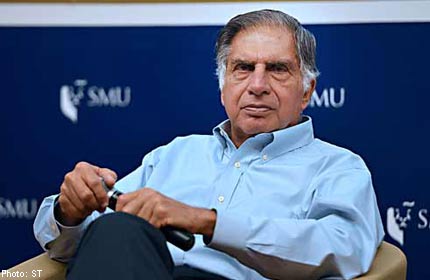
Indian awarded its highest civilian award, Bharat Tatna (Jewel of India) to ex-chairman of the Tata group Mr Ratan Naval Tata. -ST
Ravi Velloor

Tue, Mar 19, 2013
The Straits Times

It has been a few years since India announced its highest civilian award, Bharat Ratna, which, from the Hindi, translates as Jewel of India. But at some point, it may well go to the man who just stepped down as chairman of the Tata Group, the salt-to-software conglomerate.

For Mr Ratan Naval Tata, who was in Singapore last week, is no ordinary man. And the Tata Group, no ordinary enterprise.

You could start your morning with Tetley Tea, sprinkle Tata Salt on your fried egg, live in a home constructed with quality metal from Tata-owned NatSteel, call your secretary from a Tata phone, travel on an airline whose computer systems are supported by Tata Consultancy Services, stay in a Taj luxury hotel, watch television on Tata Sky direct-to-home service and if you are wealthy enough – own a Jaguar, also a Tata brand. At the other end of the spectrum, those aspiring to trade up from a motorcycle may consider the Tata Nano, the world’s cheapest car.

Such is the brand universe of the group, whose turnover, at more than US$100 billion (S$124 billion) annually accounts for a little more than 5 per cent of the gross domestic product of India, Asia’s No. 3 economy after China and Japan. Read more of this post

CEO Jim Donald’s Memo to Staff: Take More Risks; Growth and innovation come from daring ideas and calculated gambles, but boldness is getting harder to come by at some companies.

March 19, 2013, 6:54 p.m. ET

Memo to Staff: Take More Risks

MK-CB740_RISK_DV_20130319154202

CEOs Urge Employees to Embrace Failure and Keep Trying

By LESLIE KWOH

When Jim Donald took the helm at Extended Stay America a year ago, he sensed fear.

Many employees at the national hotel chain, which had recently emerged from bankruptcy, were still stuck in survival mode. Worried about losing their jobs, they avoided decisions that might cost the company money, such as making property repairs or appeasing a disgruntled guest with a free night’s stay.

“They were waiting to be told what to do,” recalls the former Starbucks Corp.SBUX -0.18% chief executive. “They were afraid to do things.”

So Mr. Donald gave everyone a safety net: He created a batch of miniature “Get Out of Jail, Free” cards, and is gradually handing them out to his 9,000 employees. All they had to do, he told them, was call in the card when they took a big risk on behalf of the company—no questions asked.

Growth and innovation come from daring ideas and calculated gambles, but boldness is getting harder to come by at some companies. After years of high unemployment and scarred from rounds of company cost-cutting and layoffs, managers say their workers seem to have become allergic to risk. Read more of this post

Kirsten Han: “Joseph Stiglitz’s Singapore is hardly the one I grew up in; Perhaps the real Singapore, too, could learn a few lessons from Stiglitz’s Singapore.”

Joseph Stiglitz’s Singapore is hardly the one I grew up in

By Kirsten Han — 7 hours ago

Kirsten Han is currently a graduate student in journalism at Cardiff University in Wales. She was born and raised in Singapore.

Joseph E. Stiglitz may be a brilliant economist, but familiar with Singapore he is not.

This fact could not be more glaring than in his piece in the New York Times urging the United States to emulate the tiny city-state. His description paints Singapore as practically utopian: the rich willingly contribute to help the poor, everyone puts money aside to pay for healthcare and retirement, and the government makes sure that workers are not disadvantaged by cunning employers.

The policies and measures praised sound good in theory, but don’t actually work that way in reality. As a matter of fact, the issues singled out by Stiglitz—wages, the Central Provident Fund (CPF), housing and labour relations—are the very things keeping Singaporeans up at night.

Singapore is far from being an equal society. When considered in the global context, Singapore cannot be considered a society with “fewer economic disparities.” Its Gini coefficient, which measures inequality, is the second highest among developed countries. Read more of this post

1,000-year-old Chinese bowl bought for US$3 at a garage sale in New York and sold for US$2.2mil

Updated: Wednesday March 20, 2013 MYT 9:12:44 AM

1,000-year-old Chinese bowl bought for US$3 and sold for US$2.2mil

bowl-auction-sothbey-latest

This handout photo obtained courtesy of Sotheby’s shows a small Chinese pottery bowl that started as a $3 tag sale only to turn into a massive windfall that sold for $2.23 million during an auction at Sotheby’s on March 19, 2013 in New York. – AFP

NEW YORK: A 1,000-year-old Chinese bowl that was bought for US$3 at a garage sale in New York state sold for more than US$2.2 million at an auction on Tuesday. An unnamed New York family bought the “Ding” bowl, which is from the Northern Song Dynasty, for no more than $3 in 2007 and displayed it on a mantelpiece with no idea as to its real worth, Sotheby’s said. After consulting with experts, the owners consigned the bowl for auction. Sotheby’s estimated it would sell for $200,000 to $300,000. London dealer Giuseppe Eskenazi paid $2,225,000 including commission for the bowl, which measures just over five inches (12.7 cm) in diameter, at the auction in New York City. Sotheby’s said the only known bowl of the same form, size and almost identical decoration has been in the collection of the British Museum in London for more than 60 years. – Reuters

KOREA: THE IMPOSSIBLE COUNTRY, by Daniel Tudor, charts the improbable rise of South Korea from the devastation of war and impoverishment to rapid development and prosperity

The rising of a nation

BY JEFF KINGSTON

MAR 17, 2013

KOREA: THE IMPOSSIBLE COUNTRY, by Daniel Tudor. Tuttle, 2012, 320 pp., $22.95 (hardcover)

This superb book charts the improbable rise of South Korea from the devastation of war and impoverishment to rapid development and prosperity, and from brutal dictatorship to the most vibrant democracy in Asia. It is “impossible” in terms of its economic and political achievements, “the most unlikely and impressive story of national building of the last century,” Daniel Tudor writes.

The Korean War (1950-53) claimed the lives of 3 million people, including 2.5 million Korean civilians, at a time when the combined population of the entire peninsula was only 30 million. In the mid-1950s GDP per capita was less than $100 and the average life span was 54 years old, compared to $32,000 and 79 as of 2012. This phoenix-like rise from the ashes was based on hard work, sacrifice and extensive state support for industry. The economy was foundering until Park Chung Hee (the current president’s father) took over in a coup in 1961 and ruled with an iron fist until gunned down by the head of the KCIA intelligence service in 1979. He is credited with the “miracle on the Han,” the era of phenomenal economic growth that was largely based on nurturing national champions. Famously, Park called businessmen “corrupt swine,” but enriched those who did his bidding.

Samsung, the star of Korea Inc., accounts for 20 percent of GDP and has a stake in virtually all market sectors where there are profits to be made, from Apple-beating mobile phones and Sony-trumping electronics to resorts, real estate, insurance and shipbuilding. This “ginormous” influence is a mixed bag; there is intense pride that a Korean firm has taken on the world’s best firms and won, but Koreans are ambivalent about its stifling omnipresence and political influence at home. Journalists criticize the behemoth at their peril as Tudor explains that libel laws in South Korea stack the deck and even if scandalous allegations are proven true, damages are awarded if the court decides that reputations have been sullied. So much for freedom of the press.

Tudor provides a primer in Korean history then launches into the modern era by examining the role of shamans and the spiritual world. He wryly compares English teachers to shamans, noting that both are paid relatively large sums of money based on an exaggerated faith in their powers.

South Korea’s problems are so similar to Japan’s that many passages read as if the country names are interchangeable. Korea has a higher suicide rate, a similarly low birth rate, a rapidly aging society, wealth without prosperity, growing disparities and just like Japan over one-third of the workforce is hired on fixed term contracts as nonregular workers with low pay, few benefits and no job security. But the differences are also stark as South Korean firms and their government adjusted quickly to changing global markets while Japan, Inc. appears relatively stodgy and complacent. Read more of this post

Earthquakes and the Mind-Bending Laws of Markets; Power laws are immensely important for proper risk management, for assessing the likelihood of large market upheavals

Earthquakes and the Mind-Bending Laws of Markets

Like the devastating Japanese earthquake of 2011, the stock market crash of Oct. 19, 1987, came as a total shock to most people. Yet the crash wasn’t entirely without warning. Five days before, the Dow Jones Industrial Average dropped 95 points, which was then an all-time record. Two days later, it closed down another 108 points. Just like others crashes — 1929, for example — and all major earthquakes, the 1987 crash was preceded by significant rumblings.

The comparison of tectonic and market shocks goes far beyond metaphor and analogy. Consider, for example, how much the prices of stocks and other financial instruments change over a certain time interval — say a few minutes, a single day, or a week. In the early 1960s, French mathematician Benoit Mandelbrot carried out a landmark study of such changes in the prices of cotton and found that the statistics of large market returns follow an inverse power law very much like the Gutenberg-Richter law for earthquakes. More than 30 years later, physicists found that this law-like pattern holds for intervals varying from a second up to a month and in different kinds of markets — stocks, foreign exchange, futures — as well as in many different countries. Read more of this post

Baby-shaped pears freak out shoppers at Beijing supermarket; “It’s obvious that the pears were grown in a mold to control their shape.”

Baby-shaped pears freak out shoppers at Beijing supermarket

Staff Reporter

2013-03-19

406186ecb7a612a8b68e0f-150653_copy1

Baby-shaped pears: marketing ploy or mythical fruit? (Internet Photo)

A photo posted on China’s Twitter-like Sina Weibo shows a box of pears for sale at a supermarket where the fruits resemble a human baby, with face and all, reports the Chinese-language Beijing Morning News.

Netizens said they thought the pears looked creepy and felt as though the “babies” could open their eyes at any time.

“I saw scary pears today at Sam’s Club (supermarket). I felt they were interesting, so I took a photo of them and uploaded it on Sina Weibo. A box cost 20 yuan (US$3),” said a netizen surnamed Wang. Read more of this post

Taiwan’s Alishan cherry blossom season expected to draw huge crowds

Taiwan’s Alishan cherry blossom season expected to draw huge crowds

CNA 

  • 2013-03-17

Alishan

Alishan cherry blossoms and the famous forest railway. (Photo/CNA)

The Alishan National Scenic Area Administration on Friday launched the area’s cherry blossom annual celebrations, and said that the popular tourist destination in southern Taiwan could draw thousands of visitors per day during the flower season.

The celebration, which will run until April 15, marks the last of a series of cherry blossom festivals that have won huge popularity in Taiwan over recent years.

Priding itself on the approximately 5,000 cherry trees it has, Alishan might attract 14,000 tourists per day during the festival, said administration head Tseng Han-chou. Read more of this post

Forecast: What Physics, Meteorology, and the Natural Sciences Can Teach Us About Economics

Forecast: What Physics, Meteorology, and the Natural Sciences Can Teach Us About Economics [Hardcover]

Mark Buchanan (Author)

Release date: March 26, 2013 | ISBN-10: 1608198510 | ISBN-13: 978-1608198511 | Edition: 1

Picture an early scene from The Wizard of Oz: Dorothy hurries home as a tornado gathers in what was once a clear Kansas sky. Hurriedly, she seeks shelter in the storm cellar under the house, but, finding it locked, takes cover in her bedroom. We all know how that works out for her.

Many investors these days are a bit like Dorothy, putting their faith in something as solid and trustworthy as a house (or, say, real estate). But market disruptions–storms–seem to arrive without warning, leaving us little time to react. Why are we so often blindsided by these things, left outdoors with nothing but our little dogs? More to the point: how did Kansas go from blue skies to tornadoes in such a short time?

In this deeply researched and piercingly intelligent book, physicist Mark Buchanan shows how a simple feedback loop can lead to major consequences, the kind predictable by mathematical models but hard for most people to anticipate. From his unique perspective, Buchanan argues that our basic assumptions about economic markets–that they are for the most part stable, with occasional interruptions–are simply wrong. Markets really act more like the weather: a brief heat wave can become a massive storm in a matter of a few days, or even hours.

The Physics of Finance reimagines the basics of how economics, with consequences that affect everyone. Read more of this post

The Insupportable Equilibrium of Economic Thought; In one form or another, positive feedback lies behind almost everything that makes our world rich and surprising, changeable and dynamic, lively and unpredictable

The Insupportable Equilibrium of Economic Thought

Conjure an image in your mind: a pencil resting on a small table, perhaps next to a notebook. In what position did you imagine the pencil? Lying on its side, right? Why not upright, with either the eraser or the graphite tip touching the table and the rest pointing into the air?

In terms of strict physical forces, it’s possible to position a pencil this way. We never see it happen because even the tiniest vibration, from the rumble of someone tapping the table to a slight shift in air currents, will knock it over.

The upright pencil is in what’s called unstable equilibrium, a state of being that can exist if unperturbed, but that will change rapidly if given the tiniest shock from the physical world. By contrast, a pencil lying on its side is in stable equilibrium. Blow on it, even slam your fist on the table, and the pencil will stay in that position or bounce around momentarily and then go back to it.

Stable equilibria are generally more important than unstable, because things in such states stay there. Whether we’re thinking of forces affecting a pencil or the Dow Jones Industrial Average, we can expect something to remain near a stable equilibrium but to wander away from an unstable one. So whenever we consider a state of equilibrium, we’ve got to ask whether it’s stable. Read more of this post

Cereal With 70% Sugar Hooks Kids on Junk-Food Bliss Point

Cereal With 70% Sugar Hooks Kids on Junk-Food Bliss Point

After E. coli from a burger paralyzed 22-year-old Stephanie Smith, Michael Moss’s newspaper story tracing the meat’s origins helped win him a Pulitzer Prize in 2010.

The titular villains of Moss’s new book, “Salt Sugar Fat: How the Food Giants Hooked Us,” aren’t much less malign. The three substances are tied to rising obesity, diabetes, hypertension and heart disease. They’re also the pillars on which the $1 trillion food-manufacturing industry is built.

Moss, a New York Times reporter, digs into the history, science, commerce and politics behind processed foods and Americans’ addiction to them. It’s a craving he tracks from lab bench and corporate memo to working moms and the mantra of convenience, from Wall Street’s relentless pressure for profit and the feckless regulators in Washington.

Moss makes the digestion of hard facts easier with a keen sense of the telling anecdote and detail. When he interviews the legendary Al Clausi in 2010, 64 years after he started as a food chemist for General Foods (MO), Moss observes a copy of the patent for Jell-O instant pudding hanging in the retiree’s office and on a shelf “a toy replica of the trucks that delivered Tang, another one of his iconic inventions.” Read more of this post

Chinese Kids Who Ignore Confucius Face State Backlash

Chinese Kids Who Ignore Confucius Face State Backlash

By Bloomberg News  Mar 17, 2013

In 10 years as head of an elder- care center in Confucius’s hometown of Qufu, Yang Youling has seen the Chinese philosopher’s exhortation of filial piety turned on its head.

Many children never visit their aged parents in the 50-bed home in eastern China’s Shandong province to avoid being criticized for not taking care of them at home, said Yang, 47. “The children are ashamed of being seen,” she said.

They may soon have no choice. From July 1, parents in China can sue their kids who don’t visit often enough, under a broadened law mandating children take better care of the aged. With China’s elderly population forecast to more than double to 487 million in the next 40 years, the government needs to try and limit the cost of caring for seniors.

“China’s aging problem is at a scale and speed not comparable with anywhere else in the world,” said Yuan Xin, director of Nankai University’s Aging Development Strategy Research Center in Tianjin, and a member of an advisory committee on the new rule. “My concern is how we can have sustainable economic development” while maintaining Confucian values such as respect and care for one’s parents, he said.

Traditionally, children lived with their parents and looked after them in accordance with Confucian beliefs. The ancient Chinese philosopher emphasized filial piety as the foundation of all values and placed great importance on harmony and a proper order of social relationships especially within families. Read more of this post

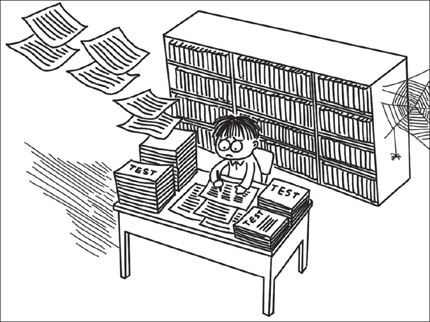
Test culture makes love of learning a waste

Test culture makes love of learning a waste

Created: 2013-3-18

Author:Wan Linxin

20130318_526209_01

RECENTLY while taking a stroll along nearby Weihai Road near Yan’an Road, I found a number of fashionable shops were closed and being remodeled. These shops come and go, and I would never have noticed them if they were not disappearing. But surprisingly, the opposite Jing’an Book Club remained open. It always puzzles me how any entity today can pretend not to care about turning a good profit. If it were not for the shelves of books, the club might well pass for an exclusive lobby, complete with beige lounges, fancy stools, long ivory-colored tables, all tastefully arranged in an ornate setting. No book reader can help being a bit flattered to be admitted – freely – into such a cultured milieu, at a time when brick-and-mortar bookstores are retreating or vanishing. The flagship Jifeng Bookstore in Shanxi Road S. metro station announced early this month it would close and move to another location after 15 years of operation, even though the rentals for the bookstore were only 10 percent the normal rates, for the bookstore had been seen somewhat as part of Shanghai’s cultural scene. Often have I strolled into this classy book club, and rarely did I find many readers. On the door was a notice to the effect that students can be admitted after 3pm by showing a pass issued by the club.

Of course, no one expects students to be readers. They are there doing their homework. I usually gave my third grader son a pat on the shoulder if he successfully prevents his homework from invading his sleep hours. One colleague of mine said that homework typically keeps his daughter busy until 10pm. My son has shown early promise of being an avid reader, but he has little time for reading, being perennially busy cracking problems meant to, among other things, assess his Chinese vocabulary, comprehension, and analytical skills. These ingeniously designed test items – cloze, multiple choice, summary – reduce to an ordeal a process that should be inspiring, exhilarating, and enchanting. Read more of this post

Lagoon In Rio De Janeiro Is So Polluted That Thousands Of Fish Just Floated Up Dead [PHOTO]

Lagoon In Rio De Janeiro Is So Polluted That Thousands Of Fish Just Floated Up Dead [PHOTO]

Henry Blodget | Mar. 17, 2013, 10:43 AM | 3,591 | 11

Here’s the scene in Rio de Janeiro… This lagoon, called Rodrigo de Freitas, is where the Olympic rowing competitions will be held in 2016.  The fish died after oxygen levels in the water dropped because of pollution, local media said.

rtr3ey19

Life Discovered in the Deepest Ocean; “Nobody realized there is so much biodiversity”

March 17, 2013, 7:33 p.m. ET

Life Discovered in the Deepest Ocean

By JONATHAN D. ROCKOFF

Researchers probing the deepest ocean have found a surprisingly high concentration of microbes, the latest evidence of organisms thriving in inhospitable environments that is reshaping scientists’ understanding of the conditions necessary for life.

The bacteria were found nearly 6.8 miles below sea level, on the floor of the Pacific Ocean’s Mariana Trench, according to the researchers, whose findings were published online Sunday by the journal Nature Geoscience. No light reaches that part of the ocean, where the temperature is an estimated 36 degrees Fahrenheit.

Extremophiles

Extremophiles are organisms that can thrive in harsh conditions, such as high pressure or freezing temperatures. Researchers have found life in a number of unlikely environments: Read more of this post

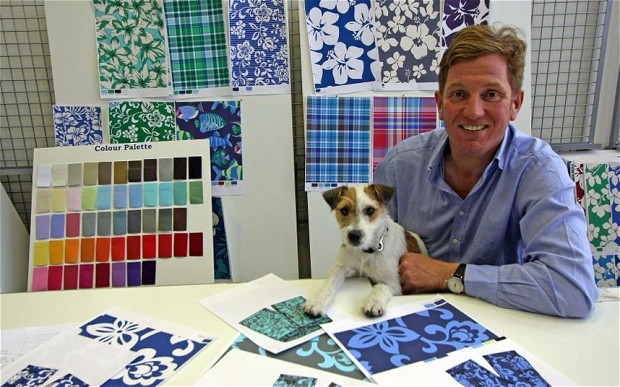
Fashion chain’s Johnnie Boden turned his neurosis into a strength; The 2012 Sunday Times Rich List puts Boden at number 255 of the UK’s richest estates, valued at £320m. Boden is cursed by self-doubt, but gifted with personableness and entrepreneurial skill. That’s why people love the brand – because it bears the name and spirit and set of values of a truly likeable character.

Johnnie Boden’s fashion brand is the love of his life

In an exclusive extract from their forthcoming book on the new breed of entrepreneurs who made their names by making names into brands, David Hopper and Charles Vallance meet British success story Johnnie Boden

cut_Johnnie-Boden__2511986b

Johnnie Boden set up the fashion brand that bears his name. Photo: Rex Features

David Hopper and Charles Vallance

8:00PM GMT 17 Mar 2013

The Boden headquarters do not conform to any known middle-class stereotype. The architectural cues of the concrete-rich buildings in North Acton feel more North Korean than Etonian. The sign on the rectangular column outside says, “Ugly building. Nice clothes”.

Johnnie Boden’s office is an ill-defined composite of artistic creativity and box-files. His welcome is warm and open. He is a well built, tallish man, so he cuts a presence in a room, helped by a head of tawny-auburn hair.

For a person who makes everyone else feel so good about themselves, Boden is an anxious individual — wanting to be helpful whilst hoping not to disappoint. He would probably say “Sorry” spontaneously to someone who elbowed him in the ribs. He is permanently self-critical.

“My father was quite old at 45 when I was born; a strong, successful soldier, old-fashioned, but a complicated man and he was very hard on me,” Boden explains. “He had such high expectations, so I always felt I was never good enough. My parents were not big on praise. So I always wanted to do better. If I got 7 out of 10, I was just cross with myself. A lot of people are very comfortable in their own skin. I wasn’t.”

Boden speaks a lot about the slim margin between success and failure. Indeed, he puts a figure on it: “51pc is successful, but 49pc is awful”. Read more of this post

Canberra Wasn’t Built in a Day; Australia’s capital city celebrated its 100th anniversary this week

Canberra Wasn’t Built in a Day
Catriona Richards | March 17, 2013

20130317110418156

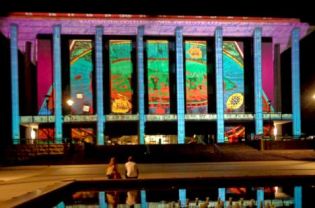
A couple admires the National Library of Australia, lit with colorful light projections as part of the Enlighten festival to celebrate Canberra\’s 100th anniversary. (JG Photo/Catriona Richards)

On the site of a former sheep station not so far from here, Australia’s capital city celebrated its 100th anniversary this week.

Canberra, the seat of Australia’s parliament and home to more than 370,000 people, is one of a handful of cities around the world that was built with the express purpose of serving as a nation’s administrative capital.

Before there was Naypyidaw in Myanmar or Putrajaya in Malaysia, the newly federated nation of Australia began to lay foundations for the city it believed would not only house its parliament, but also express the character of its people.

One hundred years on and deriding the sparsely populated, bureaucratic city has become a national sport — so much so that the phrase “Canberra bashing” entered Oxford’s Australian National Dictionary just weeks ahead of the city’s centenary celebrations.

Indonesia has long toyed with the idea of relocating its administrative capital away from the crowds and infrastructure problems of Jakarta.

The issue most recently came to the fore when floodwaters inundated the central business district in January, killing dozens of people and spilling embarrassingly into the grounds of the presidential palace.

But the experience of Indonesia’s neighbor to the south shows that building a capital city from scratch and finding acceptance from the people it seeks to represent is no easy feat.  Read more of this post

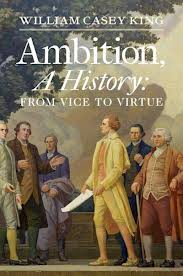
Ambition, A History: From Vice to Virtue

Ambition, A History: From Vice to Virtue [Hardcover]

William Casey King (Author)

images (1)

Release date: January 7, 2013

From rags to riches, log house to White House, enslaved to liberator, ghetto to CEO, ambition fuels the American Dream. Americans are driven by ambition. Yet at the time of the nation’s founding, ambition was viewed as a dangerous vice, everything from “a canker on the soul” to the impetus for original sin. This engaging book explores ambition’s surprising transformation, tracing attitudes from classical antiquity to early modern Europe to the New World and America’s founding. From this broad historical perspective, William Casey King deepens our understanding of the American mythos and offers a striking reinterpretation of the introduction to the Declaration of Independence.

Through an innovative array of sources and authors—Aquinas, Dante, Machiavelli, the Geneva Bible, Marlowe, Shakespeare, Thomas Jefferson, and many others—King demonstrates that a transformed view of ambition became possible the moment Europe realized that Columbus had discovered not a new route but a new world. In addition the author argues that reconstituting ambition as a virtue was a necessary precondition of the American republic. The book suggests that even in the twenty-first century, ambition has never fully lost its ties to vice and continues to exhibit a dual nature, positive or negative depending upon the ends, the means, and the individual involved. Read more of this post

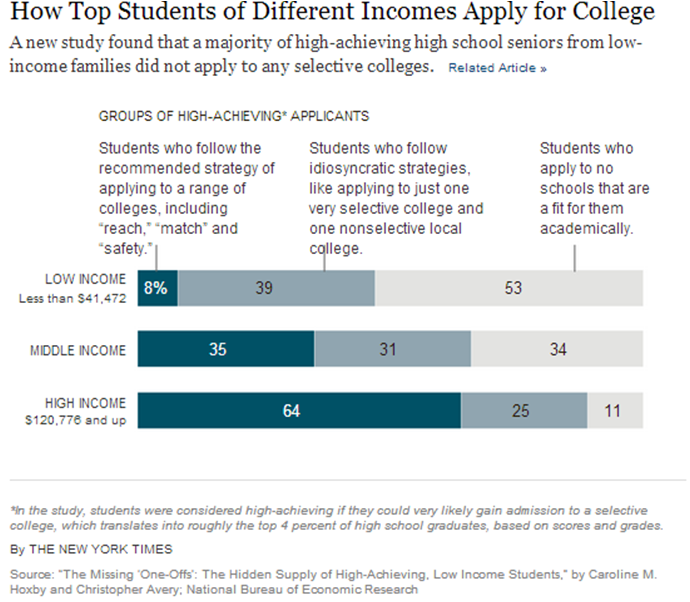
Better Colleges Failing to Lure Talented Poor, Study Shows

March 16, 2013

Better Colleges Failing to Lure Poorer Strivers

By DAVID LEONHARDT

IncomeCollege

Most low-income students who have top test scores and grades do not even apply to the nation’s best colleges, according to a new analysis of every high school student who took the SAT in a recent year.

The pattern contributes to widening economic inequality and low levels of mobility in this country, economists say, because college graduates earn so much more on average than nongraduates do. Low-income students who excel in high school often do not graduate from the less selective colleges they attend.

Only 34 percent of high-achieving high school seniors in the bottom fourth of income distribution attended any one of the country’s 238 most selective colleges, according to the analysis, conducted by Caroline M. Hoxby of Stanford and Christopher Avery of Harvard, two longtime education researchers. Among top students in the highest income quartile, that figure was 78 percent.

The findings underscore that elite public and private colleges, despite a stated desire to recruit an economically diverse group of students, have largely failed to do so. Read more of this post

Poultry farmer Ho Seng Choon, 90, is still the prince of quails; “We should be billionaires,” said the younger Mr Ho. “But while dad is an excellent and passionate farmer, he has never been a good businessman.”

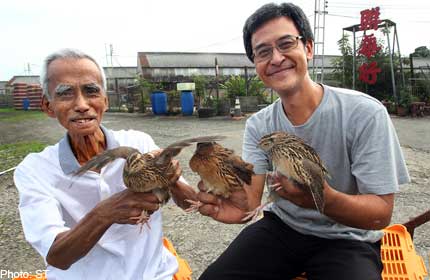
Poultry farmer, 90, is still the prince of quails

20130314.143953_poultry-farner_st

He has tried his hand at goat, turtle and crocodile farming – but at the age of 90 he is now rearing quails with his son. -ST
Melody Zaccheus
Sat, Mar 16, 2013
The Straits Times

SINGAPORE – He has tried his hand at goat, turtle and crocodile farming – but at the age of 90 he is now rearing quails with his son.

Meet Mr Ho Seng Choon, a poultry farmer credited with modernising farming techniques in Singapore over six decades.

Together with son William Ho, 48, he runs Lian Wah Hang, one of two quail farms here. It provides Singapore with 11 million quail eggs every year.

These come from their brood of 130,000 quails and are sold at supermarkets or served at restaurants such as Crystal Jade.

But this could be the “last frontier” for their 2.7ha farm in Lim Chu Kang, said the younger Mr Ho. “Just two years remain on our tenancy and we cannot expand our business on such terms. We are worried about our future.”

The older Mr Ho, who features in the National Heritage Board’s Trading Stories exhibition, has been credited with introducing the battery system for livestock in the 1950s. Born in China’s Fujian province, Mr Ho came to Singapore in 1929. His father ran a provision shop but business was disrupted by World War II.

Mr Ho saw poultry farming’s potential as the population grew, so he sold his dad’s shop and headed to Japan and the Netherlands to pick up livestock techniques.

“Farming techniques in Japan were very modern compared to Singapore where chickens would roam freely and farmhands would have to run around with their baskets in search of eggs,” said Mr Ho. He has published a series of journals on poultry farming and in 1963, he led a rally fighting for a three-cent tax on imported chicken eggs to benefit local farmers.

Two years later, he organised a farming exhibition at Kallang Airport and played host to then Prime Minister Lee Kuan Yew.

“We should be billionaires,” said the younger Mr Ho. “But while dad is an excellent and passionate farmer, he has never been a good businessman.” Read more of this post