A Philippine businesswoman who allegedly connived with legislators to embezzle 10 billion pesos (S$294 million) in funds intended for development projects has surrendered directly to President Aquino

Woman in $294m scandal surrenders to Philippine leader

Thursday, August 29, 2013 – 11:53

AFP

MANILA – A Philippine businesswoman who allegedly connived with legislators to embezzle 10 billion pesos (S$294 million) in funds intended for development projects has surrendered directly to President Benigno Aquino, officials said Thursday. Janet Napoles turned herself in to Aquino late Wednesday and asked for the president’s protection. Read more of this post

Wall Street’s Rental Bet Brings Quandary Housing Poor

Wall Street’s Rental Bet Brings Quandary Housing Poor

LaTanya Moore-Newsome, a real estate agent with Century 21 in Atlanta, has been calling Wall Street-backed landlords for months on behalf of her low-income clients with government housing vouchers. She said some of the area’s biggest homebuyers in the past two years, including Blackstone Group LP (BX), American Homes 4 Rent and Silver Bay Realty Trust Corp., repeatedly told her they had nothing available for tenants who use subsidies under the federal Section 8 assistance plan. Last week, she finally got a positive response from Blackstone’s Invitation Homes unit, which said it would accept applications from her renters. Read more of this post

The U.S. Strike on Emerging Markets; Developing Countries Were Rattled by the Prospect of War in 2002, but the World Has Changed for the Worse Since Then

Updated August 28, 2013, 6:42 p.m. ET

The U.S. Strike on Emerging Markets

Developing Countries Were Rattled by the Prospect of War in 2002, but the World Has Changed for the Worse Since Then

LIAM DENNING

MI-BY156_EMERGE_G_20130828174508

A looming war in the Middle East, the lingering legacy of a recent U.S. recession, and very low interest rates suggesting the next move must be upward. Summer 2013, yes, but also summer 2002. For emerging markets, the outlook is darker this time. Emerging markets have been melting in the summer heat. This week, with the Indian rupee and Turkish lira hitting record lows against the U.S. dollar, the focal point is expected U.S. military action in Syria. Read more of this post

The PC16: Identifying China’s Successors

The PC16: Identifying China’s Successors

Geopolitical Weekly

TUESDAY, JULY 30, 2013 – 04:02  Print  Text Size

ee16_world00

By George Friedman

Editor’s Note: For more information on purchasing the full PC16 report, which assesses each member of the grouping, and for details on custom briefings and analysis for your organization, please click here.

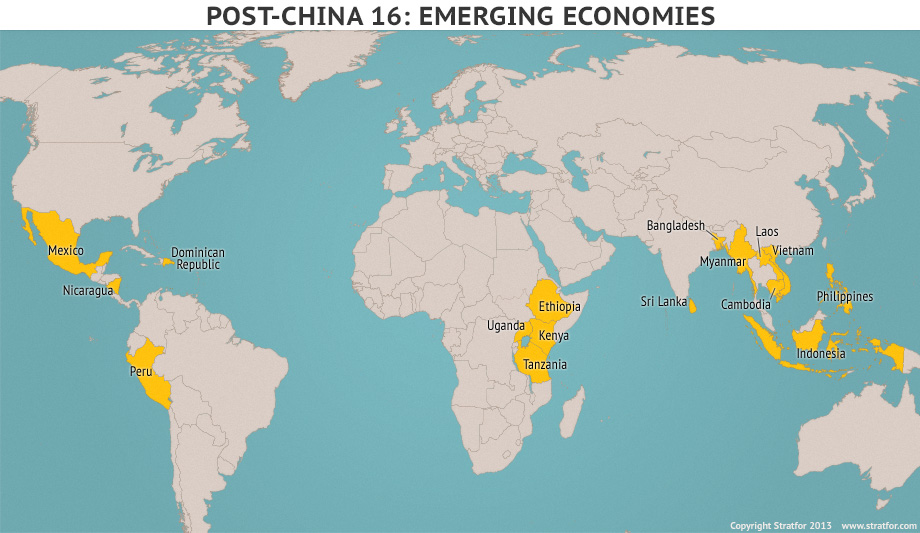
China has become a metaphor. It represents a certain phase of economic development, which is driven by low wages, foreign appetite for investment and a chaotic and disorderly development, magnificent in scale but deeply flawed in many ways. Its magnificence spawned the flaws, and the flaws helped create the magnificence. The arcs along which nations rise and fall vary in length and slope. China’s has been long, as far as these things go, lasting for more than 30 years. The country will continue to exist and perhaps prosper, but this era of Chinese development — pyramiding on low wages to conquer global markets — is ending simply because there are now other nations with even lower wages and other advantages. China will have to behave differently from the way it does now, and thus other countries are poised to take its place. Read more of this post

The German miracle is now running out of road

August 29, 2013 5:01 pm

The German miracle is now running out of road

By Sebastian Dullien

The country’s foundations for doing business are deteriorating, writes Sebastian Dullien

Since the onset of the financial crisis, Germany has found itself envied for itseconomic success. It boasts one of the continent’s lowest unemployment rates and an almost balanced budget. It is also Europe’s manufacturing powerhouse, with a current account surplus that rivals China’s. But ahead of federal elections next month there are signs of complacency: manufacturing is in danger of losing its edge, and none of the big political parties are addressing the causes in their election platforms. Read more of this post

State Street to launch emerging market ETF without BRIC countries

State Street to launch emerging market ETF without BRIC countries

New fund would allow investors to get more exposure to some of the smaller, potentially higher-growth areas of the market

Aug 28, 2013 @ 4:57 pm (Updated 5:00 pm) EST

State Street Corp., the second- largest provider of exchange-traded funds worldwide, is seeking to counter its biggest rivals’ dominance of emerging-market stock ETFs with a fund that excludes Brazil, Russia, India and China, known as the BRIC nations. State Street asked the Securities and Exchange Commission for permission to open the SPDR MSCI Beyond BRIC ETF, according to a regulatory filing dated yesterday from the Boston-based firm. The ETF would invest in developing-market stocks in Chile, Columbia, the Czech Republic, Indonesia, South Africa and Turkey, among others. Read more of this post

$60-Trillion ‘Shadow’ banks face 2015 deadline to comply with first global rules

‘Shadow’ banks face 2015 deadline to comply with first global rules

2:55pm EDT

By Huw Jones

LONDON (Reuters) – The $60 trillion “shadow banking” sector has been given until 2015 to fully comply with its first set of global rules, after an international regulatory task force unveiled plans to curb risk without strangling economic recovery. Leaders of the group of 20 economies (G20) meet in Russia next week to endorse the rules written by their Financial Stability Board (FSB), setting out requirements for the sector and how it must be supervised. Read more of this post

Risk Flipped as CCCs Beat AAAs Most Since 2009; Investors are eschewing bonds with the most to lose when interest rates rise and AAAs are more interest-rate sensitive

Risk Flipped as CCCs Beat AAAs Most Since 2009: Credit Markets

Risk is being turned on its head in the corporate-bond market as debt deemed closest to default beats returns on the highest-rated debentures by the most in four years.

Securities ranked in the CCC tier or lower by Standard & Poor’s have gained 7.1 percent this year, compared with a 5 percent loss for AAA rated debt, according to Bank of America Merrill Lynch index data. AAAs are losing 1.2 percent this month, versus 0.5 percentage point for CCCs. The divergence is making this only the third year since at least 1996 in which the lowest-graded debt produced gains while top-rated bonds lost, the data show. Read more of this post

Join The Booming Dollar Store Economy! Low Pay, Long Hours, May Work While Injured

Dave Jamieson

dave.jamieson@huffingtonpost.com

Join The Booming Dollar Store Economy! Low Pay, Long Hours, May Work While Injured

Posted: 08/29/2013 7:30 am EDT  |  Updated: 08/29/2013 7:49 pm EDT

Dawn Hughey had worked at Dollar General for just four months when she was named manager of a store in the Detroit suburbs in 2009. Having recently moved home after a stint in California, Hughey hoped the new honorific — and its attendant annual salary — would help her start a new life in Michigan. But like other managers in America’s booming dollar store industry, Hughey quickly came to believe she was a manager in name only. The major dollar store chains — Dollar General, Dollar Tree and Family Dollar — have thrived by offering customers rock-bottom prices that rival Walmart’s, a business model that requires shaving labor costs wherever possible. For a manager like Hughey, that meant working far beyond a 40-hour week. Read more of this post

Have emerging markets bottomed out? Emerging economies have yet to report the impact from higher rates and currency falls, which could prompt a further loss of investor confidence and fuel a feedback loop

August 29, 2013 6:53 pm

Have emerging markets bottomed out?

By James Mackintosh

Impact from higher rates and currency falls yet to be reported

There’s an easy way to spot a true deep-value investment. It’s the position you would be embarrassed to present to the investment committee, and definitely would not recommend to a friend. Ideally, clicking to confirm the purchase should make you feel physically sick. Emerging markets (EM) are not one of those screaming bargains. Still, on Thursday they rallied strongly as government intervention in India and a rate rise in Indonesia prompted short-covering in the rupee and rupiah. Both jumped more than 3 per cent, the biggest rise in the rupee in a decade. The question is whether EM have now bottomed out. The recent speed of the fall in the rupee certainly suggests fear. Yet, investors remain ready to search for good value. Serious panic has not set in, and falls in equities, currencies or bonds, while big, are much smaller than in proper crises. EM equities have not even had a one-fifth fall from their peak this year. In dollar terms they are off 16 per cent; in local currency shares are down less than a tenth. But in relative terms EM shares look a steal. They have lagged behind developed market shares in the past three years in a way reminiscent of the aftermath of Lehman’s collapse, the 1997 Asian crisis or the reaction to the 1994 US rate hikes. The valuation discount to developed markets has not been as big since 2005 (on price to book value) or 2006 (for price to forward earnings). EM governments’ willingness to use up currency reserves might support the growing voices suggesting that now is the time to buy. But emerging economies have yet to report the impact from higher rates and currency falls, which could prompt a further loss of investor confidence and fuel a feedback loop. A pause in the selling would give EMs a chance to show they can fix entrenched economic problems. Without that, bulls can only hope global recovery gives EM economies a lift – or watch them become a true value play.

In Turmoil, Emerging Markets Raise Rates; Move by Indonesia Follows Brazil, Turkey; Trend Threatens to Deepen Slowdown

August 29, 2013, 7:51 p.m. ET

In Turmoil, Emerging Markets Raise Rates

Move by Indonesia Follows Brazil, Turkey; Trend Threatens to Deepen Slowdown

THOMAS CATAN in Washington, SHEFALI ANAND in Mumbai and TOM MURPHY in São Paulo

WO-AP208_CENTRA_G_20130829183908

Major emerging-market central banks are moving to raise interest rates in an effort to stem an exodus of cash, in a trend that threatens to intensify an economic slowdown across the developing world. Indonesia raised its benchmark rate by half a percentage point on Thursday, one day after a half-point increase by Brazil and a week after a rate increase by Turkey. Other developing economies are under mounting pressure to tighten credit to support their weakening currencies. Brazil’s central bank hinted at further increases to come. Read more of this post

Horns of a trilemma: How can emerging economies protect themselves from the rich world’s monetary policy?

Horns of a trilemma: How can emerging economies protect themselves from the rich world’s monetary policy?

Aug 31st 2013 |From the print edition

20130831_FNC313

SINCE the beginning of May the Indian rupee has plunged by 23% against the dollar. The Turkish lira fell by 15% in that time, and the Indonesian rupiah by 16%. Headlines warn of a replay of the Asian crisis of the late 1990s. Complaints from emerging-market officials that rich-world monetary experiments are to blame for the trouble look like sour grapes. But new research presented to the world’s top central bankers at their recent gathering in Jackson Hole suggests they may have a point. Read more of this post

GE Set to Exit Retail Lending; Worries About Banking Exposure Has Conglomerate Focusing on Industrial Operations

August 30, 2013, 1:04 a.m. ET

GE Set to Exit Retail Lending

Worries About Banking Exposure Has Conglomerate Focusing on Industrial Operations

KATE LINEBAUGH and SHARON TERLEP

MK-CF933_GECAPI_NS_20130829175113

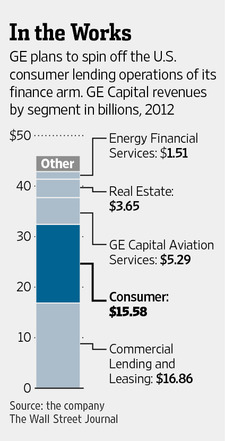
General Electric Co. GE -0.39% is preparing to spin off one of its most important financial assets—the unit that issues store credit cards for 55 million Americans—as it retreats from one of the high-growth businesses that defined the modern conglomerate. The decision to divest the business, amid concerns about the company’s exposure to banking, marks an important moment in the evolution of GE and the country’s three-decade long consumer credit boom. GE Capital expanded to the point that its portfolio of loans and other assets now would rank it as the country’s fifth-largest commercial bank. Read more of this post

Fast-Food Strikes Expand Across U.S. to 50 Cities

Fast-Food Strikes Expand Across U.S. to 50 Cities

Fast-food workers in 50 U.S. cities plan to walk off the job today in an attempt to ratchet up pressure on McDonald’s Corp. (MCD) and Wendy’s Co. to raise wages. Protests that began in New York last year are spreading to cities including Boston, Chicago, Denver, San Diego and Indianapolis, according to the Service Employees International Union, which is advising the strikers. About 200 workers showed up at the two-story Rock N Roll McDonald’s store in Chicago’s River North neighborhood this morning chanting: “Hey hey, ho ho, poverty wages gotta go!” Read more of this post

Limits on Broker Use of Client Assets Sought by Global Regulator

Limits on Broker Use of Client Assets Sought by Global Regulator

Brokers face restrictions on using clients’ assets as collateral for other trades, as part of a push by global regulators to prevent the securities lending market from sparking chain reactions that could cause a crisis. Under recommendations published today by the Financial Stability Board, brokers wouldn’t be allowed to tap client assets for their own trading, and they would have to provide “sufficient disclosure” of plans to use the securities as collateral in other transactions. They would also have to meet minimum standards in managing liquidity risks. Read more of this post

Malaysia Plans Projects-to-Subsidy Curbs to Contain Budget Gap

Malaysia Plans Projects-to-Subsidy Curbs to Contain Budget Gap

Malaysia said it plans to delay infrastructure projects, cut subsidies and may start a consumption tax, seeking to contain the budget deficit and bolster a shrinking current-account surplus. Public building projects with high import content are most likely to be rescheduled, Idris Jala, a minister in the Prime Minister’s Department, told reporters in Kuala Lumpur today. The government may unveil plans to adjust subsidies as early as next week and is trying to include a goods and services tax in its 2014 budget, said Mohd Irwan Serigar Abdullah, secretary general at the finance ministry. Read more of this post

Man, the world’s biggest publicly traded hedge-fund manager, is shutting a range of products that aimed to protect clients from losses after they failed to meet performance targets

Man Shuts Vision Fund in Overhaul of Guaranteed Products

Man Group Plc (EMG), the world’s biggest publicly traded hedge-fund manager, is shutting a range of products that aimed to protect clients from losses after they failed to meet performance targets.

The company decided this month to shut Man Vision Ltd., a $40 million pool that sought to generate returns of more than 10 percent annually, according to an Aug. 12 letter sent to clients and obtained by Bloomberg News. Man Group is also closing similar offerings that, like Vision, were tied to the performance of AHL Diversified, the firm’s biggest hedge fund, said a person with knowledge of the moves who asked not to be identified because they aren’t public. Read more of this post

India finds price of expats’ patriotism elusive as growth fades

India finds price of expats’ patriotism elusive as growth fades

2:37pm IST

By Sumeet Chatterjee and Beth Pinsker

MUMBAI/NEW YORK (Reuters) – The patriotism of wealthy overseas Indians has helped the country avert economic crises in the past and it is little surprise that embattled policymakers are turning to them again to plug a record trade gap that is battering the rupee. This time, though, big investors among the more than 25-million overseas Indian community – the world’s second-largest diaspora – are staying away as the economic outlook darkens and political instability looms ahead of national elections. Read more of this post

Malaysia’s large public funded projects may be rescheduled

Updated: Thursday August 29, 2013 MYT 2:44:34 PM

Malaysia’s large public funded projects may be rescheduled

KUALA LUMPUR: Malaysia’s goods and service tax (GST) will take 14 months to implement if announced in the budget in October, a ministry official said on Thursday, as the government moves to curb its stubborn fiscal deficit and high debt burden. The GST will help Malaysia broaden its tax base and tackle a fiscal deficit that has widened to RM14.9bil, as well as a shrinking current account surplus which fell sharply to RM2.6bil(US$780mil) in the second quarter. Read more of this post

Fed Scaring People Betrays Low-Rate Addiction, Denmark Says

Fed Scaring People Betrays Low-Rate Addiction, Denmark Says

Denmark’s Economy Minister Margrethe Vestager said the reaction to the Federal Reserve’s talk of scaling back stimulus as early as next month has made clear just how addicted people have become to record-low rates. The volatility that followed the Fed’s June signal it may be preparing to taper support measures was a reminder that low borrowing costs are still underpinning demand across much of the globe, Vestager said. Read more of this post

Naming and shaming: Macau website targets deadbeat gamblers

Naming and shaming: Macau website targets deadbeat gamblers

5:59am EDT

By Farah Master

HONG KONG (Reuters) – Hustler, cheater, robber, rogue. Gamblers who skip out on casino debts in Macau risk being branded with these monikers and having personal details made public by a website that says it has helped to recover 50 million yuan ($8 million) so far. But the novel strategy to combat bad debts in the world’s largest gambling destination is under scrutiny from the police for possibly breaking the law and from the Chinese territory’s gaming authority over privacy concerns. The bilingual website, called Wonderful World in English, features a blacklist of more than 70 people from across China who it says have failed to repay gambling debts ranging from thousands to millions of yuan. Photographs of alleged deadbeats, along with their date of birth and marital status, are displayed prominently. A bounty is often offered for help in tracking them down. Read more of this post

Is China’s Cash Crunch Returning?

August 28, 2013, 7:00 PM

Is China’s Cash Crunch Returning?

Is it time for a return of China’s cash crunch?

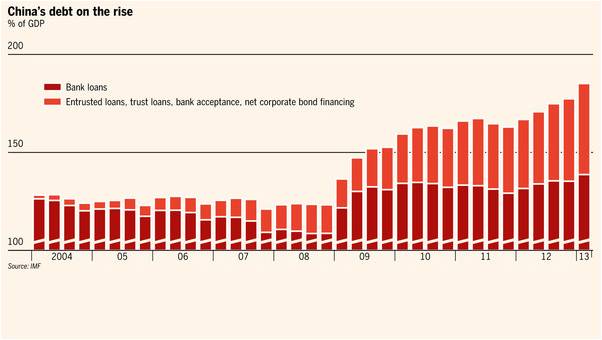
A spike in money-market rates in June raised fears about the stability of China’s financial sector, pushed equity markets sharply lower, and had investors running for cover. A peek at the overlooked role of China’s Ministry of Finance in the money markets suggests another scare might not be far away. The People’s Bank of China has the lead role in managing funds in China’s financial market, but the movement of tens of billions of yuan in tax receipts and public spending in and out of the financial system also has a major impact, and sometimes pulls in the opposite direction of the central bank. Read more of this post

Yet to Buy Into Abenomics, Wives Cut Husbands’ Pocket Money

August 29, 2013, 3:47 PM

Yet to Buy Into Abenomics, Wives Cut Husbands’ Pocket Money

By Kana Inagaki

Japanese men hoping to reap the benefits of the economic upturn with an increase in their monthly spending cash will be disappointed to find this won’t be happening anytime soon. It seems their wives, who typically control family purse strings in Japan, have yet to buy into Abenomics. According to an online survey of 3,300 individuals carried out by Orix Bank Corp. in July, the average monthly spending allowance of men fell by 11% compared with last year’s survey, falling to Y30,468 ($310). Read more of this post

Asia: Storm defences tested

August 28, 2013 7:23 pm

Asia: Storm defences tested

By David Pilling and Josh Noble

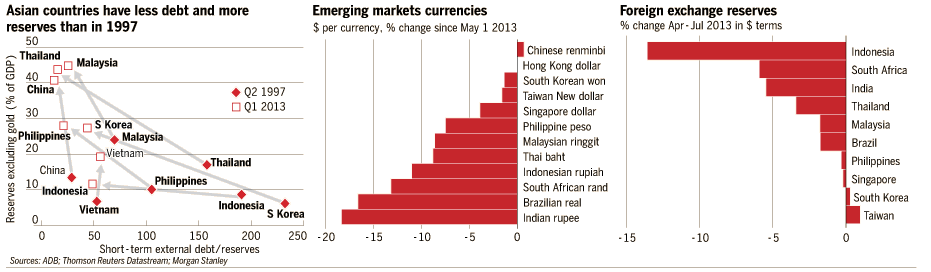
Emerging markets are less vulnerable to shocks than they were in the late 1990s

Asia

These days it seems practically everything is made in Asia. Everything, that is, apart from economic crises. For the moment, at least, those can still be produced in the US. Ever since Ben Bernanke, chairman of the US Federal Reserve, hinted in May that there may be an end in sight to the policy of aggressive monetary easing, emerging markets have been severely tested. Talk of tapering the Fed’s purchase of $85bn a month in government bonds from as early as September has pushed up long-term US interest rates. That in turn appears to have triggered a partial reversal of the carry trade in which investors borrow in dollars to purchase higher-yielding assets, often in emerging markets. Currencies and stock markets around the world, especially in countries with current account deficits financed by fickle capital inflows, have tumbled. Read more of this post

Mao-era thrift shunned for good life on credit

August 28, 2013 5:00 pm

China’s consumers take eagerly to credit

By Simon Rabinovitch in Shanghai

ChinaBorrowers Guiyang Debt

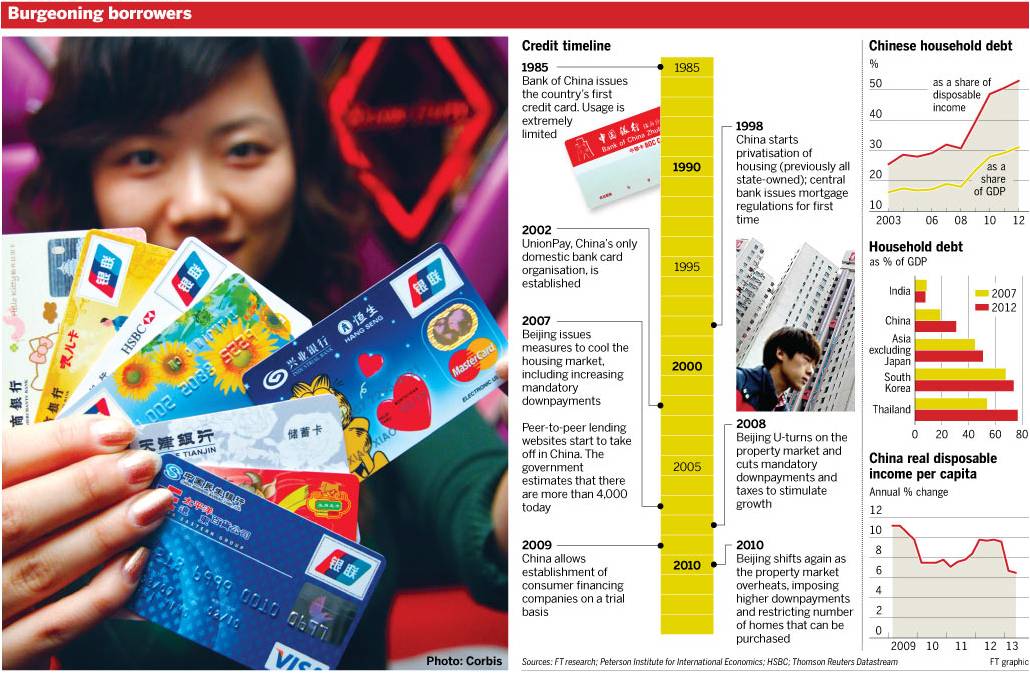
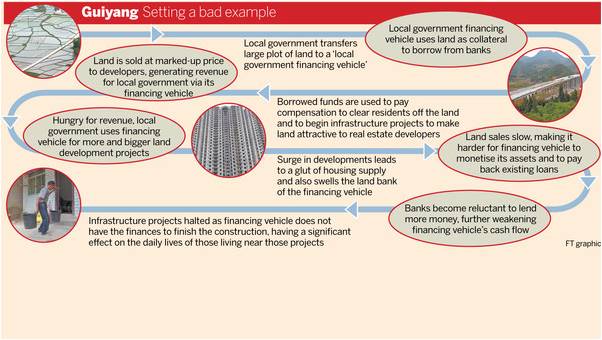
A few years after finishing university, Jack Dai thought he had scored the holy trinity of success for a young Chinese man: a government job, an apartment and a wife. But he had not counted on one additional factor, less visible from the surface, that soon drove a wedge between him and his conception of the good life. To buy his Shanghai house, Mr Dai, 30, took out a hefty mortgage. Monthly repayments now swallow up half his salary. Plus he has the other expenses of Chinese middle-classdom – overseas holidays, shopping excursions, movies and restaurants. Read more of this post

Asia’s Hot-Money Meltdown; Receding capital flows suggest deeper structural flaws in emerging economies.

August 28, 2013, 12:23 p.m. ET

Asia’s Hot-Money Meltdown

Receding capital flows suggest deeper structural flaws in emerging economies.

LIM SAY BOON

Investors are starting to whisper what was unthinkable just a few months ago, that emerging Asia faces another financial crisis. While this remains unlikely, stocks in China, Indonesia, Philippines, and Thailand are already in a bear market that will likely broaden and intensify. The problems are both cyclical and structural, and policy options are limited. The recent stock-market falls and currency routs suggest the coming months will be rough. Singapore’s Straits Times index, Taiwan’s Taiex, Korea’s KOSPI, India’s Sensex and Malaysia’s KLCI have either broken or are breaking below important technical supports, with the likelihood of accelerated losses ahead. There may be corrective rebounds in emerging-market currencies and equities over the coming week or two, but these are likely to be pauses rather than reversals. There are no quick fixes to the savings deficits in the economies worst hit by falling currencies, equities and bond prices. Read more of this post

China SOE Accounting — BAAP Not GAAP Applies

China SOE Accounting — BAAP Not GAAP Applies

2013-08-23 18:16:41

Peter Fuhrman, Chairman and CEO China First Capital

If the last two years of crisis in investing in Chinese companies proves anything, it’s that any Chinese company that pays more tax than it should, documents every transaction and practices the most forensic accounting methods is the one with the calmest, happiest investors. Such companies are very rare among the thousands invested in by private equity, and not very common among publicly-traded ones, if securities regulators in the US and Hong Kong are to be believed. Read more of this post

China Seeks Western-Style Care Amid Explosion of Elderly

China Seeks Western-Style Care Amid Explosion of Elderly

The Chinese increasingly eat, shop and play in ways their Western counterparts would instantly recognize. They’re aging like them too, living longer lives that are often limited by debilitating illnesses. As the almost 200 million population of over-60s more than doubles in the next 40 years, China faces a deluge of infirm elderly who can’t live alone. Nor can they rely on Confucian tradition of children caring for their parents: the country’s one-child policy has left fewer offspring to share the load, while more Chinese are moving away from home to study or work. Read more of this post

New Billionaire Makes Money Off Vietnam-China Cotton Gap; Shanghai-based Texhong Textile (2678) have soared 438 percent in the past 12 months

New Billionaire Makes Money Off Vietnam-China Cotton Gao

A textile maker’s cost-cutting move to shift cotton production to Vietnam has ignited a yearlong rally in its stock, minting a new billionaire in China. Shares of Shanghai-based Texhong Textile Group Ltd. (2678) have soared 438 percent in the past 12 months, boosting the wealth of its co-founder and largest shareholder Hong Tianzhu to $1 billion, according to the Bloomberg Billionaires Index. Hong, 45, hasn’t appeared on any wealth ranking. He owns almost 62 percent of Texhong, which is traded in Hong Kong. He couldn’t be immediately reached for comment by phone. Read more of this post

Harleys With Joysticks End Century of Bike-Design Inertia; Harley cut the product-development cycle to three years from about five or six. By reducing 11th-hour tinkering, the company accelerated the process and lowered the cost

Harleys With Joysticks End Century of Bike-Design Inertia

Road hogs are getting high-tech.

Harley-Davidson Inc. (HOG)’s newest models feature a voice-activated and touch-screen GPS system, the first on a production motorcycle. When the bike is getting low on fuel, the system finds the nearest filling station and maps out directions on a 6.5-inch (16.5 centimeter) screen the rider can control by voice, touch or joystick.

What’s also new is how the company decided what to include: It asked its customers. For the first time, 110-year-old Harley is using customer focus groups and dealer clinics as it develops models and features. Last week, the first wave of new bikes from those changes began arriving in dealerships. Read more of this post