Plane skids off runway as heat melts tarmac in China’s Zhejiang

Plane skids off runway as heat melts tarmac in Zhejiang

Staff Reporter 2013-08-09

d368209-175241_copy1CFP442480826-144212_copy1

The Air China airbus, off the mark. (Photo/CFP); The wheels of the aircraft stuck on the runway. (Internet photo)

Seventy-four passengers aboard an Air China flight ended up off the runway when the plane skidded out of control at Yiwu airport in Zhejiang province in eastern China. Fortunately, no casualties were reported, according to the local Qianjiang Evening Post. The main wheels of flight CA4538 sunk into a pothole as it rolled down the runway when preparing to take off, which effectively disabled the aircraft. The airport was closed immediately after the accident. The passengers on the plane disembarked and the plane was moved onto a safe surface. More than 200 passengers in the airport were transferred to Xiaoshan airport in the provincial capital Hangzhou. The state of the asphalt was attributed to the record-setting heatwave currently affecting Zhejiang and most of south China where temperatures have risen above 40°C.
 

In Deal Hunt, Big-Game Buffett Settles for Small Prey; Berkshire Hathaway Boss Trains His ‘Elephant Gun’ on Junior-Sized Targets With Larger Ones Scarce

Updated August 8, 2013, 4:38 p.m. ET

In Deal Hunt, Big-Game Buffett Settles for Small Prey

Berkshire Hathaway Boss Trains His ‘Elephant Gun’ on Junior-Sized Targets With Larger Ones Scarce

ANUPREETA DAS

MI-BX750_BUFFDE_G_20130808185109

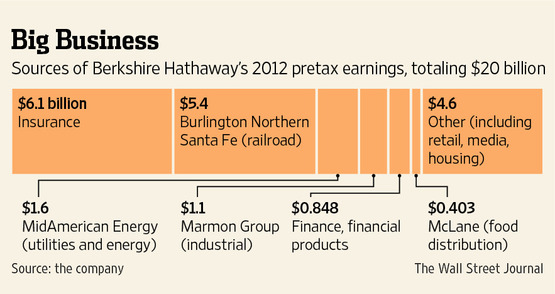
Warren Buffett hasn’t fired his “elephant gun” much recently, but he has put his managers on the hunt for smaller prey. Berkshire Hathaway Inc.’s BRKB +0.72% subsidiary operations collectively spent about $2.3 billion on 26 acquisitions last year, which the company says is a record amount. They have continued that streak this year, acquiring more than a dozen companies in the first half of 2013. Berkshire hasn’t disclosed the amount spent by its subsidiaries on acquisitions this year. With bigger, multibillion-dollar deals few and far between of late, Mr. Buffett increasingly favors such “bolt-on” acquisitions because they increase Berkshire’s earnings and enable it to use its cash pile, which stood at $36 billion at the end of June. Net cash flow from operations rose nearly 36% for the first six months of 2013 from a year earlier, putting greater pressure on Berkshire to use its cash rather than hoard it. In a telephone interview, the Omaha, Neb.-based billionaire investor said he expected these types of deals to be frequent and numerous. “I like the managers finding opportunities,” Mr. Buffett said. Read more of this post

Bill Gross’ Strategy for Combating Rising Rates; The Pimco chief explains how to alter a bond portfolio for a new set of circumstances

THURSDAY, AUGUST 8, 2013

Bill Gross’ Strategy for Combating Rising Rates

By WILLIAM H. GROSS  | MORE ARTICLES BY AUTHOR

The Pimco chief explains how to alter a bond portfolio for a new set of circumstances.

Adaptation is tantamount to survival in the physical world. So argued Darwin, at least, and I am not one to argue with most science and its interpretation of natural laws. Adaptation has been critical as well for the survival of countries during wartime, incidents of which I am drawn to like a bear to honey, especially when they concern WWI. Stick with me for a few paragraphs on this – the following is not likely to be boring and almost certainly should be instructive. In the first decade of the 20th century, British war colleges and their generals were philosophically trapped by the successful strategies of a prior era – an era before the invention of a functional machine gun. They felt that machine guns might dampen the spirit of their fighting forces. What counted was the horse and the sword. Britain’s cavalry training manual of 1907 in fact stated that “the rifle or machine gun, effective as it is, cannot replace the devastation produced by the speed of the horse, the magnetism of the charge, and the terror of cold steel.” Read more of this post

LKY: Mao Promoted Perpetual Struggle; Deng Saved China from Chaos

Mao Promoted Perpetual Struggle; Deng Saved China from Chaos

by Lee Kuan Yew | Aug 8, 2013

Mao’s successor drew lessons from Singapore’s economic development

topimg_22207_lee_kuan_yew_300x400

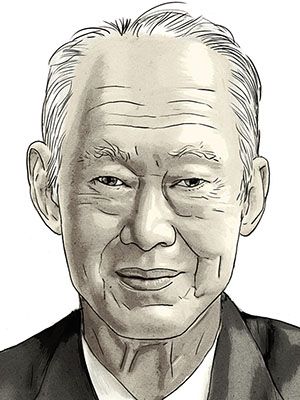
On October 1, 1949, at the Gate of Heavenly Peace in Beijing, Mao Zedong, leader of the Communist Revolution, declared the founding of the modern People’s Republic of China. Mao was an idealist who strove for constant class struggle as a way to keep the Chinese from becoming bourgeois. At the height of the Cultural Revolution, in 1967-69, schools and universities were closed, and children were encouraged to hit and rebel against their parents. Mao was, of course, a famous leader and liberator, but he was less practical when it came to governing the country.

More practical was Deng Xiaoping, who quietly took control after Mao’s death, calmed the country and concentrated on its economic development. Were it not for him, China might well have broken apart. Read more of this post

Discount Grocery Chain WinCo Touted As ‘Wal-Mart’s Worst Nightmare’ with a business model that allows for cheaper prices

A Discount Grocery Chain Is Being Touted As ‘Wal-Mart’s Worst Nightmare’

ASHLEY LUTZ AUG. 8, 2013, 5:32 PM 5,562 30

A discount grocery chain is being called “Wal-Mart’s worst nightmare.” WinCo, a Western grocery chain with about 100 stores, has a business model that allows for cheaper prices than Wal-Mart, writes Brad Tuttle at Time.  WinCo keeps costs low by buying directly from suppliers and eliminating middlemen, according to Tuttle. It also doesn’t accept credit cards and has customers bag their own groceries. A recent Idaho Statesman article about WinCo quoted retail analyst Burt Flickinger III as saying that WinCo was “unstoppable.” “They’re Wal-Mart’s worst nightmare,” Flickinger said.  Much like Costco, WinCo offers a minimalist selection instead of a wide array of brands according to Time. For instance, WinCo might only carry two brands of toothpaste, while Wal-Mart has more than 40. Unlike Wal-Mart, whose employees have demanded better wages, the company provides health benefits to employees who work 24 hours per week and a pension. WinCo is expanding fast, and could convert Wal-Mart’s customers, according to Time. “Generally speaking, shoppers tolerate Walmart’s empty shelves and subpar customer service because the prices are so good,” Tuttle writes. “The fact that another retailer—even a small regional one—is able to compete and sometimes beat Walmart on prices, while also operating well-organized stores staffed by workers who enjoy their jobs, like their employer, and genuinely want the company to be successful.”

Nestlé Feels Commodity Crunch; Missed Sales Expectations Four Quarters in a Row; Nestlé got a serious lift over the past few years from rising commodity costs. It was able to pass these on, and perhaps a bit more, to consumers

August 8, 2013, 2:39 p.m. ET

Nestlé Feels Commodity Crunch

Sales Expectations Have Been Missed Four Quarters in a Row, and a Couple More May Be Needed to Get Back on Track

JOHN JANNARONE

Nestlé NESN.VX -2.16% shares are a bit like its sugary treats: After providing a burst of energy, they have left investors in a funk. The Swiss food conglomerate fell short of revenue expectations for the fourth quarter in a row Thursday, when it reported results for the three months through June. Nestlé acknowledged that it will be “a stretch” to achieve 5% organic sales growth this year, meaning it may miss its typical 5%-6% target. That suggests Nestlé got a serious lift over the past few years from rising commodity costs. It was able to pass these on, and perhaps a bit more, to consumers. But prices of many inputs like sugar have declined over the past several months. That leads to competitive pressure that erodes pricing power. As Andrew Wood of Sanford C. Bernstein points out, Nestlé’s second-quarter pricing growth of 0.8% was the lowest in a decade. It is hard to guess when commodity prices will rebound. Emerging-market growth, a big driver of commodity demand, has cooled and may take a couple of years to resume. Read more of this post

Goldman: China might face credit losses of up to 18.6 trillion yuan ($3 trillion), because the speed of its credit expansion has exceeded that seen prior to other credit crises in history

Credit losses may hit $3 trillion, bank says

Updated: 2013-08-09 07:25

By Wang Xiaotian ( China Daily)

Goldman Sachs report warns of ‘shadow banking‘ risk elements

China might face credit losses of up to 18.6 trillion yuan ($3 trillion), because the speed of itscredit expansion has exceeded that seen prior to other credit crises in history, Goldman SachsGroup Inc has warned. In a report dated Aug 5, it said the rapid pace of China’s credit expansion, increasingly sourcedfrom the inherently more risky and less transparent “shadow banking” sector, has become atop concern for global markets. “Our Asian economists and strategists recently published a comprehensive look at this concernand its implications for economic growth and asset performance in China, calculating that anextreme upper-bound for total China credit losses could amount to 18.6 trillion yuan,” the reportsaid. But actual credit losses are likely to be significantly lower than these worst-case figures,emerge gradually and be partially absorbed by bank earnings or other avenues, it added. Read more of this post

China’s Urban Sludge Dilemma: Sinking in Stink; Trucks are dumping sludge on melon fields near Beijing, highlighting a nationwide struggle with waste

08.08.2013 16:12

China’s Urban Sludge Dilemma: Sinking in Stink

Trucks are dumping sludge on melon fields near Beijing, highlighting a nationwide struggle with waste

By staff reporter Cui Zheng and intern reporter Liu Zhiyi

Promptly at noon on March 17, a heavy truck hauling a dark substance and on a dark mission pulled out of the Gaobeidian Wastewater Treatment Plant in eastern Beijing. A wastewater treatment engineer helped a Caixin reporter identify the unusual load, which jiggled in the truck’s bed like gelatin as the driver headed down a bumpy road. The substance was unprocessed sludge – a mucky, smelly and hazardous byproduct of the sewage treatment process. Anything less disgusting coming out of the Gaobeidian plant, the engineer said, would not have jiggled. Gaobeidian is one of the largest wastewater plants in China and the biggest in Beijing, serving the capital’s downtown business district and industrial zones along with about 2.4 million household residents. It handles some 40 percent of Beijing’s wastewater, and has a daily wastewater capacity of about 1 million cubic meters. The plant is one of many built over the past seven years as part of a 500 million yuan, central government push to upgrade wastewater treatment nationwide. The investment has shown some good results: The collective sewage treatment capacity in China’s counties, for example, has risen to more than 70 percent. Read more of this post

Why Health Care for All is Still a Joke in India

Why Health Care for All is Still a Joke in India

by Seema Singh | Aug 9, 2013

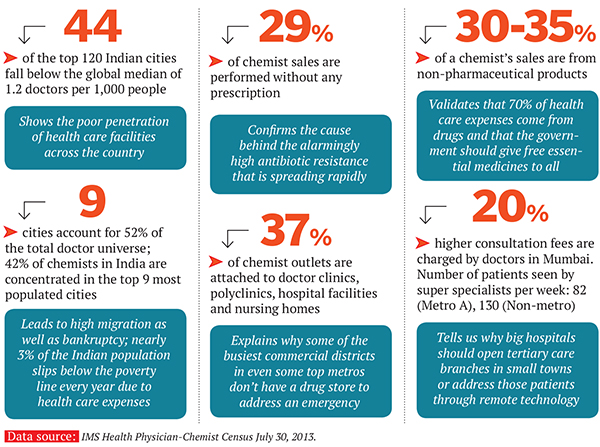
IMS Health, which provides information and services for health care, unveiled India’s first physician-chemist census in order to fill gaps in the health care value chain. The census covered 120 cities, 3.73 lakh doctors and 99,000 chemists. We list some key findings that point towards the skewed reach of medical care and decode what the numbers mean.

V5_I17_Page_6_Final.indd


China’s crazy love affair with steel is a scary example of how its finances could implode

China’s crazy love affair with steel is a scary example of how its finances could implode

By Gwynn Guilford @sinoceros 10 hours ago

So maybe China’s not collapsing—in fact, it might be stabilizing. At least, that’s what China’s unexpectedly strong July trade data hints. Exports rose 5.1% year-on-year in July, more than analysts expected. Imports, though, were the real shocker, surging 10.9%, to hit $168 billion. But wait—what exactly was China importing so furiously in July? Heaps of iron ore, it seems. Imports of the metal leapt to a record 73.1 million tonnes (80.5 million tons), up 26.7% on the previous year. That’s more than it imported during the many months of the infrastructure bonanza between 2009 and 2012, when the government pumped $11.2 trillion into the economy: Some think this means the economy is stabilizing; “steel demand is quite strong” (paywall), Maquarie analyst Graeme Train said. But it’s weird, because China’s businesses really don’t need new steel. It’s so hard to find buyers that steel mills are now storing 225,000 tonnes of steel, up 1.8% from last year. By one estimate the industry has a fifth more production capacity than it needs. And of China’s major steel mills, 40 out of 86 operated at a loss in H1 2013. Read more of this post

In Export Boom, U.S. Cities Sell to the World

In Export Boom, U.S. Cities Sell to the World

By Dorothy Gambrell on August 08, 2013

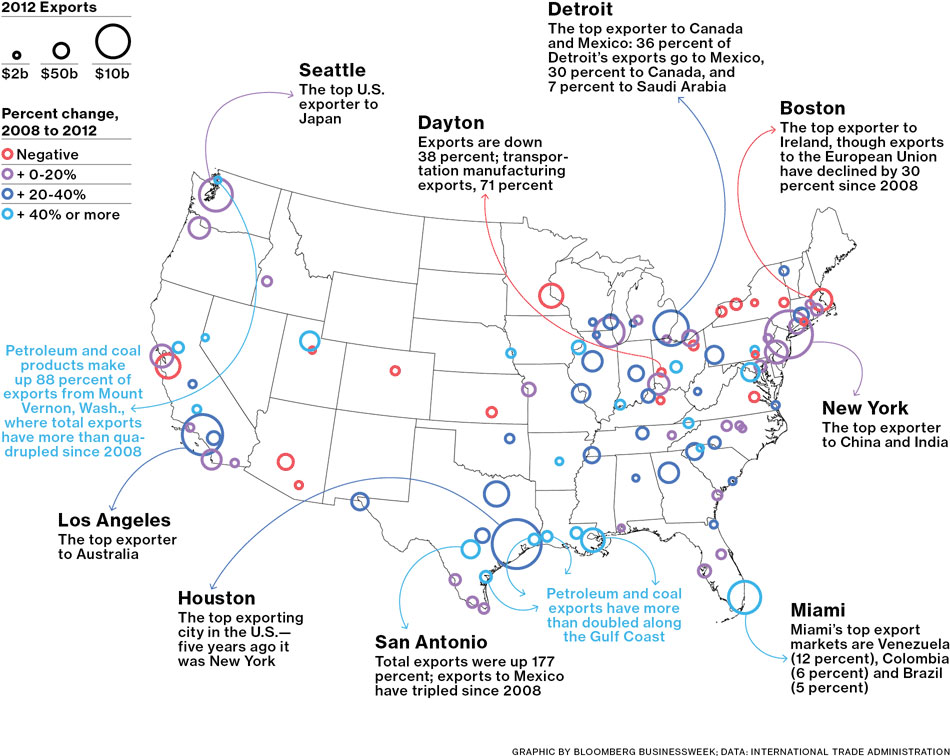
U.S. exports in June increased to an all-time high. While most of the big coastal cities did well, metropolitan areas on the Gulf stand out for their thriving oil and gas business.

econ_exports-chart33__01__950


Kiwi IT-millionaire Tim Williams was the first foreigner to list a company ValueCommerce on the Japanese stock exchange

Tim Williams: Japan’s Internet Pioneer

By Skye Wishart, July 22, 2013 @ 11 am

Kiwi IT-millionaire Tim Williams was the first foreigner to list a company on the Japanese stock exchange – a wild ride that taught him business and gave him a lifelong bent to jump into an unfamiliar industry. We interviewed him in the lead up to his role as a judge in the New Zealand International Business Awards 2013. Twenty-three-year old molecular geneticist Tim Williams’ plan was not to jump into IT, but to study Chinese medicine in Beijing – and strike it rich by engineering the raw components. But on the way over there, a stop-off in Japan foiled his plans – he loved the culture and stayed, teaching English for a couple of years. That is, until he met fellow Kiwi Jonathan Hendriksen, and together they decided to start a business in internet hosting. Back in 1996, the Internet was still quiet in Japan, and the boys set up the first domestic rental server company in the country. Read more of this post

Finalists of 2013 NZ International Business Awards

FINALISTS NAMED IN 2013 NEW ZEALAND INTERNATIONAL BUSINESS AWARDS

A revolutionary diabetes detection system and a digital DJ software platform are among the unique range of solutions produced by the 29 finalists in this year’s 2013 New Zealand International Business Awards. Celebrating the passion, vision and new approaches that New Zealand businesses are taking to achieve international success, the Awards are run by New Zealand Trade and Enterprise (NZTE) and strategic partner ANZ. Other finalists include a business offering 3D modelling technology for use in hydrogeological and geothermal exploration, a company whose handmade educational tools for children are sold in Harrods and MoMa, a burger venture taking on the Middle East, a business that manufactures precision electro magnets used in touchscreens, whiteware and medical systems, and a number of agricultural and ICT-focused companies. Also of note this year are the two winery finalists – the first time in four years a winery has made it to the finalist stage of the Awards. Read more of this post

China’s Worst Nightmare Is Turning Japanese

China’s Worst Nightmare Is Turning Japanese

Few words strike greater fear in the hearts of economists and politicians than “Japanization.” That specter of chronic malaise, deflation and bad debt has driven central bankers from Ben S. Bernanke in the U.S. to Mario Draghi in Europe to flood markets with liquidity in an effort to avert their own lost decades.

It should worry China, then, that experts on this dreaded scenario are turning their attention to Beijing. Take Brian Reading, whose quest to understand what the world can learn from Tokyo’s mess dates back to his prescient 1992 book “Japan: The Coming Collapse.” He recently wrote a 40-page report with Lombard Street Research Ltd. colleague Diana Choyleva titled “China’s Chance to Avoid Japan’s Mistakes.” Read more of this post

In wake of cash crunch, PBOC commits to transparency but quietly tightens grip to become more controlling and secretive

In wake of cash crunch, PBOC commits to transparency but quietly tightens grip

Wed, Aug 7 2013

By Lu Jianxin and Pete Sweeney

SHANGHAI (Reuters) – China’s central bank has publicly committed to becoming a better communicator after a cash crunch that it engineered spooked global financial markets in June, but traders say its behavior has become more controlling and secretive. “There is a vicious cycle in China’s reform process,” said a senior trader at a Chinese state-owned bank in Beijing. “A deregulation move often creates a mess in the newly liberalized market. Then the consequent re-tightening suppresses the market again.” Read more of this post

China’s ailing bad debt market cries for change

China’s ailing bad debt market cries for change

Thu, Apr 26 2012

By Koh Gui Qing

BEIJING (Reuters) – Veteran investor Jack Rodman has had enough. After waiting 11 years for China to sell its rising pile of bad bank loans, he is quitting and going to Spain instead. His pull-out exposes a pressing failing in China’s booming financial sector: it does not properly dispose of a growing store of bad loans from banks’ profligate lending, keeping risks pent up within the world’s second-biggest economy. And the problem only scratches the surface of deeper troubles plaguing China’s banking industry, where heavy government intervention has produced a dysfunctional system that is at times better at destroying capital than creating it. The frozen market for bad loans shows just that. Read more of this post

Daniel Yergin: China’s Big Commodity Chill

August 8, 2013, 7:12 p.m. ET

Daniel Yergin: China’s Big Commodity Chill

With the end of the supercycle, copper prices have dropped 30% from their 2011 peak, and iron ore is down 32%.

DANIEL YERGIN

ED-AR110_YERGIN_G_20130808190424

Though it was summertime, a tinge of ice was in the June air at this year’s St. Petersburg International Economic Forum. “There is no magic wand we can wave,” said Russian President Vladimir Putin, acknowledging the abrupt drop in Russia’s growth rate. “Prices for our main exports rose fast” for many years, he told the forum, but now “the situation has changed. There are no magic solutions.” What is giving Russia and many other countries the shivers is the China Chill that is the result of the slowing Chinese economy. It means a recalibration for the world’s exporters, who have come to count on vigorous Chinese demand. It will be a particular challenge for commodity exporters. Over the past decade, they have been the great beneficiaries of the commodity “supercycle”—the combination of accelerating demand and rising commodity prices that have delivered GDP growth. With China’s slowing, the supercycle is over, meaning tough choices ahead. Read more of this post

Norway’s sovereign wealth fund expands its activist role; about 60 per cent invested in equities, the fund owns on average 1.25% of every listed company in the world. Its average stake in European companies is 2.5%

August 8, 2013 11:00 pm

Investor muscle

Norway’s sovereign wealth fund expands its activist role

For most savers, passive investing makes better sense than trying to beat the markets. For the world’s biggest sovereign wealth fund with $760bn or so of assets, passive is hardly an option. Norway’s steps to becoming a more active shareholder are logical – and may benefit other investors as well. When Norway’s SWF received its first injection of North Sea oil revenue in 1996, it was a largely passive, index-tracking investor, which outsourced precise portfolio decisions to external investment managers. This made sense at the time. The amounts invested were relatively small. Investment expertise was still thin at the central bank – the fund’s institutional home. Read more of this post

Chi-X Global and SBI Japannext set sights on South Korea; South Korea is the third-largest equities market in the region after China and Japan by volume

August 8, 2013 12:33 pm

Chi-X Global and SBI Japannext set sights on South Korea

By Jeremy Grant in Singapore and Simon Mundy in Hong Kong

South Korea is set to become the third Asian equities market to open to competition between exchanges and upstart trading venues after Chi-X Global and SBI Japannext, both backed by large banks, said they were exploring entering the country. The moves are a sign that the breaking of longstanding national exchange monopolies and equity market fragmentation – a trend that has swept Europe in the past six years – is gathering pace in Asia. Japan Exchange, formed from the recent merger of the country’s two largest bourses in Tokyo and Osaka, already competes with Chi-X and SBI Japannext in share trading. Australia’s ASX faces off against Chi-X Australia. South Korea is the third-largest equities market in the region after China and Japan by volume, and it offers trading in some of the most liquid stocks such as electronics maker Samsung. Read more of this post

Cash lure to stop firms deserting ETFs in times of stress

August 8, 2013 2:39 pm

Cash lure to stop firms deserting ETFs in times of stress

By Arash Massoudi and Tracy Alloway in New York

On Wall Street, it seems money talks. Three years after the “flash crash” that sent prices of exchange traded funds reeling, US stock exchanges say they have worked out a way to motivate the financial firms that are supposed to ensure smooth trading in ETFs: pay them more.

Two of the biggest venues for trading US ETFs are readying pilot programmes that they hope will encourage better behaviour from the top “market-makers” of the funds – financial firms such as Goldman Sachs and KCG. Read more of this post

After Going All In During Mining Boom, BHP Cuts Its Ambitions

AUGUST 8, 2013, 2:38 PM

After Going All In During Mining Boom, BHP Cuts Its Ambitions

By WILLIAM MACNAMARA

BHP Billiton, the world’s largest mining company, was willing to spend big in early 2012. It was building new mines and upgrading old ones, at a cost of $18 billion. It considered a potential expansion of its copper and uranium mine, Olympic Dam, which could have cost as much as $20 billion. It proposed a deepwater extension of Port Hedland, its iron ore port, an estimated $10 billion or more. But BHP has significantly scaled back its ambitions in the last year, replacing its multibillion-dollar spending spree with an austere program of cost cuts and efficiency drives. It shelved the plans for Port Hedland and Olympic Dam, both in Australia, noting the need to find “a less capital-intensive design.” The mergers and acquisitions department is now referred to as the “D department” internally, to signify its focus on disposals, according to a person close to BHP who spoke on the condition of anonymity. Read more of this post

Russia’s Stimulus Plan: Open the Gulag Gates to unlock the tens of thousands of business owners

August 8, 2013

Russia’s Stimulus Plan: Open the Gulag Gates

By ANDREW E. KRAMER

MOSCOW — A business owner in Russia has a better chance of ending up in the penal colony system once known as the gulag than a common burglar does. More than 110,000 people are serving time for what Russia calls “economic crimes,” out of a population of about three million self-employed people and owners of small and medium-size businesses. An additional 2,500 are in jails awaiting trial for this class of crimes that includes fraud, but can also include embezzlement, counterfeiting and tax evasion. But with the Russian economy languishing, President Vladimir V. Putin has devised a plan for turning things around: offer amnesty to some of the imprisoned business people. Read more of this post

Korea Pension Scraps Minimum Broker Fee to Reduce Trading Costs; The fund holds about 6% of publicly traded shares in the $1.1 trillion equity market

Korea Pension Scraps Minimum Broker Fee to Reduce Trading Costs

South Korea’s National Pension Service, the biggest investor in the country’s equity market, scrapped the minimum fees it pays brokers to execute stock trades as the fund seeks to reduce transaction costs.

NPS, the nation’s largest pension fund, ended its policy of paying a minimum 0.15 percent fee as of last month, Lee Yun Ji, a spokeswoman for the fund in Seoul, said in a phone interview today. Brokers will need to “write down” their fees and the new policy will spur competition for commissions, Lee said. Samsung Securities Co. (016360) and Mirae Asset Securities Co. (037620) retreated in Seoul trading today, while the Kospi Index rose 0.3 percent. Read more of this post

Public Pension Shortfalls Are Everyone’s Problem

Public Pension Shortfalls Are Everyone’s Problem

The pension liabilities that helped bankrupt Detroit have cast a harsh light on similar problems in Chicago and other large American cities, adding urgency to the question of who should close the shortfall. This is a challenge that public-sector workers and retirees shouldn’t bear on their own.

The public pension problem is by now well known. Detroit’s emergency manager estimates its unfunded liabilities at $3.5 billion, about a fifth of the city’s debt. As of last year, Chicago had funded just 36 percent of its pension obligations, while, as of 2011, Philadelphia had put aside just 50 percent of its promised benefits. Read more of this post

Elon Musk’s Fortune Soars $570 Million as Tesla Beats Estimates

Elon Musk’s Fortune Soars $570 Million as Tesla Beats Estimates

Elon Musk’s fortune soared $570 million yesterday as shares of Tesla Motor Inc. (TSLA), the electric-car company he co-founded in 2003, rallied 14 percent after posting second-quarter results that surpassed analysts’ estimates on a surge in Model S sedan deliveries. Musk has a net worth of $7.7 billion, according to the Bloomberg Billionaires Index, up more than 220 percent year-to-date. He’s the world’s 162nd richest person. The company on Wednesday reported an operating profit of 20 cents a share, including 15 cents related to a leasing program. Even without that provision, results exceeded the average of 10 analysts’ estimates for a 20-cent loss, according data compiled by Bloomberg. On its operating basis, Tesla said it will make money all year, even as it expands to Europe and Asia.

Read more of this post

Subaru’s 412% Surge Leads Carmaker to Debate Niche Status

Subaru’s 412% Surge Leads Carmaker to Debate Niche Status: Cars

What car company’s stock has risen the most — fivefold — since the beginning of 2012? Besides Tesla Motors Inc. (TSLA)

It’s Fuji Heavy Industries Ltd., maker of Subaru.

Profits and sales are heading toward records after the company benefited more than most Japanese carmakers from the weakening of the yen and as new models such as the BRZ sports car have become so popular that U.S. consumers need to wait months to get one. The success is leading President Yasuyuki Yoshinaga to worry whether the niche maker of all-wheel-drive vehicles is getting too big. Read more of this post

Assessing the scale of metal warehouse trades

Assessing the scale of metal warehouse trades

Izabella Kaminska | Aug 08 08:59 | 1 comment | Share

Earlier this week Morgan Stanley published an in depth look into the financing warehouse trades in metals — the ones most analysts have been in denial about (at least publicly) for at least five years — and why they are now, thanks to new LME proposals, finally easing. The note is titled: “Beginning of the end in warehouse trades: A game changer for base metals”. There were three notable observations.

First, it’s not just banks that should be blamed for fuelling the queue and inventory over-financing problems. Part of the problem is related to the general demise of independent warehouse operators in the metals industry. That is to say, there aren’t enough warehouse owners who do not have conflicting interests as traders or bankers on top of their warehousing businesses: As has subsequently become clear, domination of a good delivery point through the ownership of the majority of multiple warehouse units licensed to receive a particular metal in a given location is a necessary condition for controlling metal inflow, outflow and associated rental cash flow that is the foundation of warehouse rental and financing deals. In addition, a sizeable balance sheet and an active involvement in physical trading as a means of engaging in inventory finance or warehouse incentive deals became a sufficient condition of this domination. Not surprisingly, the lessons and opportunities provided by the Metro acquisition were not lost on the big physical commodity trading houses, which, in a short space of time from March 2010 onwards, bought the majority of the remaining independent LME warehousing businesses. Read more of this post

Hong Kong Ex-Minister Gets Suspended Sentence for Fraud

Hong Kong Ex-Minister Gets Suspended Sentence for Fraud

Hong Kong’s former development secretary Mak Chai-kwong received a suspended sentence for his role in defrauding the government of more than HK$700,000 ($90,249) of housing allowances during the 1980s. District Court Judge Johnny Chan gave Mak and former assistant director of the highway department Tsang King-man sentences of eight months each, suspended for two years. Mak and Tsang were convicted in June of concealing that they had an interest in apartments that they leased from each other’s wives in order to claim the allowances. Read more of this post

South Korea Sees Creativity as Key to Growth

August 8, 2013, 4:41 PM

South Korea Sees Creativity as Key to Growth

By Jaeyeon Woo

The South Korean government unveiled this week a set of long-term plans to foster creative talent, which the government considers one of the most important factors for the country’s future growth. The decision came amid the acknowledgement that the current education system is not conductive to producing out-of-box thinkers. “The government realized the education and hiring environment of today has its limitation in encouraging creative talents,” read a statement released by the Ministry of Science, ICT & Future Planning, Ministry of Education and Ministry of Employment and Labor on Wednesday. Read more of this post

Monks to Lip-Jobs to Help S. Korea Lift Revenue for Welfare

Monks to Lip-Jobs to Help S. Korea Lift Revenue for Welfare

South Korea plans to tax monks and cosmetic surgery on lips, jaws and ears, as it digs for fresh revenue to cover rising social welfare costs.

The proposed changes would add a 4 percent levy on religious honorariums from 2015 and a 10 percent value-added tax on cosmetic surgeries from next year, the finance ministry said in a statement today in Sejong. The plans would also change tax-deduction rates on spending on medical and education expenses from next year, shifting the burden toward higher-income groups. Read more of this post