As Pollution Worsens in China, Solutions Succumb to Infighting

March 21, 2013

As Pollution Worsens in China, Solutions Succumb to Infighting

By EDWARD WONG

Pollution-articleLarge

Smog veiled the China Central Television Building in Beijing last week. Air pollution hit record levels in north China last month.

BEIJING — China’s state leadership transition took place this month against an ominous backdrop. More than 13,000 dead pigs were found floating in a river that provides drinking water to Shanghai. A haze akin to volcanic fumes cloaked the capital, causing convulsive coughing and obscuring the portrait ofMao Zedong on the gate to the Forbidden City.

So severe are China’s environmental woes, especially the noxious air, that top government officials have been forced to openly acknowledge them. Fu Ying, the spokeswoman for the National People’s Congress, said she checked for smog every morning after opening her curtains and kept at home face masks for her daughter and herself. Li Keqiang, the new prime minister, said the air pollution had made him “quite upset” and vowed to “show even greater resolve and make more vigorous efforts” to clean it up.

What the leaders neglect to say is that infighting within the government bureaucracy is one of the biggest obstacles to enacting stronger environmental policies. Even as some officials push for tighter restrictions on pollutants, state-owned enterprises — especially China’s oil and power companies — have been putting profits ahead of health in working to outflank new rules, according to government data and interviews with people involved in policy negotiations. Read more of this post
LME copper inventories at 10-year high; Level is the highest since China’s industrialisation was in its infancy

March 21, 2013 8:02 pm

LME copper inventories at 10-year high

By Jack Farchy in London

Copper inventories on the London Metal Exchange have risen to their highest level since 2003, in the latest sign of the copper market’s shift into oversupply.

LME copper stocks have risen 165 per cent since October, amid an increase global mine production and slower purchases from China, which has seen a rapid build-up of copper stocks in recent years.

On Thursday stocks on the LME rose 6,625 tonnes to 557,450 – the highest since October 2003, when the commodities supercycle driven by China’s industrialisation was still in its infancy.

Although LME stocks only represent one chunk of global inventories, they are closely watched by traders and analysts as an indication of the amount of surplus metal that is readily available to deliver into the market. Read more of this post

Offshore Marine Boom? Oil rig engineering specialist Lamprell posts $110m loss on cost overruns

March 21, 2013 4:31 pm

Lamprell posts $110m loss on cost overruns

By Michael Kavanagh

Picture2Picture1

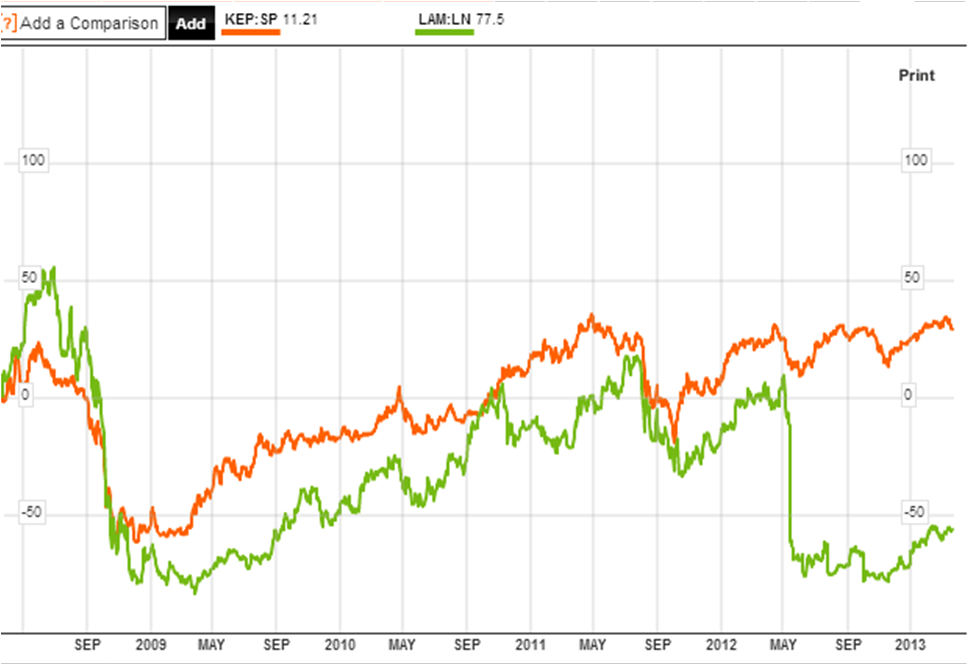
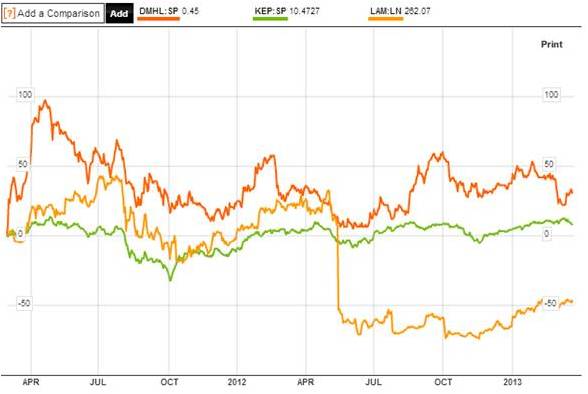
Lamprell, the specialist engineering group, set out plans for a return to break-even on trading this year after delivering a $110m loss prompted by cost overruns and penalties on key projects.

The Dubai-based contractor, which specialises in oil and gas rig construction and repair and the building of vessels used to install wind turbines, was on Monday fined £2.4m by the Financial Services Authority for failing to update the market properly on its worsening financial position in early 2012. Read more of this post

China’s rail reform skirts big question: Who pays? China’s massive high-speed rail expansion is likely to cost over $100 billion a year. The funding for it has been pure folly.

China’s rail reform skirts big question: Who pays?

March 21, 2013: 12:36 PM ET

China’s massive high-speed rail expansion is likely to cost over $100 billion a year. The funding for it has been pure folly.

By John Foley, Reuters Breakingviews

FORTUNE — China’s massive rail expansion is good for the economy. Burying it under $420 billion of debt isn’t. The long awaited dismantling of China’s sprawling Ministry of Railways and creation of a new rail company, announced on March 10, is a good moment to change track.

A grand plan to double track length to 120,000 kilometres between 2010 and 2015 is likely to cost over $100 billion a year. It’s worth it. As well as comfort, prestige and low emissions, rail is the ticket to better urbanization. A recent World Bank report calculated that the benefits to a city of better connectivity from high-speed rail could be almost as large as those from saving passengers time and operating costs.

The funding, though, has been pure folly. Projects depend on borrowing from Chinese state banks and issuing bonds — which in turn are mostly bought by the banks. The resulting debt, on a notional 6% interest rate, would require $25 billion a year of interest payments. Passengers aren’t rich enough to cover that cost. Read more of this post

IMF: borrowing is back to pre-crisis levels; Meier didn’t actually invite listeners to read between the lines of all the numbers he was presenting, but the meaning was clear to the veterans in the auditorium.

IMF: borrowing is back to pre-crisis levels

22 March 2013

Author: Simon Osborne

Are we meant to cheer, or boo? Borrowing is back to where it was in 2007. In Asia, gearing ratios are back at 96%, the same level as they were pre-crisis. Is that good or bad? Was it not borrowing that got us into this fine mess? “It might be ok now, but given a few years of that trend, that view might change,” says Andre Meier, the International Monetary Fund’s resident representative in Hong Kong, at the Private Equity International Asia Forum. He adds the Chinese are gearing up, last year recording 17% bank loan growth, 80% for Trust loans, 40% for corporate bonds and 30% for entrusted loans. He looked mellow about the bank loan growth, but was that a flicker of a conservative frown for the other three? “These markets are yet to be tested in strained scenarios. For example, there has been no default yet in Chinese domestic corporate bonds.” He pointed a stern finger at a slide with vertiginous lines showing that Dim Sum Bond issuance was $25bn in 2011, $250bn now, and QFII was $75bn in 2011, $140bn now. “The average ratio of credit to GDP is higher now than it was in 1997, the boom is striking.” All those in the audience who were in high school in 1997 smiled. Yes, yes, this is all good news of boom and prosperity……….isn’t it? Capital flows in funds are rushing back to Asia at a rate of $1.75bn per week this year, compared to outflows in 2011. That money is chasing the 7.5% GDP growth that the IMF predicts for Asia in each of the next two years. However, if some “reversal” took place, (could he mean a once-in-a-century crisis that-nobody-sees-coming that now seems to happen every other year), then Asia is vulnerable, as money could be pulled out again. Non-resident holdings of Indonesian, Malaysian and Thai government debt are at 35%, 30% and 25%. Would foreigners whisk their money out of Asia if something goes wrong? Tick, that sounds plausible. He sees less tail risk in Europe, thanks to the ECB medicine in 2012, and growth being shored up elsewhere, and a slump being prevented – by the Bank of England quadrupling the size of its balance sheet, and the Fed multiplying its by 3.5x. Meier didn’t actually invite listeners to read between the lines of all the numbers he was presenting, but the meaning was clear to the veterans in the auditorium.

Because of bias and ignorance, Western companies in Singapore have failed to build up local leadership and talent in their management

PUBLISHED MARCH 22, 2013

Western firms don’t build up local talent: study

Their competitive edge in Asia may be hurt in long haul if such practices stay

BY CHUANG PECK MINGPRINT |EMAIL THIS ARTICLE

[SINGAPORE] Because of bias and ignorance, Western companies in Singapore have failed to build up local leadership and talent in their management, says a study backed by the Tripartite Alliance for Fair Employment. And it warns that this may blunt the competitive edge of these multinational corporations in Asia in the long haul. “Our research shows that Singaporean talent brings unique strengths to leadership and organisational success, yet we observe that local employees often do not rise up through organisations to secure leadership positions,” says Kate Verson, a co-author of the study titled “Adopting an Asian lens to talent development – a Singapore study”. “There is a concern that approaches towards talent development may not be truly inclusive and that companies are potentially overlooking key local talent in the pipeline,” she adds.

Keep flats simple and affordable: Ex-HDB chief Dr Liu Thai Ker; the man who played a pivotal role in Singapore’s successful public housing programme in the early years yesterday made the call to return to the basics.

Keep flats simple and affordable: Ex-HDB chief

SINGAPORE — As the debate rages on over the role and nature of public housing, following National Development Minister Khaw Boon Wan’s call earlier this month to relook the long-term direction, the man who played a pivotal role in the Republic’s successful public housing programme in the early years yesterday made the call to return to the basics.

BY NG JING YNG –

4 HOURS 52 MIN AGO

SINGAPORE — As the debate rages on over the role and nature of public housing, following National Development Minister Khaw Boon Wan’s call earlier this month to relook the long-term direction, the man who played a pivotal role in the Republic’s successful public housing programme in the early years yesterday made the call to return to the basics.

Forget the bells and the whistles, and build more flats than needed — the end goal is affordability, said Dr Liu Thai Ker, whose 20-year career in the Housing and Development Board (HDB) began in 1969 when he was the head of the Design and Research Section.

He rose through the ranks to become its Chief Architect and ultimately, the Chief Executive Officer, before he left in 1989 to become the CEO and Chief Planner of the Urban Redevelopment Authority.

And his call was backed by former Senior Minister of State and HDB Chairman Aline Wong, who reiterated that the purpose of public housing is to “provide a shelter over everybody’s heads”.

“The asset part comes along because … property appreciates over a long time. But that is not our primary objective. People make money, accumulate savings … but we cannot promise that they will not lose (value in their property), depending on the property cycle,” she said. Read more of this post

McDonald’s franchises in China need 5 years to break even

McDonald’s franchises in China need 5 years to break even

Staff Reporter

2013-03-21

McDonald’s franchises in China may need up to five years before they break even, according to the Shanghai-based First Financial Daily. Chinese investors interested in taking up a new McDonald’s franchise must pay an initial fee of 2 million yuan (US$320,000) and must also pay for the building itself, equipment and other additional costs, including monthly franchising operations and advertising fees. An outlet may need to operate for five years before it starts to see a profit, based on the current sales of a typical McDonald’s restaurant and the increasing cost of running a business in the country, analysts say. The US fast food giant is continuing to expand its China network, with new franchises licensed in Hunan province last September, and the Jiangsu Rongjin Group obtaining franchise rights last October. McDonald’s has also opened more outlets in Fujian and Sichuan provinces, according to sources familiar with the business.

McDonald’s is one of the world’s highest-grossing fast food chains and derives its profits from other channels in addition to its burgers, selling franchising and property as well as renting out its outlets. The company reported operating revenue of US$9.9 billion in 2011. Total business from its restaurants, franchising fees and rents accounted for 32%, 23% and 45% of operating revenue, respectively. However, the company has failed to successfully apply its standard business model in China. Rival KFC beat McDonald’s into China and has held the lead in terms of revenue and expanding its franchises over the past 20 years. McDonald’s hopes to expand its network in mainland China from 1,500 to 2,000 restaurants by the end of 2013 and 20%-30% of its restaurants will be franchise outlets by 2015. According to analysts, McDonald’s should work more closely with agents within China to better understand the local market.

Chart Of The Day: China PMI Vs Electricity Production

Chart Of The Day: China PMI Vs Electricity Production

Tyler Durden on 03/20/2013 22:13 -0400

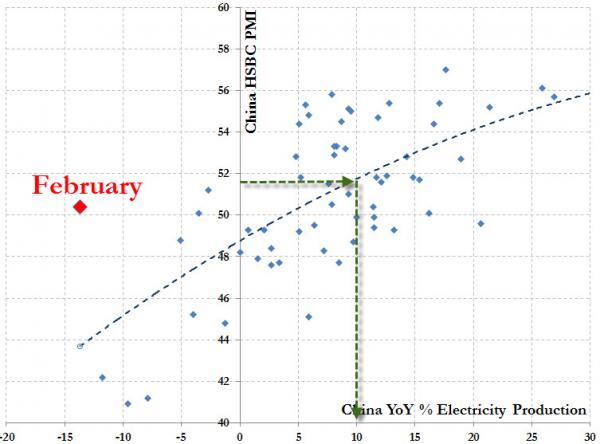
HSBC’s China Flash PMI just printed above expectations at 51.7, disappointing those hoping for more stimulus but just Goldilocks enough to satisfy the world that China is firing on all cylinders… But, and there’s always a but, the following chart suggests that the diffusion-driven survey-based PMI data may be just a little different from the hard data on the ground. Of course, everything could have magically turned around in the last 3 weeks (aside from Copper demand and PBoC repo/rev. repo that is). For now, we tip our hat to the well planned PMI print as indicative that all is well in the smog-ridden pig-barren nation but scratch our chin at just what is powering all this growthiness… HSBC’s Flash PMI upticked more than expected but remains in that neverland zone… and here are the stunning sub-indices showing the ‘surges’ – hhmm – employment? pricing? even New Export Orders are in ‘fence-sitting’ mode… But when judged against the history of a relatively tight relationship to Electricity production… is it any wonder we call it the Chart of the Day… It seems we are about to witness a jump from -13% YoY decline (as we discussed here the largest ever) to a +10% YoY rise in the span of just one month…

20130320_chinapmi_2_0

China’s Hidden Debt Risk

China’s Hidden Debt Risk

20 March 2013

Zhang Monan. Zhang Monan is a fellow of the China Information Center, a fellow of the China Foundation for International Studies, and a researcher at the China Macroeconomic Research Platform.

BEIJING – In the last 200 years, there have been more than 250 cases of sovereign-debt default, and 68 cases of domestic-debt default. None of these was an isolated incident. Indeed, such defaults – combined with factors like large current-account or fiscal deficits, overvalued currencies, high public-sector debt, and insufficient foreign-exchange reserves – have always triggered financial crises, from the Mexican peso crisis in 1994 to the Russian ruble crisis in 1998 to the American subprime mortgage crisis in 2008.

Since China’s era of reform and opening up began, the country has experienced three instances of large-scale public-finance problems. In the late 1970’s, the country faced a debilitating fiscal deficit. In the 1990’s, its corporate sector was plagued by “triangular debts” (when a manufacturer that has not been paid for its product is unable to pay its suppliers, which in turn struggle to pay their suppliers). Later that decade, financial institutions were burdened by bad debts generated by state-owned enterprises.

Now China is experiencing a fourth instance of elevated debt risk, this time characterized by high levels of accumulated local-government and corporate debt. To be sure, China’s national balance sheet, which boasts positive net assets, has garnered significant attention in recent years. But, in order to assess China’s financial risk accurately, policymakers and economists must consider the risks that lie in the country’s asset structure – and the liabilities that are not included on its balance sheet. Read more of this post

Swedish business is being cast as a model for long-term stability and growth; the Swedish model of active ownership of companies – the distinctive way Sweden has placed corporate power not with management but with shareholders who are obliged to elect board directors and be involved in big strategic decisions

March 20, 2013 6:52 pm

Scandinavia: Model management

By Richard Milne

Swedish business is being cast as a model for long-term stability and growth

The two men joke, finish each other’s sentences and defend the other from attack. “You start!” jokes one when the subject turns sensitive.

But behind this veneer of camaraderie, the two are rivals: Börje Ekholm and Anders Nyrén are two of Sweden’s most important businessmen, heading the holding companies that together control more than half of Stockholm’s stock exchange.

For the first time in the 69 years that their two companies – Mr Ekholm’s Investorand Mr Nyrén’s Industrivärden – have existed side by side their chief executives have agreed to give a joint interview.

The subject that has brought them together is the Swedish model of active ownership of companies – the distinctive way Sweden has placed corporate power not with management but with shareholders who are obliged to elect board directors and be involved in big strategic decisions.

With a structure that promotes long-term thinking, the Swedish model is attracting interest worldwide from regulators and governments looking to head off financial crashes. Some think that adapting the model’s tenets could reduce the short-term thinking that can damage companies, while also boosting local industry. Read more of this post

Biggest Solar Collapse in China Imperils $1.28 Billion; China’s Solar Billionaire Undone as Banks Push Suntech to Brink

Biggest Solar Collapse in China Imperils $1.28 Billion: Energy

Investors stand to lose most of the $1.28 billion they put into Suntech Power Holdings Co. (STP) after the solar manufacturer said it wouldn’t resist a bankruptcy petition filed in China.

The company, based in Wuxi, outside Shanghai, had more than $2 billion in debt and defaulted on $541 million in bonds due on March 15, prompting eight Chinese banks to ask a local court to push Suntech’s main unit into insolvency.

“There’s a host of companies that have gone to Wall Street investors and gotten billions of dollars, and these investors are ultimately going to be on the hook and get nothing out of it,” Angelo Zino, an analyst at Standard & Poor’s Financial Services LLC in New York, said in an interview yesterday. Read more of this post

Easy money over for Asian junk bonds; 50% of January deals are now trading underwater

Easy money over for Asian junk bonds

Bankers and investors warn high-yield bonds from Asian issuers face headwinds due to compressed spreads.

By Jame DiBiasio | 21 March 2013

After a banner year of issuance, capped by a record $10.6 billion issued in January 2013, investors in Asian high-yield debt face a tougher environment.

“Income will dominate and capital appreciation will be limited,” says Bryan Collins, portfolio manager at Fidelity Worldwide Investments.

Tim Jagger, head of Asian fixed income at Aviva Investors, says that in contrast to the equity-like returns that investors enjoyed in 2012, this year they will only make money from the coupon of Asian high-yield bonds.

Julian Trott, head of debt syndication for Asia ex-Japan at Goldman Sachs, says 50% of those January deals are now trading underwater. He expects credit investors will return to high grade instruments. “There will be more discrimination of high yield by investors,” he says. Read more of this post

Buffett Says Bet on Natural Juices of Market; “Never bet against what humans can accomplish if they’re operating in the right soil. And we have the right soil.”

Buffett Says Bet on Natural Juices of Market

Warren Buffett, the billionaire chairman of Berkshire Hathaway Inc. (BRK/A), said investors should bet on the “natural juices” of capitalism in the U.S. even as lawmakers struggle to narrow the budget deficit.

People tend to “focus too much on what the government’s done, and to give them either credit or blame,” Buffett said in an interview conducted by the chief executive officer of Business Wire, the Berkshire subsidiary that distributes press releases. “The real credit belongs to our system.”

Buffett, 82, has used annual letters to shareholders and public appearances to highlight the prospects for the world’s largest economy, where most of Berkshire’s operations are based. He’s also called for an increase in taxes on the wealthiest individuals to help reduce budget deficits and forestall cuts, an approach that Republicans say would hurt growth.

The U.S. economy “is coming back because of the natural juices of capitalism and not because of government,” Buffett told Business Wire’s Cathy Baron Tamraz in a video interview posted online today. “We have a wonderful system that eventually is self-cleansing and always moves forward.” Read more of this post

Brainbox nation: America remains the world’s biggest spender on R&D, though others are inching up

Brainbox nation: America remains the world’s biggest spender on R&D, though others are inching up

Mar 16th 2013 |From the print edition

20130316_SRC098

IT IS NOT much to look at: an anonymous suburban office building, wedged between a shopping mall and a car dealership. Yet the Defence Advanced Research Projects Agency, or DARPA, has had a hand in many of the most celebrated technologies of the age, from the internet to global positioning systems to radar-foiling stealth aircraft. Its boss, Arati Prabhakar, jokes about having invented fire.

DARPA remains gamely engaged in research that to outsiders sounds like science fiction. Its Living Foundries programme, for example, is trying to work out how to use microbes to detect and repair worn or corroded materials. Blood Pharming aims to create a kit to grow blood from a culture for battlefield transfusions. ChemBots is investigating robots that can change their shape to squeeze through small openings and then reconstitute themselves on the other side.

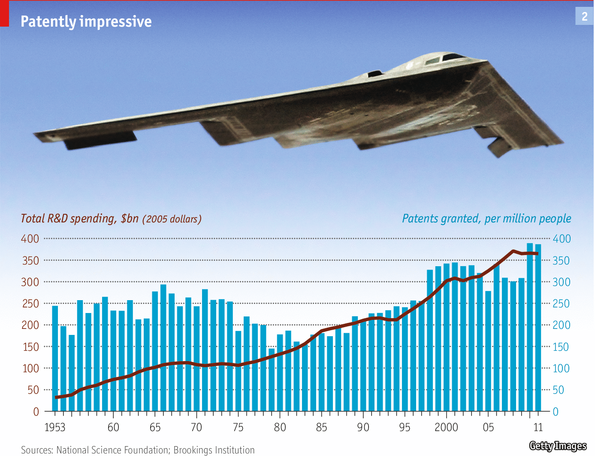
America puts more into R&D than any other country, and agencies like DARPA are in the vanguard. Yet by the National Science Foundation’s latest count, in 2009, the country’s share of global spending on R&D had fallen to 31%, from 38% in 1999. As a share of GDP its expenditure now ranks only ninth in the world, at almost 2.9%. Investment in research even fell slightly in absolute terms for a couple of years during the recession, whereas in other countries it continued to grow quickly. China’s outlays, for instance, raced ahead by 20% a year in the decade to 2009. Read more of this post

SocGen’s Black Swan Risk Map

HERE IT IS: SocGen’s Black Swan Risk Map

Sam Ro | Mar. 19, 2013, 8:49 AM | 3,543 | 4

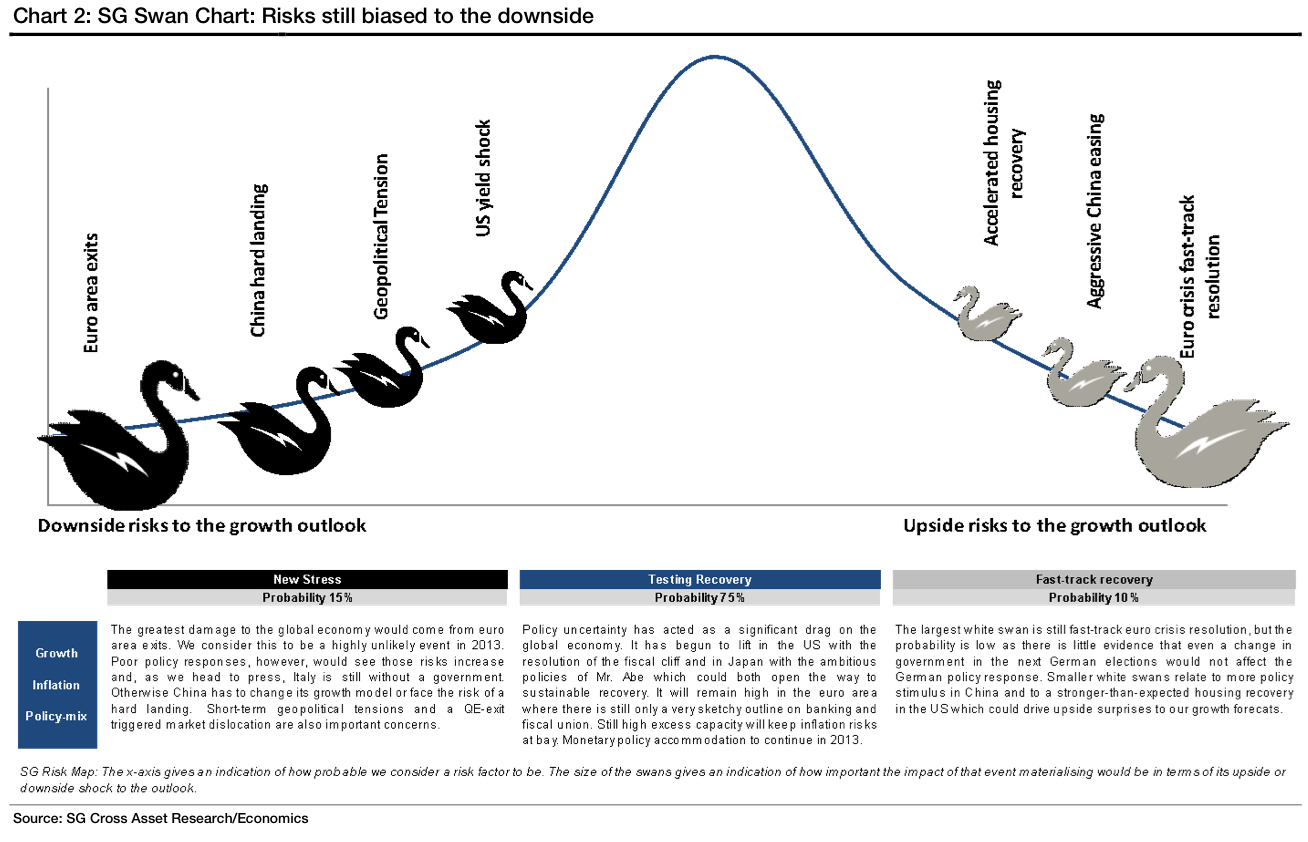
Here’s Societe Generale’s review of some of the tail risks, or unlikely scenarios, out there.  For now, they believe we should be more worried about the downside risks.

screen shot 2013-03-19 at 8.23.34 am

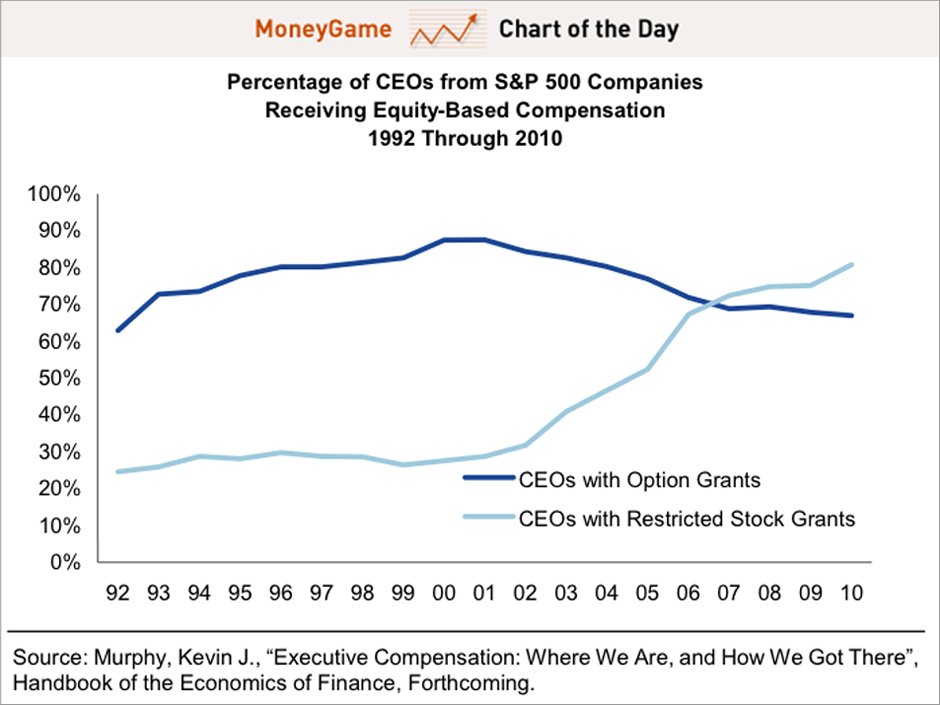
CHART OF THE DAY: The Most Outrageous Reason Why A Company Would Raise Its Dividend; senior management are compensated in options that are much more likely to increase dividends

CHART OF THE DAY: The Most Outrageous Reason Why A Company Would Raise Its Dividend

Sam Ro | Mar. 19, 2013, 8:18 AM | 1,477 | 

moneygame-cotd-031913 Read more of this post

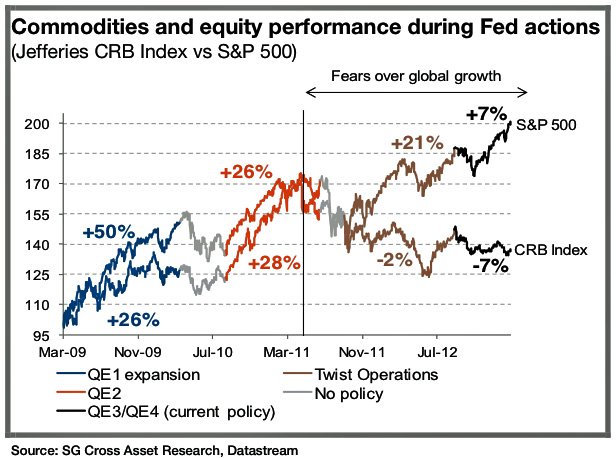
The Fed’s Effect On Commodity Prices Has Vanished

The Fed’s Effect On Commodity Prices Has Vanished

Sam Ro | Mar. 18, 2013, 10:04 PM | 3,682 | 5

chart-625 Read more of this post

Is Bali losing its allure? There have been several reports this year already that indicate the island has seen the number of foreign visitors retreat to levels not seen for several years

Is Bali losing its allure?

There have been several reports this year already that indicate the island has seen the number of foreign visitors retreat to levels not seen for several years. -Jakarta Post/ANN

Chris O’Connor
Wed, Mar 20, 2013
The Jakarta Post/Asia News Network

20130320.100208_wiki_bali20

The Tirtha Empul Temple in Bali draws tourists who seek its holy waters.

BALI – There have been several reports this year already that indicate the island has seen the number of foreign visitors retreat to levels not seen for several years.

Specific groups, such as Chinese and European visitors, have been highlighted and a variety of explanations offered as to why.

Certainly the cafes and restaurants do appear quieter than normal and even the steady stream of domestic bus tours seems reduced.

Analyses of relevant data are very important if any industry is to develop its market and adjust its planning and policies accordingly, and statements made by key players within the sector can be taken as a measure of understanding of both businesses and the administration. Read more of this post

Chinese Premier Li Cutting Wrist and pledging to cut the “hand” of the state in the economy pushes borrowing costs of railway network up; yield of 3.95% is lower than the 8.99% for similar-maturity notes of Indian Railway and slightly higher than Suntech’s 3% CB in China’s first high-profile bond default

Li Cutting Wrist Lifts Rail Costs Most in 16 Weeks: China Credit

China’s railway network became the first test case for Premier Li Keqiang’s pledge to cut the “hand” of the state in the economy, pushing its borrowing costs up the most in 16 weeks.

The yield premium over government notes for one-year bonds from the former Ministry of Railways, whose debt was transferred to the newly created China Railway Corp. on March 17, jumped 10 basis points last week to 118, the biggest rise since the period ended Nov. 23, data compiled by Bloomberg show. The yield of 3.95 percent is lower than the 8.99 percent for similar-maturity notes of Indian Railway Finance Corp.

China Railway will take over commercial operations from the ministry, according to a March 14 cabinet statement. The authority had more than 2 million employees and 2.66 trillion yuan ($427.8 billion) of debt that’s larger than Denmark’s economy. While the government offered assurances the company will receive its backing, Premier Li said three days later that he would act when the “hand” of the state shouldn’t be involved in the market, even if it feels like “cutting one’s wrist.”

“Previously creditors legally had recourse to the ministry,” said Ivan Chung, a Hong Kong-based senior credit officer at Moody’s Investors Service. “While investors expect there will be very strong support from the government for China Railway Corp., they no longer have a direct claim on the government as they used to.” Read more of this post

More bond investors bet on US rate rise

March 19, 2013 7:37 pm

More bond investors bet on US rate rise

By Stephen Foley, Michael Mackenzie and Dan McCrum in New York

More US bond investors are seeking new ways to hedge against the risk of a sharp rise in interest rates in case growth in the world’s largest economy picks up and the Federal Reserve starts to wind up its current stimulus policies.

The US central bank is expected on Wednesday to maintain its current level of bond purchases, which have pushed up bond prices and kept rates low. However, some investors are taking positions in exchange traded funds and leveraged loans that are designed to profit if market interest rates spike higher. Read more of this post

The ghosts of ’94: Veteran bond traders fear the omens point to a repeat of the catastrophic collapse of the mid-nineties

March 19, 2013 6:32 pm

Markets: The ghosts of ’94

By Michael Mackenzie, Robin Wigglesworth and Stephen Foley

Veteran bond traders fear the omens point to a repeat of the catastrophic collapse of the mid-nineties

Nineteen-ninety four. Nelson Mandela was inaugurated South Africa’s first black president. Ace of Base dominated the pop charts on both sides of the Atlantic. And Pulp Fiction introduced “Royale with cheese” to the vernacular. On Wall Street, 1994 was the year many money managers lost their shirts.

A sharp, unexpected rise in interest rates wrecked the value of bond portfolios and turned profitable trades into money losers. Hedge funds blew up, banks plunged into the red and the resulting shockwaves even hurt the equity market, which reversed a strong start to end down on the year.

It was, in other words, a year for investors to forget. But it is also a year that is important to remember. Today, with interest rates at rock-bottom thanks to the US Federal Reserve and other central banks, some bond market veterans are hearing echoes of 1994. What will happen, they ask, when the Fed decides it has done enough to stimulate the economy? Could there be another shock?

Richard Tang, now head of North America sales at RBS Securities, recalls the “gigantic roar” that went up across the trading floor at Salomon Brothers on February 4, 1994, when the Fed unexpectedly raised rates.

“I remember 1994 very well, clearly like it was yesterday. It was my first bear market in the business,” he says.

The Fed kept tightening through the year, as the US economy picked up steam and the central bank decided to put down a marker against inflation. Traders who had loaded up on debt, notably in mortgage securities, were squeezed, and the leverage in the nascent securitisation market meant the pain was magnified. Read more of this post

Indonesians left to pick up the pieces; “I want to become smart, I want to make my parents proud. I want to take them on the Hajj.”

March 19, 2013 8:36 am

Indonesians left to pick up the pieces

By Ben Bland in Bantar Gebang

©AFP

Rastinah lives in the midst of Indonesia’s decade-long economic boom, without being part of it.

Along with her husband and five children, the 40-year-old ekes out a living as a scavenger at the vast Bantar Gebang landfill site on the outskirts of Jakarta, scouring a mountain of trash every day to find material that she can sell for recycling.

Even in a good month, her family rarely earns more than $180. So, when it costs about Rp30,000 ($3) for a very basic family meal, life is a struggle.

“It’s barely enough for food, sometimes it’s not enough,” she says as she picks plastic bags from the trash heap, a foul stench in the air and the midday sun beating down, the only shade provided by a Komatsu digger operating perilously close by.

Mrs Rastinah and her family are among the tens of millions of people who have been left behind as Indonesia’s economy has taken off on the back of a fast-growing middle class and Indonesia’s plentiful natural resources. Read more of this post

China: Politicizing discovery: A system of political patronage often forces scientists to choose between career advancement and real innovation

Politicizing discovery

Wednesday, March 20, 2013

A system of political patronage often forces scientists to choose between career advancement and real innovation

Bill Dodson is chief China industry analyst at market research firm TrendsAsia in greater Shanghai and author of several books, most recently “China Fast Forward: The Technologies, Green Industries and Innovations Driving the Mainland’s Future,” published last August.

Throughout 2010, Fang Shimin – China’s self-appointed “Science Cop “ – had been relentless in his pursuit of Dr Xiao Chuanguo. Fang Shimin had publicly accused the medical researcher of falsifying test data in trials with children. The doctor had retaliated against Fang Shimin by hiring thugs to beat the Science Cop to “send him a message.” Despite Xiao Chuanguo’s confession, the court had shown great leniency toward the doctor.

The public accusations against Xiao Chuanguo, his confessed attacks on his accusers and the court’s light sentences for his crimes point to a fundamental flaw in China’s plan to surpass the United States as a preeminent innovation nation. The country lacks checks and balances within its own scientific community and society. Science prides itself on its scientific method of repeatable results rigorously tested and approved by a group of peers.

As Thomas Kuhn wrote in his seminal study of the work of scientists, “The Structure of Scientific Revolutions,” most often discoveries are resisted by peers who have vested interests, yet eventually the community of scientists adapts – typically in nonviolent ways – as the discovery becomes a fact that expands on previous understanding. The scientific method is supposed to weed out wrong or misleading results and researchers to contribute to a base of standing knowledge upon which others may continue to build. The court systems in a civil society function similarly, with judgments passed based on a body of evidence that is indisputable in its objectivity and certainty.

Both science and society in China are based on patronage, though. Read more of this post

SEC Digging Into Fund Fees; Focus on Expenses Billed to Investors by Hedge Funds and Private-Equity Firms

  • Updated March 19, 2013, 7:57 p.m. ET

SEC Digging Into Fund Fees

Focus on Expenses Billed to Investors by Hedge Funds and Private-Equity Firms

By JULIE STEINBERG

The Securities and Exchange Commission is closely scrutinizing the fees and expenses, including travel and entertainment, that hedge funds and private-equity firms charge to their investors.

Many managers of hedge funds and private-equity funds—collectively called “private investment advisers”—had long been largely unregulated and therefore had less oversight in how they billed their investors.

As part of the Dodd-Frank financial law, the SEC now oversees more than 1,500 additional such advisers that were required to register with the agency. In that capacity, the SEC is checking to ensure they are charging their investors reasonable expenses.

“Exotic” expenses like travel, entertainment and consulting arrangements are more likely to attract the agency’s attention than routine charges like legal and accounting fees, say compliance consultants who advise funds on registration and reporting requirements. Read more of this post

Largest pension fund considers dumping active management

Largest pension fund considers dumping active management

CalPERS’ review keeps pressure on from passive funds

By Jason Kephart

Mar 19, 2013 @ 1:35 pm (Updated 3:46 pm) EST

In the latest sign of the apocalypse for active management, the largest pension fund in the United States is mulling a move to an all-passive portfolio.

The California Public Employees Retirement System’s investment committee is evaluating whether the fees it pays its active managers are worth it or if paying less fees for passive management will lead to better long-term results, according to sister publication Pensions & Investments.

The pension fund, commonly referred to as CalPERS, oversees about $255 billion in assets, more than half of which already is invested in passive strategies.

The critique of active management is part of a review of the fund’s investment beliefs, which began yesterday, P&I said.

At the heart of the review of active management is whether taking the trouble to pick the right managers is worth it. Read more of this post

Canada Pension Plan Investment Board (CPPIB) laments dearth of investments for pension funds’ ‘patient capital’; “How can we think and act long term when the world around us is caught up in this ‘myopia of the moment’?

CPPIB laments dearth of investments for pension funds’ ‘patient capital’

19 March 2013

Author: Jonathan Williams

GLOBAL – The short-termist focus of governments and investors is creating problems for pension funds to invest their “patient capital”, the head of the CAD172bn (€130bn) Canada Pension Plan Investment Board (CPPIB) has said.

Mark Wiseman, chief executive and president of CPPIB, said the focus on the short term – due to shorter election cycles, quarterly profit reports and a “revolving door” of chief executives within listed companies – was causing problems, and that there was a need for longer-term thinking.

During a speech to the Canadian Australian Chamber of Commerce in Sydney, he asked: “How can we think and act long term when the world around us is caught up in this ‘myopia of the moment’?

“All market participants – be they investors or governments – desperately need a long-term lens,” he added. “While we may discuss practical, actionable items for reform, I am convinced that, unless we first address this short-term, structural paradigm, we will fail to create a policy environment that supports fundamental and lasting change.” Read more of this post

Malaysian PM Najib Sees Early Achievement of Mahathir Vision: Southeast Asia

Najib Sees Early Achievement of Mahathir Vision: Southeast Asia

Malaysian Prime Minister Najib Razak said the nation may reach high-income status two years ahead of target, as he seeks to convince voters of his economic achievements before elections due within weeks.

Gross national income could rise to $15,000 per capita in 2018, earlier than a target of 2020, Najib said in a televised speech late yesterday. The measure has increased 49 percent since 2009, to $9,970 last year, the government estimates. Najib also pledged to give annual cash handouts to low-wage earners.

“The time has come for Malaysians to make a decision and I hope you make the right choice,” said Najib, 59, without indicating when the election will be held. He must dissolve parliament by April 28 and hold a vote by the end of June.

Najib, who inherited a country in recession when he replaced Abdullah Ahmad Badawi as leader in 2009, is focusing voters on his efforts to boost investment and improve incomes as he seeks a popular mandate for the first time. The ruling National Front coalition won the last election in 2008 by its narrowest margin in more than five decades, prompting Abdullah to hand over the leadership mid-term. Read more of this post

Leveraged Asian Investors May Spur Bond Price Slump: Barclays

Leveraged Asian Investors May Spur Bond Price Slump: Barclays

Wealthy Asian investors who’ve borrowed against their houses to buy bonds may find themselves among forced sellers if interest rates rise, spurring a price slump in vulnerable securities, according to Barclays Plc.

U.S. dollar-denominated notes sold by more than 20 companies including Olam International Ltd. and Henderson Land Development Co. are some of those most exposed if private bank clients move money out of the fixed-income market, Barclays said in a research note dated March 14. Private banks hold 15 percent to 20 percent of total corporate bonds in Asia and as much as 30 percent of high-yield, or junk, notes.

Low borrowing costs have been one of the main factors driving the strong demand for Asia credit and many high net worth investors went further into debt to buy the securities, according to the report. In the past six months, equities have generated solid returns while credit has lagged, creating a risk fund flows will rotate out of bonds in a quest for higher returns and compound the price slump.

“U.S. rates are already beginning to rise, albeit gradually, and leveraged lending could be scaled back if risk committees begin to focus on the quality of such lending,” according to analysts led by Krishna Hegde, Barclays’ Singapore- based head of Asia credit research. Furthermore, any sharp or sustained sell-off in Treasuries would impact bond prices and raise borrowing costs. Considering most private bank investors don’t hedge rates, “this is an important risk factor,” they wrote. Read more of this post

Incheon named World’s Best Airport for eighth time; The process of departure takes only 19 minutes and arrival 12 minutes, far quicker than the global standard of 69 minutes and 45 minutes.

Incheon named best airport for eighth time

Wednesday, Mar 13, 2013

img_visual incheonbest

Mr Hong-Yeol Choi, VP Marketing at Incheon International Airport (left) receives the World’s Best Airport Award from Mr Edward Plaisted, Chairman of SKYTRAX (right), during the World Airport Awards held at Passenger Terminal EXPO in Vienna.

By Lee Ji-yoon
The Korea Herald/Asia News Network
Wednesday, Mar 13, 2013

KOREA – Incheon International Airport said Tuesday it won the World’s Best Airport title again this year for the eighth consecutive time.

The non-profit Airport Council International conducted a survey of 350,000 passengers over the past year and Incheon Airport earned the highest scores in service quality.

The airport also topped two other categories – best airport in Asia-Pacific and best among those with 25-40 million users annually.

It is unprecedented for an airport to win the industry’s top honour eight times, officials said. Read more of this post