Banks’ Debt Addiction Said to Face Scrutiny at Basel Group

Banks’ Debt Addiction Said to Face Scrutiny at Basel Group

A planned international limit on bank indebtedness will be on the agenda of every meeting of the Basel Committee on Banking Supervision this year as regulators seek to wean lenders off their addiction to debt, according to three people familiar with the talks.

Regulators are preparing to fight lenders over the details of the so-called leverage ratio as they seek to toughen rules on the minimum amount of capital they must use to back their investments. The Basel group, which brings together supervisors from 27 nations, will meet in the Swiss city tomorrow, according to the people, who asked not to be identified because the meetings are confidential. Read more of this post

Growth comes with side effects for Singapore; Opaque manipulated business brings unwanted attention

March 12, 2013 3:48 pm

Growth comes with side effects for Singapore

By Jeremy Grant

Singapore generally dislikes drawing attention to itself when it comes to financial markets.

Having discreetly built itself up as an Asian financial hub, Singapore has now become one of the world’s largest centres for wealth management and commodities trading. But recently the Lion City has been drawing some unwelcome attention in the foreign exchange markets, where it is ranked fourth-largest in the world by trading volume.

Last month two former UBS traders sued the Swiss-based bank alleging they were wrongfully dismissed when they say the bank fired them for gross misconduct. In two lawsuits filed in Singapore they claim they were fired to cover up any role the bank had in allegedly manipulating the pricing of foreign exchange derivatives.

One, Prashant Mirpuri, was employed as an “emerging market southeast Asia non-deliverable forward trader”, according to court filings. The other, Mukesh Kumar Chhaganlal, was a former co-head of macro-trading, emerging markets Asia.

Behind these opaque job titles lies an equally opaque business done in Singapore: dealing in a type of foreign exchange contract known as a non-deliverable forward. Read more of this post

Chinese cultural puzzles for foreign visitors

Chinese cultural puzzles for foreign visitors

Staff Reporter

  • 2013-03-12

“Why don’t public restrooms in China offer toilet paper?” Questions like these — the peculiarities of Chinese culture against many things Westerners would consider normal — have confused many foreign visitors in China. China Internet Information Center, a mainland web portal, has listed nine confusing questions about China from a stand point of a foreign visitor, reports Want Daily, our Chinese-language sister newspaper.

Some of the questions include: “Why do Chinese act so politely when you talk to them but become so mean on the internet?” or “Why can Chinese people be so weak when giving a speech on stage while they are so humorous off it? ” and “Why don’t Chinese people attend the Ultimate Fight Championship as they are good at Kung Fu?”

One of the questions even asks about the ‘local dialect:’ “Why do Chinese people usually say ‘F#$% your mother’ whereas Americans say ‘F#$% you?'”

The web portal suggests that, in a joking way, visitors should post a sign saying ‘stingy’ on a public restroom that does not offer free toilet paper as most tourist sites charge money for entrance. The web portal also says that Chinese people are not united even though there are excellent individuals around the world.

China’s “ant tribe”: Life in boxy rooms

China’s “ant tribe”: Life in boxy rooms

2013-03-12 06:18:01 GMT

They sleep in boxy rooms crammed into dingy low-rises and spend hours commuting to work on crowded buses as part of a trend of poorer white-collar workers being forced to the fringes of China’s wealthiest cities. These struggling college graduates who swarm out of their cramped accommodations and head to work in the urban sprawl each morning are often referred to as China’s ant tribe. The growing ranks of ‘worker ants’ poses a policy challenge for Chinese leaders as high property prices and dim career prospects thwart the ambitions of many graduates for a comfortable middle-class lifestyle.

U165P5029T2D570490F32DT20130312141801 U165P5029T2D570490F34DT20130312141801

China’s 80 billion disposable chopsticks a ‘burden’ on forests; A total of “20 million 20-year-old trees” have to be chopped down each year to make way for the annual production

China’s 80 billion disposable chopsticks a ‘burden’ on forests

Monday, 11 March, 2013, 2:43pm

Chris Luo chris.luo@scmp.com

A National People’s Congress member has highlighted the dire situation of China’s deforestation during a parliamentary meeting, saying that the country produces as many as 80 billion pairs of disposable chopsticks each year, state news agency Xinhua reported [1].

Bo Guangxin, chairman of state-owned timber firm Jilin Forest Industry, said at a meeting of the annual parliament session on Friday that the mass production of the wooden tableware is a heavy burden on national forests.

Eighty billion pairs of chopsticks is no small figure.

Laid out, that many chopsticks can cover the ground of Beijing’s Tiananmen Square, one of the world’s largest public squares, more than 360 times – with each chopstick being 1cm-by-0.5cm and 20cm long, Bo said.

A total of “20 million 20-year-old trees” have to be chopped down each year to make way for the annual production, he said. Read more of this post

10th anniversary of SARS outbreak: Shadow of SARS remains in an enduring nightmare

Shadow of SARS remains in an enduring nightmare

Mary Ann Benitez

Wednesday, March 13, 2013

Hong Kong may be prepared for new infections, but 10 years after SARS killed 299 people here – and was then overcome – some gaps remain in defenses.

The warning came yesterday from Thomas Tsang Ho-fai, a former controller of the Centre for Health Protection.

“Despite everything we did in pandemic preparedness, some unresolved challenges remain,” he said in marking the 10th anniversary of the emergence of Severe Acute Respiratory Syndrome.

One challenge is limited knowledge about the behavior of novel pathogens such as the SARS coronavirus.

Ten years on, no vaccine is available to see off SARS. In fact, experimental vaccines could stimulate lung diseases. Read more of this post

Life of Pi(G): Parody on Shanghai’s floating pig carcasses in the Huangpu River, which is the major source of water for the city’s 23 million population

pigs2
Authorities in the city of Shanghai reported on March 11 that at least 3,300 dead pigs had been found floating in the Huangpu River, which is the major source of water for the city’s 23 million population. The story shocked many Chinese, who worried understandably about the implications for public health and puzzled over the question of how farmers upstream were able to discharge such a large number of dead pigs into the river without notice. The above cartoon, posted by artist Du Shi Xiong (大尸凶的漫画) to Sina Weibo, is a mock movie poster referencing director Ang Lee‘s recent blockbuster Life of Pi. The poster pictures the film (and book’s) main character, Indian storyteller Pi Patel, drifting on his life raft not with the male Bengal tiger “Richard Parker” but with scores of dead pigs. The water all around him is also littered with dead pigs. This cartoon is one of quite a few now circulating on Sina Weibo using the “Life of Pi” movie poster meme to explore the story of Shanghai’s dead pigs. The following is another posted by Gou Ben (勾犇漫画) today. In this one, Pi Patel wears a heavy-duty safety mask to protect himself from the smog (another health issue of great concern to the Chinese public) while the tiger “Richard Parker” leaps headlong into a river teeming with dead pigs and screams: “Here’s some meat to eat. If it kills me, at least I’ll die of a bloated stomach!”

Life-of-PiG-2

In Spinoffs, a Chance to Jettison Undesirable Liabilities; spinoffs have a dark side, serving as a convenient dumping ground for unwanted businesses

MARCH 12, 2013, 5:44 PM

In Spinoffs, a Chance to Jettison Undesirable Liabilities

By STEVEN M. DAVIDOFF

A spinoff is a product of Wall Street math that says one plus one can equal three. Yet as shareholders of Time Warner may be about to find out, it can also be all about subtraction, as a company ditches an unwanted business, in this case, magazines.

The business argument for a spinoff is typically that a separation of the assets allows both the former parent and the newly independent company to be better run, freeing management to take bolder steps with the new company. And because Wall Street is a place where magic works, the market will recognize this, giving each of the separated companies a higher price.

There is evidence of this effect. Studies of spinoffs have found that they produce short-term gains, although these gains evaporate over the long term.

Spinoffs, not surprisingly, are big business these days on Wall Street. Last year, there were 85 spinoffs worldwide worth $109 billion, according to Dealogic, down just a bit from 93 spinoffs worth $128 billion in 2011.

But spinoffs have a dark side, as they can serve as a convenient dumping ground. In 1999, General Motors spun off its auto parts maker into Delphi, and the following year, Ford Motor did the same with Visteon. Both automakers larded the subsidiaries with too much debt, high labor costs and sweetheart pricing deals. The result sent both spinoffs into bankruptcy. Ford and G.M. are still dealing with the fallout and litigation. Read more of this post

Fever-Tree founders sell £48m stake in tonic maker; “Fever-Tree follows in a tradition of great British brands including Innocent, Ella’s Kitchen and Tyrrells which all achieved fantastic success by exporting to the rest of the world.”

Fever-Tree founders sell £48m stake in tonic maker

Two entrepreneurs who spent 18 months scouring the globe for ingredients for the perfect gin and tonic have been backed with £48m.

fever-tree_2507124b

Tim Warrillow and Charles Rolls launched Fever-Tree eight years ago.

By James Hurley

6:59PM GMT 12 Mar 2013

LDC, the private equity arm of Lloyds Banking Group, has invested in premium tonic water brand Fever-Tree, which was founded eight years ago by Charles Rolls and Tim Warrillow.

Mr Warrillow spent a year-and-a-half searching for the right ingredients for the tonic water. The company now uses quinine from the Congo, Rwandan bitter orange oil and natural cane sugar. It also makes ginger beer using gingers from the Ivory Coast.

The deal will see LDC replace original investor Lochside and leaves Mr Rolls and Mr Warrillow still holding a small majority stake.

Mr Rolls says the £16m turnover company has exploited the growing popularity of gin. “It began with a simple idea. We saw a lot of premium spirits so we thought people would want a premium mixer. If three quarters of your drink is the mixer, you should make sure the mixer is the best.

“Premium mixers didn’t exist before we started but we were right. Within six months, the likes of Waitrose were calling us. That never happens.”

More than two-thids of Fever-Tree’s sales now come from overseas, with Spain and the USA the most successful of the 35 markets it sells to. Read more of this post

Bond boom ‘as bad as dotcom bubble’

Bond boom ‘as bad as dotcom bubble’

Sovereign bonds are as overvalued as technology stocks were during the dotcom boom, a fund manager has warned.

By Richard Evans

3:41PM GMT 12 Mar 2013

George Godber of Miton said that when Germany issued bonds paying no return at the height of the eurozone crisis, the investment case was akin to a technology company floating with no prospect of making profits.

“When those bonds were issued I thought: ‘This is Baltimore Technologies as over again’,” he said.

Baltimore was one of the defining stocks of the technology boom. It promised to revolutionise internet security but never made a profit and its shares ended up in the “90pc Club” of those that lost almost all their value.

Mr Godber said even gilts yielding 2pc were hugely overvalued on the measure normally used to value shares.

“A 2pc yield is equivalent to a price to earnings ratio of 50,” he said. Shares typically trade at a p/e ratio of between 10 and 20, and investorsbuying shares at the higher end of the range normally expect earnings growth, which is not available on bonds. Read more of this post

China’s shale frenzy and the technology hurdle

China’s shale frenzy and the technology hurdle

Kate Mackenzie

| Mar 12 10:50 | 22 comments | Share

Hardly anyone, it seems, believes that China’s shale gas efforts are going to hit paydirt any time soon. Reuters wrote yesterday that the shale gas revolution risks ‘running further off track’ — and this is before it has even begun to produce any significant volumes. China early this year carried out the second auction for shale gas producing licences. As Reuters notes, the first shale auction two years ago was dominated by the likes of Cnooc and PetroChina, but this latest round was quite different — none of the 19 winning bidders had drilled a shale gas well before. In fact, it was a pretty scrappy field. The second auction attracted interest from more than 100 firms, an eclectic group that included a real estate developer, a grain trader and a tobacco dealer, lured by gas subsidies and aided by easy access to funds. Read more of this post

Why China just can’t quit producing aluminum, despite a global glut

Why China just can’t quit producing aluminum, despite a global glut

By Naomi Rovnick — March 12, 2013

Aluminum is a perfect reminder that China does not have a market driven economy. The price of the metal has been seriously weak for the last five years due to a global supply glut, yet China ignores that glut —pumping out a record 1.78 million metric tons in January, according to figures released today—and makes the oversupply worse. Stockpiles of the metals in Chinese warehouses also hit a record high in late February.

It all comes down to jobs and pride

In much the same way that the US and Russia lavished cash on their space programs in the 1960s, China since the late 1980s has worked tirelessly to perfect its aluminum production skills. And China’s economic planners like new aluminum smelters because they are mostly coal fired (pdf, p.175) and thus are useful consumers of the black stuff. The Beijing government has pushed for massive development of new coal mines in Xinjiang in Northwest China for example, and the aluminum plants will be natural customers for the mines. China now has the world’s best aluminum production technology, according to Michael Komesaroff, principal of Australian commodities consultancy Urandaline Investments. But its over production hurts global miners. Rio Tinto has written down the value of Alcan, an aluminum company it bought in 2007, by an estimated$28 billion.

“Aluminum prices won’t do well for the next ten years,” says Komesaroff.

So China’s aluminum  industry is a great window on how its economic planners think. New smelters create jobs for construction workers, smelter staff and miners, and aluminum gives China’s politicians some world class technology to feel proud of in a nation that is best known for making low value consumer goods. Supply and demand is neither here nor there.

The Fashion Retail Competition Should Be Terrified Of Forever 21

The Competition Should Be Terrified Of Forever 21

Kim Bhasin | Mar. 11, 2013, 1:31 PM | 3,529 | 4

Forever 21 is growing like crazy, and the fast fashion retailer is becoming a major threat to the rest of the industry.

Analysts Lorraine Hutchinson, Paul Alexander, and Jessica A. Lebo at Bank of America warned that competitors need to start paying attention to the privately-held retailer right now.

They declared Forever 21 “the most transformative retail concept” in a note to clients.

“Forever 21 is becoming too big for the specialty retailers to ignore,” the analysts wrote. “At this size, rapid growth could have ripple effects on the other retailers as Forever 21 takes more share.” Read more of this post

Korea’s binge drinking culture changes toward tasting

2013-03-11 17:45

Binge drinking culture changes toward tasting

By Cho Mu-hyun

Following increased awareness among the public about the benefits of living a healthy lifestyle, Korea’s infamous binge drinking is slowly but steadily changing toward consuming less alcohol while savoring flavor more.

Many Koreans, especially younger consumers, prefer brand name drinks such as Glenfiddich, Remy Martin or Matarromera, while ignoring soju, Korea’s rice distilled liquor.

Firms are advertising their products in a different way due to the rise of amateur connoisseurs with increasingly diverse tastes. Makers of beer are now responding to this demand.

The Oriental Brewery (OB), known for brands Cass and OB Lager, is pushing its Golden Lager brand with two words in mind _ young and tasty. Read more of this post

Pepsi, The No.1 Soda In Thailand, Just Had Its Market Share Wiped Out By A Lookalike Brand as market share plunged from 48% to 15%

Pepsi, The No.1 Soda In Thailand, Just Had Its Market Share Wiped Out By A Lookalike Brand

Jim Edwards | Mar. 11, 2013, 10:42 AM | 2,602 | 4

top9

For years, Pepsi was the No.1 soda in Thailand, with a 48 percent market share. Coke was only the second most popular drink there, with 42 percent.

But all that changed late last year when PepsiCo failed to renew a distribution contract. Pepsi’s main retail distributor withdrew all Pepsi products from its shelves and replaced them with “Est,” its own Pepsi-lookalike brand.

By the end of the year, it became difficult to find Pepsi in Thailand, Reuters reports.

Now, Pepsi has only a 15 percent share of the market. Coke is No.1. Est is probably the No.2 brand, with a 19 percent share, and something called “Big Cola” had a 16 percent share at the end of 2012, according to the Bangkok Post. Read more of this post

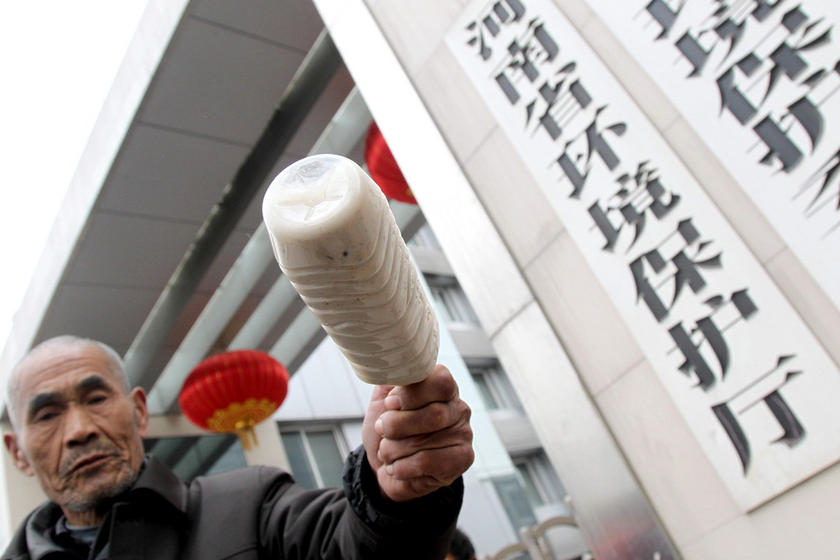
Henan peasants ask local environmental officials to drink the “pure underground water” in his village; 河南农民请环保厅长喝地下“纯净水”

1363009494305533_840_560

China launches probe on banks’ wealth management products

China launches probe on banks’ wealth management products: paper

Mon, Mar 11 2013

SHANGHAI (Reuters) – China’s banking regulator has launched a nationwide probe of banks’ wealth management products, the China Securities Journal reported on Tuesday, citing unidentified sources. The inspection by the China Banking Regulatory Commission (CBRC) is focused on those products that channel depositors’ money into a pool of assets, rather than a single account, according to the newspaper. Such products are not transparent and could create room for illegal operations, it said. CBRC is urging banks to stop selling wealth management products that don’t conform to rules by the end of April, the newspaper said. China has strengthened supervision of its fast-growing wealth management sector since late last year, when one wealth product sold through Hua Xia Bank (600015.SS: Quote, Profile, Research, Stock Buzz) failed to pay its annualized return.


Dead-Pig Tide and the Ongoing Danger of China Epidemics

Dead-Pig Tide and the Ongoing Danger of China Epidemics

The dead pigs started appearing on the riverbanks of Shanghai’s iconic Huangpu River on March 4, and by the weekend, state media were reporting that 900 had been found floating in the river, the source of much of the city’s water supply. The reports didn’t offer an explanation for where the dead pigs had come from or how they had died. Still, one thing was absolutely certain in the articles and the social- media chatter: Nothing good comes from a dead-pig tide.

Early today, Shanghai Daily reported that the number of dead pigs floating in the river had increased to 1,200. Later in the morning, the Global Times, a national paper, reported that the number had crossed “at least 2,200” and was expected to rise. By early evening, the government had retrieved 3,323 carcasses from the river, with more still floating toward downtown.

Most disturbing of all was news — first reported by local suburban papers and spread through microblogs — that upstream pig farms had been struck by an epidemic that had killed 20,000 pigs in January and February. According to these reports, as far back as January, dead pigs were appearing on the sides of roads in suburban Shanghai. News of the epidemic was partly confirmed by state media today. Read more of this post

Pull the Plug on Bailouts for Power Companies; The government gave billions in public funds to state-owned firms, a practice that would end if the market set electricity prices

03.11.2013 18:58

Closer Look: Pull the Plug on Bailouts for Power Companies

The government gave billions in public funds to state-owned firms, a practice that would end if the market set electricity prices

By staff reporter Pu Jun

(Beijing) – Last year reports that the State-owned Assets Supervision and Administration Commission (SASAC) might give 10 billion yuan to five major state-owned power companies started to circulate. On March 5, we learned the bailout happened. Read more of this post

On the Brink in Italy; Among Italy’s estimated six million companies, businesses of all sizes have been going belly up at the rate of 1,000 a day over the last year

March 11, 2013

On the Brink in Italy

By LIZ ALDERMAN

GUIDONIA, Italy — Emanuele Tedeschi wiped sawdust from his hands and gestured around the cavernous woodworking factory that has been in his family for two generations. The big machines, which used to run overtime carving custom furnishings for private homes, Roman palazzi and even the Vatican, sat idle on a shop floor nearly devoid of workers.

“A year and a half ago, the noise from production was so loud that you had to shout to be heard,” said Mr. Tedeschi, walking amid pallets of cherry and other fine woods stacked up and waiting for a purpose.

Since a government austerity plan took hold last year, the Italian economy has tumbled into one of the worst recessions of any euro zone country. Mr. Tedeschi’s orders have all but dried up. His company, Temeca, is still in business, but barely.

Businesses of all sizes have been going belly up at the rate of 1,000 a day over the last year; especially hard hit among Italy’s estimated six million companies are the small and midsize companies that represent the backbone of Italy’s $2 trillion economy. Read more of this post

Western Firms Rethink Asia Approach

March 11, 2013, 4:55 p.m. ET

Western Firms Rethink Asia Approach

Industrial Titans GE, Honeywell Boost Presence in Region to Prevent Market-Share Erosion

By KATHY CHU

JAKARTA—After 60 years supplying locomotives to Indonesia’s state-owned railway,General Electric Co. GE -0.63% faced a serious threat to its dominance in the country’s locomotive market last year.

Indonesian railroad operator PT Kereta Api needed 100 locomotives to alleviate overcrowding on trains where riders often spill into the aisles and climb on the roofs. European and Canadian companies offered competitive technology, while a Chinese company promised low prices.

GE won the $250 million contract—thanks, in part, to its long relationship with the railroad operator—but “we had a very close call,” says Stuart Dean, the Fairfield, Conn., conglomerate’s chief executive in Southeast Asia. “When a railroad buys five or six locomotives, no one cares, but when it wants 100 engines, everyone comes to play.”

The rapid advance of competitors isforcing one of the world’s largest companies to change the way it does business across Asia and emerging markets.

“Historically, we’ve taken global solutions and sold them all over the world,” says Mr. Dean. “But we’re competing with local companies and we need to fine-tune our strategy.”

Multinationals have been increasing their footprint in Asia for years, as they have moved from selling into the region to also investing here. But the transformation is gaining critical mass as Western companies’ market-share leads in Asia over cash-flush local competitors narrow, forcing Western firms to invest more, tailor their products and transfer top executives to Asia. Read more of this post

China’s nightmare scenario: By 2025, air quality could be much, much worse

China’s nightmare scenario: By 2025, air quality could be much, much worse

By Lily Kuo — March 12, 2013

china-air-pollution-db

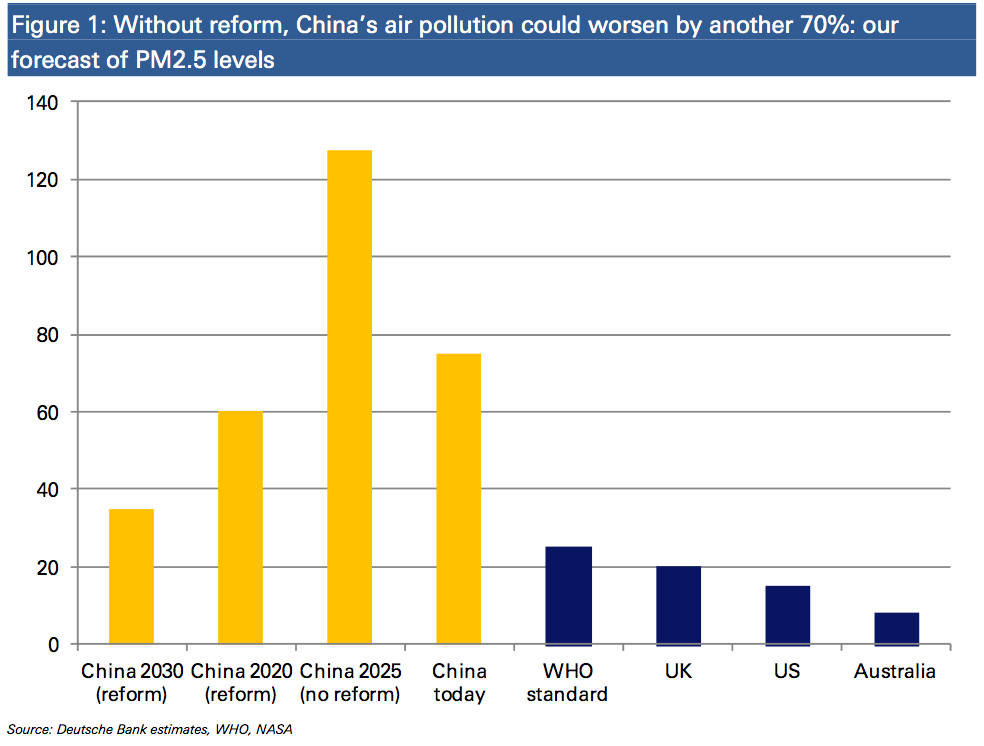
China’s myriad plans to deal with pollution don’t look so promising. In a research note today, Deutsche Bank analysts gloomily conclude that, barring extreme reforms, Chinese coal consumption and increased car ownership will push pollution levels 70% higher by 2025. Even if China’s economy slowed to 5% growth each year, its annual coal consumption would still rise to 6 billion tons (5.4 tonnes) by 2022, from the current 3.8 billion tons. Car ownership is expected to increase over the years to 400 million in 2030 from the current 90 million. With those two figures, it will be very difficult for the government to reduce the national average of PM2.5, or air pollution that is small enough to enter the bloodstream. The current national average is 75 micrograms per cubic meter. In January, PM2.5 levels in Beijing reached 900 micrograms per cubic meter. Read more of this post

There is a new move initiated by major consumer goods and retailer groups to completely avoid using palm. Norway’s $710 billion sovereign wealth fund has pulled out of 23 Asian palm oil companies

Tuesday March 12, 2013

Market access poser for palm oil, new move by major consumers to completely avoid using palm oil

Commodities Talk – By Hanim Adnan

There is a new move initiated by major consumer goods and retailer groups to completely avoid using palm.

THE market access for palm oil has become a growing debate of late, especially since global palm oil inventories from major producers are bursting at the seams.

In the European Union (EU), there is a new move initiated by major consumer goods and retailer groups to completely avoid using palm oil on the stale grounds of deforestation and biodiversity often championed by non-government organisations.

The biggest fear now is that big names like Unilever, Carrefour, Sainsbury, Wal-Mart and Kraft in the EU could also influence and jeopardise stronghold markets like China, India and Asean in the near term, given their big presence there. Read more of this post

Fear rising with rates; Bond market sell-off likely a question of when, not if, and investors ‘have no idea what’s about to happen’; Bond bomb survival guide; New investment strategies that are intended to thrive in a rising-rate environment are fast emerging

Fear rising with rates

Bond market sell-off likely a question of when, not if, and investors ‘have no idea what’s about to happen’

By Andrew Osterland

Mar 10, 2013 @ 12:01 am (Updated 4:58 pm) EST

Fear among financial advisers of a bond market crash that could devastate the portfolios of millions of investors is growing amid improving economic news and rising U.S. bond yields.

The yield on the 10-year U.S. Treasury note is climbing after hitting an all-time low of 1.43% last July. As bond prices move in the opposite direction of yields, the rise in market yields could spell huge losses for investors — especially for those in bond mutual funds, where portfolio managers would be forced to sell their holdings at a loss to meet redemption demands.

Over much of the past three decades, falling interest rates have fueled a rally in the bond market. In the years following the 2008-09 financial crisis, investors — lured by the perceived safety of bonds — poured billions of dollars in retirement and other assets into bond funds.

In 2012, for example, net inflows into bond funds totaled $304 billion, compared with outflows of $153 billion for stock funds. Investors’ enduring appetite for bonds is particularly striking in light of the fact that the Barclays U.S. Aggregate Bond Index gained 4.2% in 2012, versus the S&P 500’s 16% advance.

Over the past five years, net inflows into bond funds topped $1 trillion, while outflows from stock funds totaled $421 billion, according to the Investment Company Institute.

MORE VOLATILITY

For many, if not most, it’s a question of when the bond market sells off — not if.

“Bonds are a big problem, and most people don’t understand that yet,” said Harry Clark, chief executive of Clark Capital Management Inc. “The public thinks bonds are safe, but they’re not. They have no idea what’s about to happen to them.” Read more of this post

Norway $713bn Sovereign Wealth Fund Flees Currencies Tainted by Stimulus Addiction; Adds Turkey, Taiwan

Norway Fund Flees Currencies Tainted by Stimulus Addiction

Norway’s $713 billion sovereign wealth fund is turning away from the world’s biggest currencies and their debt-laden governments as policy makers undermine their exchange rates through unprecedented stimulus measures.

The Government Pension Fund Global, the world’s largest wealth fund, cut its holdings in French and U.K. government bonds by almost half last year as it raised its share of government bonds in emerging-market currencies to 10 percent of its fixed-income holdings by adding investments in Turkey, Russia and Taiwan.

“It’s what we perceive as a risk-reducing investment strategy,” Yngve Slyngstad, chief executive officer of Norges Bank Investment Management, said in a March 8 interview in Oslo. Cutting dollar, yen, euro and pound investments is a “prudent” move, he said. “These four major currencies all have structural issues, with regards to government debt, to private sector debt, to unconventional monetary policy, and to growth and the demographic profile of the countries.”

At issue is how central bankers across the globe will eventually unwind the uncharted stimulus measures enacted to prop up global growth since the onset of the financial crisis in 2008. Debt levels have soared for governments across much of the developed world. In Europe, political leaders are trying to save the region from a fiscal crisis now in its fourth year. Read more of this post

Future of China Railways Ministry’s US$426bn debt unclear

Future of China Railways Ministry’s US$426bn debt unclear

Staff Reporter

2013-03-11

China’s plan to break up its Ministry of Railways has led to concerns about the ministry’s bulging debt, which it accumulated during the rapid expansion of the railway system in recent years, the Shanghai-based First Financial Daily reports.

The Chinese government announced a restructuring plan on Mar. 10, with one of the main proposed changes being splitting up the Ministry of Railways into a State Railway Administration under the Ministry of Transportation and a state-owned enterprise that will be called China Railway Corp.

The proposed railway administration will play a managerial role at the Railways Ministry, while the state-owned company will be tasked with running railway operations, according to the government announcement.

Since the Ministry of Railways had accrued a total debt of 2.66 trillion yuan (US$426 billion), compared with its total assets of 4.3 trillion yuan (US$689 billion) at the end of September, how this debt will be paid off had become a hot topic of discussion, the newspaper said.

“This is a very important issue. As the Ministry of Railways will cease to exist, the party liable to repay the debt will be different, giving creditors the right to seek immediate repayment or even bring up subsequent litigation,” said Mao Zhenghua, a co-director at the Institute of Economic Research at Renmin University of China. Read more of this post

The vacancy rate of China’s New South China Mall, also known as the world’s largest shopping mall, has reached 99% since its opening in 2005

World’s largest mall is ghostly quiet

Staff Reporter

2013-03-11

The vacancy rate of China’s New South China Mall, also known as the world’s largest shopping mall, has reached 99% since its opening in 2005, reports caijing.com, a Chinese-language website specializing in financial news.

The shopping mall — which was built off of a total of 4.5 billion yuan (US$723.7 billion) in investments — is located in Dongguan of China’s southern Guangdong province. The 450,000 square meter mammoth can accommodate 2,350 stores and 8,000 parking lots. However, the near 99% vacancy rate has earned it the less fortunate name of “ghost mall” by the Chinese people. Read more of this post

China hoarding over half of global cotton reserves

China hoarding over half of global cotton reserves

Staff Reporter

2013-03-11

China’s cotton reserves reached 9.28 million tons in February, accounting for 52% of global reserves, according to the United States Department of Agriculture.

As of Feb. 1, reserves stood at 6.15 million tons, accounting for 83% of the country’s cotton reserves expected in 2013, according to texnet.com.cn, a leading Chinese-language textile website. The record stockpiles will make it difficult for the country to control its reserves for the rest of the year.

The partial release of national reserves of cotton into the textile industry in February further lowered the market price, leading to a record low turnover rate. Read more of this post

Sportswear brands in China feeling the heat; the days when Chinese sportswear brands could compete against international peers through price advantages have gone. Overseas sportswear brands like Nike drawing up ambitious plans to enter smaller markets

Sportswear brands in China feeling the heat

Overseas sportswear brands like Nike drawing up ambitious plans to enter smaller markets. -China Daily/ANN
Wang Zhuoqiong and Tang Zhihao

Sun, Mar 10, 2013
China Daily/Asia News Network

Nike’s advertisement is seen at a chain store in Yichang, Hubei province, Oct 27, 2012. The US sportswear maker plans to open 40 to 50 factory outlets to clear its high inventory in China.

BEIJING – US sportswear maker Nike Inc’s plans to open 40 to 50 factory outlets to clear its high inventory in China is a sign that the days when Chinese sportswear brands could compete against international peers through price advantages have gone.

At a Nike factory outlet store in downtown Beijing, a men’s sports sweater is selling for 199 yuan (S$40), down 300 yuan from its original price. A pair of sports shoes cost around 300 yuan, a price range found more often among domestic brands. Read more of this post

China’s coffee industry is in a key stage of development after trying to crack the global industry chain for the past two decades

Yunnan coffee industry in key stage of development

Staff Reporter

2013-03-11

China’s coffee industry is in a key stage of development after trying to crack the global industry chain for the past two decades, reports the Guangzhou-based 21st Century Business Herald. One of the landmark developments in China’s coffee industry took place in the southwestern province of Yunnan, which produces 98% of all coffee beans in the country, when coffee chain Starbucks opened its third international Farmer Support Center in the area, the magazine said. Starbucks has also set up a joint venture with a local company to establish bean processing facilities in Yunnan. However, local industry leader Dehong Hogood Coffee Co has been undergoing turmoil as a result of a dispute between the company’s founder and private equity investors. Though it was resolved at the end of 2012, the dispute caused serious damage to the company’s operations. Dehong Hogood’s rapid expansion by boosting the scale of the coffee farms it owns, and efforts to develop its own brand by building the country’s largest instant coffee production line, resulted in a tight funding situation that forced it to bring in outside investors.

Local growers shifting from tea to coffee after the Pu-erh tea price bubble burst in 2008, had also expanded the scale of coffee farms from around 64,000 acres to 165,000 acres, the magazine said. The expansion dragged down local coffee prices last year, which more than halved from peak prices. According to the magazine, because of the focus on instant coffee products, Yunnan has not grown high-quality coffee varieties on a large scale, even though the plateau environment in the subtropical region is ideal for such planting. In addition, tea is still the dominant drink in China, despite the country’s growing consumption of coffee, which has resulted in a large number of local coffee outlets being sold mainly to overseas buyers. Read more of this post