Why is it so damn hard to understand China’s mobile market? Introducing the China App Index.

Why is it so damn hard to understand China’s mobile market? Introducing the China App Index.

by KAI LUKOFF on 07/18/2013 · LEAVE A COMMENT

Two things stand out when I talk to foreign app developers about China:

They’re very excited about the opportunity;

They know almost nothing about the market.

If they’re so eager, then why is still so hard for them to understand the China market? First, to investigate a new market, a developer starts by reviewing the top app rankings on Google Play or the iTunes App Store. This works for nearly every market in the world, except for China. While Google Play is dominant in the rest of the world, it’s a small player in China, where Android is the vast majority of the market. The major mobile analytics firms (AppAnnie, Distimo, etc.) rely upon Google Play data, so they don’t really cover China either. Second, just as in PC internet, China is very different. If you look at the top apps in China, there’s nary a foreign app to be found. In other countries, there are many more global apps (Facebook, Instagram, WhatsApp, etc.) in those rankings. But foreign developers still have great opportunities in China. Among top games, foreign developers makeup roughly half. And the distribution channels (app stores), are far more open to foreign developers than the PC internet was. In the PC era, foreign game developers had to be represented by local Chinese publishers, which handicapped their access to the market (see the debacle between Blizzard & The9). Today, a foreign developer still needs to invest time to understand the market, but the regulatory barriers are not as great. So to help foreign developers understand the market, I launched at initiative at our China app store, Wandoujia. The China App Index is a monthly report with data for our top new and fastest-growing apps. But since lists alone can be a little dry, we’ve decided to pull out three catchy trends each month. For example, My WeChat ‘Moments’ (朋友圈) feed was recently flooded with pictures from the Baidu PhotoWonder celeb photo-comparison feature, so it made sense to highlight that as a trend among our fastest-growing apps.


Google’s Revenue Reignites Mobile Worries

July 18, 2013, 5:56 PM

Google’s Revenue Reignites Mobile Worries

By Amir Efrati

Google GOOG -0.86% reported lower-than-expected second-quarter revenue, reigniting concerns about the impact of mobile devices on online advertising prices and the Web giant’s push into lower-margin businesses. The Mountain View, Calif., company reported a 20% rise in revenue from its core business in the three months that ended June 30, slightly lower than the 22% revenue rise seen in the prior two quarters. The company also reported a 16% rise in profit for the second quarter in a row. Read more of this post

Microsoft Takes $900 Million Writeoff on Tablet

July 18, 2013, 5:15 PM

Microsoft Takes $900 Million Writeoff on Tablet

By Don Clark

Microsoft took a $900 million charge related to slashing the price of its struggling Surface RT tablet, contributing to fourth-quarter results that missed revenue and profit expectations by a wide mark. The software giant, which also cited effects of the soft personal computer market, reported earnings per share excluding the Surface writedown of 66 cents a share, well below Wall Street expectations on that basis of 75 cents. It reported revenue of $19.9 billion, compared with analyst expectations of $20.7 billion. Microsoft’s shares tumbled 5% in after-hours trading on the news to $33.55, off $1.89. Read more of this post

Yahoo’s Rally: Made in China by Alibaba

July 17, 2013, 1:00 p.m. ET

Yahoo’s Rally: Made in China

In CEO Marissa Mayer’s Efforts to Turn Around the Company, Alibaba Is Buying Her Time

ROLFE WINKLER

MI-BX268_ALIHOO_G_20130717180605

The typical honeymoon doesn’t last too long before the hard work of marriage begins. And so it normally is with new corporate chief executives and their shareholders. Lucky for Marissa Mayer, as well as Yahoo YHOO 0.00% shareholders, growth at Alibaba Group is extending the vacation. Yahoo’s second-quarter results, released late Tuesday, were unimpressive at best. Sales shrank 1% year over year, and the company forecasts no improvement in the third quarter. Ms. Mayer has little to show for her efforts a year after becoming CEO. Still, Yahoo shareholders didn’t seem to mind: The stock jumped 7% on Wednesday and now trades at a five-year high. Read more of this post

IBM’s Unexceptional Exceptionals; Big Blue’s reported earnings are “earnings before bad stuff.”

July 17, 2013, 7:02 p.m. ET

IBM’s Unexceptional Exceptionals

A Lot of Work Goes Into Big Blue’s Earnings—but Not Necessarily the Most Inspiring Kind

ROLFE WINKLER

If International Business Machines IBM +1.77% engineered products as well as it engineers its earnings, maybe its revenue growth wouldn’t be so anemic. Never mind that second-quarter results, reported late Wednesday, showed sales declining 3% from the prior year. IBM’s stock still increased 2.6% in after-hours trading, suggesting that investors are more focused on earnings, which are still rising. IBM said earnings per share for the full year will now amount to at least $16.90, up from guidance given last quarter of at least $16.70. That figure, though, isn’t calculated according to U.S. accounting standards—in colloquial terms, it is effectively “earnings before bad stuff.” It ignores, for instance, a $1 billion charge in the second quarter for “workforce rebalancing.” Include that charge, as well as other costs like amortization of intangible assets arising from IBM’s acquisitions, and the company’s forecast for 2013 earnings per share based on U.S. accounting standards actually falls to at least $15.08 from at least $15.53. IBM is both a serial acquirer and a serial cost cutter. In other words, these charges are a regular feature of how IBM does business. This raises the question: Why are they treated as one-time items? Just because tech rivals like Oracle ORCL -0.47%also publish an earnings-before-bad-stuff figure doesn’t mean it makes sense. IBM also boosted its earnings per share in the second quarter with the help of a lower tax rate and by buying back shares. Holding those two constant with where they were the prior year would have reduced quarterly earnings by 23 cents a share, or 8%. Investors won’t complain about IBM paying lower taxes while buying back stock. But it would inspire more confidence if the company could boost earnings by boosting its business.

Pete Flint, co-founder and CEO of Trulia, talks about what it takes to build a business and what’s next for the online real-estate marketplace

July 17, 2013, 7:25 p.m. ET

How Trulia’s CEO Built the Business

After Struggling to Find Off-Campus Housing, Co-Founder Creates Online Real-Estate Service

SARAH E. NEEDLEMAN

Pete Flint, of Chigwell, England, struggled to find off-campus housing while pursuing an M.B.A. at Stanford University.

MK-CE815_HIBI_DV_20130717171725

Pete Flint says aspiring entrepreneurs need to be ‘customer-obsessed.’

Frustrated by the situation, he spent his entire second school year in 2003 researching a solution, which later developed into a business plan for an online home-search service. He and his classmate, Sami Inkinen, created TruliaInc. TRLA +2.86% in 2004 after raising $2 million in funding from prominent Silicon Valley investors such as Ron Conway, Greg Waldorf and Kevin Hartz. They launched Trulia.com the following year. Read more of this post

Pushing the Right Buttons: Apple’s steps to reimagine television, like teaming up with ESPN, stand in stark contrast to efforts by Google to compete with established companies

July 17, 2013

Pushing the Right Buttons

By BRIAN STELTER

APPLE-popup

When Apple wanted to revolutionize cellphones, it held hands with AT&T. The partners fought endlessly, but the public loved the finished product: the iPhone. Now, as Apple tries to reimagine television, it is taking the partnership route again, collaborating with distributors like Time Warner Cable and programmers like the Walt Disney Company on apps that might eliminate the unpleasant parts of TV watching, like bothersome set-top boxes or clunky remote controls. Apple’s broader strategy — what its chief executive, Timothy D. Cook, recently called its “grand vision” for television — remains shrouded in secrecy, as everything Apple-related tends to be. Some analysts continue to predict, as they have for years, that the company will someday come out with a full-blown television set. Read more of this post

Ruling: Amazon Can’t Own ‘.Amazon’

July 17, 2013, 2:48 PM

Ruling: Amazon Can’t Own ‘.Amazon’

By Greg Bensinger

Amazon.com AMZN +0.59% is facing rough waters in its quest to claim “.Amazon.” Late Tuesday, a committee of the nonprofit organization overseeing the Internet’s top-level domain names (the ones after the final dot in a website name), recommended against allowing “.Amazon” to be controlled by the Seattle company. Amazon had hoped to win control over the domain as “a unique and dedicated platform for Amazon,” and as “a further platform for innovation” and, ultimately, to “support the business goals of Amazon,” according to filings it made with the Internet Corporation for Assigned Names and Numbers, or ICANN. Read more of this post

Tech revolution to inch into what we wear; Three categories of device will become prevalent, says Intel chief

July 17, 2013 7:46 pm

Tech revolution to inch into what we wear

By Richard Waters

Three categories of device will become prevalent, says Intel chief

The revolution will be wearable. Only, like most technology revolutions, it will not come as fast or in quite the form that the visionaries predict. That is the safe bet for what is quickly becoming Silicon Valley’s most hyped new claim: that “smart” devices like watches and glasses represent that next front in personal computing. The plunging costs of hardware and the spread of wireless networks certainly point to a time when digital intelligence and connectivity will creep into many different personal items – not to mention the broader world of inanimate objects, creating a much-predicted “internet of things”. More difficult to anticipate is exactly how this revolution will first be felt, though there are clues. Read more of this post

Why Startups Are Sporting Increasingly Quirky Names; Lack of Short, Recognizable URLs Prompts Use of Misspellings, Word Mash-Ups

July 17, 2013, 7:19 p.m. ET

Why Startups Are Sporting Increasingly Quirky Names

Lack of Short, Recognizable URLs Prompts Use of Misspellings, Word Mash-Ups

LINDSAY GELLMAN

The New York cousins who started a digital sing-along storybook business have settled on the name Mibblio. The Australian founder of a startup connecting big companies to big-data scientists has dubbed his service Kaggle. The former toy executive behind a two-year-old mobile screen-sharing platform is going with the name Shodogg. And the Missourian who founded a website giving customers access to local merchants and service providers? He thinks it should be called Zaarly. Quirky names for startups first surfaced about 20 years ago in Silicon Valley, with the birth of search engines such as YahooYHOO +10.34% —which stands for “Yet Another Hierarchical Officious Oracle,” and GoogleGOOG -0.12% a misspelling of googol,” the almost unfathomably high number represented by a 1 followed by 100 zeroes. Read more of this post

New Intel CEO: Stay Tuned for Much Cheaper Portable PCs

July 17, 2013, 9:10 PM

New Intel CEO: Stay Tuned for Much Cheaper Portable PCs

By Don Clark

Why does new Intel INTC -0.41% CEO Brian Krzanich sound so upbeat amid the personal computer market’s contraction? His first earnings call Wednesday supplied some clues, including a bet on the impact of much lower PC prices. The chip giant’s profits fell 29% in the second period, and Intel predicted its revenue will be flat for all of 2013, down from a prior prediction of growth “in the low single digits.” But Krzanich is betting that some new chips–particularly those stemming from an overhaul of its low-end Atom line–will have a big impact on demand later this year and into 2014. Read more of this post

Can Google’s Online TV Kill Cable?

Can Google’s Online TV Kill Cable?

The Internet is coming for your TV.

Google is in discussions to create an online-television service, the Wall Street Journal reports. While they face roadblocks, Google and other technology companies’ efforts to marry Internet with TV represent a telling shift in the Web’s increasing role as the backbone of our communications networks.

The idea: Let users stream live channels and on-demand shows on their TVs — just by connecting to the Internet. This combines the traditional TV packages of cable and satellite companies with the newer model of Netflix, Hulu and Amazon.com. Read more of this post

Who’s 91? Why’d Baidu Buy It? Baidu, 91 Wireless deal epitomizes mobile internet scramble

Who’s 91? Why’d Baidu Buy It?

By Tracey Xiang on July 17, 2013

$1.9 billion. It’d be, so far, the most expensive deal in China’s Internet history if Baidu successfully bought 91 Wireless. So who’s 91? Why 91?

Who’s 91?

91 started as iPhone PC Suite, an iPhone software managing tool. The developer, Xiong Jun, sold it to NetDragon for 100 thousand yuan in 2008, not long after its launch. Xiong developed 91 Assistant after joining NetDragon. Later in 2010 he left it to found Tongbu, an iOS software & content manager backed by Innovation Works. 91 Assistant got much traction as Chinese users with jailbroken iPhones could download paid apps from it for free. It reportedly had three million users in early 2010 that accounted for over 90% of jailbroken iPhones in China. It expanded to Android in 2011 by launching HiMarket, a third-party Android app market. In the same year its parent company decided to spin it off and planned to have it go IPO. Read more of this post

NHN, operator of Korea’s dominant online portal Naver, is emerging as a public enemy for destroying the cyber ecosystem by expanding its territory to non-core businesses at the expense of smaller players

2013-07-17 17:14

‘Naver the online predator’

Big portal dominates, dictates flow of information on cyberspace
By Kim Yoo-chul

aaaa-450

NHN, operator of Korea’s dominant online portal Naver, is emerging as a public enemy for destroying the cyber ecosystem by expanding its territory to non-core businesses at the expense of smaller players.
It has become a principal target of monitoring by the Park Geun-hye administration which has pursued “shared growth” to ensure a level playing field.
The Fair Trade Commission (FTC) is currently investigating NHN for abusing its bargaining power and distorting the market. Read more of this post

New Technology Could Make It Possible To Fly Anywhere In The World In 4 Hours; the new “Sabre” engine system could be cooled by more than 1,000 degrees Celsius in .01 seconds, enough to fly at five times the speed of sound

New Technology Could Make It Possible To Fly Anywhere In The World In 4 Hours

ALEX DAVIES JUL. 16, 2013, 3:32 PM 25,959 44

British aerospace firm Reaction Engines is working on an aircraft it believes would be able to take passengers anywhere in the world in just four hours. The vehicle would also be able to fly in outer space. Reaction Engines says there’s only one truly new technology in the aircraft that makes those things possible: the precooler. In a new video, chief engineer Alan Bond explains that air entering the new “Sabre” engine system could be cooled by more than 1,000 degrees Celsius in .01 seconds. That ability would allow a jet engine to run at higher power than what is possible today. More power = more speed. Enough to fly at Mach 5, five times the speed of sound, “pretty easily,” Bond says. Read more of this post

Plunging ad prices underscore doubts over Yahoo turnaround plan; “This is just the beginning of the trend, of the drop in the price per ad.”

Plunging ad prices underscore doubts over Yahoo turnaround plan

Tue, Jul 16 2013

By Alexei Oreskovic

SAN FRANCISCO (Reuters) – Marissa Mayer’s plan to resuscitate Yahoo seems a simple one: get back the eyeballs, sell more ads and charge higher prices. But the chief executive’s plan seems to have run into a major snag. The price the company charges per ad slid 12 percent in the April to June period, six times the decline just a quarter ago – a fall that some say highlights how Yahoo has been caught unprepared for the industry shift to automated, programmatic ad buying. Marketers increasingly prefer to buy online advertising space through automated exchanges, where prices are significantly lower, rather than paying top-dollar for premium ads sold by a Web publisher’s salesforce. Ads offered by exchanges also allow marketers to aim ads in real time at specific audiences, such as by gender or age. Read more of this post

Carson Block’s Muddy Waters Says American Tower May Tumble 40%

Carson Block’s Muddy Waters Says American Tower May Tumble 40%

American Tower Corp. (AMT), the operator of cell-phone antennas whose stock has almost tripled since 2008, is engaged in a “value-destroying investment binge” that will knock its shares down 40 percent, according to short-seller Carson Block. “AMT has serious challenges domestically and internationally that have not been factored into the stock price,” Block’s firm, Muddy Waters Research, wrote in a report published on its website today. The Boston-based real-estate investment trust has a market value of $28.6 billion, data compiled by Bloomberg show. American Tower has overstated the value of acquisitions in the U.S. and Brazil, according to the report. The stock is worth $44.57 a share, about 40 percent below the trading price, Muddy Waters said. Shares retreated 3 percent to $72.50 at 10:22 a.m. in New York after falling as much as 4.3 percent. Matt Peterson, an American Tower spokesman, didn’t immediately respond to a message seeking comment. Read more of this post

Online flash sales may become short-lived craze in China

Online flash sales may become short-lived craze in China

Staff Reporter

2013-07-17

With the trend of online group shopping on the downturn, “flash shopping” has been sweeping China’s e-commerce market. Flash shopping features sales of certain merchandise, mostly brand name products, at a 10-50% discount for members of e-commerce websites during a specific time frame. Vipshop.com pioneered the sales practice and its success has enabled its market value to grow six-fold in one year, prompting major e-commerce operators to join the fray. The participation of major e-commerce operators has aggravated the competition for flash sales, slashing profit margins. Vipshop.com revealed that flash sale operators used to collect 20-26% commission from vendors, a major source of their profit, but the commission has dropped to 5%, following the rollout of flash-sales channel by Vancl. As a business model, flash sales operators lack core competitiveness in customer traffic, service, supply chain and commission levels. Read more of this post

Alibaba Invests in Chinese Travel-Website Qyer; Taobao Travel hosts more than 800 travel agencies offering more than 100,000 hotel rooms, while China-based Qyer.com, founded in 2004, has more than 10 million users

July 16, 2013, 10:26 a.m. ET

Alibaba Invests in Chinese Travel-Website Qyer

JURO OSAWA

HONG KONG—Alibaba Group Holding Ltd. invested in travel website Qyer.com, the latest in a series of deals by China’s largest e-commerce company. Alibaba, which operates Taobao and other online shopping sites, declined to disclose the terms of the deal. Qyer’s travel-related information and services will complement travel-booking site Taobao Travel, Alibaba said Tuesday. Taobao Travel hosts more than 800 travel agencies offering more than 100,000 hotel rooms, while China-based Qyer.com, founded in 2004, has more than 10 million users, Alibaba said. The Qyer deal follows two other investments by Alibaba in the past few months. In April Alibaba agreed to buy an 18% stake in Sina Corp.’s SINA +1.08% Twitter-like Weibo microblogging business for $586 million, gaining an opportunity to tap into the site’s mobile-user base. Alibaba agreed in May to buy a 28% stake in Chinese mapping-software firm AutoNavi Holding Ltd. AMAP +3.97% for $294 million, another move to strengthen its mobile-based business. Read more of this post

‘Clone factory’ Rocket Internet by German Samwer brothers fires into the big time after securing $400m investment

Last updated: July 16, 2013 7:51 pm

‘Clone factory’ Rocket Internet fires into the big time after $400m investment

By Henry Mance and Tim Bradshaw

Three German brothers seeking to rivalAmazon and Alibaba for dominance of global e-commerce have secured an investment of $400m from backers including Russian-born billionaire Len Blavatnik, bringing their fundraising total for the past eighteen months to almost $2bn.

Rocket Internet, founded by Alexander, Marc and Oliver Samwer, has financed and built one of Latin America’s largest online fashion retailers, as well as dozens of businesses in Russia, Asia and the Middle East, since emerging in 2007. Read more of this post

Musicals, the stalwart of the Korean performing arts market, have hit a slump; Interpark accounts for more than 70 percent of ticket sales in the country

2013-07-16 16:47

Musicals sing summer blues

By Baek Byung-yeul

Musicals, the stalwart of the Korean performing arts market, have hit a slump despite efforts to bolster summer ticket sales. As people tend to travel, summer is generally considered the offseason for musical companies. But in a market where some 400 productions are staged in a year, even the sticky months are seen as a time to promote musicals. The trend was validated last year, when the smash hit musical “Wicked” drew in more than 200,000 during the summer and early fall. Not so this summer. Read more of this post

Here are the kings and queens of the Malaysian e-commerce scene

Here are the kings and queens of the Malaysian e-commerce scene

e-commerce.milo 17, Jul 2013Malaysia 

top_ecommerce_sites_malaysia ecommerce_companies_malaysia

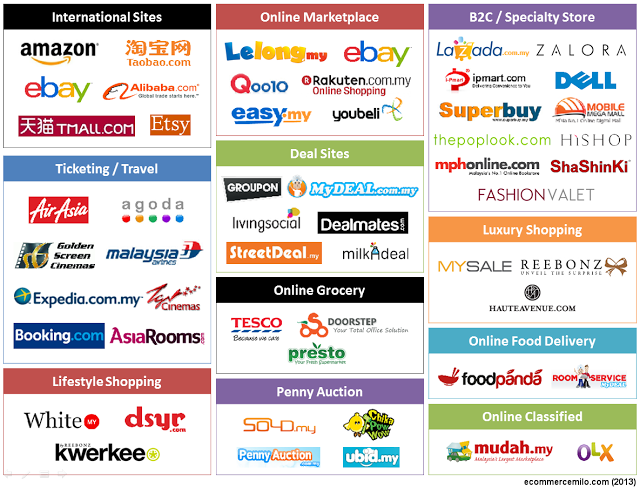
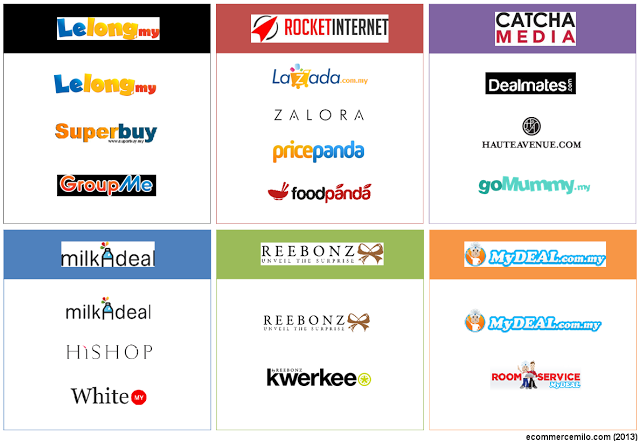
Malaysia’s e-commerce scene has been relatively crowded these days. But who’s dominating each vertical? Which are the top or most popular e-commerce sites in Malaysia? Here, we are compiling the rankings by segment or the nature of the e-commerce business. Our methodology is pretty straightforward by retrieving the data from Alexa’s top 500 sites in Malaysia (on 1 July 2013). However, some popular names are missing from the top 500 so we are including them here as well. Do take note that some notable names such as Parkson Online, Trosworld, Bubucaca. PostMe, and AirAsiaMegastore are missing from this compilation as their Alexa rankings are marginally below their competitors in respective segment. However, some of the sites above might continue to grow and we will observe them again in the near future. Before we start, you might want to read our post earlier on e-commerce history & milestones in Malaysia. Let’s get started with a visual first, followed by the rankings & tables. Read more of this post

Thai startup bubble will burst, and only the best will survive

Thai startup bubble will burst, and only the best will survive

BangkokStartup 15, Jul 2013News 

After a long chat with Krating Poonpol from DTAC, a Thai telecom conglomerate, we learnt that there is indeed a Thai startup bubble. AIS, DTAC and True. It is evident that these large telecommunication companies in Thailand are committed to the startup community. AIS has run StartupWeekends since 2011 and recently sent NoonSwoon to Echelon. The second telco hopping on the startup train is DTAC. DTAC went for a full accelerator program right away, invited international speakers to their weekly events and even hosted Geeks on the Plane. While DTAC might not be the first to play the startup game, they definitely push hard. We spoke with Krating Poonpol and his team at the DTAC House to find out how, what and why they are doing what they are doing. Read more of this post

On the 30th anniversary of Nintendo’s iconic console, the company is facing an existential crisis

On the 30th anniversary of Nintendo’s iconic console, the company is facing an existential crisis

By Christopher Mims @mims 9 hours ago

nintendo-market-share

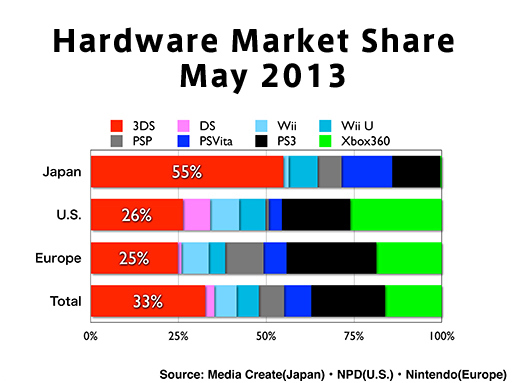
On Monday, the original Nintendo game console turned 30, but it’s looking increasingly unlikely that the company that made it will last another 30 years. Nintendo’s issues are many. The company took losses in its last two fiscal years despite maintaining revenue—mostly because of a strong yen, says CEO Satoru Iwata. Meanwhile, stiff competition from Microsoft and Sony and the advent of mobile gaming have eaten into the company’s growth. Nintendo’s recent Q&A with shareholders included a number of pointed questions that highlight the company’s weaknesses: Read more of this post

Whatsapp, The Granddaddy of Messaging Apps, Finally Goes For A Subscription Model on iOS

The Granddaddy of Messaging Apps, WhatsApp, Finally Goes For A Subscription Model on iOS

KIM-MAI CUTLER

posted 2 hours ago

While messaging has become a veritable war with apps like Line, KakaoTalk, WeChat, Path and Facebook Messenger across Asia and Western markets, there’s been one longstanding app that’s presided over the space with very few apparent changes. WhatsApp, the Sequoia-backed messaging app that dominates in Europe and that is often tipped as an attractive acquisition candidate for companies like Google and Facebook, just went freemium finally on iOS. The app has been paid for years on the iPhone at a $0.99 price point. Read more of this post

Codoon: The Chengdu-based company behind Baidu Wristband

Codoon: The Company behind Baidu Wristband

By Knight Liao on July 16, 2013

122

Codoon Wristband and App

Codoon Wristband, one of the first wearable devices produced by Chinese companies, was launched in the past June. Previously known as an appcessory developed by Baidu, this  fitness-tracking gadget, however, was made by Codoon, a Chinese startup based in Chengdu. Shen Bo founded Codoon in October 2009. In April 2011, Codoon received funding from Chinese online gaming company Shanda. Codoon Wristband is its latest product. By partnering with Baidu, Codoon can leverage its Cloud platform. The two sides also plan to come up with personalized services based on user data.

Read more of this post

Smartphone that can bend into a smart watch

Smartphone that can bend into a smart watch

July 17, 2013 – 9:14AM

Vignesh Ramachandran

art-limbo-flex-watch-620x349

Bend it: Jeabyun Yeon’s concept for a smartphone that bends into a smart watch.

This post was originally published on Mashable.

As technology advances, the list of gadgets we own grows longer: laptops, music players, smartphones, tablets, smart TVs, Google Glass – it’s endless. Now, with the buzz around smart watches, you may be wondering whether you want yet another gadget to charge, sync and carry around. Earlier this year, South Korean designer Jeabyun Yeon showcased his concept for a bendable smartphone that could transform into a watch. At 6.1-millimetres thick, the “Limbo” smartphone would be able to flex, so you could mount the 4.3-inch display on your wrist. Read more of this post

Apple Said Developing Ad-Skipping as Part of TV Strategy

Apple Said Developing Ad-Skipping as Part of TV Strategy

Apple Inc. (AAPL) is developing ad-skipping technology that would let owners of its Apple TV set-top box and future television devices watch shows without commercials, people with knowledge of the matter said.

Apple executives have briefed at least two owners of broadcast TV networks and cable channels, as well as some of the biggest U.S. pay-TV systems, said the people, who asked not to be identified because the talks are private. One proposal is for Apple to reimburse programmers for skipped ads, they said. Read more of this post

Google Said to Discuss Web TV With Media Companies

Google Said to Discuss Web TV With Media Companies

Google Inc. (GOOG), operator of the world’s most-popular search engine, has held discussions with media companies to introduce its own online-television service, people with knowledge of the matter said.

The product would offer viewers television packages that bypass cable subscriptions, said the people, who asked not to be identified because the matter is private. The talks, which also cover issues related to online piracy, are preliminary and nothing is imminent, the people said. Read more of this post

Verdict Still Out on Baidu’s $1.9 Billion App Store Deal; “Baidu has come to the realization that mobile search doesn’t work the same way that web search does”

Jul 16, 2013

Verdict Still Out on Baidu’s $1.9 Billion App Store Deal

By Paul Mozur and Isabella Steger

Baidu Inc. BIDU +4.04% just pulled off its biggest acquisition ever: forking out $1.9 billion to buy a Chinese app store operator from gaming company NetDragon Websoft Inc. 0777.HK +0.21% But investors in Hong Kong-listed NetDragon certainly didn’t like the deal, with its shares plunging as much as 21% during the day. It might also be awhile before Baidu investors learn the true value of the purchase. Nasdaq-listed Baidu is paying $1.9 billion for 91 Wireless Websoft Ltd., which posted first-quarter revenue of only $20 million. Clearly, what Baidu is after is not cash, but mobile users, who come in droves to 91′s app store HiMarket, one of the most popular in China, and one of an increasingly dwindling number of big nonaligned Chinese mobile assets. Read more of this post