Myanmar Unrest Raises Stakes for Growing Tourist Industry

Myanmar Unrest Raises Stakes for Growing Tourist Industry

By Agence France-Presse on 5:12 pm October 7, 2013.
Thandwe. Recent anti-Muslim bloodshed close to Myanmar’s most popular tourist beach raises the stakes for an industry dependent on the former pariah state’s fluid transition to democracy. Several days of tension spilled into bloodshed on Tuesday in the western state of Rakhine, where Buddhist mobs killed six Muslims and burned dozens of homes in the latest outburst of violence in the strife-torn region. Read more of this post

Time to trim back the hedge funds

October 8, 2013 6:12 pm

Time to trim back the hedge funds

Thanks to institutional interest, the sector is too big

Astriking feature of the post-crisis period has been the resilience of the hedge fund industry. In spite of their exorbitant fee structure and less than stellar performance – the average fund has returned just 4.5 per cent per annum since 2009, according to Hedge Fund Research – these investment vehicles continue remorselessly to expand. They now boast some $2.4tn under management, more than on the eve of the crisis six years ago. Read more of this post

The great diversification bait and switch: We’ve been looking recently at the false promises of a zombie hedge fund industry

The great diversification bait and switch

Dan McCrum

| Oct 09 15:10 | 10 comments | Share

We’ve been looking recently at the false promises of a zombie hedge fund industry. Now let’s widen the lens a little to take in asset management more broadly, and the self-interested warping of a concept at the heart of investing. Start with this terrific piece from Bloomberg, about how investors have been gulled by the supposedly respectable brokers of Wall Street selling investment products known as managed futures. Read more of this post

Food stamp recipients fret as stimulus boost ends

Food stamp recipients fret as stimulus boost ends

This Tuesday, Oct. 8, 2013 photo shows Jennifer Donald, whose family receives money from the Supplemental Nutrition Assistance Program also known as food stamps, helping her sleeping son Donovan, 4, out of her minivan in Philadelphia. Families already buffeted by difficult economic times will see their food stamps benefits drop Nov. 1 as money allocated by the 2009 federal stimulus plan runs out. The average family of four will see benefits drop by $36 a month, a tough hit at a time when child poverty is climbing and Congress is debating a major cut to the Supplemental Nutrition Assistance Program. (AP Photo/Matt Rourke)

2 hours ago  •  By RIK STEVENS

A temporary increase in food stamps expires Oct. 31, meaning for millions of Americans, the benefits that help put food on the table won’t stretch as far as they have for the past four years. Food stamps _ actually the Supplemental Nutrition Assistance Program _ go to 47 million Americans a month, almost half of them children and teenagers. “Every week is a struggle as it is,” said Heidi Leno, 43, who lives in Concord with her husband, 9-year-old daughter and 5-year-old twins. “We hate living paycheck to paycheck and you have to decide what gets paid.” Read more of this post

Prominent US astronomers are boycotting a NASA meeting next month on exoplanets because Chinese scientists have been banned from attending

Ban on Chinese sparks scientists’ boycott of NASA meeting

October 10, 2013

nw-wd-space-20131009212603270852-620x349

The final frontier: China’s first female astronaut Liu Yang leaves the re-entry capsule of a Shenzhou-9 spacecraft in Inner Mongolia in June last year. Photo: Xinhua

Prominent US astronomers are boycotting a NASA meeting next month on exoplanets because Chinese scientists have been banned from attending, experts say. The restriction is based on a law passed in 2011 and signed by President Barack Obama that prevents NASA funds from being used to collaborate with China or host Chinese visitors at US space agency facilities. Among those leading the boycott are Debra Fischer, an astronomy professor at Yale University, and Geoff Marcy, an astronomy professor at the University of California, Berkeley. ”In good conscience, I cannot attend a meeting that discriminates in this way. The meeting is about planets located trillions of miles away, with no national security implications,” Professor Marcy wrote in an email to the organisers. Read more of this post

Jack Dorsey was 29 and unemployed … then he built Twitter

Jack Dorsey was 29 and unemployed … then he built Twitter

October 10, 2013 – 12:14PM

Will Oremus

Jack Dorsey: Turned down for a job at a shoe store shortly before Twitter. Photo: Flickr/Jack Dorsey

The New York Times has published an excerpt from tech reporter Nick Bilton’s forthcomingbook about the early days of Twitter. Those in search of juicy anecdotes and a Zuckerbergian anti-hero figure in the Twitter origin myth will not be disappointed. I won’t keep you in suspense: it’s Jack Dorsey. In the course of Bilton’s excerpt, Dorsey goes from a shiftless New York University drop-out with a nose ring to a backstabbing climber to a disastrous manager to being forced out of Twitter and considering a job at rival Facebook to … well, just read the thing. But what stuck out to me about Dorsey, amid the parallels to Steve Jobs and Mark Zuckerberg, was that his is a more quintessential Silicon Valley rags-to-riches story than either of theirs. And it’s a quintessentially millennial story at that. Jobs was out of Reed College just a couple of years before founding Apple at age 21. Zuckerberg founded Facebook from a Harvard dorm room at age 19. Dorsey, on the other hand “was a 29-year-old New York University drop-out who sometimes wore a T-shirt with his phone number on the front and a nose ring”, writes Bilton. “After a three-month stint writing code for an Alcatraz boat-tour outfit, he was living in a tiny San Francisco apartment. He had recently been turned down for a job at Camper, the shoe store.” Then Evan Williams, the Blogger co-founder and then chief executive of Odeo, the start-up that would become Twitter, walked into the coffee shop where Dorsey was blaring punk rock on his laptop headphones. “Dorsey, who was shy after battling a speech impediment as a child, was reluctant to introduce himself personally. Instead, he opened his resume on his computer, deleted any signs of his desire to work for Camper shoes, found Williams’ email address online and sent a message to see if Odeo was hiring. Williams, whose investment in Odeo had turned him into the company’s CEO, soon called him in for an interview. He and [co-founder Noah] Glass, both college drop-outs themselves, preferred rabble-rousers to Stanford grad students and Dorsey, with his nose ring and dishevelled hair, seemed like a perfect fit.” Dorsey was hired, worked with Glass to develop Twitter, brutally betrayed Glass, and eventually remade himself as the dashing public face of the hottest social-media start-up since Facebook. He’s now Twitter’s chairman and the CEO of Square, the mobile-payments company. When he tweets that he’s in New York, Michael Bloomberg tweets “Welcome back!” Good thing he didn’t get that gig at Camper shoes.

General Electric has announced partnerships with AT&T, Cisco and Intel to expand its industrial internet service that allows its customers to analyse data and predict outcomes

Corporate giants expand industrial internet

October 10, 2013 – 9:47AM

General Electric has announced partnerships with AT&T, Cisco and Intel to expand its industrial internet service that allows its customers to analyse data and predict outcomes. The service helps customers analyse industrial “big data” – data so large that it is difficult to process using traditional database and software. This would help customers minimise downtime, increase productivity, lower fuel costs and reduce emissions. By connecting machines to the network and the cloud, workers can track, monitor, and operate GE’s machinery wirelessly from anywhere through secure and machine-to-machine communications, GE Software’s corporate officer Bill Ruh said. GE has existing partnerships with Amazon Web Services, Accenture and Pivotal to support the service. GE said the ten “predictivity” products it launched last year have contributed revenue of $US290 million ($307 million) so far this year. The company said it has 14 new customers for the 14 products launched on Wednesday. According to technology research group Wikibon, industrial data is expected to grow at two times the rate of any other big data segment over the next decade.

Behind the Best Innovations: Obvious, Annoying Problems; Like Square and Uber, Nest Seeks to Reinvent the Mundane

October 9, 2013, 2:39 p.m. ET

Behind the Best Innovations: Obvious, Annoying Problems

Like Square and Uber, Nest Seeks to Reinvent the Mundane

FARHAD MANJOO

MK-CG933_HIGHDE_D_20131009191941 MK-CG932_HIGHDE_D_20131009191820

The Nest Learning Thermostat programs itself and automatically saves energy when you’re away. Nest’s ‘smart’ smoke detector

Two years ago, Nest, a start-up founded by a group of ex-Apple AAPL +1.17%engineers and designers, unveiled a “smart” home thermostat. Folks in the tech industry responded with a familiar, collective two-step. First, puzzlement: A thermostat? Who buys thermostats? And then, when they got a chance to see the Nest in action, there was respectful envy: A thermostat! Of course! There had been Internet-connected thermostats before Nest’s version, just as there had been digital music players before the iPod. But like Apple Inc.’s music player, the Nest thermostat was so much more clever than anything else on the market that it seemed a reinvention of the entire industry. Read more of this post

IMF: Premature Fed Exit Could Fuel $2.3 Trillion in Global Bond Losses

October 9, 2013, 8:59 a.m. ET

IMF: Premature Fed Exit Could Fuel $2.3 Trillion in Global Bond Losses

IAN TALLEY

WASHINGTON—A premature exit by the U.S. Federal Reserve from its easy-money policies could cause $2.3 trillion in global bond portfolio losses, the International Monetary Fund warned Wednesday. Although the IMF assumes in its latest economic forecasts that the U.S. central bank will unravel its policies at a tempered pace, the fund said the market’s volatile reaction to Fed exit comments earlier this year show there is still a risk of moving too fast. Read more of this post

How a Treasury Default Could Trigger a Money Market Meltdown

Oct 9, 2013

How a Treasury Default Could Trigger a Money Market Meltdown

MICHAEL J. CASEY

If, God forbid, the U.S. Treasury is forced to default on its obligations next week, the first ripples in a rapidly expanding financial crisis will be felt in an obscure but giant sector of the short-term credit markets. There, in the $5 trillion-a-day repo market – more formally known as the securities repurchase market – Treasury securities are treated as the equivalent of currency. In tapping it, large Wall Street dealer banks work on the assumption that they can turn their inventory of U.S. government bonds into cash at any given moment, simply by offering the bonds up as collateral to money-market funds and other lenders that participate in this giant short-term funding market. If for just one of those securities this liquidity is turned off, those assumptions go out the window. The ramifications are enormous. Read more of this post

Brazil hikes interest rates fifth time to 9.5%, no sign of stopping

Brazil hikes interest rates fifth time, no sign of stopping

7:43pm EDT

By Luciana Otoni

BRASILIA, Oct 9 (Reuters) – Brazil raised interest rates for the fifth straight time on Wednesday and gave no indication of backing off its battle with high inflation even as Latin America’s largest economy struggles to pick up speed. The central bank raised its benchmark Selic interest rate to 9.5 percent from 9.0 percent as expected by all but two of the 65 economists polled by Reuters last week. Read more of this post

How Going Free Can Bring Profits

October 9, 2013, 4:15 p.m. ET

How Going Free Can Bring Profits

BEN ROONEY

Here is a paradox. The most popular app in the Apple store, Candy Crush Saga, is free. The game’s maker, London-based King, hasn’t disclosed revenue numbers, but its holding company, Midasplayer International Holding Co., is widely reported to be planning an IPO soon—suggesting it thinks it can make money, or at least convince investors that it can. But if free can be so lucrative, why has the newspaper industry, large parts of which have been giving away content for years, been ravaged? Likewise, the music industry, which didn’t so much give its content away free as have it stolen, saw revenues more than halve in the decade from 1999, from $14.6 billion to just $6.3 billion, according to a Forrester Research Inc. report. Read more of this post

New Rules Break Down the Walls for New Angel Investors

New Rules Break Down the Walls for New Angel Investors

Easing of Government Restrictions Allows Funding Syndicates Such as AngelList to Flourish

SPENCER E. ANTE and EVELYN M. RUSLI

Oct. 8, 2013 8:45 p.m. ET

When entrepreneur Jakub Krzych raised seed funding for his first technology startup in 2009, it took him around six months to scrounge together $20,000. A few weeks ago, Mr. Krzych rounded up $250,000 in just three days for his second startup, called Estimote. What changed? An easing on some of the U.S. government’s long-standing restrictions on fundraising has given life to a new type of venture-financing vehicle called an online syndicate, that allows so-called “angel” or early-stage investors to quickly assemble a group of investors over the Internet. Read more of this post

Mobile Advertising Begins to Take Off

Mobile Advertising Begins to Take Off

Spending More Than Doubled in the First Half

SUZANNE VRANICA and CHRISTOPHER S. STEWART

Updated Oct. 9, 2013 9:11 p.m. ET

P1-BN488A_MOBIL_NS_20131009183603

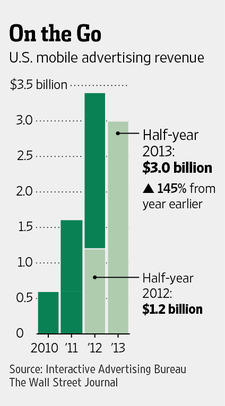
Marketers are finally convinced that there’s money to be made peddling everything from soap to salad dressing to the legions of consumers glued to their smartphones and tablets: Spending on mobile advertising more than doubled in the first half of the year. Mobile-ad spending in the U.S. totaled $3 billion in the first half, up from $1.2 billion a year earlier, the Interactive Advertising Bureau estimates. Read more of this post

Asian Messaging Apps Challenge Silicon Valley; China’s WeChat and Korea’s Line Are Threatening the Global Growth of WhatsApp and Facebook

October 9, 2013, 2:51 p.m. ET

Asian Messaging Apps Challenge Silicon Valley

China’s WeChat and Japan’s Line Are Threatening the Global Growth of WhatsApp and Facebook

JURO OSAWA And PAUL MOZUR

MK-CG942_CMESSA_NS_20131009181208

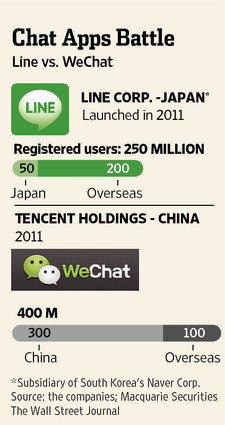
In the fiercely competitive market for smartphone applications, two Asian contenders are starting a trend from the Far East—and sending a message to Silicon Valley. China’s WeChat and Japan’s Line may be unfamiliar to most U.S. smartphone users. But the apps, which combine instant messaging with social networks, are well-known to hundreds of millions in Asia and other parts of the globe, challenging the global dominance of U.S.-based WhatsApp Inc. and even posing a potential threat to Facebook Inc. FB -0.78%and Twitter Inc. Line and WeChat’s prospects are far from assured in the fast-evolving world of mobile services, and how well they can prosper outside Asia is largely unknown. But their expansion is a marked change from the pattern of most social networks being born and gaining critical mass in the U.S. before spreading to other countries. Read more of this post

Indonesia Takes Some Small Steps Toward Hollywood

October 9, 2013, 7:00 p.m. ET

Indonesia Takes Some Small Steps Toward Hollywood

Though No. 4. in Population Globally, Long a Cinematic Lightweight Regionally.

ARMANDO SIAHAAN

Over the past few years, Indonesia’s profile in Hollywood has been growing slowly but surely, and martial arts are fighting to further the momentum. Justin Lin’s “Fast & Furious 6,” this year’s entry in the Vin Diesel muscle-car franchise, includes a supporting-villain turn for Indonesian judo-champion-turned-actor Joe Taslim, while Iko Uwais, an Indonesian actor known for the traditional martial art pencak silat, is featured in the martial-arts film “Man of Tai Chi,” a China-U.S. co-production directed by Keanu Reeves. Read more of this post

Coffee Market Braces for Venti Bags; Rule Change Expected to Further Suppress Arabica Prices

October 9, 2013, 4:34 p.m. ET

Coffee Market Braces for Venti Bags

Rule Change Expected to Further Suppress Arabica Prices

LESLIE JOSEPHS

For hundreds of years, coffee beans have made their way around the world in gunny sacks. Now the use of these burlap bags, small enough to be hoisted by one person and a symbol of coffee’s artisanal character, is giving way to the modern demands of global trade. IntercontinentalExchange Inc., ICE -0.37% home to the world’s most heavily traded coffee contract, last week said it would allow bean shipments to its certified warehouses to arrive in lined cargo containers, or “supersacks.” These plastic woven sacks often hold a metric ton of coffee, or enough beans to make about 125,000 shots of espresso. Read more of this post

Yum Concedes Missteps in China; More Innovation Was Needed After KFC Chicken-Safety Scare

Yum Concedes Missteps in China

More Innovation Was Needed After KFC Chicken-Safety Scare

LAURIE BURKITT and JULIE JARGON

Updated Oct. 9, 2013 1:40 p.m. ET

A lack of innovation and other missteps by Yum Brands Inc. YUM -6.76% in China are accelerating the slide of what was long one of the most successful foreign businesses in the world’s biggest emerging market. Yum executives acknowledged Wednesday that consumer fears over food safety have had a longer-lasting effect on China sales than expected—especially at its 4,463 KFC outlets in the country—and that its business there hasn’t been innovative enough with its menu offerings. Read more of this post

Asia’s Warning About Basel Bonds

Updated October 9, 2013, 3:38 p.m. ET

Asia’s Warning About Basel Bonds

A supposed crisis-prevention measure confuses investors.

Some people think a proliferation of novel, hard-to-value credit-linked securities that behaved unpredictably in a crunch contributed to the 2008 financial crisis. Silly them! The Basel committee of central bankers and regulators knows better, and has now decreed that more such securities are the way to avert another crisis. We’re joking, but the so-called Basel III capital standards for banks are all-too serious. And Asian banks are becoming guinea pigs in one of the bigger Basel III experiments. Read more of this post

Change Flies Into Japan: JAL’s Airbus order shows economic transformation is happening anyway, even as grand plans falter in Tokyo

Change Flies Into Japan

JAL’s Airbus order shows economic transformation is happening anyway, even as grand plans falter in Tokyo.

JOSEPH STERNBERG

Oct. 9, 2013 12:29 p.m. ET

The case for optimism about Japan’s economic future, such as it is, is that change has to come eventually. Demographic decline at home and economic changes abroad will make the old ways unsustainable, at which point the Japanese will have to change course. And wouldn’t you know it, but this week Japan Airlines 9201.TO +1.25% , of all companies, offered further evidence that the theory is true. Read more of this post

FX Concepts Closing Asset-Management Business; Firm Was Once World’s Largest Currency-Focused Fund Manager

Updated October 9, 2013, 7:14 p.m. ET

FX Concepts Closing Asset-Management Business

Firm Was Once World’s Largest Currency-Focused Fund Manager

GREGORY ZUCKERMAN, IRA IOSEBASHVILI And NICOLE HONG

MI-BY982_FXCLOS_NS_20131009180303

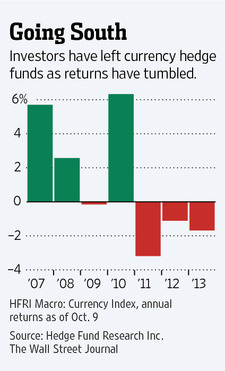
The investor retreat from the once-lucrative currency-trading arena passed a milestone Wednesday with the closure of a firm that once was the largest of its sort, FX Concepts. The New York firm, whose assets under management shriveled to $660 million last month, from $14 billion at the dawn of the financial crisis, will close its asset-management business over the next few weeks and return money to investors, the company said in a statement. Read more of this post

A giant US asset manager is banking on the US not paying its bills on time

A giant US asset manager is banking on the US not paying its bills on time

By Matt Phillips @MatthewPhillips 2 hours ago

As we’ve been saying, there are plenty of signs that investors have been dumping US Treasury bills set to mature during around the time the US will hit the debt ceiling. And here’s one solid example: giant US money manager Fidelity Investments says it is one of those investors. Portfolio managers at the Boston-based firm have been selling of short-term Treasury bills over the last couple of weeks, according to Nancy Prior, president of Fidelity’s Money Market Group, who told the Associated Press. Sell-offs by Fidelity and others have resulted in the sharp rising in yields on one-month US Treasury bills recently. Read more of this post

The workday secrets of the world’s most productive philosophers

THE WORKDAY SECRETS OF THE WORLD’S MOST PRODUCTIVE PHILOSOPHERS

BY: DRAKE BAER

Haters gonna hate, thinkers gonna think, philosophers gonna philosophize. But how does one philosophize? Would someone whose thoughts would later shape the world shape their days differently than you and I? As Josh Jones notes at Open Culture, the answer is “not really”–aside for some serious devotions to long, lonesome walks. As we’ll see below, the irregularly outsize output of Friedrich Nietzsche, Karl Marx, and Immanuel Kant was marked by exceedingly regular days. As the literary saying goes: “Be regular and orderly in your life so that you may be violent and original in your work.” So let us get to the orders. Read more of this post

Ben Horowitz: Cash Flow and Destiny; “Until you generate cash, you must heed investors even when they are wrong. When you generate cash, you can respond to silly requests from the capital markets the way Kanye would”

10.08.13 // Cash Flow and Destiny

Ben Horowitz

Wait ’til I get my money right
Then you can’t tell me nothing, right?
—Kanye West, “Can’t Tell Me Nothing”

If you are an entrepreneur, you have probably heard some crusty old CEO or investor say something like “cash is king.” You probably read the Twitter S-1 and thought to yourself: “What the hell are those old guys talking about?” Twitter is still burning cash six years after founding and they, not cash, seem to be king. In a situation such as this, I usually just say to myself: “That’s the problem with wisdom, you can get it, but you cannot share it.” But this particular nugget is so fundamentally important that I will attempt to represent the old guys in this imaginary conversation. I was a founder/CEO during the period when cash seemed more like a serf than a king in 1999 and 2000. It was the era of “go big or go home.” Investors loved anything Internet and could not care less about profits. I grew my company and I grew it fast. In less than nine months after founding, I booked a $27 million quarter. I was going big and definitely not going home. Then the dot com crash happened and investors changed their collective minds. Investors hated anything Internet and wouldn’t fund anything that couldn’t fund itself. Read more of this post

Ben Horowitz: Why Founders Fail: The Product CEO Paradox

08.12.13 // Why Founders Fail: The Product CEO Paradox

Ben Horowitz

If I knew what I knew in the past
I would have been blacked out on your a**
—Kanye West, Black Skinhead

Because I am a prominent advocate for founders running their own companies, whenever a founder fails to scale or gets replaced by a professional CEO, people send me lots of emails. What happened, Ben? I thought founders were supposed to better? Are you going to update your “Why We Prefer Founding CEOs” post? In response to all of these emails: No, I am not going to rewrite that post, but I will write this post. There are three main reasons why founders fail to run the companies they created:

The founder doesn’t really want to be CEO – Not every inventor wants to run a company and if you don’t really want to be CEO, your chances for success will be exceptionally low. The CEO skill set is incredibly difficult to master, so without a strong desire to do so the founder will fail. If you are a Founder who doesn’t want to be CEO, that’s fine, but you should figure that out early and save yourself and everyone else a lot of pain. Read more of this post

Disasters, Rebuilding and Leadership – Tough Lessons from Japan and the U.S.

Disasters, Rebuilding and Leadership – Tough Lessons from Japan and the U.S.

Oct 03, 2013

On March 11, 2011, deep below the surface of the Pacific Ocean, enormous seismic forces reached a tipping point. At 2:46 p.m., one of the earth’s tectonic plates suddenly shifted, thrusting violently underneath another. The North American plate was pushed upward with such force that the movement generated a massive tsunami. It took the wall of moving water 51 minutes to reach the coast of Japan, some 45 miles away. In some places, the tsunami towered more than 125 feet above the ground when it hit. Thankfully, the height of the wave was far less where it came ashore near the Fukushima Daiichi nuclear power plant — “only” 50 feet high. Still, the nuclear disaster caused by the earthquake and tsunami has been rated by the International Atomic Energy Agency as equal in severity to the 1986 accident at Chernobyl, the worst nuclear disaster on record. The complex catastrophe — earthquake, tsunami and nuclear meltdown — killed close to 20,000 people, displaced hundreds of thousands more and contaminated a large swathe of beautiful countryside for decades or longer. More than two years later, Japan is still struggling to recover and prevent even more devastation. On May 24, 2013, the Initiative for Global Environmental Leadership (IGEL) sponsored a panel at the Wharton Global Forum in Tokyo to consider the leadership lessons generated by the Fukushima disaster, and to look at its impact on Japan’s energy policy and the resettlement of afflicted areas. Read more of this post

Hallmarks of Successful Growth Companies

Hallmarks of Successful Growth Companies

In collaboration with GE Capital, Jun 05, 2013

Being an entrepreneur is difficult. Yet some start-up and growth-stage companies do more than survive — they thrive. Experts from Wharton and GE Capital reveal that business success often doesn’t depend on stunning innovations but instead on common-sense business practices such as embracing change and choosing the right partners and board members.

Manila Casinos Taking on Singapore Hinges on Tax: Southeast Asia

Manila Casinos Taking on Singapore Hinges on Tax: Southeast Asia

Macau casino mogul Lawrence Ho said gambling revenue in the Philippines “could easily” double to $4 billion in a couple of years, setting the stage to challenge Singapore as Asia’s second-biggest gaming hub. To ensure success, the Philippines will have to decide how to tax casino developers and operators, Melco Crown Entertainment Ltd. (MPEL) co-Chairman Ho said in an interview in Manila yesterday. In April, the nation’s tax bureau ordered all casino operators to pay income tax on their gaming earnings, removing an exemption provided for by the licenses given to four operators developing casinos in the capital. Read more of this post

Disney will stop issuing stock certificates, delivering shares only in electronic form in a blow to would-be collectors of the documents featuring drawings of Bambi and Mickey Mouse

Disney Stops Issuing Stock Certificates in Blow to Fans

Walt Disney Co. will stop issuing stock certificates on Oct. 16, delivering shares only in electronic form in a blow to would-be collectors of the documents featuring drawings of Bambi and Mickey Mouse. When investors transfer shares, they will be reissued without certificates, Disney said today in a regulatory filing. That will shrink the supply for websites pitching the items as a way to interest children in investing. Read more of this post

NASA Keeps Chinese Away From Aliens; Chinese nationals carry the burden of their country’s weak commitment to intellectual-property protection and strong commitment to espionage

NASA Keeps Chinese Away From Aliens

If Martians landed on National Aeronautics and Space Administration property, Chinese nationals wouldn’t be part of the welcoming committee.

That’s one potential — if far-fetched — consequence of federal legislation and a March moratorium that bans people from China and a handful of other nations from being granted new access to NASA facilities. NASA Administrator Charles Bolden’s rationale for the moratorium was to protect the U.S. and its space technology from spies. This came in the wake of espionage allegations at a NASA facility that turned out to be false. (The downloaded secrets were actually, ahem, downloaded porn.)

An actual consequence of the U.S.’s actions is that Chinese students and researchers will not be allowed to attend a November conference on alien worlds at NASA’s Ames Research Center in Mountain View, California. As a result, several prominent researchers are boycotting the conference. Read more of this post