State Street to launch emerging market ETF without BRIC countries

State Street to launch emerging market ETF without BRIC countries

New fund would allow investors to get more exposure to some of the smaller, potentially higher-growth areas of the market

Aug 28, 2013 @ 4:57 pm (Updated 5:00 pm) EST

State Street Corp., the second- largest provider of exchange-traded funds worldwide, is seeking to counter its biggest rivals’ dominance of emerging-market stock ETFs with a fund that excludes Brazil, Russia, India and China, known as the BRIC nations. State Street asked the Securities and Exchange Commission for permission to open the SPDR MSCI Beyond BRIC ETF, according to a regulatory filing dated yesterday from the Boston-based firm. The ETF would invest in developing-market stocks in Chile, Columbia, the Czech Republic, Indonesia, South Africa and Turkey, among others. Read more of this post

$60-Trillion ‘Shadow’ banks face 2015 deadline to comply with first global rules

‘Shadow’ banks face 2015 deadline to comply with first global rules

2:55pm EDT

By Huw Jones

LONDON (Reuters) – The $60 trillion “shadow banking” sector has been given until 2015 to fully comply with its first set of global rules, after an international regulatory task force unveiled plans to curb risk without strangling economic recovery. Leaders of the group of 20 economies (G20) meet in Russia next week to endorse the rules written by their Financial Stability Board (FSB), setting out requirements for the sector and how it must be supervised. Read more of this post

Risk Flipped as CCCs Beat AAAs Most Since 2009; Investors are eschewing bonds with the most to lose when interest rates rise and AAAs are more interest-rate sensitive

Risk Flipped as CCCs Beat AAAs Most Since 2009: Credit Markets

Risk is being turned on its head in the corporate-bond market as debt deemed closest to default beats returns on the highest-rated debentures by the most in four years.

Securities ranked in the CCC tier or lower by Standard & Poor’s have gained 7.1 percent this year, compared with a 5 percent loss for AAA rated debt, according to Bank of America Merrill Lynch index data. AAAs are losing 1.2 percent this month, versus 0.5 percentage point for CCCs. The divergence is making this only the third year since at least 1996 in which the lowest-graded debt produced gains while top-rated bonds lost, the data show. Read more of this post

Join The Booming Dollar Store Economy! Low Pay, Long Hours, May Work While Injured

Dave Jamieson

dave.jamieson@huffingtonpost.com

Join The Booming Dollar Store Economy! Low Pay, Long Hours, May Work While Injured

Posted: 08/29/2013 7:30 am EDT  |  Updated: 08/29/2013 7:49 pm EDT

Dawn Hughey had worked at Dollar General for just four months when she was named manager of a store in the Detroit suburbs in 2009. Having recently moved home after a stint in California, Hughey hoped the new honorific — and its attendant annual salary — would help her start a new life in Michigan. But like other managers in America’s booming dollar store industry, Hughey quickly came to believe she was a manager in name only. The major dollar store chains — Dollar General, Dollar Tree and Family Dollar — have thrived by offering customers rock-bottom prices that rival Walmart’s, a business model that requires shaving labor costs wherever possible. For a manager like Hughey, that meant working far beyond a 40-hour week. Read more of this post

Have emerging markets bottomed out? Emerging economies have yet to report the impact from higher rates and currency falls, which could prompt a further loss of investor confidence and fuel a feedback loop

August 29, 2013 6:53 pm

Have emerging markets bottomed out?

By James Mackintosh

Impact from higher rates and currency falls yet to be reported

There’s an easy way to spot a true deep-value investment. It’s the position you would be embarrassed to present to the investment committee, and definitely would not recommend to a friend. Ideally, clicking to confirm the purchase should make you feel physically sick. Emerging markets (EM) are not one of those screaming bargains. Still, on Thursday they rallied strongly as government intervention in India and a rate rise in Indonesia prompted short-covering in the rupee and rupiah. Both jumped more than 3 per cent, the biggest rise in the rupee in a decade. The question is whether EM have now bottomed out. The recent speed of the fall in the rupee certainly suggests fear. Yet, investors remain ready to search for good value. Serious panic has not set in, and falls in equities, currencies or bonds, while big, are much smaller than in proper crises. EM equities have not even had a one-fifth fall from their peak this year. In dollar terms they are off 16 per cent; in local currency shares are down less than a tenth. But in relative terms EM shares look a steal. They have lagged behind developed market shares in the past three years in a way reminiscent of the aftermath of Lehman’s collapse, the 1997 Asian crisis or the reaction to the 1994 US rate hikes. The valuation discount to developed markets has not been as big since 2005 (on price to book value) or 2006 (for price to forward earnings). EM governments’ willingness to use up currency reserves might support the growing voices suggesting that now is the time to buy. But emerging economies have yet to report the impact from higher rates and currency falls, which could prompt a further loss of investor confidence and fuel a feedback loop. A pause in the selling would give EMs a chance to show they can fix entrenched economic problems. Without that, bulls can only hope global recovery gives EM economies a lift – or watch them become a true value play.

In Turmoil, Emerging Markets Raise Rates; Move by Indonesia Follows Brazil, Turkey; Trend Threatens to Deepen Slowdown

August 29, 2013, 7:51 p.m. ET

In Turmoil, Emerging Markets Raise Rates

Move by Indonesia Follows Brazil, Turkey; Trend Threatens to Deepen Slowdown

THOMAS CATAN in Washington, SHEFALI ANAND in Mumbai and TOM MURPHY in São Paulo

WO-AP208_CENTRA_G_20130829183908

Major emerging-market central banks are moving to raise interest rates in an effort to stem an exodus of cash, in a trend that threatens to intensify an economic slowdown across the developing world. Indonesia raised its benchmark rate by half a percentage point on Thursday, one day after a half-point increase by Brazil and a week after a rate increase by Turkey. Other developing economies are under mounting pressure to tighten credit to support their weakening currencies. Brazil’s central bank hinted at further increases to come. Read more of this post

Horns of a trilemma: How can emerging economies protect themselves from the rich world’s monetary policy?

Horns of a trilemma: How can emerging economies protect themselves from the rich world’s monetary policy?

Aug 31st 2013 |From the print edition

20130831_FNC313

SINCE the beginning of May the Indian rupee has plunged by 23% against the dollar. The Turkish lira fell by 15% in that time, and the Indonesian rupiah by 16%. Headlines warn of a replay of the Asian crisis of the late 1990s. Complaints from emerging-market officials that rich-world monetary experiments are to blame for the trouble look like sour grapes. But new research presented to the world’s top central bankers at their recent gathering in Jackson Hole suggests they may have a point. Read more of this post

GE Set to Exit Retail Lending; Worries About Banking Exposure Has Conglomerate Focusing on Industrial Operations

August 30, 2013, 1:04 a.m. ET

GE Set to Exit Retail Lending

Worries About Banking Exposure Has Conglomerate Focusing on Industrial Operations

KATE LINEBAUGH and SHARON TERLEP

MK-CF933_GECAPI_NS_20130829175113

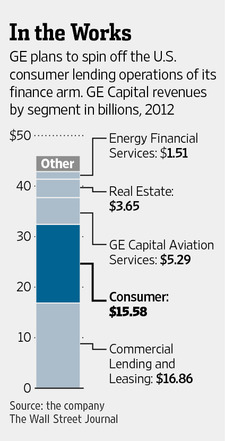
General Electric Co. GE -0.39% is preparing to spin off one of its most important financial assets—the unit that issues store credit cards for 55 million Americans—as it retreats from one of the high-growth businesses that defined the modern conglomerate. The decision to divest the business, amid concerns about the company’s exposure to banking, marks an important moment in the evolution of GE and the country’s three-decade long consumer credit boom. GE Capital expanded to the point that its portfolio of loans and other assets now would rank it as the country’s fifth-largest commercial bank. Read more of this post

Fast-Food Strikes Expand Across U.S. to 50 Cities

Fast-Food Strikes Expand Across U.S. to 50 Cities

Fast-food workers in 50 U.S. cities plan to walk off the job today in an attempt to ratchet up pressure on McDonald’s Corp. (MCD) and Wendy’s Co. to raise wages. Protests that began in New York last year are spreading to cities including Boston, Chicago, Denver, San Diego and Indianapolis, according to the Service Employees International Union, which is advising the strikers. About 200 workers showed up at the two-story Rock N Roll McDonald’s store in Chicago’s River North neighborhood this morning chanting: “Hey hey, ho ho, poverty wages gotta go!” Read more of this post

Limits on Broker Use of Client Assets Sought by Global Regulator

Limits on Broker Use of Client Assets Sought by Global Regulator

Brokers face restrictions on using clients’ assets as collateral for other trades, as part of a push by global regulators to prevent the securities lending market from sparking chain reactions that could cause a crisis. Under recommendations published today by the Financial Stability Board, brokers wouldn’t be allowed to tap client assets for their own trading, and they would have to provide “sufficient disclosure” of plans to use the securities as collateral in other transactions. They would also have to meet minimum standards in managing liquidity risks. Read more of this post

Acquisitions, Entry, and Innovation in Network Industries

Acquisitions, Entry, and Innovation in Network Industries

Pehr-Johan Norbäck Research Institute of Industrial Economics (IFN)

Lars Persson Research Institute of Industrial Economics (IFN); Centre for Economic Policy Research (CEPR)

Joacim Tag Research Institute of Industrial Economics (IFN)

August 2013
CEPR Discussion Paper No. DP9585

Abstract: 
In industries with network effects, incumbents’ installed bases create barriers to entry that discourage entrepreneurs from developing new innovations. Yet, entry is not the only commercialization route for entrepreneurs. We show that the option of selling to an incumbent increases innovation incentives for entrepreneurs when network effects are strong and incumbents compete to preemptively acquire innovations. We thus establish that network effects and installed bases do not necessarily restrict innovation incentives. We also show that network effects promote acquisitions over entry and that the entrepreneur has strong incentives to invest in the initial user base of the innovation.

Innovation as Determining Factor of Post-M&A Performance: The Case of Vietnam

Innovation as Determining Factor of Post-M&A Performance: The Case of Vietnam

Vietnamica THURSDAY, AUGUST 22, 2013 – 12:36

August 21, 2013 (Vietnamica) –In the 2005-2012 period, M&A transactions value in Vietnam was estimated around US$10 billion. Employing a categorical data sample of 212 M&A cases, Vuong, Napier and Samson (2013) investigate the relationship between determination of controlling an acquired firm’s capital, assets, and brand versus its capability of innovation and ex post performance. Empirical evidence suggests negative performance of post M&A operations is likely rooted in an overwhelming “resource acquiring” strategy and negligence on innovation factor – for instance, a human resource, especially corporate leaders, willing and able to make creativity. Indeed, many sellers consider M&A an exit or even an end of their entrepreneurial endeavors (Vuong and Tran, 2009; Vuong, Tran, and Nguyen, 2010). In a post M&A period, some enjoy comfortable lives of wealthy retired businesspeople while others start new venture of being capitalist.  Read more of this post

What Stops Leaders from Showing Compassion

What Stops Leaders from Showing Compassion

by Roger Schwarz  |   8:00 AM August 29, 2013

Most good people want to act compassionately at work. And recent research suggests that compassion also creates positive outcomes in organizations: People who experience compassion feel more committed to the organization and feel more positive emotions at work; when people receive bad news that is delivered with compassion, they remain more supportive of the organization; and acting with compassion can increase your own satisfaction and mitigate your own stress at work. And yet even if you want to be compassionate with others at work, you may find it difficult. You may find yourself either judging others or making assumptions about what will happen if you are compassionate. This can be especially challenging for leaders. As a leader, you get paid for your judgment. You are constantly evaluating situations and people. But that strength can become a liability when others need your compassion. If you find yourself thinking any of the thoughts below, chances are you’re letting your judgment get too much in the way of your compassion:

“Your suffering isn’t that serious.” When you tell yourself that others’ suffering isn’t serious enough, you’re saying they don’t deserve compassion. When your direct reports say, “We’re totally overwhelmed with work and can’t get any cooperation from the other divisions,” do you think, “Your workload is nothing; you have no idea how much I’m working. Stop complaining and make it happen”? Suffering isn’t a competition. Other people’s suffering doesn’t have to exceed yours for you to be compassionate. Remember that acting with compassion can also reduce your own stress. Read more of this post

The Hidden Risk of Investing in Stable Companies; Rising interest rates may hurt dividend-paying stocks, defensive sectors, and large caps more than their counterparts

The Hidden Risk of Investing in Stable Companies

Rising interest rates may hurt dividend-paying stocks, defensive sectors, and large caps more than their counterparts.

By Alex Bryan | 08-28-13 | 06:00 AM | Email Article

Fear of rising interest rates has a lot of investors on edge, to say the least. Clearly, rising interest rates are bad for bond and equity investors. It’s easy to reduce interest-rate risk in a bond portfolio because interest-rate sensitivity, or duration, is directly related to the timing of cash flows. Bond investors can cushion the blow of rising rates by swapping out long for short duration bonds. But for investors who want to stick with stocks in a rising interest-rate environment, the options for reducing interest-rate risk are less clear. While some investment styles may help limit the damage the Fed can inflict on your portfolio, it’s important not to lose sight of the big picture. Read more of this post

Cancer’s Primeval Power and Murderous Purpose

Cancer’s Primeval Power and Murderous Purpose

It was 2010 and I was driving through the badlands of northwest Colorado, far from the cool, green Rocky Mountains. This was the land where the oldest known example of cancer had been found: inside of a bone of a Jurassic Age dinosaur. About 150 million years ago, the malignant growth had eaten away at the beast. It died and was buried under the layered debris of the ages. But a fragment of its petrified skeleton chanced to survive. It was discovered by an unknown rock hunter, cut and polished in a rock shop, and purchased by a man on vacation — a doctor who knew bone cancer when he saw it. Read more of this post

Wine Consultant Charles Curtis on Spotting a Wine Fake

August 28, 2013, 6:59 p.m. ET

Wine Consultant Charles Curtis on Spotting a Wine Fake

The Signs a Wine Isn’t What Its Label Says It Is

JASON CHOW

PJ-BQ200_TOT_G_20130828175921

As the market for fine wine grows, so does the opportunity for making money from passing off a cheap blend as pricey aged Bordeaux. Wine counterfeiters “are getting really sophisticated,” says Charles Curtis, a New York-based wine consultant who, through his company Wine Alpha, offers a service that checks for fakes in the cellars of wealthy collectors throughout the world. “People are reusing old bottles, reapplying labels and corks—it’s complex.” Few wine collectors have seen as many old bottles as Mr. Curtis, a former head of wine for Christie’s auction house in Asia and the Americas. He now advises private clients on how to start or sell a collection as well as verifying the wines they own. Read more of this post

Malaysia Plans Projects-to-Subsidy Curbs to Contain Budget Gap

Malaysia Plans Projects-to-Subsidy Curbs to Contain Budget Gap

Malaysia said it plans to delay infrastructure projects, cut subsidies and may start a consumption tax, seeking to contain the budget deficit and bolster a shrinking current-account surplus. Public building projects with high import content are most likely to be rescheduled, Idris Jala, a minister in the Prime Minister’s Department, told reporters in Kuala Lumpur today. The government may unveil plans to adjust subsidies as early as next week and is trying to include a goods and services tax in its 2014 budget, said Mohd Irwan Serigar Abdullah, secretary general at the finance ministry. Read more of this post

Man, the world’s biggest publicly traded hedge-fund manager, is shutting a range of products that aimed to protect clients from losses after they failed to meet performance targets

Man Shuts Vision Fund in Overhaul of Guaranteed Products

Man Group Plc (EMG), the world’s biggest publicly traded hedge-fund manager, is shutting a range of products that aimed to protect clients from losses after they failed to meet performance targets.

The company decided this month to shut Man Vision Ltd., a $40 million pool that sought to generate returns of more than 10 percent annually, according to an Aug. 12 letter sent to clients and obtained by Bloomberg News. Man Group is also closing similar offerings that, like Vision, were tied to the performance of AHL Diversified, the firm’s biggest hedge fund, said a person with knowledge of the moves who asked not to be identified because they aren’t public. Read more of this post

India finds price of expats’ patriotism elusive as growth fades

India finds price of expats’ patriotism elusive as growth fades

2:37pm IST

By Sumeet Chatterjee and Beth Pinsker

MUMBAI/NEW YORK (Reuters) – The patriotism of wealthy overseas Indians has helped the country avert economic crises in the past and it is little surprise that embattled policymakers are turning to them again to plug a record trade gap that is battering the rupee. This time, though, big investors among the more than 25-million overseas Indian community – the world’s second-largest diaspora – are staying away as the economic outlook darkens and political instability looms ahead of national elections. Read more of this post

Unhappy ending for Indonesia growth story; Indonesia bows to investor pressure to raise rates

August 29, 2013 3:40 pm

Unhappy ending for Indonesia growth story

By Ben Bland in Jakarta

Indonesia’s decision to follow Brazil’s lead by raising interest rates at an extraordinary central bank meeting on Thursday temporarily took the sting out of the recent market slide, with the rupiah appreciating against the dollar and the stock market closing in the black. But the global emerging market turbulence, which has also hit Brazil, India, South Africa and Turkey, is unlikely to abate until the US Federal Reserve clarifies its plans to curb its quantitative easing programme. Read more of this post

Malaysia’s large public funded projects may be rescheduled

Updated: Thursday August 29, 2013 MYT 2:44:34 PM

Malaysia’s large public funded projects may be rescheduled

KUALA LUMPUR: Malaysia’s goods and service tax (GST) will take 14 months to implement if announced in the budget in October, a ministry official said on Thursday, as the government moves to curb its stubborn fiscal deficit and high debt burden. The GST will help Malaysia broaden its tax base and tackle a fiscal deficit that has widened to RM14.9bil, as well as a shrinking current account surplus which fell sharply to RM2.6bil(US$780mil) in the second quarter. Read more of this post

Fed Scaring People Betrays Low-Rate Addiction, Denmark Says

Fed Scaring People Betrays Low-Rate Addiction, Denmark Says

Denmark’s Economy Minister Margrethe Vestager said the reaction to the Federal Reserve’s talk of scaling back stimulus as early as next month has made clear just how addicted people have become to record-low rates. The volatility that followed the Fed’s June signal it may be preparing to taper support measures was a reminder that low borrowing costs are still underpinning demand across much of the globe, Vestager said. Read more of this post

Naming and shaming: Macau website targets deadbeat gamblers

Naming and shaming: Macau website targets deadbeat gamblers

5:59am EDT

By Farah Master

HONG KONG (Reuters) – Hustler, cheater, robber, rogue. Gamblers who skip out on casino debts in Macau risk being branded with these monikers and having personal details made public by a website that says it has helped to recover 50 million yuan ($8 million) so far. But the novel strategy to combat bad debts in the world’s largest gambling destination is under scrutiny from the police for possibly breaking the law and from the Chinese territory’s gaming authority over privacy concerns. The bilingual website, called Wonderful World in English, features a blacklist of more than 70 people from across China who it says have failed to repay gambling debts ranging from thousands to millions of yuan. Photographs of alleged deadbeats, along with their date of birth and marital status, are displayed prominently. A bounty is often offered for help in tracking them down. Read more of this post

Is China’s Cash Crunch Returning?

August 28, 2013, 7:00 PM

Is China’s Cash Crunch Returning?

Is it time for a return of China’s cash crunch?

A spike in money-market rates in June raised fears about the stability of China’s financial sector, pushed equity markets sharply lower, and had investors running for cover. A peek at the overlooked role of China’s Ministry of Finance in the money markets suggests another scare might not be far away. The People’s Bank of China has the lead role in managing funds in China’s financial market, but the movement of tens of billions of yuan in tax receipts and public spending in and out of the financial system also has a major impact, and sometimes pulls in the opposite direction of the central bank. Read more of this post

Yet to Buy Into Abenomics, Wives Cut Husbands’ Pocket Money

August 29, 2013, 3:47 PM

Yet to Buy Into Abenomics, Wives Cut Husbands’ Pocket Money

By Kana Inagaki

Japanese men hoping to reap the benefits of the economic upturn with an increase in their monthly spending cash will be disappointed to find this won’t be happening anytime soon. It seems their wives, who typically control family purse strings in Japan, have yet to buy into Abenomics. According to an online survey of 3,300 individuals carried out by Orix Bank Corp. in July, the average monthly spending allowance of men fell by 11% compared with last year’s survey, falling to Y30,468 ($310). Read more of this post

Innovation isn’t an idea problem, but rather a biased recognition problem

Innovation Isn’t an Idea Problem

by David Burkus  |   8:00 AM July 23, 2013

When most organizations try to increase their innovation efforts, they always seem to start from the same assumption: “we need more ideas.” They’ll start talking about the need to “think outside the box” or “blue sky” thinking in order to find a few ideas that can turn into viable new products or systems. However, in most organizations, innovation isn’t hampered by a lack of ideas, but rather a lack of noticing the good ideas already there. It’s not an idea problem; it’s a recognition problem. Read more of this post

Is Bias Fixable?

Is Bias Fixable?

by Nilofer Merchant  |  10:16 AM August 28, 2013

“As a brown woman, your chances of being seen and heard in the world are next to nothing,” he said. “For your ideas to be seen, they need to be edgier.” He paused, as if to ruminate on this, before continuing. “But if you are edgy, you will be too scary to be heard.” This was the advice I got from a marketing guru when I asked for his help with titling my second book. I was confused, as I couldn’t figure out how this answer had any relationship to my original question. I walked — somewhat dazed — to my next meeting and repeated what I’d just heard. In return, I received only blank stares. It wasn’t that these people affirmed his point of view; it’s that they stayed silent. My confusion gradually turned to fear. Was someone finally doing me a service by telling me … The Truth? For months after hearing this “… you’ll never been seen” message, I was a mess seeing his “truth” into every missed opportunity or unexpected obstacle. Read more of this post

Love of creation is what enables entrepreneurs to withstand the fear that comes with entrepreneurship

Startups are a young person’s game: Leasing a soul to build better companies

BY OPHIR TANZ 
ON AUGUST 28, 2013

Institutional investment in tech entrepreneurs dates back half a century, and during that period the average age of funded entrepreneurs has plummeted. The first Silicon Valley entrepreneurs were in their middle age. Today a typical early stage venture capital investment, $1 million or more, is pooled from pension funds, charities, endowments and sovereign wealth funds and entrusted to a 20-something with zero work experience, no real understanding of how to manage people or capital, no ability to command a room, garner press, or even put together decent financials. Read more of this post

Asia: Storm defences tested

August 28, 2013 7:23 pm

Asia: Storm defences tested

By David Pilling and Josh Noble

Emerging markets are less vulnerable to shocks than they were in the late 1990s

Asia

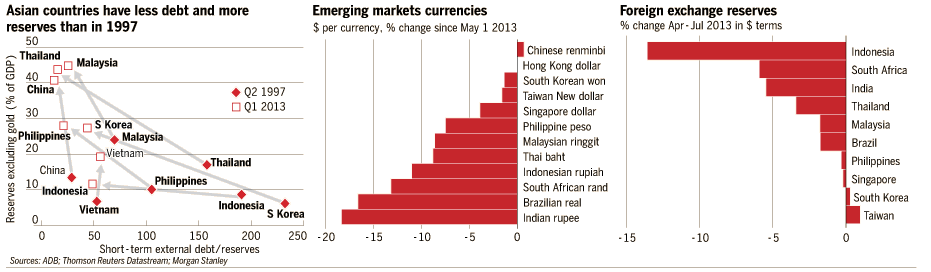
These days it seems practically everything is made in Asia. Everything, that is, apart from economic crises. For the moment, at least, those can still be produced in the US. Ever since Ben Bernanke, chairman of the US Federal Reserve, hinted in May that there may be an end in sight to the policy of aggressive monetary easing, emerging markets have been severely tested. Talk of tapering the Fed’s purchase of $85bn a month in government bonds from as early as September has pushed up long-term US interest rates. That in turn appears to have triggered a partial reversal of the carry trade in which investors borrow in dollars to purchase higher-yielding assets, often in emerging markets. Currencies and stock markets around the world, especially in countries with current account deficits financed by fickle capital inflows, have tumbled. Read more of this post

Mao-era thrift shunned for good life on credit

August 28, 2013 5:00 pm

China’s consumers take eagerly to credit

By Simon Rabinovitch in Shanghai

ChinaBorrowers Guiyang Debt

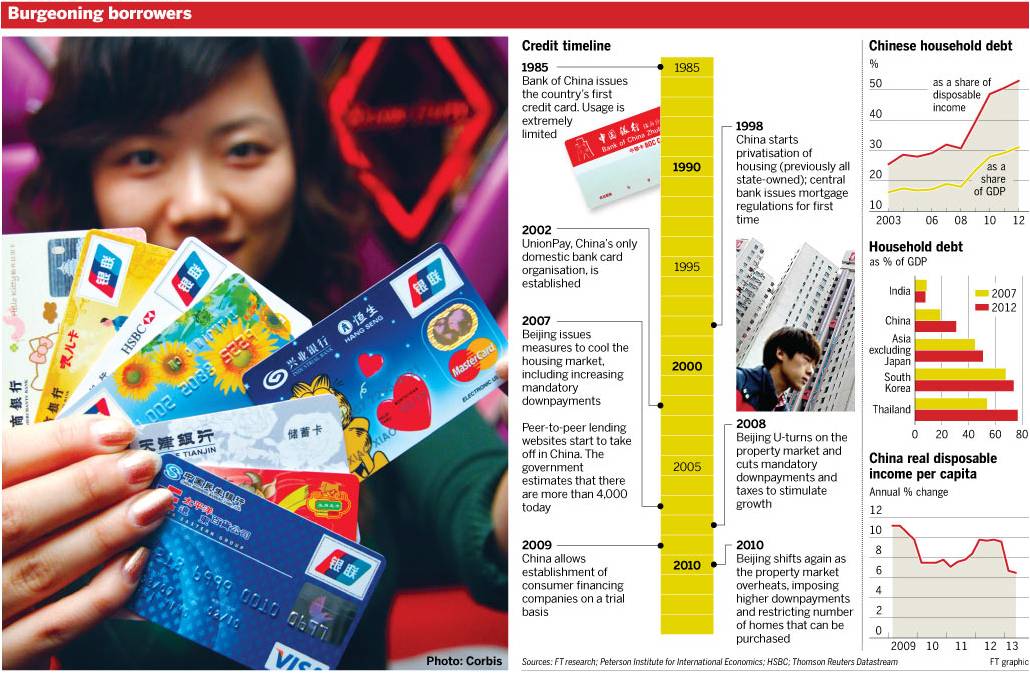
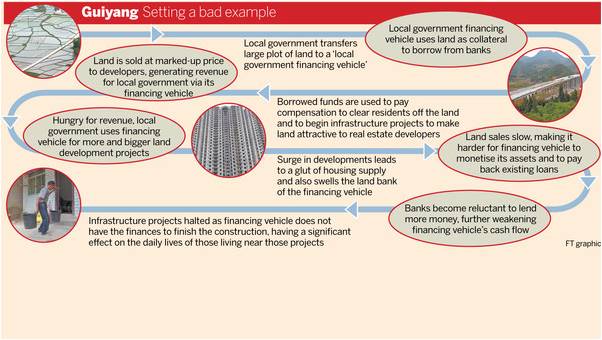
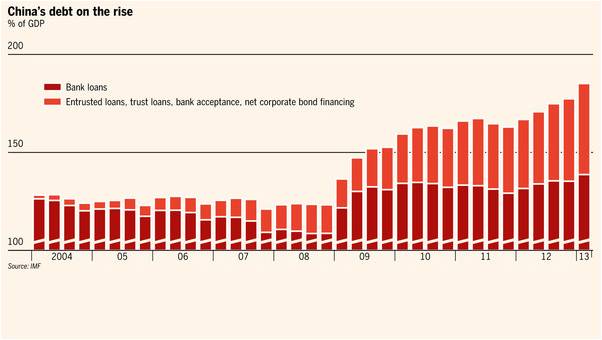
A few years after finishing university, Jack Dai thought he had scored the holy trinity of success for a young Chinese man: a government job, an apartment and a wife. But he had not counted on one additional factor, less visible from the surface, that soon drove a wedge between him and his conception of the good life. To buy his Shanghai house, Mr Dai, 30, took out a hefty mortgage. Monthly repayments now swallow up half his salary. Plus he has the other expenses of Chinese middle-classdom – overseas holidays, shopping excursions, movies and restaurants. Read more of this post