Nassim Taleb: Lectures on Risk and(Anti)fragility
March 23, 2013 Leave a comment
https://docs.google.com/file/d/0B_31K_MP92hURjZxTkxUTFZnMVk/edit?pli=1
R.E.S.-ilience in Value Creation 《竹经:经商经世离不得立根创新》
March 23, 2013 Leave a comment
KidZania opening largest indoor site
Published: 22 Mar 2013 at 17.13

KidZania, the world’s fastest growing “edutainment” brand from Mexico, on Friday inaugurated its largest indoor site in the world in Bangkok.
Developed at a cost of 810 million baht, the attraction will officially open to the public on Martch 29.
The 10,000-square-metre park for children between four and 14 years old, located on the fifth floor of Siam Paragon, offers role play for real-world professions among its attractions.
Xavier Lopez Ancona, KidZania’s global CEO and founder, said he expected the company’s 12th location in the world to become a new landmark attraction for Bangkok, increasing the capital’s appeal as a regional destination with a sophisticated family entertainment and educational product. Read more of this post
March 23, 2013 Leave a comment
March 22, 2013, 9:00 p.m. ET
A Daring Designer of Snazzy Snacks
By AMY GAMERMAN


Jim Goldberg found one of his best potato-chip ideas in a pickle bowl. The founder of Deep River Snacks, whose kettle chips are sold in high-end delis from Darien to Dubai, was eating lunch at Katz’s Delicatessen in New York one day when he bit into a pickled green tomato.
“I said, ‘Holy crap, someone’s got to make something this good,’ ” he recalls. “We gotta do this!”
What Mr. Goldberg does is turn taste sensations into potato chips: chips that taste like they’ve come off a mesquite grill or bathed in a dish of olive oil and rosemary. So as soon as he had finished his pastrami sandwich, Mr. Goldberg made calls to four seasoning companies. “I said, ‘I want it to be a little bit spicy. It’s got to have good dill flavor—it’s really got to taste like the pickle.’ ”
After six months of experimentation, Deep River’s New York Spicy Dill Pickle kettle-cooked chip hit store racks last year. Unlike conventional “flat” chips, which are fried as they move along a production line, kettle chips are cooked in vats of oil. Mr. Goldberg makes 11 varieties.
“For the price and value, it’s the best chip,” says Charlie Moore, grocery buyer for the Fairway chain of stores. A 2-ounce bag of Sweet Maui Onion or Sea Salt & Vinegar retails for between 99 cents and $1.39. Mr. Goldberg says that he sold more than 24 million bags of his chips last year: a crumb compared with Lay’s, but not bad for an 11-year-old company with headquarters above a varicose-vein clinic in Old Lyme, Conn. Read more of this post
March 23, 2013 Leave a comment
March 22, 2013, 8:45 p.m. ET
Sleeping Like a Baby, Learning at Warp Speed
Babies and children sleep a lot—12 hours a day or so to our eight. But why would children spend half their lives in a state of blind, deaf paralysis punctuated by insane hallucinations? Why, in fact, do all higher animals surrender their hard-won survival abilities for part of each day?
Children themselves can be baffled and indignant about the way that sleep robs them of consciousness. We weary grown-ups may welcome a little oblivion, but at nap time, toddlers will rage and rage against the dying of the light.
Part of the answer is that sleep helps us to learn. It may just be too hard for a brain to take in the flood of new experiences and make sense of them at the same time. Instead, our brains look at the world for a while and then shut out new input and sort through what they have seen.
Children learn in a particularly profound way. Some remarkable experiments show that even tiny babies can take in a complex statistical pattern of data and figure out the rules and principles that explain the pattern. Sleep seems to play an especially important role in this kind of learning. Read more of this post
March 23, 2013 Leave a comment
March 22, 2013, 7:40 p.m. ET
The Choice: To Squawk or to Go?
A refugee economist created an irresistibly useful approach to understanding how dissent shapes organizations
Four decades ago, an economist named Albert O. Hirschman prophesied a rising gap in the quality of schools. As he reasoned: If the quality of public schools deteriorated, affluent families would switch to private schools. Hirschman labeled this the “exit” option. The parents of the remaining kids would try to restore quality via “voice”—that is, by appearing at school board meetings, speaking out, writing letters.
But these activists would be doubly handicapped. Public schools—being insensitive to profit—are less responsive to voice. And the desertion of wealthier parents would tend to deprive the public schools of influential voices.
Once you start looking at the world through the Hirschman lens, the paradigm of exit and voice is all around. Suppose you are unhappy at work: Should you complain to the boss or simply quit? Or maybe you are the boss: How much should you mollify employees—or customers—to keep them from leaving? It might depend on the presence of a third Hirschman factor: loyalty.
Broadly speaking, markets are all about exit: If the stock is a lemon, sell it. Politics deals in voice (just listen to talk radio).
What Hirschman grasped is that the strongest organizations (in either sphere) foster exit as well as voice. Both corporations and school districts have customers or members whom they need to retain—though at some point, it’s best to let the dissenters go. Read more of this post
March 23, 2013 Leave a comment
March 22, 2013, 4:57 p.m. ET
When the Lamps Went Out
No single government or nation deserves blame for World War I. But the question remains: How could such a calamity have occurred?
The historian Fritz Stern described World War I as “the first calamity of the twentieth century, the calamity from which all other calamities sprang.” It takes only the barest knowledge of the war to grasp his point. The war and its appalling slaughter strained combatant nations to the breaking point. By the end, it had overthrown dynasties, shattered empires and reconfigured the map of Europe—unleashing all sorts of political forces and intensifying sympathies and resentments that would themselves wreak havoc on history. In various ways, as we now know in retrospect, World War I helped to bring about the Russian Revolution and yet another world war.
How could such a calamity have occurred? Or to put the matter more pointedly: Who caused the war, and for what reasons? Such questions have made the origins of World War I the great whodunit of modern history. The political implications of assigning blame have only heightened the importance of the answer. Read more of this post
March 23, 2013 Leave a comment
March 22, 2013, 6:22 p.m. ET
Low-Quality Stocks Have Zoomed. Time to Shift Gears?
By MARK HULBERT
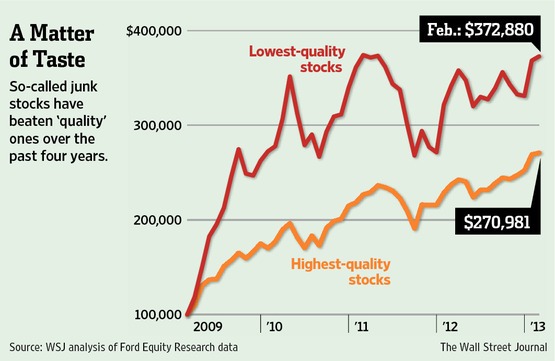
“Junk” continues to beat “quality” on Wall Street. Nearly four years after the end of the recession of 2007-09, it should be the other way around.
The Federal Reserve’s monetary stimulus is a big reason for this unexpected outcome.
Because the Fed’s easy-money policies won’t continue indefinitely, however, investors might want to begin reducing their holdings of low-quality stocks—which will be among the biggest casualties when the Fed turns off the spigot. Read more of this post
March 23, 2013 Leave a comment
March 22, 2013, 7:15 p.m. ET
The Brains of the Animal Kingdom
New research shows that we have grossly underestimated both the scope and the scale of animal intelligence. Primatologist Frans de Waal on memory-champ chimps, tool-using elephants and rats capable of empathy.
Who is smarter: a person or an ape? Well, it depends on the task. Consider Ayumu, a young male chimpanzee at Kyoto University who, in a 2007 study, put human memory to shame. Trained on a touch screen, Ayumu could recall a random series of nine numbers, from 1 to 9, and tap them in the right order, even though the numbers had been displayed for just a fraction of a second and then replaced with white squares.
I tried the task myself and could not keep track of more than five numbers—and I was given much more time than the brainy ape. In the study, Ayumu outperformed a group of university students by a wide margin. The next year, he took on the British memory champion Ben Pridmore and emerged the “chimpion.”
How do you give a chimp—or an elephant or an octopus or a horse—an IQ test? It may sound like the setup to a joke, but it is actually one of the thorniest questions facing science today. Over the past decade, researchers on animal cognition have come up with some ingenious solutions to the testing problem. Their findings have started to upend a view of humankind’s unique place in the universe that dates back at least to ancient Greece.
Aristotle’s idea of the scala naturae, the ladder of nature, put all life-forms in rank order, from low to high, with humans closest to the angels. During the Enlightenment, the French philosopher René Descartes, a founder of modern science, declared that animals were soulless automatons. In the 20th century, the American psychologist B.F. Skinner and his followers took up the same theme, painting animals as little more than stimulus-response machines. Animals might be capable of learning, they argued, but surely not of thinking and feeling. The term”animal cognition” remained an oxymoron.
A growing body of evidence shows, however, that we have grossly underestimated both the scope and the scale of animal intelligence. Can an octopus use tools? Do chimpanzees have a sense of fairness? Can birds guess what others know? Do rats feel empathy for their friends? Just a few decades ago we would have answered “no” to all such questions. Now we’re not so sure. Read more of this post
March 23, 2013 Leave a comment
March 22, 2013, 9:07 a.m. ET
Volvo Says Chinese Dealers Inflated Sales
By ANNA MOLIN and COLUM MURPHY
STOCKHOLM—Volvo Car Corp. said Friday some of its Chinese dealers inflated sales figures to receive cash incentives in 2011 skewing annual comparisons that led the company to disclose it lost ground in China last year when it had actually increased sales in the key market.
The struggling Swedish auto maker launched an internal investigation last year and found that dealers reported more retail sales than they conducted during 2011, Volvo Cars spokesman Per-Åke Fröberg said on Friday. To make the books match, the dealers didn’t report the sales executed in 2012 that were falsely booked in 2011. Read more of this post
March 23, 2013 Leave a comment
March 22, 2013, 6:00 p.m. ET
Here Comes the Slow-Stock Movement
By JASON ZWEIG
When you are loyal to a drugstore, airline or credit card, you get points, miles, cash back and other rewards. Should investors also get a bonus for being loyal to a stock?
Next week in London, two dozen global investors will meet to discuss whether companies should offer special shares to reward long-term holders in a short-term world.
Investors who hold a stock continuously for years might earn a higher dividend or receive “warrants” entitling them to purchase more shares.
“It’s a way of rewarding long-term behavior and taxing short-term behavior,” says Patrick Bolton, an economist at Columbia Business School who has spent several years developing the idea.
Patience is a rare virtue in today’s high-speed markets. Read more of this post
March 23, 2013 Leave a comment
March 15, 2013
The Stories That Bind Us
By BRUCE FEILER
I hit the breaking point as a parent a few years ago. It was the week of my extended family’s annual gathering in August, and we were struggling with assorted crises. My parents were aging; my wife and I were straining under the chaos of young children; my sister was bracing to prepare her preteens for bullying, sex and cyberstalking.
Sure enough, one night all the tensions boiled over. At dinner, I noticed my nephew texting under the table. I knew I shouldn’t say anything, but I couldn’t help myself and asked him to stop.
Ka-boom! My sister snapped at me to not discipline her child. My dad pointed out that my girls were the ones balancing spoons on their noses. My mom said none of the grandchildren had manners. Within minutes, everyone had fled to separate corners.
Later, my dad called me to his bedside. There was a palpable sense of fear I couldn’t remember hearing before.
“Our family’s falling apart,” he said.
“No it’s not,” I said instinctively. “It’s stronger than ever.”
But lying in bed afterward, I began to wonder: Was he right? What is the secret sauce that holds a family together? What are the ingredients that make some families effective, resilient, happy? Read more of this post
March 23, 2013 Leave a comment
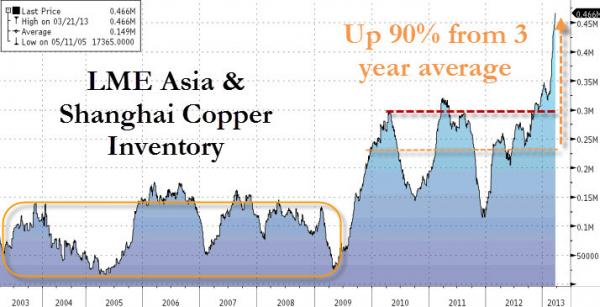
Beijing, We Have A Problem: Warehoused Asian Copper Hits Record High
Tyler Durden on 03/22/2013 11:18 -0400
A rather well-known problem for those who have tracked the warehousing woes of assorted industrial medals in China as an indication of the true state of the Chinese economy: as of right now, the stocks of copper in Asia (as determined by deliverable LME CLS and Shanghai copper) are at an all time high and up 90% from the previous three year average.
March 22, 2013 Leave a comment
SAP to Become European Corporation to Speed Up Decisions
By Cornelius Rahn – Mar 22, 2013
SAP AG (SAP), the German business- management software maker, plans to turn itself into a European corporation to enable faster decision-making as it focuses on grabbing database customers from Oracle Corp. (ORCL)
SAP will ask shareholders to approve a change of its legal status from an Aktiengesellschaft to a Societas Europaea, or SE, at next year’s annual meeting, it said yesterday. One aim is to speed up decisions on the supervisory board, said a person familiar with the matter, who asked not to be named because the discussions are private.
The SE structure, already adopted by companies including BASF SE (BAS), Allianz SE (ALV) and Puma SE (PUM), was created by the European Commission to simplify regulatory and legal requirements for companies with subsidiaries in more than one European country. Previously, multinationals had to follow each of the EU members’ own legal system where they had a subsidiary. Read more of this post
March 22, 2013 Leave a comment
Inhouse target: zero to $40 billion in 4 years
Posted By SIMON HOYLE On 22/03/2013 @ 3:16 pm In INVESTOR PROFILE
If everything continues on schedule, the $60-billion AustralianSuper will begin testing its new internal investment-management systems this month, with a view to managing its first money in house in the third quarter of 2013.
Within four years the fund expects to manage as much as $40 billion in house, funded primarily from cash flow, and to have built an investment management capability the equal of any in the world. Read more of this post
March 22, 2013 Leave a comment
Cherry trees reach full bloom in Tokyo

The spectacle marks the second earliest blossoming in the capital on record. -AFP
Fri, Mar 22, 2013
AFP
TOKYO – Tokyo’s cherry trees were in stunning full bloom on Friday, Japan’s weather agency said, marking the second earliest blossoming in the capital on record. Read more of this post
March 22, 2013 Leave a comment
How Franklin Roosevelt Secretly Ended the Gold Standard
On March 4, 1933, Franklin D. Roosevelt became president for the first time, promising an “adequate but sound” currency. The next day, a Sunday, he closed the nation’s banks. “We are now off the gold standard,” he privately declared to a group of advisers. Goldbugs in the president’s circle immediately began prophesying doom. One of his aides, Lewis Douglas, proclaimed “the end of Western civilization.”
How Roosevelt took this fateful step has been the subject of debate among historians, many of whom believe that the president flailed his way through his first weeks in office, and only gradually came to the decision to take the country off gold that April. But the evidence suggests that Roosevelt intended to do so from Day One for very specific reasons, although he delayed letting the rest of the country in on his plans.
Minutes after FDR had made his unsettling private disclosure, a secretary told him that reporters were clamoring to know if the U.S. had left the gold standard. “Tell them to ask a banker,” Roosevelt said. He clearly did not yet wish to say the truth publicly. First, he needed depositors to return the gold they had withdrawn in panic in the weeks preceding his inauguration. Read more of this post
March 22, 2013 Leave a comment
China’s Poison Air Is Becoming Its Leading Export
Sitting on a Tokyo runway last week, the captain announced that our flight would be delayed for reasons few of us could believe: sandstorms.
Chuckles filled the aircraft. The woman next to me quipped: “What, are we in Egypt?” As we all craned our necks to look out the windows, it really did feel as if we were taxiing in Cairo or Marrakesh, not the capital of a Group of Seven nation.
The sand is compliments of China’s boom. Thanks to deforestation and overgrazing, more and more of the Gobi Desert’s grit, along with industrial pollution, is being carried by prevailing winds to Japan. In recent weeks, people in Japan have been Googling “PM2.5,” or fine airborne particulates that cause disease and premature death in high concentrations. They also are loading up on air purifiers as China’s environmental crisis becomes Japan’s.
The geopolitics of pollution has the potential to turn toxic. If you thought Asia’s territorial disputes were a barrier to peace and cooperation, just wait until blackened skies dominate summit meetings. And they will, as nationalists in Japan, South Korea and Taiwan use pollution as a rallying point to gin up anti-China sentiment; business leaders in Hong Kong express anger about having trouble recruiting foreign talent; China lashes out at independent reports on health risks; and the world points fingers at the Communist Party as climate change accelerates. Read more of this post
March 22, 2013 Leave a comment
IBM Works for Free to Build Relationships With African Cities
International Business Machines Corp. (IBM), which makes most of its money from high-end technology contracts, is betting that some of its growth will come from customers who don’t pay anything — yet.
The company has developed an application to track the water system in Tshwane, South Africa, where more than half the population lives in slums that often aren’t connected to plumbing. IBM is letting the community use the app for free, after it sent a team of executives to evaluate the system as part of a corporate service project in October.
The benefit to IBM is it can use the city as a testing ground for the application, while gaining favor with the local government. It also may catch the attention of other cities with similar problems. Relationships are key to building the company’s business in Africa, where it now has offices in more than 20 countries, compared with just four in 2006.
“We’re not just walking in and saying, ‘Throw us our money,’” said Perry Hartswick, an architect of IBM’s Smarter Planet program, which tries to fix civic problems with tracking technology. “We’re walking in to say we’re here to be a part of Africa. That’s a very important part of the way we approach any new geography.” Read more of this post
March 22, 2013 Leave a comment
Russian Gynecologist Becomes Billionaire in Cyprus Entity
Mark Kurtser, a 59-year-old Russian gynecologist, has become a billionaire after shares of his MD Medical Group Investment Plc, Russia’s largest private provider of women’s and children’s health care, surged 42 percent in five months.
Kurtser, MD Medical’s chairman, controls 68 percent of the operation through Cyprus-based investment entity MD Medical Holding. The company sold shares in a London initial public offering in October, raising $154 million for expansion. The billionaire collected another $135 million from the IPO.
“I did not imagine it when I was starting this business,” Kurtser, who is worth $1 billion, according to the Bloomberg Billionaires Index, said in a telephone interview. “I am a doctor first.”
Kurtser founded the company as a private Moscow hospital in 2006. Today, MD Medical runs 13 medical centers in Russia and Ukraine, offering childbirth, gynecological and in vitro fertilization services. It generated 3.5 billion rubles ($117 million) in revenue in the 12 months ended June 30, 2012, up 48.6 percent in a year. The company’s net income doubled to 1.2 billion rubles in three years. Read more of this post
March 22, 2013 Leave a comment
The Effect of CEO and CFO Resignations on Going Concern Opinions
Joseph Beams University of New Orleans
Yun-Chia Yan University of New Orleans – Department of Accounting
February 5, 2013
Abstract:
Anecdotal evidence suggests that the resignation of a top executive increases a firm’s likelihood of failure. When auditors perceive an increased likelihood of failure, a going concern modified audit opinion is issued. This study tests the relationship between top management resignations and the issuance of going concern audit opinions. Firms in which a CEO or CFO resigned were more likely to receive a going concern audit opinion than firms in which the CEO or CFO did not resign. The study uses financially distressed firms from 2008-2010 and a logistic regression model to test the relationship. The findings show a positive relationship between CFO resignations and firms receiving a going concern audit opinion. However, no significant relationship is found between CEO resignations and receiving a going concern audit opinion. Firm size, cash flow from operations, stock return, and investments also had a significant relationship with going concern opinions.
March 22, 2013 Leave a comment
US Begins Regulating BitCoin, Will Apply “Money Laundering” Rules To Virtual Transactions
Tyler Durden on 03/21/2013 21:22 -0400
Last November, in an act of sheer monetary desperation, the ECB issued an exhaustive, and quite ridiculous, pamphlet titled “Virtual Currency Schemes” in which it mocked and warned about the “ponziness” of such electronic currencies as BitCoin. Why a central bank would stoop so “low” to even acknowledge what no “self-respecting” (sic) PhD-clad economist would even discuss, drunk and slurring, at cocktail parties, remains a mystery to this day. However, that it did so over fears the official artificial currency of the insolvent continent, the EUR, may be becoming even more “ponzi” than the BitCoins the ECB was warning about, was clear to everyone involved who saw right through the cheap propaganda attempt. Feel free to ask any Cypriot if they would now rather have their money in locked up Euros, or in “ponzi” yet freely transferable, unregulated BitCoins.
For the answer, we present the chart showing the price of BitCoin in EUR terms since the issuance of the ECB’s paper:
March 22, 2013 Leave a comment
Price wars and the destruction of China’s e-consumer confidence
Staff Reporter 2013-03-22
The constant price-cutting competition between China’s online shopping sites has been the source behind a growing number of consumer complaints, the Chinese-language Economic Information Daily reports.
Some 93,600 complaints regarding online commerce were filed in 2012, with most of them being made against leading shopping sites Taobao, TMall and Dangdang. The number of complaints had not gone down significantly from 2011, according to a report recently published by the China e-Business Research Center. Major players making the list of 10 most complained-about sites in 2012 also include Amazon China, Gome, Tencent’s QQ online shopping service and Jingdong 360Buy, according to other consumer data. Over half of these complaints — 55.40% — involved online shopping, while 21.3% concerned transactions made with group-buying sites, which offer daily deals with heavy discounts. The center noted in its report that at least 10 large-scale price wars occurred in 2012 and the number of complaints often peaked during the half-month period following these cutthroat sales.
Such price wars were blindly aimed at grabbing market share, experts said, often leading to customer disputes when websites fail to stock sufficient merchandise and cancel orders placed by shoppers. The websites can cancel orders under their terms of use, which often stipulate that a contract is not established prior to confirmation of the sale transaction. Read more of this post
March 22, 2013 Leave a comment
Migrants living in containers in Shanghai urged to leave
2013-03-22 00:02:41 GMT2013-03-22 08:02:41(Beijing Time) SINA.com
March 22, 2013 Leave a comment
Even billionaires get the currency blues
PUBLISHED: 20 HOURS 21 MINUTES AGO | UPDATE: 6 HOURS 56 MINUTES AGO
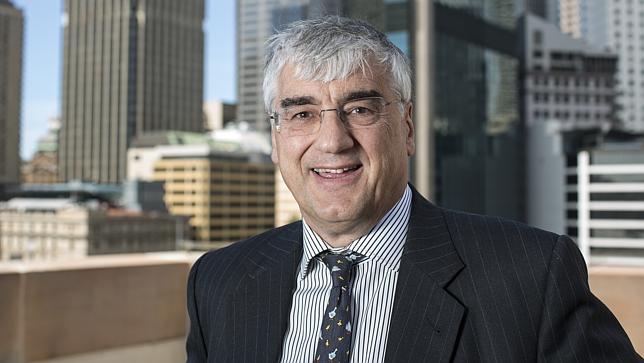
“The days when there was an arbitrage in saying, ‘Don’t worry I’ll buy you a meal when I come to Australia and you buy me one when you come to London.’ It’s gone the other way around,” says billionaire Michael Hintze. Photo: Angus Mordant
JONATHAN SHAPIRO, PETER WELLS AND PHILIP BAKER
Australia is expensive even for a billionaire. Michael Hintze, Australia’s wealthiest and most successful financial markets export with an estimated personal fortune of $US1.6 billion, says coming home from his hedge fund’s London base is not as cheap as it used to be.
“The days when there was an arbitrage in saying, ‘Don’t worry I’ll buy you a meal when I come to Australia and you buy me one when you come to London.’ It’s gone the other way around,” says Hintze, the founder of the $US11.5 billion hedge fund CQS and a well known donor to the UK’s Conservative Party.
With the British pound at a 28-year low against the Australian dollar, British tourists and returning hedge fund titans are clearly feeling the pinch. “The Australian dollar certainly feels fully valued,” says Hintze, who owns farmland in Australia. “I wish the dollar were lower as it would be easier in farming.” Read more of this post
March 22, 2013 Leave a comment
World With More Phones Than Toilets Shows Water Challenge
There are more mobile phones on Earth than clean toilets, one of the most vexing challenges facing governments on the 20th anniversary of the United Nations’ World Water Day.
Solving that developmental dilemma has so far confounded leaders, some of whom will meet today in The Hague to discuss water cooperation. There are 6 billion mobile phones, according to the International Telecommunication Union, while 1.2 billion of the planet’s 7 billion people lack clean drinking water and 2.4 billion aren’t connected to wastewater systems. Read more of this post
March 22, 2013 Leave a comment
Hong Kong Homes Face 20% Price Drop as Banks Raise Rates
By Stephanie Tong and Kelvin Wong – Mar 22, 2013
Hong Kong officials, who have struggled in vain for three years to slow the growth in home prices, are about to get their wish as the city’s biggest banks raise mortgage rates.
Prices could fall as much as 20 percent over the next two years, according to Deutsche Bank AG, after lenders including HSBC Holdings Plc, Hong Kong’s biggest by assets, and Standard Chartered Plc raise their home loan rates by 25 basis points in response to tighter risk rules.
Hong Kong dollar’s peg to the U.S. currency has kept interest rates in the city at near record lows, underpinning a more than 110 percent gain in home prices since the beginning of 2009 to the most expensive among major global cities. Low mortgage costs, coupled with a property buying spree driven by Chinese from the mainland, have seen home prices shrug off repeated attempts by the government since 2010 to stymie escalating housing values amid an outcry over affordability.
“You have this pile of measures plus higher interest rates; this will be a big challenge for the market,” said Buggle Lau, chief analyst at Midland Holdings Ltd. (1200), the city’s biggest publicly traded realtor, which predicted as many as a third of real estate agent branches in Hong Kong will close. Read more of this post
March 22, 2013 Leave a comment
Exorbitant property prices reported in Beijing university district
Thursday, 21 March, 2013, 5:24pm
Ernest Kao ernest.kao@scmp.com
Property prices in Beijing’s secondary market have come under scrutiny once again after a tiny apartment in a university district recently listed a sell price of 3.5 million yuan (HK$4.4 million) – close to the very high levels in Hong Kong.
The price of the 37-square-metre (400 sq ft), one-bedroom flat located in the city’s northwest Wudaokou neighbourhood, hit a record 100,000 yuan per square metre, Xinhua reported [1] on Wednesday. Read more of this post
March 22, 2013 Leave a comment
房企主动停工?天津响螺湾暂成“空城”
作者 蔡胤
来源 第一财经日报
时间 : 2013-03-22 01:39


这一区域长期来看还是能发展起来的,只是浦东当时的发展用了多久,这里也需要多久,关键看当地政府的决心。 Read more of this post
March 22, 2013 Leave a comment
河北兴隆20年堆出2.3万米平垃圾山 威胁北京水源(图)
2013年03月22日 02:29
来源:新京报
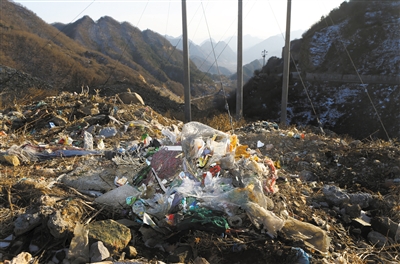
2月21日,河北兴隆县青松岭上的垃圾山,虽然被黄土掩埋,仍可见大片生活垃圾。新京报记者尹亚飞摄 Read more of this post
March 22, 2013 Leave a comment
L’Oreal Eats Into P&G’s China Lead With Mushroom Lotions
At L’Oreal SA (OR) (OR)’s Shanghai research center, more than 260 scientists working with skin cells and test tubes tailor products from lipsticks to shampoos for Chinese shoppers.
This year’s offerings: a cosmetic balm for Chinese men looking to mask face blemishes, and skin serums made from white fungus, ginseng, and cordyceps — a type of parasitic mushroom widely used as a herbal remedy.
The world’s largest cosmetics maker is launching the new products to whittle away at Procter & Gamble Co (PG).’s lead in China’s market for beauty and personal care products, estimated to reach $34 billion this year by Euromonitor. To gain an edge over its Cincinatti competitor, L’Oreal is counting on lotions using traditional medical ingredients and offerings targeted at Chinese men, among the fastest growing sections of the market.
The strategy will help the Paris-based firm boost China sales more than 10 percent in 2013 from 12.05 billion yuan ($1.9 billion) last year, China Chief Executive Officer Alexis Perakis-Valat, predicted in an interview. The new products will be unveiled later this year.
“L’Oreal has become a formidable competitor for Procter & Gamble (PG) in skin care,” Oru Mohiuddin, a senior analyst in London at researcher Euromonitor International, said in an e-mail. “Not just has L’Oreal approached China from various angles, including pricing and retail coverage, it also strived to make the brands more customized and effective.” Read more of this post

咬定青山不放松,立根原在破岩中。 千磨万击还坚劲,任尔东西南北风。