Innovator: Matt Rabinowitz Sifts Gene Data for Healthy Pregnancies; Traditional screenings during a pregnancy’s first trimester miss 15% of Down syndrome cases and yield false positives 5% of the time
April 26, 2013 Leave a comment
Innovator: Matt Rabinowitz Sifts Gene Data for Healthy Pregnancies
By John Tozzi on April 25, 2013
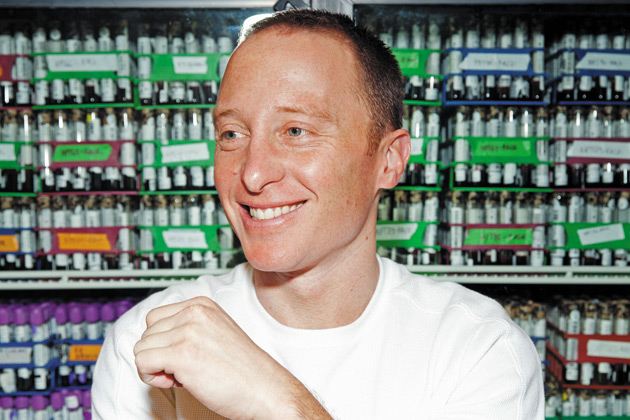
Ten years ago, prenatal screenings gave a clean bill of health to Matt Rabinowitz’s nephew. The tests didn’t show that he had Down syndrome, which raises infant mortality risks. The boy died six days after birth. While Rabinowitz mourned, the Stanford-educated data scientist began to research genetic testing. “It just seemed amazing to me that that would happen in the 21st century,” he says. Traditional screenings during a pregnancy’s first trimester miss 15 percent of Down syndrome cases and yield false positives 5 percent of the time. False alarms can lead to more invasive diagnostics, such as amniocentesis and chorionic villus sampling, which are highly accurate but increase risk of miscarriage. In the past three years, four companies have developed noninvasive tests that predict the risk of birth defects by analyzing fetal DNA that’s mingled with the mother’s blood. Rabinowitz’s company, Natera, introduced the newest of these tests in March. Based in San Carlos, Calif., Natera’s more than 200 employees use cloud computing to analyze the genetic data they extract from maternal blood samples. The software scans 19,500 of a cell’s 10 million genetic markers. Using data from the human genome project and samples of the parents’ genes, “you can reconstruct the entire DNA of the child from that single cell,” Rabinowitz says. He says it detects miscarriage-threatening conditions other screenings can miss, such as triploidy, which occurs when cells carry extra copies of each chromosome.Natera, founded in 2004, began genetic screening of embryos used for in vitro fertilization in 2009. In March it started selling the noninvasive test for women over 35 or otherwise at risk for birth defects. Natera says it can detect conditions including Down syndrome with 99 percent accuracy and no false positives. Cori Feist, a genetic counselor at Oregon Health & Science University, whose clinic has used tests from Natera and competitors Sequenom (SQNM), Verinata Health (ILMN), and Ariosa Diagnostics, says the screenings improve upon prior tests for genetic anomalies in the first trimester. Still, they don’t provide a direct evaluation of the fetus, as amniocentesis does.
The new tests are also limited in what they can detect, says Nancy Rose, chair of the committee on genetics for the American College of Obstetricians and Gynecologists: “A normal result doesn’t guarantee a normal baby.” They’re also not cheap—Natera charges $2,760, on the high end of the four companies—although in the last two months insurers have begun to cover the tests for high-risk women.
Natera has raised $42 million in venture capital. Rabinowitz, who sold an e-commerce startup for more than $100 million during the dot-com boom, then saw another company he started fail, says medical technology hasn’t kept pace with consumer electronics. “All of these computational and statistical tools have found their way into all of our gizmos,” he says. “The most important thing in most people’s life is not the latest gizmo. It’s having a healthy family.”
Problem: Conventional prenatal screenings can be unreliable or invasive
Solution: Genetic testing of trace fetal DNA can predict birth defects
Investment: Natera has received $42 million in venture capital
 About bambooinnovator
 Bamboo Innovator