Europe Car Sales Plunge 10% as Germany’s Decline Hurts VW

Europe Car Sales Plunge 10% as Germany’s Decline Hurts VW

European car sales dropped 10 percent in March as declines at PSA Peugeot Citroen (UG), Ford Motor Co. (F) and Volkswagen AG (VOW3) and a plunge in Germany put the industry on pace for the fewest annual deliveries in 20 years.

Registrations fell to 1.35 million vehicles last month from 1.5 million a year earlier, the Brussels-based European Automobile Manufacturers’ Association, or ACEA, said today in a statement. First-quarter sales dropped 9.7 percent to 3.1 million cars.

A recession stemming from the European sovereign-debt crisis has led to 12 percent unemployment in the 17 countries sharing the euro, the highest rate since records began in 1995. Four of Europe’s five biggest car markets shrank last month, with the steepest drop at 17 percent in Germany, the region’s largest economy and home to producers such as VW and Bayerische Motoren Werke AG (BMW). The region’s sales declined for an 18th consecutive month, the ACEA said. Read more of this post

New Publisher Authors Trust: Themselves; Self-publishing is expanding beyond first-time writers who can’t get deals, as big names like David Mamet are choosing this route

April 16, 2013

New Publisher Authors Trust: Themselves

By LESLIE KAUFMAN

When the Pulitzer Prize-winning playwright and author David Mamet released his last book, “The Secret Knowledge: On the Dismantling of American Culture,” with the Sentinel publishing house in 2011, it sold well enough to make the New York Times best-seller list.

This year, when Mr. Mamet set out to publish his next one, a novella and two short stories about war, he decided to take a very different path: he will self-publish.

Mr. Mamet is taking advantage of a new service being offered by his literary agency, ICM Partners, as a way to assume more control over the way his book is promoted.

“Basically I am doing this because I am a curmudgeon,” Mr. Mamet said in a telephone interview, “and because publishing is like Hollywood — nobody ever does the marketing they promise.”

As digital disruption continues to reshape the publishing market, self-publishing — including distribution digitally or as print on demand — has become more and more popular, and more feasible, with an increasing array of options for anyone with an idea and a keyboard. Most of the attention so far has focused on unknown and unsigned authors who storm onto the best-seller lists through their own ingenuity. Read more of this post

In Beijing, housing is so expensive that migrant workers are living in bomb shelters

In Beijing, housing is so expensive that migrant workers are living in bomb shelters

By Nate Berg — 12 hours ago

Nate Berg is a freelance reporter and a former staff writer for The Atlantic Cities. He lives in Los Angeles.

life-underground-in-beijing

The numbers are undeniably mind-boggling: An estimated two million people in Beijing are said to be living below the earth’s surface, in thousands of 100-square-foot spaces located just one or two stories below street level. These figures have been making headlines (and trending upwards) for a couple of years now. Assuming they’re accurate, that would mean 10 percent of the city’s 20 million people sleep in windowless, subterranean residences.

That they are there speaks to the crushingly expensive housing market in China’s bulging top-tier cities. The makeshift conversion of approximately 20,000 antiquated bomb shelters and basements across Beijing has also no doubt led to a rise in dangerous living conditions: it’s common to find multiple people sharing these small emergency shelters made only slightly more hospitable with space heaters and hot plates.

The only affordable alternative would be way out on the city’s periphery. And yet, if you ask them, many of these people, most of them migrant workers, will tell you their choice to live underground is vastly better than the alternative. Read more of this post

Axa cuts 450 jobs as it ends face-to-face financial advice

Axa cuts 450 jobs as it ends face-to-face financial advice

Insurer blames regulations banning commission payments for move affecting staff based in UK bank branches

guardian.co.uk, Monday 15 April 2013 15.41 BST

Axa says it has withdrawn its in-branch financial advice because it could not find a profitable model. Photograph: Tom Saunderson for the Guardian

Insurer Axa is cutting 450 jobs in branches of the Co-operative, Yorkshire and Clydesdale banks under plans to cease face-to-face financial advice.

The group blamed the decision on new regulations that banned commission payments, forcing customers to pay up front. Read more of this post

5 Mobile Apps Chinese Smartphone Users Can’t Live Without

5 Mobile Apps Chinese Smartphone Users Can’t Live Without

April 16, 2013

by Spencer Ng


top-5-ios-china top-5-android-china Read more of this post

How do you compete with a free operating system? Try paying people; Alibaba will pay handset makers a monthly fee of 1 yuan (16 cents) for every AMOS user

How do you compete with a free operating system? Try paying people

By Leo Mirani — April 16, 2013

China’s e-commerce juggernaut Alibaba has finally found some takers for its mobile operating system, known as AMOS, or the Alibaba Mobile Operating System. It announced yesterday that five handset makers—KONKA, ZOPO, Amoi, G’Five, and Little Pepper—will release devices running on AMOS. This is a big deal for the company, which has had trouble finding willing partners. Google claims Alibaba’s OS is based on but incompatible with Google’s Android software. Alibaba disputes this, saying it only uses some Android tools to give users access to third-party applications. It doesn’t matter. Google’s position means AMOS can’t be adopted by any of the firms that are part of the Open Handset Alliance, a Google-run body that coordinates Android versions. That’s basically all the biggest manufacturers except Apple and Nokia. So why would any manufacturers, Chinese or otherwise, want to use AMOS when they can get Android for free and do near whatever they want to with it? Two reasons stick out.

The first is speculation on our part. The Chinese government frets about the dominance enjoyed by Android in the country, where it enjoys a market share of 86%. (The government is not crazy about Apple either but that’s another story.) China is not the only one worried about the reliance of local firms on foreign providers—the US has its own concerns about Huawei, a Chinese manufacturer of unsexy but essential networking equipment. But unlike America, which considered banning the use of Huawei equipment, China is pushing domestic firms to compete with Google. That means AMOS probably has Beijing’s blessings.

The second reason is clearer. The best way to compete with a free product is to offer a better free product. Alternatively, you could try paying people to use your stuff. Alibaba, whose OS is too young and too small to be a serious challenger to Android, went for the second option. The company will pay handset makers a monthly fee of 1 yuan (16 cents) for every AMOS user. App-makers benefit too. Alibaba is setting up a one billion yuan fund that it will deploy as incentives for developers—though it did not say how that money would be used. In addition, Alibaba is also working on easy financing which would allow customers to buy the phone without having to pay anything upfront. Unlike some other new Chinese operating systems that rely on hype to make up for the lack of revolutionary features, Alibaba’s OS is pretty interesting. For one thing, it will do most of the heavy lifting in the cloud (on Alibaba’s servers) rather than on phones. That means no more of those constant, annoying updates. It is also important for Alibaba’s core e-commerce business—the company will want to ensure it is has a strong strategy in mobile-based shopping before its widely expected IPO in the coming months.

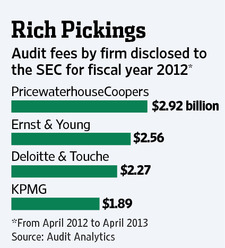
It is time to audit our auditors; Investors can only trust capital markets if they trust their auditors; Big Four earn annual audit fees of US$10 billion in US

April 16, 2013 7:30 pm

It is time to audit our auditors

By Anthony Catanach

MI-BV384_AUDITH_NS_20130416174803

Investors can only trust capital markets if they trust their auditors, writes Anthony Catanach

The revelation that a partner at KPMGleaked privileged information to a “golfing buddy” for a few silver coins is not just another accounting scandal. A 29-year veteran of the accounting firm provided advance notices of client earnings releases and merger plans in exchange for more than $50,000 in cash and gifts, including a $12,000 Rolex watch. It would be easy to dismiss this event, given its minor monetary consequences relative to some of the auditing blunders of the past decade. But this event just may be a watershed.

Investors can view today’s global capital markets as secure only if they trust the financial statements issued by publicly traded companies. Fundamental to this is the belief that information provided by market participants is accurate, complete, and reliable. Accountants have been given the task of certifying this. Investors must, therefore, trust that public company auditors are not only knowledgeable and experienced, but also independent and possess the highest levels of integrity.

There is already mistrust of the profession. The auditors who allowed Enron to flatter their balance sheets have not been forgotten. Nor those who signed off on the infamous Lehman Brothers “Repo 105” accounting wheeze, which magically transformed loans into sales. Such cases cause one to wonder if our current levels of trust in the auditing profession may be too high. What makes the KPMG case so important is that it involves a senior partner with authority over 50 other partners and more than 500 staff in one of the firm’s largest offices. He placed his own self-interest before that of his clients, much less the investing public. As a result, KPMG has withdrawn several years of audit reports for some clients. This is quite a moment: it is the first significant withdrawal of an audit report since 2007, when PwC did the same for Yukos, the bankrupt oil company, over concerns about the accuracy of information provided to the auditor by the management. Read more of this post

Accounting: Stalking the Big Four; Scandals have given Chinese accounting a toxic reputation internationally

April 16, 2013 7:18 pm

Accounting: Stalking the Big Four

By Adam Jones and Simon Rabinovitch

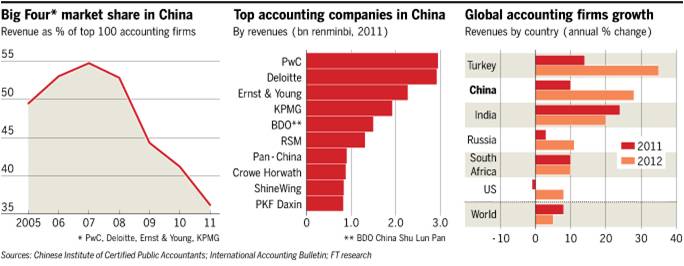
Homegrown auditors are eroding the influence of established western firms in China

China Big Four

When Zhang Ke left Coopers & Lybrand in 1999 to set up his own accounting firm, some doubted the upstart would survive. Outside Coopers – now part of PwC – and the other big western outfits, the profession in China was weak. This did not deter Mr Zhang. “I thought China was so big, it should have some of its own accounting firms,” he recalls. Little more than a decade later, the gamble has paid off. ShineWing, the firm he started, is snapping at the heels of the industry’s biggest names in China and the avuncular, soft-spoken Mr Zhang has become perhaps the most influential accountant in the land. “He is the dean of the accounting profession right now in China,” says Paul Gillis, a professor at Peking University. “He’s the guy.” Such praise will be hard to swallow in some quarters. Scandals have given Chinese accounting a toxic reputation internationally. Instead of Zhang Ke, the name on the lips of many western investors is Muddy Waters, the research firm that has levelled accounting fraud accusations against several Chinese companies. Carson Block, Muddy Waters’ founder, has said questionable auditing is endemic in the fast-growing Chinese market. But even as weaknesses continue to be exposed in the way accounts are drawn up and vetted in China, a subtler trend has emerged. The local dominance of the world’s leading audit and consulting networks – PwC, Deloitte, Ernst & Young and KPMG – is being eroded by ShineWing and other homegrown rivals after two lucrative decades. Read more of this post

Sir Luke Johnson: Red tape is stifling job creation; Gold-plating regulations provides yet another reason for entrepreneurs to ask: “Why bother?”

April 16, 2013 4:46 pm

Red tape is stifling job creation

By Luke Johnson

Gold-plating regulations provides yet another reason for entrepreneurs to ask: “Why bother?”

In Westminster and in Washington alike, politicians constantly say they want to stimulate entrepreneurship and promote investment. But warm words count for nothing if actions on the ground do not match the positive rhetoric from Downing Street and the White House.

The only pub in the village near my house in rural Malvern went bust and shut down. As an adventure, I bought it, refurbished the premises and relaunched the business late last year. The idea was never to make a significant profit but to open an establishment that would suit the community and of which I could be proud. Trading there has been tough, partly because of the poor weather. But we are making progress, and the locals have been supportive.

The ones who have not been so encouraging are the bureaucrats, despite the challenges facing the region. This part of the country is not wealthy: there are dozens of closed pubs and almost no outsiders putting money into the region. Yet the only communication of any kind I have had from government since I started the business has been bills, especially from the various tax authorities: property, employee, corporation, value added tax, licensing and so on. Never so much as a “thank you” or “good luck”. Read more of this post

India’s first theme park opens its gates, the world’s first to boast a ride involving a gigantic six-armed animatronic Hindu god, standing astride a trio of curly-horned fire-breathing rams

April 16, 2013 11:18 am

India’s first theme park opens its gates

By James Crabtree in Mumbai

India’s debut theme park is also almost certainly the world’s first to boast a ride involving a gigantic six-armed animatronic Hindu god, standing astride a trio of curly-horned fire-breathing rams.

But the opening of the Adlabs Imagica complex on Thursday on a 65-acre site between the major western cities of Mumbai and Pune marks a first of a different sort too, as India takes an initial step into a market where, so far at least, the likes of Disney have feared to tread.

Set up by Bollywood entrepreneur Manmohan Shetty, the park expects up to 3m visitors a year to enjoy its roughly two dozen international-standard rides, raising hopes that India’s nascent industry might in time follow a recent theme park boom in China.

Speaking before the launch, Mr Shetty said global operators like Disney and Universal Studios should now rethink concerns about infrastructure, land acquisition and cost-conscious customers, which have so far led them to avoid the country’s 1.2bn-strong market. Read more of this post

Charities try their luck with online game amid a slowdown in cash donations and government funding; “Charities are looking to innovate, and reaching new audiences is the Holy Grail.”

April 16, 2013 12:00 am

Charities try their luck with online game

By Henry Mance

Leading charities are aiming to raise $1bn from an online game, in their latest effort to swap rattling coin collections for the digital marketplace.

Jaro.com, which is supported by 11 big charities including Age UK and the British Red Cross, will charge players of its battleships game $10 to enter a knockout tournament. Users will decide how to split their entrance fee between a particular good cause and a jackpot prize.

The move highlights charities’ increasing engagement with new technology, amid a slowdown in cash donations and government funding. The Disasters Emergency Committee announced last week that for the first time one of its appeals had received most of its donations from digital platforms, rather than by post or phone.

Computer games, which are played by about one in three people in the UK, have excited particular enthusiasm as a way of raising funds while engaging donors.

Jaro.com is aiming to sign up more than 100m users worldwide within 12 months.

“It’s not a traditional gambling product – it’s a social game. It gives people a new way to control where the money goes. That’s the key difference with the lottery,” said Anthony Farah, head of Jaro.com. Read more of this post

Foreign investment: Brazil is now ‘ugly mirror image of Mexico’ in beauty parade

April 17, 2013 12:08 am

Foreign investment: Brazil is now ‘ugly mirror image of Mexico’ in beauty parade

By Joe Leahy in São Paulo

Brazil has become used to being top of the class rather than the dunce at the back as far as rating agencies have been concerned in recent years.

So it was with some surprise it recently received a slap on the wrist from Fitch, which warned that the country’s difficulties in kick-starting its flagging economic growth were “weighing” on its rating.

“With a slower growth trajectory, making inroads into fiscal consolidation becomes harder,” said Shelly Shetty, a Fitch analyst.

It is not that Brazil is facing any kind of crisis. It still has one of the world’s largest foreign exchange reserves, at about $377bn, a sound financial system and a government and central bank still more or less committed to targeting inflation and maintaining a floating exchange rate.

It is just that Brazil, the original currency warrior accustomed to discouraging capital inflows during the boom years between 2009 and 2011, now finds itself in a different world in terms of foreign exchange and capital markets trading. Read more of this post

Forget Gold, the Gourmet-Cupcake Market Is Crashing

Updated April 16, 2013, 8:06 p.m. ET

Forget Gold, the Gourmet-Cupcake Market Is Crashing

By EMILY MALTBY and SARAH E. NEEDLEMAN

MK-CC455_CUPCAK_G_20130416171918

Sales at gourmet cupcake maker Crumbs have softened lately.

The icing is coming off America’s cupcake craze. The dessert became a cultural and economic phenomenon over the last decade, with gourmet cupcake shops proliferating across the country, selling increasingly elaborate and expensive concoctions. The craze hit a high mark in June 2011, when Crumbs Bake Shop Inc.,CRMB -3.41% a New York-based chain, debuted on the Nasdaq Stock MarketNDAQ +0.35% under the ticker symbol CRMB. Its creations—4″ tall, with fillings such as vanilla custard, caps of butter cream cheese, and decorative flourishes like a whole cookie—can cost $4.50 each. After trading at more than $13 a share in mid-2011, Crumbs has sunk to $1.70. It dropped 34% last Friday, in the wake of Crumbs saying that sales for the full year would be down by 22% from earlier projections, and the stock slipped further this week. Crumbs in part blamed store closures from Hurricane Sandy, but others say the chain is suffering from a larger problem: gourmet-cupcake burnout. “The novelty has worn off,” says Kevin Burke, managing partner of Trinity Capital LLC, a Los Angeles investment banking firm that often works in the restaurant industry.

MK-CC467_CRUMBS_G_20130416164203 Read more of this post

Gold’s fall costs billionaire hedge fund manager John Paulson $1.5bn this year

April 16, 2013 6:00 pm

Gold’s fall costs Paulson $1.5bn this year

By Dan McCrum in New York

The tumbling gold price has personally cost billionaire hedge fund manager John Paulson at least $1.5bn so far this year, as a decline in the price of the metal turned into a rout.

The estimated losses for Mr Paulson, who has made and lost more money on gold than almost any other hedge fund manager, reflect a bold all-in bet on the precious metal.

While many investors hold some gold in case of financial calamity or a return of the rampant inflation of the 1970s, since 2009 Mr Paulson has allowed clients of Paulson & Co to denominate their holdings in gold, rather than US dollars. Mr Paulson enthusiastically embraced the option, according to people familiar with the situation, and has about 85 per cent of his personal capital in the firm linked to the gold price. Read more of this post

Tears, reality TV and the Chinese dream

April 16, 2013 7:34 pm

Tears, reality TV and the Chinese dream

By Patti Waldmeir in Shanghai

Xi Jinping is cooking up the China of the future, writes Patti Waldmeir

His wife acts like Jackie Kennedy and he sounds like JFK: Xi Jinping, the new president of China, seems to have beamed us all back to 1960.

It is not just that Peng Liyuan, Mr Xi’s celebrity wife, looks like a clone of America’s First Fashionista. There is also the fact that Mr Xi seems unable to open his mouth without uttering the phrase “Chinese dream” – with all that evokes of the saccharine sentimentality and social mobility of the Kennedy era. The American dream may have had a bad 50 years since JFK’s untimely demise but Mr Xi seems to think it is ripe for reinvention now, halfway across the world in China.

He is not the only one. Mainland television magnateshave figured out that the Chinese dream also sells well in the form of reality TV shows such as MasterChef China, the local version of the cookery cliffhanger that has a global audience of 250m. This month, millions of mainlanders watched the coronation of a new MasterChef: “desperate housewife” Zhao Dan, who rose from the obscurity of her provincial kitchen to win Rmb1m ($160,000) and a future in the restaurant business by cooking up a plate of ribs and frying a slab of goose liver on national TV.

There was no shortage of culinary skill involved in the finale, which pitted a cleaver-wielding Ms Zhao against an unemployed Taiwanese single father who, like all the other contestants, had never cooked a meal professionally in his life. But the contestants’ sob stories may turn out to be more memorable than their stir-fries. Read more of this post

False Start: Urbanization Drive Fails to Meet Expectations in China

False Start: Urbanization Drive Fails to Meet Expectations – Economic Observer Online – In-depth and Independent

By Kang Yi, Jiang Yunzhang, Zhang Xiaodong and Xiao Wei (康怡,降蕴彰, 张向东 ,肖薇)

Issue 615, April 15, 2013

After a period of optimism spurred on by high hopes for rapid urbanization, the steel industry is now wistfully watching customers change the way they buy steel in order to capitalize on falling prices. Ge Xin (葛昕), a researcher with the Beijing Lange Steel Information Research Center, reports that he heard of this trend recently at an industry meeting. He says in the past companies might book 10,000 tons of steel from a trader two months before construction and pay the entire cost upfront. Now however, they might divide shipment of that 10,000 tons over eight weeks and pay whatever the market price of the steel is at the time of delivery. Lower cash availability among these companies is one reason for delaying purchases, but it has more to do with a desire to take advantage of falling steel prices.

“At the end of last year and especially in January this year, people all felt steel had a bright future,” Ge said. “It appeared that the steel market was booming. After Chinese New Year almost all steel factories increased production, and these increases were quite large.” However, in March, the price for reinforcing steel (rebar) dropped more than 200 yuan per ton. The steel industry over the past three months has been described as a “roller coaster” and producers now feel they were overly optimistic. Read more of this post

What Happens When Asia’s Water Tower Dries Up? Drought in the Yunnan province of China affects most of the major rivers of Asia

What Happens When Asia’s Water Tower Dries Up?

Drought in the Yunnan province of China affects most of the major rivers of Asia

By Coco Liu and ClimateWire  | Tuesday, April 16, 2013 | 11

what-happens-when-asias-water-tower-dries-up_1

Lijiang Old City, Black Dragon Park. The whole region repeatedly suffers from drought. Recently, they have become more frequent.Image: Flickr/Winston Smith

LIJIANG, China — After photographing Black Dragon Lake here for eight years, He Jiaxin knows of more places where he can get the lake to mirror the majesty of its surrounding mountains than anyone else. But this year, he has a problem: The lake has disappeared.

Since its springs dried up last year, no water has flowed into Black Dragon Lake for more than 400 days. At the same time, hot weather caused a high evaporation rate, turning a large part of the lake into a play yard for children.

“I’ve never seen such a dry-up before,” He, a 36-year-old local photographer, said while staring at the parched lake bed. “It hasn’t rained in Lijiang for a really long time.”

Lijiang is hardly alone. Similar situations are happening across other parts of Yunnan province, which usually has more rain than half of China’s regions. But it has experienced extremely low rainfall for the past three years. Read more of this post

Treatment Woes Can Bolster Hospitals’ Profit; The study underscores the challenges of improving the safety of medicine when few hospitals have financial inducements to do so

Updated April 16, 2013, 4:10 p.m. ET

Treatment Woes Can Bolster Hospitals’ Profit

By CHRISTOPHER WEAVER

Hospitals have faced pressure for years to make visits to their wards safer. But their investments in everything from hand-washing campaigns to infection-fighting robots have done little to curb the thousands of yearly injuries and deaths caused by avoidable medical complications.

New research suggests one obstacle: Treatment complications and infections can inadvertently bolster the bottom line.

Surgical complications such as infections and procedure-related strokes were on average twice as lucrative as operations that went smoothly at one large hospital system, researchers from Harvard Medical School, Boston Consulting Group and Texas Health Resources, reported Tuesday in the Journal of the American Medical Association.

The study underscores the challenges of improving the safety of medicine when few hospitals have financial inducements to do so, the researchers said. Texas Health, a Dallas-based hospital network, which made medical and financial records of more than 34,000 surgeries available for the study, said it would discuss the results with insurers in hopes of better aligning payments to reward successes. Read more of this post

TIPS Investors Rush for Exit

April 16, 2013, 8:48 p.m. ET

TIPS Investors Rush for Exit

Treasury Inflation-Protected Securities Lose Favor as Fears of Rising Prices Ease

By CAROLYN CUI

MI-BV391_MKTLED_G_20130416174506

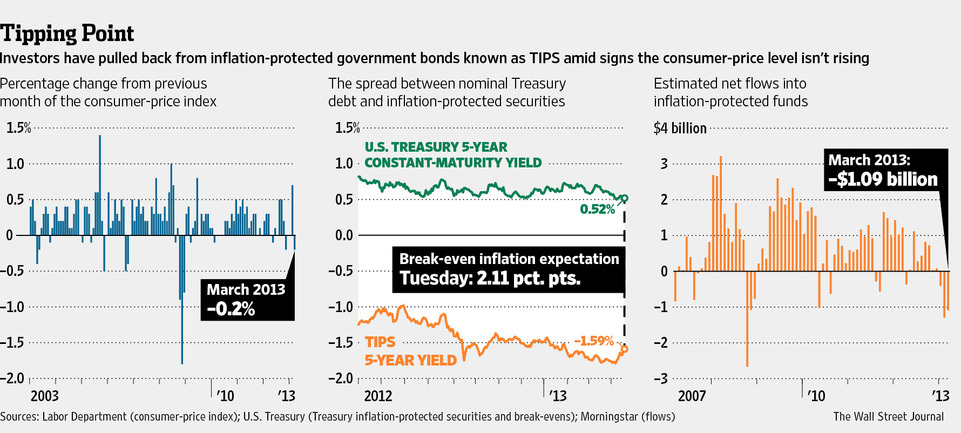
A surprise drop in gasoline prices has jolted a corner of the bond market, easing investors’ inflation fears and triggering an exodus from a popular form of Treasury securities.

Bond investors have been pouring into the $883 billion market for Treasury inflation-protected securities, or TIPS, over the past year, in a bid to protect their purchasing power in case of rising prices. TIPS holders receive adjustments to the principal value of their bonds tied to the rate of inflation, protecting their holdings from being eroded by rising price levels. Read more of this post

Facebook Charging $1 Million For New, Intrusive Video Ads; Facebook has previously claimed its logged-in audience is equivalent to three Super Bowls every day

Facebook Charging $1 Million For New, Intrusive Video Ads

Jim Edwards | Apr. 16, 2013, 8:43 AM | 2,455 | 14

Facebook wants $1 million from advertisers who want to be the first to run video ads in users’ news feeds this summer, according to Ad Age. And users won’t have a choice over whether they see them: the 15-second spots will be on “autoplay,” meaning that they’ll run like regular video ads on any other website, starting up whether users like it or not. The move was expected. Business Insider noted in December that Facebook was considering autoplay video ads. The company believes it can take a significant share of ad money currently being spent on TV by showing advertisers superior return on investment measurement. Facebook is already the second biggest server of online video, after YouTube. Facebook has previously claimed its logged-in audience is equivalent to three Super Bowls every day — making it the perfect place to launch new movie trailers. Read more of this post

A senior Chinese auditor has warned that local government debt is “out of control” and could spark a bigger financial crisis than the US housing market crash.

Last updated: April 16, 2013 5:32 pm

China local authority debt ‘out of control’

By Simon Rabinovitch in Beijing

A senior Chinese auditor has warned that local government debt is “out of control” and could spark a bigger financial crisis than the US housing market crash.

Zhang Ke said his accounting firm, ShineWing, had all but stopped signing off on bond sales by local governments as a result of his concerns.

“We audited some local government bond issues and found them very dangerous, so we pulled out,” said Mr Zhang, who is also vice-chairman of China’s accounting association. “Most don’t have strong debt servicing abilities. Things could become very serious.”

The International Monetary Fund, rating agencies and investment banks have all raised concerns about Chinese government debt. But it is rare for a figure as established in the Chinese financial industry as Mr Zhang to issue such a stark warning.

“It is already out of control,” Mr Zhang said. “A crisis is possible. But since the debt is being rolled over and is long-term, the timing of its explosion is uncertain.” Read more of this post

Quality concerns over China’s bottled water

Quality concerns over China’s bottled water

chiday_water

Wednesday, Apr 17, 2013
China Daily/Asia News Network
By Wang Zhenghua and Yan Yiqi

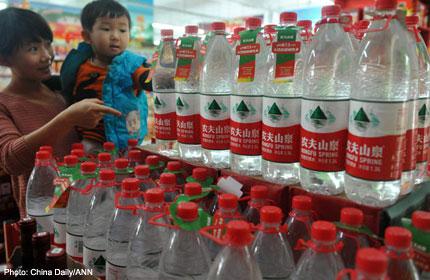
CHINA – A debate over the production standards adopted by bottled water giant Nongfu Spring has aroused safety concerns.

Several bottled water retailers in eastern China approached by China Daily said they have yet to see a major setback in sales of Nongfu Spring’s bottled water, but some consumers remain sceptical about the quality of its products. Read more of this post

IMF: Financial instability shifting from banks to pensions

Financial instability shifting from banks to pensions

17 April 2013

Author: Rachel Fixsen

Financial sector risk may be shifting to pension funds and other institutions as a result of global central banks’ exceptionally easy monetary policy – including bond-buying programmes – according to a new report from the International Monetary Fund (IMF).  Read more of this post

An H7N9 patient in Zhejiang province was sick for weeks and died before authorities had diagnosed the virus, making effective treatment impossible

Zhejiang cook died without knowing he had H7N9

Staff Reporter, 2013-04-17

An H7N9 patient in Zhejiang province was sick for weeks and died before authorities had diagnosed the virus, making effective treatment impossible, reports the People’s Daily. The man consulted four doctors and was not diagnosed as having contracted what is now known to be the latest strain of avian flu. He was reportedly infected after preparing two chickens which were carrying the disease, even though he did not eat their meat. Read more of this post

Moves to curb house prices trigger fake divorces in Shanghai

Moves to curb house prices trigger fake divorces in Shanghai

Staff Reporter, 2013-04-16

China’s recent attempts to cool the country’s overheated housing market have triggered a wave of phony divorces in Shanghai, with critics questioning the long-term effectiveness of government attempts to hold down soaring prices.

Jiahegongcheng, a Chinese non-profit offering marriage consultancy, said it had recently provided services to many couples staging a fake divorce in order to sidestep restrictions and purchase an additional home. The trend began after the Shanghai government limited families to buying only one additional new home among other measures started in 2010.

There were 43,964 couples in Shanghai which filed for divorce in 2012 and 8,068 of them later remarried, according to statistics.

Fake divorce has become a common way to avoid the law, and the government should not allow the trend to continue, said Hu Zonggen, a real estate consultant based in Shanghai. He suggested during a conference in March that the city should address the issue by banning new home purchases to people in their first year after a divorce. Read more of this post

FAW-Volkswagen Car chairman resigns amid corruption scandals; 10 billion yuan (US$1.6 billion) had evaporated from the group’s real estate business

FAW Car chairman resigns amid corruption scandals

Staff Reporter, 2013-04-17

First Automobile Works Group chairman Xu Jianyi has resigned as chairman and as member of the board at the group’s subsidiary FAW Car. The development has fueled speculation that his exit is a result of the series of corruption scandals within the state-owned enterprise.

FAW Car released a statement on Friday saying Xu’s resignation was due to work demands and he will not be taking up any other posts at the subsidiary. Xu will however remain as chairman of the group.

The statement came a day after reports that 10 billion yuan (US$1.6 billion) had evaporated from the group’s real estate business and that 200 senior managers had been whisked away by investigators for questioning. Read more of this post

China’s department stores losing out to e-commerce, higher costs; Retailing specialists said many department stores are being used purely as “fitting rooms” as shoppers have taken to trying on clothes at the store and then placing their orders online to save money

China’s department stores losing out to e-commerce, higher costs

Staff Reporter,  2013-04-17

Department stores in China have been under increasing pressure from rising rent and labor costs as well as greater competition from online retailers.

Department stores reported a total of 228.2 billion yuan (US$36.8 billion) in sales in 2012, up 8.92% from 2011, a rate far lower than the average annual growth rate of 16.5% recorded between 2006 and 2011, according to the China Commerce Association for General Merchandise.

Retailing specialists in China said local department stores were currently reporting net profits of only 2%-3% due to rising labor and rental costs. Labor costs have been increasing at a rate of over 10% annually, while rent has jumped over 10-fold during the past eight years.

Increased competition from e-commerce websites has also contributed to the slide.

Retailing specialists said many department stores are being used purely as “fitting rooms” as shoppers have taken to trying on clothes at the store and then placing their orders online to save money. Read more of this post

Death toll hits 16 in China bird flu outbreak; Online pictures of dead birds spur China flu openness

Online pictures of dead birds spur China flu openness

POSTED: 16 Apr 2013 4:21 PM

a-photo-from-weibo-user-mao-lanlanlan-on-april-15-shows-dead-sparrows-on-the-ground-in-nanjing-eastern-china-4
Photos of 10 dead sparrows on a Chinese pavement that went viral on social media and drew a swift official response show how hard covering up a bird flu outbreak would be in the Internet age.

SHANGHAI – Photos of 10 dead sparrows on a Chinese pavement that went viral on social media and drew a swift official response show how hard covering up a bird flu outbreak would be in the Internet age.

China has won international praise for its transparency on the H7N9 strain, which has killed 14 people so far, in sharp contrast to criticism for trying to conceal the 2003 Severe Acute Respiratory Syndrome (SARS) epidemic.

But analysts say the government has little choice, as technological change over the past decade and the proliferation of Twitter-like “weibo” microblogs help drive greater official openness.

The images of the dead sparrows by weibo user Mao Xiaojiong (who also uses the weibo name Mao Lanlanlan), shot beneath a magnolia tree near her home in the city of Nanjing — which banned live poultry trading and culled birds after confirming H7N9 in people — were a case in point.

When she posted them on her weibo account earlier this month, asking authorities to investigate, they were reposted 20,000 times, racked up hundreds of thousands of views, and became a top topic on Internet portal Sina. Read more of this post

Bird Flu Fears Mount in China as Herbal Remedies Run Out

Bird Flu Fears Mount in China as Herbal Remedies Run Out

A popular herb called ban lan gen, or blue root, has been flying off pharmacy shelves across China as local governments encourage people to consider traditional remedies to ward off the latest bird flu virus.

With scientists so far unable to pinpoint the H7N9 influenza virus’ animal host, locals are preparing for a possible pandemic by stocking up on popular plant remedies as well as face masks and hand sanitizers and other over-the- counter remedies.

“Chinese people associate ban lan gen with anti-virus,” said Shen Jiangang, assistant director for research at the University of Hong Kong’s school of Chinese medicine. “So when they hear about bird flu, they immediately think it might be effective to protect themselves although there is no experimental evidence.”

Ayurvedic and Chinese medicines have used the remedy for centuries. Scientists have proved it can relieve bacterial conjunctivitis in eye drops and found it has an antiviral effect in test tubes. There is no test to show it works against influenza.

That hasn’t stopped buyers. Chinese consumers, especially older ones, tend to believe in traditional formulations especially when it comes to cold and flu remedies, said Iwona Mamczur, an analyst at Mintel International Group Ltd. The market for over-the-counter medicines was worth 77.5 billion yuan ($12.5 billion) in 2011, according to a report from the London-based researcher. Read more of this post

The Role of Management Quality in the IPOs of Venture-Backed Entrepreneurial Firms

The Role of Management Quality in the IPOs of Venture-Backed Entrepreneurial Firms

Thomas J. Chemmanur Boston College – Carroll School of Management

Karen Simonyan Suffolk University – Department of Finance

Hassan Tehranian Boston College – Department of Finance

April 4, 2013

Abstract: 
We make use of hand-collected data on the quality and reputation of the management teams of a large sample of entrepreneurial firms going public to analyze the role of management quality in the IPOs of venture capital (VC)-backed firms for the first time in the literature. We hypothesize that management quality may affect a VC-backed firm’s IPO characteristics and post-IPO operating performance through two channels: a “certification” channel, where firms with higher management quality face reduced information asymmetry in the IPO market, and therefore find it easier and cheaper to go public; and an “ability” channel, where firms with higher quality managements select better projects and implement them more ably. Further, VC-backing may itself affect a firm’s IPO, indirectly by affecting a firm’s management quality and directly through the above certification and ability channels. These hypotheses imply that VC-backing will be associated with higher management quality, and both management quality and VC-backing will have a favorable effect on firms’ IPO characteristics, increase IPO participation by financial market players, allow firms to go public earlier, yield higher IPO and immediate after-market valuations, and will be positively related to changes in post-IPO operating performance. Our OLS regression, propensity-score matching, and instrumental variable analyses provide empirical support for the above hypotheses. While VC-backing and management quality act as substitutes in their effect on a firm’s IPO characteristics, they act as complements in their effect on firms’ IPO and secondary market valuations and post-IPO operating performance.