Henninger: Capitalism’s Corruptions; Corruption suppresses growth because citizens in time recognize that honest work produces a lower return than spending one’s energies gaming the system

April 3, 2013, 6:47 p.m. ET

Henninger: Capitalism’s Corruptions

On capitalism, Pope Francis, Barack Obama and François Hollande aren’t singing from the same hymnal.

By DANIEL HENNINGER

ED-AQ615_wl0404_DV_20130403175653

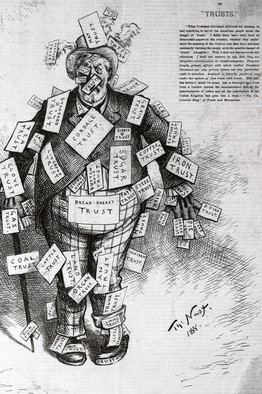
Public relations for capitalists hasn’t been so hard since Thomas Nast was caricaturing them in 19th-century America. The back wash of the 2008 financial crisis has put capitalist baiting back in vogue. The president of the United States got himself elected to a second term with a four-year assault on “the wealthiest” and the “well off.” French President Nicolas Sarkozy attacked the “free-wheeling Anglo-Saxon model” of capitalism, so the French dumped him to elect an aggressive anti-capitalist. Read more of this post

Dementia Care More Expensive Than Heart Disease, Study Says; the yearly expense of dementia care and treatment doubled to $215 billion in 2010, to jump to $511bn by 2040 vs the direct cost of treating heart disease, the leading cause of death in the U.S., was $102 billion in 2010, while cancer cost $77 billion

Dementia Care More Expensive Than Heart Disease, Study Says

The cost of caring for dementia patients has reached $109 billion annually, exceeding that for heart disease and cancer, and will double by the time the youngest Baby Boomers reach their 70’s, according to a study.

Dementia, most commonly taking the form of Alzheimer’s, results in a loss of brain function affecting memory, thinking, language, judgment and behavior. More than 5 million Americans have the Alzheimer’s, according to the Alzheimer’s Association, and that number will rise 40 percent by 2025. Dementia represents a substantial financial burden on society, researchers said in the study, published today in the New England Journal of Medicine.

The goal now is to find treatments for Alzheimer’s and other brain disorders. To speed along research, President Barack Obama announced earlier this week a campaign called the BRAIN Initiative, which will spend $100 million beginning in 2014 to map the complex interactions between brain cells and neurological circuits.

“We need more research into interventions to delay or halt the onset of dementia, right now we don’t really have anything at all,” said Michael Hurd, an author of the study and director of Rand Corp.’s Center of the Study of Aging, in an interview. “The problem is going to grow rapidly.”

When support from family and friends is given a cost value, the yearly expense of dementia care and treatment doubled to $215 billion in 2010, the study, which was funded by the National Institutes of Health, said. That figure will jump to $511 billion by 2040, as the generation born between 1946 and 1964 range become elderly, according to the study. By comparison, the direct cost of treating heart disease, the leading cause of death in the U.S., was $102 billion in 2010, while cancer cost $77 billion, according to the paper. Read more of this post

Addictive animal webcams prove irresistible to business and viewers; The average person, seemingly transfixed by the cuteness, stays on the page for 18 minutes and 50 seconds

Addictive animal webcams prove irresistible to business and viewers

April 3, 2013

BRIAN STELTER

art-cat-620x349

Too cute: Animal Planet has signed a deal with Samsung to encourage viewers to watch Kitty Cam on their TVs.

The average visitor to the Kitten Cam on Animal Planet’s website has a hard time leaving. The live internet stream of felines has been watched more than 25 million times since it started last September. The average person, seemingly transfixed by the cuteness, stays on the page for 18 minutes and 50 seconds.

“That’s a longer length of time than many television shows,” said the head of Animal Planet, Marjorie Kaplan.

The channel, sensing that its visitors would like more of a good thing, will begin promoting 10 more web channels this week as “ambient entertainment” for viewers and advertisers. At a new website, APL.TV, webcams of ants, beluga whales, chicks, penguins, wild birds, and even cockroaches, will be live all the time, day and night.

The web channels — under the umbrella name “Animal Planet Live” — are designed for internet-connected TV sets, so viewers can watch the kitties and penguins on their big screens. Animal Planet already has a deal with Samsung so that the cams will appear on the manufacturer’s smart TV interface, and it says it will have a similar app for Xbox Live in coming months. The arrangement portends a future when tiny, cheap web channels can compete for viewers with 30-year-old cable TV channels.

Importantly for Animal Planet’s owner, Discovery Communications, which has withheld most of its television programming from the web, the new web channels are additive and do not use anything that already runs on the main Animal Planet channel. Read more of this post

Mobile phone turns 40, with little fanfare; Father of the mobile phone, Martin Cooper, placed the first call to a rival, Joel Engel of Bell Labs. “They thought that we were a gnat, an obstacle… we believed in competition and lots of players. And we also believed – our religion was portables, because people are mobile.”

Mobile phone turns 40, with little fanfare

April 4, 2013 – 9:11AM

bg_first_mobile_phone-20130404084241509589-620x349

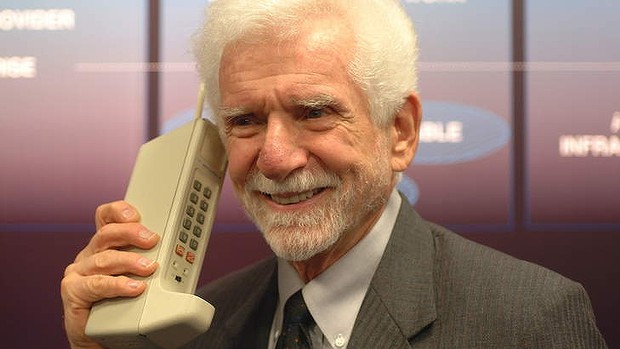
Father of the mobile phone, Martin Cooper, pictured with the first functional mobile phone.

The mobile phone turned 40 on Wednesday, with no fanfare to mark the occasion in a market which seemed focused on new smartphones like the iPhone and a possible Facebook-themed device.

The first mobile call was placed April 3, 1973, by Motorola engineer Martin Cooper, head of a team working on mobile communication technologies. Cooper made the call on Sixth Avenue in New York, before going into a press conference using a Motorola DynaTAC – a device that weighed one kilogram, and had a battery life of 20 minutes, according to Motorola. Cooper told the technology website The Verge last year that he placed the first call to a rival, Joel Engel of Bell Labs.

“To this day, he resents what Motorola did in those days,” Cooper said. “They thought that we were a gnat, an obstacle… we believed in competition and lots of players. And we also believed – our religion was portables, because people are mobile. And here they were trying to make a car telephone and a monopoly on top of that. So that battle was the reason that we built that phone.” Read more of this post

Angry Birds Maker at Pivot Point

Updated April 3, 2013, 8:59 p.m. ET

Angry Birds Maker at Pivot Point

By JUHANA ROSSI

HELSINKI—Rovio Entertainment Ltd. continued to grow at a rapid clip last year, but a top executive said maintaining momentum hinges on how well it pivots from a hot Nordic game developer into a global entertainment powerhouse.

The Finnish company, which struck gold in 2009 with the launch of its Angry Birds mobile game, said Wednesday it doubled 2012 revenue compared with the prior year and posted a steep increase in net profit. Head count more than doubled to 518 staffers and its closely watched active-monthly-user count marched past the quarter billion mark. Read more of this post

An Auctioneer Showdown Looms in Asia; “I don’t think we’ll ever see it like it was two years ago. You now just don’t see that crazy mainland Chinese buyer who bids up and up.”

April 4, 2013, 6:58 AM

An Auctioneer Showdown Looms in Asia

By Jason Chow

OB-WX592_HKAUCT_G_20130403012021

‘Mao’s Song Poem of Snow, No.2′ by Zeng Fanzhi. See more of what’s hitting Hong Kong auction blocks this season

HONG KONG  – Sotheby’s and three Asian auction houses expect to sell more than $300 million in art, antiques, wine and jewelry this week, with a Mao portrait by Zeng Fanzhi and a Qing dynasty bowl among the most expensive items.

Despite the flurry of activity and glut of high estimates, art insiders are watching nervously for signs of China’s luxury appetite. Last year, art-auction sales in Greater China, which includes Hong Kong, fell 37% from 2011, according to data compiled by Art Market Monitor of Artron.

“Everybody’s looking at these sales—Sotheby’s, mostly—as a test to see if the market is coming back,” said Catherine Kwai, a gallery owner in Hong Kong. “I don’t think we’ll ever see it like it was two years ago. You now just don’t see that crazy mainland Chinese buyer who bids up and up.” Read more of this post

Growth in ‘Frontier Asia’ Highlights Overheating Risk, IMF Says

Updated April 3, 2013, 12:12 p.m. ET

Growth in ‘Frontier Asia’ Highlights Overheating Risk, IMF Says

By NATASHA BRERETON-FUKUI

BANDAR SERI BEGAWAN, Brunei—Parts of Southeast Asia are experiencing very high credit growth and surging property sectors, and policy makers there should monitor conditions carefully, a senior official at the International Monetary Fund said on Wednesday.

IMF Deputy Managing Director Naoyuki Shinohara didn’t say which countries were at greatest risk of overheating, but he noted that lower-income countries in “frontier Asia” were experiencing stronger growth than other members of the Association of Southeast Asian Nations. Cambodia, Laos and Myanmar all grew faster than 6% last year.

“I don’t think the risk is imminent, but once these things start moving it’s very difficult to unwind,” Mr. Shinohara said in an interview on the sidelines of regional meetings in Brunei. “So policy makers should be careful in monitoring how the market develops, how the economy grows, and take necessary measures as the situation develops.”

Surging capital inflows—the result of loose monetary policy in industrialized nations and global investors’ hunt for yield—have sparked concerns about overheating across emerging Asia and led to preemptive steps in many countries. Read more of this post

Chinese Deluge U.S. Master’s Programs; Overseas Students Seek Specialized Degrees to Win Competitive Edge, and B-Schools Enjoy Revenue in Tough Time

Updated April 3, 2013, 8:36 p.m. ET

Chinese Deluge U.S. Master’s Programs

Overseas Students Seek Specialized Degrees to Win Competitive Edge, and B-Schools Enjoy Revenue in Tough Time

By MELISSA KORN

MK-CC126_MASTER_G_20130403180005

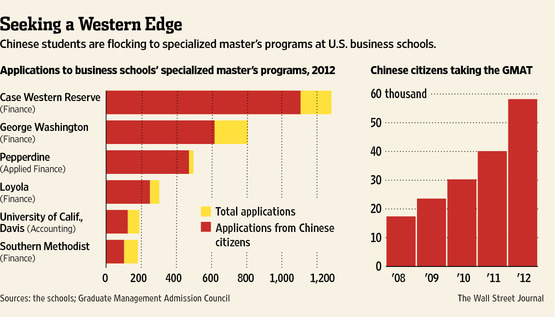
When the business school at the University of California, Davis, started its master’s program in accounting last year, administrators expected to attract aspiring accountants from nearby colleges. What they got instead was a wave of interest from overseas: Roughly two-thirds of the 189 applications received for last fall’s entering class came from Chinese citizens. “Frankly, we were shocked at the deluge of applications…for what we saw as a program that prepared students for a U.S. credential,” says James Stevens, assistant dean of student affairs. Davis has plenty of company. Specialized master’s degrees in accounting, finance and other disciplines—generally aimed at students just out of college and lasting one year—have found tremendous popularity in recent years among Chinese nationals seeking a competitive edge and U.S. experience.

Such demand has provided steady revenues for business schools at a time when traditional M.B.A. programs are losing their appeal among U.S. students. But the uneven applicant pool has left many schools weighing financial goals against uninspiring classroom experiences for both Chinese and local students and worrying about weak job-placement rates. Read more of this post

Japan’s Car Makers Struggle in China

April 2, 2013, 9:47 a.m. ET

Japan’s Car Makers Struggle in China

OB-WX256_0402ca_G_20130402105213

An overturned Honda police car takes a beating at an anti-Japan protest in Shenzhen last August; lingering bad feelings are still hurting Japanese car makers’ sales in China.

Japan’s three major auto makers suffered continued sales setbacks in China last month, adding urgency to efforts to reignite sales in the vast but increasingly competitive market. Toyota Motor Corp., 7203.TO +1.46% Nissan Motor Co. 7201.TO +1.24% and Honda Motor Co. 7267.TO +1.99% reported year-over-year declines in March as they grapple with a territorial dispute between China and Japan over a group of rocky islands in the East China Sea, a row that inflamed anti-Japanese sentiment in China and caused boycotts and general wariness of Japanese car brands. Read more of this post

Why Grocers Like Tesco Find Trouble in the U.S. Market; The American grocery market has tempted foreigners for almost a century. Many foreign companies have also arrived with a superiority complex, seeing hundreds of small, unsophisticated enterprise that seemed to be easy prey for international entrants with deep pockets and industry know-how

Why Grocers Like Tesco Find Trouble in the U.S. Market

Any day now, Tesco (TSCO) Plc, the U.K. grocery giant, may announce the closure of the 200 or so Fresh & Easy food stores it has opened in California, Arizona and Nevada since 2007.

When it does, Tesco will join a long list of international grocers that have met their match in the U.S. In every case, these companies wrongly assumed that strategies honed abroad would succeed in America, and they underestimated the resources and management attention required to make headway in a vast and fast-changing market.

The American grocery market has tempted foreigners for almost a century. One reason is the obvious potential: For a grocer that had exhausted the possibilities in its home market, expansion in the U.S. offered a means to boost profits. Many foreign companies have also arrived with a superiority complex, seeing hundreds of small, unsophisticated enterprises that seemed to be easy prey for international entrants with deep pockets and industry know-how. Read more of this post

Creating ‘bamboo innovators’ in S’pore now on AsiaOne

Now on AsiaOne: http://www.asiaone.com/News/Latest%2BNews/Singapore/Story/A1Story20130402-413040.html

Creating ‘bamboo innovators’ in S’pore
20130402.152437_bt_gilv7

Uncertain conditions can breed innovative businesses, where risk-taking educators nurture flexible students. -ST
Kee Koon Boon

Wed, Apr 03, 2013
The Straits Times

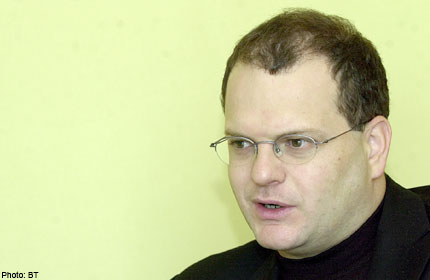
Gil Shwed, CEO & Founder of Check Point Sofware.

SINGAPORE – “Can my kid watch how you milk cows?”

“Can my kid see how you print the newspaper?”

These were questions asked by Israeli inventor and entrepreneur Gil Shwed’s mother when she took him on educational “adventure trips” when he was young, exposing him to a dairy farm, a printing house, and his father’s office in 1972, where at age five he saw a computer for the first time.

He soon signed up for computer classes at age nine, a summer coding job at 12, and took computer science classes at the Hebrew University while still in high school.

Unlike his career-minded peers, Mr Shwed persisted with an idea first cooked up during his military conscription: building a type of computer security software that links up computer networks in a way that would allow some users access to confidential materials while denying access to others. He embarked upon the project with two friends after army conscription and without the security of “proper” jobs.

By 1994, the trio’s Firewall product won the best software award at a computer show, vindicating a venture capital firm’s faith in Mr Shwed’s vision. Check Point Software Technologies listed on Nasdaq in 1996. Its market value today has jumped 12-fold to US$10 billion (S$12.4 billion).

Binding the trio together was a pioneering ethos where “education” with a “bitzu’ism” quality was at its heart. A bitzu’ist is a Hebrew word that loosely translates to “pragmatist” with a resilient quality, like bamboo that bends but does not break in the wildest storms when even oak trees snap. The bitzu’ist is the “builder, the irrigator, the pilot, the gun-runner, the settler all rolled into one”.

Mr Shwed thinks of his home country Israel as a “start-up nation”. “We managed to create a country from zero. We’ve had an entrepreneurial spirit for over 100 years. One thing that really helps us here is that we don’t have a local market.”

Surrounded by hostile neighbours and with few natural resources, Israel has the highest density of start-ups in the world, with one for every 1,800 Israelis. With a population of 7.7 million with 70 different nationalities, Israelis think globally when creating products and innovative firms.

Developing human capital is the key to growing the Israeli economy. Its education system is not about chasing after instrumental achievements such as “grades” or a “checklist-based holistic curriculum vitae” or “high graduation salary”.

The education system in Israel is made market-relevant when plugged into an unique ecosystem that constantly searches for and supports innovative ideas and new products to help build “bamboo innovator” companies such as Check Point.

In “Singapore version 1.0’s” growth since independence, the education system is meritocratic, highly competitive and “standardised”, lifting the technical competence and social mobility of Singaporeans to fit multinational companies (MNCs) with their export-oriented strategies.

This is augmented by higher valued-added services from logistics, shipping and maritime support to legal, finance and accounting, generating high wages to beat inflationary pressures. “Education 1.0” is about meeting the needs of capable MNCs which connect Singapore’s small, open economy to the real marketplace.

Yet the highly skilled workforce is not able to translate its “intangibles” in know-how into building and even owning “bamboo innovators”. The “earnings” accrued from this know-how remain with the MNCs.

In investing lingo, a high-salaried MNC worker has a price earnings (PE) ratio of one while a MNC can have a PE value of 20 times. A productive “bamboo” worker is one who, when a wind blows away his MNC title and position, can still remain a resilient innovator to create value because he has that intangible quality that is indestructible.

MNCs are concerned about the Singapore workforce lacking the initiative and innovativeness desired by knowledge-based industries, thus creating a barrier to a breakthrough in wages and productivity. It is the hollow “emptiness” in its centre – the intangibles – that gives bamboo great strength and flexibility in a raging storm.

The Singapore workforce’s accumulation of wealth and tangible assets for their own sake has evolved into a sense of entitlement, a dangerous liability that erodes character, moral values and social cohesion.

Reform attempts through character education and creative thinking alone are not only difficult but also decidedly off-track. As economist David Landes puts it, nothing dilutes drive and ambition more than a sense of entitlement. This kind of distortion makes an economy inherently uncompetitive.

Instead of the diminishing marginal returns from repeating “Education 1.0”, where school results are instrumental, these complex uncertain times require an education system that enables students to grope and reach directly into the global marketplace, to be sensitive and alert to existing anomalies and paradigms, and to how things ought to function and behave.

Educators must connect and sensitise students to the chaotic global marketplace. It is this sensitivity and alertness that leads to creating “bamboo innovators”.

Reflecting former deputy prime minister Goh Keng Swee’s view about the spirit of education as both “a search for truth” and “the way to a better life”, Singapore’s “Education 2.0” system should centre on how and why resilient firms continue to create value in uncertain and difficult times.

The system should also educate students who dare to become “bamboo innovators” like Mr Shwed, and who will build enduring creations.

As former Israeli president Shimon Peres said, “the most careful thing is to dare”.
China’s $10 Million Artist Pursues Spartan Life in NYC; “Every morning I wake up between 7 a.m. and 8 a.m., have a cup of coffee, read the news and head to the studio,” says artist Zhang Xiaogang, “where I stay until 10 p.m. to 11 p.m.”

China’s $10 Million Artist Pursues Spartan Life in NYC

Zhang Xiaogang, Forever Lasting Love

“Every morning I wake up between 7 a.m. and 8 a.m., have a cup of coffee, read the news and head to the studio,” says artist Zhang Xiaogang, “where I stay until 10 p.m. to 11 p.m.”

It’s a Spartan routine for China’s priciest living artist, who achieved that status when his triptych titled “Forever Lasting Love” sold for $10.2 million at a Hong Kong auction in 2011. His latest works, a mix of paintings and sculptures, are now on view at the Pace Gallery in New York’s Chelsea area where the opening last week attracted several hundred guests.

Read more of this post

North Korea Says It Has Final Approval For Nuclear Attack On US

North Korea Says It Has Final Approval For Nuclear Attack On US

Tyler Durden on 04/03/2013 15:40 -0400

This is merely the latest headline in what may well culminate with the wettest dream Paul Krugman has ever had.

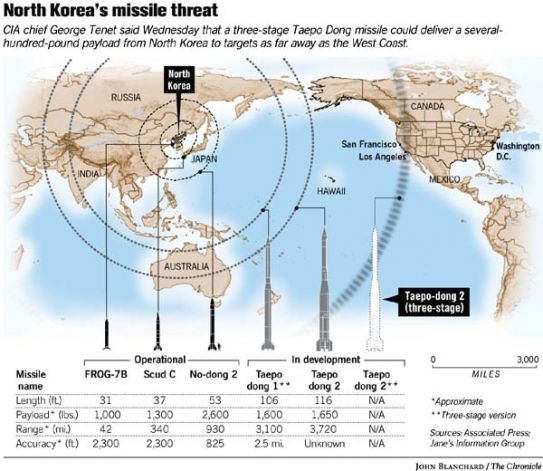
AFP: North Korean Army has approval to launch “mercilesss” nuclear strike on U.S. involving possible use of “cutting edge” nuclear weapons

— Sky News Newsdesk (@SkyNewsBreak) April 3, 2013

For those concerned, here is a map showing the range of North Korean missiles. It is safe to assume that GETCO’s collocated servers are safe, and will ramp the ES limit up on any flashing red headline launch news. Just think of the fixed income investment and epic resulting GDP boost, on both a real and seasonally adjusted basis.

Korea-missiles-SFC


Data Discrepancy Clouds China’s Report of Export Boom; “Fake exporting is rampant,” said an export-agency owner in the city of Foshan in China’s southern Guangdong province

April 3, 2013, 2:32 p.m. ET

Data Discrepancy Clouds China’s Report of Export Boom

AI-CA108_CEXPOR_NS_20130403134803

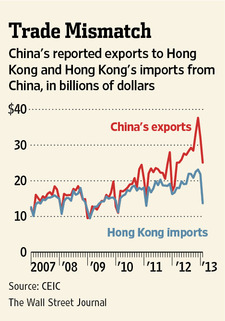
BEIJING—A discrepancy between China’s export data and Hong Kong import numbers has raised doubts about what appeared to be booming overseas demand for Chinese goods, amid uncertainty about the strength of the recovery in the world’s second largest economy.

China’s customs bureau reported in March that exports rose 19.8% year-to-year in the three months through February, despite a fragile recovery in the U.S. and Europe. The report has buoyed confidence that China’s economy is strengthening, after growth in gross domestic product touched a three-year low of 7.4% year-to-year in the third quarter of 2012.

A resurgence in exports has been a bright spot for the economy, suggesting demand for goods remained strong enough to keep production lines humming and provide jobs for tens of millions of migrant workers.

But some exporters, trade agents and economists said the export numbers were likely to be inaccurate because of false reporting by exporters and local governments. They point in particular to mismatching trade figures with Hong Kong, the first destination for many mainland Chinese goods.

In the three months through February, mainland customs reported $94.9 billion in exports to Hong Kong, but Hong Kong customs reported only $58.7 billion in imports from the mainland. The discrepancy during the period was significantly greater than at any other time in recent years.

China’s export growth for February could be overstated by around seven percentage points, based on an analysis of data discrepancies, Louis Kuijs, China economist at RBS, estimated.

Some exporters exaggerate invoices to gain tax rebates and evade controls on bringing cash into the country, and some local governments claim higher export numbers to look good, people familiar with reporting practices said.

“Fake exporting is rampant,” said an export-agency owner in the city of Foshan in China’s southern Guangdong province.

“It’s really easy to inflate export data if you want to,” said a customs official in China’s eastern Zhejiang province, an export powerhouse. Read more of this post

New Bird Flu Strain Creates Fear And Surveillance; “I can tell you this thing is real and definitely has the markings of being a killer,” says Jason Tetro, coordinator of the Emerging Pathogens Research Centre in Ottawa. “Infecting a big poultry reservoir, on the other hand, might well enable H7N9 to access Asia’s wild bird population.”

New Bird Flu Strain Creates Fear And Surveillance

Tyler Durden on 04/03/2013 15:23 -0400

Authored by Peter Christian Hall, originally posted at Reuters,

An emerging bird flu that is mysterious and deadly is haunting China. With four fresh H7N9 cases reported in Jiangsu Province and no indication as to how three Chinese adults caught the little-noted avian flu virus that killed two of them in March, the global medical community is hoping the new flu will calm down until China’s health system can determine how it spread.

“I can tell you this thing is real and definitely has the markings of being a killer,” says Jason Tetro, coordinator of the Emerging Pathogens Research Centre in Ottawa, which on Monday examined gene sequences from three of China’s H7N9 cases.

“I don’t wish to cause panic,” Tetro said in an interview, noting that if the subtype were proven to have emerged from a small farm, he wouldn’t be much alarmed. Infecting a big poultry reservoir, on the other hand, might well enable H7N9 to access Asia’s wild bird population. The upstart subtype could then become as menacing as H5N1, which since 2005 has officially taken 371 lives in 622 cases, mostly in China, Southeast Asia and Egypt, according to the World Health Organization. The additional Chinese cases have convinced Tetro that “close contact with birds” has been involved. “And I think the CAFOs [industrial chicken farms] have definitely contributed to the evolution of this virus,” he says. Read more of this post

Chinese toll from new bird flu rises to 9 cases, 3 dead; Hanoi bans China poultry after new bird flu strain deaths

Chinese toll from new bird flu rises to 9 cases, 3 dead

1:00pm EDT

By Ben Blanchard and Kate Kelland

BEIJING/LONDON (Reuters) – China has found two more cases of a new strain of bird flu and one of the victims has died, state media said on Wednesday, bringing to nine the number of confirmed human infections from the previously unknown flu type.

A 38-year-old cook fell ill early last month while working in the province of Jiangsu, where five of the other cases were found. He died in hospital in Hangzhou city on March 27, the Xinhua news agency reported. Samples tested positive on Wednesday for the new bird flu strain, H7N9.

The second patient, also in Hangzhou, is a 67-year-old who is having treatment. Xinhua said no connection between the two cases had been discovered, and no one in close contact with either patient had developed any flu-like symptoms.

The World Health Organization said it was “following the event closely” and was in contact with Chinese authorities, which it said were actively investigating the cases amid heightened disease surveillance. Read more of this post

China Turns Graveyard From Goldmine Hurting Ship Makers: Freight

China Turns Graveyard From Goldmine Hurting Ship Makers: Freight

For shipbuilders such as STX Group, China was once a goldmine. Now it’s a graveyard.

China’s lower appetite for commodities undermined the group’s plan to sell its shipping line, wiping out a combined $435 million of investor wealth at the South Korea-based conglomerate’s three main companies this week. That also threatens the group’s ability to repay $1.2 billion of debt by the end of the year.

STX’s crisis comes after last decade’s boom prompted the group to set up a shipbuilding and offshore complex in Dalian, northeastern China. With Asia’s biggest economy slowing down and the European crisis adding to a plunge in cargo rates, China Cosco Holdings Co. (1919), the nation’s biggest mover of bulk commodities and containers, last week reported a loss for 2012, a third straight annual loss.

“China was the promised land, something STX Group saw as an opportunity to help it become much bigger,” said Park Moo Hyun, an analyst at E*Trade Securities Korea in Seoul, who doesn’t rate any of the group companies. “It’s turned into a nightmare, a big investment that is coming back to bite them.”

STX, a conglomerate that owned $23 billion in assets as of April last year, is trying to raise 2.5 trillion won ($2.2 billion) through asset sales. It will know this week whether creditors will accept a request for a voluntary debt rescheduling by its shipbuilding unit. The group has 1.37 trillion won of bonds due this year, it said. Read more of this post

China’s Baidu developing digital eyewear similar to Google Glass

China’s Baidu developing digital eyewear similar to Google Glass

4:57am EDT

SHANGHAI (Reuters) – Baidu Inc (BIDU.O: QuoteProfile,ResearchStock Buzz), China’s largest search engine, is developing prototype digital eyewear similar to Google Inc’s (GOOG.O: QuoteProfileResearchStock Buzz) Google Glass that will leverage Baidu’s strengths in image search and facial recognition, a Baidu spokesman said on Wednesday.

Internally known as project “Baidu Eye”, the glasses are being tested internally and it is not clear whether the product will ever be commercialized, said Kaiser Kuo, Baidu’s spokesman.

Kuo said the device will be mounted on a headset with a small LCD screen and will allow users to make image and voice searches as well as conduct facial recognition matches.

“What you are doing with your camera, for example, taking a picture of a celebrity and then checking on our database to see if we have a facial image match, you could do the same thing with a wearable visual device,” Kuo said. Read more of this post

Canada Seen Beating U.S. in $150 Billion Asia LNG Race; “The smart money is going to Canada” to export LNG. “They don’t have any objections to exporting gas and it’s closer to Asia, which cuts down on shipping costs.”

Canada Seen Beating U.S. in $150 Billion Asia LNG Race

Canada is pulling ahead of the U.S. in a contest to be the first exporter of liquefied natural gas from the North American shale bonanza to Asia’s $150 billion LNG market.

An LNG terminal being built at a cove north of Vancouver financed by a Houston private-equity firm is scheduled to begin shipping the fuel across the Pacific Ocean in mid-2015, eight months before the first continental U.S. plant is slated to start. Canada’s government has approved twice as much LNG export capacity as its southerly neighbor, evincing a friendlier attitude toward selling domestic gas to the highest bidder and positioning the nation as the go-to source of gas in North America for overseas buyers.

International energy giants from Exxon Mobil Corp (XOM). to Malaysia’s Petroliam Nasional Bhd (PET) are considering terminal projects in western Canada to supply Asian utilities and factories that are paying more than four times the price of U.S. markets. Chevron Corp (CVX). said it’s focusing all of its North American LNG efforts north of the U.S. border because of the more favorable regulatory climate and closer proximity to Asia, making exports more profitable for producers.

“The smart money is going to Canada” to export LNG, said Michelle Foss, chief energy economist at the Center for Energy Economics at the University of Texas’ Bureau of Economic Geology. “They don’t have any objections to exporting gas and it’s closer to Asia, which cuts down on shipping costs.” Read more of this post

Malaysian Prime Minister Najib Invokes 7th Century Battle in Poll Warning; PM urges party members to learn from the seventh century Battle of Uhud, in which Prophet Mohammed’s army was defeated by the Meccans because his archers didn’t obey orders

Najib Invokes 7th Century Battle in Poll Warning: Southeast Asia

Malaysian Prime Minister Najib Razak urged party members four months ago to learn from the seventh century Battle of Uhud, in which Prophet Mohammed’s army was defeated by the Meccans because his archers didn’t obey orders.

Now, with elections just weeks away and facing an invigorated opposition, party leaders are amplifying Najib’s message: After ill-discipline and sabotage cost the ruling coalition its two-thirds majority in the 2008 election, this time round it could end their 55-year hold on power.

The 13-party governing alliance plans to announce candidates a week before nomination day, a break from past elections when nominees were declared 48 hours in advance, to allow enough time to purge troublemakers, said Khairy Jamaluddin, son-in-law of former Prime Minister Abdullah Ahmad Badawi. Infighting five years ago produced a flood of spoiled ballots, contributing to the coalition’s narrowest election win since independence in 1957 and Abdullah’s resignation, he said. Read more of this post

Pimco’s Bill Gross Says Buffett to Soros Careers Fueled by Expansion: “What if there is a future that demands that an investor – a seemingly great investor – change course, or at least learn new tricks? Ah, now, that would be a test of greatness: the ability to adapt to a new epoch. Investors should be judged on their ability to adapt to different epochs, not cycles.”

Gross Says Buffett to Soros Careers Fueled by Expansion

Bill Gross, manager of the world’s largest mutual fund, said the most renowned investors from Warren Buffett to George Soros may owe their reputations to a favorable era for money management as expanding credit fueled gains in asset prices across markets.

The real test of greatness for investors is not how they navigated market cycles during that time, but whether they can adapt to historical changes occurring over half a century or longer, Gross, 68, wrote in an investment outlook published today entitled “A Man in the Mirror,” named after a song by Michael Jackson.

“All of us, even the old guys like Buffett, Soros, Fuss, yeah – me too, have cut our teeth during perhaps a most advantageous period of time, the most attractive epoch, that an investor could experience,” Gross wrote. “Perhaps it was the epoch that made the man as opposed to the man that made the epoch.”

Gross, one of the co-founders in 1971 of Newport Beach, California-based Pacific Investment Management Co., is examining his legacy as the bond shop he built over four decades is seeking to adapt to an environment that looks very different from the bull market that fueled Pimco’s growth to one of the largest money managers in the world. The prospect of elevated market volatility, an aging population and climate change could make investing far more challenging in the coming decades, Gross said. Read more of this post

Pimco’s Bill Gross Asks “What Makes A Great Investor?”: “All of us, even the old guys like Buffett, Soros, Fuss, yeah – me too, have cut our teeth during perhaps a most advantageous period of time, the most attractive epoch, that an investor could experience”

Bill Gross Channels Michael Jackson In Latest Monthly Letter, Asks “What Makes A Great Investor?”

04/03/2013 07:31 -0400

From Bill Gross of PIMCO

I’m starting with the man in the mirror 

I’m asking him to change his ways
And no message could have been any clearer
If you wanna make the world a better place
Take a look at yourself, and then make a…
Chaaaaaaaange …..

 Michael Jackson

A Man in the Mirror

Am I a great investor? No, not yet. To paraphrase Ernest Hemingway’s “Jake” in The Sun Also Rises, “wouldn’t it be pretty to think so?” But the thinking so and the reality are often miles apart. When looking in the mirror, the average human sees a six-plus or a seven reflection on a scale of one to ten. The big nose or weak chin is masked by brighter eyes or near picture perfect teeth. And when the public is consulted, the vocal compliments as opposed to the near silent/ whispered critiques are taken as a supermajority vote for good looks. So it is with investing, or any career that is exposed to the public eye. The brickbats come via the blogs and ambitious competitors, but the roses dominate one’s mental and even physical scrapbook. In addition to hope, it is how we survive day-to-day. We look at the man or woman in the mirror and see an image that is as distorted from reality as the one in a circus fun zone. Read more of this post

Corporate Funding: Who Finances Externally? We document a surprising reliance on internal finance among eleven thousand U.S. public industrial companies over the past quarter-century

Corporate Funding: Who Finances Externally?

B. Espen Eckbo Dartmouth College – Tuck School of Business; European Corporate Governance Institute (ECGI)

Michael Kisser Norwegian School of Economics

March 28, 2013
Tuck School of Business Working Paper No. 2012-110 

Abstract: 
We document a surprising reliance on internal finance among eleven thousand U.S. public industrial companies over the past quarter-century. Pooling all sources of cash, the median contribution from net debt issues (above debt repurchases) is zero for the period, and two percent for equity issues. Fifty-six percent of the firms issue positive net debt at most twice over the quarter-century. As predicted, low-frequency issuers exhibit significantly higher fixed direct issue costs than low-frequency issuers. After the IPO year, debt issues are overwhelmingly rollovers, supporting a relatively stable average leverage ratio. In an average year, firms raise twelve percent of total funds externally, but the top two hundred issuers receive eighty-four percent of the total net debt issue proceeds. We also discover that funding decisions differ significantly in response to positive and negative net operating cash flows. Negative operating cash flow triggering primarily equity issues. However, in years with positive operating cash flow, the correlation between debt issues and profitability is positive, which helps resolve a long-standing capital structure puzzle.

The Innovators: The Men Who Built America

http://en.wikipedia.org/wiki/The_Men_Who_Built_America

The Men Who Built America (also known as The Innovators: The Men Who Built America in some international markets) is a History eight-hour, four-part miniseries docudramabroadcast in Fall (autumn) 2012, and on the History Channel UK in Spring 2013. The series focuses on Cornelius VanderbiltJohn D. RockefellerAndrew CarnegieJ. P. Morgan and Henry Ford and how their industrial innovations and business empires revolutionized and, as alluded to in the title, “built” America. The series is directed by Patrick Reams and Ruán Magan and is narrated by Campbell Scott. It averaged 2.6 million total viewers, 1.2 million Adults 25-54 and 1 million Adults 18-49 across 4 nights.

418831_563132657043923_1061238913_n (1)

Najib Calls Malaysia Election With Five-Decade Rule on Line; The KLCI index has gained 82 percent during Najib’s three years as leader as of yesterday’s close, about three times less than benchmarks in Thailand, Indonesia and the Philippines.

Najib Calls Malaysia Election With Five-Decade Rule on Line

Malaysian Prime Minister Najib Razak dissolved parliament in preparation for elections that will determine whether his ruling coalition extends its unbroken hold on power since independence in 1957. Under Malaysian law the contest must be held within 60 days of the dissolution of the legislature. The Election Commission will meet in a few days to announce a date for the poll, spokesman Sabri Said said in a text message. “The ultimate power of choosing the government lies in the peoples’ hands,” Najib said in a televised address. “Over the past five decades we’ve achieved stability and prosperity in this country. I hope we’ll continue this tradition.”

The 13-party Barisan Nasional coalition, which won the 2008 national vote by its slimmest margin, faces a resurgent opposition alliance led by former deputy prime minister Anwar Ibrahim. The prospect of an even closer election result has helped make the FTSE Bursa Malaysia KLCI Index one of the worst performing Asian benchmarks this year. The gauge fell as much as 3.1 percent today, the most since October 2011. “We expect the Barisan Nasional coalition to have less seats in the aftermath of the 13th general election, but not enough to lose their majority,” said Anand Pathmakanthan, head of Malaysia research at CLSA Asia-Pacific Markets. “If you talk to most investors, their best case scenario is that Najib stays as well because they can’t see what comes after.” The KLCI index has gained 82 percent during Najib’s three years as leader as of yesterday’s close, about three times less than benchmarks in Thailand, Indonesia and the Philippines. Read more of this post

Dissemination, Direct-Access Information Technology and Information Asymmetry; firms that are not highly visible can disseminate firm-initiated news via Twitter to increase liquidity and market depth

Dissemination, Direct-Access Information Technology and Information Asymmetry

Elizabeth Blankespoor Stanford University – Graduate School of Business

Gregory S. Miller University of Michigan – Ross School of Business

Hal D. White University of Michigan – Ross School of Business

January 25, 2013

Abstract: 
Firm disclosures often reach only a portion of investors, which results in information asymmetry among investors, and therefore lower market liquidity. This issue is particularly salient for firms that are not highly visible, as they tend not to receive broad news dissemination via traditional intermediaries, such as the press. This paper examines whether firms can reduce information asymmetry by using a new information technology to increase the breadth of dissemination of firm disclosures. Using a sample of technology firms, we examine the impact of using Twitter to send market participants links to press releases that are provided via traditional disclosure methods. We find this additional dissemination of firm-initiated news via Twitter is associated with lower abnormal bid-ask spreads and greater abnormal depths, consistent with a reduction in information asymmetry. Moreover, this result holds mainly for firms that are not highly visible, consistent with them being in greater need of this additional dissemination channel. We also examine the impact of dissemination on a volume-based measure of liquidity, and find that dissemination is positively associated with liquidity.

Vanguard raises the possibility of free ETFs

April 2, 2013 1:08 pm

Vanguard raises the possibility of free ETFs

By Madison Marriage

Exchange traded fund providers have room to reduce charges to zero and could even pay clients to invest in their products, according to US firm Vanguard. Nick Blake, head of retail at Vanguard Investments, says revenues from securities lending alone are sufficient to make ETFs profitable. Mr Blake says: “I would like to think the cost of investing [in ETFs] could come down to zero. “There will always be a fixed cost in there, but if [a firm’s asset] volume is big [enough], the total expense ratio can come right down.” Vanguard, which has been building its footprint in Europe and now has ETFs registered in Ireland, the UK and Switzerland, currently charges investors an average management fee of 28 basis points.

Read more of this post

Value of China’s documentary market quadruples in 4 years to 1.5 billion yuan (US$242 million)

Value of China’s documentary market quadruples in 4 years

Xinhua 2013-04-03

C319N0005H_2010資料照片_N71_copy1

On location for a documentary about the Mogao Caves in Dunhuang, northwestern Gansu province. (Photo/CNS)

Sales for China’s documentary film industry soared from 400 million yuan (US$64 million) in 2009 to 1.5 billion yuan (US$242 million) last year, according to a recent report. Read more of this post

Chinese Local Governments Face Greater Financial Risks as Land Sales Drop; “A significant amount of local government debts are maturing this year, as debt due in the last two years are transferred to 2013 through re-financing. This year could be a peak of debt repayment. ”

Chinese Local Governments Face Greater Financial Risks as Land Sales Drop

04-02 15:36 Caijing

Declining land sales and squeezed house transactions under property regulations are adding increasing financial pressures to local governments as their debt repayment is coming to a peak in the following two years.

Chinese local governments could face an unprecedented financial challenge in 2013 as the country’s land-selling activities have showed signs of cooling down and a large amount of debts are maturing this year, according to a study by eHouse, a leading real estate services provider in China. China collected 2.69trillion yuan from selling land in 2012, a remarkable 15% drop from a year earlier, contributing to 31% of local government’s total revenue, 7 percentages lower compared with the previous year, but still at historical high, the report said. Read more of this post

Record numbers of British workers are being employed on “zero hours” contracts which keep staff on standby and deny them regular hours, official figures disclose

Number of Britons on ‘zero hours’ contracts hits record high

Record numbers of British workers are being employed on “zero hours” contracts which keep staff on standby and deny them regular hours, official figures disclose.

The number of workers employed on a zero hours contract almost doubled between the quarter to June and the three months to December last year.  Photo: AFP

By Hayley Dixon

11:23PM BST 02 Apr 2013

The number of workers in jobs without any guarantee of regular hours or pay nearly doubled during last year to reach 200,000, according to data from the Office for National Statistics. The contracts – now used by almost a quarter of Britain’s major employers – legally allow firms to employ staff, often in low paid jobs, without any guarantee of actual work, or income. Read more of this post