Connecting everything: A conversation with Cisco’s chief technology and strategy officer Padmasree Warrior

Connecting everything: A conversation with Cisco’s Padmasree Warrior

Cisco’s chief technology and strategy officer describes how the exponential growth of connectivity between people and devices, both mobile and network, will change commerce, business systems, and individual behavior.

May 2013

Despite two decades of increasing connectivity between people and devices over high-tech networks, only 1 percent of what could be connected in the world actually is, argues Padmasree Warrior, Cisco Systems’ chief technology and strategy officer. As the level of connection swells over mobile and other platforms during the next decade, she expects sweeping changes in how consumers shop, businesses handle data, and individuals grapple with the data available about themselves. This interview was conducted by McKinsey’s Rik Kirkland in Davos, Switzerland. What follows is an edited version of Warrior’s remarks.

Interview transcript

Connecting everything

We believe that today only 1 percent of what can be connected in the world is actually connected. As an industry, it took us about 20 years to connect 1 percent of the world. And in the next ten years, we believe that number will go up dramatically. We’ll make significant progress in connecting the 99 percent that’s still unconnected. That will be people, that will be devices, and that will be a lot more information on the network. Read more of this post
Governance Through Trading: Does Institutional Trading Discipline Empire Building and Earnings Management?

Governance Through Trading: Does Institutional Trading Discipline Empire Building and Earnings Management?

Eric C. Chang University of Hong Kong – School of Business

Tse-Chun Lin University of Hong Kong – Faculty of Business and Economics

Xiaorong Ma University of Hong Kong – School of Business

May 12, 2013

Abstract: 
This paper empirically identifies an important external corporate governance mechanism through which the institutional trading improves firm values and disciplines managers from conducting value-destroying behaviors. We propose a reward-punishment intensity (RPI) measure based on institutional investors’ absolute position changes, and find it is positively associated with firm’s future risk-adjusted returns and Tobin’s Q. Importantly, we find that firms with higher RPI exhibit less subsequent empire building and earnings management. Our results suggest that the improved firm values can be attributed to the discipline effect of institutional trading on managers, which is in line with the argument of “Governance Through Trading”. Furthermore, we find that the exogenous liquidity shock of decimalization augments the governance effect of institutional trading. We also find that the discipline effect is more pronounced for firms with lower institutional ownership concentration, higher stock liquidity, and higher managers’ wealth-performance sensitivity, which further supports the governance role of the RPI.

LinkedIn founder Reid Hoffman: Why The Classic Career Question ‘What Should I Do With My Life?’ Is Totally Wrong

Why The Classic Career Question ‘What Should I Do With My Life?’ Is Totally Wrong

Alyson Shontell | May 16, 2013, 10:39 AM | 1,175 | 2

Whether you’re a new college graduate or you’ve spent years in the work force, one question seems to linger:

“What should I DO with my life?”

LinkedIn‘s founder, Reid Hoffman, says that’s the wrong question to ask. Instead, professionals should be asking, “How can I help?” and trying to understand what other people’s needs are. “[That] question focuses the attention on you, instead of the most important factor, everyone else.” Hoffman recently wrote in a PowerPoint presentation for college graduates. “The best career has you pursuing worthy aspirations, using your assets, while navigating the market realities.” To do that, Hoffman encourages people to find their competitive advantage, which matches the things they do well with what the market will currently pay for those skills. “Fulfill needs. Solve problems. And you can change the world.”

Amazing Career Advice For College Grads From LinkedIn’s Billionaire Founder

Nicholas Carlson | May 12, 2013, 9:07 AM | 4,978,097 | 68

Reid Hoffman says it took him 15 years after graduating from Stanford in 1990 to figure out what he was really doing with his life. Figure it out, he did! Hoffman is now the billionaire co-founder of LinkedIn, a $19 billion public company. During those 15 years, Hoffman first thought he wanted to become an academic. Then he abandoned that idea to start some companies. Mostly, they flopped. How’d he figure his path out? What lessons can today’s graduates learn from Hoffman’s journey? To answer those questions Hoffman and Ben Casnocha first co-authored a book called “The Start-up of You.” Then, expanding on ideas from that book, they created a slideshow presentation for college grads called “The 3 Secrets Of Highly Successful Graduates” and allowed us to republish it here.

23 Of The Best Pieces Of Advice Ever Given To Graduates

23 Of The Best Pieces Of Advice Ever Given To Graduates

Max Nisen and Lynne Guey | May 15, 2013, 1:26 PM | 145,428 | 13

A great commencement or class-day speech sticks with you forever. You remember it when you accept for your first job, and when you quit it. Too many, unfortunately, offer the same warmed-over clichés, like “dream big,” “work hard,” or “follow your passion.”  But there are some lessons that are truly worth remembering, or so well-said that they stick in the memory longer than just about anything else. We’ve collected some of the greatest speeches and pieces of advice, worth reading and listening to for any grad, or anyone looking for guidance. Links to the full speeches and transcripts are provided, when available.

SALMAN KHAN: Live your life like it’s your second chance.

From his 2012 commencement address at MIT: 

“… Imagine yourself in 50 years. You’re in your early 70s, near the end of your career. You’re sitting on your couch, having just watched the State of the Union holographic address by President Kardashian. “You begin to ponder your life. The career successes, how you’ve been able to provide for your family. You’ll think of all the great moments with your family and friends. But then you start to think about all of the things you wished you had done just a little differently, your regrets. I can guess at what they might be. “Sitting in 2062, you wish that you had spent more time with your children. That you had told your spouse how much you loved them more frequently. That you could have even one more chance to hug your parents and tell them how much you appreciate them before they passed. That you could have smiled more, laughed more, danced more and created more. That you better used the gifts you were given to empower others and make the world better. “Just as you’re thinking this, a genie appears from nowhere and says, “I have been eavesdropping on your regrets. They are valid ones. I can tell you are a good person so I am willing to give you a second chance if you really want one.” You say “Sure” and the genie snaps his fingers. “All of a sudden you find yourself right where you are sitting today. It is June 8, 2012, at Killian Court. You are in your shockingly fit and pain-free 20-something body and begin to realize that it has really happened. You really do have the chance to do it over again. To have the same career successes and deep relationships. But, now you can optimize. You can laugh more, dance more and love more. Your parents are here again so it is your chance to love them like you wished you had done the first time. You can be the source of positivity that you wished you had been the first time around. “So now I stand here, once again deeply honored to be here. Excited by what you, the MIT class of 2012 — both undergrads and graduate students — the young wizards of our time — a time like no other in human history — will do with your second chance.” Read more of this post

How To Get Others To See Your Potential

How To Get Others To See Your Potential

by Dorie Clark  |  11:00 AM May 16, 2013

Overcoming people’s past perceptions of you isn’t easy. When I launched my consulting business seven years ago, I was astonished to find — years later — that acquaintances and even friends hadn’t kept up with my career transition. They’d ask about my past work in politics or nonprofit advocacy, oblivious to the changes that had been consuming my life. It wasn’t their fault, however. These days, we all have thousands of Facebook friends or LinkedIn connections; it’s just not realistic to keep up with everyone’s latest developments. But the fact that they weren’t aware of my new business meant I was losing out on referrals and potential clients. I realized I had to ensure they took notice.

Of course, you can’t just prop someone’s eyelids open, A Clockwork Orange-style, and force them to read your white papers or watch your webinars. So how do you get other people to realize, and remember, what you’re doing now — and grasp what you’re truly capable of?

Create content. As a knowledge worker, it can be hard to demonstrate your expertise to anyone besides your boss. But the Internet — and the ability for anyone to start publishing content — has given us a profound opportunity. Just as a graphic designer has a portfolio she can display of her best logos and brochures, you should be creating intellectual property (blog posts, podcasts, videocasts — even a savvy and professional Twitter feed can count) that demonstrates your expertise. If you’ve changed careers, or are trying to move up the ladder at your company, others may still think of the “old you.” Creating solid content reminds people of your new skills and knowledge (it’s hard to ignore it if they see links to your blog posts every day in their social media feed) and enables people to judge you based on the quality of the material you produce, not your past history or credentials. Read more of this post

WHO reports first patient-to-nurse spread of new SARS-like virus

WHO reports first patient-to-nurse spread of new SARS-like virus

Wed, May 15 2013

By Kate Kelland

LONDON (Reuters) – Two health workers in Saudi Arabia have become infected with a potentially fatal new SARS-like virus after catching it from patients in their care – the first evidence of such transmission within a hospital, the World Health Organization said. The new virus, known as novel coronavirus, or nCoV, is from the same family of viruses as those that cause common colds and the one that caused the deadly outbreak of Severe Acute Respiratory Syndrome (SARS) that emerged in Asia in 2003. “This is the first time health care workers have been diagnosed with (novel coronavirus) infection after exposure to patients,” the Geneva-based U.N. health agency said in a disease outbreak update late on Wednesday. Read more of this post

How listening to sad songs heals the blues

How listening to sad songs heals the blues

LONDON – Listening to sad songs is best way to get over a break up as it has same soothing effect as a sympathetic friend, researchers find

3 HOURS 16 MIN AGO

LONDON – Listening to sad songs is best way to get over a break up as it has same soothing effect as a sympathetic friend, researchers find. Sir Elton John once sang that listening to sad songs was the perfect way to recover from a relationship breakdown, the Daily Telegraph reported. But now psychologists appear to have uncovered evidence to support the pop star’s conclusions that they really do “say so much”. A new international study has found listening to sad music was the best way to recover from a relationship break-up as it had the same soothing effect as a sympathetic friend. Researchers concluded that when consumers experienced serious emotional distress they turned to a surrogate to replace a lost personal bond and lift their mood. Their findings appear to contradict popular opinion that upbeat music or humorous movies were a better way to beat distress. “Emotional experiences of aesthetic products are important to our happiness and well-being,” said co-author Dr Stephen Palmer, from the University of California at Berkeley. “Like a sympathetic friend, music, movies, paintings, or novels that are compatible with our current mood and feelings are more appreciated when we experience broken or failing relationships.” In the study, consumers were presented with various frustrating situations and asked to rate angry music, compared to joyful or relaxing music. Other volunteers were separately asked to recall experiences involving loss. The authors, also from the KAIST Business School in South Korea and the FGV School of Administration in Brazil, found some people were more likely to relate to their own state of mind. They found people experiencing relationship problems were more likely to prefer “sad music” or “tear-jerking dramas” that reflected their negative mood. Participants said they liked angry music more when they were frustrated by interpersonal violations such as being interrupted or when someone was late than by “impersonal” problems such as lack of internet connection or a natural disaster. Preference for sad music was significantly higher when they had experienced the break-up of a personal relationship, compared to an impersonal loss such as losing a competition. AGENCIES

How Bing Crosby and the Nazis Helped to Create Silicon Valley

May 13, 2013

How Bing Crosby and the Nazis Helped to Create Silicon Valley

Posted by Paul Ford

The nineteen-forties Bing Crosby hit “White Christmas” is a key part of the national emotional regression that occurs every Christmas. Between Christmases, Crosby is most often remembered as a sometimes-brutal father, thanks to a memoir by his son Gary. Less remarked upon is Crosby’s role as a popularizer of jazz, first with Paul Whiteman’s orchestra, and later as a collaborator with, disciple to, and champion of Louis Armstrong. Hardly remarked upon at all is that Crosby, by accident, is a grandfather to the computer hard drive and an angel investor in one of the firms that created Silicon Valley.

If today’s youth make up the first digital generation, Crosby’s was the first recorded-music generation. Born in 1903, Crosby grew up in Spokane, Washington, where he spent his latter adolescence haunting record stores and learning the drums, and his twenties on the road as a drummer and singer. He landed in Paul Whiteman’s legendary dance band, touring the country. Vaudeville was fading, as was the belting projection of singers like Al Jolson; jazz, talkies, and the radio were ascendant, with Crosby in the wave. Read more of this post

The Water On the Moon Probably Came From Earth

May 9, 2013

The Water On the Moon Probably Came From Earth

In September 2009, after decades of speculation, evidence of water on the surface of the Moon was discovered for the first time. Chandrayaan-1, a lunar probe launched by India’s space agency, had created a detailed map of the minerals that make up the Moon’s surface and analysts determined that, in several places, the characteristics of lunar rocks indicated that they bore as much 600 million metric tonnes of water.

In the years since, we’ve seen further evidence of water both on the surface and within the interior of the Moon, locked within the pore space of rocks and perhaps even frozen in ice sheets. All this has gotten space exploration enthusiasts pretty excited, as the presence of frozen water could someday make permanent human habitation of the Moon much more feasible.

For planetary scientists, though, it’s raised a knotty question: How did water arrive on the Moon in the first place? Read more of this post

S&P has cut its rating on Berkshire Hathaway by one notch, citing the company’s dependence on its core insurance operations for most of its dividend income

Updated May 16, 2013, 9:53 a.m. ET

S&P Cuts Rating on Berkshire Hathaway

By ERIK HOLM

Warren Buffett’s Berkshire Hathaway Inc. BRKB -0.68% had its credit rating cut one notch to double-A by Standard & Poor’s, which cited the conglomerate’s reliance on its insurance operations.

The downgrade comes after S&P revised the criteria it uses to evaluate the creditworthiness of insurers. The ratings company said the move was fueled by Berkshire’s “dependence on its core insurance operations for most of its dividend income.”

Berkshire-owned railroad Burlington Northern is the only non-insurance subsidiary to provide a “significant portion of the total dividends paid from the operating companies to the holding company,” S&P said. Read more of this post

Reality meets Jim Chanos’s China bearish call

May 16, 2013, 8:01 a.m. EDT

Reality meets Jim Chanos’s China call

By Kirk Spano

Jim Chanos has been famously bearish on China for several years now. While Chinese stocks have underperformed during that time, their markets have not outright collapsed. Recently, Chanos pointed out that credit and capital issues in China have gotten worse. In short, credit has expanded into a slowing economy, setting up the potential for many creditors not to be repaid. But is Chanos wrong?

Chanos, in a recent presentation, noted a multitude of problems in China including, economic inefficiencies, real-estate and credit bubbles, questionable “audited” numbers, inflation, ghost cities, money laundering and broad corruption by the ruling elite, among other issues. All of these factors, Chanos says are leading to a greater dilemma, soon to come, in China. Read more of this post

Just How Useless Is the Asset-Management Industry?

Just How Useless Is the Asset-Management Industry?

by Justin Fox  |   8:00 AM May 16, 2013

Writing under a pseudonym in the Financial Analysts Journal in 1960, mutual fund executive Jack Bogle made “The Case for Mutual Fund Management.” Bogle took the track records of four leading mutual funds going back to 1930 and compared them to the performance of the Dow Jones Industrials. Not only had the four beaten the Dow, handily, but during the period from 1950 through 1956, for which the brokerage Arthur Wiesenberger & Co. (the Lipper/Morningstar of its day) had calculated mutual fund volatility, all but one of them had fluctuated less than the Dow.

“[M]utual funds in general have met the test of time, and performed in keeping with their stated policies and goals,” Bogle concluded.

As tests go, Bogle’s had its flaws. The fact that four funds (they’re not named in the article, but Bogle once told me they were Massachusetts Investors Trust, Investors Incorporated — now Putnam Investors — State Street, and Wellington) that had survived since 1930 had performed well didn’t say anything about the performance of the many funds that didn’t survive, or the new ones that popped up in the 1950s. But it’s quite possible he was right that the tiny mutual fund industry of the 1930s, 1940s, and early 1950s had served its investors admirably. Read more of this post

How InMobi Grew From a Startup to a Giant Mobile Ad Network

How InMobi Grew From a Startup to a Giant Mobile Ad Network

May 16, 2013

by Willis Wee

Founder and CEO of mobile ad network giant, InMobi, Naveen Tewari, has come a long way. Naveen is an engineer by training, studied at Harvard Business School, and worked at consulting firm McKinsey. In between all that, Naveen also had some experience working in startups while he was in Silicon Valley.

Entrepreneurs being entrepreneurs, Naveen was very fascinated with the rapidly changing mobile internet. He wanted to build something which he could call his own. Naveen and his team started to dabble and among their first few projects was a VOIP application and also a chat application. But it was too early for the market back then. So the team started to question, “What are the things that could work? Maybe there’s a play for us if we were to build a fundamental service?” Read more of this post

The short arm of the SEC: Chinese executives of reverse-merger RINO who inflate revenue 15-fold and exproprirate $100m are given a minor fine of $250,000

The short arm of the SEC

Paul Murphy

| May 16 10:30 | 3 comments Share

So, there was evidence this week that the US authorities might finally be getting to grips with the Chinese reverse merger scandal, whereby a string of Chinese companies exploited lax listing rules to shake down naive American investors. Executives at RINO International, a steel industry supplier, have been charged by the SEC with inflating revenues 15 fold in their US filings, while some of the proceeds from a reverse merger and $100m cash raising in 2007 were diverted to buy a house in Orange County, two Mercedes Benz cars and also funded shopping trips to the Chanel and Valentino stores in Beverley Hills. Most of the rest of the money was dispatched to China. Chief executive Dejun “David” Zou and chairman Jianping “Amy” Qiu have been charged under 10 sections of the Securities Exchange Act. So will they be looking at jail time? Nope. Without admitting or denying the claims against them, RINO, Zou, and Qiu consented to the entry of a judgment permanently enjoining them from violations of the respective provisions of the Securities Act and Exchange Act. Zou and Qiu agreed to pay civil penalties of $150,000 and $100,000, respectively… In addition, Zou and Qiu consented to entry of an order prohibiting them from serving as officers and directors of a public company for a period of ten years. Separately, Zou and Qiu have agreed to pay back the cash spent on the Orang County house in settlement of class action suite. But that’s it. The $100m has gone and the penalty is a minor fine and a directors’ ban. Quite a few American fraudsters will wish they’d enjoyed similarly benign treatment at the hands of the US authorities. There reality here, of course, is that the SEC will consider itself lucky to have reached any sort of settlement with Zou and Qiu. The regulator’s powers don’t reach as far as it would like the world to think.

Top Hedge Fund Manager Predicts A Collapse In The Art Market; “These $90 million paintings won’t go from 90 to 70, it will go from 90 to eight.”

Top Hedge Fund Manager Predicts A Collapse In The Art Market

Sam Ro | May 16, 2013, 6:44 AM | 1,490 | 4

Michael Novogratz, the head of Fortress Investment Groupappeared on CNBC yesterday. Among other things, he talked about what he considered to be an ongoing bubble in art. “Art is 100 percent a bubble—I mean it has all the markings for a bubble,” said Novogratz. “Prices have gone parabolic. You go to any of the art shows and you know even the cheap stuff that was $10,000 two years ago is now $80,000.” Novogratz and the CNBC crew were responding to a story on the recent Sotheby’s auction where Barnett Newman’s “Onement VI” sold for a stagger $43.8 million. “These $90 million paintings, you know, they might be worth eight one day,” added Novogratz. “They won’t go from 90 to 70, it will go from 90 to eight.” Investors skeptical of traditional financial assets have flocked to alternative assets like art and gems in their efforts to store their wealth.

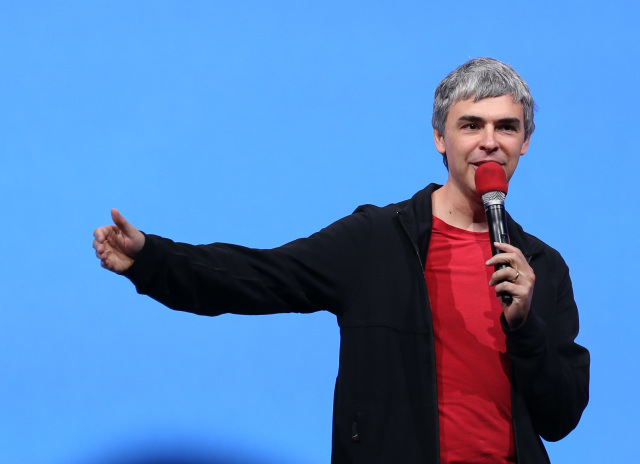
Google CEO Larry Page Shares His Philosophy At I/O: “We Should Be Building Great Things That Don’t Exist”

Google CEO Larry Page Shares His Philosophy At I/O: “We Should Be Building Great Things That Don’t Exist”

DREW OLANOFF posted yesterday

img_87131

Today, a day after discussing his voice issues, Google CEO Larry Page took the stage at the I/O keynote. He skipped last year’s conference and a few earnings calls due to those same voice problems, which he has noted are improving. Page even did something a little new for I/O — taking questions at the end of his talk.

Page discussed how important it is for both the developers and Google to keep dedicating themselves to technology, to make sure that people everywhere can get access to it. He also discussed his relationship with his father, and how important that was in influencing him when it comes to innovation:

My dad was really interested in technology. He drove me and my family all across the country to go to a robotics company. Then we got there, he thought it was so important his son would go to the conference. Read more of this post

Death By A Thousand Cuts? Google Wallet’s Plan To Take On PayPal Leverages Chrome, Android, Google+, Gmail & More

Death By A Thousand Cuts? Google Wallet’s Plan To Take On PayPal Leverages Chrome, Android, Google+, Gmail & More

SARAH PEREZ posted yesterday

send_money-hero

Flying under the radar amid a flurry of announcements from today’s Google I/O developer conference is the bigger news of how Google is stepping up its efforts to compete with online payment giants, such as PayPal. It plans to do so with a revamped checkout process for the web, mobile web, within mobile applications running on Android, and more. It’s a proposed death to PayPal by a thousand cuts, leveraging everything from Chrome to Android and even Gmail. What Google hasn’t quite worked out yet is how all this will tie together in the long run, but you can see the plan beginning to form.

Read more of this post

Online apparel retailers are finding that showing their clothing on real people causes customers to engage more and buy more often

Updated May 15, 2013, 7:19 p.m. ET

More Brands Want You to Model Their Clothes

By CHRISTINA BINKLEY

Online apparel retailers are finding that showing their clothing on real people causes customers to engage more and buy more often. On Style columnist Christina Binkley joins Lunch Break.

After Katherine Lin put out a photo of herself with friends at the Coachella music festival on Twitter and Instagram this spring, she was thrilled to discover the photo posted on the website of Dannijo.com, the retailer whose necklace she was wearing.

“It shows how much they want to connect with us as consumers,” says the 21-year-old University of Southern California student. Read more of this post

Sony’s $100 Billion Lost Decade Supports Loeb Breakup

Sony’s $100 Billion Lost Decade Supports Loeb Breakup

By Angus Whitley, Brooke Sutherland and Naoko Fujimura  May 16, 2013

Sony Corp. (6758) has a $100 billion reason to consider Daniel Loeb’s breakup proposal.

Loeb, whose Third Point LLC hedge fund just took a $1.1 billion stake in Sony, is pushing the Tokyo-based company to sell as much as 20 percent of its entertainment business and focus on the “considerable and underappreciated value” of its electronics unit. After Loeb’s proposal sparked the biggest rally in Sony shares in more than four years, the $21 billion company still languishes at a cheaper valuation relative to profit than 90 percent of similar-sized consumer electronics makers, according to data compiled by Bloomberg yesterday.

Loeb is approaching Sony after shareholders lost more than $100 billion in market value since 2000. CLSA Asia-Pacific Markets said Sony would be worth 28 percent more in a separation. While estimates from Macquarie Group Ltd.’s Damian Thong fall short of Loeb’s targeted 60 percent stock gain, the analyst said the activist’s claim that spinning off the entertainment unit and boosting its profitability may raise the company’s market value by about 30 percent “seems reasonable.”

“Sony is a chronic underperformer,” Joshua Strauss, Chicago-based co-manager of the Appleseed Fund at Pekin Singer Strauss Asset Management Inc., which oversees about $1 billion, including investments in Japan and Korea, said in a telephone interview. “Should they spin off the entertainment division? Would it create shareholder value? Probably. When you do that sort of thing, the sum of the parts is greater than the whole.” Read more of this post

Chinese economy replaces EU debt crisis as investors’ top concern

Chinese economy replaces EU debt crisis as investors’ top concern

Staff Reporter 2013-05-16

Predictions that China’s economy will face a hard landing leading to a commodity collapse has replaced the European sovereign debt crisis as one of the main concerns of international and domestic investors, with many reducing their investments in emerging markets and commodities to invest in Japanese and European equities, reports our sister paper Want Daily.

A report released by the Bank of America Merrill Lynch earlier in the month showed that many investors are currently forecasting a weakening Chinese economy, with those feeling positive about the country’s economic outlook dropping by 8%. It is the first negative figure in fourteen months, while 25% of the fund managers surveyed considered a hard landing a possibility in China, a sharp increase from the 18% recorded last month.

Approximately 29% of the fund managers have already reduced their investments in China’s commodity market, while investments in Japanese equities have increased for the seventh consecutive month, surpassing the 31% recorded in May 2006. Read more of this post

Bentley Luxury-Car Sales in China Cool; Global luxury goods market to cool in 2013: Bain

May 15, 2013, 11:07 a.m. ET

Bentley Luxury-Car Sales in China Cool

By COLUM MURPHY

BEIJING—The maker of Bentley luxury cars is the latest high-end auto maker to warn that ebbing confidence among Chinese consumers and a government-led drive against conspicuous consumption has hurt demand for its expensive rides. Read more of this post

Cancer researchers are growing increasingly enthusiastic about harnessing the body’s own immune system to fight tumors

May 15, 2013

Melanoma Treatment Harnesses Immune System to Combat Cancer Cells

By ANDREW POLLACK

Cancer researchers are growing increasingly enthusiastic about harnessing the body’s own immune system to fight tumors. And new research shows that two drugs that use this approach may be even better than one. Researchers reported on Wednesday that a combination of two drugs from Bristol-Myers Squibb shrank tumors significantly in about 41 percent of patients with advanced melanoma in a small study. In few of the 52 patients in the study, tumors disappeared completely, at least as could be determined by imaging.

“I think it was really the rapidity and the magnitude of the responses that was impressive to us,” Dr. Jedd D. Wolchok of the Memorial Sloan-Kettering Cancer Center, said in a telephone news conference organized by the American Society of Clinical Oncology. Read more of this post

The Buffett Formula — How To Get Smarter

The Buffett Formula — How To Get Smarter

by SHANE PARRISH on MAY 15, 2013

“The best thing a human being can do is to help another human being know more.” — Charlie Munger

“Go to bed smarter than when you woke up.” — Charlie Munger

Most people go though life not really getting any smarter. Why? They simply won’t do the work required. It’s easy to come home, sit on the couch, watch TV and zone out until bed time rolls around. But that’s not really going to help you get smarter. Sure you can go into the office the next day and discuss the details of last night’s episode of Mad Men or Game of Thrones. Sure you know what happened on Survivor. But that’s not knowledge accumulation, it’s a mind-numbing sedative. You can acquire knowledge if you want it. In fact there is a simple formula, which if followed is almost certain to make you smarter over time. Simple but not easy. It involves a lot of hard work. We’ll call it the Buffett formula, named after Warren Buffett and his longtime business partner at Berkshire Hathaway, Charlie Munger. These two are an extraordinary combination of minds. They are also learning machines. Read more of this post

Why companies need inventors, not just their ideas

Why companies need inventors, not just their ideas

By Peter Gwynne May 13, 2013

Peter Gwynne is a former science editor of Newsweek and a freelance writer who covers science, technology and business.

According to an early and frequently quoted aerodynamic model, bumblebees cannot possibly fly. Of course, any entomologist or gardener knows that the fuzzy insects make it into the air with great success; the model simply had it wrong.

As with bees, so it is with business. Researchers have long held the conceit that innovative entrepreneurship is impossible. “They assert that ‘entrepreneurs can’t do anything new in the economy,’” says Daniel Spulber, a professor of management and strategy at the Kellogg School.

This is because established firms have several advantages when it comes to taking inventions to the market. “They have all kinds of assets that are complementary to innovation,” Spulber says, including established corporate structures, marketing channels, an existing customer base, and access to capital. To go it alone, on the other hand, the inventor must undertake the cumbersome effort of setting up a new firm and dealing with the uncertainty that any new invention faces in the market. Even Joseph Schumpeter, perhaps the greatest advocate of entrepreneurs, suggested in his classic book Capitalism, Socialism, and Democracy that only large companies have the resources and market power necessary for innovation. Read more of this post

What Is Organizational Culture? And Why Should We Care?

What Is Organizational Culture? And Why Should We Care?

by Michael Watkins  |   2:00 PM May 15, 2013

If you want to provoke a vigorous debate, start a conversation on organizational culture. While there is universal agreement that (1) it exists, and (2) that it plays a crucial role in shaping behavior in organizations, there is little consensus on what organizational culture actually is, never mind how it influences behavior and whether it is something leaders can change.

This is a problem, because without a reasonable definition (or definitions) of culture, we cannot hope to understand its connections to other key elements of the organization, such as structure and incentive systems. Nor can we develop good approaches to analyzing, preserving and transforming cultures. If we can define what organizational culture is, it gives us a handle on how to diagnose problems and even to design and develop better cultures.

Beginning May 1, 2013, I facilitated a discussion around this question on LinkedIn. The more than 300 responses included rich and varied perspectives and opinions on organizational culture, its meaning and importance. I include several distinctive views below, illustrated by direct quotes from the LinkedIn discussion thread — and then I offer my own synthesis of these views. (There often were multiple postings with similar themes, so these are simply early selections; unfortunately it was not possible to acknowledge everyone who made helpful contributions.) Read more of this post

Don’t Let Predictability Become the Enemy of Innovation

Don’t Let Predictability Become the Enemy of Innovation

by Michael Schrage  |   1:00 PM May 15, 2013

Unhappily shocked by Sputnik’s unexpected 1957 success, President Eisenhower quickly pushed the Pentagon to establish the Defense Advanced Research Projects Agency (DARPA). Its ostensible mission: “to prevent technological surprise to the U.S. military, and to create surprises of its own.”

Anticipating and enabling “technological surprise” has become even more challenging, DARPA director Arati Prabhakar recently told an MIT audience, because more people in more places have more access to more technology that ever before. Surprises can come from anywhere. In an era of greater global trade, knowledge transfer and transparency, Prabhakar unsurprisingly reports DARPA’s core value proposition demands disproportionately greater imagination and ingenuity. Predictability breeds complacency. Predictability is DARPA’s cultural, technical and organizational enemy. Read more of this post

Have we all been duped by the Myers-Briggs test? Despite its popularity, the personality test has been subject to sustained criticism by professional psychologists for over three decades

Have we all been duped by the Myers-Briggs test?

May 15, 2013: 11:13 AM ET

Despite its popularity, the personality test has been subject to sustained criticism by professional psychologists for over three decades.

By Roman Krznaric

FORTUNE — When Frank Parsons opened the world’s first career guidance center in Boston in 1908, he began by asking prospective clients 116 penetrating questions about their ambitions, strengths, and weaknesses (and how often they bathed). But then he did something more unusual: He measured their skulls.

Parsons was a committed believer in phrenology. If you had a large forehead, he might recommend you become a lawyer or engineer. But if your skull was more developed behind the ears, you were of the “animal type” and best suited to manual work. Read more of this post

The Leader’s Code: Mission, Character, Service and Getting the Job Done

May 15, 2013 4:25 pm

Management lessons from the frontline

Review by Morgen Witzel

The Leader’s Code: Mission, Character, Service and Getting the Job Done
By Donovan Campbell (Random House, $27)

That the experience of military leadership offers some useful lessons for leaders in other fields has long been understood. Sun Tzu’s The Art of War is still read by business leaders and sports coaches, and more recently Norman Dixon’s On the Psychology of Military Incompetence offers lessons from military failure.

The latest crossover book that draws from military experience is Donovan Campbell’s The Leader’s Code. As such efforts go, it is a pretty good one. Campbell, a former captain in the US Marine Corps who served in Iraq, writes fluently and persuasively, blendingabstract ideas and personal experience in a highly readable narrative. He begins by arguing that people no longer trust their leaders, whom they see as greedy and selfish. “The widespread destruction of trust has left a leadership vacuum that is slowly becoming filled with despair,” he says, pointing out that this is true of business and government alike. “We trust no single leader, or class of leaders, to fix what is broken.” Read more of this post

For Entrepreneurs, Failure Isn’t Always a Good Teacher

For Entrepreneurs, Failure Isn’t Always a Good Teacher

by Art Papas  |   8:00 AM May 15, 2013

Much has been said about the virtues of failure — it’s a learning opportunity, it happens to everyone, it’s character-building. Failure is becoming some romanticized rite of passage, invoking images of young entrepreneurs burning the midnight oil and yelling “Eureka!” I can say from experience that any entrepreneur who fails repeatedly before finding the golden ticket had better be ready to coat themselves in protective armor, because your stakeholders may not be as understanding of your failures.

I’ve often said that failure is a great teacher, but its lessons are too harsh. Entrepreneurs will fail all the time, yes, and there’s no alternative to failure. You can’t avoid it altogether. What you mustavoid, however, is letting it consume you and destroy your self-confidence. If you let yourself become afraid to innovate — to go for it — you haven’t just failed. You’ve become a failure.

Failure makes many of us less confident and less aggressive. We become gun shy. That’s not surprising. Unfortunately, the cold reality is that once you’ve failed as an entrepreneur, you need to have blind confidence and a healthy sense of aggression to prove to people that you actually cansucceed. You need to try again, and brace yourself to be criticized, lectured, doubted, and flat-out ignored by investors and sometimes even your own team. If at first you don’t succeed, you’re in for the fight of your life. Read more of this post

How to bridge a cultural ocean; Lessons on how to be brasher in business

Last updated: May 15, 2013 8:01 pm

How to bridge a cultural ocean

By Ian Sanders

On the 24th floor of a building on New York’s Avenue Of The Americas, a group of British entrepreneurs is attending a masterclass in how to do business in the US, listening to fellow Britons who have already set up in the city. The event has been organised by London-based media events company Chinwag as part of a trade mission in association with UK Trade and Investment, the government body that helps British businesses expand overseas. Amid the talk of tax arrangements and employment contracts, the entrepreneurs are learning about the cultural nuances in hiring, pitching and workplace culture. Read more of this post