Scientists Develop Epilepsy Warning Device

Scientists Develop Epilepsy Warning Device

By Agence France-Presse on 6:57 pm May 2, 2013.
Paris. A tiny device implanted in the brain of epilepsy sufferers has for the fist time been able to predict the onset of seizures, scientists reported on Thursday.

The potentially life-saving device works with electrodes that monitor electrical activity on the brain surface, they wrote in The Lancet Neurology.

The electrodes were connected to a second device implanted under the skin of the chest, which transmitted the data wirelessly to a hand-held device that calculated the probability of a seizure.

The device lights up in red for a high risk, white for moderate, or blue for low seizure probability. Read more of this post

The Analogical Animal: The key to human cognition may well be the ability to compare one thing to another

May 3, 2013, 7:42 p.m. ET

The Analogical Animal: The key to human cognition may well be the ability to compare one thing to another

By DOUGLAS HOFSTADTER And EMMANUEL SANDER

At the White House Correspondents Dinner last week, President Barack Obama got some laughs when he said that his advisers had suggested he start his speech “with some jokes at my own expense, just take myself down a peg. I was like, ‘Guys, after 4½ years, how many pegs are there left?’ ”

In this remark, few of us would immediately think of “take myself down a peg” as an analogy, but that’s what it is: a comparison between two things, in this case, between the president’s standing and pegs on a board. Mr. Obama did it again later in his speech, complimenting journalists “who took the time to wade upstream through the torrent of digital rumors to chase down leads and verify facts.” “Wade upstream” and “torrent” qualify as analogies, too.

In fact, once you start to look for analogies, you find them everywhere, not just in the metaphors and other figures of speech used by politicians. It is by way of analogy that human beings negotiate and manage the world’s endless variety. We would make an even grander claim: that analogies lie at the very center of human cognition, from the humblest of everyday activities to the most exalted discoveries of science. Read more of this post

Don’t Pay High Fees for Index Funds

May 3, 2013, 6:05 p.m. ET

Don’t Pay High Fees for Index Funds

By JOE LIGHT

You might think that a plain-vanilla index mutual fund is synonymous with low fees. But some such funds are charging expenses that might make even a high-turnover momentum-fund manager blush.

The indexing revolution has been a boon for investors. Big fund companies have launched many nearly identical mutual funds and exchange-traded funds that track indexes such as the Standard & Poor’s 500. With nothing to compete on but price, that’s meant ever lower expenses for investors.

According to an April report from the Investment Company Institute, a trade group, stock-fund investors on average paid 0.77% in expenses in 2012, or $77 per $10,000 invested. That was down from 0.79% in 2011 and from 1% a decade ago. Read more of this post

Regulators Focus on ‘Nontraded’ REITs

May 3, 2013, 6:03 p.m. ET

Regulators Focus on ‘Nontraded’ REITs

By CAITLIN NISH

Wall Street’s leading self-regulator has been watching how brokerages market “nontraded” real-estate investment trusts to customers, and it doesn’t like what it sees.

Brokers too often offer misleading information about the potential benefits and incomplete explanations of the risks of nontraded REITs, the Financial Industry Regulatory Authority said in guidance it issued to firms Thursday. Sales materials often stress the income the investments generate in distributions but can fail to make sufficiently clear that these may actually tap the investor’s principal, the regulator said.

“The notice provides clear standards that can be applied consistently by firms,” said Thomas A. Pappas, Finra’s vice president for advertising regulation, in an email. When firms follow the guidance, “investors will have a better understanding of the products and their features.”

REITs give investors an equity interest in a pool of assets such as land, shopping centers or hotels, or in mortgages secured by real estate. REITs don’t pay income taxes if they distribute at least 90% of their earnings to investors, and they often attract investors seeking higher payouts than other investments offer. Read more of this post

Risky Business: The Quiz That Could Steer You Wrong

May 3, 2013, 6:13 p.m. ET

Risky Business: The Quiz That Could Steer You Wrong

By JASON ZWEIG

BF-AE903_INVEST_G_20130503172321

With the stock and bond markets butting up against record highs, and volatility not far from all-time lows, that little red devil on your shoulder is whispering in your ear that it’s safe to take more risk again. Can you count on your broker or financial adviser to tell you how much risk is right for you?

Read more of this post

Receiver Gains Control of Some Assets of China’s ZST; Case Is Test of Investors’ Ability to Recoup Losses in Wake of Accounting Questions

May 3, 2013, 1:25 p.m. ET

Receiver Gains Control of Some Assets of China’s ZST

Case Is Test of Investors’ Ability to Recoup Losses in Wake of Accounting Questions

By MICHAEL RAPOPORT

The court-appointed receiver empowered to seize the assets of a U.S.-traded Chinese company facing accounting questions has chalked up his first successes.

The receiver, Robert Seiden, says he has obtained control over subsidiaries of the Chinese company, ZST Digital Networks Inc., ZSTN +13.33% in the British Virgin Islands and Hong Kong. He also has gained control of a ZST Digital bank account in Hong Kong, and is in the process of doing the same with ZST Digital bank accounts in China.

Mr. Seiden has been tasked with seizing and selling ZST Digital assets as part of a court’s novel remedy for a U.S. investor locked in a legal dispute with the network-equipment maker. The high-profile case may test the extent to which U.S. investors can recover losses from Chinese companies whose shares drop in the wake of accounting or disclosure problems. Read more of this post

How the Brain Really Works: New techniques are letting researchers look at the activity of the whole brain at once

May 3, 2013, 5:16 p.m. ET

How the Brain Really Works

New techniques are letting researchers look at the activity of the whole brain at once

By ALISON GOPNIK

For the last 20 years neuroscientists have shown us compelling pictures of brain areas “lighting up” when we see or hear, love or hate, plan or act. These studies were an important first step. But they also suggested a misleadingly simple view of how the brain works. They associated specific mental abilities with specific brain areas, in much the same way that phrenology, in the 19th century, claimed to associate psychological characteristics with skull shapes.

Most people really want to understand the mind, not the brain. Why do we experience and act on the world as we do? Associating a piece of the mind with a piece of the brain does very little to answer that question. After all, for more than a century we have known that our minds are the result of the stuff between our necks and the tops of our heads. Just adding that vision is the result of stuff at the back and that planning is the result of stuff in the front, it doesn’t help us understand how vision or planning work.

But new techniques are letting researchers look at the activity of the whole brain at once. What emerges is very different from the phrenological view. In fact, most brain areas multitask; they are involved in many different kinds of experiences and actions. And the brain is dynamic. It can respond differently to the same events in different times and circumstances. Read more of this post

Great historical minds on the importance of being truthful, or not

Saturday May 4, 2013

Great historical minds on the importance of being truthful, or not

“ONE per cent of people will always be honest and never steal,” the locksmith said. “Another one per cent will always be dishonest and always try to pick your lock and steal your television. And the rest will be honest as long as the conditions are right but if they are tempted enough, they’ll be dishonest too. Locks won’t protect you from the thieves, who can get in your house if they really want to. They will only protect you from the mostly honest people who might be tempted to try your door if it had no lock.”

Dan ArielyThe Honest Truth About Dishonesty: How We Lie to Everyone Especially Ourselves

Time will inevitably uncover dishonesty and lies; history has no place for them.

The late King of Cambodia, Norodom Sihanouk

“We can easily forgive a child who is afraid of the dark; the real tragedy of life is when men are afraid of the light.”

Plato

“It is not only by dint of lying to others, but also of lying to ourselves, that we cease to notice that we are lying.”

Marcel Proust, Sodom and Gomorrah

“If you tell the truth, you don’t have to remember anything.”

Mark Twain

“I’m not upset that you lied to me, I’m upset that from now on I can’t believe you.”

Friedrich Nietzsche

“I’m the most terrific liar you ever saw in your life. It’s awful. If I’m on my way to the store to buy a magazine, even, and somebody asks me where I’m going, I’m liable to say I’m going to the opera. It’s terrible.”

J.D. Salinger, The Catcher In The Rye

“I always tell the truth. Even when I lie.”

Al Pacino

“I lie to myself all the time. But I never believe me.”

Susan Eloise, The Outsiders

Clay is moulded to make a vessel, but the utility of the vessel lies in the space where there is nothing. Thus, taking advantage of what is, we recognise the utility of what is not.

Lao Tzu

What compels us to lie; Dan Ariely’s “The (Honest) Truth About Dishonesty: How We Lie to Everyone Especially Ourselves”

Saturday May 4, 2013

What compels us to lie

Reviewed by NICK WALKER
balticmedia@ymail.com

The (Honest) Truth About Dishonesty: How We Lie to Everyone Especially Ourselves
Author: Dan Ariely
Publisher: Harper

HAVE you ever lied on your CV? Yeah, right. Sure you haven’t. How about fudging the truth a bit? Was that an affirmative you just mumbled?

Well, don’t beat yourself up about it. According to Dan Ariely, a behavioural economist and popular psychologist, and the bestselling author of The Upside of Irrationality and Predictably Irrational, we generally speaking all lie sometimes. And some of us lie all the time. What is worse, and no big surprise to any urban professional in Malaysia, is that the job-hunting game provides fertile ground for duplicity on both sides.

In his latest book, Ariely examines the contradictory forces that both compel us to be dishonest and restrain us from lying.

From cheating-by-smartphone in schools to political leaders who take liberties with the truth, to the commercial shenanigans that hurt the poorest in society, cheating, lying, and compromising the truth in other ways, are inescapable components of the human condition.

Drawing on his own empirical research, and penned in the breezy accessible style of Malcolm Gladwell’s What The Dog Saw andFreakonomics by Steven D. Levitt and Stephen J. Dubner, Ariely reveals, with remarkable candor, what knocks us off the true and straight road of honesty. Read more of this post

Finding that true north; When Tan Sri Lee Shin Cheng started his ice-cream business on a bicycle, nobody including himself expected him to become Malaysia’s fourth wealthiest man

Saturday May 4, 2013

Finding that true north

By CHOONG EN HAN
han@thestar.com.my

WE have all heard about the runaway success stories of entrepreneurs that made it big. Take Sara Blakely for example, the woman behind the success story of Spanx, in which she turned a US$5,000 investment into a billion dollar slimming bodywear empire.

The ones who made it always make the headlines but nobody knows how many entrepreneurs armed with game changing ideas that just fell flat.

That doesn’t stop people from going out on their own, but really, what does it take for one to take that leap of faith and delve into the unknown? Read more of this post

Studying the Dark Art of Leaking Deal Talks

APRIL 29, 2013, 8:59 PM

Studying the Dark Art of Leaking Deal Talks

By ANDREW ROSS SORKIN

Psst.

That’s how you might imagine a “leak” of a big merger or acquisition would start. A well-placed phone call. An off-handed comment over lunch. A confidential document accidentally left on an airplane.

It seems as if news of most big deals is invariably leaked ahead of the official announcement. Of the biggest deals of the year so far — the buyout of Dell, Warren Buffett’s acquisition of Heinz, American AirlinesUS Airways, Liberty Global-Virgin Media — none made it to the finish line without the news media finding out about it first, sometimes with weeks of advance notice, some with just hours to go.

An intriguing academic study casts new light on the dark arts of the leak — or what used to be affectionately known in London as “the Friday night drop.” (It’s a bit of lore, but deal leaks used to be delivered by envelope on Friday night on Fleet Street to the gossipy Sunday broadsheets where the news could be placed as a trial balloon ahead of the markets’ reopening on Monday.) Read more of this post

Seth Klarman: “If The Economy Is So Fragile That Government Can’t Allow Failure Then We Are Indeed Close To Collapse”

Seth Klarman: “If The Economy Is So Fragile That Government Can’t Allow Failure Then We Are Indeed Close To Collapse”

Tyler Durden on 05/03/2013 15:43 -0400

Following today’s flashback to the most euphoric and irrationally exuberant days of market peaks (and bubbles) gone by, driven entirely by the now constant central-planner dilution of current and future wealth, these selected excerpts from Seth Klarman’s latest letter to investors is just the cold water of common sense everyone needs:

From Seth Klarman of Baupost:

Is it possible that the average citizen understands our country’s fiscal situation better than many of our politicians or prominent economists? Read more of this post

Gazprom shows what happens when giants push their weight around for too long

Gazprom shows what happens when giants push their weight around for too long

By Steve LeVine 11 hours ago

If you wrote up a list of the world’s most vilified people and things, it currently would be topped by the Tsarnaev Brothers. Mohammed Soel Rana would probably be next, along with a few other Bangladeshi garment factory owners. But just a few years ago—in the middle-late 2000s—the list might have been led by Gazprom, the Russian gas giant that preferred to cut off service to Ukraine and the rest of Europe in the dead of winter rather than settle utility disputes the normal way.

What a difference five years makes. This mighty spearhead of Vladimir Putin’s foreign policy, according to The Wall Street Journal, finds itself pushed around(paywall) and having to offer discounts to Poland, Bulgaria and other relative small fry.

One thing that has changed Gazprom’s world is the global natural gas boom, which has undermined its previously unassailable dominance in Europe, where it supplies 25% of the market. Last year, outside gas pushed down Gazprom shipments to Europe by 3.6%; Gazprom’s profit fell by 9.5%. Investors have pummeled the stock, sending down Gazprom’s share price by 24% since September. Read more of this post

China calls time on expensive watches in face of crackdown

May 3, 2013 5:30 pm

China calls time on expensive watches in face of crackdown

By James Shotter in Zurich

Before accompanying the Chinese premier, Li Keqiang, on a visit to a neighbourhood ravaged by the earthquake in Sichuan two weeks ago, Fan Jiyue, a county party chief, took an important precaution: he removed his wristwatch.

His concern was understandable. China’s new leadership is cracking down hard on ostentatious displays of wealth by party officials and corruption. As a result, expensive watches – a popular gift given by those seeking to win favour with Chinese businessmen and politicians – have become a source of unwanted attention.

Unfortunately for Mr Fan, unwanted attention is precisely what his move brought him: the watch-shaped tan lines on his wrist were spotted by China’s eagle-eyed netizens, and pictures of the local official’s unadorned arm went viral on the Chinese internet. With predictable alacrity, the country’s censors had soon blocked searches for Mr Fan.

This sudden hostility to extravagance, which set in last autumn after Xi Jinping took over as Chinese president, has led to a big slowdown in Swiss watch exports to China – which over the past 10 years has been the fastest growing market for the Alpine nation’s timepieces. Read more of this post

What Every Successful Leader Knows About The Chicken And The Egg

What Every Successful Leader Knows About The Chicken And The Egg

by Fortune Gamanya | May 3, 2013

Great organisations are those that do not waste time telling the world how they are better than the competition – they show them

The question of whether the chicken came first or the egg has occupied minds and spurred debate for generations. A similar paradox is being played out right now in organisations across the world: “Does a carefully conceived set of differentiators inform an organisation’s culture and performance, or should culture and performance give birth to differentiators?”.

All businesses know that customer service based on value and quality are critical for survival. Good companies realise that to retain and win new business, quality is not enough. Enter the differentiator; with companies spending time and money identifying what sets their service offering apart from that of their competitors. Once done, the marketers step in and communicate this set, top-down, to employees and customers.

But what becomes of this well-worn strategy when all good companies are using differentiators to stand out in the marketplace? And is it fair to say that trying to evolve a corporate culture or define a service offering by first thrashing out that set of differentiators, is a bit like trying to produce a chicken without an egg; or vice versa? Read more of this post

Brain, Interrupted. Does distraction matter — do interruptions make us dumber?

May 3, 2013

Brain, Interrupted

By BOB SULLIVAN and HUGH THOMPSON

TECHNOLOGY has given us many gifts, among them dozens of new ways to grab our attention. It’s hard to talk to a friend without your phone buzzing at least once. Odds are high you will check your Twitter feed or Facebook wall while reading this article. Just try to type a memo at work without having an e-mail pop up that ruins your train of thought.

But what constitutes distraction? Does the mere possibility that a phone call or e-mail will soon arrive drain your brain power? And does distraction matter — do interruptions make us dumber? Quite a bit, according to new research by Carnegie Mellon University’s Human-Computer Interaction Lab. Read more of this post

A Sense of Where You Are: The way the brain records and remembers movement in space may be the basis of all memory

April 29, 2013

A Sense of Where You Are

The way the brain records and remembers movement in space may be the basis of all memory

By JAMES GORMAN

TRONDHEIM, Norway — In 1988, two determined psychology students sat in the office of an internationally renowned neuroscientist in Oslo and explained to him why they had to study with him. Unfortunately, the researcher, Per Oskar Andersen, was hesitant, May-Britt Moser said as she and her husband, Edvard I. Moser, now themselves internationally recognized neuroscientists, recalled the conversation recently. He was researching physiology and they were interested in the intersection of behavior and physiology. But, she said, they wouldn’t take no for an answer. “We sat there for hours. He really couldn’t get us out of his office,” Dr. May-Britt Moser said. “Both of us come from nonacademic families and nonacademic places,” Edvard said. “The places where we grew up, there was no one with any university education, no one to ask. There was no recipe on how to do these things.” “And how to act politely,” May-Britt interjected. “It was just a way to get to the point where we wanted to be. But seen now, when I know the way people normally do it,” he said, smiling at the memory of his younger self, “I’m quite impressed.”

So, apparently, was Dr. Andersen. In the end, he yielded to the Mosers’ combination of furious curiosity and unwavering determination and took them on as graduate students. They have impressed more than a few people since. In 2005, they and their colleagues reported the discovery of cells in rats’ brains that function as a kind of built-in navigation system that is at the very heart of how animals know where they are, where they are going and where they have been. They called them grid cells. Read more of this post

Chobani CEO: Our Success Has Nothing To Do With Yogurt; the company’s now infamous Greek yogurt is netting more than $1 billion in annual sales — and it only went to market five years ago.

Chobani CEO: Our Success Has Nothing To Do With Yogurt

Megan Durisin | May 3, 2013, 11:19 AM | 2,559 | 3

Chobani Yogurt has been one of the most explosive food start-ups to ever hit the market.

The company’s now infamous Greek yogurt is netting more than $1 billion in annual sales — and it only went to market five years ago.

But Chobani’s CEO and founder, Hamdi Ulukaya said the company’s instant success wasn’t all about the product.

“Chobani is not a yogurt story,” he said. “It’s a manufacturing story.”

Ulukaya gave a presentation earlier this week to a packed audience at New York University‘s Stern School of Business, sponsored by the Berkley Center for Entrepreneurship & Innovation. In it, he outlined the story of the company’s rapid growth.

Ulukaya scraped together funding to buy an old yogurt plant in upstate New York in 2005, with help from a Small Business Administration Loan. He didn’t have any concrete plans, and the place wasn’t in good shape — with water dripping from the ceiling and paint peeling for the walls. But when he got the idea to start making Greek yogurt in the U.S., the company fixed the factory up and ran with it, and Ulukaya said he practially lived in the plant for five years to get Chobani off the ground.

“I knew that something could be done with yogurt because growing up in Turkey, we knew what to expect from yogurt,” he said at NYU.

Chobani was an instant success when it hit shelves in 2007, with orders consistently increasing. Ulukaya soon had big yogurt companies, like Dannon, knocking at his door, asking him to sell. He also could have turned to private equity companies for funding. Those strategies are typically the most appealing to food start-ups, Ulukaya said, because if they don’t, the larger companies imitate it and use their large manufacturing bases to get it to the masses.

But he decided not to sell, and that’s when Chobani’s focus turned to expansion — and fast.

“No start-up has done it any other way, so I wanted to do it in another way,” Ulukaya said. “I bet on these guys being lazy, that they’re not going to wake up that fast, and I said, ‘I’m going to be fast.'”

And fast it was. Ulukaya didn’t outsource anything — keeping control of the yogurt from its production in the factories to the time it hit shelves. The company built a big warehouse across the street from the plant in two months, and soon after built another huge plant in Idaho, which went up in just a year.

He also bet on the product being successful and priced it based on what it would cost in the future if sales increased, instead of factoring in the high input costs that the company had to face at the onset. (The yogurt goes for about $1 per cup.)

“This was not going to be about selling,” Ulukaya said. “This was going to be about making.”

The strategy worked. The company now produces 2.2 million cases of yogurt a week, Ulukaya said, and has passed $1 billion in sales. When they started, Greek yogurt made up 0.2% of the yogurt market in the U.S. Now it makes up 50%, and Chobani has at least half of that market share, he said.

It’s been a huge shock to the yogurt sector, which had been dominated by two or three big companies for decades prior and mostly pumped out products that were high in sugar, coloring and preservatives, Ulukaya said. And the majority of the money to fund Chobani’s new plants, employees and warehouses was internally generated.

Ulukaya also prides the company’s success on its small-town roots and dedicated employees, who he said didn’t have a holiday off for the first five years.

“Never has a food aisle been challenged like this and changed so quickly by a startup ever,” Chobani said. “Some say we’re the fastest growing startup ever, including technology.”

Closer Look: The COSCO Maelstrom, China’s shipping giant struggling in a swirl of conflicting interests

05.02.2013 19:44

Closer Look: The COSCO Maelstrom

COSCO Chairman Wei Jiafu can save the company from struggling in a swirl of conflicting interests by taking the company’s shares off of public exchanges

By Wang Lan

Shipping giant China COSCO Holdings Co. Ltd. announced March 28 that the Shanghai Stock Exchange (SSE) would tag the company’s shares for “special treatment.” The measure is used to warn investors of a company’s possible delisting after a company reports two straight years of losses.

In 2011, COSCO lost 10.4 billion yuan, and it posted annual losses of 9.56 billion yuan in 2012, marking the second straight year the company reported a loss.

COSCO is not the only state-owned enterprise (SOE) which has failed to get out of the red. COSCO Chairman Wei Jiafu stated in early April at the Boao Forum in Hainan, “If the company is performing as badly as a few people say, how would it be possible for me to attend the BRICS Summit with government officials in Durban?” Wei went on to add, “I am not worried if the central government and the State Council supports COSCO.” His words sparked public acrimony. Read more of this post

Less Is More: Rogue Economists Champion Prosperity without Growth

05/02/2013 04:23 PM

Less Is More: Rogue Economists Champion Prosperity without Growth

By Nils Klawitter

For years, economists have posited that prosperity requires growth, with environmental damage as the regrettable but unavoidable consequence. A growing number of critics are now challenging this equation, though, calling for a radical revamping of the economic system.

Harald Welzer’s career as a critic of growth began with a few simple reflections. Just how progressive is it, he asked himself, when millions of hectares of land are used elsewhere in the world so that we keep down the cost of meat? How modern is it when producing a kilogram of salmon in a supposedly sustainable way requires feeding the fish five to six kilograms (11 to 13 pounds) of other types of fish?

If everyone used up as much space and resources as we do, says the 54-year-old Berlin-based social psychologist, we would need three earths. In Welzer’s eyes, this can hardly be called progress.

All of this made Welzer so angry that he wrote a book critical of equating this sort of progress with growth. The ruling class of economists, who he characterizes as “disdainers of reality” and “proponents of a world essentially limited by consumption,” is responsible for compulsively tying these two concepts together, he argues. His treatise, “Selbst denken” (“Thinking for Ourselves”), is a manual for phasing out the “totalitarian consumerism” that gives people desires that, until recently, they didn’t even suspect they would ever have. Read more of this post

Man vs. Machine: Are Any Jobs Safe from Innovation?

05/03/2013 10:49 AM

Man vs. Machine: Are Any Jobs Safe from Innovation?

By Thomas Schulz

Past warnings about how technological innovation threatens jobs have proved exaggerated. Yet the digital revolution now has many scholars warning that this time things are different, and that the breakneck speed of automation could wreak havoc on the global labor market.

The Massachusetts Institute of Technology (MIT), in Cambridge, ranks among the most prestigious universities in the United States and has a reputation for extolling the virtues of technological progress. Here, along the banks of the Charles River, researchers helped lay the foundations for modern computer technology and played a key role in paving the way to the digital age.

Andrew McAfee and Erik Brynjolfsson, two respected economists and directors at the MIT Center for Digital Business, are deeply committed to this tradition. This prompted them to set out to research the flood of IT innovations in recent years and write a book about how wonderful the digital revolution is for the entire economy.

But something didn’t add up here. The theory didn’t match reality. Read more of this post

Long-Term Unemployment Is Turning Jobless Into Pariahs

Long-Term Unemployment Is Turning Jobless Into Pariahs

Long-term unemployment is one of the most vexing problems the U.S. faces, and today’s jobs report shows all-too-meager progress in fixing it.

The U.S. created 165,000 new jobs in April, pushing down the unemployment rate to 7.5 percent from March’s 7.6 percent. But as of the end of April, 4.4 million Americans, or 37 percent of the unemployed, had been without a job for 27 weeks or longer, barely better than March’s 39 percent. The U.S. can’t afford to write off more than 4 million people who would like to work but haven’t for more than six months.

Long-term joblessness peaked in April 2010 at 6.7 million, so the picture might seem to be improving. Hidden within that number is this troubling fact: The average unemployed person has been out of work for 36.5 weeks. That’s not much better than the December 2011 duration of 40.7 weeks, which was the longest since World War II. Long-term unemployment at the start of the recession in December 2007 was 1.3 million people, and the average duration was 16.6 weeks.

Terrible things happen to people when they are out of work for long periods, numerous studies show. Beyond a sharp drop in income, long-term unemployment is associated with higher rates of suicide, cancer (especially among men) and divorce. The children of the long-term unemployed also show an increased probability of having to repeat a grade in school. Read more of this post

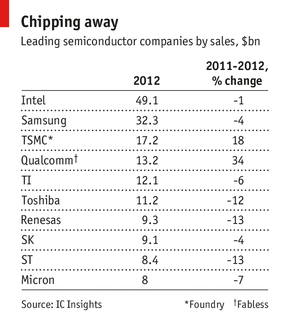
Intel v ARM

Intel v ARM

Chip off the old block

May 2nd 2013, 20:29 by M.G. and P.L.| SAN FRANCISCO AND LONDON

20130504_woc556

IT’S all change at the top of two of the world’s leading semiconductor companies. On May 2nd Intel, the world’s largest chip-maker, announced that Brian Krzanich (pictured above), the firm’s current chief operating officer, will become the sixth chief executive in the firm’s history. Mr Krzanich, who will take over as boss on May 16th, replaces Paul Otellini, who unexpectedly announced last November that he would be resigning as Intel’s boss.

ARM, Intel’s British rival, is also changing its leader. In March Warren East, the company’s chief executive, said he would stand down in July after 12 years in the top job. Like Intel, ARM has chosen an internal successor, Simon Segars (pictured below), who has been running the company’s intellectual-property divisions and is also the company’s president.

Mr Krzanich faces the harder challenge of the two. Intel rode to greatness on the back of the personal computer (PC). Its microprocessors are in most PCs and the server computers that are found in data centres and offices.  But PC sales have been falling sharply just as sales of smaller mobile computing devices have taken off. IDC, a research firm, reported that shipments of PCs in the first quarter of 2013 plummeted by almost 14%. Read more of this post

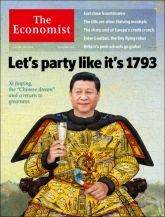
Chasing the Chinese dream: China’s new leader has been quick to consolidate his power. What does he now want for his country?

Xi Jinping’s vision

Chasing the Chinese dream

China’s new leader has been quick to consolidate his power. What does he now want for his country?

May 4th 2013 | BEIJING |From the print edition

20130504_cna40020130504_FBC519

THESE have been heady days for Chen Sisi, star of a song-and-dance group run by China’s nuclear-missile corps. For weeks her ballad “Chinese dream” has been topping the folk-song charts. She has performed it on state television against video backdrops of bullet trains, jets taking off from China’s newly launched aircraft-carrier and bucolic scenery. More than 1.1m fans follow her microblog, where she tweets about the Chinese dream.

Ms Chen is playing her part in a barrage of dream-themed propaganda unleashed by the Communist Party. Schools have been organising Chinese-dream speaking competitions. Some have put up “dream walls” on which students can stick notes describing their visions of the future. Party officials have selected model dreamers to tour workplaces and inspire others with their achievements. Academics are being encouraged to offer “Chinese dream” research proposals. Newspapers refer to it more and more (see chart). In December state media and government researchers, purportedly on the basis of studies of its usage, declared “dream” the Chinese character of the year for 2012.

It was, however, one very specific usage just before that December publication which set the country dreaming. On November 29th, two weeks after his appointment as the party’s general secretary and military commander-in-chief, Xi Jinping visited the grandiose National Museum next to Tiananmen Square. Flanked by six dour-looking, dark-clad colleagues from the Politburo’s standing committee, Mr Xi told a gaggle of press and museum workers that the “greatest Chinese dream” was the “great revival of the Chinese nation”. Read more of this post

Singapore’s economy: Manufacturers struggle as the city-state changes its economic model

Singapore’s economy: Manufacturers struggle as the city-state changes its economic model

CONTRARY to what many imagine about affluent Singapore, the economy is not all about banks and shopping malls. Manufacturing and industry account for about 30% of the country’s GDP, a strikingly high figure for an advanced economy. In Britain and France the figure is about 12% and in America even less. Nor is it all about sophisticated multinationals: three-fifths of Singapore’s economy is made up of small and medium-sized enterprises (SMEs). The government is proud of the mix of big and small, manufacturing and services, which has helped to spread risk during global downturns.

Now the model is under strain. While other South-East Asian countries have posted impressive, even record, rates of growth over the past few years, Singapore has struggled. In 2012 the economy grew by just 1.3%. This year will probably see only a marginal improvement, especially after the economy contracted in the first quarter, by 0.6% compared to the same period last year. The problems have much to do with the waning competitiveness of Singapore’s metal-bashers. Read more of this post

Online retailers may soon have to collect sales tax. Amazon, oddly, is gloating

Online retailers may soon have to collect sales tax. Amazon, oddly, is gloating

AMAZON, which became America’s biggest internet retailer by selling things more cheaply than anyone else, used to go to great lengths to avoid collecting sales tax from its customers. It issued a map showing employees which states to avoid lest they give the authorities a target for enforcement (some of the biggest states were coded red). In 2011 it shut down a warehouse in Texas after the state’s government demanded $270m in back taxes.

The taxmen are now catching up. On May 6th the Senate is expected to approve a bill requiring internet merchants to collect sales tax due in other states. The House of Representatives may follow. Politicians are heeding howls from bricks-and-mortar retailers that current law gives Amazon and its kind an unfair advantage. State governments reckon that tax avoidance by online retailers costs them roughly $11 billion a year. If the Marketplace Fairness Act passes, states will get some extra cash. Yet Amazon is unruffled. Read more of this post

Money to burn: The muddle-headed world of American public-pension accounting

Money to burn: The muddle-headed world of American public-pension accounting

20130504_FND002_0

SLOWLY but surely the cost of America’s public-sector pension promises is becoming clear. Last year the best estimate of the shortfall was more than $4 trillion. To deal with its deficit, a giant Californian pension fund, CalPERS, recently announced plans that will increase contributions by employers (in effect, taxpayers) by up to a half, starting in 2015-16.

Shinzo Abe’s government looks likely to disappoint on fiscal consolidation

Japan’s public debt

Don’t mention the debt

Shinzo Abe’s government looks likely to disappoint on fiscal consolidation

TO REVIVE Japan’s economy Shinzo Abe, its prime minister, has loosed three arrows. Temporary fiscal stimulus, monetary easing and structural reform together make up the strategy known as “Abenomics”. But many reckon there needs to be a fourth dart in the quiver: fiscal consolidation over the longer term to tackle the country’s vast public debt, which is expected to approach 240% of GDP next year (see chart).

Mr Abe’s party, the Liberal Democratic Party of Japan (LDP), last year co-operated with its main rival, the Democratic Party of Japan (DPJ), to pass a bill to raise the consumption tax from 5% to 8% in April 2014 and up to 10% in October 2015. For Yoshihiko Noda, the DPJ prime minister at the time, the bill represented the end of a crusade by his party to get Japan back on fiscal track. The extra consumption-tax revenue of {Yen}13.5 trillion ($14 billion) meant that a goal set in 2010 of halving the primary budget deficit (ie, before interest payments) to 3.2% of GDP by 2015 looked achievable. This modest target would not reduce Japan’s debt, but the bill was at least a small step in the right direction. Read more of this post

Regulators fret about the risk of a sudden rise in long-term bond yields

Regulators fret about the risk of a sudden rise in long-term bond yields

May 4th 2013 | Washington, DC |From the print edition

20130504_FNC513

THE Federal Reserve has long acknowledged trade-offs in its efforts to revive growth with ultra-easy monetary policy. Now those trade-offs are getting starker. On April 26th America’s economy was reported to have grown by 2.5% on an annualised rate in the first quarter: stupendous by European standards, but less than expected. On April 29th underlying inflation slipped to just 1.1%. On May 1st the Fed duly said it would keep rates near zero, as it has since 2008, and keep buying $85 billion of government bonds a month, although it may vary the pace depending on the outlook for inflation and jobs.

A prolonged period of low rates carries the risk of asset bubbles. In its annual report issued on April 25th America’s new Financial Stability Oversight Council (FSOC), a watchdog that includes the Fed, warned that a “sudden spike in yields and volatilities could trigger a disorderly adjustment, and potentially create outsized risks.” For its part, the IMF noted in its latest “Global Financial Stability Report” that “credit markets…are maturing more quickly than in typical cycles.” Read more of this post

Seth Klarman Cautions “False Sense Of Calm In The US”

Seth Klarman Cautions “False Sense Of Calm In The US”

April 30, 2013

By Tabinda Hussain

Seth Klarman’s Baupost Group was not able to translate the enthusiasm of equity markets into similar returns but the fund did well in Q1, according to Klarman’s latest letter to investors. As is the custom with Baupost, detail of returns and investments are released some time later. Just like last quarter, Baupost continues to benefit from the liquidation of Lehman Brothers Holdings Inc. (OTCMKTS:LEHMQ) debt. This time the fund boosted its cash balance by 2 percent of AUM through Lehman. Baupost is looking forward to more inflows from US and international Lehman debtors throughout the year.

Klarman again talks about overdrive in stocks that has lulled investors into a new comfort zone where theFed’s monetray easing is taken for granted. He takes a jab at Ben Bernanke again in his missive, saying that Bernanke will not take advice from the hedge funds and traders when he decides to take a u-turn onQE, and these investors will not have a sufficient door to exit from as inflation booms. Klarman has been against the trend of jumping on QE bandwagon and reiterates that there is a false sense of calm in the US which is betrayed by the slowdown in almost every other part of the world. He adds that the US public is not, however, duped by promises of growth and wealth from raising debt load, adding taxes and increasing spending cuts. While painting a realistic picture, Klarman convincingly writes, “They know that society’s wealth is not unlimited, and that if the economy is so fragile that the government cannot allow failure, then we are indeed close to collapse.” Read more of this post