Malaysian-listed China firms losing lustre? “Investors just do not trust China stocks and they are quite justified in doing so”

Bursa-listed China firms losing lustre?

By Lidiana Rosli

Published: 2013/07/22

KUALA LUMPUR: China-based companies that are listed on Bursa Malaysia are having a tough time attracting investors and retaining their stock prices after being listed.

Almost all of the nine China-based companies, namely XingQuan International Sport Holdings, China Automobile Parts Holdings, HB Global Ltd, China Stationery Ltd, XiDeLang Holdings, K-Star Sports Ltd, China Ouhua Winery Ltd, Maxwell International Holdings and Multi Sports Holdings, are trading below their initial public offering (IPO) price as at July 19’s market close. An analyst told Business Times that low investor confidence and possibly “justified stigma” are the reasons for the lacklustre performance. “Frankly speaking, investors just do not trust China stocks and they are quite justified in doing so,” said the analyst, on condition of anonymity.  Read more of this post

The Bond Boom—and Beyond: Low rates drew a flood of corporate debt issues in recent years. But is the run over?

Updated July 22, 2013, 12:00 a.m. ET

The Bond Boom—and Beyond

Low rates drew a flood of corporate debt issues in recent years. But is the run over?

LE-AA279_DEBTch_G_20130719113322

The record-breaking bond market has been very, very good to corporate borrowers. Companies around the globe have been rushing to issue new debt, encouraged by the lowest interest rates since the 1950s. New bond issues set a record last year, the average yield for high-yield junk bonds in early May fell below 5% for the first time, and Apple Inc.’sAAPL -1.58% recent $17 billion offering was the largest in history. Borrowers have been taking advantage of cheap debt to refinance more expensive short-term obligations, pushing the ratio of long-term to total borrowing to record highs. Many, like Apple, are using bond proceeds to benefit shareholders through increased dividends or stock buybacks. Read more of this post

Spectre of rising household debt in Malaysia

Spectre of rising household debt in Malaysia

Monday, Jul 22, 2013

Daljit Dhesi

The Star/Asia News Network

PETALING JAYA – Although the latest measures introduced by Bank Negara to rein in household debt would ensure a sound and sustainable household sector, more is needed to prevent debt from reaching alarming levels, said economists.

The household debt in Malaysia, which stands at about 83 per cent of gross domestic product (GDP), is higher than many other countries in the region like the Philippines, Indonesia, Singapore, Hong Kong and Japan. If not prevented, it could put a damper on the country’s 5 per cent-6 per cent projected GDP growth this year. Read more of this post

Snack War: Peltz vs. Rosenfeld

July 21, 2013, 4:46 p.m. ET

Snack War: Peltz vs. Rosenfeld

Mondelez CEO Is Familiar With Investor’s Efforts to Reshape Companies

JULIE JARGON

Irene Rosenfeld can’t seem to shake activist investor Nelson Peltz. First, Mr. Peltz’s Trian Fund Management LP pushed her in 2007 to sell underperforming brands such as Post cereals while she was chief executive of Kraft Foods Inc. Then in 2010, with Ms. Rosenfeld still as CEO, Kraft made a $19.4 billion acquisition of British chocolate maker Cadbury PLC, two years after Cadbury separated its drink and candy businesses at Trian’s urging. After the Cadbury deal, Mr. Peltz and his partners used their stake in Kraft to press the company to split in two. The separation of Kraft’s North American groceries unit and international snack business occurred last year, with the snack business renamed asMondelez International Inc. MDLZ +0.36% Now, Trian’s machinations are threatening to bedevil Ms. Rosenfeld yet again. Mr. Peltz last week proposed to merge PepsiCo Inc.’s PEP -0.45% snack business with Mondelez, where Ms. Rosenfeld became chairman and CEO under the changes at Kraft.

Read more of this post

With Decentralized Power Comes Graft

With Decentralized Power Comes Graft

By Yeremia Sukoyo & Usmin on 9:08 am July 22, 2013.

Riau Governor Rusli Zainal, center, became the latest of nearly 300 regional heads to be arrested for graft since 1999. (JG Photo/Marcel Kataren)

Jakarta/Bengkulu. The advent of regional autonomy more than a decade ago has given rise to highly corrupt local cabals who have misappropriated Rp 2.2 trillion ($218.5 million) in public funds since 2008, watchdogs say.

Uchok Sky Khadafi, the director of investigations and advocacy at the Indonesian Forum for Budget Transparency (Fitra), said at a discussion over the weekend that the figure for the state losses was based on a report published by the Supreme Audit Agency (BPK) about regional funding from 2008 to 2012. Read more of this post

In Brazil, Dilma Rousseff’s woes prompt talk of Lula comeback

July 21, 2013 12:59 pm

In Brazil, Dilma Rousseff’s woes prompt talk of Lula comeback

By Joe Leahy in São Paulo

The interaction was classic Lula, as Brazil’s former president Luiz Inácio Lula da Silva is known.

Discussing mass protests that swept Brazil last month with university students in his working-class neighbourhood of São Paulo, Mr Lula da Silva was all rough charm, casually peppering his discourse with expletives uncommon for a politician, in public at least. Read more of this post

Investors, Analysts See End of Commodity ‘Supercycle’; Popular Bet in Global Financial Markets—That Prices Would Keep Rising—Is Unraveling

July 21, 2013, 3:42 p.m. ET

Investors, Analysts See End of Commodity ‘Supercycle’

Popular Bet in Global Financial Markets—That Prices Would Keep Rising—Is Unraveling

CHRISTIAN BERTHELSEN

MI-BX315_ABREAS_G_20130721163008

Investors are suffering mounting losses as a decadelong rise in commodity prices unravels amid slowing emerging-markets economies, rising supplies of oil and metals and the eventual end of central-bank stimulus policies that propped up prices for raw materials.

The sharp reversal in the prices of commodities, ranging from gold to copper and aluminum, is undermining one of the most popular bets in global financial markets: that prices would keep rising, fueled by strong growth in China and other developing economies and the relative scarcity of many raw materials. Read more of this post

The China disconnect: analysts lose plot on financial stocks

The China disconnect: analysts lose plot on financial stocks

5:45pm EDT

By Nishant Kumar

HONG KONG (Reuters) – Seventy percent of analysts covering Chinese financial stocks rate them a buy, the highest among the world’s top 10 markets for such shares. Yet its financials are the worst performing this year in the group, Thomson Reuters StarMine data shows.

That disconnect has been on display in recent weeks, with Chinese financial stocks getting hammered on fears about a credit crunch and the country’s slowing economy. While the majority of analysts remain positive, mutual funds have dumped shares and short sellers have moved in. Read more of this post

Treasuries Not Safe Enough as Foreign Buying Slowest Since 2006

Treasuries Not Safe Enough as Foreign Buying Slowest Since 2006

Foreign investors, the bulwark of the U.S. government bond market as it more than doubled in size during the financial crisis, are adding Treasuries at the slowest pace since 2006 amid the worst rout in four years.

Holdings by non-U.S. investors rose 1.9 percent through May, down from 5.2 percent a year ago data last week show, as foreigners owned less than 50 percent of Treasuries outstanding for the first time since March 2012. Overseas central banks cut the amount of bonds held for them by the Federal Reserve during the second quarter. The Bloomberg U.S. Treasury Bond Index fell 2.4 percent, the most since 2009, after Chairman Ben S. Bernanke said he might slow asset purchases as the economy improves. Read more of this post

Tycoons Usurped by SOEs in China IPOs as Returns Tumble

Tycoons Usurped by SOEs in China IPOs as Returns Tumble

In December, China Machinery Engineering Corp., a builder of power stations, went public in Hong Kong thanks to five Chinese government-owned companies that bought almost a third of the $575 million offering. The stock has since fallen 24 percent.

China Machinery is among a growing number of state-owned enterprises forced to rely on so-called cornerstone investments by other state firms to get initial public offerings done, as wealthy individuals like Li Ka-shing stopped investing. The results haven’t been stellar. Read more of this post

China’s move to loosen interest-rate controls is insufficient to cut corporate borrowing costs in coming months as the economy expands at the slowest pace since 1990

PBOC’s Rate Rules No Company Salve to Barclays: China Overnight

China’s move to loosen interest-rate controls is insufficient to cut corporate borrowing costs in coming months as the economy expands at the slowest pace since 1990, according to Barclays Plc and UBS AG.

The People’s Bank of China scrapped the floor on the rates banks can charge customers on July 19 while keeping a cap on deposit rates. Yuan forwards rose and Chinese stocks trading in the U.S. posted the first back-to-back weekly gain since May as the change signaled policy makers’ commitment to market reforms. Read more of this post

Steel Goal Fades as $12 Billion Projects Dumped in India

Steel Goal Fades as $12 Billion Projects Dumped: Corporate India

ArcelorMittal (MT) and Posco’s decisions to scrap $12 billion of proposed steel projects in India and delays in building plants by Tata Steel Ltd. (TATA) and its peers will probably cut the nation’s 2020 capacity target by a quarter.

India may add about 50 million metric tons in the next eight years, half of an earlier plan, taking total capacity to 150 million tons, according to the average estimate of six analysts, government officials and company executives in a Bloomberg survey. Slowing demand, land acquisition delays, rising funding costs and difficulties in getting iron ore mining permits are diminishing the viability of the projects, said A.S. Firoz, the steel ministry’s chief economist. Read more of this post

Beijing Airport Bomber Highlights Threat to Social Stability

Beijing Airport Bomber Highlights Threat to Social Stability

A man who detonated a home-made bomb at Beijing Capital International Airport to gain attention for his grievances highlights the growing threat to social stability in China from frustration at perceived injustice.

The man, identified as Ji Zhongxing, a 34-year-old from Heze city in eastern Shandong province who is confined to a wheelchair, exploded the device outside the exit to the arrival hall of Terminal 3 on July 20, according to a report from the official Xinhua News Agency. Ji, who sustained injuries to his arm, was the only person hurt in the explosion, it said. Read more of this post

China Shipyards Squeezed by Low Down Payments Amid Credit Crunch

China Shipyards Squeezed by Low Down Payments Amid Credit Crunch

During the 2007 shipping boom, China’s shipyards charged down payments of as much as 60 percent of a vessel’s value. Now, shipbuilders are cutting those payments to as little as 2 percent, giving an advantage to state-owned companies that can tap the government’s cash.

With flagging demand pushing shipyards to compete by cutting down payments and China taking measures to rein in lending, the nation’s privately owned yards are getting squeezed by state-owned rivals that enjoy greater access to financing. China Rongsheng Heavy Industries Group Holdings Ltd. (1101), the largest shipbuilder outside state control by order book, said this month it’s seeking government support after failing to win any new vessel orders this year. Read more of this post

Keppel Seeks New Non-Rig Orders for Brazil Yards as competition from China pushes down rig prices

Keppel Seeks New Non-Rig Orders for Brazil Yards: Southeast Asia

Keppel Corp. (KEP), the world’s largest oil-rig maker, wants to set aside capacity to build offshore production and support vessels in Brazil as competition from China pushes down rig prices.

Keppel wants to expand its business of building offshore production and support vessels in the country, Chief Executive Officer Choo Chiau Beng said in an interview on July 19. The Singapore company, which is building a second yard in Brazil, also plans to offer more repair and conversion work. Read more of this post

China’s decision to liberalize bank lending rates has raised suspicions that it reflects official concerns over possible loan defaults and is aimed at helping out heavily indebted state firms and local governments

China’s rate reform may serve to shield indebted state firms

4:27am EDT

By Wayne Arnold

HONG KONG (Reuters) – China’s decision last week to liberalize bank lending rates, though widely applauded, has raised suspicions that it reflects official concerns over possible loan defaults and is aimed at helping out heavily indebted state firms and local governments. China’s central bank announced on Friday that banks could now lend at whatever rate they liked, enabling them to compete for new borrowers with cheaper credit at a time when the world’s second-largest economy is slowing markedly. But some investors said the move was symbolic and likely represented, in the short term at least, relief for heavily indebted state-owned enterprises (SOEs), big private-sector employers and local government financing arms. “I’m a little skeptical of the appraisals that this is a big, big reform move,” said Patrick Chovanec, managing director and chief strategist at Silvercrest Asset Management in New York and formerly a professor at Beijing’s Tsinghua University. “My concern in the short run is that what will happen is that a bunch of local government financing vehicles will get lower interest rates,” he added. Read more of this post

Poor quality and bad management: India ignored warnings in free meal program

Poor quality and bad management: India ignored warnings in free meal program

7:18am EDT

By Annie Banerji and Anurag Kotoky

GANDAMAN, India/NEW DELHI (Reuters) – The village school in India where 23 children died by poisoning last week had been providing lunch under a government-sponsored scheme without checks or monitoring by local officials to see if the food was stored carefully or cooked properly. Although it is the first such disaster in the “midday meal” project that feeds about 120 million children every day across India, a Reuters review of audit reports and research papers shows officials have long ignored warnings of the lack of oversight and accountability in the program. “You only come and do checks when you get complaints or when there are serious cases,” said Rudranarayan Ram, the local education administrator for the village of Gandaman in Bihar state, where the children died. “This was the first time.” Read more of this post

If You’re a Bond Investor, Beware of the Seesaw; SEC has a basic reminder for investors enticed by rising interest rates on bonds: When rates climb, prices fall.

July 20, 2013

If You’re a Bond Investor, Beware of the Seesaw

By JEFF SOMMER

21stra-illo-articleLarge

THE Securities and Exchange Commission issues frequent bulletins about what it calls “investment frauds and scams” — a frightening taxonomy of plots and stratagems aimed at separating investors from their money. The agency’s alerts range from warnings of Madoff-style Ponzi schemes to “pump and dump” operations intended to temporarily inflate a stock price. They also include cautionary notes about polite offers of assistance from predators posing as government regulators. Lately, though, the S.E.C. has been giving a warning of a different sort. Bearing the general title “Interest Rate Risk,” this latest bulletin is a cry for understanding. It’s about bonds, and for most people, the subject is confounding. Read more of this post

Shoppers Drug Mart’s pharmacist associate model a hidden jewel for Loblaw

Shoppers Drug Mart’s pharmacist associate model a hidden jewel for Loblaw

Armina Ligaya | 13/07/20 | Last Updated: 13/07/19 4:46 PM ET
If Loblaw Companies Ltd. successfully buys Shoppers Drug Mart, it will not only inherit the pharmacy retailer’s vast network of stores — particularly key locations in the hearts of Canada’s urban centres — it will also benefit from the advantages afforded by the owner-operators of those stores: pharmacists.

While pure-play food and drug retailers such as Metro and Rexall appear to have the most to lose in the impending nupitals of Loblaw and Shoppers Drug Mart, Monday’s $12.4-billion deal stands to challenge a far broader swath of retail companies — from Old Navy to Sears to Sephora — as the two Canadian retail giants begin stocking their strongest brands and categories in each other’s stores. Read more of this post

Lighting rural India: Villagers enjoy sunlight after dark

Lighting rural India: Villagers enjoy sunlight after dark

Jul 20th 2013 | ATRAULI, UTTAR PRADESH |From the print edition

20130720_ASP002_0

FLY by night over Uttar Pradesh in northern India, the country’s most populous state, and its cities appear as dazzling islands. In between, however, lies an inky sea. Perhaps two-thirds of Uttar Pradesh’s 200m people have no regular electricity. In India as a whole, 700m, or more than half of the population, suffer unreliable connections to the national grid, or none at all.

On paper, plans exist for linking the country’s northern and southern grids. That would help, yet nobody expects rural India to be properly plugged in for a long time yet. Meanwhile, villagers soldier on with paraffin lamps, which harm lungs and emit a dim light that is of little use for school homework. Darkness breeds danger, so women stay home after the sun goes down. A lack of electricity limits business, as markets and shops close early. Banks have been ordered to reach villages, but they need electricity. And though most Indians have mobile phones, many struggle to recharge them. Lots of India’s 400,000 mobile-phone towers are powered at least in part by diesel generators, which are noisy, dirty and costly. Power can account for two-fifths of a mobile-phone company’s operating costs. Read more of this post

Renewable energy in Spain: Sustainable energy meets unsustainable costs

Renewable energy in Spain: Sustainable energy meets unsustainable costs

Jul 20th 2013 | MADRID |From the print edition

20130720_WBC097

ÁNGEL MIRALDA was proud of his 320 solar panels in a field near Benabarre, in northern Spain. They added 56 kilowatts of clean-energy capacity to a country that depended on oil imports. The panels cost €500,000 ($735,000): €150,000 from an early-retirement pay-off from IBM’s Barcelona office, the rest from a bank loan. The government promised a 10% annual return on such projects. That was in 2008. Five years later, after subsidies were cut on July 12th for the third time since 2012, his income is down by 40% and he is struggling to repay the loan. “There is no legal security in Spain,” he complains. Mr Miralda is the victim of a bungled, overambitious renewables programme. Governments everywhere want to turn green and create environmentally friendly jobs. But as Spain shows, good intentions are not enough. If the policies are wrong, the benefits are wasted, the jobs disappear, the costs remain—and business investors bear the brunt. Read more of this post

Hauling New Treasure Along the Silk Road; With freight trains as their caravans, manufacturers like Hewlett-Packard are reviving an ancient way to ship products made in China to markets in Western Europe

July 20, 2013

Hauling New Treasure Along the Silk Road

By KEITH BRADSHER

AZAMAT KULYENOV, a 26-year-old train driver, slid the black-knobbed throttle forward, and the 1,800-ton express freight train, nearly a half-mile long, began rolling west across the vast, deserted grasslands of eastern Kazakhstan, leaving the Chinese border behind.

Dispatchers in the Kazakh border town of Dostyk gave this train priority over all other traffic, including passenger trains. Specially trained guards rode on board. Later in the trip, as the train traveled across desolate Eurasian steppes, guards toting AK-47 military assault rifles boarded the locomotive to keep watch for bandits who might try to drive alongside and rob the train. Sometimes, the guards would even sit on top of the steel shipping containers. Read more of this post

A Bizarre Goldman Sachs Aluminum Moving Scheme Has Allegedly Cost US Consumers $5 Billion In The Past 3 Years

A Bizarre Goldman Sachs Aluminum Moving Scheme Has Allegedly Cost US Consumers $5 Billion In The Past 3 Years

ADAM TAYLOR JUL. 20, 2013, 6:20 PM 5,341 24

Aluminium

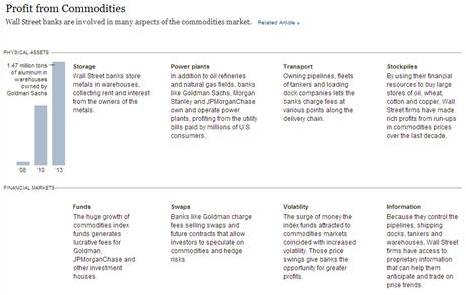
The Federal Reserve is currently “reviewing” a landmark 2003 decision that first allowed regulated banks to trade in physical commodity markets. Why exactly shouldn’t banks be able to trade physical commodities? To see one argument, take a look at a big report from David Kocieniewski in today’s New York Times. According to Kocieniewski, a Goldman Sachs-owned company has been involved in an elaborate plan to move around aluminum in a way that has inflated market prices. The report states that every time an American consumer buys a product containing aluminum, they pay a price that has been affected by this maneuver. Sources told The New York Times that in total the plan has cost American consumers more than $5 billion over the last three years, Kocieniewski’s investigation centers on Metro International Trade Services, an aluminum storage company that Goldman Sachs bought three years ago. According to the Times, since Goldman bought the company the average wait time at the storage facility has gone up more than 20-fold. As the wait times are longer, the companies’ revenues for storing the aluminium are higher. This cost is reflected in the market price of aluminum. Aluminum storage facilities are not allowed to mindlessly sit on aluminum — industry standards require them to move 3,000 tons of the metal every day. However, according to the Times, Metro International gets around this law by moving the metal between its own warehouses every day. One analyst estimated that around 90% of the metal moved each day went to another Goldman-owned warehouse. The body that governs the industry has shown little interest in reforming the practice, Kocieniewski writes. This may be because the body — the London Metals Exchange — collects 1% of the rent from aluminum storage facilities. Limiting the amount of rent received would cost it millions. This all makes for a somewhat absurd working environment. Workers told the Times that they’d routinely see the same drivers making three or four round trips a day. Some warehouses reportedly sat empty 12 or more hours a day, the Times reports, despite the huge backlog. If the practice is as the Times describes it, it is very hard to see what value is given to society by the activity. A loose coalition of companies that use aluminium — including Boeing and Coca-Cola — have begun to put pressure on Goldman. However, the issue may go beyond aluminum — JP Morgan, Blackrock and Goldman have all been given approval by the SEC to buy a large amount of copper available on the market and stockpile it, Kocieniewski reports. Read more of this post

Record Downgrades in China Foreshadow First Onshore Debt Default; “The government can’t save everyone. In the future, downgrades may spread to high-grade bonds, especially those which rely heavily on support from the central or local government

Record Downgrades Foreshadow First Onshore Default

China’s rating firms cut the most bond issuer rankings on record in June and brokerages said they are preparing for the onshore market’s first default as the world’s second-biggest economy slows.

A total of 38 issuers were downgraded last month, according to Guotai Junan Securities Co., the most since the nation’s third-biggest brokerage started compiling the data in 2005. Some 86 firms were upgraded, down from 88 a year earlier. China Chengxin Securities Rating Co. lowered Zhuhai Zhongfu Enterprise Co. (000659)’s debt rating to AA- from AA on June 28, causing the yield on the beverage package maker’s May 2015 bonds to almost triple to 15.01 percent. Read more of this post

Can Market Timers Beat the Index? Even those who do beat a buy-and-hold strategy in one market cycle have no greater odds of success in the next cycle

July 19, 2013, 6:25 p.m. ET

Can Market Timers Beat the Index?

Even those who do beat a buy-and-hold strategy in one market cycle have no greater odds of success in the next cycle.

MARK HULBERT

BF-AF382_HULBER_G_20130719133904

If you think you will know it when this bull market finally comes to an end, you are kidding yourself. The vast majority of professional advisers who try to get in and out of the stock market at the right time end up doing worse than those who simply buy and hold through bull and bear markets alike. Even those few who beat a buy-and-hold strategy during one period rarely beat it in the next one. What makes you so confident you can do better? Read more of this post

New-Car Salesmen Are Lonely in Europe

July 19, 2013

New-Car Salesmen Are Lonely in Europe

By FLOYD NORRIS

NewCar

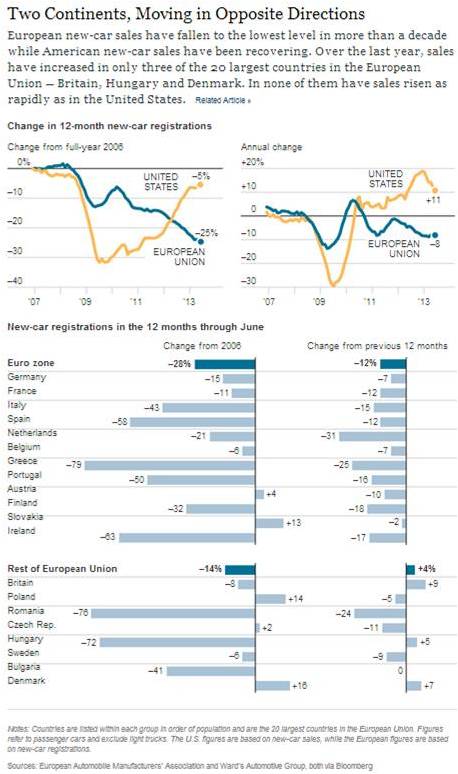
IN Europe, new cars are becoming rare items. The European Automobile Manufacturers’ Association reported this week that new-car registrations in the European Union were down 6 percent in June compared with those in the month a year earlier and were running at their slowest pace since 1996. Even in Germany, whose economy has been stronger than those of most of its European brethren, sales were the lowest for any June since the country was unified in 1990.

Read more of this post

Fed rethinks move allowing banks to trade physical commodities

Fed rethinks move allowing banks to trade physical commodities

7:47pm EDT

By David Sheppard and Josephine Mason

NEW YORK (Reuters) – The U.S. Federal Reserve is “reviewing” a landmark 2003 decision that first allowed regulated banks to trade in physical commodity markets, it said on Friday, a move that may send new shockwaves through Wall Street.

While it is well known that the Fed is considering whether or not to allow banks including Morgan Stanley (MS.N: Quote, Profile, Research, Stock Buzz) and JPMorgan (JPM.N: Quote, Profile, Research, Stock Buzz) to continue owning trading assets like oil storage tanks or metals warehouses, Friday’s one-sentence statement suggests that it is also reconsidering the full scope of banks’ activities in physical markets, which help generate billions in profits. Read more of this post

How GlaxoSmithKline missed red flags in China; With more compliance officers in China than in any country bar the United States, British drugmaker GlaxoSmithKline Plc seemed well-positioned to do things right

How GlaxoSmithKline missed red flags in China

With more compliance officers in China than in any country bar the United States, British drugmaker GlaxoSmithKline Plc seemed well-positioned to do things right. -Reuters
Fri, Jul 19, 2013
Reuters

LONDON – With more compliance officers in China than in any country bar the United States, British drugmaker GlaxoSmithKline Plc seemed well-positioned to do things right. But despite conducting up to 20 internal audits in China a year, including an extensive 4-month probe earlier in 2013, GSK bosses were blindsided by police allegations of massive corruption involving travel agencies used to funnel bribes to doctors and officials. The scale of funds signed off by GSK to pay travel agencies for organising educational medical meetings has triggered heated debate, with some saying such spending would have looked legitimate but others arguing it should have raised alarms inside GSK and at its external auditor PricewaterhouseCoopers. Read more of this post

Hedge Fund Alpha is Negative; Down Around 1700 BPs in 11 Years

Hedge Fund Alpha is Negative; Down Around 1700 BPs in 11 Years

July 11, 2013

By Jacob Wolinsky

hedge-fund-alpha-1024x443 hedge-fund-correlation

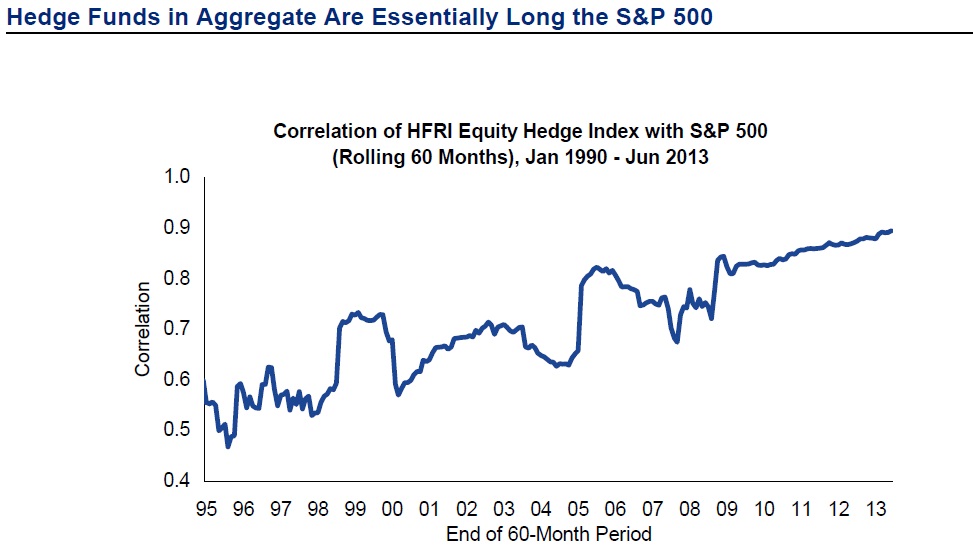
Adam Parker of Morgan Stanley is out with a new report on the S&P 500. He notes that hedge fund alpha has tanked since early 200s and today is still negative, with a drop of about 1700 basis points. At the same time correlation is up making many hedge funds appear to be nothing more than closet index funds.

Adam S. Parker, Ph.D., Chief US Equity Strategist, Morgan Stanley, is out with a great new report titled ‘US Equity Strategy’. In the 99 page report Parker has nearly a hundred interesting charts. Morgan Stanley sees the S&P 500 (.INX) in 2014 at 1600 in the base case scenario . However, the most interesting data is on hedge fund alpha and hedge fund correlation with the S&P 500 (.INX).  Read more of this post

Japan Tells Firms: Stop Sitting on Cash; Government Wants Companies to Invest More at Home

July 19, 2013, 6:12 p.m. ET

Japan Tells Firms: Stop Sitting on Cash

Government Wants Companies to Invest More at Home

YOREE KOH, MITSURU OBE and MAYUMI NEGISHI

BF-AF398_JCASH_G_20130719173004

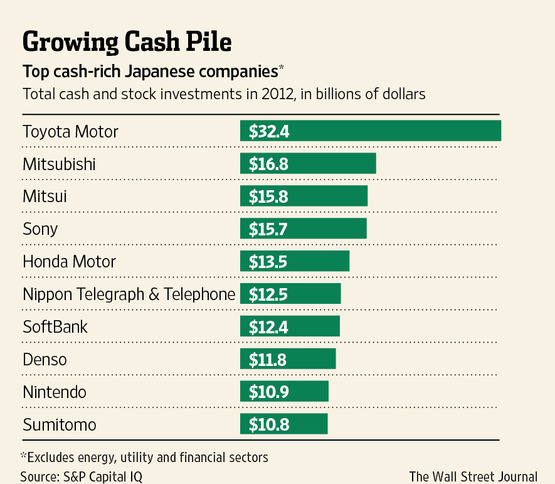
TOKYO—Okuma Corp., 6103.TO -3.64% a Japanese machine-tool maker, has seen its stock price rise around 30% this year. Its customers have outdated machinery that needs replacing. But, for now, the company isn’t investing. Instead, it is sitting on a pile of cash worth about $280 million—50% higher than its pile a decade ago, equivalent to one-fifth its annual sales, and more than twice the level required for the firm to be deemed loan-worthy by a bank. Why? Senior director Chikashi Horie says the answer is simple. Okuma’s clients “are not investing, not even to raise efficiency, so we are not investing either,” he says. Read more of this post