Nervous About Backlash, Facebook Moves Cautiously on Video Ads; CEO Zuckerberg Tries to Find Right Balance for Users and Advertisers

August 8, 2013, 4:41 p.m. ET

Nervous About Backlash, Facebook Moves Cautiously on Video Ads

CEO Zuckerberg Tries to Find Right Balance for Users and Advertisers

EVELYN M. RUSLI and SUZANNE VRANICA
MK-CF415B_FBVID_G_20130808183906

Facebook’s coming big play for video ads will unlock a new market for the social network’s booming ad business–but it will also present the greatest test of Facebook’s commitment to its user experience. Evelyn Rusli reports on The News Hub. Photo: Facebook.

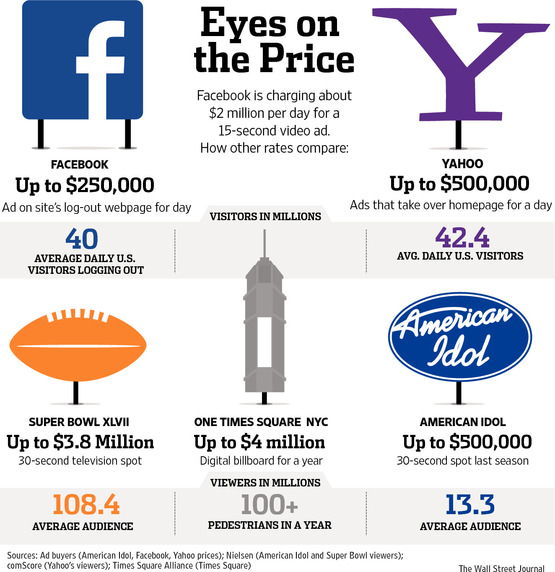
Facebook Inc. FB -0.85% has been planning for months to dive into the lucrative market for online video ads. The holdup: CEO Mark Zuckerberg doesn’t want to annoy its 1.1 billion members. As soon as this fall, Facebook plans to launch a video-ad service that will show members 15-second-or-less clips on both smartphones and the Web, according to people with knowledge of the matter. Facebook needs the ads to be sufficiently splashy that they will convince brands to fork over roughly $2 million per day. Yet since earlier this year, Mr. Zuckerberg and his engineers have toiled over how to make the ads not so distracting and slow that they alienate users, according to current and former employees and advertisers. The videos will appear prominently on members’ homepage news feeds, the people familiar said. Read more of this post
Pearson Said to Seek Up to $500 Million for Mergermarket which has $150 Million in sales with more than 500 journalists and analysts to offer financial news and information to clients including banks and hedge funds

Pearson Said to Seek Up to $500 Million for Mergermarket

Pearson Plc (PSON) is seeking as much as $500 million for its financial-information division Mergermarket Ltd., with first-round bids due by the end of September, according to people with knowledge of the matter. The company sent information on the business to potential buyers last week, said two people, who asked not to be identified because the information is private. Private-equity firms including Warburg Pincus LLC are among the interested parties, the people said. Mergermarket posted about $150 million in sales last year, Pearson Chief Executive Officer John Fallon said at the company’s earnings meeting last month. The company, which has more than 500 journalists and analysts globally, was founded in 2000 to offer financial news and information to clients including banks and hedge funds, according to its website. Read more of this post

IBM Losing Favor Among Some CIOs

August 7, 2013, 6:39 PM ET

IBM Losing Favor Among Some CIOs

Clint Boulton

IBM Corp., once viewed as the strongest and most authoritative of technology vendors, is struggling to maintain its standing among customers in a quickly changing market. “Traditionally most CIOs would normally have gone for IBM because you didn’t get fired for hiring IBM,” said Yousuf Khan, CIO of Hult International Business School, which doesn’t use IBM technology. “It was solid, it had enough recognition, credibility and gravitas. You stuck with IBM because like other established players in the services space it was considered a safe bet.” CIOs don’t regard IBM as they once did, according to Mr. Khan. “When the negative news is happening at multiple levels … it will no doubt catch the attention of the CFO, the CEO, and the industry peers in general,” Mr. Khan said. Is that enough to compel CIOs to pause and think twice before they sign a deal with IBM? “Absolutely,” he says. Read more of this post

Huawei’s Smartphone-Like Network Switch to Challenge Cisco

Huawei’s Smartphone-Like Network Switch to Challenge Cisco

Huawei Technologies Co., China’s largest phone-network equipment maker, will offer a new line of switches that can be upgraded like applications on a smartphone as the company steps up its challenge to Cisco Systems Inc. (CSCO) The new S12700 series of switches, programmable by software enabling four times faster updates than hardware-based switches, will be released globally in October, William Xu, head of Huawei’s Enterprise Business Group, said in an interview in Beijing yesterday. Huawei is diversifying into smartphones and business-computing products and services as sales of its network equipment are blocked in the U.S. on security concerns. Cisco had a 58.8 percent share of the market for switches, which connect computer networks, in the first quarter compared with Huawei’s 2 percent, according to data from IDC and Bloomberg Industries. Xu said he expects the new gear to help boost Huawei’s share by 2 percentage points in a year. Developing hardware for a traditional switch takes about two years, while software can be written to upgrade the S12700 in about six months, Xu said. “This is like migrating from an old feature phone to a smartphone. With smartphones, applications can be upgraded by software.” Read more of this post

This Story Of A Wheelchair-Bound Woman Using Google Glass Will Move You To Tears

This Story Of A Wheelchair-Bound Woman Using Google Glass Will Move You To Tears

JULIE BORT AUG. 7, 2013, 7:50 PM 750 3

We hear a lot of stories about people using Google Glass, sometimes for awesome reasons and sometimes to the horror of their their friends and coworkers. But here’s one that really shows how the device can help someone. Alex Blaszczuk owns Glass as part of Google’s Explorer program, where Google allowed about 8,000 people to purchase the device at $1,500 a pop. Blaszczuk is a law student whose life was changed in the fall of 2011. She was on her way to a camping trip when a car accident left her paralyzed from the chest down, unable to use her hands. Last month, Alex finally made it camping, helped in large part by the confidence she regained by using Glass. She shared her story and video of the trip taken with Glass. (Seriously, after watching this, we have tears in our eyes.) Congrats to Blaszczuk!

Overseas online shopping booming in China

Overseas online shopping booming in China

Staff Reporter

2013-08-08

Buying overseas products over the internet, dubbed “haitao” in China, has become an increasingly popular way to shop for Chinese consumers, reports the Chinese-language Guangzhou Daily. The country’s “haitao clan” is on the rise thanks to the growing value of the Chinese currency, the renminbi or the yuan, and improved online payment methods. So far, the top online shopping destination for Chinese consumers is the United States, which offers not only cheaper prices compared to domestic retailers and online stores, but also provides many more options in terms of websites and delivery companies. Read more of this post

Logitech’s UE Boom portable speaker: How on earth did they get something so big out of something so small?

UE Boom: like a bottle with a ship, only louder

PUBLISHED: 13 HOURS 13 MINUTES AGO | UPDATE: 0 HOUR 0 MINUTES AGO

e28fe1aa-fd79-11e2-8eed-98c18044f956_b2f6d1f85d3db986_org--646x363

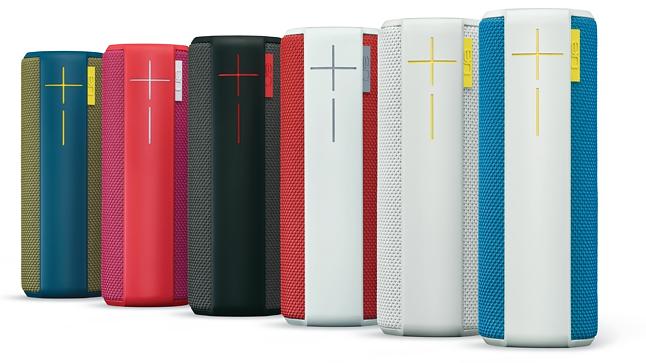
Logitech’s Ultimate Ears UE Boom speakers . . . pack one in your luggage so you can listen to music in your hotel

JOHN DAVIDSON

UE BOOM

Likes Great sound, dead simple to use

Dislikes Waterproof fabric cover isn’t interchangeable

Price $199

Ultimate Ears says it based the design of its portable speaker, the UE Boom, on a water bottle. When the device is switched off, it’s easy enough to believe that it’s some sort of a drinking bottle. The UE Boom, which boosts the sound of your mobile phone or tablet, turning it into a sort of boombox, is roughly the same size and weight as a 600ml water bottle, and weighs about the same. (For anyone keeping score, the UE Boom is 18 centimetres high, 6.5 centimetres in diameter, and weighs 538 grams. So it’s a shade under a 600ml bottle.) But start playing music through this device, and it’s entirely another sort of bottle that comes to mind: one of those old wine bottles with a miniature sailing ship in it, that leaves you wondering “How on earth did they manage to get something so big into something so small?” Read more of this post

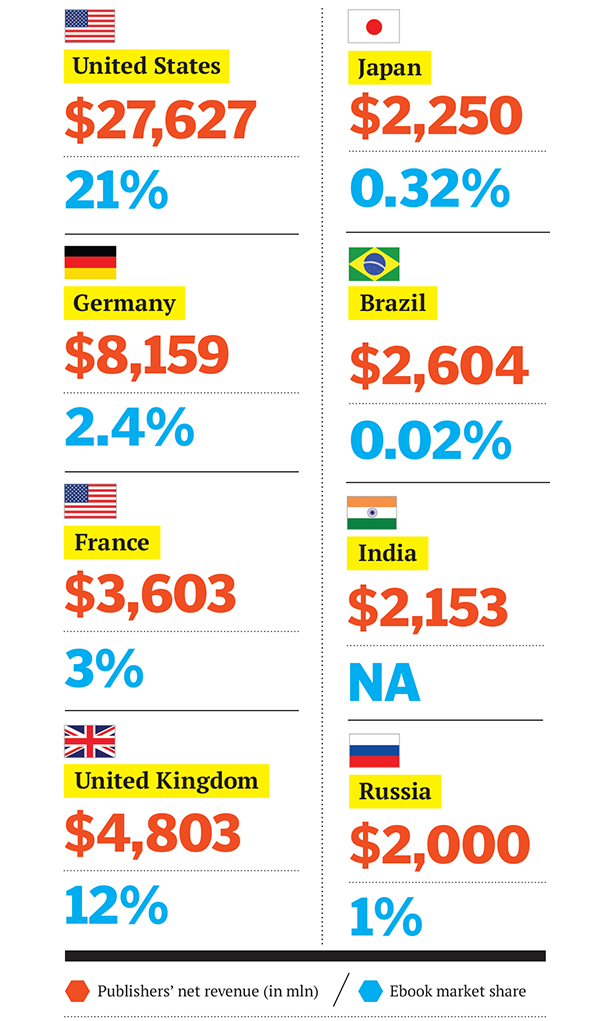
How the Numbers Stack Up in Global E-Publishing

How the Numbers Stack Up in Global E-Publishing

by Jasodhara Banerjee | Aug 6, 2013

Click-a-Book

The global publishing industry is set to grow. And ebooks, which are increasing their share in some of the largest markets, have a large role to play.

FOB_World watch_Final.indd


Paul Krugman on Arcade Fire, Nate Silver and making money from journalism

AUGUST 5, 2013, 6:40 AM

Nate Silver, Superstar

Over at Barry Ritholtz’s place, Bob Lefsetz argues that Nate Silver’s departure from the Times heralds a new age of journalism in which the individual journalist builds his or her own brand, and the middlemen — like newspapers — lose power. In fact, he compares Nate to Arcade Fire, who pioneered the modern indie rock movement by creating their own position rather than by relying on record companies. I like this analogy, and as regular readers know, I love Arcade Fire. (I’m also a Nate Silver fan; I have no information at all about what his relationships with other Times people were like.) But there is a problem here. It’s true that information technology makes it increasingly easy to carve out your own brand; I’ve done some of that myself. But it also makes monetizing information harder; I believe that Arcade Fire makes a lot of its money from live performances rather than record sales, and in any case they have not become wealthy. This is OK for music — great music can be made without super-profitable record companies — but not so OK for journalism, which relies on a substantial infrastructure of non-superstar reporters. Read more of this post

Inside the sad, synergy-less marriage of Newsweek and the Daily Beast

August 4, 2013

The Last Temptation of Tina Brown

By LESLIE KAUFMAN and CHRISTINE HAUGHNEY

On Nov. 12, 2010, Tina Brown gathered the staff of her Web site The Daily Beast in the third-floor conference room at its Chelsea offices with its commanding views of the Hudson. Brimming with the fervor she has brought to all her endeavors, she delivered some surprising news: the Web site would merge with Newsweek, a once-proud but struggling magazine brand. Ms. Brown, according to staff members who were present, spoke excitedly about the potential synergies for advertisers across platforms and promised to produce a new form of magazine journalism, where digital would drive print instead of the other way around. But after a few softball questions from the staff, Peter Lauria, the company’s media reporter, braved a more skeptical one: Given that the two publications lost more than $30 million in the previous two years, he asked, why was it a good idea to put them together? And if The Beast was on schedule to break even in 18 months, how much longer would it take now that Newsweek was part of the mix? Read more of this post

Where Is Our Netflix for News or ITunes for Ideas?

Where Is Our Netflix for News or ITunes for Ideas?

If “Googlezon” is becoming a reality, as predicted in the dystopian Epic2014 video produced 10 years ago, should we users of Google and Amazon at least get some benefits? Shouldn’t we draw direct advantages from the real-life takeover of the Washington Post by Amazon.com Inc.’s chief executive officer? The sale offers the news industry another chance to fully join the technology revolution that it has long covered and envied. Can we dream of a Netflix for news? When the man who created the gold standard of customer satisfaction takes on an organization whose fortunes still depend on the 15th-century printing press, radical revolutionary technological transformation is in order. Read more of this post

Even as Android Obliterates Smartphone Market and widens its lead, Apple harvests the most profit for now

Aug 7, 2013

Android Obliterates Smartphone Market

By Will Connors

OB-YL923_mobile_Q_20130807190929

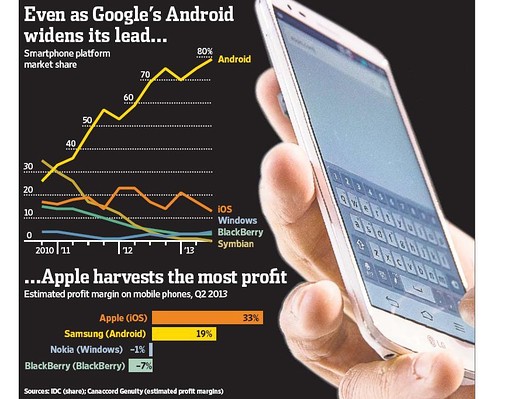
While Google‘sGOOG -0.66% Android operating system continues to distance itself from the competition in the world-wide smartphone market, one-time market leaderBlackBerryBB.T -3.33% is reaching new lows. Android’s market share jumped to 79.3% in the second quarter, from 69.1% a year earlier helped in large part to a rush of new phones from Chinese handset makers. The only other operating system that gained was Microsoft’s Windows Phone, which still has a paltry 3.7% compared with 3.1% last year. But it overtook BlackBerry as the No. 3 smartphone operating system thanks in part to Nokia‘sNOK1V.HE -0.78% new lineup of Lumia phones. Read more of this post

Out of Nest, TripAdvisor Soars Past Expedia; Former Subsidiary’s Success Shows How Swiftly Currents Can Shift Online. Expedia relies on bookings. TripAdvisor depends on ads. But both are vying to be travelers’ first stop online

August 7, 2013, 7:46 p.m. ET

Out of Nest, TripAdvisor Soars Past Expedia

Former Subsidiary’s Success Shows How Swiftly Currents Can Shift Online

DREW FITZGERALD

MK-CF307_TRIP_G_20130807180904

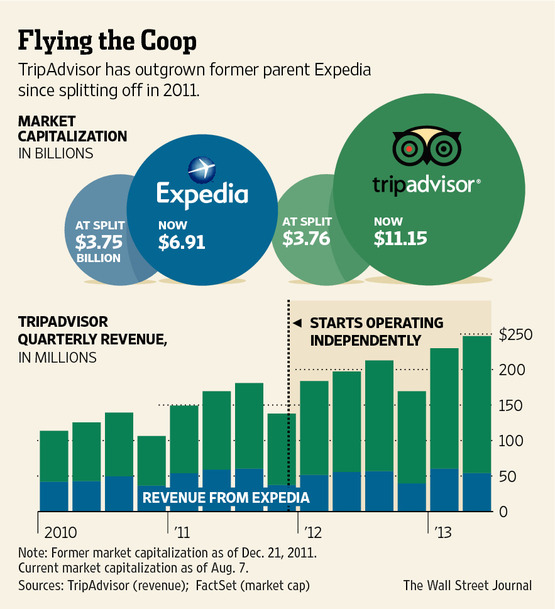
Expedia relies on bookings. TripAdvisor depends on ads. But both are vying to be travelers’ first stop online. Children often outgrow their parents by their teens. TripAdvisor Inc. TRIP -1.63% did it in less than 20 months. That milestone was crossed after Expedia Inc. EXPE -0.33% executives spent months warning analysts and investors that aggressive marketing tactics from old rivals like Priceline.com Inc. PCLN -0.83% could hurt profits this year. But a more painful and unexpected sting came last month from an old ally: TripAdvisor, the former subsidiary that still feeds Expedia many of its customers. Read more of this post

Samsung’s Phones Help Sell Home Appliances; Reputation and Advertising of Trendy Devices Boost Refrigerators and Washers in U.S.

August 6, 2013, 8:36 p.m. ET

Samsung’s Phones Help Sell Home Appliances

Reputation and Advertising of Trendy Devices Boost Refrigerators and Washers in U.S.

JAMES R. HAGERTY and MIN-JEONG LEE

MK-CF337_SAMAPP_G_20130806174504 MK-CF350_SAMAPP_P_20130806214413

Samsung’s U.S. market share for major home appliances has surged. Samsung Electronics Co.’s 005930.SE -0.57% global success in selling trendy smartphones is helping it win credibility in a more humdrum market: refrigerators, washers and other home appliances. The South Korean company over the past few years has rapidly gained market share in the backyard of U.S.-based Whirlpool Corp., WHR +0.73% the world’s largest maker of appliances. So has LG Electronics Inc., 066570.SE +1.08% another Korean company that makes both smartphones and appliances. “We hear it all the time: ‘Oh, I have one of their phones,'” says Rocco Perla, a third-generation appliance dealer in Pittsburgh who displays Samsung and LG products prominently in his showroom. Read more of this post

Unfolding Washington Post’s Inner Value; newspaper-publishing segment of Washington Post represented just 13% of revenue and an operating loss of $49 million

August 6, 2013, 5:11 p.m. ET

Unfolding Washington Post’s Inner Value

Company May Want to Consider Even Deeper Changes

MIRIAM GOTTFRIED

MI-BX676A_WAPOH_NS_20130806183310

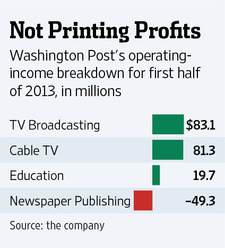
What is the Washington Post Co. WPO -0.91% without the Washington Post? Quite a lot, actually. The announcement Monday that Amazon.com Chief ExecutiveJeff Bezos will buy the Post for $250 million generated speculation about his intentions for the paper. But the sale is small in the context of Washington Post’s $4 billion enterprise value. What matters more for investors is the value, and future, of what is left. In the first half of 2013, the newspaper-publishing segment of Washington Post represented just 13% of revenue. But that segment reported an operating loss of $49 million. Selling it removes the overhang of a business in decline. Read more of this post

Creative thinking out loud; New technology platforms such as Medium and Quora are helping executives to test their ideas

August 7, 2013 7:16 pm

Creative thinking out loud

By Ian Sanders

Len Kendall is at his desk in Chicago thinking through the sales strategy for his start-up CentUp, a business that facilitates donations to online content creators – such as bloggers, photographers and illustrators – and charities. Instead of waiting until his strategy is complete, Mr Kendall has chosen to outline his thinking and approach to selling in a blog post entitled This Blog Post Isn’t Free. He sees this approach as a way of testing his idea in public.

Traditionally, if an executive wanted to test an idea, they might consult their peers at an industry gathering or commission some research. Today, many are using the web to think out loud instead. While the internet has long been used by business people to broadcast their thinking to the world, what is new is their willingness to share thoughts-in-development rather than present polished opinions and press release-style communication. Read more of this post

Children’s Advocacy Group Faults Learning Apps for Babies, saying that there was no rigorous scientific evidence that the apps taught infants what the companies claimed

AUGUST 7, 2013, 1:51 PM

Children’s Advocacy Group Faults Learning Apps for Babies

By NATASHA SINGER

Updated, 8:25 p.m. |

subBaby1-tmagArticle

Screen images of the Laugh & Learn mobile apps, which have been downloaded more than 2.8 million times.

The Walt Disney Company’s “Baby Einstein” videos do not turn babies into prodigies. And despite marketing claims by Fisher-Price, its popular “Laugh & Learn” mobile apps may not teach babies language or counting skills, according to a complaint filed on Wednesday with the Federal Trade Commission. As mobile devices supplant television as entertainment vehicles for younger children, media and software companies increasingly see opportunities in the baby learning app market. But the complaint to the F.T.C. by the Campaign for a Commercial-Free Childhood, the same nonprofit group that helped prompt “Baby Einstein” to backtrack from its educational claims, challenges the idea that such apps provide more than simple entertainment value. Read more of this post

38% of Groupon’s revenues now come from selling low-margin, discounted junk

Is Groupon Goods a Daily-Deal Savior or a Low-Margin Distraction?

Published on August 7, 2013
by Jason Del Rey

When Groupon recognized in 2011 that daily deals alone wouldn’t lead it to long-term success, the company started selling discounted products under the Groupon Goods banner. That business has continued to grow strongly since then, accounting for $151 million in revenue in North America in the first quarter, and $229 million globally. As the Chicago-based daily-deal company prepares to report second-quarter earnings on Wednesday, it’s clear that analysts will be paying close attention to this business segment. That’s because the Goods unit now represents 38 percent of Groupon’s sales, via discount sales of consumer electronics, jewelry, clothing and other such items from national companies. The rest of the company’s business, of course, focuses on selling discounted services from local merchants. Read more of this post

Sequoia’s Michael Moritz: Jeff Bezos has what it takes to become a bonafide media baron

Jeff Bezos has what it takes to become a bonafide media baron

By Michael Moritz August 7, 2013

Michael Moritz is chairman at Sequoia Capital, a large venture capital firm. He sits on the boards of LinkedIn, Sugar, and Kayak.

This originally appeared on LinkedIn. You can follow Michael Moritz here.

Word that Amazon Founder and CEO Jeff Bezos is buying The Washington Post might cause consternation in its newsroom, but uneasy journalists wondering about what lies in store might be reassured if they read the letters he has sent to shareholders since 1997. Most annual letters to shareholders are crammed with fatuous drivel. A few stand out. Warren Buffett’s commentaries on the performance of Berkshire Hathaway have long been compulsory reading for investors. Jeff Bezos’ reports on Amazon should be required reading—not just for the journalists who are about to become his employees—but also for anyone aspiring to build and lead a company. Read more of this post

Reality Check: Asia-Made Messaging Apps Are Not Taking Over The World

Reality Check: Asia-Made Messaging Apps Are Not Taking Over The World

August 7, 2013

by Steven Millward

Asian-messaging-apps-not-really-global

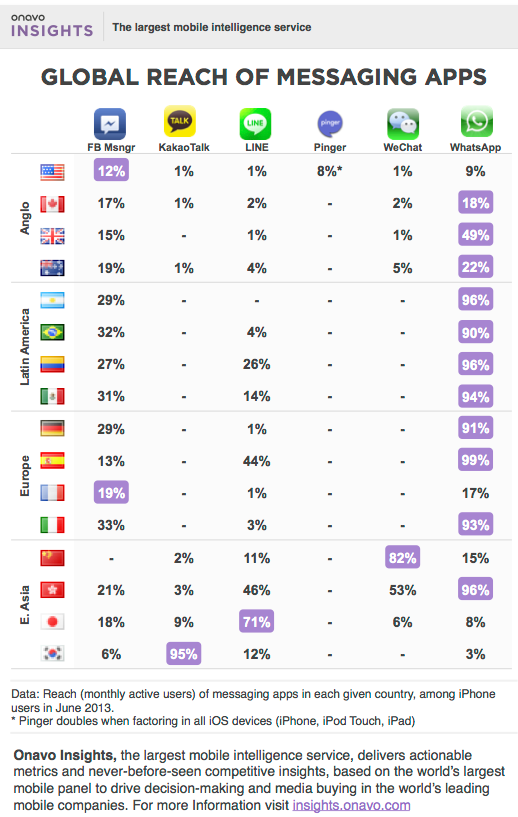
We’ve seen Asian messaging apps rocket to acquiring over half a billion collective users in the past couple of years, with most of them – like Line, WeChat, and KakaoTalk – keen to expand globally. But interesting new data from Onavo provides a useful reality check. As seen in the table below (hat-tip to TheNextWeb’s Jon Russell for spotting it), Onavo’s figures show that Whatsapp and Facebook Messenger have much greater global reach, with the Asia-made messaging apps only really dominating their home countries. One important caveat is that this covers iPhone data only. Nonetheless, it shows that WeChat’s 70 million overseas users, and the approximate 75 percent of Line’s users outside of Japan [1] are not sufficient to make those the leading apps in any country outside their home base. Line’s 44 percent reach among active iPhone users in Spain is fairly impressive, as is WeChat’s 53 percent reach in Hong Kong, but both are bested in those two markets by WhatsApp. Nonetheless, US-based WhatsApp must be somewhat worried, having copied its Asia-made rivals today by adding push-to-talk voice messaging(Editing by Anh-Minh Do, Enricko Lukman)


WeChat has nearly 400 million registered users in total; Line has over 200 million. But Whatsapp has 300 million active users.  ↩

Washington Post Co.’s Real Star Asset: A Massive Pension Fund

August 5, 2013, 6:45 PM

Washington Post Co.’s Real Star Asset: A Massive Pension Fund

By Tom Gara

oKU9Z32

The Washington PostWPO -0.91% Company is best known for its flagshipnewspaper title sold today to a company controlled by Amazon founder Jeff Bezos, but it makes its big money from less prominent sources: A for-profit education business, cable television, and local TV stations. But while all these assets have their merits, here is one asset that gets much less attention: its hugely over-funded pension. At a time when pension obligations are becoming giant financial drag on some of America’s best known companies – such a drag, in some cases, that the pension funds end up owning significant chunks of the business — having a hugely over-funded pension plan is a pretty sweet spot to be in. Here are the details, via the company’s 2012 annual report: That’s a pension plan that owes its recipients just under $1.47 billion, but has $2.07 billion in assets — in other words, it is over-funded by a cool $604 million. Read more of this post

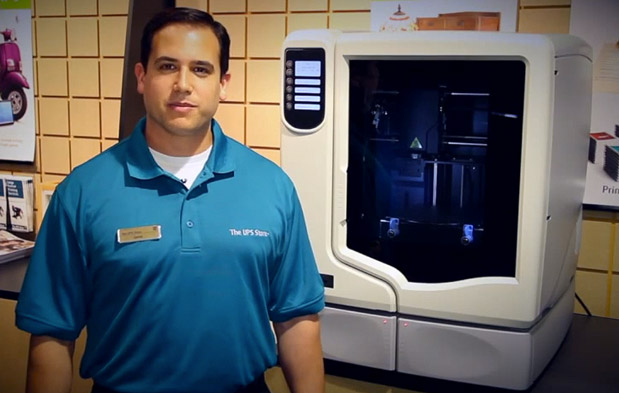
UPS is going to test 3D printing in its stores. It could be the beginning of a whole new business for the delivery firm

3D printing: Out of the box

Aug 6th 2013, 18:39 by P.M.

ups

THE emergence of three-dimensional (3D) printing will have a revolutionary effect on manufacturing, but it may be equally disruptive for firms that make much of their living warehousing and delivering spare parts for companies. Now, one of the biggest delivery firms, UPS, is going to test 3D printing in its stores. Stratasys, a Minneapolis company which is one of the leading makers of 3D printers, will provide its uPrint SE desktop machines to six UPS Stores in America for a trial programme. These machines will allow customers to bring their designs to the store and have them printed out as objects—in much the same way as people take two-dimensional digital documents to the store and have them printed on paper. The uPrint machines can produce items in plastic in a range of colours and make bigger objects in finer detail than consumer-level 3D printers. UPS expects designers, entrepreneurs, start-ups and architects seeking models to be among its customers for 3D printing services. Some people might also be seeking spare parts: it is often small plastic items that break in products, but they can be difficult and expensive to find. Some industrial 3D printers can print metal components too.

Read more of this post

Why your finger will never replace your mouse; It’s hard to put a finger on what’s amiss with the new gesture-based computing peripheral from Leap Motion

Why your finger will never replace your mouse

August 6, 2013: 5:00 AM ET

It’s hard to put a finger on what’s amiss with the new gesture-based computing peripheral from Leap Motion.

By John Patrick Pullen

FORTUNE — He shot me. After a good eight seconds of flailing, grabbing, and poking at the air above my desk, Frank Welty finally unholstered his sidearm and put me out of my misery. Alas, it was only a game, but I never really stood a chance. My shooter, which in this case was my pointer finger, hadn’t hit a damn thing all day. The game, Fast Iron, is just one of dozens of apps available for the newly launched Leap Motion Controller. A peripheral that lets users control their computer through hand gestures, this device showed plenty of promise when it was announced in May 2012. Now, more than a year later, the $79 product has come to market, and after a week of feeling it out, it’s hard to point a finger at what exactly is wrong with gesture-based computing, at least in its current state. Read more of this post

WeChat became the bane of the Big Three for slashing their profits, but a pilot program involving China Unicom may transform enemies into partners

08.06.2013 17:17

Popular Messaging App, Telecoms Operator Trying to Play Nice

WeChat became the bane of the Big Three for slashing their profits, but a pilot program involving China Unicom may transform enemies into partners

By staff reporters Qin Min and Wang Shanshan

(Beijing) — A special subscription plan offered by China Unicom’s Guangdong branch to users of the popular messaging application WeChat opened to online reservations on August 5. Official sales were to start three days later. The plan, which includes a new SIM card, has attracted great attention from the market because it is the first attempt at cooperation between a telecoms operator and Tencent Holding’s WeChat. Early indications are that the pilot program is flying high. The two companies say that as of 11 a.m. on August 6, the number of online reservation surpassed 933,000. Read more of this post

Did SingTel just make peace with WhatsApp?

Did SingTel just make peace with WhatsApp?

J. Angelo Racoma 7, Aug 2013Corporations 

SingTel partners WhatsApp to offer prepaid plans as low as US$0.40 daily. How does this relate to the competitive dynamics between SMS and over-the-top apps?

Both SingTel and StarHub, two of Singapore’s telcos, announced early this year that they will be taking the fight to WhatsApp by building their own messaging app. An announcement that SGEntrepreneurs’ editor, Terence Lee, said made no sense. The popular cross-platform instant messaging service, that has recently surpassed 300 million users globally, is one of the reasons that telcos are seeing their revenues, especially from SMS and MMS services, declining. But it seems like a middle ground may have been found. Read more of this post
The Rise Of Social Commerce — How Tweets, Pins And Likes Are Driving Sales, Online And Offline [CHARTS]

The Rise Of Social Commerce — How Tweets, Pins And Likes Are Driving Sales, Online And Offline [CHARTS]

COOPER SMITH AND MARCELO BALLVE AUG. 6, 2013, 4:30 PM 1,346

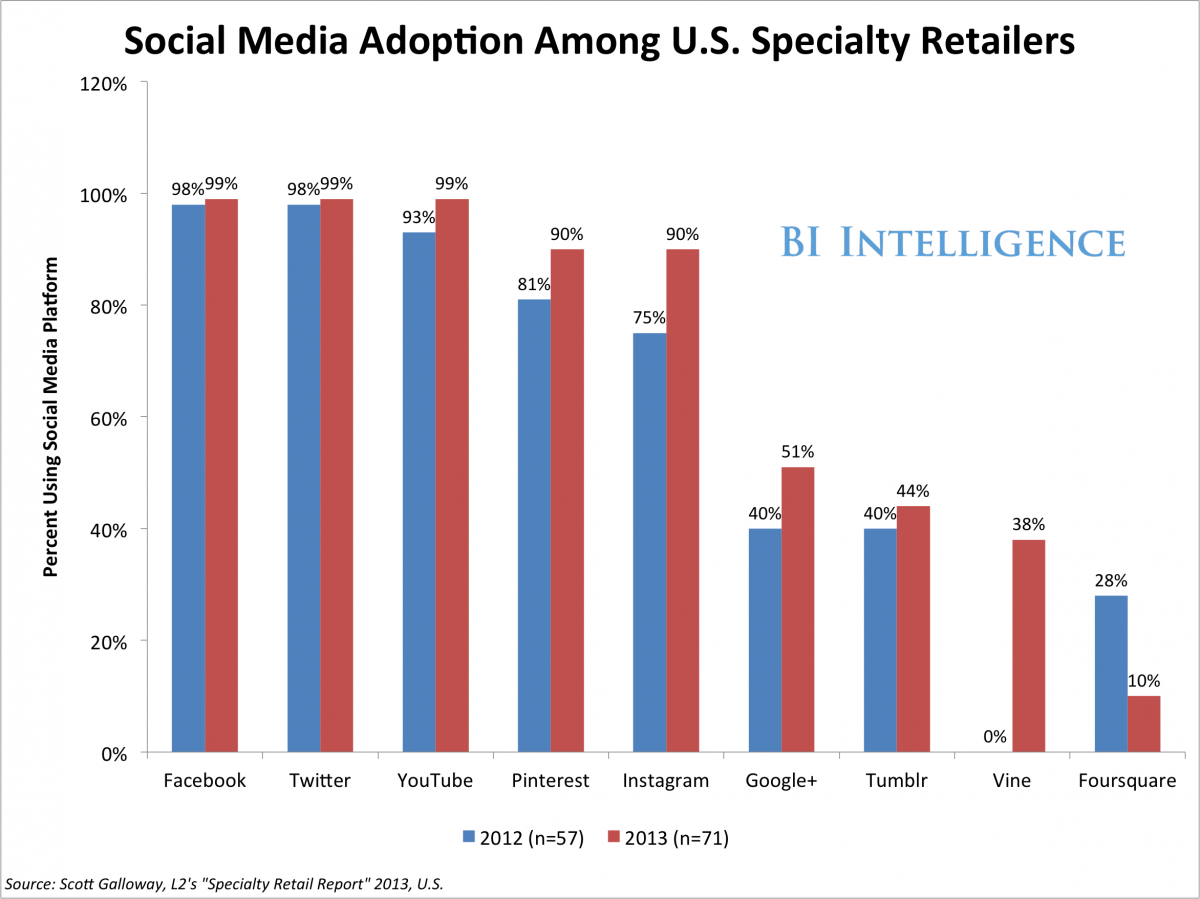
bii-ecommerce-conversions-size bii-specialty-retail-social-platforms

The stubborn conversion rate gap persists, but it doesn’t account for offline purchasing

Overall usage on social media platforms is exploding. Millions and millions of consumers are expressing likes on Facebook, tweeting about products on Twitter, and pinning on Pinterest every single day. Retailers and brands are increasingly focusing their attention on social commerce. But many struggle with the question: how do you convert a “like,” a “tweet,” or “pin” into a sale? Is social media really going to be a source of dollars and foot traffic? In a recent report from BI Intelligence, we look at successful examples of businesses and business models for generating commerce via social media-based strategies, analyze Pinterest’s success as a social commerce platform, look at Facebook’s potential as a social commerce contender, and we examine the numbers behind the social commerce conversion and order value gap. The report is supplemented by rich datasets on social commerce, and subscribers will also receive full access to BI Intelligence’s full library of hundreds of in-depth reports, charts and datasets — including up to date coverage on social commerce.  Here’s an overview of the converging trends that promise to transform social media into a viable commerce platform: Read more of this post

Amazon starts selling art; Works range from a $44 cat portrait to Norman Rockwell’s $5m Willie Gillis: Package from Home

Amazon starts selling art

Amazon has unveiled yet another business line as it works to expand its appeal: Art.

rockwell0_2637337b

Norman Rockwell’s Willie Gillis: Package from Home, which retails for $4.85m

8:01PM BST 06 Aug 2013

The 19-year online retail giant, which began as a bookseller but now does everything from groceries to patio furniture, launched “Amazon Art” to market works from galleries in Miami, San Francisco, New York and other US cities. The site showcases more than 40,000 works from over 150 galleries and dealers that run the gamut as far as subject, genre and period are concerned. Works range from modest canvasses like a $44 cat portrait to Norman Rockwell’s Willie Gillis: Package from Home, which retails for $4.85m. “From gallery walls to your walls,” boasts the site, which enables users to quickly click through works by period and genre. Read more of this post

Amazon’s Bezos pays hefty price for Washington Post; Going by the valuations of other newspaper deals and publicly traded media companies, though, WaPost would have been worth closer to $60 million.

Amazon’s Bezos pays hefty price for Washington Post

1:05am EDT

By Jennifer Saba

(Reuters) – Jeff Bezos has just shown how valuable one-of-a-kind newspaper properties can still be in the United States. The multibillionaire founder of online retailer Amazon.com Inc may have paid more than four times the price that the financial results of the Washington Post suggests it is worth. In Monday’s deal, Bezos agreed to buy the Post and a handful of other newspaper assets from the Washington Post Co for $250 million. Going by the valuations of other newspaper deals and publicly traded media companies, though, the Washington Post would have been worth closer to $60 million. The average sale of a metro U.S. newspaper has commanded a valuation of 3.5 to 4.5 times earnings before interest, taxes, depreciation and amortization (EBITDA), according to Reed Phillips, managing partner of the media investment bank DeSilva and Phillips. Morningstar analyst Liang Feng estimated that the Washington Post’s newspaper division posted EBITDA of $15 million last year, not including pension liabilities. Washington Post CEO Donald Graham said the newspaper division was profitable last year but declined to give a figure. Based on those estimates, Bezos paid about 17 times 2012 EBITDA. Read more of this post

Washington Post: Why didn’t Buffett buy it?

Washington Post: Why didn’t Buffett buy it?

By Stephen Gandel, senior editor August 6, 2013: 5:00 AM ET

Despite his recent acquisitions, Warren Buffett may not be as optimistic about the future of print as some people think. FORTUNE — With the sale of the Washington Post, Warren Buffett is once again showing the limits of his love affair with newspapers. Warren Buffett’s Berkshire Hathaway (BRKA) is the largest outside investor in The Washington Post Co. (WPO) and has held the stock for four decades. Berkshire holds just over 1.7 million shares. The sale of the flagship paper to Amazon (AMZN) CEO Jeff Bezos pushed the value of Buffett’s holding in the company up $45 million in after-hours trading on Monday. But Berkshire’s overall gain is far bigger than that. Buffett first began buying shares back in 1973. In 2008, Berkshire in its annual report said the position was worth $674 million and had a cost basis of $11 million. After the sale, Buffett’s stake is now worth about a billion. Read more of this post

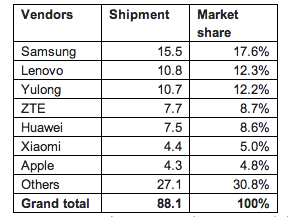
Xiaomi muscles past Apple to take sixth place in China’s smartphone market as Samsung stays on top

Xiaomi muscles past Apple to take sixth place in China’s smartphone market as Samsung stays on top

By Kaylene Hong, 17 hours ago, 11:22am

Screen-shot-2013-08-06-at-PM-04.26.14

Chinese smartphone manufacturer Xiaomi has been on a roll despite launching its first device only as recently as 2011 — it has officially overtaken Apple in the Chinese market. The latest figures were conveyed to TNW by Canalys, an independent analyst firm, which noted that Xiaomi shipped a total of 4.4 million smartphones in China during the second quarter of 2013, inching above Apple which shipped 4.3 million units and knocking it to the seventh position. Last quarter, Apple managed to occupy the fifth spot in China’s smartphone market. Samsung still took the lead in China in Q2 2013 with 15.5 million smartphones shipped to make up for a market share of 17.6 percent. Read more of this post