Cao Shiru, the woman behind Zhongnanhai’s Hongqi supermarket; “In business, it is not enough to be self-possessed, you also need innovation”; Cao gives her staff the freedom to carry out their plans and backs them strongly if she believes that their ideas are right.
March 28, 2013 Leave a comment
Cao Shiru, the woman behind Zhongnanhai’s Hongqi supermarket
Staff Reporter 2013-03-28
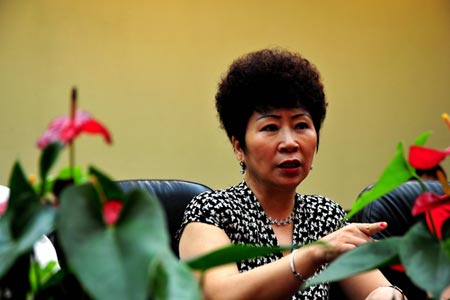
Until its mysterious closure, Hongqi of Chengdu was the only supermarket chain to operate an outlet in Zhongnanhai, the government compound in the heart of Beijing that houses the State Council and the headquarters of the Communist Party.
Despite the setback, the chain’s founder Cao Shiru has proved herself a canny operator in the retail industry, reports the semi-monthly China Entrepreneur.
“The first two characters of my name are pronounced the same as supermarket in Mandarin,” Cao told the magazine, explaining why she has a strong affinity for the retail sector.
Cao’s chain employs over 13,000 workers, and while around 80% of them are female, most of her senior executives are men.
Yu Shi, the company’s deputy general manager, told the magazine that Cao gives her staff the freedom to carry out their plans and backs them strongly if she believes that their ideas are right.
Yu once made a mistake by investing in the company’s stock after the chain went public, which brought scrutiny from the regulators and caused damage to the company’s reputation, but Cao trusted him none the less. “It encourages me to do my best at my job to avoid disappointing her again,” Yu said.
Another senior executive, Hu Yaoming, said Cao has good foresight and has insisted on projects despite objections from her managers, and she has often shown to have made the right decision in the long run.
Hu said Cao decided to set up a logistics center in Cuqiao, Chengdu, investing tens of millions of yuan during Hongqi’s early years when the company was strained for cash. Many tried to dissuade her, because Quqiao was nothing but a small village outside the Sichuan provincial capital at the time, but after a couple of years the logistics center became the basis of the chain’s success.
“Cao was reckless when it came to small losses or gains, and often made business decisions within five minutes,” said Mi Xili, a Hongqi supplier. She rejected kickbacks and has forbidden her subordinates from accepting commissions from suppliers, which encouraged them to deal fairly with Cao’s company.
Hongqi was plunged into a financial crisis when D’long International Strategic Investment collapsed in 2004 during a takeover of the supermarket chain. Many of its around 1,000 suppliers continued to deliver to Hongqi despite the company’s financial troubles because of their trust in Cao, said Mi.
Now in her 60s, Cao is grooming her only son Cao Zengjun as her successor, but has said that he is not ready to take over her empire, despite the fact that he has impressed industry observers. “In business, it is not enough to be self-possessed, you also need innovation,” his mother said.
 About bambooinnovator
 Bamboo Innovator