Why Redfin, Zillow, and Trulia Haven’t Killed Off Real Estate Brokers
By Brad Stone on March 07, 2013
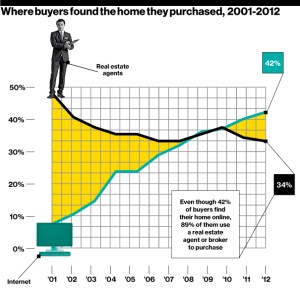

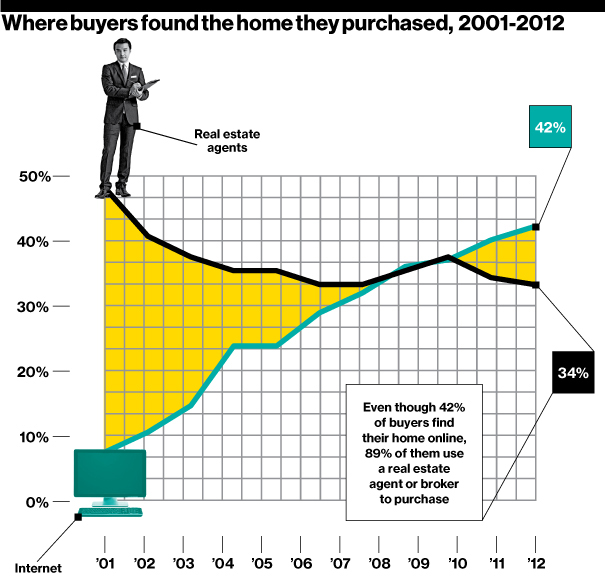
Over the last decade, the Internet has seeped into that bedrock of the U.S. economy: the housing market. A group of growing and mostly profitable websites have sprung up to help guide consumers through what in many cases will be the largest and most nerve-wracking transaction of their lives. Four sites—Redfin and Zillow (Z), based in Seattle, and Trulia (TRLA) and Realtor.com, based in the San Francisco Bay Area—attract 61 million of the 67 million visitors to real estate websites each month in the U.S., according to ComScore (SCOR). They also generate hundreds of millions in revenue and have helped turn buying a house into entertainment—a spectator sport that can be enjoyed without darting surreptitiously into random open houses. Ninety percent of consumers now start their real estate journeys on the Web, according to the National Association of Realtors.
It all looks at first glance like the same kind of electronic marketplace that has eliminated travel agents, decimated classified ads, depressed stock brokers, and taken the swagger out of car dealers, but it hasn’t dented the fortunes of real estate brokers. A majority of buyers and sellers still wind up working with traditional brokers, one on each side of the deal.
Not only have brokers resisted the attack by the Internet’s real estate sites but their fees remain stable. Real Trends, a research firm, reports the average commission paid to the buying and selling brokers was 5.4 percent of the price of a home in 2011, up from 5 percent in 2008. (The seller’s agent collects the commission from the seller and then splits it evenly with the buyer’s agent.) That’s considerably higher than the median rate in markets abroad, where there may only be one agent involved in the transaction, such as the U.K. (a 1 percent to 2 percent fee), Germany (3 percent to 6 percent), Israel (4 percent), and the Netherlands (1.5 percent to 2 percent), according to a 2007 report by the Organisation for Economic Co-operation and Development. “Ten years ago almost no one started their home search online. And yet none of that value has come back to the consumer,” says Glenn Kelman, Redfin’s chief executive officer. Read more of this post








 Bamboo Innovator