BRICS “Big Five” find it hard to run as a herd

Published: Thursday March 28, 2013 MYT 8:39:00 AM

BRICS “Big Five” find it hard to run as a herd

DURBAN: At a summit in South Africa on Wednesday, Vladimir Putin likened the BRICS nations – Brazil, Russia, India, China and South Africa – to Africa’s “Big Five” game beasts of trophy hunting lore – the lion, elephant, buffalo, leopard and rhinoceros.

The Russian president’s comparison captures the dilemma of these muscular emerging global powers, which together present a formidable potential economic and political counterweight to the developed West, but individually could hardly be more different.

The question is whether the BRICS five can run as a herd or hunt as a pack on the global stage, transforming their diverse but collective strength into real institutions and coordinating structures to project their voice in the world. Read more of this post

How to build a $37 million online cat empire

How to build a $37 million online cat empire

March 28, 2013 – 3:30PM

art-Ben-working-on-XPS-12-Convertible-Ultrabook-on-bed-420x0

The man who built an online cat empire

I have cats. I like taking photos of them. I love sharing these pictures with my friends. But I don’t have a $37 million company. That’s because I’m not Ben Huh, an entrepreneur whose websites have gained cult-like status around the world. And it all started with a simple website full of cute cats with funny captions.

Of course, no person in their right mind could have predicted that cats would become one of the most popular and most shared personalities on the internet. But Huh tapped into the zeitgeist and he’s laughing all the way to the bank. Huh is CEO of the Cheezburger Network, a business that runs around 50 sites at any one time, all based on humour. Along with the original cat site I Can Has Cheezburger?, the other sites include This is a Photobomb and Totally Looks LikeRead more of this post

Fat-Buster Bacteria Helps in Gastric Surgery, Researchers Find

Fat-Buster Bacteria Helps in Gastric Surgery, Researchers Find

Bacteria that live in the gut change after gastric-bypass surgery, and may aid in weight loss, according to a Harvard University study.

Researchers gave mice the stomach-shrinking surgery and monitored changes in the gut’s bacterial inhabitants, according to a study in the journal Science Translational Medicine. When bacteria from the mice that got surgery were transferred into mice with no gut germs, those mice also lost weight, about a fifth of what they would have lost with surgery.

Gastric surgery helps people lose weight by shrinking the size of the stomach, making it tougher to absorb calories. Now scientists think it may also adjust gastrointestinal bacteria, contributing to weight loss and raising the possibility for less-drastic obesity treatments, according to the authors. Read more of this post

Gadget Makers Seeking Twitter Fame Flock to Texas

Gadget Makers Seeking Twitter Fame Flock to Texas

Hardware makers will tussle with application developers for the limelight at the South by Southwest Interactive festival, a conference better known for showcasing startups such as Twitter Inc. focused on software.

“There is more hardware happening at South by Southwest this year than ever before,” Hugh Forrest, the lead organizer of the event, said in an interview. “It’s a new thing, and that newness is always sexy.”

Memoto AB is touting tiny cameras that clip to a shirt, letting users capture a running photo log, while Leap Motion Inc. will try to lure attention to computers that respond to hand motions. MakerBot Industries LLC, meantime, is promoting a three-dimensional printer at the annual gathering of technology tastemakers that gets under way today in Austin, Texas.

Entrepreneurs and investors are growing more interested in gadgets, aided by an increase in websites that make it easier to raise funding and greater access to contract manufacturers that can help build products at a reasonable cost. That’s helping hardware gain ground at a conference, better known as SXSWi, which in previous years gave rise to software sensations Twitter and Foursquare Labs Inc. Read more of this post

Merchants paid an estimated $600 billion last year to let their customers use plastic to shop. Now, some stores are turning to a Swedish company that says it can slash those credit and debit card fees in half.

Former Trader’s Software Skips Visa to Challenge Google Wallet

Merchants paid an estimated $600 billion last year to let their customers use plastic to shop. Now, some stores are turning to a Swedish company that says it can slash those credit and debit card fees in half.

Those hidden fees to banks and card companies such as Visa Inc. (V) and Mastercard Inc. (MA) eat into profits that could have gone to lower prices for customers, said Seamless Distribution AB (SEAM) Chief Executive Officer Peter Fredell. While other apps let smartphone users pay without wallets, Seamless’s SEQR is the only one that saves merchants money with no investment, he said.

“This is huge, especially when many of these merchants have an operating margin of 1 percent,” Fredell said over lunch from his office overlooking a construction site on the outskirts of Stockholm.

Seamless cut its teeth on the streets of cities such as Accra, Riga and Mumbai, where its software lets mobile users top up their pre-paid cards without a modern banking infrastructure. After 12 years, the company is harnessing the booming use of smartphones to promise savings to merchants because it can route payments directly to and from bank accounts, dodging traditional card-handling fees. Read more of this post

Grooms at $18 Fuel IPO Ambitions for Indian Matchmaker; “Whether its bottom of the pyramid, top of the pyramid, online, offline, the idea is that, we need to help them find a suitable life partner.”

Grooms at $18 Apiece Fuel IPO Hope for Indian Matchmaker: Retail

Indian parents’ anxiety to find their children suitable spouses is a constant in a country that spends $37 billion annually on weddings.

Matrimony.com Pvt., whose website has brokered more than 2 million marriages, is banking on that desire to woo investors for a potential share sale.

The company, whose private equity funders include Bessemer Venture Partners and Canaan Partners, is expanding a wedding empire that includes websites to help parents arrange marriage by caste, complexion (dark to fair) and family values (orthodox to liberal). It is now preparing to ramp up growth by selling products for the less affluent — such as lists of 10 potential suitors for 1,000 rupees ($18).

“Marriages within the community is still very much the norm and I don’t see that changing,” said Chief Executive Officer and founder Murugavel Janakiraman, who met his own wife on the site. “This is a market that will keep growing for a very long time so the demand is strong.” Read more of this post

Drugs for Indian Poor Spark Pfizer Anger at Lost Patents; The dispute illustrates how emerging markets are turning out be less lucrative than drugmakers expected

Drugs for Indian Poor Spark Pfizer Anger at Lost Patents

In trying to get sophisticated medicines to its neediest citizens, India is increasingly pitting its generic-pharmaceutical industry against international drugmakers, threatening their growth in emerging markets.

An Indian regulatory board this month upheld a ruling that allows Natco Pharma Ltd. (NTCPH) to make a low-priced copy of Bayer AG (BAYN)’s Nexavar cancer treatment. The drug is one of at least four that have had their patents weakened, revoked or rejected in India in the past year. The country also has refused a patent for Novartis AG’s (NOVN) Gleevec leukemia medicine, and the Supreme Court will rule April 1 on the company’s appeal of the decision.

Those steps are needed to put modern medicines into the hands of Indians, according to aid groups and doctors. Western drugmakers including New York-based Pfizer Inc. (PFE) say the country, which has a $30 billion drug market that’s growing 13 percent a year, is abusing international law and allowing domestic companies to profit from products discovered at Big Pharma’s expense.

The dispute illustrates how emerging markets are turning out be less lucrative than drugmakers expected. London-based GlaxoSmithKline Plc (GSK) has warned that so-called compulsory licensing of patented products may hurt profit growth. One advocacy group now is pushing stricken Western countries such as Greece to follow India’s lead, raising the prospect of further pressure on drug prices. Read more of this post

Helene Rey made a side trip on her way to the hospital to give birth to her daughter in September 2006: She stopped off at the main office of London Business School, where she teaches economics, to turn in a report on a doctoral defense. “If I hadn’t, the student couldn’t have graduated,” she said.

Proving Greenspan Wrong Shows Why Rey Became Worthy to Bernanke

Helene Rey made a side trip on her way to the hospital to give birth to her daughter in September 2006: She stopped off at the main office of London Business School, where she teaches economics, to turn in a report on a doctoral defense.

“If I hadn’t, the student couldn’t have graduated,” she said.

Rey’s dedication has led to teaching posts at Harvard University, the University of California at Berkeley, the London School of Economics and Princeton University. The department chairman who hired her there, Ben S. Bernanke, is now chairman of the Federal Reserve. Just yesterday, she became the first woman to win the Yrjo Jahnsson Prize, for a European economist under age 45 whose research is significant to Europe.

It was at Princeton that France-born Rey co-authored a paper showing how the U.S. position at the center of global finance gives it an edge to borrow cheaply and safely in the short term and make high-return, riskier investments. The study addressed concerns about the nation’s ballooning current-account deficit: By 2004, then-Fed Chairman Alan Greenspan was warning that foreigners might be unwilling to keep buying dollars.

The research caught the attention of economists at the Fed and the International Monetary Fund, and spread through academia. Read more of this post

Three small Spanish banks post multi-billion euro losses

Three small Spanish banks post multi-billion euro losses

Wed, Mar 27 2013

MADRID (Reuters) – Three small Spanish banks reported multi-billion euro losses on Wednesday, showing the scale of the country’s problems with its property market.

The three banks – Banco CEISS, BMN and Caja 3 – which have all been rescued by the government, had to take big write-downs on bad property loans and assets.

Spain has forced its banks to recognize their property losses to try to clean up the sector after the country’s property boom collapsed in 2008.

Banks without a strong enough capital base, such as CEISS, BMN and Caja 3, turned to the state for support, forcing Spain to take 41 billion euros in European aid for its banking sector. Read more of this post

Analysis: Southeast Asia ready to build, but will investors come?

Analysis: Southeast Asia ready to build, but will investors come?

Wed, Mar 27 2013

By Stuart Grudgings and Neil Chatterjee

KUALA LUMPUR/JAKARTA (Reuters) – Indonesia is seeking European investors for $9 billion worth of water, road, air and seaport projects in what will be a litmus test of Southeast Asian countries’ ability to seize on ripe financial conditions to upgrade decrepit infrastructure.

Easy global liquidity and investors’ eagerness to tap one of the world’s few fast-growing regions should create a sweet spot for the region to fill the $600 billion in infrastructure needs the Asian Development Bank identifies over the next decade.

But infrastructure experts say a shortage of projects offering compelling returns, coupled with stifling bureaucracy and regulatory uncertainty, threatens to undermine the ambitious plans of Indonesia, Thailand and the Philippines. Read more of this post

South Koreans in Farm U-Turn as Chaebol Era’s Rapid Growth Ends

South Koreans in Farm U-Turn as Chaebol Era’s Rapid Growth Ends

Lee Geun Hong is a rare example of wealth in South Korea’s countryside, known for its shrinking population and decades-long farming slump. Driving a Mercedes rather than a Hyundai, the former Samsung Heavy Industries Co. executive says that may soon change.

“The future for farmers is very bright,” the 60-year-old Lee said while pruning trees in a greenhouse at his farm in Sangju, overlooking the Nakdong River about 160 kilometers (100 miles) southeast of Seoul. “But those who stick to conventional ways will remain poor.”

Lee moved to Sangju from Seoul in 2007 after 18 years at the world’s second-biggest shipbuilder and a stint running his own cafeteria. He earns about $180,000 a year, more than six times the average rural income, selling blueberries online to cut out the middleman, and grows organically to appeal to Korean consumers he calls “the pickiest in the world.”

The number of people leaving cities for rural areas is at a record high in South Korea, as government subsidies to boost agricultural production coincide with slowing economic growth. The most successful bring investment and skills that are boosting margins — the number of farmers and agricultural associations earning at least 100 million won ($90,000) rose for a fourth year to 17,291 in 2012, the farm ministry said.

“The trend may help the national economy by re-channeling surplus labor to rejuvenate farming areas,” said Jun Kwang Hee, a professor of sociology at Chungnam National University. “We now live in an era where the economy is growing without creating many jobs. Your career at companies ends at 50, but you are very young at 50 and even at 60 in the countryside.” Read more of this post

Saudi Riches Don’t Reach Entrepreneurs as Bankers Shun Startups

Saudi Riches Don’t Reach Entrepreneurs as Bankers Shun Startups

When Saleh Al-Zaid decided it was time to expand Twitmail.com, the Saudi Arabian entrepreneur figured it wasn’t even worth trying to get a bank loan.

“Saudi banks don’t want to take the risk with early stage startups,” Al-Zaid said over coffee and donuts in Riyadh. Instead, the 28-year-old obtained 1 million riyals ($267,000) from an investor in local venture-capital group Oqal, financing a trip to Silicon Valley for training. He left his part-time job, and now his website, which helps Twitter users share e- mails, has 400,000 visitors on a busy day.

The banking blind-spot may be an obstacle for King Abdullah’s efforts to create jobs and diversify the economy away from oil, which brings 90 percent of government revenue. The kingdom, the world’s biggest crude exporter, is investing $500 billion on industry, transportation and housing, a program Abdullah expanded after watching revolts sweep across other high-unemployment Arab countries two years ago.

The Saudi plan is for private business to take over the growth baton from government spending. Smaller companies may struggle to play their part so long as they’re constrained by a lack of financing. Just 2 percent of Saudi bank loans go to small and medium-sized businesses, compared with an 8 percent Middle East average that’s itself low by global standards, according to the International Finance Corp., the World Bank’s private lending arm.

“In a country like Saudi Arabia, where relationship banking is very important, there has been a tendency for banks to focus on big corporates,” said James Reeve, an economist at Samba Financial (SAMBA) Group in Riyadh. “Some observers feel the needs of small and medium-sized businesses have been overlooked.” Read more of this post

China Says Elected Hong Kong Leader Cannot Oppose Beijing Rule

China Says Elected Hong Kong Leader Cannot Oppose Beijing Rule

China won’t allow Hong Kong to choose a chief executive who opposes Chinese government rule, as some lawmakers in the former British colony demand universal suffrage earlier than planned in 2017.

The leader of Hong Kong “can’t plot to overthrow the rule of the Chinese Communist Party,” Qiao Xiaoyang, chairman of the law committee of the National People’s Congress, said in a March 24 speech, according to a transcript posted online today. “Opposition isn’t defined to mean criticizing Beijing. If it’s for the good for the country, any sort of criticism is allowed.” Read more of this post

In the shadow of well-known brands like Volvo and Ericsson, an acquisition-packed decade has made technology firm Hexagon one of Sweden’s most valuable companies and a rare newcomer among its top blue chips.

From tuna to tech, Hexagon breaks Swedish mould

Rollen, the president and chief executive officer of Hexagon, poses by the London Eye in London

11:44am EDT

By Niklas Pollard and Johannes Hellstrom

STOCKHOLM (Reuters) – In the shadow of well-known brands like Volvo and Ericsson, an acquisition-packed decade has made technology firm Hexagon one of Sweden’s most valuable companies and a rare newcomer among its top blue chips.

The company, market leader in precision measurement technology used in fields from microchip making to surveying dam construction, is now worth more than Swedish world number two white goods maker Electrolux after taking its business so far from its roots as to be unrecognizable.

When Ola Rollen stepped through the doors at Hexagon as CEO in 2000, leaving a job as head of a division at engineer Sandvik, he entered a company with lots of businesses but no business idea and scarcely any growth prospects.

Founded in 1975, Hexagon was then a sprawling conglomerate with its fingers in everything from tuna fish imports to vehicle hydraulics and, as financier Melker Schorling told Rollen at a meeting in downtown Stockholm in 1999, it was basically garbage.

Schorling had bought a controlling stake in the company the year before, aiming to build something from the ground up. Rollen, who first made a name for himself as a young CEO of metals firm Kanthal, had attracted his attention. Read more of this post

Do Countries Falsify Economic Data Strategically? Some Evidence that They Do

Do Countries Falsify Economic Data Strategically? Some Evidence that They Do

Tomasz Kamil Michalski HEC Paris – Department of Economics and Decision Sciences

Gilles Stoltz Ecole Normale Superieure de Cachan; HEC Paris – Department of Economics and Decision Sciences

The Review of Economics and Statistics, Forthcoming
HEC Paris Research Paper No. 930/2010 

Abstract: 
We find evidence supporting the hypothesis that countries at times misreport their economic data in a strategic manner. Among those suspected are countries with
fixed exchange rate regimes, high negative net foreign asset positions or negative current account balances, which corroborates the intuition developed with a simple economic model. We also find that countries with bad institutional quality rankings and those in Africa, Middle East, Eastern Europe and Latin America release economic data of questionable veracity. Our evidence calls for models with public signals to consider strategic misinformation and for establishing independent statistical agencies to assure the delivery of high quality economic data.

100 Years of Georg Wilhelm Claussen: A Century for Brands and People. He stands for continuity and innovation, for successful brand management and humane cooperation.

100 Years of Georg Wilhelm Claussen: A Century for Brands and People

  • For almost 75 years Georg W. Claussen has been part of the success story of Beiersdorf
  • For more than three decades he shaped the development of world brands like NIVEA, Eucerin, Labello, 8×4, Hansaplast and tesa as Chairman of the Board and on the Supervisory Board
  • On June 5th the Hamburg-native will turn 100

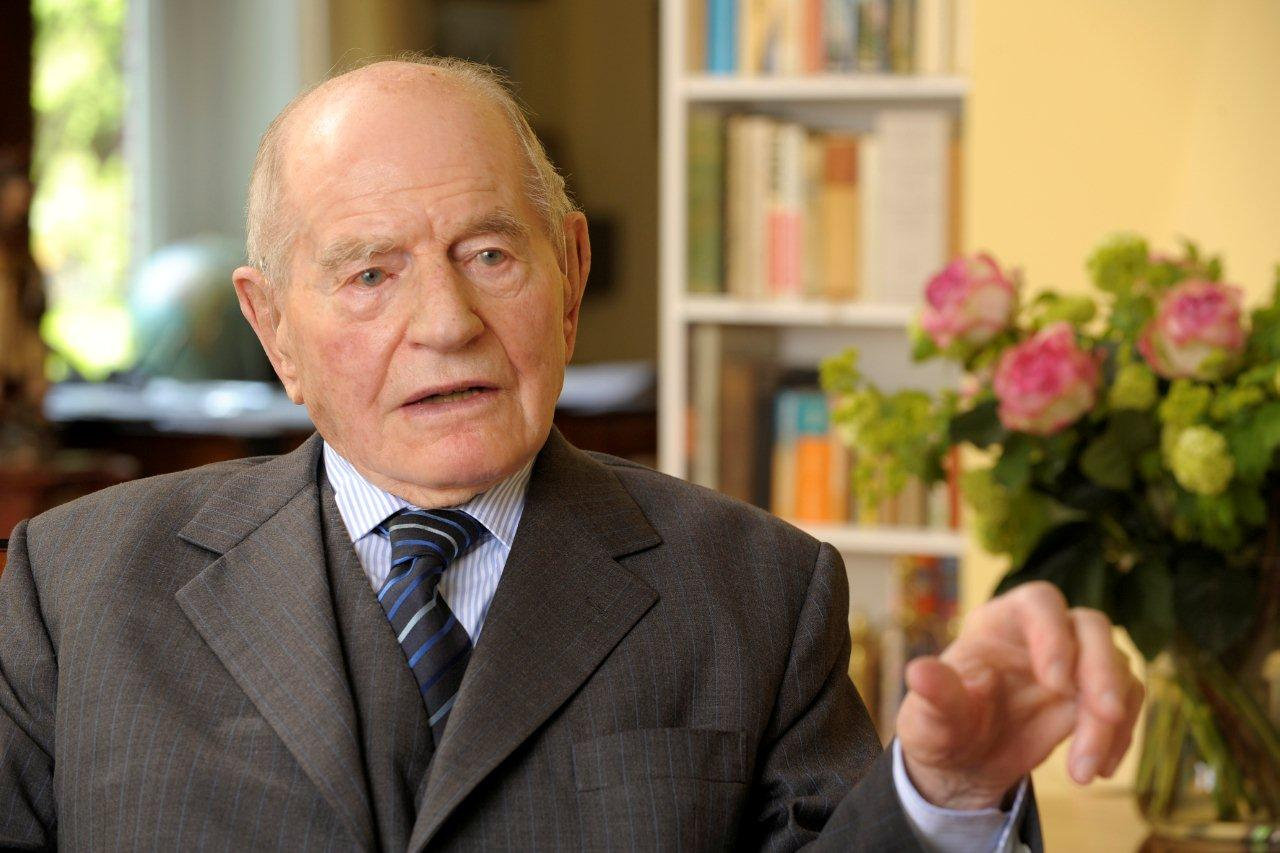
Hamburg, June 4, 2012 – Georg W. Claussen is an unusual German company figure – the grand nephew of Dr. Oscar Troplowitz, the man who in 1911 invented the largest skincare brand with NIVEA – he consistently lived corporate responsibility and embodies like no other the values of Beiersdorf. He stands for continuity and innovation, for successful brand management and humane cooperation.

_Original_9916_1477624_georg_w_claussen_beiersdorf
Record Setting Life Achievement
As a young man in 1938, Claussen entered the company and starting in 1952, he was a member of the board. In 1957 he became the Chairman of the Managing Board of the then 75-year old Beiersdorf AG. For 22 years he held this position until he switched to the Supervisory Board for another nine years. More than three decades long he shaped the development of world brands like NIVEA, Hansaplast, 8×4 and tesa. Since 1989, he has been part of the company as an Honorary Chairman of the Company. He completed 58 Annual General Meetings behind the podium, first as Chairman of the Board, later as Chairman of the Supervisory Board, then as Honorary Chairman of the Company – surely a unique record in German economy.

An Impressive Figure
The “Elder”, as he is lovingly and respectfully named at Beiersdorf, is in very close contact with the company. Until recently he still worked regularly in his office on the 5th floor of company headquarters on Unnastrasse. “Mr. Claussen was a partner in dialogue for the board and management on many subjects,” said HR and Finance Board Member Dr. Ulrich Schmidt, who has known Claussen for almost 30 years. “As a businessman, not only the brands and markets were important to Claussen, but also the people.” And he embodies something that has become rare today: “Hanseatic Understatement.” He does good without having to talk about it. In this way his outstanding engagement for his home city of Hamburg, and his generous support of numerous institutions and facilities of art, culture, science and social work have earned great respect. The Claussen Simon Foundation, for example, founded in 1982, supports science and its offspring. Read more of this post

Beiersdorf’s Longest-Serving Chief Claussen Dies at 100; Nivea, which Troplowitz developed from the discovery of water-and-oil emulsifier Eucerit, is Hamburg-based Beiersdorf’s biggest source of revenue.

Beiersdorf’s Longest-Serving Chief Claussen Dies at 100

Georg W. Claussen, who was the longest-serving chief executive officer at Nivea skin-cream producer Beiersdorf AG (BEI), has died. He was 100.

Claussen, died on March 21 in his hometown of Hamburg surrounded by his family, Beiersdorf said on its website today. He was the grand nephew of Oscar Troplowitz, who invented Nivea in 1911, it said. Claussen joined Beiersdorf’s management board in 1954 and was CEO from 1957 until 1979.

Nivea, which Troplowitz developed from the discovery of water-and-oil emulsifier Eucerit, is Hamburg-based Beiersdorf’s biggest source of revenue. CEO Stefan Heidenreich, who joined the company at the beginning of 2012, has pledged to return the Nivea brand to its roots, creating a new logo and packaging inspired by the product’s traditional box.

“We have lost a towering businessman and luminary,” Heidenreich said in today’s statement. Claussen “has left a lasting mark on Beiersdorf, and what he achieved laid the foundation for today’s success.” Read more of this post

EMC Losing Ground as Smartphones Displace RSA Tokens; “There’s a lot of innovation going on right now because it’s a dangerous world,” Lee Congdon, chief information officer at Red Hat

EMC Losing Ground as Smartphones Displace RSA Tokens

Security tokens used to safeguard computer networks risk going the way of the rotary phone as EMC Corp. (EMC)’s RSA unit, the top maker of the devices, is challenged by smartphones deployed as cyber-protection tools. Vasco Data Security International Inc. (VDSI) and Gemalto NV (GTO), two companies with identification-software that runs on tokens, tablets and smartphones, saw their market share roughly double last year, reducing RSA’s portion to 60 percent from 76 percent in 2011, according to WinterGreen Research Inc. As an increasing number of consumers shop and bank online and more workers access corporate networks via mobile devices, global sales of identity-protection products will surge to $6.43 billion by 2016, from $4.51 billion last year, according to IDC. Software startups seized on an opening created after hackers compromised millions of RSA tokens two years ago to promise corporate customers better protection at a lower price.

“There’s a lot of innovation going on right now because it’s a dangerous world,” Lee Congdon, chief information officer at Red Hat Inc. (RHT), said in an interview. “Malicious people are becoming more adept. Folks are actively trying to steal your secrets and money.” Red Hat, the biggest seller of Linux operating system software, began replacing RSA tokens with Gemalto’s tools last month, Congdon said. “It’s considerably less expensive,” Congdon said. Gemalto’s tokens, paired with a free mobile application, cost less than half the price of protection from RSA, he said. Read more of this post

The Secret To 17-Year-Old Nick D’Aloisio’s $30 Million Success: Amazing Hustle

The Secret To 17-Year-Old Nick D’Aloisio’s $30 Million Success: Amazing Hustle

Jay Yarow | Mar. 26, 2013, 12:05 PM | 18,310 | 22

Now that 17-year-old Nick D’Aloisio sold his company to Yahoo for $30 million, he’s gaining widespread attention. However, in tech media circles, D’Aloisio was already well known. In 2011, Gizmodo‘s Casey Chan wrote about making D’Aloisio cry. Chan covered apps for Gizmodo. So, D’Aloisio emailed Chan to see if he would write about his app, which was called Trimit at the time. Chan said he was interested in the app. This led to D’Aloisio going nuts. “Over the course of a few days, D’aloisio berserker barraged me with over a hundred e-mails about Trimit,” says Chan, “I saw him go from calm to excited to a nervous wreck to suffering a nervous break down to threatening to bat shit crazy to borderline suicidal.” D’Aloisio never mentioned that he was only 15 at the time. After not getting quick responses from Chan, he went on to email everyone else at Gizmodo. In response to D’Aloisio’s email barrage, Gizmodo decided to name Trimit the “worst app of the week.” But, the editors felt bad about that, so they just pulled the coverage altogether. This sent D’Aloisio over the edge. He wrote to Chan:

I can’t believe this. Please just put us back on the list. Anywhere.

I feel like crying I’m that disappointed. Please.

You don’t understand what this means if we don’t get featured. We’ll go bust and I’ll end up unemployed.

Why have you done this. I can’t actually believe this is happening.

Please, seriously Casey, don’t destroy my livelihood.

I’ll do anything just please put us back. Seriously I’ll do anything I can’t let my boss see this.

We’d planned so much marketing and SEO for this feature. Now we’re not going to get the visibility and get into debt. Casey, you must understand what this will do to us if you don’t put us back on the list. I thought you liked the app, why do you want to destroy it.

Come on man, please forgive me. We all make mistakes. Why didn’t you tell me days ago to stop emailing you! I thought you weren’t getting them, that’s why I kept sending them.

Seriously without this feature we will lose ranking and then we won’t pay back our purchases and then will have to stop the business.

I plea for you to put it back to how it was before. I plea.

Now we’ve wasted $10,000 as we dont have the article to accompany the efforts.

That puts us in debt and we can’t pay that back for ourselves so now I’m going to have to go without food for the next month.

I am new, we’ve just started the startup, and I’ve never been in PR so I’m not familiar with these journalistic conducts and etiquettes I seem to have broken. I was not meaning to hurt any of you guys or disrupt your work at all; none of that was intentional. I WILL GET FIRED now because of all of this but I guess I can’t change what has happened now. Our marketing has failed since we were not featured and now I have massive debt which is my responsibility to fix.

I’ll ask you for the final time to understand the seriousness of the situation and change it back to the way it was. What is stopping you? Why ruin my livelihood and my app? Why would you want that, seriously?

Please man. Please.

I really need to know what’s going on! My boss is asking.

While this appears to be the ramblings of a crazy person, it also shows someone with a dedication, focus, and energy to succeed. (And, again, he was 15!) Gizmodo wasn’t the only publication that got aggressive emails from D’Aloisio. He was in our writers’ inboxes too. While we don’t want to encourage others to bomb our inbox with pitches, we think his behavior reveals a big part of the reason he’s successful. The kid is a hustler. He works hard. He’s aggressive. He went after his investors, he pursued the media. In one of his interviews from yesterday he told people who want to be like him: “If you have a good idea, or you think there’s a gap in the market, just go out and launch it because there are investors across the world right now looking for companies to invest in.” This is obviously an oversimplification, but it’s not terribly far from the truth. If you have a good idea, and you’re willing to work incredibly hard like D’Aloisio, you’ll probably find success.

10 Mind-Blowing Facts About Amazon.com; Its warehouses are the size of 700 Madison Square Gardens; Amazon.com employees spend two days every two years working at the customer service desk, even the CEO

10 Mind-Blowing Facts About Amazon.com

Kevin Smith | Mar. 27, 2013, 7:37 AM | 16,228 | 1

Amazon.com is well-known for its Kindle, lightning fast shipping, and selling virtually anything online.

The e-tailer’s revenue totaled $61 billion in 2012 and it currently sits at No.5 on ComScore’s list of top 2,000 domains on the web.

But did you know that the massive website started in founder Jeff Bezos‘ garage? Or that Amazon’s operation has become so massive that it’s warehouses have more square footage than 700 Madison Square Gardens?

Take a look at some other mind-blowing facts we found.

Amazon.com was almost called “Cadabra” as in “Abracadabra”. That idea was struck down because CEO Jeff Bezos’ lawyer misheard the word as “cadaver”. Read more of this post

SHILLER: ‘We’re Living In A Totally Artificial Real Estate Economy’; Shiller thinks a full housing recovery is a long way off. He thinks it could take 40 years before home prices rise to pre-2007 levels

SHILLER: ‘We’re Living In A Totally Artificial Real Estate Economy’

Drew SandholmCNBC | Mar. 26, 2013, 7:51 PM | 11,479 | 27

Housing data released Tuesday was mixed, showing home prices jumped while new home sales dropped, prompting renowned economist Robert Shiller to call the housing recovery positive in the short-term, but not without many headwinds. There might even be a bubble, he said.

“One thing that makes it very hard to forecast home prices right now is that we’re living in a totally artificial real estate economy,” said Shiller, co-creator of the Standard & Poor’s/Case-Shiller Index, a widely followed measure of housing prices.

Shiller pointed to the Federal Reserve, which last week reaffirmed its policies on bond purchases and record-low interest rates. In September, the Fed launched a third round of quantitative easing (QE), in which it has bought $40 billion of mortgage-backed securities per month, primarily in mortgage-backed bonds.

Meanwhile, Fannie Mae and Freddie Mac, the two largest U.S. home funding sources, remain in government conservatorship as Congress looks for ways to raise new tax revenues, Shiller noted.

“All of these things are weighing on the futures of housing,” Shiller said on CNBC‘s “Futures Now,” adding the recovery might even be a bubble. “One thing you learn from history is that bubbles can occur at any time.” Read more of this post

Panera extends pay-what-you-want idea to menu item at all St. Louis-area cafes; “People do the right thing and are willing to take care of each other.”

Panera extends pay-what-you-want idea to menu item at all St. Louis-area cafes

By Associated Press, Updated: Wednesday, March 27, 1:08 PM

Panera Pay What You Want.JPEG-0675f

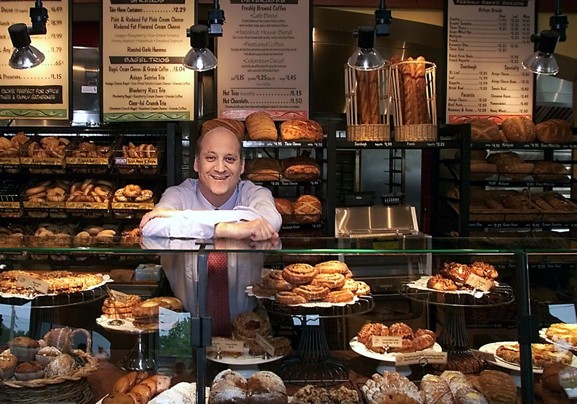
ST. LOUIS — Order a bowl of turkey chili at a St. Louis-area Panera Bread cafe and it’ll cost you a penny. Or $5. Or $100. In other words, whatever you decide.

Three years after launching the first of five pay-what-you-want cafes, the suburban St. Louis-based chain on Wednesday quietly began its latest charitable venture that takes the concept on a trial run to all 48 cafes in the St. Louis region.

The new idea experiments with a single menu item, Turkey Chili in a Bread Bowl, available at each St. Louis-area store for whatever the customer chooses to pay. The new chili uses all-natural, antibiotic-free turkey mixed with vegetables and beans in a sourdough bread bowl. The suggested $5.89 price (tax included) is only a guideline. All other menu items are sold for the posted price.

Panera calls it the Meal of Shared Responsibility, and says the potential benefit is twofold: Above-the-cost proceeds go to cover meals for customers who cannot pay the full amount and to St. Louis-area hunger initiatives; and for those in need, the 850-calorie meal provides nearly a day’s worth of nutrition at whatever price they can afford. Read more of this post

Global pool of triple A status shrinks 60%, forcing investors and financial regulators to rethink definitions of “safe” assets.

March 26, 2013 7:34 pm

Global pool of triple A status shrinks 60%

By Ralph Atkins and Keith Fray in London

The global pool of government bonds with triple A status from the three main rating agencies, the bedrock of the financial ­system, has shrunk more than 60 per cent since the financial crisis triggered a wave of downgrades across the advanced economies.

The expulsion of the US, the UK and France from the “nine-As” club has led to the contraction in the stock of ­government bonds deemed the safest by Fitch, Moody’s and Standard & Poor’s, from almost $11tn at the start of 2007 to just $4tn now, according to Financial Times analysis.

The shrinkage, largely a result of US’s downgrade by S&P in August 2011, is part of a dramatic redrawing of the world credit ratings map, which is encouraging investment flows into emerging markets and forcing investors and financial regulators to rethink definitions of “safe” assets. Read more of this post

BOE Says U.K. Banks Have a Capital Shortfall of $38 Billion; Banks need to set aside more money to cover bigger potential losses on commercial real estate and from the euro area, possible fines for mis-selling and stricter risk models

BOE Says U.K. Banks Have a Capital Shortfall of $38 Billion

By Ben Moshinsky and Jennifer Ryan  Mar 27, 2013

U.K. lenders were told by the Bank of England to raise 25 billion pounds ($38 billion) of additional capital, less than analyst estimates.

Banks need to set aside more money to cover bigger potential losses on commercial real estate and from the euro area, possible fines for mis-selling and stricter risk models, the Bank of England said following a report by the Financial Services Authority. The BOE didn’t identify or quantify the number of lenders that need to bolster capital and it said plans already announced by banks should cover about half the shortage.

“It’s a bit of a damp squib,” said Simon Maughan, an analyst at Olivetree Securities Ltd. in London. “The banks are going to have until the end of 2013, at least, to do it and there was no change to the message that they won’t need to raise fresh capital or restrict dividend payments.”

The BOE is pushing banks to increase resilience so they can boost lending and fund an economic recovery. The bank’s focus on loan losses could still hit Royal Bank of Scotland Group Plc and Lloyds Banking Group Plc (LLOY) the most because of their commercial real-estate holdings, while Barclays Plc (BARC), with its investment banking unit, would be most affected by the changes to risk weights, Maughan said. RBS and Lloyds have announced asset sales this year to bolster capital, and Barclays plans to sell contingent convertible notes. Read more of this post

Sir Luke Johnson: Online help for would-be founders; Keeping connected via the internet is more important than ever for entrepreneurs

March 26, 2013 4:14 pm

Online help for would-be founders

By Luke Johnson

Keeping connected via the internet is more important than ever for entrepreneurs

Starting a business can be lonely, and keeping connected via the internet and online publications is more important than ever.

There are a host of websites and magazines for entrepreneurs, but no one who works for themselves can afford to spend hours a day surfing. So I have selected a handful of my favourite sites to save you time. I have not included typical blogs because there are too many and they are mostly rather personal. Read more of this post

New York’s wonder shows planners’ limits; Unplanned social interactions are the key to vibrant cities and companies

March 26, 2013 5:59 pm

New York’s wonder shows planners’ limits

By John Kay

Unplanned social interactions are the key to vibrant cities and companies

The Financial Times reader visiting New York might typically stay or shop in midtown and speed to Wall Street by car or subway. With a few hours to spare, I chose to wander in the area in between, with no particular destination in mind. Greenwich Village, Chelsea, the Bowery and the Lower East Side are full of quirky buildings, eccentric shops and charming cafés, and layer upon layer of American social history.

This is hardly an original observation. It was made to brilliant effect 50 years ago by Jane Jacobs in The Death and Life of Great American Cities. That book was the product of her campaign to stop Robert Moses, the city and state public works executive, building the Lower Manhattan Expressway, an elevated highway that would have enabled motorists to speed directly from Queens to New Jersey via the Williamsburg Bridge and the Holland Tunnel. In the process, it would have destroyed the character of the area through which it passed.

Jacobs explained, through meticulous observation, how the life of cities is the product of multiple, unplanned social interactions. The density of urban living, far from being an evil, is the source of its vitality. Short streets divided into many blocks lead residents and visitors to take a multiplicity of routes and acquire a variety of experiences. Jacobs explained why the planned cities of the world such as Canberra, Brasília, Chandigarh and Letchworth Garden City are so boring. And her readers were told how the expressways Moses had built had damaged the life of the outer boroughs of New York. Read more of this post

Turning Google Trends into sales trends; Here’s how one entrepreneur used Google Trends to predict which items were likely to sell

Turning Google Trends into sales trends

By Mohana Ravindranath, Updated: Wednesday, March 27, 6:00 PM

A year and a half ago, Matt Thier, co-founder of online-only clothing store BetaBrand, thought he noticed more people in San Francisco wearing bold, patterned socks than before.

Thier had been thinking about expanding BetaBrand’s sock line beyond the striped socks it already sold, but he wasn’t sure if there was enough interest, or if BetaBrand should continue investing in socks at all.

So Thier decided to do some market research, not by surveying shoppers, but by analyzing Internet searches.

He used Google Trends, a free service showing the volume, popularity over time, and geographic concentration of particular search terms. Google Trends is one of several search-term analysis platforms currently available, including subscription-based services like Compete, which can be a few hundred dollars a month. Read more of this post

S. Korea’s debt-to-GDP ratio rises to record high in 2012; the rate of combined debts to the nominal GDP was 283 percent in 2012, higher than the 227 percent for the 1998-99 Asian foreign exchange crisis and the 278 percent in 2009 when the global financial crisis peaked

S. Korea’s debt-to-GDP ratio rises to record high in 2012

English.news.cn   2013-03-27

SEOUL, March 27 (Xinhua) — The ratio of South Korea‘s total debt to gross domestic product (GDP) rose to a record high last year, boosting concerns over lack of capabilities to repay massive debts, central bank data showed Wednesday. Combined debts of households, companies and the government were 3,607.3 trillion won (3.25 trillion U.S. dollars) as of the end of 2012, according to the Bank of Korea (BOK) data. The rate of combined debts to the nominal GDP was 283 percent in 2012, the highest since the related data began to be compiled. The figure was higher than the 227 percent for the 1998-99 Asian foreign exchange crisis and the 278 percent in 2009 when the global financial crisis peaked. The ratio continued to rise from 221 percent in 2003, 236 percent in 2006 and 274 percent in 2008. The rapid rise was attributed to a faster growth in debts than economic output, boosting concerns that the Asia’s No.4 economy may fail to pay back debts amid slowing economic growth and its consequent low income gain.

How to Beat Childhood Cancer; The past 40 years have demonstrated the remarkable return on investment to be gained in collaborative scientific research

How to Beat Childhood Cancer

Peter C. Adamson is Chair of the Children’s Oncology Group at The Children’s Hospital of Philadelphia.

26 March 2013

PHILADELPHIA – For a parent, there is perhaps no greater fear than the prospect of losing a child to illness or accident. And it is childhood cancer that has the greatest potential to catapult a remote fear into an unimaginable reality. As a pediatric oncologist, having cared for children with cancer and their families for more than 25 years, I know that only a parent who has confronted such a diagnosis truly understands the depth of this fear, as it touches the core of who we are as parents.

I also know that we are treating more children more effectively than ever before – and that we can do much better still. Read more of this post

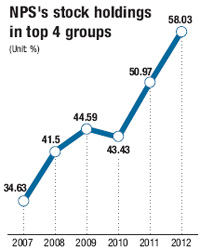
Korea’s National Pension Service (NPS) has increased its securities investment in the country’s top four conglomerates ― Samsung, Hyundai Motor, SK and LG ― by about four times over the past five years; he four firms accounted for as much as 58 percent of the NPS’s combined stock investment in 2012, compared with 34.6 percent in 2007

2013-03-26 17:54

NPS exposure to risk increasing

By Na Jeong-ju

130326_p10_NPS

The National Pension Service (NPS) has increased its securities investment in the country’s top four conglomerates ― Samsung, Hyundai Motor, SK and LG ― by about four times over the past five years. This is another indication that the state pension fund is making little effort to diversify its investment portfolio ― the No. 1 rule for risk-hedging. That also means the NPS is betting bigger money from pensioners on the four firms ― if they falter, people’s money will be at risk. According to the NPS, Tuesday, its investment in stocks and bonds issued by the four business groups and their affiliates totaled 51.7 trillion won ($46.6 billion) as of the end of 2012. That’s about 3.7 times larger than 13.5 trillion won in 2007. The four firms accounted for as much as 58 percent of the NPS’s combined stock investment in 2012, compared with 34.6 percent in 2007. Read more of this post