Papers Worldwide Embrace Web Subscriptions

March 31, 2013

Papers Worldwide Embrace Web Subscriptions

By ERIC PFANNER

SERRAVAL, France — Newspapers, once reluctant to try to charge readers for access to their Web sites, have begun doing so in droves.

Across many of the developed economies of America, Europe and Asia, so-called pay walls are proliferating as publishers struggle to make up for dwindling revenue on their print products. Online advertising, once seen as the great hope for the future, has begun leveling off, which is accelerating the push for new Internet business models.

“Why now?” said Douglas McCabe, an analyst at Enders Analysis in London. “The outlook for digital advertising for all but the very largest sites looks increasingly challenging. Therefore, it is critical that news services experiment with subscription models.” Read more of this post

New Disney Characters Make It Big in TV’s Preschool Playground; Nick Jr. ratings have plummeted more than 50 percent since Disney introduced Disney Junior

March 31, 2013

New Disney Characters Make It Big in TV’s Preschool Playground

By BROOKS BARNES and AMY CHOZICK

PRESCHOOL-articleLarge

LOS ANGELES — Sorry, Dora. You’ve been dethroned.

Nick Jr. has long been cable television’s No. 1 channel dedicated solely to preschool children. The service, owned by Viacom, had a smash hit in “Dora the Explorer,” which made its debut in 2000. Competition was also light: the Walt Disney Company, preoccupied with hunting for preteenagers, operated no 24-hour preschool channel.

But in the year since Disney introduced Disney Junior, a channel aimed at the tiniest of viewers, Nick Jr. ratings have plummeted more than 50 percent, according to Nielsen. On Tuesday Nielsen data for Disney Junior will be revealed for the first time; the new channel is expected to beat its rival, even though Nick Jr. is available in 75 million homes, 25 percent more than Disney Junior.

Disney now has the top three preschool cable programs, led by what appears to be a monster-size new hit, “Sofia the First,” a cartoon that stars a pint-size princess and her zany animal friends. Read more of this post

E-commerce companies that make everything from bedding to eyeglasses are trying to build premium brands at discount prices by cutting out middlemen and going directly to manufacturers

March 31, 2013

E-Commerce Companies Bypass the Middlemen

By CLAIRE CAIN MILLER and STEPHANIE CLIFFORD

When the founders of a start-up that sells eyeglasses online, Warby Parker, began investigating why designer glasses cost several hundred dollars, they discovered that everyone in the process was taking a cut: designers, manufacturers, brands, wholesalers and retailers.

But what if they left out most of those people? “I had been to the factories and knew what it costs to manufacture glasses and knew the cost didn’t warrant a $700 price tag,” said Neil Blumenthal, a founder of the company. Inspired by glasses they found in their grandparents’ attics, the founders sketched a few frames, hired the same Chinese factories that make designer glasses and started selling directly to consumers online. By doing so, they eliminated enough of the cost to charge customers just $95 a pair.

Warby Parker is part of a wave of e-commerce companies that are trying to build premium brands at discount prices by cutting out middlemen and going straight to manufacturers. They make everything from bedding (Crane and Canopy), to office supplies (Poppin), nail polish (Julep), tech accessories (Monoprice), men’s shoes (Beckett Simonon) and shaving supplies (Harry’s). The result is generally cheaper products for consumers and higher profit margins for the companies. Big retailers discovered long ago that controlling the supply chain benefited their bottom lines, which is why companies like Wal-Mart and Whole Foods sell many products under their own brands. At Macy’s and Kohl’s, such “private label” brands make up almost half of their sales. Read more of this post

Era of Fed Stimulus Wanes

March 31, 2013, 12:08 p.m. ET

Era of Fed Stimulus Wanes

By CYNTHIA LIN

Between U.S. stocks reaching highs and Treasury TWE.AU -0.35% yields holding near all-time lows, one of these two contrary markets will eventually have to give.

At the moment, the Federal Reserve’s easy-money policy makes it so that there is enough to go around, bolstering risky and haven assets alike. But the more the U.S. economy improves, the closer investors get to a financial marketplace with less Fed support that can sap the strength from one of these markets.

Entering the second quarter with a fresh batch of key economic data on deck, investors will get evidence as to whether the U.S. recovery this year can defy the downturn suffered in each of the past two springs. Hand in hand with that will be whether and how the Fed reacts by adjusting its $85 billion monthly bond-buying program.

“We are getting closer to the end,” John Brynjolfsson, managing director of global macro hedge fund Armored Wolf LLC, said of the Fed’s stimulus efforts. “Discussion of tapering helps to make the exit less of a digital on-off decision, and should allow the Fed to more gradually wean the markets off its support.”

Mr. Brynjolfsson owns put options on the Standard & Poor’s 500-stock index to hedge against a sharp drop in equities, while also positioning for a fall in Treasurys prices against German bund prices. Read more of this post

A U.S. investor won an unusual remedy in his fight against a Chinese company under an accounting cloud; Court Official Given Power to Seize Assets to Buy Back Burned Investor’s Shares

March 31, 2013, 8:44 p.m. ET

Novel Relief for China Woes

Court Official Given Power to Seize Assets to Buy Back Burned Investor’s Shares

By MICHAEL RAPOPORT

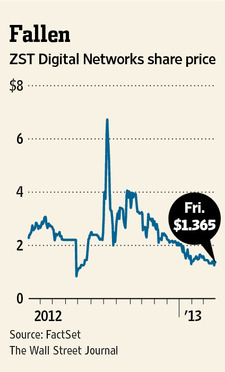
MI-BV059_ZST_NS_20130331172703

A U.S. investor won an unusual remedy in his fight against a Chinese company under an accounting cloud: A judge gave a court-appointed official the power to seize company assets needed to buy back the investor’s shares for far more than their current price. The ruling in Delaware Chancery Court by Vice Chancellor J. Travis Laster also offers a glimmer of hope to other investors who suffered steep losses on Chinese companies that listed their shares in the U.S., but have plummeted in value in the past two years. Such investors were pounded by billions of dollars in losses as short sellers targeted U.S.-listed Chinese companies, auditing firms backed away from previous work on financial statements and regulators questioned the accounting and disclosure practices of some companies.

The Delaware ruling came after ZST Digital Networks Inc. ZSTN +11.20% a network-equipment supplier, flouted an earlier court order to give the shareholder access to “certain books and records” of the company. Peter E. Deutsch, who runs a wine importer, began buying ZST shares in 2011 and eventually accumulated 3.9 million shares. But ZST ran into questions over its accounting in 2012, ultimately prompting Mr. Deutsch to sue.

Read more of this post

Superstitious investors jittery as bad omen actor Adan Cheng releases movie; Cheng has appeared in some 17 television series since 1992. The market fell while 11 of them were on air

Superstitious investors jittery as bad omen actor Cheng releases movie

Friday, 29 March, 2013, 8:06pm

Jeanny Yu jeanny.yu@scmp.com

Bulls beware. Adam Cheng Siu-chow is coming to a cinema near you.

The Hong Kong actor, whose every new television drama is said to herald a stock market crash, is returning to the big screen with a new release on April 4. And stock investors are scared stiff.

“It’s a self-fulfilling prophecy. Many locals, especially retail investors, are very superstitious,” said Ben Kwong Man-bun, chief operating officer at KGI Asia. “If everyone buys into this negative association and starts selling in panic, a sharp fall is inevitable.”

The new movie, Saving General Yang, is based on the legendary generals of the famed Yang family during the early years of the Northern Song dynasty. Cheng plays the senior General Yang, who fought a battle to defend the Song’s borders from foreign invaders.

The 66-year-old Cheng’s tryst with infamy began in 1992, when TVB launched a drama series called The Greed of Man. Cheng played the role of Ting Hai, an actor who makes a killing by short-selling derivatives and stocks in a bear market. The Hang Seng Index fell up to 13 per cent while the show was on. His bad influence on the index has been dubbed the “Ting Hai effect” since, and has proven largely true over the past decade. Cheng has appeared in some 17 television series since 1992. The market fell while 11 of them were on air. In 1997, when another series, Legend of Yung Ching , was running, the index fell below 10,000 points. TVB also happened to launch a new Cheng series in 1998, when the Asian financial crisis erupted, and in 2000, when the technology bubble burst. Read more of this post

Beijing University is in possession of a bamboo-strip version of the Laozi / Daode Jing that they date to the Western Han

Transcription of Beida Laozi Manuscript On-Line

As many of you know, there are more and more excavated texts making their presence known in our field. Beijing University is in possession of a bamboo-strip version of the Laozi / Daode Jing that they date to the Western Han.

LaoTzu_Bamboo Read more of this post

Consultants’ fees slash workplace pensions

March 28, 2013 6:36 pm

Consultants’ fees slash workplace pensions

By Josephine Cumbo

Workplace pension savers could see up to 50 per cent of their retirement pots used to pay for pension advice given to an em-ployer, says a new report.

As millions of workers are automatically enrolled into workplace pensions, a probe by Which?, the consumer group, has exposed the size of “consultancy charges” that are being passed to pension savers without their knowledge. Read more of this post

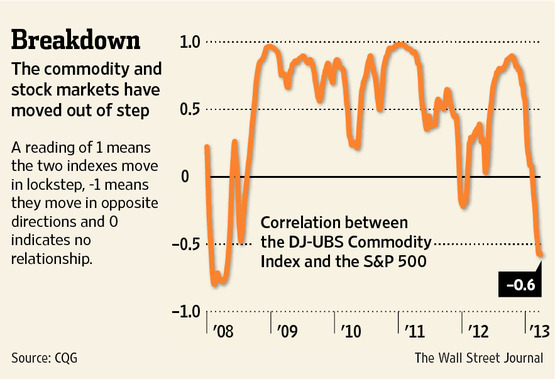
Stocks, Commodities Break Up the Band; The Correlation Between the Two Markets Is at its Lowest Since October 2008

March 31, 2013, 9:14 p.m. ET

Stocks, Commodities Break Up the Band

The Correlation Between the Two Markets Is at its Lowest Since October 2008

By JERRY A. DICOLO

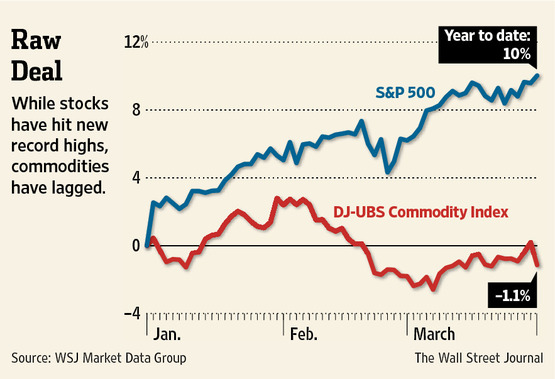
Commodities have been shut out of the stock market’s recent party.

Even as the U.S. stock market notched record highs in recent weeks, prices of raw materials, often used as a barometer of the global economy, have languished.

MI-BV041_ABREAS_G_20130331163004MI-BV042_ABREAS_G_20130331163304 Read more of this post

eBay CEO: Same-day shipping will be everywhere; “I’ve had newspaper companies come to me and say, we have all these trucks. Can we help deliver?”

eBay CEO: Same-day shipping will be everywhere

By JP Mangalindan, Writer March 29, 2013: 1:19 PM ET

John Donahoe tells Fortune that eBay’s same-day shipping service could eventually serve everyone in the U.S.

FORTUNE — Same-day shipping is inevitable, according to eBay CEO John Donahoe.

While eBay’s (EBAY) same-day shipping program, eBay Now, may be available in just three U.S. cities — with another two coming this summer — Donahoe foresees a day when customers can get thousands of items from partners like Target (TGT), Home Depot (HD), and Urban Outfitters everywhere within an hour, from Portland to Peoria. “We’re looking at the consumer benefits and the retailer benefits,” Donahoe tells Fortune. “How it gets connected is wide open.”

That means exploring other third-party shipping and transportation systems to exploit excess capacity. Just as say, Airbnb lists available homes and rooms and Uber leverages the downtime of black car and taxi drivers, eBay Now could utilize the excess capacity of shipping services like UPS (UPS). Indeed, the company has already had early talks with two well-known shipping and transportation companies about potential partnerships that would expand eBay Now’s coverage.

“I’ve had newspaper companies come to me and say, we have all these trucks. We deliver these newspapers, and these trucks don’t get used after 8 a.m. in the morning. So we have drivers, and we have empty trucks. Can we help deliver?” says Donahoe, who readily points out there are newspaper trucks in every city in America. Read more of this post

Himalaya, India’s Booming Ayurveda Herbal “Alternative Healthcare” Company; Sales have quadrupled in the last five years to reach 12 billion rupees ($220 million) in 2012

Himalaya, India’s Booming Herbal Healthcare Company
Adam Plowright | March 31, 2013

Bangalore, India. Its raw materials are plants and it bases its products on texts dating back millennia, but don’t dare call India’s biggest herbal healthcare group a maker of “alternative medicine.” “It’s high time people took us very seriously and did not view us as an alternative form of medicine,” says Philipe Haydon, the India chief executive of the Himalaya group from his office in tech and healthcare hub Bangalore. “This is not a feel-good product. This will save a man’s life,” he says, taking a box from a stack next to his desk.

It is marked Liv 52, a blend of six herbs used to treat liver disorders, and is one of the firms best-selling products. In two recent clinical tests, results published in the World Journal of Gastroenterology in 2007 and in the Antiviral Research journal in 2009 showed significant results. “It so happens that the input material is a herb but the rest of it is very very modern,” said the 50-year-old, who joined Himalaya in 1979. The group is an Indian healthcare success story, combining ancient traditional medicine known as Ayurveda with cutting-edge technology. Its air-tight production facility converts truck-loads of fragrant organic matter into eight million tablets a day and 10,000 bottles of medicine. In the quality control area, men and women in lab coats sit next to conveyor belts as tablets fly past on their way into plastic pots carrying Himalaya’s green and orange labels. In the research and development wing, 250 scientists are working to find new combinations of herbs whose active ingredients are extracted and concentrated to form products that are then tested by humans.

Sales have quadrupled in the last five years to reach 12 billion rupees ($220 million) in 2012. Its target is a billion dollars in annual revenue in the next four years as it spreads into foreign markets. Read more of this post

Thailand’s Pichai Chunhavajira will draw on his experience during the dark days to help him resolve SME Bank’s ingrained woes

Changing the system from the inside out

487292

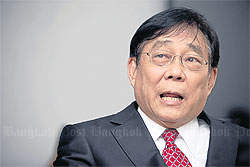
Pichai Chunhavajira will draw on his experience during the dark days to help him resolve SME Bank’s ingrained woes.

Published: 1 Apr 2013 at 00.00

Are we in a new bubble? It certainly seems like it, considering the massive trading volume on the stock exchange, the long queues at the Bangkok International Motor Show and the ever-changing city skyline as new buildings seemingly appear each day.

“You have to admit there are some areas that are overheating, but overall it’s not that bad,” said Pichai Chunhavajira, executive chairman of the Small and Medium Enterprise Development Bank of Thailand (SME Bank).

One major difference today is that speculation aside, most of the country’s banks and top companies remember the lessons learned from the Asian economic crisis. Risk management, asset diversification and balance sheets today for the country’s top firms have all significantly improved over the course of the past several years. Debt-to-equity ratios have fallen sharply, as many chief financial officers remember painfully the dangers of excessive leveraging and overdependence on banks for funds. Read more of this post

Helping leadership teams to leave their comfort zone

Helping leadership teams to leave their comfort zone

Published: 1 Apr 2013 at 00.00

‘Khun Tada, I envy you. Your company has done well.”

“I wish I could say I was pleased, Khun Kriengsak. The thing is, I’m worried.”

“Why is that?”

“Our business has been successful for the past three years. This year looks even more promising. I think we can achieve our business targets easily. But my teams are new. They’re young and inexperienced because we promoted them faster than usual due to the fast growth we’ve been experiencing.

“But we know that there’s no guarantee for smooth growth. We will face some threats. I worry that when that time arrives, my teams may not be ready to cope with adversity.”

“Why not?”

“Because we’ve been trapped in our comfort zone too long. You know, it’s like any sport _ when you get too comfortable, you have a tendency to be complacent and lazy. You don’t practice as much. Once you meet with a tough opponent, you lose easily.”

“That makes sense, Khun Tada. What do you plan to do to prevent that from happening in your business?” Read more of this post

Malaysia/Asia: How much should chiefs of government linked companies be paid?

Monday April 1, 2013

How much should chiefs of government linked companies be paid?

Corporate Notes by Gurmeet Kaur

GLCs-pay-directors-graphic-b2

THE debate continues on how much top directors of government-linked companies (GLCs) should be paid. GLCs here are key drivers of the economy and on many occasions, they are substantial investors in the financial markets. But the one key feature is that GLCs are ultimately owned and controlled by the Government.

So the remuneration paid to GLC chiefs can be a touchy issue as shown during Bursa Malaysia Bhd’s shareholder meeting on Thursday. The seemingly high annual remuneration of RM5.54mil paid to its chief executive officer Datuk Tajuddin Atan in 2012 grabbed the attention of minority shareholders.

They wanted the board to explain why Tajuddin’s pay last year had more than doubled from 2011, considering the exchange’s performance was “not impressive”.

To be fair, Tajuddin was appointed to the top post at Bursa on April 1, 2011, meaning his remuneration for the year (amounting to RM3.55mil) covered a nine-month period. So Tajuddin’s salary for 2012 is actually only a 17% increase against a pro rated 2011 salary.

Still, his remuneration is far greater than his predecessor’s. In 2010, former Bursa CEO Datuk Yusli Mohamed Yusoff was paid RM1.54mil.

Then again, Tajuddin’s pay package does not surprise some recruitment specialists who reckon the position of a stock exchange head is perhaps the most coveted in Corporate Malaysia.

Bursa did not give a breakdown of Tajuddin’s RM5.5mil package, which does not include his share grant. It is interesting that Bursa had given its CEO a share grant last April before he had delivered any key performance indicators (KPIs).

So how are other stock exchange chiefs remunerated? Across the causeway, the Singapore Exchange Ltd dished out a remuneration package totalling S$3.901mil for its head honcho Magnus Bocker in 2012. The bulk of Bocker’s remuneration was in the form of a S$2.20mil bonus. Read more of this post

Datuk Hafsah Hashim, CEO of SME Corp Malaysia: Creating global champions from local companies was never heard of before. And, no one has ever given a thought to a Malaysian local company becoming a multinational corporation (MNC) in another far away land! Who says that it is impossible?

How much is a brand worth?

Published: 2013/04/01

In a blink of an eye, we are already in the second quarter of 2013… time really flies! How I wish I have the super power to stop time, just enough to encompass the moment to sit and reflect on how my life has changed ever since I embarked on this journey to do my bit in assisting small businesses.

Indeed, these little business entities are like own children. My life’s little pleasures are watching them grow from start-ups to become local and, thereafter, global champions. I watch their every little success as they etched their mark, the challenges they go through and the triumphs they get from winning contracts. The joy and satisfaction of being with them as they move from zero to hero is indeed immeasurable!

Creating global champions from local companies was never heard of before. And, no one has ever given a thought to a Malaysian local company becoming a multinational corporation (MNC) in another far away land! Who says that it is impossible? In any case, if we break the words of “impossible” into three parts, it becomes “I m possible”.  Read more of this post

Bamboo Innovator is featured in Singapore’s newspaper Straits Times (and upcoming on Today) and also on the insightful websites Greatinvestor.tv and BeyondProxy.com

Dear Friends and All,

It has been a month since “Bamboo Innovator” was created in late February and I am grateful that there are some kindred spirits who find the ideas value-adding and resonate in your hearts. There is an article “Creating ‘bamboo innovators’ in S’pore” in Singapore’s Straits Times today that goes beyond the accounting numbers and uses Check Point/Gil Shwed as an actionable example of Bamboo Innovator at work: with the recent recovery in the S&P 500 back to its previous 2007 peak, Check Point is up over 80% in the same period; when the index plunged 50% from its peak to bottom in March 2009, Check Point was resilient, down around 15%. Overall, Check Point is up 12-fold since its 1996 listing to $10 billion, a rare feat in the hyped-up “startup culture” that has resulted in “entrepreneurs” with a get-rich-quick mentality by flipping and selling businesses rather than building business models to last the distance. There is also an upcoming article in Today Singapore possibly on next Monday and I am working towards a possible monthly Monday column about Bamboo Innovator. The wonderfully informative websites BeyondProxy.com and Greatinvestors.TV have also featured another Bamboo Innovator article on detecting accounting frauds and some videos about my thoughts on value investing in Asia (weblinks below). I also look forward to presenting at the upcoming Emerging Value Summit on April 9-10 on the topic “R.E.S.-ilient Compounders in (the Next) Crisis: Buffett + Bosch + Baiyao = Bamboo Innovator” to a group of like-minded value investors around the world. Great value investors including Tata Capital CEO, FCA Corp founder and CEO Mr Robert Scharar are speakers at the Emerging Value Summit which is still open for registration.

Why “Bamboo Innovators”? Bamboos bend, not break, even in the most terrifying storm or devastating earthquake that would snap the mighty resisting oak tree. It survives, therefore it conquers. Disruptive industry trends and black-swan crises have become a permanent fixture in today’s marketplace. How wonderful it would be if countries, companies and individuals can stay resilient amidst the disruptive upheavals and unorthodox challenges – like the bamboo. The study of Bamboo Innovators can hopefully inspire companies to be productive innovators in order to surpass stall points in their business models during tumultuous periods, particularly SMEs aspiring to scale up to become global champions.

Asian Research Product (Subscription Bundle)

  • With (1) over 80% of the listed universe of 15,000+ stocks in Asia under a billion dollars in market capitalization and the median market cap is around US$80-100 million; (2) the stock prices and volume/liquidity in Asia often manipulated by nefarious insiders and syndicates of momentum traders and (3) outbreaks of accounting frauds, corporate governance lapse and asset expropriation erupting on a systematic basis at the firm level, how does a long-term investor go about investing in Asia to generate sustainable outsized returns?
  • I am working towards a potential long-term collaboration in developing a subscription-based Asian research product to hopefully plug into an established ecosystem with long-term institutional investors in US and Europe seeking to invest in Asia. I am an admirer of the dynamic entrepreneurs behind this ecosystem which serves as an “idea funnel” for the world’s top money managers and I likened them to the “Apple/iTunes of value investing”. I hope my Asian “App” can be a useful feature in this community, though I am no “Angry Bird”! Just a little bird who has been singing for the past decade plus about research-driven value investing ideas in resilient compounders in Asia – the Bamboo Innovators. Just a simple painter with a “beginner’s mind” who loves to paint.
  • Interestingly, the Malaysian-listed company that I shared in my last February email which was up 20-25% since last year in December 2012 while the Bursa index was down had continued to deliver value and is now up 50% while the index stays down 1% YTD on political risks at the country level over the upcoming elections. Its European-listed bigcap parent is also up 29% this year despite the continued Euro crisis with the Euro Stoxx index down to flat. Both continue to announce outstanding financial results and business progress. Resilient compounders have their own internal rhythm to outperform in their business fundamentals. Another actionable stock idea, the “Heinz of Korea”, which I shared last December with an esteemed Singapore investment pioneer who helped build Singapore’s asset management industry, is up 49% this year while the Kospi index is flat/down after the elections exuberance. There are many more Bamboo Innovators in Asia that I would love to share with kindred spirits. These are companies which all of us are proud to see their success because they stay dedicated and innovative in their mission.
  • As Intuit’s former CTO David Murray puts it aptly, we are great at solving problems but less adept in defining problems. Defining the right problem to solve is the foundation of any great business model. For Sam Walton, the primary problem was offering the lowest prices on household items. For Mark Zuckerberg, the primary problem was that earlier versions of Friendster and MySpace were focused too much on meeting new people rather than enhancing existing relationships. This led Zuckerberg to identify the primary metric he used to manage the site: the time users spent communicating with one another, rather than the number of users or connections. As Murray explains in his insightful book “Plan B: How to Hatch A Plan That’s Always Better Than Your First”, MySpace did a great job executing on the problem it has identified. Facebook is solving a more important problem. So Zuckerberg didn’t out-execute his competitor, he out-theorized it. Yes, I know, “theory” (and “academic”) is a very dirty word in Asia and to businesspeople.
  • The primary problem for value investors in Asia is that the beautiful macro Siren is alluring but dangerous at the micro or firm-level, leaving even very famous and experienced money managers shipwrecked before they reach their target destination for their clients. Bamboo Innovator is meant to solve this problem. As Asia’s capital markets develop and mature, clients need to be very suspicious of the old workhorse argument that “Oh, Asia is growing and a rising tide lifts all boats. Miss the bullish growth prospects and you’ll regret. Asia is under-allocated on a GDP-weighted basis and you should position your portfolio early in the global rebalancing process.” This is largely true during the decade from 1998-2008. But the 07/08 global financial crisis is a game-changer at the micro firm-level. Firm-specific strengths and weaknesses are attenuated in their growth expansion strategies. That’s why companies like the Malaysian-listed company (and its European-listed parent) and “Korea’s Heinz” can be up 50% this year while their country indexes are down. Hopefully one day, there will be a self-indexed Bamboo Innovator 500 and actively-managed products (e.g. Bamboo Innovator 50) can be created around the key index and both parent index and the multiple ‘spinoff’ products can scale up assets in a sustainable way without cannibalization and producing the toxic Asset-Gathering-Is-King culture.
  • The story of how Jonathan Steinberg’s WisdomTree started from a humble subscription-based investment newsletter that grew into the billion-dollar self-indexing ETF powerhouse disrupting the traditional active funds management industry players never fails to amaze and inspire. WisdomTree now manages US$25 billion in asset under management (AUM) and trades at all-time high in the $2 trillion ETF industry and traditional long-term clients such as Calpers and Australian Superfund are considering switching to passive indexing strategies. Fundamental-based self-indexing is Value Line 2.0 with a touch of Buffett. The same inspiring stories are also seen in BCA Research and its London-listed acquirer and FTSE250 parent Euromoney Institutional Investor built by the late journalist-turned-entrepreneur Padraic Fallon.

Thought Leadership about Bamboo Innovator in Articles, Presentations and Videos

  • Straits Times: This published article “Creating ‘bamboo innovators’ in S’pore” in the local newspaper Straits Times attempts to go behind the scene and beyond the financial numbers in investigating the makings of a resilient compounder through the example of Check Point. I am grateful to the Opinion editorial team at Straits Times for their great help and work in editing the piece. The unedited longer version can be found here.
  • Today: There will be another upcoming article about Bamboo Innovator in the Management column possibly on next Monday. I am also working hard towards a possible monthly Monday column with Today about Bamboo Innovator – a “Monday Morning with the Bamboo Innovator” hopefully. I am grateful to Today for accepting my article.
  • BeyondProxy.com: An article and a video is featured in this insightful website about detecting accounting frauds and avoiding accounting pitfalls when investing in Asia.
  • Greatinvestors.TV: On this great website, two videos on Bamboo Innovator are posted: Part one and two.
  • Emerging Value Summit: I will be posting the full version of the downloadable slides that I am presenting at the upcoming Emerging Value Summit on April 9-10 on April 8th which you can find at this weblink for the preview version. The topic is “R.E.S.-ilient Compounders in (the Next) Crisis: Buffett + Bosch + Baiyao = Bamboo Innovator” and I will be discussing the Bamboo Innovator framework, the accounting and governance pitfalls of investing in Asia, as well as one specific actionable Asian stock idea.
  • Wide Moat Investing Summit: I am grateful to be further invited to be a speaker at the Wide Moat Investing Summit on July 9-10, 2013.

Seminars/Workshops/Speaking

  • It is easy to lose perspective when one is mired in day-to-day operations feeling important and useful in fighting fire as opposed to taking a step back to invest in learning and pursuing value-creating opportunities. When he had only five stores, a highly-driven Sam Walton took a step back to attend a workshop that gave the small-town merchant innovative ideas and valuable friendship to transform and scale his business model to $200 billion in market value. From $130 million in 1992, the typical SME size in Asia, Ecolab scaled to $23 billion in market value when they are able to take a step back to first articulate the strategy of “Circle the Globe, Circle the Customers” and execute and adapt with relevance accordingly to the changing circumstances. Nalco, the water treatment technology company that Warren Buffett used to invest in, was acquired in December 2011 by Ecolab.
  • I have some unconfirmed interest from the CEO of an Asian-listed company in the “Uprising” industry trends workshop that I also conduct for companies in the technology, media and telecom (TMT) and consumer industry with practical real-world cases and scenarios. The brochures can be found on this weblink. I am working on developing a general public seminar on Bamboo Innovator, similar to the “Master Entrepreneur Program: Scaling SMEs to MNCs” that I did previously for CEOs, entrepreneurs, top management and professionals, and high network individuals in Singapore, HK and Beijing (in Mandarin) with positive feedback on its practical and actionable framework and cases.
  • I am also happy to speak about topics on innovation, resilience and business model design to companies and organizations seeking to create sustained value and growth in the face of uncertainty and disruptions in the business environment.

Life

  • For my friends in the West who are wondering what the Chinese words in the Bamboo Innovator “logo” mean, it is about “The Way of the Bamboo: How and why our journey in business and in life is about establishing rootedness in values and innovating continually”.
  • I will also be teaching some evening courses in accounting to working professionals in Singapore’s SIM University starting July. I am grateful for this opportunity.
  • Do follow Bamboo Innovator on the website (www.bambooinnovator.com), Twitter (@bambooinnovator) and Facebook (www.facebook.com/bambooinnovator) for updates and to give your valuable comments and criticisms.

I was at the SMU-Vitol Industry Speakers’ Series on March 15 presented by Dr Brene Brown when she was in Singapore. Brene is the author of “Daring Greatly: How the Courage to be Vulnerable Transforms the Way We Live, Love and Lead” and the message was inspiring: Vulnerability is the birthplace of innovation and the authentic wholehearted person dare to show up and be seen in the arena, to take the hits and punches; totally different from what we are taught that vulnerability is displaying weakness and a lack of confidence and optimism. Click on these two links to see my favorite quotes from the Oprah Winfrey’s “Super Soul Sunday” interview with Brene and the videos: fav quotes and video. Perhaps I am naïve or idealistic, but it is a fact that vulnerability is still a big no-no in Asian culture, yet unless we appreciate one another to carry the Big V, we cannot embrace resilient innovation.

I like to end off by sharing a story about Dwight Eisenhower and the power of vulnerability and authentic leadership. Professor L, Professors T and Professor C, Mr A and Mr B, and to my friends, thank you for your kind encouragement. Really grateful.

During World War II, General Dwight D. Eisenhower would routinely walk among the troops. One day, as the soldiers were preparing for battle, Eisenhower noticed a young man who seemed silent and depressed.

“How are you feeling, son?” he asked.

“General,” he said. “I’m awfully nervous. I was wounded two months ago and just got back from the hospital yesterday. I don’t feel so good.”

Many generals would have tried to buck up the frightened soldier’s spirits, saying, “You don’t need to be scared. You’ve got the best damn army in the world behind you.”

Instead, Eisenhower said, “Well, you and I are a great pair then, because I’m nervous too… Maybe if we just walk along together to the river we’ll be good for each other.”

Eisenhower revealed himself in the most humble way, and that’s one of the reasons his troops were so devoted to him. He became a great leader not by being rigid and fearsome, but by being honest and human.

“His grin, his mannerisms, his approach to life all exuded sincerity. He wore his heart on his sleeve. There was nothing devious about him. It is perhaps a paradox that it was for this reason that he was an outstanding diplomat, a profession in which the guarded truth and the half-truth are supposed to count for much,” historian Stephen Ambrose writes in The Supreme Commander: The War Years of Dwight D. Eisenhower.

Warm regards,

KB Kee

31 March 2013

Creating ‘bamboo innovators’ in S’pore (Straits Times, April 1, 2013)

http://www.stasiareport.com/premium/opinion/story/creating-bamboo-innovators-spore-20130401

Creating ‘bamboo innovators’ in S’pore

Uncertain conditions can breed innovative businesses, where risk-taking educators nurture flexible students.

Published on Apr 01, 2013
Check Point Software Technologies CEO and founder Gil Shwed, an Israeli inventor and entrepreneur who started the Firewall security software. — PHOTO: CHECK POINT SOFTWARE TECHNOLOGIE
By Kee Koon Boon For The Straits Times
Read the published version below and the unedited longer version hereRead more of this post

How Funds Massage Numbers, Legally

March 31, 2013

How Funds Massage Numbers, Legally

By CAROLYN T. GEER

OB-WW353_31IBc_G_20130328162432

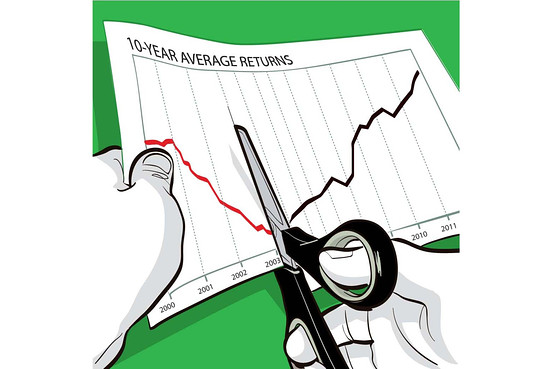
Most investors are familiar with the boilerplate disclaimer that past performance doesn’t guarantee future results. Far fewer are aware of how past performance numbers themselves can be misleading.

Sometimes only a “trick of the calendar” is to blame, as noted in a recent market commentary from Vanguard Group. The 10-year average annual return of the total U.S. stock market shot to 8% as of year-end 2012, from 4% a year earlier. Sure, U.S. stocks were up 16% in 2012, versus 1% for 2011. But more important, the negative 21% return from 2002—the last year of the 2000-2002 bear market—rolled out of the 10-year return calculations.

This year, the negative 37% return from 2008 rolls off the five-year return calendar, so that even if stocks go nowhere in 2013, their five-year average annual return will jump from the current 2% to 12%, by Vanguard’s calculations. Read more of this post

Playing Favorites: How Firms Prevent the Revelation of Bad News

Playing Favorites: How Firms Prevent the Revelation of Bad News

Lauren Cohen, Harvard Business School and NBER

Dong Lou, London School of Economics

Christopher Malloy, Harvard Business School and NBER

This Draft: February 24, 2013; First Draft: November 18, 2012

ABSTRACT

We explore a subtle but important mechanism through which firms manipulate their information environments. We show that firms control information flow to the market through their specific organization and choreographing of earnings conference calls. Firms that “cast” their conference calls by disproportionately calling on bullish analysts tend to underperform in the future. A long-short portfolio that exploits this differential firm behavior earns abnormal returns of up to 95 basis points per month. Firms that call on more favorable analysts experience more negative future earnings surprises and more future earnings restatements. Further, firms that cast their calls have higher accruals, barely exceed/meet earnings forecasts, and subsequently issue equity.

Martin Feldstein: When Interest Rates Rise

When Interest Rates Rise

Martin Feldstein, Professor of Economics at Harvard University and President Emeritus of the National Bureau of Economic Research, chaired President Ronald Reagan’s Council of Economic Advisers from 1982 to 1984. In 2006, he was appointed to President Bush’s Foreign Intelligence Advisory Board, and, in 2009, was appointed to President Obama’s Economic Recovery Advisory Board. Currently, he is on the board of directors of the Council on Foreign Relations, the Trilateral Commission, and the Group of 30, a non-profit, international body that seeks greater understanding of global economic issues.

30 March 2013

CAMBRIDGE – Long-term interest rates are now unsustainably low, implying bubbles in the prices of bonds and other securities. When interest rates rise, as they surely will, the bubbles will burst, the prices of those securities will fall, and anyone holding them will be hurt. To the extent that banks and other highly leveraged financial institutions hold them, the bursting bubbles could cause bankruptcies and financial-market breakdown. Read more of this post