Colleges Soak Poor Students to Funnel Aid to Rich

Colleges Soak Poor Students to Funnel Aid to Rich

By John Hechinger and Janet Lorin  May 8, 2013

U.S. colleges such as Boston University are using financial aid to lure rich students while shortchanging the poor, forcing those most in need to take on heavy debt, a report found.

Almost two-thirds of private institutions require students from families making $30,000 or less annually to pay more than $15,000 a year, according to the report released today by the Washington-based New America Foundation.

The research analyzing U.S. Education Department data for the 2010-2011 school year undercuts the claims of many wealthy colleges that financial-aid practices make their institutions affordable, said Stephen Burd, the report’s author. He singled out schools — including Boston University and George Washington University — that appear especially pricey for poor families.

“Colleges are always saying how committed they are to admitting low-income students — that they are all about equality,” Burd said in a phone interview. “This data shows there’s been a dramatic shift. The pursuit of prestige and revenue has led them to focus more on high-income students.” Read more of this post

Tough Times Ahead for 100-Yen Stores

May 9, 2013, 3:13 p.m. ET

Tough Times Ahead for 100-Yen Stores

By MAYUMI NEGISHI

MI-BV882_YENSTO_G_20130509155407

TOKYO—Japanese investors and exporters may be cheering the dollar’s return to the ¥100 mark, but for the thousands of “100 Yen” discount stores around the country, it signals tough times ahead.

The 100-yen shops have become representative of a deflationary Japan, thriving by astonishing customers with the purchasing power of the ¥100 coin. They offer everything from cellphone chargers to fake eyelashes for the same low price. Their business model has centered on a strong yen pushing down prices of the imported goods that fill their shelves.

But now the Bank of Japan has declared a new war on deflation, and a primary side effect of its primary weapon—a massive monetary easing—has been a vastly cheaper yen. That is starting to erode already razor-thin profit margins for the discounters.

“A five yen difference is huge,” said Yasuaki Ikeda, manager of two US.Mart 100-yen stores in Tokyo. He imports 90% of his products, 80% of them from China. “When the cost of 100 chopsticks moves from ¥80 to ¥85, I have to ask suppliers to pack fewer chopsticks,” he said. Read more of this post

Heart Patient Risk From iPad2 Found by 14-Year-Old

Heart Patient Risk From iPad2 Found by 14-Year-Old

Gianna Chien is somewhat different from all the other researchers reporting on their work today to more than 8,000 doctors at the Heart Rhythm Society meeting.

Chien is 14, and her study — which found that Apple Inc. (AAPL)’s iPad2 can, in some cases, interfere with life-saving heart devices because of the magnets inside — is based on a science-fair project that didn’t even win her first place.

The research offers a valuable warning for people with implanted defibrillators, which deliver an electric shock to restart a stopped heart, said John Day, head of heart-rhythm services at Intermountain Medical Center in Murray, Utah, and chairman of the panel that reviews scientific papers to be presented at the Denver meeting.

If a person falls asleep with the iPad2 on the chest, the magnets in the cover can “accidentally turn off” the heart device, said Chien, a high school freshman in Stockton, California, whose father is a doctor. “I definitely think people should be aware. That’s why I’m presenting the study.”

Defibrillators, as a safety precaution, are designed to be turned off by magnets. The iPad2 uses 30 magnets to hold the iPad2’s cover in place, Chien said. While the iPad2 magnets aren’t powerful enough to cause problems when a person is holding the tablet out in front of the chest, it can be risky to rest it against the body, she found. Read more of this post

Quantifying Wikipedia Usage Patterns Before Stock Market Moves

Quantifying Wikipedia Usage Patterns Before Stock Market Moves
08 May 2013

Financial crises result from a catastrophic combination of actions. Vast stock market datasets offer us a window into some of the actions that have led to these crises. Here, we investigate whether data generated through Internet usage contain traces of attempts to gather information before trading decisions were taken. We present evidence in line with the intriguing suggestion that data on changes in how often financially related Wikipedia pages were viewed may have contained early signs of stock market moves. Our results suggest that online data may allow us to gain new insight into early information gathering stages of decision making. Read more of this post

Berkshire Sells Debt to Buyers Buffett Pities; “Berkshire issuing debt is effectively an efficient way to short the bond market.”

Berkshire Sells Debt to Buyers Buffett Pities: Corporate Finance

Berkshire Hathaway Inc.’s $1 billion note sale shows that while Chief Executive Officer Warren Buffett may pity investors who’ve stuck with bonds as yields fall to record lows, he’ll sell them as much debt as they want.

The company’s Berkshire Hathaway Finance Corp. sold five-and 30-year securities offering the company’s lowest coupons for those maturities ever. Berkshire, whose holdings span insurance, railroads, newspapers and manufacturing, has reduced its bond investments to $28.6 billion from $34.1 billion in the last three years, regulatory filings show.

Berkshire isn’t buying corporate bonds, Buffett, 82, said during a May 4 interview with Bloomberg Television’s Betty Liu after the company’s annual meeting in Omaha, Nebraska. With the average yield on U.S. corporate debt having fallen to a record low 3.35 percent this month from more than 11 percent in 2008, the second-richest American said at the meeting he has empathy for savers who depend on bond interest.

“Buffett’s views on current interest rates are pretty clear,” said Richard Cook, co-founder of Cook & Bynum Capital Management LLC in Birmingham, Alabama, which oversees about $270 million including Berkshire shares. “Berkshire issuing debt is effectively an efficient way to short the bond market.” Read more of this post

Insight: New York authorities in wave of pension payment deferrals

Insight: New York authorities in wave of pension payment deferrals

9:28am EDT

By Edward Krudy

NEW YORK (Reuters) – For Niagara Falls, a city in New York staring at the prospect of insolvency in the face of a weak local economy and soaring employee costs, diverting money earmarked for pensions to cover short-term spending needs seemed like the only option. “We don’t like doing it, so this is sort of a last ditch strategy for us,” Mayor Paul Dyster told Reuters in an interview. Postponing pension payments was the way to avoid cutting back on town services, he said. Dyster is not alone. A poster child for the struggling upstate economy, Niagara Falls is now one of around 200 New York municipalities, counties and other public employers that delayed more than $1 billion in pension contributions last year as they struggled to plug budget shortfalls. The delay in contributions mirrors steps taken some years ago in other states like New Jersey and Illinois, both now grappling with massive pension funding troubles. The problem is national. Nearly half of all public plans did not make their required contributions last year and had self-declared unfunded liabilities of around $834 billion, according to Wilshire Consulting. Read more of this post

Keep on, or enough already? Fed officials spar over QE3

Keep on, or enough already? Fed officials spar over QE3

Thu, May 9 2013

By Ann SaphirLuciana Lopez and Jonathan Spicer

SAN FRANCISCO/NEW YORK (Reuters) – Little over a week after U.S. Federal Reserve policymakers overwhelmingly endorsed a plan to keep buying bonds to spur economic growth and hiring, they are airing their differences over their super-easy policy.

“I think we should try as hard as we can” to turn things around, Chicago Federal Reserve Bank President Charles Evans said in an interview on Bloomberg TV, in a forceful defense of the bond-buying program, known as QE3 because it is the Fed’s third round of quantitative easing since the Great Recession. Read more of this post

“Bond God” Gundlach says yield-seekers at risk if interest rates rise; “If interest rates rise up to 5 percent on the 10-year Treasury, you are going to get killed in a lot of these types of vehicles”

Gundlach says yield-seekers at risk if interest rates rise: CNBC

Filed 12 hours ago

NEW YORK – Jeffrey Gundlach, star bond investor and the head of DoubleLine Capital LP, said on Thursday that investors who are fleeing bonds in favor of alternatives offering higher yields could suffer losses if interest rates rise.

“If interest rates rise up to 5 percent on the 10-year Treasury, you are going to get killed in a lot of these types of vehicles,” Gundlach, the chief executive and chief investment officer of DoubleLine Capital, told cable television network CNBC. Using master limited partnerships as an example, he said such investments have a lot of leverage and interest-rate risk.

Los Angeles-based DoubleLine Capital has $59 billion in mostly fixed-income assets. Read more of this post

Voice emotion recognition developer Beyond Verbal raises $2.8m

Voice emotion recognition developer Beyond Verbal raises $2.8m

Voice Recognition has also launched a patented technology that can extract, decode, and measure a full spectrum of human emotions from a person’s raw voice.

9 May 13 13:01, Globes’ correspondent

Voice emotion recognition developer Beyond Verbal has closed a $2.8 million financing round led by t angel investor Kenges Rakishev and new venture capital fund Genesis Angels. Following the investment Rakishev is joining Beyond Verbal’s board of directors. Voice Recognition has also launched a patented technology that can extract, decode, and measure a full spectrum of human emotions from a person’s raw voice. Read more of this post

Paying for the great urbanization of China

Paying for the great urbanization of China

BY HAL HARVEY | 8 MAY 2013

Article Highlights

  • China is in a historic transformation, adding hundreds of millions of people to its urban centers, but its new cities have been built in ways that waste energy and create congestion.
  • It is in the interest of other countries that Chinese urban development decisions be well made, because they will affect resource markets and climate change worldwide.
  • To support the design, transportation and other reforms needed to create livable and healthy cities, China must change its method of financing urban infrastructure.

Consider the impact Pierre L’Enfant had when he laid out Washington, DC, or when Robert Moses worked his plans for New York, or when Daniel Burnham designed Chicago. These planners set patterns that have affected us ever since: They significantly determined how we get around, how our work and home lives connect, whether we live in welcoming neighborhoods, how much traffic congestion we suffer, and more. Their influence reaches into the industrial metabolism as well, as design choices affect our energy and material consumption. And the patterns persist for many decades. Read more of this post

Is There Political Peril in Letting China’s Cities Grow? China’s Vision for a ‘New’ Urbanization

May 9, 2013, 10:05 PM

Is There Political Peril in Letting China’s Cities Grow?

Chinese leaders since Mao Zedong have been wary of letting China’s largest cities reach megacity proportion. The usual reason cited is the fear of turning Beijing, Shanghai and other such cities into Latin American-style slums. But Ohio State University political scientist Jeremy Wallace says there may be another reason: regime survival. In a study of authoritarian regimes between 1946 and 2004 (pdf), he finds that “regimes with capital cities that dominate the urban landscape fail nearly four years sooner and face 60% greater death rates.” Read more of this post

Girl power: As the supply of female factory-workers dwindles, blue-collar women gain clout

Girl power: As the supply of female factory-workers dwindles, blue-collar women gain clout

May 11th 2013 | SHENZHEN |From the print edition

SITTING around a restaurant table, six workers discuss the progress of their labour action. Five of them are women, as are most of their several hundred colleagues who have been occupying the toy factory since mid-April. They have been sleeping on floors, braving rats and mosquitoes, to stop the owner shutting down the factory without giving them fair compensation. Those at the table are all migrants from the countryside. A couple are tearful. All are angry and determined not to give way. In Guangdong province, where nearly 30% of China’s exports are made, women usually far outnumber men on labour-intensive production lines such as those at the toy factory in the city of Shenzhen, next to Hong Kong. Rural women are hired for their supposed docility, nimble fingers and attention to mind-numbing detail. But in recent years Guangdong’s workforce has changed. The supply of cheap unskilled labour, once seemingly limitless, has started to dry up. Factory bosses are now all but begging their female workers to remain. At the same time the women who have migrated to the factory towns have become better-educated and more aware of their rights. In labour-intensive factories, stereotypes of female passivity are beginning to break down.

Read more of this post

AQR: Low-Risk Investing Without Industry Bets

Low-Risk Investing Without Industry Bets

Clifford S. Asness AQR Capital Management, LLC

Andrea Frazzini AQR Capital Management, LLC

Lasse Heje Pedersen New York University (NYU) – Department of Finance; National Bureau of Economic Research (NBER)

March 20, 2013

Abstract:      
The strategy of buying safe low-beta stocks while shorting (or underweighting) riskier high-beta stocks has been shown to deliver significant risk-adjusted returns. However, it has been suggested that such “low-risk investing” delivers high returns primarily due to its industry bet, favoring a slowly changing set of stodgy, stable industries and disliking their opposites. We refute this. We show that a betting against beta (BAB) strategy has delivered positive returns both as an industry-neutral bet within each industry and as a pure bet across industries. In fact, the industry-neutral BAB strategy has performed stronger than the BAB strategy that only bets across industries and it has delivered positive returns in each of 49 U.S. industries and in 61 of 70 global industries. Our findings are consistent with the leverage aversion theory for why low beta investing is effective.

An Exploration of the Relationship between Language Choice in CEO Letters to Shareholders and Corporate Reputation

An Exploration of the Relationship between Language Choice in CEO Letters to Shareholders and Corporate Reputation

Russell Craig Australian National University (ANU) – School of Business and Information Management

Niamh M. Brennan University College Dublin (UCD) – Quinn School of Business

2012
Accounting Forum, 36(3): 166-177, 2012 

Abstract:      
This paper proposes a taxonomy to assist in more clearly locating research on aspects of the association between corporate reputation and corporate accountability reporting. We illustrate how our proposed taxonomy can be applied by using it to frame our exploration of the relationship between measures of reputation and characteristics of the language choices made in CEO letters to shareholders. Using DICTION 5.0 software we analyse the content of the CEO letters of 23 high reputation US firms and 23 low reputation US firms. Our results suggest that company size and visibility each have a positive influence on the extent to which corporate reputation is associated with the language choices made in CEO letters. These results, which are anomalous when compared with those of Geppert and Lawrence (2008), highlight the need for caution when assessing claims about the effects on corporate reputation arising from the language choice in narratives in corporate annual reports.

Any Benjamin Franklins in Asia? Bamboo Innovator is featured in BeyondProxy.com, where value investing lives

Bamboo Innovator is featured in BeyondProxy.com, where value investing lives:

Any Benjamin Franklins in Asia? May 9, 2013 (Weblink: BeyondProxy.com)

BenFranklinAsia

Charles Ellis on how much your money manager cost you and he worries about the challenges aging boomers face from low bond yields to uncertain stock returns, and dubious financial come-ons

How much does your money manager cost you?

By Penelope Wang @Money May 7, 2013: 6:01 PM ET

Charley Ellis, founder of Greenwich Associates, worries about the challenges aging boomers face from low bond yields to uncertain stock returns, and dubious financial come-ons.

Charley Ellis may not be a household name, but he commands the respect of many savvy investors.

He shook up Wall Street in 1975 with a landmark article in a financial trade journal that attacked the notion that professional money managers consistently beat the market. Nonprofessionals stand even less chance of outperforming the benchmarks, argued Ellis, so individuals need to rethink their approach to building wealth. That influential piece was the basis for Ellis’s classic investing book, Winning the Loser’s Game, the sixth edition of which is due in July. Founder of the financial consulting firm Greenwich Associates, Ellis has also served as a director of Vanguard. Today he still worries about investing costs, as well as the challenges that aging boomers face from low bond yields, uncertain stock returns, and dubious financial come-ons. Ellis, 75, spoke recently with MONEY editor-at-large Penelope Wang. Their conversation has been edited.

Read more of this post

Walter Robb: Whole Foods’ other CEO on organic growth

Walter Robb: Whole Foods’ other CEO on organic growth

By Geoff Colvin, senior editor-at-large @FortuneMagazine May 6, 2013: 9:31 AM ET

Company culture compels Whole Foods co-CEO Walter Robb to fly coach.

Selling groceries is a grinding, low-margin business — except forWhole Foods (WFMFortune 500). The world’s largest natural and organic grocer is a financial powerhouse with a market capitalization matching that of Kroger (KRFortune 500) which is eight times its size by revenue. Keeping the magic alive as Whole Foods (No. 232 on the Fortune 500) expands aggressively is partly the task of Walter Robb, 59, who shares the CEO job with founder John Mackey. Robb started a 1,000-square-foot natural and organic food market in 1977, not long after graduating from Stanford, then built a grocery business and sold it to Whole Foods in 1991. He talked recently with Geoff Colvin about making the chain more competitive on price, the power of its culture, flying Southwest Airlines in the middle seat, and much else. Edited excerpts: Read more of this post

Execs and investors from Pandora, IDEO, Andreessen Horowitz, SoundCloud, and Kleiner Perkins, among other masters of disruption, share the wisdom they’ve gathered on the way to the top

8 SUCCESSFUL ENTREPRENEURS GIVE THEIR YOUNGER SELVES LESSONS THEY WISH THEY’D KNOWN THEN

EXECS AND INVESTORS FROM PANDORA, IDEO, ANDREESSEN HOROWITZ, SOUNDCLOUD, AND KLEINER PERKINS, AMONG OTHER MASTERS OF DISRUPTION, SHARE THE WISDOM THEY’VE GATHERED ON THE WAY TO THE TOP.

BY: GRACE NASRI

Looking at the success trajectories of today’s disruptors–from Pandora cofounder Tim Westergren to Wikipedia’s Jimmy Wales–it’s easy to think that they had everything figured out from a young age. But many of today’s success stories learned lessons later in life that they wished they had known as they were beginning their careers. The eight investors and entrepreneurs below share the advice they wish they had gotten in their early twenties.

Tim Westergren: Avoid the risk of not trying and the regret of wishing you had.
Tim Westergren, the founder and Chief Strategy Officer at Pandora, said if he could offer his younger self one piece of advice, it would be to realize from an early age that it’s far more haunting to live with the regret of having not followed your instincts–even when those instincts required a diversion from the beaten path–than to have followed your gut and failed. Luckily for Westergren, he was one of the few who did follow his passions and that pursuit led him to found a company with a market cap of $2.5 billion.

“Be sure to ‘notice’ ideas when you have them. Stop. Take the time to consider them seriously. And if your gut tells you they’re compelling, be fearless in their pursuit,” Westergren said. “For most people, the idea of chasing a personal passion or being entrepreneurial is simply something they don’t think of themselves doing. We’re so programmed to walk well-trodden paths. But, we live life only once. So, rather than avoiding the risk of trying, avoid the risk of not trying. Nothing is more haunting than thinking, ‘I wish I had…’.” Read more of this post

New book teaches children ABCs of Buffett’s Berkshire Hathaway

New book teaches children ABCs of Buffett’s Berkshire Hathaway

12:45pm EDT

By Jonathan Stempel

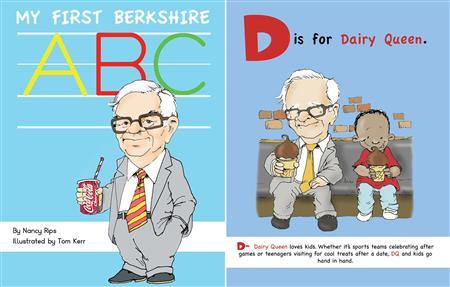
Handout photo of Chairman and CEO of Berkshire Hathaway Warren Buffett in an illustration on the cover of the book "My First Berkshire ABC"

OMAHA, Nebraska (Reuters) – Warren Buffett’s Berkshire Hathaway Inc invests in dozens of businesses, and a new book tries to explain it all to young readers, from A to Z. Two Omaha residents, author Nancy Rips and illustrator Tom Kerr, have teamed up on “My First Berkshire ABC” to teach children about one of the world’s best-known companies, and a little about the local billionaire behind it. More than 1,000 copies were sold at Berkshire’s annual meeting on Saturday, which draws thousands of people to Omaha, and where Buffett has a say on what gets sold. “You need something to bring home to your kids and grandkids to explain Berkshire,” Rips, who has also written three books about Jewish holidays, said in a joint interview with Kerr. Most pages show companies that Berkshire owns or invests in. G, for example, is for “Geico,” and features the car insurer’s talking gecko. And W is for “Wells Fargo”, and features the bank’s familiar stagecoach. The book’s theme changed at Buffett’s suggestion. “Our first effort was things like, ‘S is for sharing. Mr. Buffett believes in sharing. K is for being kind,'” Rips said. “I got an email back from Warren saying, it’s too laudatory, they will lampoon him in the news,” she continued. “And I wrote a whole new proposal: A is for Acme (Brick), B is for Borsheim’s (jewelry), C is for Clayton Homes, D is for Dairy Queen. I got an email back: ‘You’re in the show.'” Kerr has worked at many newspapers and drew McGruff, the Crime Dog for the National Crime Prevention Council. “Part of what Warren talks about is investing in things that you know,” he said. “Virtually everything in here is something that somebody can relate to and touch and understand.” Berkshire Vice Chairman Charlie Munger is shown under “Q,” stamping boxes of “quality” merchandise. Rips and Kerr have not heard from Buffett on whether he likes the book. Buffett’s assistant Carrie Sova had no comment on that question. Kerr depicted Buffett just four times, including on the cover holding his usual Cherry Coke. “This book is not all about Warren Buffett,” Kerr said. “I picked my spots. He’s so synonymous with Dairy Queen that I wanted him there, and obviously on the cover with Coca-Cola.” “Cherry Coke,” Rips interjected. “Yep,” Kerr said. “She had me change that.”

McKinsey: Amazon’s Dominance Of Retail Comes From These 3 Factors

McKINSEY: Amazon’s Dominance Of Retail Comes From These 3 Factors

Kevin Smith | May 8, 2013, 11:52 AM | 23,829 | 2

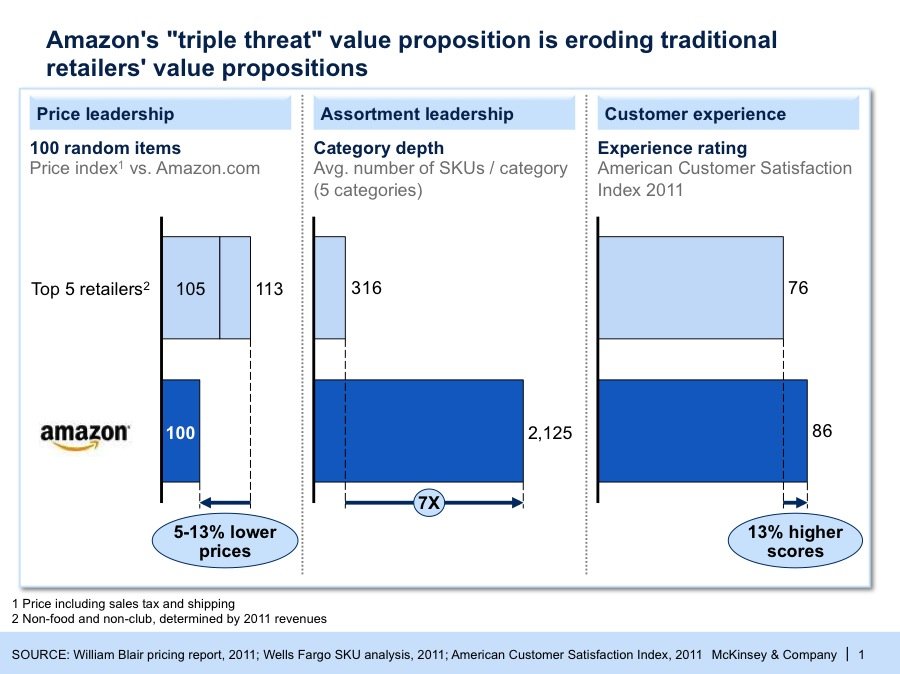
Consulting group McKinsey & Co. thinks it has figured out Amazon‘s “secret sauce.” In 2011, 13% of all U.S. online retail sales went through Amazon,McKinsey believes. The secret? Lower prices than its rivals, a greater product assortment, and better customer relations. Amazon’s domination of the retail market is bolstered by a “maniacal” tech investment strategy, according to the report. This deck shows why McKinsey believes Amazon is poised to capture even more U.S. retail market share, at the expense of its main street rivals.

jpg (15)jpg (7) Read more of this post

Chinese internet company Sohu CEO Charles Zhang says his generation has no value system or principles 张朝阳:我们这代人实际是没价值观也没原则

张朝阳:我们这代人实际是没价值观也没原则

2013-5-9 8:10:00  云科技    阅读:1206

导读:张朝近日对话云科技程苓峰,谈到搜狐的发展,也谈到他个人如何战胜精神的苦难,学会与自己相处。以下是对话全文: Read more of this post

Panera Bread’s founder Ron Shaich: Every Leader’s Job: Discover Tomorrow Today

Ron Shaich

Founder, Chairman, & Co-CEO at Panera Bread

Every Leader’s Job: Discover Tomorrow Today

Alan Kay, the renowned computer scientist, put it memorably some forty years ago: “the best way to predict the future is to invent it.” Aside from masterful technologists like Mr. Kay, few among us have the capacity to actually create the future. But I have no doubt that the foremost responsibility of any leader is to discover where the world is heading and prepare the organization for tomorrow’s arrival.

We all look to innovation as a prime source of differentiation and growth. Discovery stands at the core of every innovation effort. Whether it’s a breakthrough technology, an emerging business opportunity, or a better way to work, every successful innovation starts with a novel insight that profoundly changes the way we do what we do and ultimately yields substantial value for its creators.

Think of the entrepreneur’s most valuable asset. It certainly isn’t money. After all, capital is a renewable resource. What’s far more valuable is the entrepreneur’s ability to discover an untapped market, unsullied by cutthroat competition, where outsize profits await. Successful entrepreneurs aren’t capitalists. They’re opportunists. They see the white spaces in the market that others don’t and exploit those opportunities. Read more of this post

Sir Alex Ferguson: “They gave me the confidence and time to build a football club, rather than just a football team”. Alex Ferguson’s managerial lessons stretch far beyond football; Despite his success, Sir Alex never kidded himself that he knew everything; He knew his players’ pre-match toilet habits (and checked if they were going more than usual).

May 8, 2013 8:33 pm

Manchester United’s global brand reaches crossroads

By Roger Blitz, Leisure Industries Correspondent

Like Margaret Thatcher’s death, the announcement that Sir Alex Ferguson wasretiring after 26 years as Manchester United manager had the capacity to shock.

Supporters of both knew their respective departures had been coming, had even braced themselves for the moment, yet still could not quite believe it when it came.

Where they differed was that Lady Thatcher’s death did not move the markets, whereas the retirement of Sir Alex, a life-long supporter of the left, did. Shares inManchester United fell 4.1 per cent when New York opened for business.

It is a mark of Sir Alex’s longevity and success, with an accumulation of 13 Premier League titles and 2 Champions League trophies, that his departure should strike at the core of a club as financially strong and dominant on the pitch as Manchester United.

As Emmanuel Hembert of consultancy AT Kearney said: “It’s like Apple losing Steve Jobs. What’s next is the big question.” Read more of this post

What Eyeware Startup Warby Parker Sees That Others Don’t

What Eyeware Startup Warby Parker Sees That Others Don’t

Published: May 08, 2013 in Knowledge@Wharton

Shortly after Neil Blumenthal launched Warby Parker, the e-commerce eyeware startup known for its $95 retro-cool frames, customers emailed asking if they could “stop by” the company’s Philadelphia headquarters and check out the glasses for themselves. There was just one problem: Warby Parker — the brainchild of Blumenthal and three Wharton classmates, Andrew Hunt, Jeffrey Raider and David Gilboa — didn’t have a showroom. So they improvised.

“We said, ‘Sure, you can come to our… apartment,’ and we laid the glasses on the dining room table,” Blumenthal says.

When those would-be customers visited the makeshift shop back in 2010, “something special happened,” according to Blumenthal, 32. “They saw us sitting on the couch working our laptops, responding to orders, talking on the phone with customers. They saw the people behind the brand, which is so rare,” he says. “We realized we could learn from those customers — what they liked and what they wanted. Those people became some of our best advocates.”

Today, Warby Parker is a beloved and booming brand. The company’s hipster eyewear, coupled with its customer-centric strategy and socially conscious business model, has won over shoppers and impressed top-notch investors. In February, Warby Parker closed a round of financing worth $41.5 million, including funds from Millard Drexler, the chief executive of J. Crew, and American Express. The retail world is watching as the company embarks on its latest venture — an expansive store in New York City’s Soho neighborhood, across from the Apple store and next to Ralph Lauren. Read more of this post

Converge: Transforming Business at the Intersection of Marketing and Technology

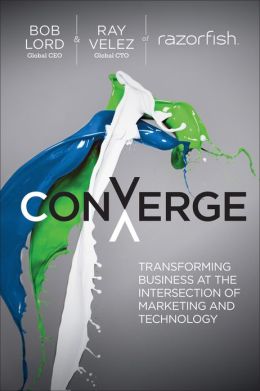
Converge: Transforming Business at the Intersection of Marketing and Technology [Hardcover]

Bob W. Lord (Author), Ray Velez (Author)

9781118575529_p0_v3_s260x420

Publication Date: April 29, 2013

The leaders of Razorfish share their strategies for merging marketing and IT

To create rich, technologically enabled experiences, enterprises need close collaboration between marketing and IT. Converge explains how the merging of technology, media, and creativity is revolutionizing marketing and business strategy. The CEO and CTO of Razorfish, one of the world’s largest digital marketing agencies, give their unique perspective on how to thrive in this age of disruption. Converge shares their first-hand experience working closely with global brands—including AXE, Intel, Samsung, and Kellogg—to solve business problems at the collision point between media, technology, and marketing.

With in-depth looks at cloud computing, data- and API-enabled creativity, ubiquitous computing, and more, Converge presents a roadmap to success.

Explains how to organize for innovation within your own organization by applying the principles of agile development across your business

Details how to create a religion around convergence, explaining how to tell the story throughout the organization

Outlines how to adapt processes to keep up with and take advantage of rapid technological change

A book by practitioners for practitioners, Converge is about rethinking business organizations for a new age and empowering your people to thrive in a brand, new world. Read more of this post

Tales and fins from the heads of online ad agency Razorfish: Converge: Transforming Business at the Intersection of Marketing and Technology

May 8, 2013 5:38 pm

Tales and fins from the heads of Razorfish

Review by Emily Steel, US media and marketing correspondent

Converge: Transforming Business at the Intersection of Marketing and Technology
By Bob Lord and Ray Velez, Wiley, $29.95/£19.99

This story starts at a point in time that most observers predicted it would end. The year was 2002. The internet party was long over. Pets.com and other high-flying digital darlings were defunct. It was the dark days for the few survivors of the dotcom bubble, and Razorfish was barely hanging on.

The brash online ad agency that had come to symbolise the arrogance and frivolity of the era had slashed its staff from 1,800 employees to just 230. The company was sold for $8.2m – a minuscule fraction of its $4.2bn market value just two years bef­ore. One journalist asked the new owner if he was nuts for buying the shop.

Razorfish kept its grip, however, convincing one corporation then another that the internet was not a passing business fad. The once separate worlds of marketing, media and technology had started to collide rapidly, offering fundamentally new ways for businesses to operate and connect with consumers. Read more of this post

It’s Becoming Increasingly Difficult To Fake A Great Corporate Culture

It’s Becoming Increasingly Difficult To Fake A Great Corporate Culture

Dan SchawbelThe Fast Track | May 8, 2013, 5:18 PM | 2,399 | 1

Corporate culture is becoming increasingly important in the war for talent and retention at companies of all types around the world. Corporate culture is the personality of a company and it can’t be faked. Through social networks, review sites and word-of-mouth, a company’s culture is revealed. If employees are happy and fit in the culture, then the company gets a strong name and more people want to work there.

Some of the elements of culture include management techniques, shared values and mission, work ethic, daily work practices and language. Companies are not only competing for customers and revenue, they are competing on the basis of how they treat their employees and what they represent. If you have a strong culture, people will not only want to work for you, but they won’t want to work for anyone else so it’s well worth the investment of money and time.

Here are three companies that are doing it right: Read more of this post

Why corporate giants fail to change

Why corporate giants fail to change

May 8, 2013: 12:18 PM ET

The sources of corporate failure are often prosaic and avoidable. Nokia’s experience is a case in point.

By Julian Birkinshaw

(TheMIX) — Last week, I taught a case study on the decline of Nokia to my MBA students. I asked them, “Why did Nokia fall from industry leadership to also-ran status in the space of less than five years?” Their answers were predictable:

  • “They lost touch with their customers.” True, but almost tautological — and interesting to note that this is the same Nokia that in the early 2000s was lauded for its customer-centric marketing and design capabilities.
  • “They failed to develop the necessary technologies.” Not really true — Nokia (NOK) had a prototype touchscreen before the iPhone was launched, and its smartphones were technologically superior to anything Apple (AAPL), Samsung, or Google (GOOG) had to offer during the late 1990s.
  • “They didn’t recognize that the basis of competition was shifting from the hardware to the ecosystem.” Again, not really true — the “ecosystem” battle began in the early 2000s, with Nokia joining forces with Ericsson (ERIC), Motorola, and Psion to create Symbian as a platform technology that would keep Microsoft (MSFT) at bay.

Through this period, the people at Nokia were aware of the changes going on around them, and they were never short of leading-edge technology or clever marketers. Where they struggled was in converting awareness into action. The company lacked the capacity to change in a decisive and committed way.

The failure of big companies to adapt to changing circumstances is one of the fundamental puzzles in the world of business. Occasionally, a genuinely “disruptive” technology, such as digital imaging, comes along and wipes out an entire industry. But usually the sources of failure are more prosaic and avoidable — a failure to implement technologies that have already been developed, an arrogant disregard for changing customer demands, a complacent attitude towards new competitors. Read more of this post

Ottavio Missoni, Founder of Italian Fashion House, Dies at 92. Missoni founded the fashion company in the 1950s with his wife Rosita

Ottavio Missoni, Founder of Italian Fashion House, Dies at 92

Ottavio Missoni, founder of the Italian fashion company known for its zig-zag knitwear, has died. He was 92.

Missoni died “peacefully” in his home in Sumirago, a town near the northern city of Varese, the company said in an e-mailed statement today. It didn’t give additional details. Missoni was released May 1 from a hospital in Varese after being treated for a respiratory problem, Corriere della Sera reported the same day on its website.

Missoni founded the fashion company in the 1950s with his wife Rosita. With designs worn by celebrities including Madonna and Jennifer Lopez, the fashion house has expanded its store networks and diversified its business by designing hotels and tableware. A lower-priced line, M Missoni, was introduced in 1998 to broaden the brand’s customer base. Read more of this post

Cucinelli Becomes Billionaire Knitting $1,920 Cardigans

Cucinelli Becomes Billionaire Knitting $1,920 Cardigans

Brunello Cucinelli, the 59-year-old founder of the luxury fashion house that bears his name, has become a billionaire.

Knitwear brand Brunello Cucinelli SpA (BC) has more than doubled in value since its initial public offering in Milan last April, giving Cucinelli a net worth of at least $1 billion, according to the Bloomberg Billionaires Index. He has never appeared on an international wealth ranking.

“From the beginning we hoped for a positive and gentle listing,” Cucinelli said by phone from his Milan showroom through a translator. “Investors appreciate our quality, our positioning in the absolute luxury market and our Italian heritage.”

The Solomeo, Italy-based company, which sells $4,530 suede jackets and $1,920 cashmere cardigans, had sales of $360 million in 2012, up 15.6 percent in a year. It forecast “modest double-digit” revenue growth for 2013, Bloomberg News reported in February.

“It is chic sportswear where the quality of the finishing is very high,” Armando Branchini, founder of Milan-based luxury consultant Intercorporate, said in a telephone interview. “Cucinelli offers couture finishing, elegance and sophistication and yet you can wear it in a very casual way.”

Cucinelli’s 63 percent stake is valued at $947 million. He collected more than $90 million selling shares in the IPO. Read more of this post