Samsung, Hyundai account for 50 pct profit of top 100 firms in S. Korea, boosting concerns over excessive dependence on a few number of companies,

Samsung, Hyundai account for 50 pct profit of top 100 firms in S. Korea

English.news.cn 2013-05-29

SEOUL, May 29 (Xinhua) — Samsung Electronics and Hyundai Motor accounted for more than half of net profits generated by top 100 companies by sales in South Korea, boosting concerns over excessive dependence on a few number of companies, local media reported Wednesday. Top 100 South Korean companies listed on the main bourse posted a combined 48.73 trillion won (43 billion U.S. dollars) in net profits in 2012, according to data by the Korea Exchange cited by the local daily ChosunIlbo. Samsung Electronics, Hyundai Motor and its affiliate Kia Motors logged a total of 24.8 trillion won in net income last year, accounting for 51 percent of the total. The share of net profits generated by the big three companies continued to increase from 19 percent in 2007 to 35 percent in 2009, 36 percent 2011 and the record high of 51 percent 2012, according to the report. The heavy dependence on a few number of companies boosted concerns over the South Korean economy, which saw its gross domestic product (GDP) expand less than 1 percent for the past eight straight quarters. Samsung kept its record-breaking earnings trend over the past years, but it depended on smartphone for around 70 percent of its total sales. The end of smartphone boom could lead the company into trouble with generating record-breaking profits. Hyundai saw its operating profit for the first quarter decline 10.7 percent from a year earlier amid worries about the weak yen trend that was feared to hurt the company’s price competitiveness compared with Japanese rivals. The yen/dollar exchange rate rose fast since September last year, topping the 100 yen level in around four years earlier this month. More than 20 percent depreciation of the Japanese yen versus the dollar over the cited period was faster than any other descending period.

Brazilian wine producer Miolo aims to cultivate customers at home by winning favour overseas

May 28, 2013 5:18 pm

A vineyard’s ambitions for a bouquet from Brazil

By Joe Leahy

When Morgana Miolo started doing business in China two years ago, the Brazilian was struck by the cultural differences of operating in the world’s second-largest economy.

“The Chinese close a deal with the most important person at the table raising a glass in toast higher than the others,” says the gaúcha, as people from Brazil’s southern state of Rio Grande do Sul are known. “My first time there, I didn’t know this stuff.”

More unusual than the vagaries of doing business in China, however, was the product Ms Miolo was selling. Hailing from a country best known in China for its savvy on the football field, this fourth-generation scion of a family of Brazilian viticulturists was in Shanghai to establish a market for her Miolo wine brands. Read more of this post

The Stock Exchange of Thailand seeks to increase market capitalisation to US$700 billion in the next three years from $500 billion now to overtake the Singaporean bourse as Southeast Asia’s largest market

SET plans to eclipse Singapore

Published: 29 May 2013 at 00.00

Newspaper section: Business

The Stock Exchange of Thailand seeks to increase market capitalisation to US$700 billion in the next three years from $500 billion now to overtake the Singaporean bourse as Southeast Asia’s largest market, says SET president Charamporn Jotikasthira.

The SET’s market capitalisation is similar to the Malaysian stock exchange but smaller than Singapore and Taiwan’s, each of which is closer to $700 billion.Despite the smaller market capitalisation, the SET has passed its Singaporean counterpart for highest average trading volume in Asean at 50-60 billion baht, about 35% higher than Singapore. Read more of this post

Why Bangkok is the world’s number one tourist destination

Why Bangkok is the world’s number one tourist destination

By Jake Maxwell Watts @jmwatts_ May 28, 2013

Bangkok has beaten London to the number one spot as 2013’s most popular tourist destination, and it’s not just because of Thailand’s reputation for spicy food and Buddhist temples: It’s the shopping.

Thailand’s capital is expected to receive 15.98 million tourists in 2013, compared to London’s 15.96 million and Paris’s 13.92 million, according to MasterCard’s latest Global Destination Cities Index. The city’s luxury malls are legion; Bangkok’s Siam Paragon shopping mall is the world’s second-most photographed location on Instagram, trailing only Bangkok’s Suvarnabhumi airport. Read more of this post

What Mad Over Donuts Learnt from India; the size of stores is not important. Engaging the customer is

What Mad Over Donuts Learnt from India

by Tarak Bhattacharya | May 29, 2013

topimg_21759_tarak_bhattacharya_600x400

For Tarak Bhattacharya, COO of Mad Over Donuts, the size of stores is not important. Engaging the customer is

Tarak Bhattacharya
Age:
 38
The Challenge: To create a pan-Indian brand from scratch
The Achievement: Has turned MOD into one of the most profitable doughnut chains in the country
How He Did It: Fly under the marketing radar, invest well in the product, keep customers engaged and open small stores in the country

India wasn’t one of the markets we had originally wanted to enter. We were looking for markets like Vietnam, Thailand, the UAE. But we thought that India had potential as there was a mass market and there was no one in the country in the doughnut sector; so the first-mover advantage was there.  Read more of this post

Ronnie Screwvala: The Indian billionaire working for Disney

Ronnie Screwvala: The Indian billionaire working for Disney

May 28, 2013: 9:54 AM ET

Bollywood pioneer Ronnie Screwvala is Disney’s point man in India.

By Kurt Wagner, reporter

130528094522-ronnie-screwvala-620xa

FORTUNE — Ronnie Screwvala believes in India. As a self-made entrepreneur, Screwvala turned his small cable television company, UTV, into a multimedia conglomerate worthy of Disney’s (DIS) attention. (Disney fully purchased the company for an undisclosed amount in 2012, and Screwvala is the managing director of the joint entity in India.) The key to Screwvala’s success: capitalizing on an emerging market. India still falls under that umbrella, and with the world’s second-largest population (70% of whom live in rural areas), there is much to be done in terms of innovation, says Screwvala. The billionaire’s foundation, Swades, targets India’s rural population in an attempt to provide reliable running water, access to education, and support for women.Fortune interviewed Screwvala to discuss innovation in India, his role in Bollywood, women in technology, and the future of Indian entrepreneurship. An edited transcript follows. Read more of this post

The Singapore Flyer, the world’s tallest observation wheel, takes bad turn into receivership in less than 5 years from heavy debt and mismanagement; In 2009, some of the company’s investors lost a bid to depose Florian Bollen as chairman

May 28, 2013, 2:54 p.m. ET

Singapore Landmark Takes Bad Turn

Some Assets of Big Observation Wheel Enter Receivership

By CHUN HAN WONG

signapore_flyer

The Singapore Flyer, the world’s tallest observation wheel, has had some of its assets put in receivership.

Just five years after its opening, a Singapore tourist landmark faces a financial storm.

The Singapore Flyer, the world’s tallest observation wheel, has had some of its assets put in receivership, a process often used by creditors to take control of a business in order to recover debt. Read more of this post

Africa’s Malaria Battle: Fake Drug Pipeline Undercuts Progress

May 28, 2013, 10:39 p.m. ET

Africa’s Malaria Battle: Fake Drug Pipeline Undercuts Progress

By BENOÎT FAUCON in Luanda, Angola, COLUM MURPHY in Guangzhou, China, and JEANNE WHALEN in London

P1-BL700_ANGOLA_G_20130528184816

When customs officials in Luanda, Angola, searched a cargo container from China, they found something hidden inside a shipment of loudspeakers: 1.4 million packets of counterfeit Coartem, a malaria drug made by Swiss pharmaceutical giant NovartisNOVN.VX +0.56% AG.

The discovery, last June, led to one of the largest seizures of phony medicines ever. The fakes—enough to treat more than half the country’s annual malaria cases, had they been genuine—are part of a proliferation of bogus malaria drugs in Africa that threatens to undermine years of progress in tackling the disease. Read more of this post

With $30 Billion and 100,000 Patient Deaths Annually at Risk, Hospitals Push Staff to Wash Hands; “People learn to game the system.. there are people who will swipe their badges and turn on the water, but not wash their hands. It’s just amazing.”

May 28, 2013

With Money at Risk, Hospitals Push Staff to Wash Hands

By ANEMONA HARTOCOLLIS

At North Shore University Hospital on Long Island, motion sensors, like those used for burglar alarms, go off every time someone enters an intensive care room. The sensor triggers a video camera, which transmits its images halfway around the world to India, where workers are checking to see if doctors and nurses are performing a critical procedure: washing their hands.

This Big Brother-ish approach is one of a panoply of efforts to promote a basic tenet of infection prevention, hand-washing, or as it is more clinically known in the hospital industry, hand-hygiene. With drug-resistant superbugs on the rise, according to a recent report by the federal Centers for Disease Control and Prevention, and with hospital-acquired infections costing $30 billion and leading to nearly 100,000 patient deaths a year, hospitals are willing to try almost anything to reduce the risk of transmission. Read more of this post

Pork industry hunts for deadly pig virus

Insight: Pork industry hunts for deadly pig virus

3:11pm EDT

By P.J. Huffstutter

Chicago (Reuters) – The sudden and widespread appearance of a swine virus deadly to young pigs – one never before seen in North America – is raising questions about the bio-security shield designed to protect the U.S. food supply.

The swine-only virus, the Porcine Epidemic Diarrhea Virus (PEDV), poses no danger to humans or other animals, and the meat from infected pigs is safe for people to eat.

Though previously seen in parts of Asia and Europe, the virus now has spread into five leading hog-raising U.S. states. How it arrived in the United States remains a mystery.

While the U.S. imports millions of pigs each year from Canada, it imports pigs from virtually no other country, and no Canadian cases of PEDV have been confirmed. Veterinarians and epidemiologists say pigs are infected through oral means, and that the virus is not airborne and does it not occur spontaneously in nature. Read more of this post

The Rise of the Mobile-Only User

The Rise of the Mobile-Only User

by Karen McGrane  |   8:00 AM May 28, 2013

“They can just use their desktop computer to do that.”

One of the most persistent misconceptions about mobile devices is that it’s okay if they offer only a paltry subset of the content available on the desktop. Decision-makers argue that users only need quick, task-focused tools on their mobile devices, because the desktop will always be the preferred choice for more in-depth, information-seeking research. Read more of this post

At Sears, CEO’s Tech Focus Hasn’t Led to a Turnaround

Updated May 28, 2013, 8:03 p.m. ET

At Sears, CEO’s Tech Focus Hasn’t Led to a Turnaround

By SUZANNE KAPNER

Since taking over as chief executive of Sears Holdings Corp., SHLD -2.53% billionaire hedge-fund manager Edward Lampert has spoken eagerly of overhauling the retailer to accommodate “hyper-connected” shoppers with tablets and mobile phones.

Wall Street mainly wants to know when the company might be profitable again.

Bricks-and-mortar retailers face an important shift in consumer behavior and need to innovate. But some analysts worry that Mr. Lampert is overemphasizing his technological ambitions while sales results at his stores suffer. Read more of this post

Apple’s Cook Hints at Wearable Devices

May 28, 2013, 10:22 p.m. ET

Apple’s Cook Hints at Wearable Devices

By SHIRA OVIDE And EVELYN M. RUSLI

RANCHO PALOS VERDES, Calif.—Apple Inc. AAPL -0.83% Chief Executive Tim Cook, defending its prowess as a tech trend-setter, hinted that wearable devices may play a role in future product plans.

Mr. Cook, speaking during Tuesday’s opening interview at the D: All Things Digital conference, praised devices such as Nike Inc.’s NKE +0.78% FuelBand, an activity tracker worn on the wrist. He said such wearable products “could be a profound area for technology.” Read more of this post

Mr. Clean Tech Won’t Back Down

May 28, 2013, 8:17 p.m. ET

Mr. Clean Tech Won’t Back Down

By PUI-WING TAM

When renewable-fuels company KiOR Inc. KIOR +0.64% raised money in March, it didn’t tap the stock market, where it has faced a rocky reception since going public in 2011. KiOR turned instead to its earliest investor: billionaire venture capitalist Vinod Khosla.

Out of his own pocket, Mr. Khosla lent KiOR $50 million so the Pasadena, Texas, company could build a facility to turn wood and other nonfood sources of feedstock into a renewable crude oil using a proprietary technology that it further processes into gasoline and diesel fuel. That followed a $25 million loan to KiOR from Mr. Khosla’s venture-capital firm, Khosla Ventures, in early 2012.

KiOR and Mr. Khosla declined to detail terms of the loans. KiOR Chief Executive Fred Cannon said the venture capitalist “has been an outstanding supporter” even though the renewable-fuels sector is out of favor with investors. Read more of this post

Record Loss Looms at Tata as Buyers Shun Nano; “Tata is no longer an aspirational brand and in India, cars are an aspirational purchase”

Record Loss Looms at Tata as Buyers Shun Nano: Corporate India

Tata Motors Ltd. (TTMT) may report a record loss at its Indian operations in the quarter ended March as sluggish sales of its cars, including the world’s cheapest, drags down earnings for the group that owns Jaguar Land Rover.

The loss at the local business may result in group profit at India’s biggest automaker dropping 57 percent, the largest decline since former Chairman Ratan Tata acquired the luxury units from Ford Motor Co. in 2008, according to a median estimate of 40 analysts compiled by Bloomberg. The marquee British brands accounted for 72 percent of the Mumbai-based company’s revenue in the three months ended Dec. 31.

Promotions such as offering to buy back Manza sedans and allowing customers to purchase the Nano using their credit cards failed to lure buyers because their products are dated, driving clients to rivals including Maruti Suzuki India Ltd. (MSIL), according to Mohit Arora, executive director at J.D. Power Asia Pacific. Tata Motors’ passenger vehicle sales in India fell 15 percent in the year to March, while industrywide deliveries increased 2.2 percent.“Tata is no longer an aspirational brand and in India, cars are an aspirational purchase,” said Singapore-based Arora. “They seem to be trying to do something about this but those models are some time away, so the big challenge is how do you hold on while the new models come in.” Read more of this post

Gamblers Betting $1.6 Million a Visit Aid Macau Casinos

Gamblers Betting $1.6 Million a Visit Aid Macau Casinos

Sky 32, an elite oasis of luxury on the 32nd floor of the Galaxy Macau casino, offers commanding views, a waterfall, a bar with vintage single malt whiskeys — and six sumptuous rooms where players must commit to betting at least 10 million yuan ($1.6 million) per visit.

Just a few months ago, even over-the-top pampering like that available in Sky 32 wasn’t enough to attract big bettors from China, as many steered clear of Macau, the world’s top-grossing gambling hub.

Now, the high-rollers are coming back to Macau, which raked in $38 billion in revenue last year, more than six times that of the Las Vegas strip. After reining in spending for part of last year, so-called VIP players from China helped drive Macau casino revenue to a record $3.9 billion in March, according to data from the city’s gaming regulator.

“The VIP market is gaining momentum,” said Robert Drake, chief financial officer of Galaxy Entertainment Group Ltd (27) (27)., which owns Galaxy Macau. The industry’s April revenue “was second-highest in history. We are off to a great start for the year.” Read more of this post

Mao’s Red Flag May Need to Evoke Panda DNA to Beat Audi; “The Red Flag is like a panda that grew up in a man-made environment. It won’t survive unless it has the toughest type of DNA in its blood.”

Mao’s Red Flag May Need to Evoke Panda DNA to Beat Audi

Chairman Mao Zedong’s Red Flag sedans go on sale to the public tomorrow after a $300 million overhaul, pitting the symbol of Communist privilege against Volkswagen AG (VOW3)’s Audi for China’s elite.

China FAW Group Corp. (CHFAWZ), which built the first Hongqi — as the brand is known in Chinese — for Mao in 1958, will hold an event tomorrow evening to mark the start of retail sales, according to Fan Xiaojing, a marketing executive with the state-owned automaker. He declined to provide pricing details.

Formerly called First Automotive Works (CHFAWZ), started by the Communist Party as a linchpin of China’s industrial policy, FAW Group has delivered more than 500 Red Flags to government agencies and has been included by the Commerce Ministry as an item for foreign aid. To win private sales, FAW will have to compete against brands from Audi to Bayerische Motoren Werke AG (BMW)’s BMW and Daimler AG (DAI)’s Mercedes-Benz.

“China’s auto market is like a jungle full of ferocious beasts,” Cao He, an analyst with China Minzu Securities Co. in Beijing, said by telephone. “The Red Flag is like a panda that grew up in a man-made environment. It won’t survive unless it has the toughest type of DNA in its blood.” Read more of this post

China Credit-Bubble Call Pits Fitch’s Chu Against S&P; “It’s a big black box, and it’s quite scary.”

China Credit-Bubble Call Pits Fitch’s Chu Against S&P

Chinese banks are adding assets at the rate of an entire U.S. banking system in five years. To Charlene Chu of Fitch Ratings, that signals a crisis is brewing.

Total lending from banks and other financial institutions in China was 198 percent of gross domestic product last year, compared with 125 percent four years earlier, according to calculations by Chu, the company’s Beijing-based head of China financial institutions. Fitch cut the nation’s long-term local-currency debt rating last month, in the first downgrade by one of the top three rating companies in 14 years.

“There is just no way to grow out of a debt problem when credit is already twice as large as GDP and growing nearly twice as fast,” Chu, 41, said in an interview.

Chu’s view puts her in a minority among those charting the future of the world’s biggest nation. She questions how long China can maintain the model of growth driven by bank lending that has allowed its economy to sidestep the global financial crisis. Fitch’s sovereign-debt downgrade to A+, the fifth-highest level has sparked a debate in which Chu’s calculations have been called “biased” by an Australia & New Zealand Banking Group Ltd. economist and a “misinterpretation” by Everbright Securities Co.

Her views have struck a nerve. “Everyone is talking about credit — about the credit cycle, leverage and credit-quality problems,” said Stephen Green, head of Greater China research at Standard Chartered Plc in Hong Kong, adding that there’s not enough good data available. “It’s a big black box, and it’s quite scary.” Read more of this post

Beijing reports 2nd H7N9 infection; Drug resistance in new China bird flu raises concern

Beijing reports 2nd H7N9 infection

English.news.cn   2013-05-2

BEIJING, May 28 (Xinhua) — Health authorities in Beijing Tuesday reported a second human infection of the H7N9 strain of bird flu in the Chinese capital.

A six-year-old boy who lives in the Haidian district was confirmed to have been infected with the H7N9 strain Tuesday afternoon, the Beijing municipal health bureau said in a statement.

The child developed symptoms including fever and headache on May 21 and he was sent to a hospital for medical treatment on the same day. His body temperature returned to normal on May 23 and he returned to kindergarten the next day, according to the statement.

The boy was sent to the Beijing Ditan Hospital for further medical observation after being confirmed of the H7N9 infection Tuesday. Read more of this post

Trading Companies and the Business of Illusion; Firms are using a difference in the yuan exchange rates in Hong Kong and Shenzhen to make money off fake trades, especially involving gold

05.28.2013 17:15

Trading Companies and the Business of Illusion

Firms are using a difference in the yuan exchange rates in Hong Kong and Shenzhen to make money off fake trades, especially involving gold

By staff reporters Fu Yanyan and Tian Lin

(Beijing) – Last year, the owner of an export processing company who we will call Lin Minyao learned of an easy way to make money in Shenzhen, the port city next to Hong Kong.

Like his fellow traders, Lin said he could set up two shell companies, one in Hong Kong and the other in special areas set up to encourage trade in Shenzhen, to fake trades and profit from the two city’s differing yuan exchange rates.

It was quite a tempting opportunity, he said. “The return rate could reach up to 20 percent, much higher than the 3 to 5 percent from real trades.” Read more of this post

Harsh trading lessons are legacy of HKMEx saga

May 28, 2013 7:15 pm

Harsh trading lessons are legacy of HKMEx saga

By Jeremy Grant

Derivatives exchange plans new products as trading stops

In the space of a few days this month, what had seemed like a perfectly sensible business proposition – a derivatives exchange based in Hong Kong tapping into China’s insatiable demand for commodities – has all but collapsed.

The Hong Kong Mercantile Exchange (HKMEx), created in 2008, surrendered its trading licence to the territory’s market regulator, saying it did not earn enough revenues to cover its operating expenses. Read more of this post

When blue becomes the new white; Unemployment means that Chinese graduates are taking manual jobs

May 28, 2013 7:31 pm

When blue becomes the new white

By Patti Waldmeir in Shanghai

Unemployment means that Chinese graduates are taking manual jobs, writes Patti Waldmeir

My maid and her husband, a driver, have scrimped and saved and crammed themselves into a tiny flat in Shanghai for decades with one goal in mind: to give their only son a crack at the “Chinese dream”.

Now those decades of deprivation have reached their climax as the cherished child of these hard-working people graduates from university and takes his first job: as a construction worker. And he counts himself lucky to have a job. Read more of this post

The breadth of China’s recently released economic agenda has led some observers of China to call it radical. But it’s too early to celebrate. Here’s why.

China’s economic reform: Don’t hold your breath

May 28, 2013: 1:38 PM ET

The breadth of China’s recently released economic agenda has led some observers of China to call it radical. But it’s too early to celebrate. Here’s why.

By Minxin Pei

FORTUNE — Those who have been waiting for China’s new leadership to unveil their economic reform program finally got some good news last week. The new premier, Li Keqiang, vowed to reduce the government’s influence on China’s economy in a speech to senior Communist Party officials.

More importantly, the State Council, the country’s cabinet, endorsed a set of reform objectives drafted by the National Development and Reform Commission (NDRC), the economic super-agency in charge of planning and regulation. Read more of this post

Why China’s concession to US accounting regulators is worth little to investors

Tuesday, May 28, 2013

Why China’s concession to US accounting regulators is worth little to investors

After months of silence on its standoff with Chinese securities regulators, the US body that oversees accounting practices of US-listed firms has finally given investors what, at first blush, sounds like a breakthrough.

The Public Company Accounting Oversight Board (PCAOB)announced Friday it will gain access to financial documents from Chinese companies listed in the US, a key tool in pinpointing fraud. The board has pursued the documents since a string of fraud at Chinese companies that started in 2010 and has threatened to take measures that would eventually delist all Chinese firms from US if mainland authorities ultimately failed to comply.

Now, the PCAOB will gain access to financial paperwork but only for the purpose of investigations. That means it will not be allowed to finger through auditing reports from Chinese firms without first explaining the reason for the inquiry. Read more of this post

In China’s Xinjiang, a region plagued by ethnic strife, the growth of immigrant-dominated settlements is adding to the tension

Settlers in Xinjiang

Circling the wagons

In a region plagued by ethnic strife, the growth of immigrant-dominated settlements is adding to the tension

May 25th 2013 | 38th REGIMENT, SOUTHERN XINJIANG |From the print edition

20130525_SRM934

MANY hours’ drive along what was once the southern Silk Road, through a featureless desert landscape punctuated by swirling dust-devils and occasional gnarled trees, a curious sight eventually confronts the traveller: row upon row of apartment blocks with vivid red roofs, as if a piece of Shanghai suburbia has been planted in the wilderness (see picture). Following the military-style nomenclature of immigrant settlements in China’s far west, it calls itself 38th Regiment. It is home to thousands of people, in a spot where just a few years ago there was nothing but sand.

The town is the latest addition to a vast network of such communities in the Xinjiang Uighur Autonomous Region, China’s biggest province by land area and also its most ethnically troubled. Neighbouring Tibet has long been roiled by ethnic tension, too, but rarely has it witnessed the kind of violence that has troubled Xinjiang: a low-level insurgency involving ethnic Uighurs whose Muslim faith and Central Asian culture and language set them apart from the Han Chinese who dominate places like 38th Regiment. On April 23rd, 21 people were killed near Kashgar during an encounter between police and alleged separatists. An explosion of inter-ethnic violence in 2009 in the regional capital, Urumqi, that left nearly 200 dead, by official reckoning, exacerbated the divide. The expansion of the settlement network is deepening it further. Read more of this post

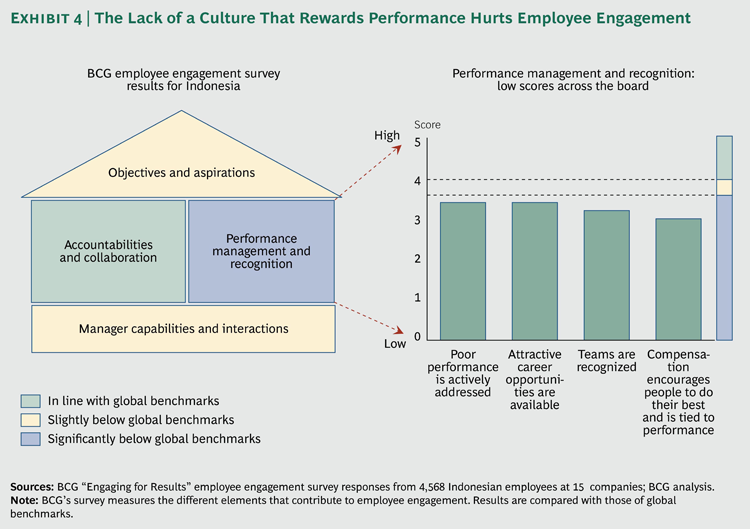
Tackling Indonesia’s Talent Challenges

Tackling Indonesia’s Talent Challenges

Growing Pains, Lasting Advantageby Dean Tong and Bernd WaltermannMAY 28, 2013

Tackling-Indonesia's-Talent_ex1_large_tcm80-134797Tackling-Indonesia's-Talent_ex4_large_tcm80-134806

Overview

In the mid-1990s, after the Indonesian football team was eliminated early in a regional tournament, President Suharto lamented: “We have more than 200 million people. There must be 11 of them with decent football skills.”

Indonesia has added 40 million people in the past two decades, but its shortage of talent has grown worse—and not just in football. Talent shortages threaten to undermine the country’s recent run of impressive economic performance.

Indonesia’s economy will likely break into the top 15 in the world in the next decade or so, but many companies may be left behind. They may need to scale back their growth plans unless they can recruit, develop, and retain the right people. This should be a top priority for chief executives in Indonesia. Fortunately, companies that act with foresight and persistence can become employers of choice and fulfill their growth aspirations. Others will falter. Read more of this post

Stock Investors in India Bypass IPOs

Updated May 28, 2013, 11:58 a.m. ET

Stock Investors in India Bypass IPOs

By ASHUTOSH JOSHI and SHEFALI ANAND

India is on pace for its worst year for initial public offerings since the global financial crisis, largely because two key groups of investors—foreign institutions and the Indian public—are staying away.

“I doubt if we will see a rush of IPOs for the rest of the year, given the poor retail participation in markets,” said Avinash Gupta, vice president of research at Globe Capital Market Ltd. in New Delhi.

It has certainly been a slow year thus far. Including search engine Just Dial Ltd., which raised $166 million last week in the country’s biggest IPO of the year, three companies have raised a total of $234 million—the lowest since 2009, according to data provider Dealogic. By comparison, there were 26 IPOs through May 28, 2010, that raised $2 billion. Read more of this post

Brazil investments have a long, potholed road ahead

Brazil investments have a long, potholed road ahead

3:12pm EDT

By Brad Haynes and Silvio Cascione

SAO PAULO (Reuters) – If you think you’re seeing light at the end of the tunnel for Brazil’s economy, look again: it’s just brake lights from a growing line of 18-wheelers.

Investment in Brazil probably grew at the fastest pace in three years in the first quarter, official data should show on Wednesday. But as much as two-thirds of the rise may have come from the construction of heavy trucks – hardly the steady capital spending that Brazil so badly needs.

If anything, the new trucks highlight one of the country’s great weaknesses: paltry investments in rail and waterways are forcing more and more goods onto a crumbling patchwork of highways. As more vehicles crowd the same lousy roads, shipping times have lengthened – which perversely creates a need for even more trucks. Read more of this post

Paid-for currents accounts could become the next bank mis-selling scandal as increasing numbers of customers complain that they cannot use the advertised perks, the financial watchdog warns.

Paid for current accounts may be next scandal, watchdog warns

Paid-for currents accounts could become the next bank mis-selling scandal as increasing numbers of customers complain that they cannot use the advertised perks, the financial watchdog warns.

Banks are also switching current account customers to paid-for accounts without their knowledge, the watchdog warned Photo: Rex Features

By Josie Ensor

6:00AM BST 29 May 2013

The Financial Ombudsman Service (FOS) has received a record number of complaints from people unhappy with the accounts offered by major high street banks after discovering that the included insurance deals were unsuitable.

Banks are also switching current account customers to paid-for accounts without their knowledge, the watchdog warned, with many only noticing when they see the charge debited from their account. Read more of this post

Germany fears revolution if Europe scraps welfare model

Germany fears revolution if Europe scraps welfare model

4:40pm EDT

By Ingrid Melander and Nicholas Vinocur

PARIS (Reuters) – German Finance Minister Wolfgang Schaeuble warned on Tuesday that failure to win the battle against youth unemployment could tear Europe apart, and dropping the continent’s welfare model in favor of tougher U.S. standards would spark a revolution.

Germany, along with France, Spain and Italy, backed urgent action to rescue a generation of young Europeans who fear they will not find jobs, with youth unemployment in the EU standing at nearly one in four, more than twice the adult rate. Read more of this post